Is the Philippines Safe at Night? Scams, Areas to Avoid & Solo Travel Tips for Indians
Verified against the Philippine National Police (PNP) advisory portal and recent traveller reports from Cebu, Manila, and Boracay on 2026-07-17. The Philippines is one of the friendliest countries in Southeast Asia for Indian backpackers, but the gap between touristy areas and the rough edges of Manila after dark is enormous. The short version: daytime is relaxed, nights are manageable if you stay in the right neighbourhoods, and almost every headache Indian backpackers report comes from one of three patterns, which I’ll name plainly below. For related planning, see our guide on Sea Backpacking Hub.
Filipino hospitality is real, English is everywhere, and Indian tourists are visibly welcome. That said, the country ranks well below Thailand or Singapore on most safety indexes. The good news: the gaps are predictable, the scams are scripted, and Grab exists. You may also find What to Do When Travelling to Philippines useful for this trip.
Quick Answers
| What | Answer | Price (INR) |
|---|---|---|
| Is Manila safe at night? | Yes, in Makati and BGC. Avoid Ermita and Tondo after 9 pm. | Free to learn |
| Safest area to stay in Manila? | Makati (Greenbelt/Salcedo) or BGC (Bonifacio Global City). | Hostels from ₹1,011 (~600 PHP or ~$10.68) |
| Best transport after dark? | Grab. Never unmarked taxis or jeepneys late at night. | ₹168-₹505 (~100-300 PHP or ~$1.78-$5.34) |
| Common scams targeting Indians? | ”Friend” leading to ATM, tuk-tuk overcharging, fake tour operators. | Avoidable |
| Are Filipino women approachable? | Generally yes, with normal social caution. Scam risk low in tourist zones. | Cultural note |
Subodh’s Pro Tip: Save the PNP emergency hotline (911) and your embassy’s number in your phone before you leave India. A locked phone is useless in a crisis.
The Real Risks (What to Worry About)
I rank these by how often Indian backpackers report them to me, not by what makes for dramatic headlines.
| Risk | Likelihood | Impact | How to Avoid |
|---|---|---|---|
| Petty theft (pickpocketing, bag snatching) | High | Moderate | Crossbody bag, no phone in back pocket, avoid jeepneys after dark |
| Scams (fake tour agents, tuk-tuk overcharging, “ATM helper”) | High | Low to moderate | Book tours through your hostel or established platforms, agree on Grab price in-app |
| Drink spiking / overcharging in bars | Moderate | Severe | Never leave drinks unattended, check the bill line by line |
| Violent crime (muggings, assaults) | Low to moderate | Severe | Stay in lit, populated areas; use Grab; avoid empty streets |
| Drug-related entrapment (Mindanao, certain Manila bars) | Low | Severe | Decline everything offered; even shabu residue on a table can be a setup |
| Traffic accidents (motorbike, jeepney) | High | Severe | Don’t ride motorbikes without IDP and helmet; cross on pedestrian bridges |
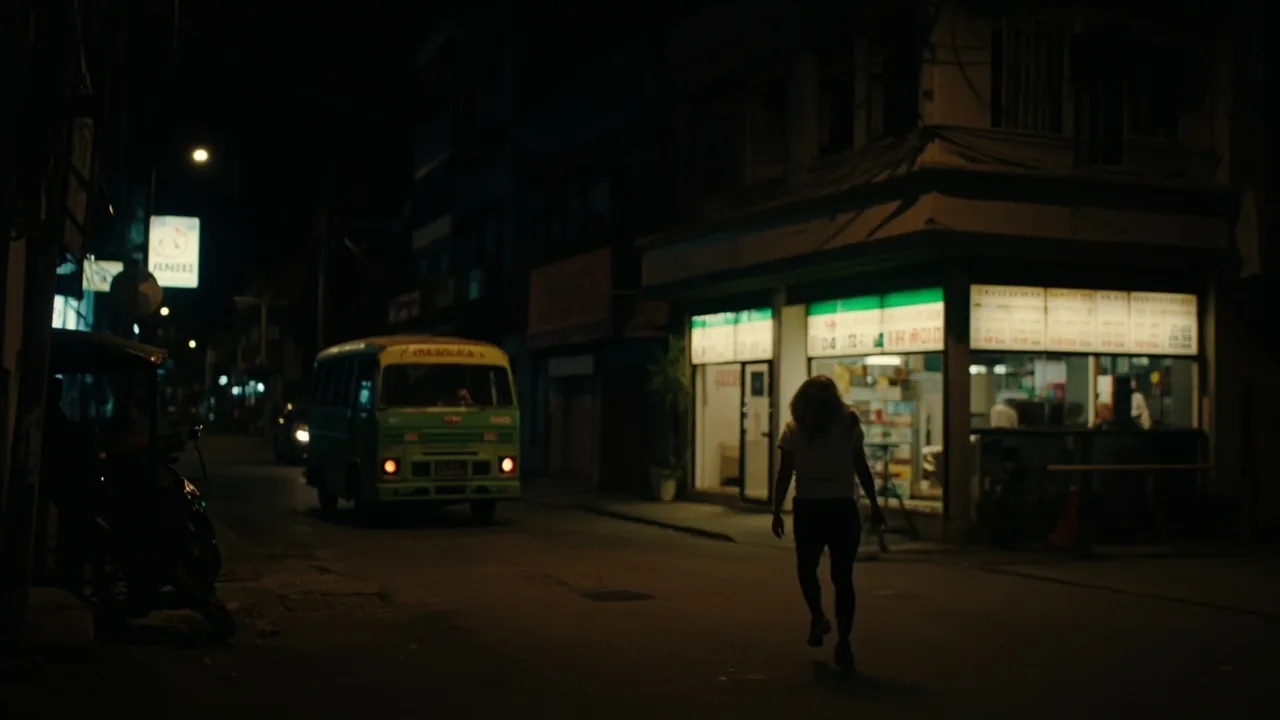
The pattern: violent crime against tourists is rare, but scams and petty theft are constant. Travellers report the night feeling safe in Makati, BGC, Cebu IT Park, and Boracay Station 2, but uneasy in older Manila districts and on dark provincial roads.
Prevention and Preparation
Before you board your flight from Delhi or Mumbai, take 30 minutes for these five things:
- Register with the Indian Embassy in Manila. It’s free and means someone from the MEA will call your family if something goes sideways. The portal is eoi.gov.in.
- Buy travel insurance that covers medical evacuation. Filipino private hospitals (St. Luke’s, Makati Medical Center) are excellent but expensive. A basic ER visit runs 3,000 to 8,000 PHP without insurance.
- Photocopy your passport, visa stamp, and Aadhaar. One paper copy in your bag, one digital copy in cloud storage (Google Drive works), one WhatsApp-ed to a family member.
- Get an IDP (International Driving Permit). If you plan to rent a scooter anywhere (Cebu, Boracay, Siargao, Batanes), Indian traffic police do check foreigners. The IDP costs ₹1,000 (~$10.37) from your local RTO and is valid for one year.
- Vaccinations. Hepatitis A and typhoid are recommended. Update your tetanus. Rabies pre-exposure is worth considering if you plan to handle animals (stray dogs and cats are everywhere).
For scooter-specific risks (which account for about 60% of all serious injuries I see from Indian backpackers in the Philippines), our detailed guide at philippines-scooter-motorbike-rental-safety-tips-indian-backpackers goes deeper.
City-by-City Scams and Gotchas
Manila
The “Friendly Local” ATM Scam. A chatty local (often in Rizal Park or Intramuros) walks with you to an ATM, then distracts you while an accomplice swaps your card or watches your PIN. Use ATMs inside banks (BPI, BDO) only, and never share your PIN.
Jeepney Overcharging. Jeepneys have fixed routes (9 to 20 PHP within the city), but foreigners get quoted 50 to 100 PHP. The fix: ask a Filipino what the fare should be before boarding, or use Grab.
Ermita After Dark. Ermita was Manila’s main tourist strip in the 1990s and is now run-down. After 9 pm, the area gets sketchy fast. Stay in Makati or BGC instead.
“Tondo tour” offers. Tondo is Manila’s densest and poorest district. Locals sometimes offer to “take you to the real Manila.” Decline. It’s not dangerous to pass through, but it’s a known robbery corridor.
Cebu
Colon Street Aggressive Sellers. Colon is the oldest street in the Philippines and a known area for pickpocketing and drink-spiking scams. Stay in IT Park, Mango Avenue’s upper end, or near Ayala Center Cebu, not Colon.
“Whale shark booking” scams in Oslob. Indian travellers are sometimes quoted 3,500 PHP by roadside agents for the Oslob whale shark experience, then left without transport. Book through your hostel or established operators only. Official rate is around 1,500 PHP if you self-arrange, but most packages run 2,500 to 4,000 PHP inclusive of transport.
Tricycle Overcharging. Cebu’s tricycles (motorbike with sidecar) are notorious for quoting 100 PHP for a 50 PHP ride. Always agree on the price before sitting down, or use Grab (available in Cebu City, less so in Moalboal).
Boracay
“Beach closure” scam. Boracay has real, recurring beach closures for clean-up. Scammers exploit this by saying the beach is “closed for Indians” or “VIP access only.” It’s nonsense. The beach is free and open to all except during officially announced rehabilitation windows.
Henna and Massage Aggression. Station 2 beach vendors are persistent. A polite “no thank you” works, but persistent haranguing is common. Don’t engage if you don’t want to buy.
Night-party “free drink” invitations. Travellers report invitations to “VIP parties” with free drinks. The catch: you get one drink, then a 5,000 PHP bill. Decline politely.
Siargao
Surf instructor scams. “Surf lesson for 500 PHP!” sounds great, but the catch is broken boards billed at 5,000 PHP. Stick to established schools (Cloud 9 Surf School, Kahuna) where equipment is included and prices are fixed.
Motorbike rental scams. This is a huge one, covered in detail at our philippines-scooter-motorbike-rental-safety-tips-indian-backpackers guide. The short version: photograph every scratch and dent before riding off.
What to Do If It Happens
Your wallet or phone is snatched
- Don’t chase. Muggings often involve a knife or a getaway motorbike.
- Cancel your cards via your bank’s app (HDFC, ICICI, Axis all have international freeze features).
- File a police report (Blotter) at the nearest PNP station. You’ll need it for your insurance claim.
- Call the Indian Embassy in Manila: +63-2-8843-0101. They can issue an emergency certificate if your passport is gone.
Your passport is stolen
- PNP Blotter first, get a stamped copy.
- Indian Embassy in Manila (Bonifacio Global City) for an emergency passport. Bring: photocopy of the lost passport, two passport photos, FIR-equivalent (the Blotter), and a fee of around 2,500 PHP.
- Embassy hours are Mon-Fri 9 am to 5 pm. Outside hours, call the duty officer number posted on their website.
You have a scooter accident
- Get medical attention first. Don’t negotiate money on the road with bystanders.
- PNP Blotter, even for minor scrapes. Without it, no insurance payout.
- Call your insurer’s 24/7 line. SafetyWing has an English-speaking helpline.
- Don’t sign any documents in Tagalog you don’t understand. Ask your hostel manager to translate before signing.
Severe food poisoning
- Severe means bloody stool, fever over 38.5°C, or inability to keep water down for 12+ hours. Otherwise, rest, ORS, and a paracetamol usually suffice.
- Local clinics in tourist areas (e.g., Boracay’s Island Clinic, Cebu’s Chong Hua Hospital) handle foreigners daily. Walk-in fee is 1,500 to 3,000 PHP; ER is 4,000+ PHP.
- Hospital deposits for foreigners: 10,000 to 20,000 PHP at private hospitals. That’s why insurance matters.
Indian-Specific Considerations
Medicine Equivalents
| Indian Brand | Generic | Filipino Equivalent |
|---|---|---|
| Electral / ORS | ORS sachets | Hydrite (any Mercury Drug store) |
| Crocin / Dolo 650 | Paracetamol | Biogesic |
| Mylan | Metronidazole (for diarrhoea) | Flagyl (prescription required) |
| Pantocid | Pantoprazole | Nexium OTC |
| Avomine | Avomine (motion sickness) | Same name, available OTC |
| Combiflam | Ibuprofen + Paracetamol | Alaxan FR |
Indian Embassy Contact (Manila)
Embassy of India, Manila Bonifacio Global City, Taguig Phone: +63-2-8843-0101 Email: [email protected] Working hours: Mon-Fri, 9 am to 5 pm
There’s a smaller Honorary Consulate in Cebu City for non-emergency passport renewals; Manila handles all real emergencies.
Hospital Deposit Costs
Without insurance, expect to deposit 10,000 to 20,000 PHP at any private hospital before treatment begins. Public hospitals (Philippine General Hospital in Manila) are free but slow and crowded. Most Indian travellers go private, which is why the safety net of insurance is non-negotiable.
Safe Areas and Where to Stay
Manila
Makati is the safest central base. Stay near Greenbelt, Glorietta, or Salcedo Village. The streets are clean, lit, and patrolled, and Grab works 24/7. Hostels here cluster around P. Burgos Street and Jupiter Street.
BGC (Bonifacio Global City) is the second pick, slightly pricier but quieter and foreigner-friendly. Walking around High Street Central at 11 pm feels safer than many Indian metros.
Avoid for night stays: Ermita, Malate, parts of Pasay near the airport perimeter, and Tondo.
Cebu
IT Park is the modern, safe hub. Cafes, restaurants, and walkable streets. Lahug and the upper end of Mango Avenue are also fine. Avoid Colon Street and the immediate port area at night.
Boracay
Station 2 (White Beach central) is the party zone. Station 1 is quieter and more upscale. Both are safe at night; the backstreets leading to Bulabog Beach are less lit.
Siargao
General Luna town and Cloud 9 area are the safe hubs. Avoid motorbike rides on unlit roads between 9 pm and 6 am. Most nightlife is in GL itself.
Getting Connected
Working data is the difference between a five-minute Grab ride home and a two-hour ordeal. The two real options for Indian travellers:
- Local SIM (Globe or Smart). Buy at the airport for 100 to 200 PHP with 8 GB data. Requires passport. Globe has better coverage outside Manila.
- eSIM (Nomad). Activate before you fly, lands working on landing. Get Nomad eSIM is the option I use when I don’t want to queue at the airport kiosk.
Either way, you need data. Without it, Grab doesn’t work, embassy numbers are hard to look up, and you’re at the mercy of unmarked taxis.
Indian Female Solo Traveller Considerations
This gets asked a lot. Honest answer:
- Filipino culture is generally respectful toward solo female travellers. Catcalling exists but is mild by Indian-city standards.
- Modest dress (covered shoulders, knee-length shorts) gets you more positive attention and easier entry to churches, malls, and conservative provinces.
- Avoid walking alone on dark, unlit roads anywhere outside Makati, BGC, Cebu IT Park, and Boracay Station 1/2 after 10 pm. Use Grab.
- The bigger risk is drink-spiking at beach parties (Boracay, Siargao, Manila’s Burgos Street). Stick to bottled beer you opened yourself, never accept “free” cocktails from strangers.
- Solo female travellers consistently report feeling safer in Cebu and Bohol than in Manila, and safer in Siargao than in Boracay.
For LGBTQ-specific safety considerations (the Philippines is more conservative than Thailand but generally tolerant in cities), see our lgbtq-travel-safety-philippines-guide.
FAQ
Is the Philippines safer than India for tourists?
Mixed answer. Violent street crime is generally lower than in Delhi or Mumbai, but petty theft and scams are more frequent than in Goa or Kerala. The risk profile is different, not lower or higher overall.
Do Indians face racial discrimination in the Philippines?
Rare. Filipinos are generally warm to Indians, partly because of the cultural overlap (Bollywood is huge here) and partly because of the visible Indian business community in Manila. Most travellers report zero issues.
Can I drink tap water in the Philippines?
No. Stick to sealed bottled water (Wilkins, Absolute, Summit brands). Ice in established restaurants is fine; ice from street stalls is risky. This is covered in detail at philippines-street-food-safety-indian-travelers.
What areas of Manila should I avoid?
Ermita, Malate, Tondo, Pasay’s red-light pockets, and the area immediately around Divisoria market at night. Stick to Makati and BGC for first-time visits.
Is it safe to take a Grab alone at night?
Yes. Grab is the safest transport option after dark. Drivers are registered, the trip is GPS-tracked, and you can share your route live with family via the app’s “Share My Ride” feature. Always use it. Always.
What if I get caught with marijuana?
Philippine drug laws are among the harshest in Asia. Even small amounts can mean 12+ years in prison. Do not bring any in, do not buy any locally. This is non-negotiable.
Are there any travel advisory concerns for 2026?
For the latest updates, check the MEA travel advisory before departure. As of
Subodh’s Take
The Philippines is genuinely safe for Indian backpackers if you do three things: stay in Makati or BGC when in Manila, use Grab instead of unmarked taxis at night, and treat every scooter rental like a legal contract. The scams are predictable, the safe zones are well-defined, and Filipino hospitality is real. Don’t let fear-mongering online talk you out of Palawan or Siargao, both of which are among the best places you can spend a week anywhere in Asia. The only mandatory kit: data on your phone, insurance that covers evacuation, and a paper photocopy of your passport in your daypack.
