Philippines vs Thailand for Backpacking: Which Is Cheaper in 2026?
The Philippines vs Thailand backpacking cost debate is the SEA route most Indian travellers get wrong. Both sit on the same stretch of water, both take under five hours to fly into from Chennai or Bengaluru, and both hand you the same jungle/beach/nightlife pitch on Instagram. The cost question diverges, and not always in the direction you’d expect.
This is a head-to-head breakdown of what a 2026 backpacker trip costs: dorm beds, street food, ferries, tuk-tuks vs jeepneys, island tours, and the visa fees nobody warns you about. Pick based on the numbers, not the marketing.
Quick Answers
| What | Answer | Price (INR) |
|---|---|---|
| Cheapest dorm (Bangkok / Manila) | Bangkok wins on dorm beds at the bottom of the market | (Manila dorm floor: 270 PHP) |
| Street food meal (per dish) | Bangkok street food is cheaper per dish | (Manila street food: 30-80 PHP) |
| Island-hopping day tour | Philippines wins, far more dramatic per peso | 1,200-1,500 PHP (~₹1,860-2,325) |
| Visa for Indians | Philippines is visa-free for 30 days, Thailand is also visa-free for 60 days | PHP 0 / THB 0 |
| SIM card (7 days, ~25GB) | Roughly tied at airport counters | ₹84 (~50 PHP or ~$0.89) / ₹869 (~299 THB or ~$9.18) tourist SIM |
Currency note: verified 2026-07-22 at 1 PHP ≈ ₹1.55 (1 USD = PHP 56.4) and ≈ ₹2.87 (1 USD = THB 33.6).
How to Get There (from Bangkok or Manila)
Most Indian backpackers arrive in Bangkok first because flight connections from India are well-served and the visa-free process is straightforward. From Bangkok, the cheapest onward hop to the Philippines is via Cebu Pacific or AirAsia, with Manila being the common transit point.
| Route | Mode | Duration | Cost (one-way) | Book |
|---|---|---|---|---|
| Bangkok → Manila | Flight (Cebu Pacific, AirAsia) | 4-5 hrs (incl. Transit) | Book on 12go | |
| Bangkok → Cebu | Flight (Cebu Pacific direct) | 4.5 hrs | Book on 12go | |
| Manila → Bangkok | Flight (Cebu Pacific, AirAsia) | 4 hrs | Book on 12go |
Bangkok’s Don Mueang airport handles most of the low-cost carriers flying the Manila route. Book 3-4 weeks out for the cheapest fares, and check whether your luggage weight is included; budget carriers in this corridor charge per piece for checked bags.
If you’re already in Thailand on the Banana Pancake Trail and want to skip the flight, there’s no surface route. The only sea crossing is freight ferry from Satun to Puerto Princesa, takes 28 hours, costs about 2,400 PHP (~₹3,720), and runs once or twice a week.
Where to Stay (Manila vs Bangkok)
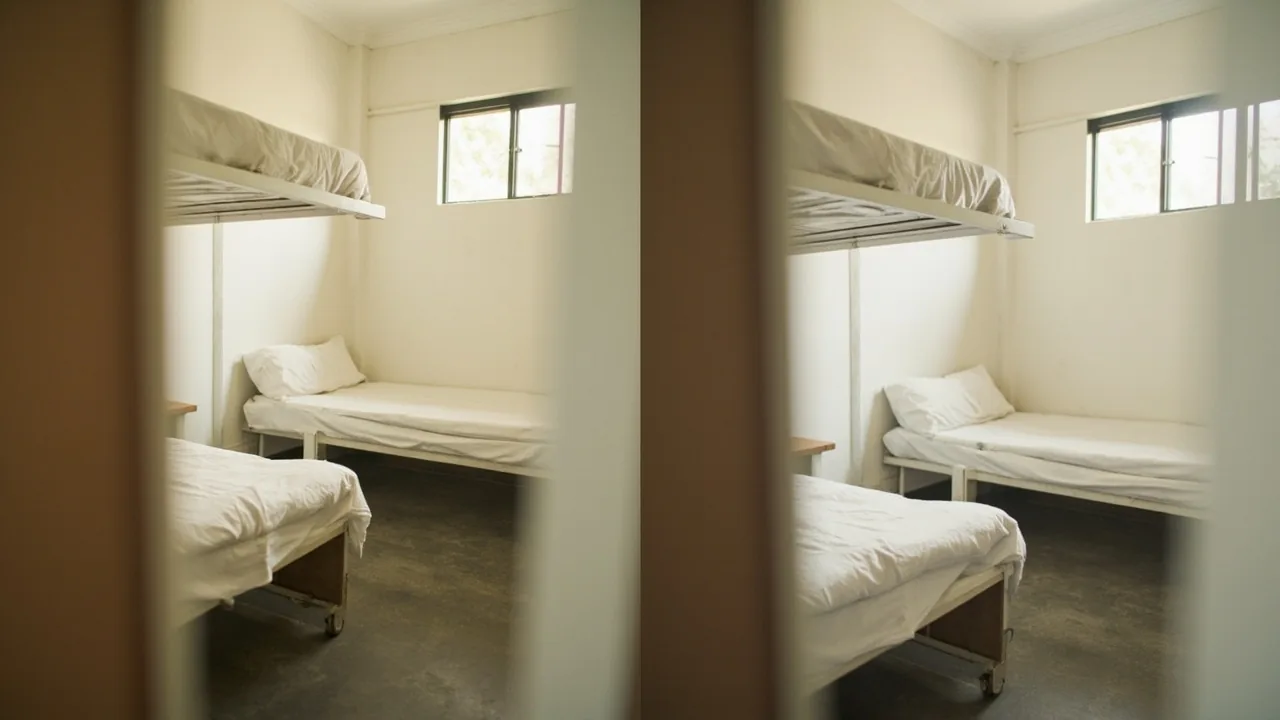
Dorm beds in Bangkok cluster at the budget end with party hostels near Khao San, while Manila’s dorms sit in the mid-range because cheap Chinatown hostels have been closing year by year. Thailand wins on dorm price at the bottom; the Philippines has better mid-range value.
Manila hostels
Dorm beds in Manila cluster in the 270-600 PHP range. Poblacion (Makati) has the densest backpacker hostel strip, with rooftop bars and walking-distance nightlife. Quiapo and Malate offer quieter options at slightly lower prices. Budget 600-900 PHP/night for a social dorm in Poblacion, 400-600 PHP for a basic bed in Quiapo or Malate.
Bangkok hostels
Bangkok dorm beds start lower than Manila’s, clustering at 250-500 THB/night. Khao San Road has the classic party hostels with 24-hour bars; the Siam area offers quieter modern dorms near BTS access; Ari has the hipster residential vibe with cafés downstairs. Budget 250-350 THB/night for a party hostel near Khao San, 350-500 THB for a quieter spot near BTS lines.
Philippines vs Thailand: Daily Budget Breakdown
Side-by-side, with the same categories in both currencies. Daily totals here are realistic, not aspirational.
Philippines daily budget (Manila baseline)
| Category | Budget/day |
|---|---|
| Dorm bed | 270-600 PHP |
| Food (3 meals) | 100-200 PHP |
| Local transport | 50-100 PHP |
| Activities | 100-200 PHP |
| Misc / drinks | 70-120 PHP |
| Total | 590-1,220 PHP |
Thailand daily budget (Bangkok baseline)
| Category | Budget/day |
|---|---|
| Dorm bed | 300-500 THB |
| Food (3 meals) | 120-250 THB |
| Local transport | 40-100 THB |
| Activities | 200-500 THB |
| Misc / drinks | 80-150 THB |
| Total | 740-1,500 THB |
What this table tells you at a glance: Bangkok comes in cheaper than Manila when you’re comparing the same dorm tier, and the street food differential isn’t dramatic. But once you add a real activity (an island tour, a national park fee, a cooking class), Thailand’s daily total climbs because operators often break out entry fees, guide fees, and equipment as separate line items. The Philippines tends to bundle these costs into a single tour price.
Want to dig deeper into Filipino itineraries? Cebu’s 2-day city-only route walks through the inland costs, no ferry surcharge, no island-tour markup.
What to Eat
Both cuisines are heavy on pork and seafood, and both have weaker vegetarian scenes than India. The good news: large cities in both countries have working Indian restaurants, and the Filipino local dishes lean toward sour/salty/savory rather than spicy, so vegetarians can find more than you’d expect.
Manila (and the Philippines in general)
Kantina Manila is renowned for its signature sisig and adobo, crafted with locally sourced ingredients, providing an authentic taste of traditional Filipino cuisine. The adobo is the canonical “first meal” for first-time visitors.
Leandro’s Bistro in Quezon City leans into home-style Filipino cooking with a slightly more comfortable room. The vegetarian laing (taro leaves in coconut) is one of the few proper veg mains in the local scene; the kare-kare (oxtail peanut stew) is the meat-eater pick.
Street food across Manila runs 30-80 PHP per item: fish balls on a stick (15-25 PHP), balut (fermented duck egg, skip if squeamish, 50 PHP), and banana que (caramelised saba banana on a stick, 20 PHP). Jeepney stops with visible queues are usually a quality signal.
Bangkok
Bangkok street food is among the cheapest in Southeast Asia at scale. Yaowarat (Chinatown) at night is the densest concentration, with 40-60 THB noodle bowls, 30-50 THB satay skewers, and 20-40 THB mango sticky rice. Or Tor Kor market near Chatuchak is the cleaner indoor version, same prices.
Vegetarian food in Bangkok: Jay restaurants (the Thai word for “vegan” or “no meat”) are clustered around Chinatown and Phahurat. Look for the yellow “เจ” flags, which mark fully vegetarian spots with all-you-can-eat buffets at around 60-80 THB per head. Strict veg is easy here if you know to look for them.
Indian food in Manila
The Indian food scene in Manila is small but functional. Royal Indian Curry House in Quezon City serves authentic Indian cuisine at around 1,700 PHP per person, with butter chicken and dal makhani as the standouts. The spices are imported and the portions are large enough to share.
Seven Mannah Indian Fusion Food is the casual option at 300-500 PHP per head, biryani and tandoori items, good for a one-person meal. Biryanista specialises in authentic Hyderabadi biryanis served in a stylish, modern setting.
Travellers report the Indian restaurants in Manila cluster in Quezon City and Makati, not in Intramuros or the tourist strips. Plan around that.
What to Do
Philippines side
El Nido island hopping (Tour A) is the headline activity. Limestone karst cliffs, hidden lagoons, seven stops on one boat, 1,200-1,500 PHP including lunch and mask/snorkel rental. Check El Nido tours on GetYourGuide before you arrive; walk-ups are 200-300 PHP more expensive. Budget a full day.
Chocolate Hills viewpoint (Bohol) runs 100 PHP entry, with a viewing deck that takes 45 minutes. Pair it with the Tarsier Sanctuary (80 PHP) and the Loboc river lunch cruise (450 PHP, with food). Check Bohol tours on GetYourGuide if you’d rather have transport bundled.
Banaue Rice Terraces viewpoint fee in Ifugao is 50 PHP for the environmental fee. The actual hike down to Batad village is free but takes 3-4 hours each way and the guides (mandatory, ~500 PHP) cost more than the entry fee.
Boracay island hopping (half-day) runs 700-1,200 PHP with three snorkel stops and lunch. Check Boracay tours on GetYourGuide if you’re based at White Beach.
Thailand side
Khao San Road at night is free to walk and the cheapest entertainment in Bangkok if you count people-watching. Most backpackers go once, regret it, and go again the next night.
Grand Palace and Wat Pho (combined visit) runs 500 THB entry to Grand Palace plus 200 THB to Wat Pho. Budget a half-day. Dress code enforced: long pants, covered shoulders. Travellers report getting turned away at the Grand Palace gate for shorts more than anywhere else in Bangkok.
Ayutthaya day trip from Bangkok by train (20 THB one-way, third class, 1.5 hours) plus 50 THB entry to the historical park is the cheapest UNESCO day trip in Thailand. Rent a bicycle at the park for 50 THB.
Koh Tao diving (if you have your Open Water cert) runs 8,500-10,000 THB for a 3-day course. Skip the ferry if you’re already on Koh Samui or Koh Phangan; transfers from Bangkok to Koh Tao via sleeper bus and ferry total around 1,200-1,500 THB. If you’re planning a Philippines inland leg, the Baguio budget guide covers mountain stays away from the beach trail.
Getting Connected
Philippines SIM
Globe and Smart both run tourist SIMs at NAIA airport counters (Manila’s main airport). The standard 7-day tourist SIM with 5-8GB of data runs 50 PHP. Add a 5GB data pack for 100 PHP if you’re moving around islands and need hotspot.
Buying the same SIM at a 7-Eleven or sari-sari store in the city costs the same or 10-20 PHP less, with shorter queues. Counter staff at the airport will register the SIM for you, which is the one real benefit.
Thailand SIM
AIS, TrueMove, and dtac all run airport tourist SIMs at Suvarnabhumi and Don Mueang. AIS’s standard 8-day tourist SIM with 15GB runs 299 THB (~₹858). Buying the same SKU at a 7-Eleven or AIS shop in central Bangkok is 20-30 THB cheaper, with the same activation.
eSIM alternative
If you don’t want to mess with physical SIMs, Get Nomad eSIM covers both the Philippines and Thailand, no airport queue, and works the moment your plane lands. Useful if you’re transiting through Manila or Bangkok and going straight to the islands.
WiFi in both countries is reliable in hostels and cafés in city centres. Island destinations (El Nido, Siquijor, Koh Tao) drop to patchy 3G once you leave the main town; the SIM is non-negotiable there.
Visa / Entry Notes
Philippines: Indians get a visa-free stamp on arrival for 30 days. Extendable for PHP 3,030/month at any Bureau of Immigration office. Note that there is also a separate airport terminal fee of PHP 550-850 (~₹825-1,275) payable at the Manila airport on departure. This is independent of the visa, and most airlines warn you about it only at check-in.
Thailand: Indians are visa-exempt for 60 days on arrival, with the standard fee being zero for the visa-free stamp. If you want to stay longer, you can apply for a 30-day extension at a Thai immigration office for 1,900 THB. No photos, no bank statements for the initial 60-day stamp.
For a complete Philippines visa walkthrough with which BI offices to visit, see the Manila entry guide (which covers entry logistics in detail).
Safety reminder: Before you fly, check the current advisories for both countries on the MEA travel advisory portal (mea.gov.in). The Philippines carries regional advisories for parts of Mindanao and the Sulu archipelago that don’t apply to the standard backpacker trail but are worth knowing about.
Common Mistakes
Mistake 1: Booking El Nido or Boracay without checking typhoon season. The Philippines sits in the western Pacific typhoon belt from June to November. El Nido, in particular, cancels ferries and tours on weather days with little notice. It’s common for travellers to lose 2-3 days of itinerary when a typhoon closes Coron-El Nido ferries for 48+ hours. Plan around this; see the typhoon-season guide for month-by-month weather.
Mistake 2: Comparing Bangkok to Manila as the equivalent “city stop”. Bangkok is a transit-and-nightlife city with the rest of Thailand pulling backpackers outward (Chiang Mai, Pai, islands). Manila is a stop most travellers want to minimise; the Philippines’ backpacker value lives on the islands (Palawan, Siargao, Bohol). Comparing the two cities as equals skews the answer; comparing the two countries by their best stops is the cleaner test.
Mistake 3: Treating “Philippines is cheaper” as a blanket statement. The Philippines is cheaper than Thailand for island activities and accommodation outside Manila, but Manila itself is more expensive than Bangkok at the dorm tier. The headline “Philippines is cheaper” only holds if you’re comparing Manila vs Bangkok’s island hubs (Krabi vs El Nido, Koh Tao vs Siargao). Travellers report that Manila’s dorm market is structurally tighter because cheap hostels in Chinatown have closed year over year.
Philippines or Thailand for honeymoon?
The Philippines has a structural edge for honeymoons: more private island resorts, more dramatic seascapes per dollar, and fewer organised group-tour crowds. Boracay and El Nido have specific couples-only resorts at 4,000-6,000 PHP/night (₹6,200-9,300), which is cheaper than comparable Phuket or Koh Samui options at 2,500-4,000 THB/night (₹7,175-11,480). Thailand’s honeymoon value is in the variety (Chiang Mai for culture, Krabi for beaches, Pai for quiet), not in raw price.
FAQ
Is the Philippines cheaper than Thailand for Indian backpackers?
Depends on the city pair. Manila is more expensive than Bangkok at the dorm tier. El Nido, Siargao, and Bohol are cheaper than Krabi, Koh Samui, and Koh Phangan for island activities. Compare the parts of each country you want to visit.
Which is safer for solo Indian women, Philippines or Thailand?
Travellers report Thailand has more developed solo-female infrastructure: women-only areas on the BTS Skytrain platforms, more women travelling alone in Chiang Mai, and clearer hotel/hostel staff gender protocols. The Philippines is safe on the standard backpacker route but reports of catcalling in Manila and Cebu are more common than in Bangkok.
Can I use Indian rupees directly in either country?
No. Bring USD and exchange on arrival, or use a forex card. Philippine peso and Thai baht are not available at Indian airport forex counters in the volumes you’d need.
How long should I spend in each country?
Two weeks minimum in Thailand if you want Bangkok + Chiang Mai + one island. Two weeks minimum in the Philippines for Manila + Palawan or Manila + Cebu + Bohol. Travellers report that 10 days in either country feels rushed.
Do I need a return ticket for visa-free entry to either country?
Yes, both countries technically require proof of onward/return travel for visa-free entry. Airlines check this at check-in. Book a fully refundable return or a 12go onward ticket before you fly.
What’s the cheapest month to visit either country?
Thailand: May to October (low/shoulder season, fewer crowds, slight price drops on accommodation). Philippines: June to November has the lowest prices but the typhoon risk; February to May is the dry window and slightly more expensive.
Subodh’s Take
If you want cheap beer, working ATMs, and a backpacker trail you can follow without research, Thailand still wins for first-time SEA backpackers. The Philippines rewards a second or third trip once you’ve figured out what you want from a backpacker destination, because the islands are unreal but the logistics between islands are rougher than anything in Thailand.
