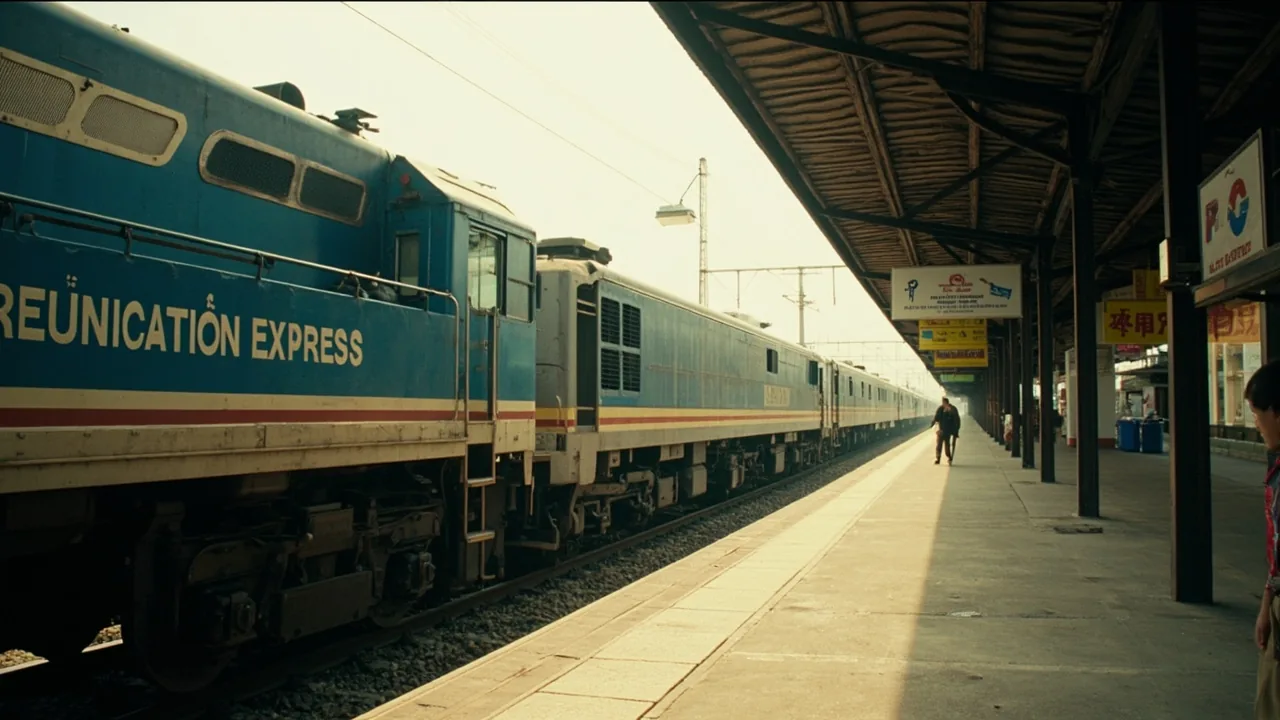
Reunification Express: Hanoi to HCMC by Train (2026)
Yes, the Reunification Express Hanoi to Saigon is worth it, but only if you break the journey. The full 1,726 km ride takes 30 to 34 hours nonstop, so most Indian backpackers split it across 3 to 5 stops (Hue, Da Nang, Nha Trang). Soft sleeper tickets run ₹4,784-₹6,992 (~1,300,000-1,900,000 VND or ~$49.66-$72.58) one-way depending on the leg, booked at dsvn.vn. Tickets sell out 1 to 3 weeks ahead in peak season, October to March. For related planning, see our guide on Sea Backpacking Hub.
What Is the Reunification Express?
The Reunification Express is Vietnam’s north-to-south passenger rail line, officially the Hanoi to Ho Chi Minh City mainline, covering 1,726 km through 35 stations. It runs under the operational code “Tàu Thống Nhất” (Unity Train) and uses the same single-track line the French built between 1899 and 1936 to connect their Indochinese colonies. After 1976, when North and South Vietnam formally reunified, the line was renamed the Reunification Express, a deliberate symbol of national reconnection.
Today the line carries six daily passenger trains (SE1 through SE8, numbered odd for southbound, even for northbound), plus several slower local services. Trains reach top speeds of about 80 km/h on flat sections, slower through the central highlands, and overnight runs pass through Hue, Da Nang, Nha Trang, and Muong Man before pulling into Saigon Railway Station.
Quick Answers
| What | Answer | Price (INR) |
|---|---|---|
| Full route length | 1,726 km, Hanoi to Ho Chi Minh City | , |
| Total journey time (nonstop) | 30 to 34 hours | , |
| Daily southbound trains | SE1, SE3, SE5, SE7 | , |
| Fastest train | SE3 (about 29h 50m) | , |
| Cheapest ticket (hard seat, full route) | SE1 / SE3 hard seat | ₹2,944 (~800,000 VND or ~$30.56) |
| Most popular class (soft sleeper, 4-berth) | SE3 / SE7 soft sleeper | ₹6,992 (~1,900,000 VND or ~$72.58) |
| Hanoi station | Ga Hà Nội, 120 Lê Duẩn | , |
| Saigon station | Ga Sài Gòn, 1 Nguyễn Thông | , |
| Official booking site | dsvn.vn | , |
| Average stop duration | 5 to 15 minutes | , |
Subodh’s Pro Tip: Book soft sleeper, not hard seat. The hard seats on a 30-hour run are torture, even for a 20-something. Pay the extra ₹2,208 (~600,000 VND or ~$22.92) for the soft sleeper and you’ll sleep.
A Quick History (Why It Matters for the Ride)
The line wasn’t built as one project. The French began construction in 1899 from both ends simultaneously, north from Hanoi and south from Saigon, finally connecting them at the Núi Cấm pass near the Laotian border in 1936. That reverse-build strategy is why the track’s geometry is poor in the middle sections: it follows the path the construction crews took, not the path engineers would have chosen.
Two facts from this history still affect your ride today. First, the gauge is metre-gauge (1,000 mm), narrower than Indian broad gauge, which is one reason trains feel slower than you’d expect. Second, the line was heavily bombed and rebuilt multiple times during the Vietnam War; the famous Hải Vân Pass tunnel section between Hue and Da Nang, the most scenic stretch, was only fully restored to passenger service in the 2000s. When you sit on the platform watching the train pull in, you’re watching a railway the French imagined as a colonial artery, the Americans tried to break, and the Vietnamese made into a national symbol.
The Route, Stop by Stop
The full southbound run hits 35 stations, but Indian backpackers break it at 4 to 6 of them. These are the stops that matter:
Hanoi (Ga Hà Nội). Km 0. Trains depart between 19:00 and 23:00 most nights. Get to the station 60 minutes early for sleeper boarding, and check our Vietnam spending money guide before budgeting the trip.
Vinh. Km 319. Around 5 hours in. Nobody disembarks here for tourism, but if you’re on the slower SE1 you’ll have a 20-minute stop.
Huế (Ga Huế). Km 645. About 12 to 14 hours from Hanoi, usually arriving at dawn. This is the standard 2-night split for backpackers: ride overnight from Hanoi, spend 1 to 2 days in Hue, then reboard south.
Đà Nẵng (Ga Đà Nẵng). Km 791. The next major stop, 2 to 3 hours south of Hue. Worth its own stopover for the beach and Ba Na Hills.
Nha Trang. Km 1,315. About 24 hours from Hanoi. The big coastal backpacker hub.
Sài Gòn (Ga Sài Gòn). Km 1,726. End of the line. Trains arrive between 04:00 and 06:00 on the third morning.
Ticket Classes, Explained
Vietnam Railways sells four classes, and the difference matters more than on Indian Railways because of the journey length.
Hard seat, ₹2,944-₹3,312 (~800,000-900,000 VND or ~$30.56-$34.38) for the full route. Reclining bench seats, 40 per carriage. Tolerable for daytime runs under 6 hours, misery overnight.
Soft seat, ₹4,048-₹4,784 (~1,100,000-1,300,000 VND or ~$42.02-$49.66). Air-con, fewer seats per row, padded recliners. Still upright sleeping.
Hard sleeper, ₹5,152-₹6,072 (~1,400,000-1,650,000 VND or ~$53.48-$63.03). Six-berth compartments, no air-con on older stock, rough bedding. Budget backpacker choice.
Soft sleeper, ₹6,440-₹6,992 (~1,750,000-1,900,000 VND or ~$66.85-$72.58). Four-berth compartments, air-con, reading light, USB on refurbished SE7 stock. The class every Indian backpacker should book if budget allows.
Subodh’s Pro Tip: Check whether you’re booking SE3 or SE7. SE7 has the newer refurbished carriages with USB ports and cleaner bathrooms. SE3 is older but often arrives on time. SE1 is the slowest and the worst-maintained.
Step-by-Step: Booking and Riding
Step 1: Decide your segment. Don’t book the full Hanoi to Saigon ride unless you genuinely have 34 hours to kill. Book Hanoi to Hue for the first night, then Hue to Da Nang or Nha Trang for the next. Travellers report this 2-to-3-leg split is what makes the trip feel like an experience rather than punishment.
Step 2: Book online 7 to 21 days ahead. Go to dsvn.vn (Vietnam Railways’ official site). Foreign passport holders can book directly, no agent needed. Tickets open 30 days before departure and soft sleepers fill up first, especially SE7’s southbound Friday and Saturday runs.
Step 3: Choose your berth. Lower berths cost 10 to 15% more than upper berths. For the night runs, lower berths are worth the premium because you can sit up without hitting your head. For daytime runs, upper is fine and saves a few thousand VND.
Step 4: Pay with a foreign-accepted card or a Wise/forex card. The official site accepts Visa and Mastercard. Travellers report that HDFC Forex and Niyo cards work without foreign transaction fees, which matters because Vietnam Railway prices are quoted in VND and your bank will mark up the FX if it routes through USD. See our full guide on using international cards in Vietnam for the cards that work cleanest.
Step 5: Print or screenshot your ticket. dsvn.vn sends a PDF with a QR code. Screenshots work at the gate but printed copies are smoother if your phone battery dies.
Step 6: Arrive at the station 45 to 60 minutes early. Hanoi station requires you to go through a security check, find your platform (they’re only marked in Vietnamese), and locate your carriage. The boarding window closes 10 minutes before departure and they will leave without you.
Step 7: Board, store your bag, and lock up. Each sleeper has a small overhead shelf plus storage under the lower berth. Bring a padlock for the under-berth compartment; theft is uncommon but not unknown. Keep your passport on your body, not in your bag.
Step 8: Stock food at the station before boarding. Station vendors sell bánh mì, instant noodles, fruit, and water at fair prices. Once the train departs, the on-board trolley inflates prices 2 to 3x.
Step 9: Sleep, eat, watch the coast. Between Hue and Da Nang you’ll cross the Hải Vân Pass with coastal views on the left side of the train (sit on the left going south, on the right going north). This is the only stretch worth staying awake for.
Step 10: Disembark, repeat. At each stop, confirm your train number and platform with the station staff; announcements are in Vietnamese only.
Common Mistakes Indian Travellers Make
Mistake 1: Booking the full route as one ticket. You’ll either waste 30+ hours in hard seat or overspend on a soft sleeper you don’t use to its full. Book segments.
Mistake 2: Trusting third-party “Vietnam Railways” sites. dsvn.vn is the only official site. Sites like 12go and Baolau resell tickets at markup (usually ₹184-₹552 (~50,000-150,000 VND or ~$1.91-$5.73) extra per ticket) and travellers report the tickets sometimes arrive with the wrong berth or wrong date.
Mistake 3: Bringing only Indian rupees. No money changer at Hanoi or Saigon station will touch INR. Withdraw VND from an ATM inside the station or arrive with USD/EUR cash to exchange. See our Indian bank ATM fees explainer to avoid the worst machines.
Mistake 4: Not carrying your own toilet paper and hand sanitiser. Train toilets are squat or Western, but neither has guaranteed paper. Pack a small roll.
Mistake 5: Assuming the train runs on time. Trains are usually 15 to 60 minutes late. Don’t book a tight onward connection.
What Most Guides Don’t Tell You
The SE7 refurbishment matters. SE7’s carriages were rebuilt in 2023 with USB-A ports, better mattresses, and bio-toilets. SE3 is the same age as the original line. Same price band, different ride. Always check the carriage number when you book.
Foreign passport surcharge. Travellers report dsvn.vn sometimes charges a ₹184-₹368 (~50,000-100,000 VND or ~$1.91-$3.82) “foreign ticket fee” at the counter, even when the online price was the headline rate. Carry small VND notes.
Hue to Da Nang is the scenic stretch, not Hue to Nha Trang. Most blogs hype the whole coast. The reality: the section south of Da Nang runs inland through dry rice paddies. The 2-hour Hải Vân Pass run between Hue and Da Nang is the part worth staying awake for, everything south of it is less dramatic.
Station staff at small stops. At minor stops (Vinh, Đồng Hới, Ninh Bình), the conductor may announce stops only in Vietnamese and the train only halts for 3 to 5 minutes. Set a phone alarm for 30 minutes before your stop.
The Reunification Express doesn’t connect directly to India’s IRCTC. You can’t earn IRCTC loyalty points or use a foreign-card-linked Indian Railways account. It’s a fully separate booking system.
Where to Eat (and Where to Avoid Indian Food on the Train)
On-board food exists but is mediocre and overpriced. Eat before boarding. At Hanoi station, the area inside the terminal building has small vendors selling bánh mì for ₹92-₹147 (~25,000-40,000 VND or ~$0.96-$1.53) and phở for ₹184-₹258 (~50,000-70,000 VND or ~$1.91-$2.67). In Hue, walk 5 minutes from the station to the Perfume River area for proper cơm hến (clam rice) and bún bò Huế for under ₹221 (~60,000 VND or ~$2.29).
For Indian food, Hanoi has the best concentration:
- MẸT Vietnamese Restaurant & Vegetarian Met 2 for vegetarian Vietnamese dishes with full Indian-friendly spice levels.
- Tadka 2 Indian Restaurant Hanoi for proper chicken tikka masala and dal at ₹552-₹1,104 (~150,000-300,000 VND or ~$5.73-$11.46) per person.
- BENARAS MANTRA in the French Quarter for upscale Indian, ₹1,104-₹1,840 (~300,000-500,000 VND or ~$11.46-$19.10) per person.
For Vietnamese vegan food near Hanoi station before you board:
- Hoang’s Restaurant for vegan Vietnamese food.
- May Hanoi Train Street Restaurant if you’re already near Train Street.
- Sen Trang An for traditional Vietnamese local flavours.
If you’re catching the train from Saigon, eat at Hong Hoai’s Restaurant or Hello Hanoi Restaurant before heading to Ga Sài Gòn, both within a 10-minute Grab ride of the station.
Connecting by 12go
If you decide to skip the train for a specific leg (say Hanoi to Da Nang, because flights are cheap), Book on 12go for buses and flights as a comparison. Travellers report 12go is also useful for booking the bus from HCMC airport to the city after you arrive off the train at Ga Sài Gòn.
Stay Connected on the Train
There’s no Wi-Fi on the train. Mobile data works in coverage zones, which means you’ll have 4G in cities and on coastal stretches, but you’ll lose signal in the central highlands and in many tunnels. Vietnamese SIMs from Viettel or Mobifone work best; Vinaphone has the worst rural coverage on this line. Buy a SIM at the airport on arrival or at any Viettel store in central Hanoi, or read our Southeast Asia SIM card guide for the full breakdown on registration rules and which provider to pick.
If you’d rather skip the SIM card queue, Get Nomad eSIM works in Vietnam from the moment you land and gives you 4G on most of the Reunification Express route.
Subodh’s Pro Tip: If you’re spending more than a week in Vietnam, get a physical SIM. The data packages are bigger (120 GB for 30 days runs around ₹736 (~200,000 VND or ~$7.64) with Viettel) and Viettel’s rural coverage beats every eSIM provider. If you’re only doing 3 to 5 days, the eSIM wins on convenience.
FAQ
How long is the Reunification Express Hanoi to HCMC?
The full route is 1,726 km. The fastest train, SE3, completes it in about 29 hours 50 minutes. SE1 takes 34+ hours.
Can I book Reunification Express tickets online from India?
Yes. Dsvn.vn accepts foreign Visa and Mastercard. Book 7 to 21 days ahead for soft sleeper availability.
Is the Reunification Express safe for solo Indian travellers?
Yes. Sleeper compartments are mixed-gender but well-policed, theft is rare, and other passengers are overwhelmingly domestic Vietnamese families. Keep your passport on your body.
How much does a soft sleeper cost?
₹6,440-₹6,992 (~1,750,000-1,900,000 VND or ~$66.85-$72.58) for a full-route ticket. For a single leg (say Hanoi to Hue), expect ₹2,576-₹3,312 (~700,000-900,000 VND or ~$26.74-$34.38).
Should I fly Hanoi to Saigon instead of taking the train?
If your time is under 7 days in Vietnam, fly. Vietnam Airlines, Vietjet, and Bamboo run the route for ₹2,944-₹9,200 (~800,000-2,500,000 VND or ~$30.56-$95.51) one-way in 2 hours. If you have 10+ days and want the experience, train. They are different trips.
What is the difference between SE1, SE3, SE5, and SE7?
SE3 is the fastest and most punctual. SE7 has the newest carriages. SE1 is the slowest with the oldest stock. SE5 is mid-pack. Pick SE3 or SE7.
Can I break the journey and reboard later?
Yes. Book each leg separately on dsvn.vn. You can stay 1 to 3 nights in Hue, Da Nang, or Nha Trang and continue on a later train.
Subodh’s Take
The Reunification Express isn’t the most efficient way to get from Hanoi to Saigon. A flight is 2 hours and ₹5,520 (~1,500,000 VND or ~$57.30). A sleeper train is 30+ hours and ₹6,992 (~1,900,000 VND or ~$72.58). So why take it? Because you’ll watch Vietnam slide past your window: the Red River delta, the Hải Vân Pass coast, the rice paddies of the central highlands, the industrial outskirts of Saigon. No bus or flight shows you that. Book the soft sleeper, break it into three legs, and the train becomes the spine of your whole Vietnam trip, not just a transfer between cities.
