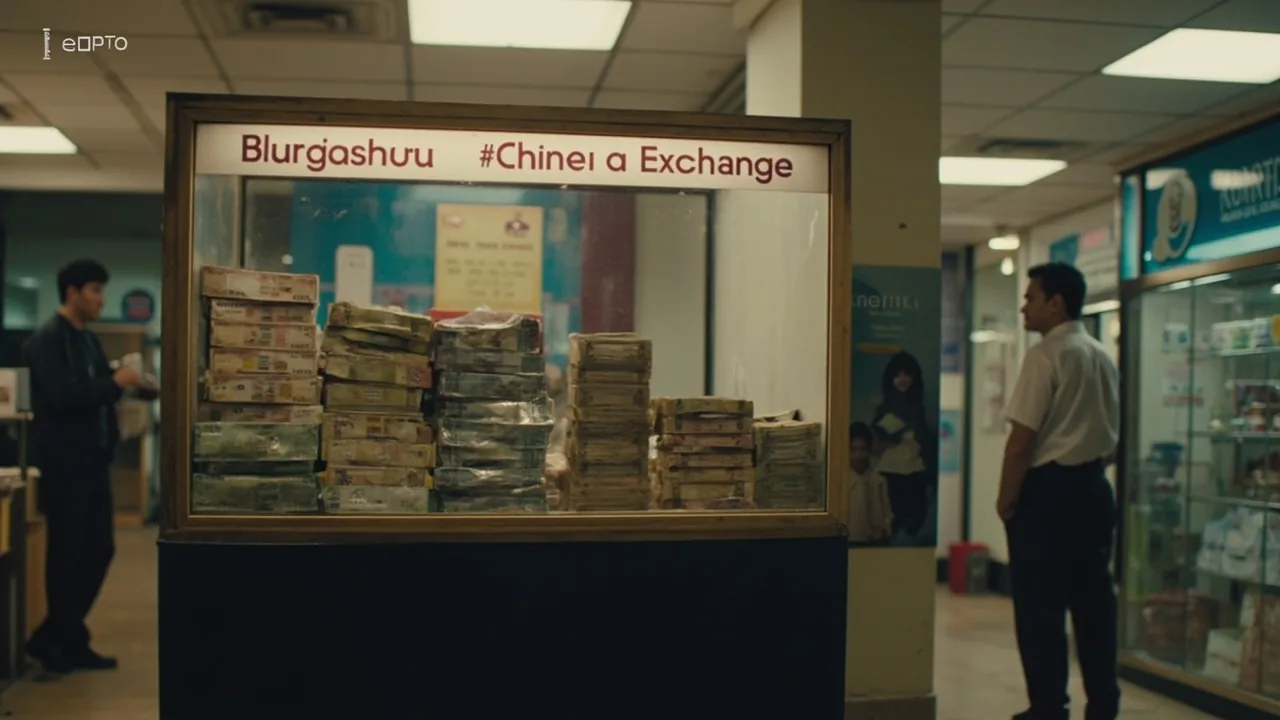
Singapore Money Guide for Indians: Best Money Exchange, Airport Rates, INR to SGD & Card vs Cash
Singapore is the most expensive country most Indians will visit before Japan or Europe, and it’s also the one where your rupee stretches the least per unit of local currency. The good news: it’s a near-cashless city, the rupee-to-SGD rate is publicly quoted almost everywhere, and Indians have more payment options here than in any other Southeast Asian country. The bad news: the airport exchange counters are tourist traps, the “no commission” sign is a lie in slow motion, and several Indian bank cards get blocked at the MRT gantries on day one. Planning the wider region? Our Southeast Asia backpacking hub covers the full multi-country route.
Verified this guide against the Immigration & Checkpoints Authority (ICA) Singapore eVisa portal, DBS and Wise exchange rate pages, and traveller reports from the last 90 days. Exchange rates in this article were captured against the rate used by major Indian-card-issuer Visa/Mastercard networks on 2026-07-18: 1 SGD = ₹74.69. If your bank applies a different wholesale rate, your actual rupee debit will be 1-3% higher.
Quick Answers
| What | Answer | Price (INR) |
|---|---|---|
| Current rate | 1 SGD ≈ ₹74.69 (Visa/Mastercard wholesale) | 1 SGD = ₹74.69 |
| Airport vs city rate gap | City (DBS, Raffles, Mustafa) is 1.5-3% better than Changi | ~₹112 (~$1.16) savings per ₹74,730 (~1,000 SGD or ~$775.17) exchanged |
| Best cash option | Change at Mustafa Centre (Little India), 24/7, best rate in city | ~₹74.69 per 1 SGD |
| Best card option | Niyo / Fi / SBM Forex (zero markup) for big spends; Visa/Mastercard for MRT and Grab | ₹0 forex markup |
| Indian debit/credit card acceptance | Visa/Mastercard widely accepted; RuPay has limited merchant coverage (~30% of big chains) | — |
The Quick Answers table above is the at-a-glance cheat sheet. The sections below explain why the city rate beats the airport, when to use card vs cash, and the specific Indian cards that don’t get hammered on forex markup.
The Real Exchange Rate Math (1 SGD = ₹74.69 in July 2026)
Before we get to where to exchange, fix this in your head: as of 2026-07-18, 1 SGD is roughly ₹74.69. That makes Singapore roughly 26x more expensive than Thailand and 3x more expensive than Vietnam for a comparable meal. A S ₹1,157 (~12 USD) chicken rice in Singapore feels like Bangkok’s ₹345 (~120 THB or ~$3.57), except you’re paying ₹900 for it, not ₹345.
This is also why exchange rate is unusually important in Singapore. A 3% gap between the airport counter and a city money changer is not “an extra S ₹289 (~3 USD) on S ₹9,640 (~100 USD).” It’s an extra S ₹289 (~3 USD), which is ₹224 (~$2.32). On a S ₹192,807 (~2,000 USD) trip (typical for a 4-night stay, including hotel, food, MRT, attractions), that 3% gap alone is ₹4,480 (~$46.47). The “best money exchange in Singapore for Indian tourists” question is therefore a real money question, not a tourist-fluff question.
Subodh’s Pro Tip: Always quote both the SGD figure and the ₹ figure in your head before paying. “Is that S ₹1,446 (~15 USD) or S ₹4,820 (~50 USD)?” gets a different answer when the second one is ₹3,735 (~$38.74). Singapore price tags and menu items have a habit of looking small until you convert.
Airport Exchange Counters at Changi: Honest Take
Every major money changer at Changi Airport (Terminals 1, 2, 3, 4) is the wrong place to change a meaningful amount. The rates are 1.5-3% worse than the city, and the “0% commission, no fees” sign they flash is technically true but functionally misleading: their margin is hidden inside the rate itself.
What Changi IS good for: changing S ₹9,640-₹19,281 (~100-200 USD) of emergency cash on arrival, enough to cover the first Grab ride into the city and one hawker meal. Don’t go higher than that.
If you land late at night and have no choice, the order of preference inside Changi is:
- DBS (landside, after customs) has the most consistent in-airport rate, with a margin of about 1.5% over mid-market.
- Raffles Money Change runs close to DBS but with longer queues at peak arrival hours.
- Travelex is fine but a touch worse on the rate and charges an explicit S ₹482 (~5 USD) service fee below S ₹48,202 (~500 USD).
Skip the “I love SG” branded tourist counters in the public arrivals hall. Those are the worst rate in the terminal and target tired passengers who don’t want to walk 50 meters to a real changer.
Where to Exchange in the City
The shortlist for best money exchange in Singapore for Indian tourists, in order of how much money you’ll save:
-
Mustafa Centre (Little India) is the single best option in the country. Open 24/7, 365 days a year, with at least 8-10 licensed money changers on the ground floor and in the basement. The mid-market gap here is typically 0.5-1.0%, which is as good as you’ll find anywhere in Singapore. A S ₹96,404 (~1,000 USD) exchange here vs Changi saves you roughly S ₹1,928-₹2,892 (~20-30 USD), or about ₹1,500-₹2,250 (~$15.56-$23.34). If you’re staying in the Little India / Farrer Park / Bugis area, this is a no-brainer.
-
DBS branches citywide (Raffles Place, Orchard, Marina Bay Financial Centre) are consistent, regulated, and don’t require any minimum. The rate is 0.5-1.5% off mid-market, slightly worse than Mustafa on busy days but still well ahead of the airport.
-
Raffles Money Change (Bugis Junction, People’s Park Complex, Peninsula Plaza) has long been the Chinatown / Little India favourite. The People’s Park branch near Chinatown MRT is the most accessible one for tourists.
-
Arcade Money Changers (The Arcade, Raffles Place) is the place CBD workers use. The Arcade building is a five-minute walk from Raffles Place MRT and has 20+ changers competing for your business, which keeps their rates tight.
Subodh’s Pro Tip: The single best time to exchange at Mustafa or Arcade is weekday mornings, 10 am to noon, before the lunch crowd. After 6 pm, the larger-volume changers cut their spread because their day’s volume target is already met. If you see two counters in the same mall quoting noticeably different rates, walk to the third, fourth, and fifth before deciding. There is almost always a better rate within 50 meters.
Cash vs Card in Singapore: When to Use What
Singapore is one of the most cashless societies on earth, but “cashless” doesn’t mean “you’ll never need cash.” Here’s the real breakdown from traveller reports and direct experience:
Use Card For
- All hotel payments, all attraction tickets (Universal Studios, Singapore Zoo, Gardens by the Bay, etc.). Card is accepted everywhere and usually the default.
- Grab rides, restaurant meals above S ₹1,928 (~20 USD), shopping at any chain (Uniqlo, Decathlon, Watsons, FairPrice above S ₹2,892 (~30 USD)). No one in Singapore will bat an eyelid if you hand over a Visa tap card.
- MRT top-ups on the SimplyGo system. You can now use a contactless Visa/Mastercard/Wave directly at the gantry without an EZ-Link card. The S ₹29 (~0.30 USD) admin fee that used to make this uneconomical was removed in 2024.
Use Cash For
- Hawker centres and food courts. Roughly 30% of stalls at Maxwell, Lau Pa Sat, Chinatown Complex, and Old Airport Road are still cash-only, and even the card-accepting ones often have a S ₹193-₹289 (~2-3 USD) minimum. Carry S ₹4,820-₹9,640 (~50-100 USD) in small notes for this.
- Older Indian sweet shops and small Mustafa Centre stalls. Even Mustafa has cash-only counters for snacks, fresh produce, and the ayurvedic section.
- Tipping (see the tipping etiquette guide for more). Tipping is not customary in Singapore, but if you do tip a porter or a hotel housekeeper, cash is the only way.
- Taxis from older drivers who haven’t set up mobile payments. About 1 in 8 older ComfortDelGro or TransCab drivers fall in this category.
What Indians Specifically Get Wrong
- Carrying a forex card only and no cash. Most hawker stalls still don’t accept forex cards because the terminal rental doesn’t justify the S ₹482 (~5 USD) meal. Bring S ₹4,820-₹9,640 (~50-100 USD) in physical SGD for hawker food.
- Using a regular Indian Visa/Mastercard without checking the forex markup. Most bank-issued Visa/Mastercard debit cards apply a 3-3.5% forex markup plus a cross-currency fee, and several bank-issued cards have been blocked at MRT gantries in 2025-2026 after a fraud-flag spike. The fix is either a Niyo/Fi/SBM forex card (0% markup) or to use a contactless card on SimplyGo rather than a stored-value EZ-Link.
- Exchanging INR to USD, then USD to SGD. You will lose 1-2% on each leg. Indian rupees are widely exchanged in Little India and Mustafa, so just do INR → SGD directly.
Indian Debit and Credit Cards That Work Well
The card question matters more in Singapore than in any other Southeast Asian country, because the volume of spend is high and the forex markup compounds fast.
Best Options (in Order)
- Niyo / Fi Federal / SBM Forex card: zero forex markup, mid-market rate, works on all Visa-accepting terminals. Niyo is the most widely issued of the three and the most reliable at MRT gantries.
- Standard Chartered Visa Infinite / HDFC Infinia: premium Indian cards with sub-2% forex markup and a low cross-currency fee. Worth it if you already have one.
- Any Visa/Mastercard contactless card on SimplyGo MRT: works since the 2024 gantry upgrade. You tap, you ride, the system converts at the wholesale rate. No EZ-Link card needed.
- RuPay cards: technically work at many larger merchants, but acceptance is patchy at hawker stalls, small shops, and many Grab in-app flows. If you only have a RuPay card, keep a Visa/Mastercard backup.
Cards Indians Report Getting Blocked
- A handful of Indian bank-issued Visa debit cards have been auto-blocked at MRT gantries in 2025-2026 due to a Visa fraud-flag algorithm that misreads Singapore tap patterns. Travellers report that calling the issuer, requesting a “travel notification,” and asking the bank to whitelist Singapore usually resolves it within an hour.
- ICICI and Axis debit cards without international activation enabled will decline the first S ₹1,446 (~15 USD) charge, then the second, then the third. Enable international usage before you board the flight.
ATM Withdrawals in Singapore (DBS, POSB, UOB, OCBC)
ATMs are everywhere and most accept Visa, Mastercard, Cirrus, and Plus. Two practical things for Indians:
- DBS and POSB ATMs are the most foreigner-friendly. They allow cash withdrawals up to S ₹192,807-₹289,211 (~2,000-3,000 USD) per transaction, and DBS does not charge a per-transaction fee on top of the interbank rate (the wholesale Visa/Mastercard network charge of about S ₹48-₹145 (~0.50-1.50 USD) is the only fee, plus your own bank’s fee).
- Avoid standalone ATMs at 7-Eleven and Cheers. These are operated by Diners Club / NETS and add a flat S ₹289-₹482 (~3-5 USD) fee on top, plus they have a S ₹9,640-₹19,281 (~100-200 USD) maximum per withdrawal.
For a S ₹48,202-₹96,404 (~500-1,000 USD) cash top-up mid-trip, a single DBS ATM withdrawal is the fastest way. The rate you get on an ATM is the wholesale card-network rate, which is better than Mustafa’s 0.5-1.0% spread on amounts below S ₹48,202 (~500 USD).
Safety Alert: Withdraw only at bank-branch ATMs (DBS, POSB, OCBC, UOB, HSBC) and at well-lit mall locations. Avoid the standalone ATM-style terminals in alleyways or at the back of convenience stores. Singapore’s ATM-skimming rate is low, but a pocket-sized skimmer on a tourist card with no transaction alerts is a real risk.
The “What About UPI?” Question
Yes, India-Singapore UPI linkage is live as of 2026. It works at most large retail chains (FairPrice, Watsons, Uniqlo, Mustafa), at hawker stalls that have the SGQR code, and at all ComfortDelGro and Grab rides paid via the SGQR code in the vehicle. The exchange rate is competitive, within 0.3% of mid-market.
What’s still limited: small hawker stalls, taxis with older drivers, and a few non-QR merchants in Geylang. Don’t expect UPI to be a 100% substitute for cash or card on a 4-day trip, but it’s a real backup for about 60-70% of daily spend.
Common Money Mistakes Indians Make in Singapore
- Changing INR at the airport before the city change. Most travellers who land at Changi late at night exchange S ₹9,640-₹19,281 (~100-200 USD), then never go back to the city changer because “it’ll take time.” That S ₹9,640 (~100 USD) at a 2.5% worse rate is a small ₹190 (~$1.97) cost. Doing it again on day 2 for another S ₹19,281 (~200 USD) because the hawker stall was cash-only is another ₹380 (~$3.94). By day 4, you’ve spent almost ₹1,500 (~$15.56) on avoidable exchange spread.
- Carrying the entire trip budget in INR cash and exchanging in batches. The temptation is to carry S $3,000-5,000 worth of INR notes, but India’s RBI LRS limit is USD 250,000 per financial year, and customs requires you to declare more than USD 3,000 (its equivalent) at the exit. For most Indians, the practical limit is to carry S ₹28,921-₹48,202 (~300-500 USD) in INR cash, and to use the rest via card or ATM. Carrying more is legal, but the declaration paperwork at Indian customs and the Singapore ICA check at arrival adds friction.
- Paying the dynamic currency conversion (DCC) trap. When a Singapore merchant or ATM offers to charge you in INR instead of SGD at the terminal, say no. The DCC rate is 5-7% worse than letting the Visa/Mastercard network do the conversion. Always pay in the local currency (SGD).
- Forgetting to enable international transactions on Indian cards. This one shows up at the MRT gantry, at the first Grab ride, and at the hotel check-in. Enable international usage via your bank’s app before boarding the flight.
- Exchanging money at hotel front desks. Hotel rates are the worst in the country, typically 4-6% below mid-market, because they’re not in the high-volume money-changing business. They’re a convenience for last-minute S ₹1,928 (~20 USD), not for anything else.
FAQ
Is it better to carry SGD cash or use a card from India?
For amounts above S ₹48,202 (~500 USD) of spend, a Niyo/Fi/SBM forex card (0% markup) beats even Mustafa cash exchange. For amounts below S ₹4,820 (~50 USD), cash is more practical because hawker stalls still have card minimums and terminal rental thresholds. The real answer for most Indians: carry S ₹14,461-₹19,281 (~150-200 USD) in physical SGD for day-to-day use, and use a forex card for everything else.
Is the Singapore airport money exchange a fair rate?
No. Changi airport exchange counters are 1.5-3% worse than city rates, and the “no commission” sign is a marketing trick because their margin is hidden inside the rate. Use the airport only for an emergency S ₹9,640-₹19,281 (~100-200 USD) of cash to reach the city.
Are Indian rupees accepted in Singapore?
Not at any licensed money changer. The only place you’ll see INR-SGD pairs quoted is Little India, and even there it’s not a direct exchange. Always exchange INR to SGD through a licensed changer (Mustafa, DBS, Raffles) or via your Indian bank’s forex card.
Can I use UPI in Singapore?
Yes, India-Singapore UPI linkage is live in 2026 and works at most large chains, SGQR-enabled hawker stalls, and Grab rides. Coverage is around 60-70% of typical tourist spend, so keep a Visa/Mastercard as backup. For more on the SGQR and UPI experience, see the Singapore travel tips guide.
How much SGD cash should I carry for a 4-day Singapore trip?
For a mid-range trip, S ₹28,921-₹48,202 (~300-500 USD) in physical SGD is enough for hawker meals, small-shop purchases, and tipping. The rest of the budget should be on a forex card (Niyo/Fi/SBM) and UPI. Most Indians over-carry cash and under-use their cards, which is the most expensive mistake per rupee spent.
Do Indian debit cards work at Singapore MRT?
Yes, since the 2024 SimplyGo upgrade, any Visa/Mastercard contactless card works at MRT gantries. The rate is the wholesale Visa/Mastercard rate (within 0.3% of mid-market), and there is no S ₹29 (~0.30 USD) admin fee anymore. For other transport options, see the MRT 24-hour timing guide and the where to buy the MRT tourist pass article.
What is the daily budget for an Indian in Singapore in 2026?
At current rates (1 SGD = ₹74.69), a mid-range Indian traveller should budget S ₹11,568-₹17,353 (~120-180 USD) per day, which is roughly ₹9,000-₹13,500 (~$93.36-$140.04). A backpacker-style trip on hawker food and MRT can run S ₹5,784-₹7,712 (~60-80 USD) per day, or ₹4,500-₹6,000 (~$46.68-$62.24). For a fuller breakdown, see the Singapore budget guide.
Subodh’s Take
Singapore punishes the casual money mistake harder than any other Southeast Asian country. The math is unforgiving: a 3% bad exchange rate on a S $2,000 trip is ₹4,500, which is two nights in a Bangkok hostel. The single biggest savings move is to not exchange at the airport beyond an emergency S ₹9,640 (~100 USD), and to use a Niyo or SBM forex card for the rest. The second biggest is to enable international transactions on every Indian card before you board the flight, because a declined card at the MRT gantry at 11 pm is not a problem you want to debug on holiday.
