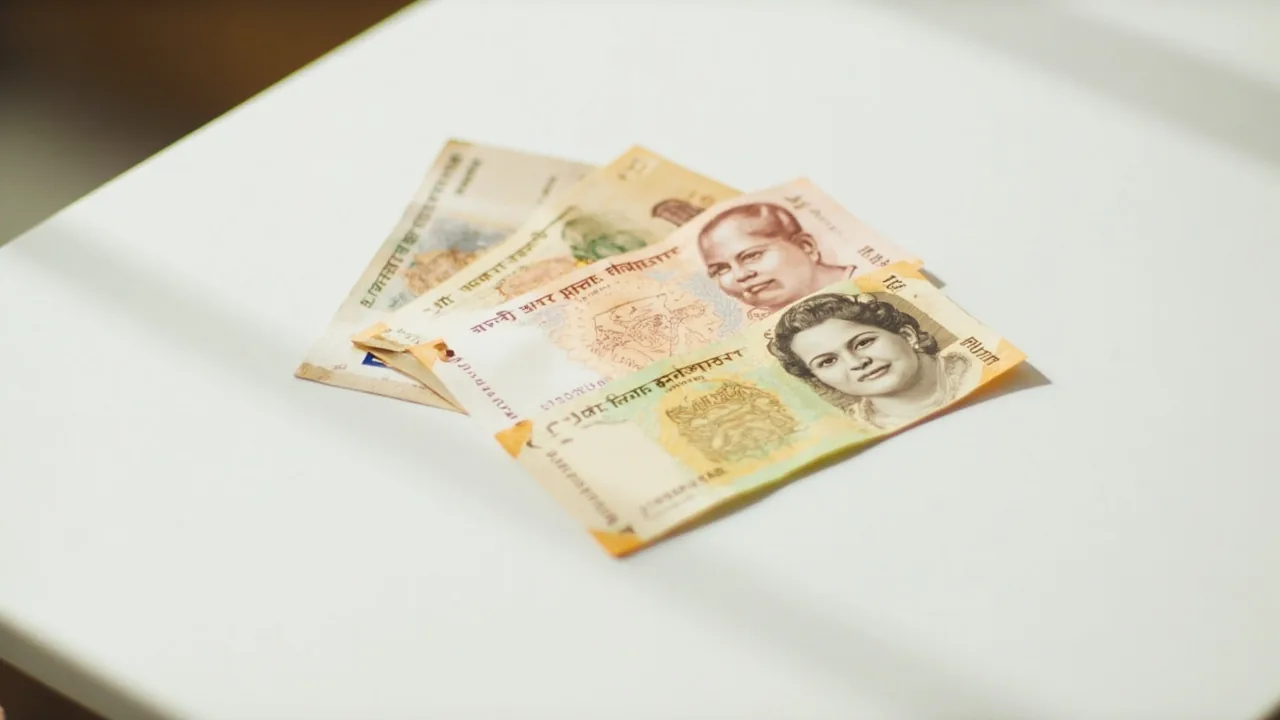
Singapore Dollar to Indian Rupee: Live Rate, Conversion Tricks & Where to Get the Best Deal
Right now, if you’re checking the singapore dollar to indian rupee today, 1 SGD equals ₹74.69 (~$77.18) at the mid-market rate. That’s the honest number banks and money changers build their margins on top of.
The trick isn’t finding today’s rate. Rates are everywhere. The trick is paying close to it, which means dodging the airport changers, the hotel front desks, and that “0% commission” sign that quietly hides 4% in the spread. If you’re planning a broader Southeast Asia trip, our Southeast Asia backpacking hub covers money, visas, and transport across every country on the loop.
Quick Answers
| What | Answer | Price (INR) |
|---|---|---|
| Current mid-market rate | 1 SGD = ₹74.69 | ₹74.69 per S $1 |
| Best place to convert | Online forex card (Niyo, Fi, HDFC) or zero-markup debit | 0.5%-1.5% above mid-market |
| Worst place to convert | Changi airport money changer (after hours) | 5%-8% above mid-market |
| Cheapest way to send money home from Singapore | Wise (TransferWise) or DBS Remit | 0.4%-0.7% above mid-market |
| Smart timing | Convert midweek, mid-morning SGT | Saves 0.3%-0.8% vs Friday evening |
Always ask to be billed in SGD when an ATM offers. Choosing “convert to INR” triggers Dynamic Currency Conversion, a 3%-5% stealth fee dressed as a service.
How the SGD to INR Rate Moves
The Singapore Dollar is the most stable currency in Southeast Asia. MAS (Monetary Authority of Singapore) manages it against a basket of currencies within a policy band, which means SGD doesn’t swing like the Thai Baht or Vietnamese Dong. That’s good news: you don’t need to time the market like a trader. The daily range is usually ±0.2% to ±0.4%.
The rupee, on the other hand, depreciates gradually. Over the past three years, 1 SGD has moved from roughly ₹65 ($67.35) to ₹74.69 ($77.18) today. That’s a slow bleed, about 4%-5% per year. If you’re converting for a trip, this matters less than you’d think: a 1% rate shift on a ₹50,000 (~$518.65) holiday spend is ₹500 (~$5.19), the cost of one bad meal.
What matters more is the spread, the gap between mid-market and what you pay. Airport changers can charge 6% above mid-market. Online forex cards charge 0.5%-1.5%. That 4.5-percentage-point gap on ₹50,000 (~$518.65) is ₹2,250 (~$23.34). That’s where the real money goes.
The other mechanic Indians get caught by is Dynamic Currency Conversion (DCC). When you swipe a card or hit an ATM, the terminal may offer to charge you in INR instead of SGD. It sounds helpful. It’s a 3%-5% fee buried in a worse exchange rate. Always choose SGD. Always.
Where to Convert: Airport vs City vs Online
If you land at Changi and need cash for the MRT or a Grab, the airport money changers are the worst option by a wide margin. The bureaus inside Terminals 1, 2, and 3 quote rates 4%-7% above mid-market. The “24-hour” changers in the transit area are even worse: 6%-8% above mid-market because they’ve got a captive audience at 2 AM.
Once you’re in the city, licensed money changers in Little India (Tekka Centre, Mustafa Centre) and Mustafa Centre itself offer much tighter spreads, usually 1%-2.5% above mid-market. Mustafa is open late and takes INR cash directly for SGD, useful if you want to carry rupees out of India and swap them at destination instead of declaring at customs.
The cheapest option, by far, is a forex card loaded at home before you fly. Niyo, Fi, and HDFC ForexPlus all let you load SGD at rates within 0.5%-1.5% of mid-market. You lock the rate when you load, so even if the rupee drops while you’re abroad, your money is already converted. The catch: unused balance reconverts back at a worse rate plus a reconversion fee, so don’t load more than you’ll spend. For a detailed comparison, see our best forex cards for India guide.
For a deeper breakdown of card vs cash vs ATM strategy in Singapore specifically, our Singapore money guide for Indian travelers covers the day-to-day mechanics.
Comparison of Popular Options
| Tool | Markup vs mid-market | ATM fee in SGD | Best for | Verdict |
|---|---|---|---|---|
| Niyo Global Card | 0.5%-1.2% | 0 SGD (some partner ATMs) | First-time forex card users | Solid, app-based, easy reload |
| Fi Debit | 0% markup | 0 SGD | Anyone with Indian bank account | Best flat-rate card for Indians abroad |
| HDFC ForexPlus | 1.5%-2.5% | ~₹112-₹224 (~1.50-3 SGD or ~$1.16-$2.33) | Carry multiple currencies | Old reliable, higher markup |
| Cash from Mustafa Centre | 1%-2.5% spread | N/A | Small top-ups after landing | Good rate, count your notes |
| Changi airport changer | 4%-7% spread | N/A | Emergency only | Avoid if you have any other option |
| Hotel front desk exchange | 6%-10% spread | N/A | Desperation | Worst option on the menu |
| DBS/POSB ATM with Indian debit | 0%-1% (bank-dependent) | ~₹374-₹747 (~5-10 SGD or ~$3.88-$7.75) | Large cash withdrawals | Check your bank’s overseas terms first |
For a full breakdown of ATM fees and which Indian cards work best at Singapore ATMs, see our Indian ATM card in Singapore guide.
The Fi debit card is the standout for 2026: zero markup on currency conversion, a flat ₹100 (~$1.03) + GST per ATM withdrawal in most cases, and full UPI support back home for reloading. Niyo is the runner-up: slightly higher markup, but better acceptance at older ATMs.
India-Specific Gotchas: RBI, TCS, and LRS
This is where most Indian travelers trip up. The Reserve Bank of India’s Liberalised Remittance Scheme (LRS) lets you send up to USD 250,000 per financial year abroad for permitted purposes, including travel and maintenance abroad. You don’t need anyone’s permission for this, but you do need to fill out an A2 form when buying forex, and your bank will ask for your PAN.
The bigger gotcha is TCS (Tax Collected at Source). Under current rules, foreign exchange purchased for travel above ₹7 lakh per financial year attracts 20% TCS. Below ₹7 lakh, the TCS is nil for education and medical, and 0.5% for other purposes (including travel and gifts) when paid in cash, and nil when paid via debit/forex card/UPI. Translation: if you’re spending under ₹7 lakh on your Singapore trip and paying by card or UPI, you’re not paying TCS. If you’re remitting cash for someone else’s travel, paying off a credit card bill in foreign currency, or sending money above ₹7 lakh, TCS kicks in at 20%.
For sending money home from Singapore (your NRI friend wiring back to family, or a student supporting parents), the rule reverses: the receiver’s TCS obligations don’t apply to inbound remittances. The sender in Singapore uses a remittance service, and Indian tax law doesn’t tax inbound gifts from a relative (above the exemption limit, the recipient needs to report).
For the visa and entry formalities that any Singapore trip needs, our Singapore visa for Indian passport holders guide walks through the S ₹2,121 (~22 USD) application fee and document checklist.
Sending Money from Singapore to India (NRI Angle)
This is the use case Western Union, DBS Remit, and Wise all target, and competitors like westernunion.com and dbs.bank.in own this keyword for it. If you’re working in Singapore and sending money home, here’s the honest comparison.
Wise (formerly TransferWise) uses the mid-market rate with a transparent 0.4%-0.7% fee. UPI payouts in India are faster (often minutes) and incur no Indian-side charges for small amounts.
DBS Remit is free for DBS account holders if you send during off-peak hours (weekday mornings, SGT). The rate is competitive, usually within 0.5% of mid-market. The catch: you need a DBS or POSB account in Singapore.
Western Union charges a flat fee (~5-15 USD depending on amount and channel) plus a markup of 1.5%-3% on the rate. Compared to Wise, that means the recipient typically gets less. Western Union’s edge is cash pickup: if your recipient doesn’t have a bank account, Western Union pays out at any India Post or partner bank branch within minutes.
For NRIs sending monthly support, the choice matters. Over 12 months, Wise vs Western Union is a difference of ₹18,000-₹26,000 (~$186.71-$269.70) in your family’s pocket, real money.
What Bananarchy Travellers Use
On the Bananarchy trip, every traveller arrives in Singapore with two things: a Fi debit card loaded with enough SGD for day one, and ₹10,000-₹15,000 (~$103.73-$155.60) in INR cash that they swap at Mustafa Centre once they’re through immigration. The forex card carries the bulk of the budget because it’s locked at the rate they loaded at home in India, and that rate is usually 0.5%-1% better than anything they’d get on the ground.
The Fi card handles day-to-day swipes at MRT top-ups, hawker centres with PayNow terminals, and grab rides. Cash covers stalls that don’t take cards, which is roughly 30% of food spots and almost every souvenir shop in Bugis Street. Travellers who skipped the forex card and relied only on an HDFC Debit with international enabled ended up paying more in ATM fees over a four-day stay. Not catastrophic, but avoidable.
The one rule nobody breaks: never exchange at the airport unless they need a small amount to get from Changi to the hostel. The 5%-7% markup is a tax on impatience.
For a full cost breakdown of what a Singapore trip runs an Indian traveller, our Singapore budget breakdown lays out the daily numbers.
Getting Connected
You’ll want data the moment you land to check rates, reload your forex card, and book a Grab. Singapore’s M1, Singtel, and StarHub kiosks at Changi sell tourist SIMs, but the Get Nomad eSIM option is faster: scan a QR, activate before takeoff, and you’ve got data on touchdown without queueing at a SIM kiosk.
FAQ
What’s the live SGD to INR rate today? At the time of writing (verified 2026-07-18), 1 Singapore Dollar equals ₹74.69 (~$77.18) at the mid-market rate. The rate moves ±0.2%-0.4% on a typical day.
Where do I get the best SGD to INR exchange rate in Singapore? Mustafa Centre and licensed changers in Little India (Tekka Centre) offer the tightest spreads, usually 1%-2.5% above mid-market. Online forex cards like Niyo or Fi give you a locked-in rate before you fly, often within 0.5%-1.2% of mid-market.
Can I convert Indian Rupees directly to Singapore Dollars in Singapore? Yes, at Mustafa Centre and most Little India money changers. They accept ₹500 (~$5.19) and ₹2,000 (~$20.75) notes (not the old ₹1,000 (~$10.37)). Note: you can carry up to ₹25,000 out of India for personal use without declaration, and up to ₹2,00,000 (~$2,075) with a customs form.
What’s the cheapest way to send money from Singapore to India? Wise (formerly TransferWise) offers the best rate with a 0.4%-0.7% transparent fee. DBS Remit is free for DBS account holders during off-peak hours. Western Union charges more but supports cash pickup at any India Post branch.
How much cash can I carry out of India for a Singapore trip? RBI allows up to ₹25,000 (~$259.33) in cash per person when travelling abroad without declaration. Up to ₹2,00,000 (~$2,075) requires a customs declaration form at the airport. For larger amounts, use a forex card or international debit card instead.
Subodh’s Take
The Singapore Dollar is the one currency where being lazy doesn’t hurt you much, because it’s so stable. But the spread between mid-market and what you pay is where Indians leave the most money on the table, not the rate itself. Load a forex card before flying, carry small INR cash for a Mustafa swap on day one, and use Wise or DBS Remit for any money you’re sending home. The rate will move 0.3% while you’re in the air; the spread will cost you 5% if you don’t plan ahead.
Travel Insurance: Get SafetyWing travel insurance, covers Indian travelers from ~$62/month (~₹5,200). Includes COVID, trip interruption, and medical evacuation across Southeast Asia.
