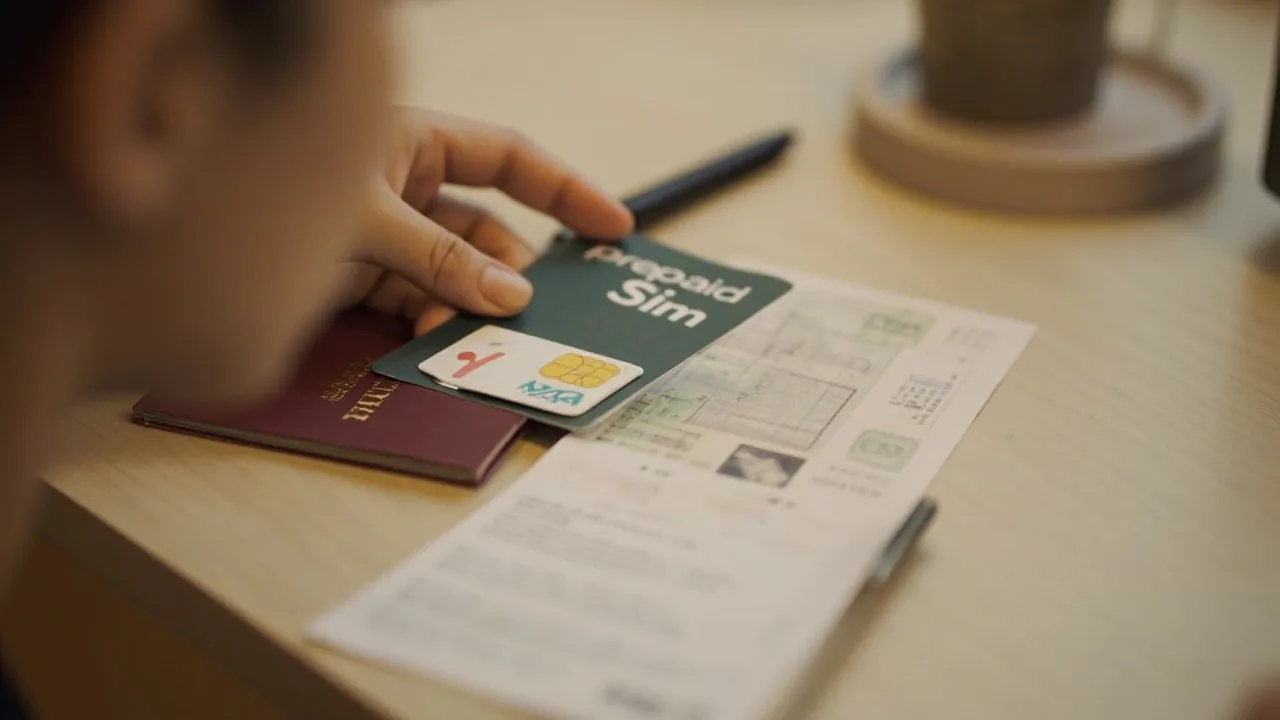
Singapore SIM Card Registration Law: What Indian Travelers Must Know Before Buying
Singapore’s prepaid SIM rules are strict, and the penalties for getting them wrong are some of the heaviest in Southeast Asia. Indian travelers who skip registration, hand over the wrong documents, or buy from unofficial sellers can land in real trouble: SIMs are deactivated, and the law allows fines up to S ₹964,037 (~10,000 USD), with possible jail time on top for serious or repeat misuse. The good news is the actual registration process takes five minutes if you walk in with the right paper. For related planning, see our guide on Sea Backpacking Hub.
This guide is built around the IMDA (Infocomm Media Development Authority) framework that governs every prepaid SIM sold in Singapore, and is cross-checked against Singtel, M1, and StarHub’s current tourist SIM pages as of mid-2026. I’ve also pulled the penalties section directly from the Telecommunications Act (Cap. 323) so the fine figures here match what the statute says. You may also find Singapore Sim Card Expiry How Long Tourist Sims Actually Last What Happens When They Expire useful for this trip.
Quick Answers
| What | Answer | Price (INR) |
|---|---|---|
| Must tourists register a Singapore SIM? | Yes, every prepaid SIM must be registered to a valid passport under IMDA rules. | ₹0 |
| What ID do Indian travelers use? | Passport. NRIC and FIN are for residents. Visitors carry no NRIC/FIN. | ₹0 |
| What’s the registration deadline? | At the point of purchase, in person, before the SIM is activated. No post-buy grace period. | ₹0 |
| What if you skip registration or buy a pre-registered SIM from someone else? | SIM is deactivated; fines up to S ₹964,037 (~10,000 USD) and/or up to 3 years’ jail for misuse-related offences. | ₹0 |
| How much does a 7-day tourist SIM cost? | S ₹1,446 (~15 USD) from Singtel or M1 at Changi, includes ~50GB data. | ₹950 (~$9.85) |
Who This Law Applies To
Every prepaid SIM sold in Singapore, whether tourist, short-term, or local, falls under the same registration framework administered by IMDA. The law was tightened progressively over the last decade, and the current version (the IMDA Notice on Registration of Prepaid SIM Cards) makes registration mandatory at the point of sale. See also: Singapore Sim Cards for Indian Travelers Heya Pelago Starhub 7 Eleven Wifi Options Compared.
For Indian travelers, this means:
- Tourist SIMs (Singtel hi!Tourist, M1 Tourist, StarHub Tourist) all require passport registration.
- Long-stay prepaid plans (12-month and 24-month) require passport registration too.
- Free or promotional SIMs handed out at events still need registration.
- eSIM profiles sold to foreign visitors fall under the same rule when issued by a Singapore telco. For related planning, see our guide on Packing List for Singapore Trip a Backpacker S Complete Guide.
If you are on a Singapore tourist visa (30 days, single entry) and want a local number for the trip, you must register in person with your Indian passport before the SIM activates. The only people who can register with an NRIC or FIN are Singapore citizens, PRs, and long-term pass holders. Tourists do not have either. You may also find Singapore Tourist Gadget Rules Regulations useful for this trip.
What Documents You Need
The official requirement is a valid passport. Specifically, IMDA’s registration form asks for:
- Full name as printed on the passport
- Passport number
- Nationality
- Date of birth
- Address in Singapore (hotel name and address works fine)
- A contact number (your Indian mobile is acceptable)
A few practical notes from the field:
- Your passport must be valid for the duration of your stay in Singapore. There is no widely-cited three-month-extra rule from IMDA itself; that is a general airline boarding requirement, not a telco rule.
- A scanned passport copy on your phone is not accepted. Registration is done at the counter and the staff physically scans or photocopies your passport.
- If you are on a Singapore tourist visa, your visa grant letter is not a substitute. The passport is the primary document.
Subodh’s Pro Tip: Photograph your passport’s bio page and the visa page before you fly. If you lose the passport in Singapore, ICA will reissue you a document called a Document of Identity, but most SIM counters still prefer the original passport. Carry the original every time you buy or top up a SIM.
Where and How to Register
Registration is done at the point of sale by the telco staff. There is no online form to fill from your hotel. The three practical places an Indian backpacker will register:
- Changi Airport kiosks (Singtel, M1, StarHub counters in all terminals). Open during flight hours. Fastest option if you land and want data within 10 minutes.
- Telco stores in the city. Singtel, M1, and StarHub each run flagship stores in Orchard, Bugis, and other malls. Quieter than the airport, same process.
- Authorised resellers, including 7-Eleven, Cheers, and selected Watsons stores. The registration process is identical, but staff may take a few extra minutes to process.
The on-the-ground flow at a Singtel or M1 counter looks like this:
- Pick a tourist SIM (S ₹1,446 (~15 USD) for 7 days, ~50GB data).
- Hand over your passport. Staff scans it.
- You sign a digital registration form on their tablet.
- SIM is activated on the spot.
- You receive an SMS confirmation with your Singapore number.
The whole process takes about 5 to 10 minutes, longer at Changi during a flight bank when queues build.
Subodh’s Pro Tip: Changi’s SIM counters are open from early morning until the last flight, but the queues around 7 to 9 PM (peak arrival window from India via Scoot, Air India, and Singapore Airlines) are the worst. If your flight lands outside that window, walk straight to the counter, you’ll be done in 15 minutes.
The Deadline: When Registration Has to Happen
There is no grace period. The SIM is registered before it is activated, period. IMDA’s rules require that no prepaid SIM can be sold, gifted, or otherwise transferred to an end user without registration being completed at the same moment.
This matters in three specific situations:
- Buying a SIM for a friend. Not allowed. Each person must register their own SIM in person with their own passport.
- Buying a SIM from a market stall or unofficial seller. Risky. If the SIM is already registered to someone else, you are using an unregistered-by-you SIM, which means it can be deactivated and the registered person can face penalties. The sellers themselves have been prosecuted in past enforcement cases.
- Receiving a pre-registered SIM as a gift. The SIM was registered to the giver, not you. If IMDA traces usage to a different person, the registration is treated as invalid and the line is cut.
What Counts as “Misuse” and Why the Fine Is So High
The S $10,000 fine ceiling (and potential jail term) is what makes Singapore’s regime one of the strictest in the region. To understand why, you have to separate two distinct categories of offence:
1. Failure to register, or registering incorrectly
This is the basic compliance offence. If you buy a SIM and the registration is incomplete, false, or never done, IMDA can direct the telco to deactivate the line. The fine here is lower than the misuse ceiling and is usually a compoundable sum payable to the telco or IMDA, plus the SIM gets cut.
For Indian backpackers this is rarely the version of the law that bites. You either register at the counter (zero risk) or you buy from a shady seller (the bigger problem, see below).
2. Misuse of a registered SIM for fraud, scams, or other offences
This is where the S $10,000 / 3 years’ imprisonment ceiling comes from, sitting in Section 9 of the Telecommunications Act. The maximum penalties apply when a SIM is used as an instrument of crime: scam calls, phishing operations, impersonation, or providing a line to someone else for those purposes.
For an Indian tourist, the realistic exposure is narrow but real:
- Buying a “cheap SIM” from a tout at Lucky Plaza or Little India that turns out to be registered to a stranger or a synthetic ID. The SIM may work for a week, then IMDA’s batch screening cuts it. If the original registration was tied to a known scam ring, you may be asked questions.
- Reselling your registered SIM to another traveller for cash. Even at a small markup, this is a registration-transfer offence and the fine scales toward the upper end of the statute.
The headline figure of S ₹964,037 (~10,000 USD) is the maximum on the misuse side of the law, not the typical fine for an honest traveller who forgot their passport at the counter. For ordinary non-compliance (no registration at all when buying from an authorised seller), the de facto outcome is SIM deactivation plus a smaller administrative penalty, not the maximum jail term.
Safety Alert: If a SIM stops working within a few days of purchase, do not assume it is a network glitch. It may have been flagged and deactivated. Walk into any Singtel/M1/StarHub store with your passport, ask for a re-registration check, and they’ll tell you what happened.
Buying From Unofficial Sellers: The Real Risk
Most registration problems for Indian backpackers in Singapore come not from the law itself but from trying to save S ₹289 (~3 USD) to S ₹482 (~5 USD) by buying from unofficial resellers. The pattern is well-documented in Little India and parts of Geylang:
- SIM is pre-registered to a phantom identity or a previous traveller’s passport.
- SIM works for 3 to 14 days, then goes dead when IMDA’s batch audit runs.
- The seller has vanished, and you have no receipt or passport record tied to the purchase.
- The line cannot be re-registered under your passport because it is already registered to someone else.
The legal exposure here is asymmetric: you, as the current holder, can be questioned about possession of an irregularly registered SIM, while the original registrant (often a stranger or a shell identity) is who the regulator wants. Either way, your data is cut off mid-trip.
The fix is mechanical. Buy only from:
- Changi Airport official counters
- Singtel, M1, or StarHub branded stores
- 7-Eleven stores with a visible “Prepaid SIM Registration” sign and a staff member who scans your passport
The price difference is small. A 7-day Singtel hi!Tourist at Changi is S ₹1,446 (~15 USD). The tout at Lucky Plaza might offer S ₹964 (~10 USD). The risk-reward math doesn’t pencil out.
SIM Options That Fit the Law
| Plan | Duration | Data | Where to Buy | Price (SGD) |
|---|---|---|---|---|
| Singtel hi!Tourist | 7 days | ~50GB | Changi, Singtel shops | S ₹1,446 (~15 USD) |
| M1 Tourist SIM | 7 days | ~50GB | Changi, M1 shops | S ₹1,446 (~15 USD) |
| StarHub Tourist SIM | 7 days | ~50GB | Changi, StarHub shops | S ₹1,446 (~15 USD) |
| Singtel hi!Card (12-month) | 365 days | Varies | Singtel shops, 7-Eleven | S ₹964 (~10 USD)-S ₹1,928 (~20 USD) |
| eSIM via Nomad | 7-30 days | 1-20GB | Online, activate on landing | Varies |
For most Indian backpackers on a 3 to 5 day Singapore stopover, the S ₹1,446 (~15 USD) 7-day SIM is the right call. You register once, get a Singapore number for Grab and WhatsApp
Transit Passengers: Do You Still Need to Register?
This is the most-asked variation of the question, and the answer depends on whether you clear immigration.
If you stay airside at Changi on a transit layover and never pass immigration, you do not need a Singapore SIM at all. Changi has free airport WiFi throughout, and the transit areas count as international territory for registration purposes. No SIM, no registration, no issue.
If you clear immigration, even for a few hours (a Changi layover tour, a Quick City Tour, or walking out to meet someone landside), you are in Singapore as a visitor and the registration rule applies if you buy a SIM. The Changi Free Tour and the various paid city tour buses from the airport are designed for this use case and you can buy a SIM at the airport counter as you exit the transit area.
Subodh’s Pro Tip: If your layover is under 6 hours and you don’t need local data, skip the SIM and use airport WiFi. If it’s over 6 hours or you’re doing a city tour, the S ₹1,446 (~15 USD) 7-day SIM is cheaper than any roaming pack from an Indian carrier.
What Happens If Your SIM Gets Cut
If IMDA deactivates your SIM mid-trip (for any reason: failed audit, mismatched registration, suspected fraud), the steps to recover are:
- Visit any Singtel, M1, or StarHub store with your passport.
- Ask for a re-registration check on the number.
- If the line was deactivated for administrative reasons, the staff will tell you whether you can re-register in your name or need a fresh SIM.
- If the line was deactivated for misuse-linked reasons (the registered identity is under investigation), the staff will not be able to help, and you should not push the issue. The matter is now with IMDA or the police.
For honest travellers, outcome 3 is the usual case. A S ₹1,446 (~15 USD) replacement SIM and you’re back online within an hour.
Common Mistakes Indian Travellers Make
| Mistake | What Happens | What to Do Instead |
|---|---|---|
| Buying from a tout at Lucky Plaza | SIM pre-registered to a stranger, deactivated within days | Buy from Changi counters or branded telco stores only |
| Handing passport to a friend to buy a SIM for you | Registration tied to friend’s identity, invalid for your use | Each person registers their own SIM in person |
| Assuming transit means you don’t need to register | Only true if you stay airside. Once you clear immigration, the rule applies. | Skip the SIM entirely if staying airside; buy at airport counter if exiting |
| Trying to use an NRIC or Aadhaar | Not accepted. Foreign visitors must use passport. | Carry your Indian passport every time you top up |
| Photographing the SIM card and thinking that is registration | It is not. Registration is a counter process. | Walk in, scan passport, sign the form |
FAQ
Do I need to register if I buy a SIM at 7-Eleven? Yes. The registration process at 7-Eleven is the same as at a telco store. The staff scans your passport, you sign the form, and the SIM is activated. Some 7-Eleven outlets have longer queues because the staff also handle other tasks.
Can I use my Aadhaar instead of a passport? No. IMDA’s registration framework accepts only a Singapore-issued ID (NRIC, FIN) for residents, and a passport for everyone else. Aadhaar is not on the accepted list.
How long does registration take? Five to ten minutes at a quiet counter. Add another 10 minutes for queue during Changi’s evening rush.
What if my passport is with the Indian High Commission for renewal? You cannot register a SIM without a valid passport. ICA issues a Document of Identity in such cases, but most SIM counters will not accept it. The clean workaround is to use WiFi only until your new passport arrives, or to ask a travel companion to lend you a Singapore hotspot.
Is the S ₹964,037 (~10,000 USD) fine real, or is it just on paper? It is the maximum penalty written into the Telecommunications Act for misuse-related offences. For ordinary non-compliance (no registration at all when buying from an authorised seller), the practical outcome is SIM deactivation plus a smaller administrative compound. For misuse involving scams or fraud, the S $10,000 ceiling and the jail term are real and have been applied in past cases.
Can I top up my SIM after registration without going back to the counter? Yes. Once registered, top-ups can be done online or via the telco app. The in-person registration is a one-time event tied to the original purchase.
What if I lose my SIM during the trip? Visit any telco store with your passport. They can issue a replacement SIM on the same registered number. The original registration stays valid.
Subodh’s Take
Singapore’s SIM registration law is one of those things that sounds intimidating on paper but is frictionless in practice if you do the obvious thing: buy from an authorised counter, hand over your Indian passport, sign the form, walk out with a working SIM in five minutes. The S $10,000 fine ceiling is real and is meant to deter scam operations, not punish a backpacker who forgot their passport. The actual trap for Indian travellers isn’t the law itself, it’s the unofficial sellers offering S ₹482 (~5 USD) cheaper and leaving you with a dead line three days later. Spend the extra ten dollars, register properly, and the whole thing becomes a non-event.
