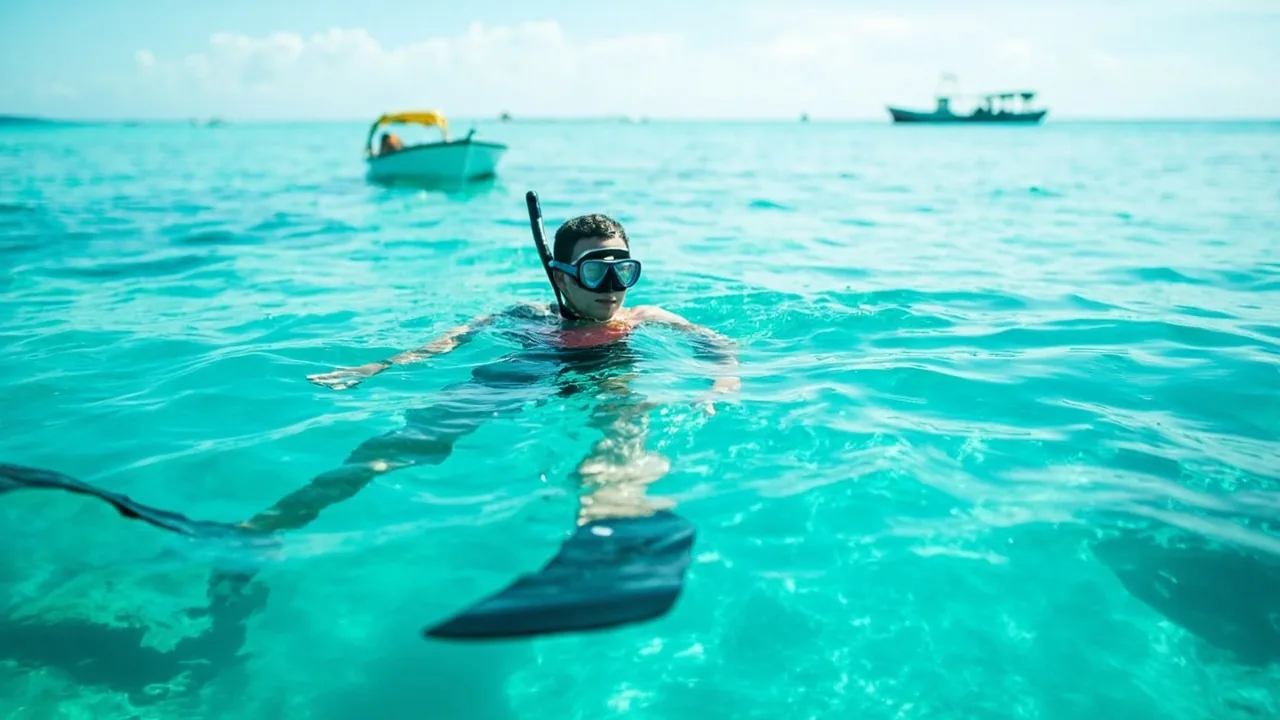
Snorkeling in Cebu: A Backpacker’s Guide to the Best Sea Spots (2026)
Cebu offers world-class snorkeling: the Moalboal sardine run, turtle-filled Balicasag, and quiet house reefs you can swim to for under 200 PHP. Fly into Cebu, then head south to Moalboal or out to Bantayan. See our sea backpacking hub for more across the region.
Quick Answers
| What | Answer | Price (INR) |
|---|---|---|
| Is Cebu good for snorkeling? | Yes, one of the best in the Philippines | , |
| Best area for sea life | Moalboal (sardine run + turtles) | , |
| Cheapest way to snorkel | Shore entry at Panagsama Beach | ₹168 (~100 PHP or ~$1.78) (mask + fins rental) |
| Best island day trip | Balicasag Island from Panglao | ₹2,527 (~1,500 PHP or ~$26.69) (boat + lunch + fees) |
| Best budget base | Moalboal | ₹1,011 (~600 PHP or ~$10.68) dorm bed |
| Best quiet alternative | Bantayan Island | ₹1,179 (~700 PHP or ~$12.46) dorm bed |
| Water temp year-round | 27 to 30°C | , |
| Currency note | 1 PHP ≈ ₹1.81 at current rates (1 USD = ₹96.33) | , |
What Is Snorkeling in Cebu, Actually?
Snorkeling in Cebu refers to the practice of swimming at the surface with a mask, snorkel, and fins along the island’s outer reefs, drop-offs, and shallow lagoons. The activity is distinct from scuba diving because participants remain at the surface and breathe through a simple tube, though Cebu’s clear water (often 15 to 25 metres of visibility) means snorkelers see almost as much as divers in many spots. The island’s geography matters: Cebu sits in the middle of the Visayas, surrounded by smaller islands (Pamilacan, Balicasag, Malapascua) that act as natural breakwaters, which keeps the water calm and the coral healthy. Most backpackers fly into Mactan-Cebu International Airport, then travel by bus or van 3 to 4 hours south to Moalboal, or by ferry 4 hours north to Bantayan.
Where to Stay
You don’t need to book ahead in Moalboal or Bantayan during low season (June to November), but December to May fills up. Book your stay close to the best entry points.
Moalboal is where the action is, Bantayan is the quiet alternative for when you need three days of nothing.
The Best Snorkeling Spots in Cebu
The island’s geography divides cleanly into three zones, each with a different character. Pick based on how much company you want, how deep your wallet is, and whether you care more about sardines, turtles, or solitude.
1. Moalboal Sardine Run (Panagsama Beach)
The single most famous snorkeling in Cebu experience. A wall of sardines the size of a small apartment building hangs just 20 metres off Panagsama Beach, year-round. You walk in from the sand, swim 5 minutes out, and you’re inside it. No boat needed, no fee beyond mask and fin rental.
What it looks like: A dense wall of sardines moving together, parting around you when you swim through, then reforming. Sometimes a sea turtle glides past. Visibility is usually 15 to 20 metres.
Cost: 100 PHP for mask and fin rental from the beach vendors. Boat is not needed. If you want to combine with Pescador Island (a separate reef 30 minutes by bangka boat), the standard tour is 1,200 to 1,500 PHP, including gear.
Best time: Early morning, 6 to 9 AM, before the day-trippers from Cebu City arrive and before the surface chop picks up.
Honest take: The sardines are real and they are spectacular. But Moalboal town itself is just a single dusty road with dive shops and eateries. Two nights is the right amount of time. Five nights and you’ll be climbing the walls.
2. Pescador Island
A 30-minute bangka boat ride from Panagsama Beach, Pescador is a small limestone island with a marine sanctuary on its southwest side. The reef drops to 30 metres, and the wall is covered in soft coral, sea fans, and the kind of reef fish you’d usually need a scuba tank to see.
What it looks like: Clownfish in anemones, parrotfish, occasional turtle. The drop-off starts at 5 metres and goes straight down, which means even snorkelers see the wall descending into blue.
Cost: 1,200 to 1,500 PHP per person for a shared bangka boat tour, including mask, fins, life vest, and a guide. The marine sanctuary fee is 100 PHP. Tours leave at 9 AM and 1 PM from Panagsama Beach.
Best time: Morning. Afternoon tours run, but visibility drops with the afternoon wind.
Honest take: Pescador is better for divers than snorkelers, because the wall goes deeper than you can comfortably free-dive. That said, the shallows on the north side are snorkel-friendly and have healthy coral. If you’ve already done the sardine run, do Pescador as a half-day add-on rather than a dedicated trip.
3. Balicasag Island (from Panglao/Bohol)
Technically Bohol, but most Cebu-based backpackers do this as a day trip from Panglao, which is one ferry away. Balicasag is a tiny island ringed by a marine sanctuary wall that drops to 1,000 metres. The snorkeling is the best in the Visayas for sheer density of marine life.
What it looks like: Jacks, barracuda, clownfish, sea turtles (the guides know which spots), and on lucky days, dolphins on the boat ride over.
Cost: Day trips run 1,500 PHP per person for a shared boat, including marine sanctuary fee, lunch, and three snorkeling stops. Boats leave Alona Beach, Panglao in the morning and return by afternoon.
How to get there: Take a fast ferry from Cebu City to Tagbilaran (1.5 hours), then tricycle to Alona Beach. Check ferry schedules and prices locally.
Honest take: If you only have time for one sea trip in the Visayas, this is it. The downside is the morning itself is a logistical chain, so most people book through their hostel rather than DIY.
4. Bantayan Island
The quiet alternative. Bantayan sits 4 hours by ferry west of Cebu City and sees a fraction of Moalboal’s traffic. The house reef off Santa Fe beach is the main draw: swim out 50 metres and you’re over coral gardens with the same fish you’d see on a paid tour.
What it looks like: Soft coral, parrotfish, the occasional turtle, fewer crowds than anywhere else on this list. Visibility is slightly less than Moalboal (10 to 15 metres), but the water is flat calm almost every day.
Cost: 100 PHP mask and fin rental. 800 to 1,200 PHP for a half-day boat tour to Virgin Island or Hilantagaan.
Best time: Late morning, when the tide is high and the reef comes up to within a metre of the surface.
Honest take: Bantayan is what Moalboal was 15 years ago, before the sardine run went viral. If you want snorkeling without the crowds and you don’t mind a longer bus+ferry journey, this is the move. The town is small, the beaches are white, and the night life is zero.
5. Malapascua Island (Monad Shoal)
Malapascua is famous for thresher sharks at Monad Shoal, but those are a dive-only experience (they hang at 20 to 30 metres). What most backpackers don’t know is that the house reef off the north end of the island has some of the healthiest coral in the Visayas, accessible from shore.
What it looks like: Staghorn coral, anemones with clownfish, moray eels in the cracks, occasional reef sharks in deeper water.
Cost: 100 PHP gear rental, or 1,500 PHP for a full island-hopping tour that includes Gato Island and the lighthouse.
Best time: Early morning. The reef is on the leeward side, so it’s protected from afternoon chop.
Honest take: Malapascua is a long journey (5 to 6 hours from Cebu City via Maya Port ferry), and most of the island’s marketing is aimed at scuba divers. But the shore snorkeling is genuinely good, and if you’re already there for the atmosphere (it has a castaway feel), spend at least two nights.
6. Sumilon Island Sandbar
A tiny island off the southern tip of Cebu, Sumilon has a shifting white-sand sandbar and a marine sanctuary lagoon. The snorkeling is decent, not exceptional, but the photos you’ll take here are some of the best in the country.
What it looks like: The sandbar moves with the tide, so what you see today may not be there tomorrow. The lagoon side has coral and reef fish in 2 to 4 metres of water.
Cost: Day trips from Oslob run 2,500 to 3,000 PHP including boat, lunch, and entrance. Check with local operators for current pricing.
Honest take: Sumilon on its own is fine; the lagoon is pretty, but you can find similar water on Bantayan for a quarter of the cost. The area is also known for whale shark interactions, though the practice is increasingly criticized by marine biologists.
Step-by-Step: How to Plan Snorkeling in Cebu
This is the order I’d do it in if I had 7 nights and were flying in from India with no Philippine experience.
Step 1: Fly into Cebu. Mactan-Cebu International Airport has direct flights from Manila, Singapore, Kuala Lumpur, and a few Indian connections via Kuala Lumpur. From the airport, Grab or MyAirportRide to your hotel runs 250 to 400 PHP.
Step 2: One night in Cebu City, then move south. Spend one night in Cebu City to shake off the flight. Walk Colon Street, eat at a local barbecue stall, then catch the next morning bus to Moalboal (3.5 hours, around 180 PHP). Don’t base yourself in Cebu City for the snorkeling, you’ll waste two days each way.
Step 3: Two to three nights in Moalboal. Do the sardine run on day one, Pescador Island on day two, rest day three. Accommodation runs 600 to 800 PHP per night for a dorm. Food is cheap: chicken inasal with rice is 120 to 180 PHP at most carinderias.
Step 4: Optional side trip to Panglao/Bohol. Ferry from Cebu City to Tagbilaran (1.5 hours, 800 PHP), one night in Panglao, Balicasag Island day trip, overnight in Panglao, ferry back to Cebu City. Add 3 days and 4,000 PHP.
Step 5: Optional side trip to Bantayan. Bus to Hagnaya Port (4 hours, 220 PHP), ferry to Bantayan (1 hour, 200 PHP), two nights, ferry back, bus to Cebu City. Add 2 days and 2,500 PHP.
Total time: 5 to 9 days depending on side trips. Total cost (excluding flights): Around 8,000 to 15,000 PHP (₹14,500 (~$150.41) to ₹27,200 (~$282.15)). See our Philippines travel guide for more on budgeting and logistics.
Subodh’s Pro Tip: Don’t book a “Cebu island hopping” tour from a Cebu City operator. Those tours bus you 3 hours to Moalboal, give you 90 minutes in the water, then bus you back. Stay in Moalboal instead and do the sardine run at sunrise when the water is flat and the day-trippers haven’t arrived.
Common Mistakes Indians Make in Cebu
Mistake 1: Booking a Moalboal day tour from Cebu City. Most Cebu-based operators sell “Moalboal + Kawasan Falls” day tours for 2,500 to 3,500 PHP. These leave at 5 AM and return at 8 PM. You get 90 minutes of snorkeling. Stay in Moalboal instead, you’ll get the same sardine run at 7 AM with zero time pressure.
Mistake 2: Bringing reef-safe sunscreen from India. The Philippines bans certain sunscreen chemicals (oxybenzone, octinoxate) in marine sanctuaries, but enforcement is patchy. Most backpackers don’t get checked. However, the bigger issue is that reef-safe sunscreen bought in India is hard to find; just buy a coral-safe brand (Badger, Stream2Sea, or local brands like Human Nature) once you’re in Cebu, around 350 to 500 PHP.
Mistake 3: Skipping a rash guard. The Philippine sun is closer to the equator than most of Southeast Asia, and you’ll burn in 30 minutes in shallow water. A long-sleeve rash guard (400 to 700 PHP at any local surf shop) is the single best thing you can pack.
Mistake 4: Paying for “marine sanctuary fees” in cash to a guide. The official fee is 100 PHP. Some guides pocket the difference. Always ask to see the receipt, or pay at the official booth before entering the water.
Mistake 5: Confusing Moalboal with Mactan. Mactan Island (where the airport is) has some snorkeling, mostly resort-based house reefs. It’s fine for a half-day if you’re stuck there for a flight, but it doesn’t compare to Moalboal or Bantayan. Don’t waste a full day of your trip on Mactan snorkeling.
What Most Guides Don’t Tell You
The sardine run is artificially maintained. The Moalboal sardines have been there for decades, but their density (and their staying right next to Panagsama Beach) is partly because local dive shops have stopped spearfishing in the area. If spearfishing returns, the sardines move deeper. This is worth knowing because in 2025 and 2026, traveller reports suggest the wall is slightly smaller than it was in 2022, but it’s still impressive.
Pescador Island closes randomly for “weather”. When the southwest monsoon picks up in July to September, bangka boats don’t run to Pescador. Book it for your first morning, not your last morning, so you have a backup day if it’s cancelled.
Balicasag has visitor limits. Panglao operators may limit boats to Balicasag Island to reduce reef damage. Book through your hostel at least one day ahead, especially in high season (December to May).
Bantayan ferries stop in heavy weather. Bantayan is exposed to the open Sibuyan Sea, and the Hagnaya to Santa Fe ferry has been known to cancel runs during typhoon warnings (August to October). Have a backup night booked in Cebu City.
Safety Alert: The Philippine MEA equivalent advisories flag Mindanao and the Sulu Archipelago (south Philippines) as higher risk, but Cebu and the Visayas are listed as generally safe for tourism. Check the Indian Ministry of External Affairs travel advisory page (mea.gov.in) before booking flights, especially during typhoon season (June to November). For day-to-day safety, Cebu City has standard urban crime (pickpockets around Colon Street, bag-snatching on jeepneys at night), so use a crossbody bag with a zip and don’t flash your phone in traffic.
Getting Connected
Globe and Smart both sell tourist SIMs at Mactan-Cebu International Airport for 300 to 500 PHP with 8 to 12 GB valid for 7 days. Signal is excellent in Moalboal and Bantayan, weak on Pescador and Balicasag (you’ll get 3G at best). For a data-only alternative you can activate before you fly, Get Nomad eSIM works in the Philippines and gives you 5 GB for around ₹868 (~9 USD).
What to Eat
Cebu’s food scene is mostly local (Visayan) and Korean-influenced (the Korean expat community is large), with little specifically vegetarian Indian food outside Cebu City.
- Open-air barbecue near Fuente Osmeña (Cebu City): Local barbecue street. Chicken inasal, pork skewers, garlic rice, ₱50 to ₱120 per stick.
- Bell+Amadeus (Cebu City): Fusion restaurant offering creative dishes, good for a non-Filipino meal when you’re homesick for variety. Around 350 to 600 PHP per dish.
- 7107 Restaurant - Cebu City: Casual Filipino dining. Try the sinigang (sour soup) or kare-kare (peanut stew). Around 200 to 350 PHP per meal.
- The New White Gold House Rest: Budget-friendly local spot, good for a quick plate of rice and meat. Around 80 to 150 PHP per meal.
- Herbs & Cellar: Upscale European food if you want a splurge night. Expect 800 to 1,500 PHP per person.
Subodh’s Pro Tip: Vegetarian travelers will struggle outside Cebu City. Most Moalboal and Bantayan restaurants serve pork, chicken, or fish as the main. Stock up on fruit and nuts at 7-Eleven, and ask carinderias if they can do a “vegetable only” version of their rice meals. It’s not perfect, but it’s possible.
When to Go
Cebu has three rough seasons for snorkeling:
- December to May (dry season, high season): Best visibility (20+ metres), calmest water, most tourists. Moalboal fills up. Book hostels ahead.
- June to November (wet season, low season): Occasional typhoons, afternoon rain, but mostly sunny mornings. Water visibility drops to 10 to 15 metres. The sardine run still happens, and you’ll have Panagsama Beach mostly to yourself.
- Shoulder months (late May, early December): The sweet spot for backpackers who want high-season water with low-season prices.
If you’re flying from India, December and January are the most expensive months for flights. February to April and September to November are cheaper on average by around 30%.
FAQ
Is Cebu or Palawan better for snorkeling? Palawan (El Nido, Coron) has more dramatic limestone cliffs and clearer water, but it’s also twice as expensive and harder to reach. Cebu is the better value pick. If you want the absolute best sea for snorkeling in the Philippines and have the budget, combine both.
Do I need scuba certification to see the best spots? No. The sardine run, Bantayan house reef, and Malapascua north end are all snorkel-friendly. Pescador and Balicasag are technically better for divers because of the depth, but snorkelers still see plenty.
Is it safe to swim with whale sharks in Oslob? The Oslob whale shark interaction has been criticized by marine biologists because the sharks are fed to keep them near the boats. The practice is legal but ethically debated. If you go, stay 4 metres away, don’t touch them, don’t wear sunscreen.
Can I drink the tap water in Cebu? No. Bottled water is 20 to 30 PHP for 1 litre from any sari-sari store. Refill bottles are fine if you boil or filter.
What currency should I bring? PHP (Philippine Peso). Carry cash from Manila or change USD or EUR at Cebu airport (rates are bad, around 5 to 8% spread) or use a forex card like Niyo or Fi to withdraw PHP from any BancNet or BPI ATM. For more on cards, see our best forex card for India guide and Philippines visa guide.
How much should I budget per day in Cebu? A backpacker can survive on 1,500 to 2,500 PHP per day (₹2,700 (~$28.01) to ₹4,500 (~$46.68)) including hostel, food, and one paid activity. See our Southeast Asia trip cost guide for the regional picture.
What should I pack? Rash guard, reef-safe sunscreen, dry bag, and your own mask if you wear glasses. See our Southeast Asia packing list for the full kit.
Subodh’s Take
Cebu is the best sea for snorkeling in the Philippines for backpackers who care about value and accessibility, not postcard views. The sardine run alone justifies the flight, and Bantayan is the kind of quiet island you’d never find if you only read guidebooks that push Palawan. Spend three nights in Moalboal, two in Bantayan, skip the whale sharks, and you’ll come home with the best underwater photos of your trip.
