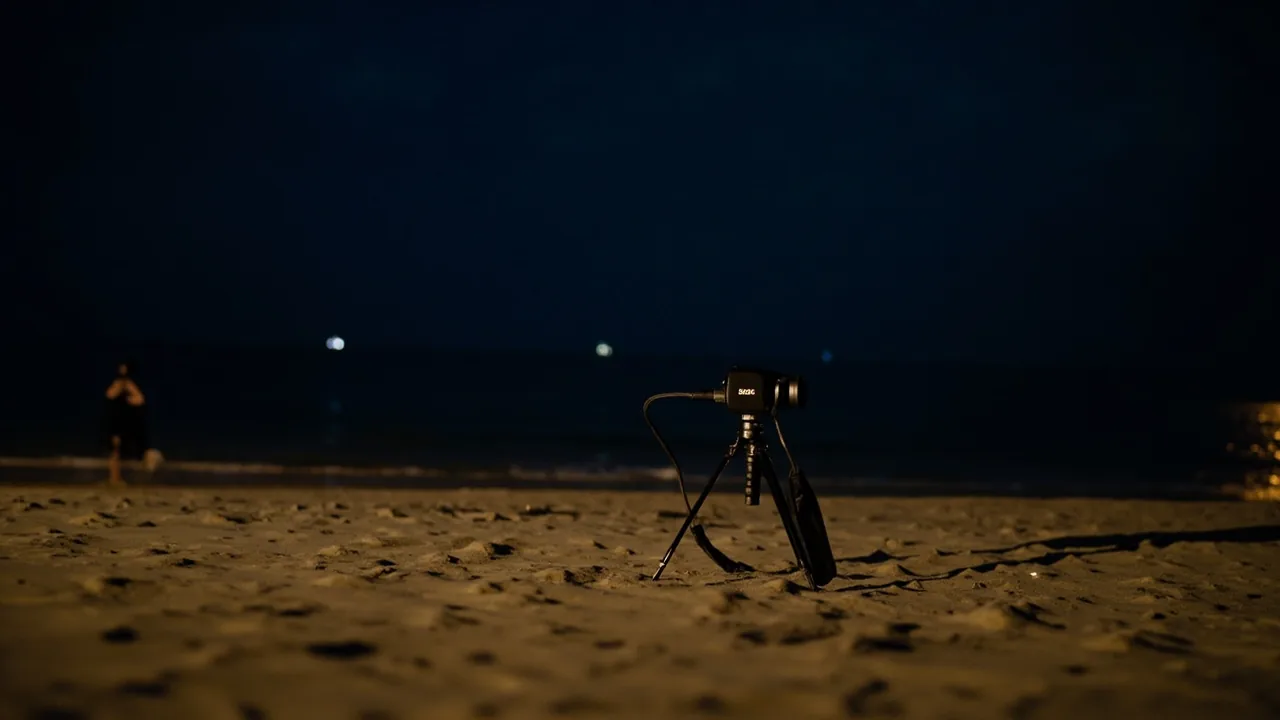
Southeast Asia Night Photography: Settings & Tips for Stunning Shots
Southeast Asia after dark is a photographer’s playground: neon tuk-tuk queues in Bangkok, lantern-lit rivers in Hoi An, incense smoke curling around temple spires in Luang Prabang, and street-food vendors whose wok flames light up entire alleyways. The trade-off is harsh: humidity, crowds with phones in your face, and light sources that range from warm tungsten to cold LED to that sodium-vapour orange that ruins white balance if you don’t fix it. This guide covers the camera settings, gear, and composition choices that work across the region, whether you’re shooting handheld at a 7-Eleven stall or running a tripod on a temple causeway at midnight. For related planning, see our guides on Sea Backpacking Hub and Bangkok Rooftop Bars Budget Cocktail Prices Guide.
Quick Answers
| What | Answer | Price (INR) |
|---|---|---|
| Best ISO range for handheld street night shots | ISO 1600 to 6400 on modern mirrorless or APS-C, accept noise over motion blur | ₹0 (gear you already own) |
| Minimum tripod weight for temple causeways and beach sand | 1.5 kg aluminium tripod with a hook for hanging your backpack | ₹1,500 (~$15.57) to ₹4,000 (~$41.52) |
| Best shutter speed for handheld (no IBIS, no OIS) | 1/30s at f/1.8, ISO 3200, on a 35mm equivalent lens | ₹0 (gear you already own) |
| Aperture sweet spot for cityscapes | f/8 to f/11 on tripod, f/1.8 to f/2.8 handheld | ₹0 (gear you already own) |
| Raw vs JPEG for night work | Always raw; you’ll be lifting shadows 2 to 3 stops in post | ₹0 (storage cost only) |
All photography gear prices above are from shops in Bangkok’s Pantip Plaza or online Thai vendors like Banggood/Shopee Thailand at typical backpacker price points. Rates below quoted as 1 THB = ₹2.87, 1 VND = ₹0.0037, 1 IDR = ₹0.0054, 1 USD = ₹96.53, 1 SGD = ₹74.76, 1 KHR = ₹0.024, 1 LAK = ₹0.0043, 1 MYR = ₹23.59. You may also find Lombok Nightlife Guide Where to Go After Dark in Kuta Mataram the Gili Islands useful for this trip.
The Night-Photography Scene Across Southeast Asia
The region gives you four distinct low-light situations, and each one wants different settings: See also: Boracay Nightlife Guide Party Street Bars Late Night Clubs.
Neon cityscapes (Bangkok’s Sukhumvit, Singapore’s Orchard Road, Kuala Lumpur’s Bukit Bintang). Bright, multi-coloured, full of moving vehicles and pedestrians. You can often get away with handheld at 1/60s if your lens opens to f/1.8, but a tripod lets you drop ISO to 400 and clean up the noise floor. For related planning, see our guide on Palawan Nightlife Where to Drink Dance and Stay Out Late.
Temple and pagoda scenes (Angkor Wat at sunrise-blue hour, Bagan pagodas in Myanmar, Borobudur in Java). Lower ambient light than cities, but tripods are usually permitted outside prayer hours. Watch for tripods being banned inside temple compounds in Thailand and Bali; you’ll need to shoot from the perimeter with a telephoto.
Markets and street food (Chiang Mai’s Sunday Walking Street, Hoi An’s riverside lanterns, Pham Ngu Lao in Ho Chi Minh City). Mixed lighting, lots of steam and smoke, vendors who won’t hold still for you. Fast primes (f/1.4 or f/1.8) are gold here.
Beach and island nights (Koh Tao, Koh Phangan, the Perhentians, Gili Islands). Almost no light except moon and stars. Long exposures, high ISO, or astrophotography mode on modern phones.
Quick Camera Settings for Common Situations
These are the settings I’d dial in, by situation, before I leave the hostel:
Handheld street scenes (no tripod)
- Mode: Manual, or Shutter Priority with Auto ISO
- Aperture: Widest your lens allows, f/1.8 or f/1.4 if you have it
- Shutter speed: 1/60s minimum on a 35mm full-frame, 1/125s on APS-C or Micro Four Thirds
- ISO: Auto, ceiling at 6400. Modern sensors handle this fine
- White balance: Auto, or fixed at 3200K to warm up the scene
- Focus: Back-button autofocus, single point on the brightest sign or face
Tripod cityscape or temple shot
- Mode: Manual
- Aperture: f/8 to f/11 for cityscapes, f/5.6 for temple interiors with available light
- Shutter speed: 1 to 15 seconds, depending on how much light
- ISO: 100 to 400 (don’t go higher on a tripod, the noise floor shows up)
- White balance: 4000K tungsten or shoot raw and fix in post
- Self-timer: 2-second delay or remote release, never the shutter button at long exposures
Astrophotography on a beach (no moon)
- Mode: Manual
- Aperture: f/2.8 or wider
- Shutter speed: 15 to 25 seconds (the 500-rule for full-frame: 500 ÷ focal length = max seconds before star trails)
- ISO: 3200 to 6400
- Focus: Manual focus, live-view magnified on a bright star, then tape the focus ring
- Tripod: Required, with a hook for hanging your daypack under the centre column for stability
Gear That Matters
You don’t need much, but the few items you do need make or break the trip.
A fast prime lens. A 35mm f/1.8 or 50mm f/1.8 is the single best night-photography investment you can make. Prices for budget primes across the region: a Yongnuo 35mm f/2 in Bangkok runs ₹10,006 (~3,500 THB or ~$103.86) to ₹12,865 (~4,500 THB or ~$133.54), a Canon 50mm f/1.8 STM runs ₹11,150 (~3,900 THB or ~$115.73) to ₹14,009 (~4,900 THB or ~$145.41). In Vietnam you can find the same lenses in Hanoi’s photography shops on Pho Hang Bong for around ₹9,180 (~2,500,000 VND or ~$95.29) to ₹11,750 (~3,200,000 VND or ~$121.97). Singapore’s Sim Lim Square and Malaysia’s Low Yat Plaza stock them too, usually 10% over Thai prices.
A solid tripod. Aluminium over carbon fibre for backpackers, because you can replace an aluminium leg cheaply when the Grab driver runs over it. A good 1.5 kg tripod with a hook runs ₹4,288 (~1,500 THB or ~$44.51) to ₹11,436 (~4,000 THB or ~$118.70) at Bangkok’s Pantip Plaza. Don’t bother with plastic travel tripods, they wobble in the slightest breeze and you’ll throw sharp shots away.
A remote shutter or intervalometer. A ₹286 (~100 THB or ~$2.97) wired remote works fine. If you don’t have one, the camera’s 2-second self-timer does the same job for tripod work.
A headlamp with a red mode. Red light preserves your night vision and won’t spook temple guards or night-market vendors. A Black Diamond Astro runs ₹3,431 (~1,200 THB or ~$35.61) in Bangkok, or ₹1,001 (~350 THB or ~$10.39) for a generic version on Lazada.
A microfiber cloth and a rocket blower. Humidity here is brutal. You’ll be wiping the front element every 10 minutes at coastal locations. A rocket blower is ₹429 (~150 THB or ~$4.45) at any camera shop.
Composition Tips That Work in Crowds
Composition matters more than gear in this region. You can shoot a clean night cityscape with a phone if you know where to stand; you can ruin a ₹289,017 (~3,000 USD) Sony with bad composition.
Frame around the light source, not at it. Neon signs in Bangkok and Ho Chi Minh City are 10 stops brighter than the people under them. Point your meter at the face, then recompose. If you don’t, the sign blows out to pure white and your subject is in silhouette.
Use leading lines. Bangkok’s Sukhumvit has long, straight roads with overhead wires that all converge on the BTS station. Hoi An’s lantern-lit river has bridges that lead the eye into the frame. Singapore’s Helix Bridge curves into Marina Bay. Position yourself so the lines point at your subject.
Wait for the human moment. Night markets and temple entrances have people moving through them constantly. The trick is to wait 30 seconds and shoot the moment a vendor looks up, a monk walks through incense smoke, or a scooter passes through a light beam. One clean frame beats 50 cluttered ones.
Include scale. A 30-second exposure of Wat Arun’s spires with a single long-tail boat in front gives the viewer a sense of place. A 30-second exposure with no foreground element just looks like an empty postcard.
Shoot in blue hour, not full dark. The 20 minutes after sunset (the technical twilight) gives you the best balance: sky still has colour, building lights are on, signs are bright but not yet blown out. Set an alarm for sunset minus 30 minutes and be on location by then.
Managing the Region’s Trickiest Lighting Problems
Mixed colour temperature
A street-food stall with tungsten bulbs next to an LED phone screen next to a fluorescent tube. Auto white balance will give you a sickly yellow-green cast. Solution: shoot raw and pick a fixed Kelvin temperature in post (4500K works for most SEA markets). If you’re a JPEG shooter, set the white balance to “Tungsten” (3200K) to cool the scene and accept some warmth in the tungsten lights.
Steam and smoke
Hoi An’s riverside cooking, Vietnam’s noodle stalls, Balinese incense, Lao temple offerings. Steam reflects light from signs and creates ugly hot spots. Solution: shoot from the side, not directly into the steam cloud, and use a lens hood to cut stray flare. A circular polarizer helps if you can find one in your bag size.
Crowds blocking the shot
Wat Pho at night, Shibuya-style crossings in Bangkok, the lanterns in Hoi An on full-moon nights. Solution: arrive at 6am or wait until 11pm. The famous shots from these places are made at odd hours because the crowds are gone. If you can’t avoid people, embrace them: a single silhouette against bright neon is a stronger frame than a clean empty alley.
Vibration on bridges
Long-exposure shots on bridges and bamboo walkways will pick up footstep vibrations and turn your shot to mush. Solution: shoot handheld at higher ISO, or wait for the foot traffic to die down (last ferry at midnight, etc.).
Tripod bans
Temple compounds in Thailand (Wat Pho, Wat Phra Kaew), Bali (Tanah Lot, Uluwatu), and most mosques in Malaysia and Indonesia ban tripods inside the inner sanctum. Solutions: shoot from outside the gate with a telephoto (70-200mm works), get written permission from the head monk in advance (rare but possible for paying customers), or shoot handheld at f/1.4 and 1/125s.
Getting Connected
For night photography you don’t strictly need data, but having it lets you check star charts (Stellarium app), check opening hours of temples that might be lit at night, and call a Grab back to your hostel if you’re stuck in a dark alley. A local physical SIM is still the cheapest option for most of SEA, with tourist packages at airport counters. The single fastest alternative is an eSIM you activate before you fly: Get Nomad eSIM.
Safety and Etiquette for Night Shooters
Don’t block traffic for a shot. Bangkok sois, Hanoi’s Old Quarter, and Phnom Penh’s riverside all have narrow lanes where stopping in the middle to set up a tripod causes a 10-minute backup and angry locals. Stay on the pavement, shoot from the kerb.
Ask before photographing people. This isn’t Europe. Pointing a camera at a vendor’s face without asking is rude, and in some places (especially in Bali and conservative parts of Malaysia) can lead to a confrontation. Smile, gesture at the camera, wait for the nod, then shoot.
Don’t use flash at temples. It disturbs worshippers and pisses off the monks. Available light only, or skip the shot.
Watch your gear in crowds. A scooter-mounted snatch-and-grab in Ho Chi Minh City or Phnom Penh takes your camera strap and your shoulder with it. Use a wrist strap, not a neck strap, in dense crowds, and walk on the inside of the pavement away from the road.
Check local advisories. Some border regions and certain districts in larger cities have periodic advisories worth knowing about before you go out shooting at night. Check the Indian MEA travel advisory page and the destination country’s own advisory site before you travel.
Common Mistakes Backpackers Make
Buying a cheap tripod. Every backpacker regrets the ₹2,287 (~800 THB or ~$23.74) plastic tripod by day three. Spend ₹7,147 (~2,500 THB or ~$74.19) minimum on a name-brand aluminium tripod (Manfrotto, Sirui, or Benro) and it will last you ten years of trips.
Leaving ISO on Auto with no ceiling. Auto ISO in low light will push to 12,800 and 25,600, where your shots are unusable mush. Set an ISO ceiling of 6400 for handheld, 800 for tripod.
Shooting JPEG only. You’ll blow highlights on neon signs and lose shadow detail in temple interiors. Raw gives you 2 to 3 stops of recovery in post. If your camera has raw, use it. Storage is cheap.
Skipping the white balance step. Sodium-vapour street lamps turn everything orange. Tungsten bulbs make it yellow. Mixed sources make it green. One click on a custom Kelvin setting saves an hour in Lightroom.
Walking around with the camera dangling. In dense markets, a camera around your neck is a target. Use a wrist strap, keep the lens cap on until you’re ready, and put it back in the bag between shots.
Using a long shutter handheld. Anything slower than 1/60s on a 35mm full-frame (or 1/125s on APS-C) will show handshake blur. Brace the camera against a wall, a pole, or your own knee and shoot at 1/30s if you have to go slow.
Best Spots by Country (with settings notes)
Bangkok, Thailand. Sukhumvit sois after 9pm for neon. Lumphini Park at twilight for the lake and city lights behind. Chinatown (Yaowarat) on Sunday for the Walking Market. Settings: handheld at f/1.8, 1/60s, ISO 1600.
Hoi An, Vietnam. Lanterns along the riverside from 6pm onwards, when the lights come on. Long exposures on a tripod across the river work beautifully. Settings: tripod, f/11, 8 to 15 seconds, ISO 100.
Luang Prabang, Laos. The night market on the main street is lit by red lanterns, atmospheric. Wat Xieng Thong at night with available light from the temple’s own lamps. Settings: tripod if allowed, otherwise f/1.8 handheld at high ISO.
Siem Reap, Cambodia. Pub Street is the neon hub. Angkor Wat for sunrise-blue hour (you’ll need a guided entry pass for pre-dawn, around ₹1,927 (~20 USD) / ₹1,930 (~$20.03)). Settings: tripod, f/11, 30 seconds for the temple reflection pools.
Singapore. Marina Bay for the skyline from the Esplanade Bridge (tripod allowed, crowded at sunset). Gardens by the Bay Supertree light show at 7:45pm and 8:45pm. Settings: tripod mandatory at f/11, 4 to 8 seconds.
Bali, Indonesia. Tanah Lot temple at sunset from the cliff path. Uluwatu Kecak dance at sunset (no flash, no tripod). Ubud’s main street in the evening when the warungs light up. Settings: handheld at f/1.8 for the dance, tripod from outside Tanah Lot.
George Town, Penang, Malaysia. Armenian Street at night, blue hour over the heritage shophouses. Settings: tripod on the street, 4 to 10 seconds, ISO 200.
Night Photography Gear Packing List
A practical list for a 2-week trip with photography as a focus:
- Camera body (mirrorless or DSLR)
- One fast prime (35mm f/1.8 or 50mm f/1.8)
- One wide zoom (16-35mm or kit 18-55mm) for cityscapes
- Tripod (1.5 kg aluminium, max 50 cm folded)
- Remote shutter (wired, ₹286 (~100 THB or ~$2.97))
- 2 extra batteries (cold night air and live-view drain them fast)
- 3 SD cards, 64 GB each
- Microfiber cloths x3
- Rocket blower
- Headlamp with red mode
- Lens hood for each lens
- Small notebook for logging your settings (you’ll thank yourself later)
Quick Settings Cheat Sheet (print this)
| Situation | Aperture | Shutter | ISO | Notes |
|---|---|---|---|---|
| Neon street handheld | f/1.8 | 1/60s | 1600 | Back-button focus on brightest sign |
| Temple on tripod | f/8 | 8s | 100 | Self-timer, no wind |
| Food vendor handheld | f/2.8 | 1/125s | 3200 | Wait for the wok flame |
| Beach stars | f/2.8 | 20s | 3200 | Tape focus ring, no moon |
| Blue hour cityscape | f/11 | 4s | 200 | Tripod on solid ground |
| Indoor museum | f/1.8 | 1/30s | 6400 | Lean against wall for stability |
Subodh’s Take
Night photography in Southeast Asia rewards the patient and punishes the lazy. The guy who shows up at Hoi An’s river at 5pm with a tripod, shoots blue hour for 30 minutes, then stays for the lantern glow will walk away with a better frame than the guy who arrives at 8pm with a phone and shoots into the light. The single biggest upgrade you can make is buying a fast prime lens and learning to use it. The second biggest is using a tripod without being embarrassed about it. The third is shooting raw, every time, no exceptions.
FAQ
Is night photography safe in Southeast Asia?
Generally yes in tourist zones, but use common sense. Bangkok’s Khao San Road, Ho Chi Minh’s District 1, and Phnom Penh’s riverside are all fine with a camera. Avoid walking alone with gear in side alleys after midnight, especially in Pattaya and parts of Manila. Keep your camera in a bag when not shooting.
Do I need a tripod for night photography?
For shutter speeds slower than 1/60s, yes. For everything else, handheld at f/1.8 works fine. A 1.5 kg tripod is the sweet spot for backpackers, light enough to carry daily, heavy enough to stabilise a 24mm lens at 10 seconds.
Can I shoot night photography with a phone?
Modern phones (iPhone 14 Pro and later, Pixel 7 and later, Samsung S22 Ultra and later) have a dedicated night mode that produces decent 3 to 5 second exposures handheld. Useful for casual shots, but you lose control over aperture and white balance. For anything you want to print or post-process, a real camera still wins.
What’s the best lens for night photography in SEA?
A 35mm f/1.8 or 50mm f/1.8 on full-frame, or a 23mm f/1.4 / 25mm f/1.8 on APS-C. The wide aperture lets in enough light for handheld street shots at ISO 3200 without flash.
Are there photography permits needed for temples?
Most temples don’t require permits for personal photography outside prayer hours. Borobudur in Indonesia charges a small tripod permit (around ₹269 (~50,000 IDR or ~$2.79) / ₹270 (~$2.80)), and some Thai temple inner sanctums ban tripods entirely. Check at the gate.
How do I avoid getting my camera stolen?
Wrist strap, not neck strap. Keep the lens cap on in crowds. Don’t change lenses on the street, do it inside your hostel. Don’t put the camera down to check your phone, even for a second. In scooter-heavy cities, walk on the inside of the pavement away from the road.
