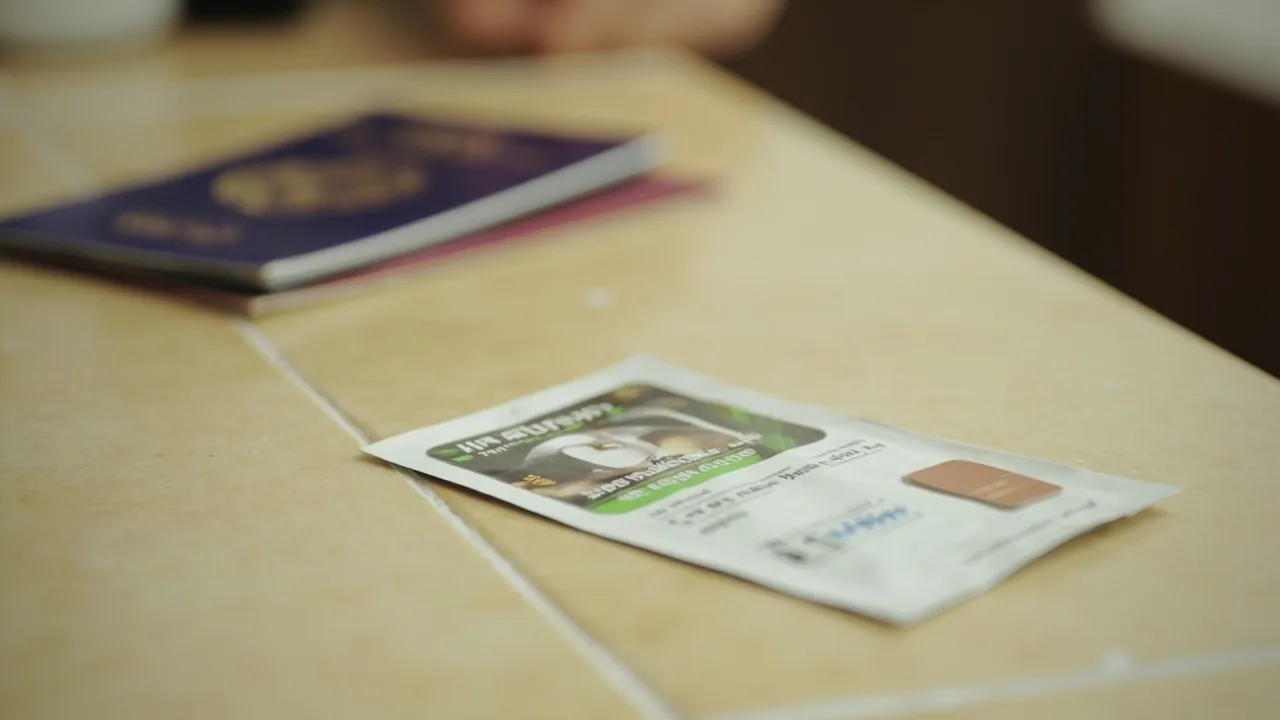
Southeast Asia SIM Card Setup: Which Network to Pick in Thailand, Vietnam & Beyond
Connectivity is the first thing to sort out after landing in Bangkok, Ho Chi Minh, or Phnom Penh. Grab needs a working number, Google Maps will eat 200 MB on your first hour, and your parents want a WhatsApp confirmation that you have not died in a tuk-tuk. This guide covers the real prices and networks Indian backpackers use across Thailand, Vietnam, Cambodia, and Laos, and the honest answer to the question everyone asks: do you need a different SIM in every country? For related planning, see our guides on Sea Backpacking Hub and Best Sim Esim for Thailand From India Data Upi and What Actually Works.
Quick Answers
| What | Answer | Price (INR) |
|---|---|---|
| Cheapest Thailand tourist SIM (7-Eleven, 8 days, 15 GB) | AIS traveller SIM, ₹855 (~299 THB or ~$8.87) | ~₹860 (~$8.93) |
| Best Vietnam tourist SIM on arrival (Viettel, 30 days, 3 GB/day) | ₹734 (~200,000 VND or ~$7.62) at airport kiosk | ~₹740 (~$7.68) |
| Cambodia Smart tourist SIM (5 days, 5 GB + calls) | ₹482 (~5 USD) at airport or ₹385 (~4 USD) in town | ~₹480 (~$4.98) |
| Do I need a separate SIM per country? | Yes, for the cheapest price | Cost varies |
| Does India roaming work in SEA? | Yes, but data costs ₹15-50/MB on most plans | Not worth it |
The Real Question: One SIM or Four?
Let me settle this first because every backpacker asks it on day one. There are three real options, and the answer depends on your trip length. You may also find Currency Exchange Tips in Southeast Asia Best Rates Safe Spots and Common Scams useful for this trip.
Buy one SIM per country. This is the cheapest and what locals do. A fresh tourist SIM at the airport in each country costs ₹385-₹674 (~4-7 USD) for 5-8 days of generous data. You will buy 3-4 SIMs on a month-long Thailand-Vietnam-Cambodia loop. Each SIM takes five minutes to activate with your passport, and you throw it away when you cross the border.
Buy a regional eSIM (Airalo, Nomad, Holafly). One QR code covers 4-10 countries, no physical swap, no airport queue. The catch: data costs roughly double what a local tourist SIM costs. A 5 GB, 30-day Airalo “Asia” plan is around ₹1,734 (~18 USD), versus ₹385-₹674 (~4-7 USD) for local SIMs totalling ₹1,541-₹2,697 (~16-28 USD) for four countries. If convenience matters more than saving ₹963 (~10 USD), this is the play.
Keep your Indian SIM active with international roaming. Airtel and Jio both offer $3-5/day packs for SEA. The math is brutal: 5 days roaming is ₹2,408 (~25 USD), more than your entire local SIM budget for the trip. Roaming is for emergencies and one-day stopovers, not a multi-week loop.
For most Indian backpackers doing 3-4 countries in 3-4 weeks, the cheapest path is a mix: local SIMs in Thailand and Vietnam (where airport deals are excellent), and one regional eSIM that covers Cambodia and Laos to skip the SIM-swap ritual in smaller airports. Get Nomad eSIM for a multi-country plan before you fly.
Thailand: AIS vs dtac vs TrueMove
Three networks cover 99% of Thailand: AIS, dtac (now merged with True under a single group but sold separately), and TrueMove. AIS is the biggest, has the best 4G/5G coverage outside Bangkok, and the cleanest tourist SIM packages. Dtac is cheaper in cities but patchy on the islands.
The standard backpacker move: walk past the airport AIS counter with its ₹1,712 (~599 THB or ~$17.78) “premium tourist” SIM and instead buy the same plan at any 7-Eleven for ₹855 (~299 THB or ~$8.87). You get 8 days of unlimited data at reduced speeds after 15 GB, plus 100 baht of call credit. Same SKU, no airport markup. The whole process takes two minutes: hand over your passport, the staff scans it, you sign a digital form, the SIM pops out, you pop it in your phone. Done.
On Phuket and Koh Samui, coverage is fine on AIS but dtac drops to 3G in some beach areas. If you are island-hopping, AIS is the safer bet. On the mainland, both work everywhere tourists go.
Subodh’s Pro Tip: Buy the SIM at a 7-Eleven, not the airport, and skip the “unlimited 5G” up-sell. The ₹855 (~299 THB or ~$8.87) plan has more data than you will use in a week. At current rates (1 THB ≈ ₹2.87), the 7-Eleven price is ~₹860 versus ~₹1,720 (~$17.85) at the airport counter.
Vietnam: Viettel vs Mobifone vs Vinaphone
Vietnam is where you see the biggest gap between airport kiosk prices and town prices, so it pays to walk ten minutes before activating. Viettel is the military-owned giant with the strongest coverage in remote areas (Sapa, Ha Giang loop, Phong Nha). Mobifone is competitive in cities. Vinaphone is fine but tourist SIMs are harder to find.
The most popular tourist SIM is Viettel’s “Tourist SIM” sold at Noi Bai (Hanoi) and Tan Son Nhat (Ho Chi Minh) airport kiosks for ₹734-₹1,102 (~200,000-300,000 VND or ~$7.62-$11.43), giving you 3-4 GB/day at high speed for 30 days. The same SIM in any Viettel store in central Hanoi or District 1 of HCMC costs 30-40% less. The catch: you need to speak enough Vietnamese or have a local phone number to register the SIM in-store. If your Vietnamese is “chao” and “cam on,” just pay the airport premium and walk out with a working SIM in three minutes.
If you are crossing into Vietnam overland from Laos or Cambodia, buy a tourist SIM at the border Viettel office. They exist at every major crossing and the price is the same as the city stores.
Subodh’s Pro Tip: Get the airport SIM only if you arrived on a late flight or your hotel check-in needs WhatsApp coordination. If you have a daytime arrival, take a Grab to your hotel first, then walk into any Viettel store with your passport for the cheaper deal. At current rates (1 VND ≈ ₹0.0037), a 200,000 VND SIM is ~₹740.
Cambodia: Smart vs Cellcard vs Metfone
Two networks matter for tourists: Smart (owned by Axiata, the Malaysian telecom group) and Cellcard. Metfone is technically the largest but mostly used by locals and has weak English support at stores.
The Smart tourist SIM at Phnom Penh and Siem Reap airports costs ₹482 (~5 USD) for a 5-day plan with 5 GB of data plus local calls. In Phnom Penh town, the same plan drops to ₹385 (~4 USD), sold at any Smart shop. The data allowance is generous: 5 GB over 5 days is 1 GB/day, enough for Maps, WhatsApp, and Instagram without rationing.
For Siem Reap specifically, both Smart and Cellcard work fine in the city and at Angkor Wat. Smart has slightly better coverage at the further temples (Beng Mealea, Koh Ker), which matters if you are hiring a tuk-tuk for a full-day temple loop.
Important Cambodia-specific note: many mid-range guesthouses and cafes have weak Wi-Fi, and there is no free public Wi-Fi culture like Thailand. A working SIM is genuinely useful here, not just a convenience.
Laos: Lao Telecom vs Unitel vs Tplus
Laos is the country where you want a SIM more than you want anything else, because Wi-Fi is genuinely patchy outside Vientiane and Luang Prabang. The two main networks are Lao Telecom (LTC) and Unitel. Tplus exists but has weak rural coverage.
The unitel tourist SIM at Wattay International Airport in Vientiane costs ₹215-₹344 (~50,000-80,000 LAK or ~$2.23-$3.57) for a 7-day plan with 5-10 GB. The same SIM is ₹129-₹215 (~30,000-50,000 LAK or ~$1.34-$2.23) at any Unitel store in town. Coverage on Unitel is better in northern Laos (Luang Prabang, Nong Khiaw, Vang Vieng) and on the slow boat route between Huay Xai and Luang Prabang.
For the Gibbon Experience, Bokeo, and other remote eco-tourism spots, signal is limited to town edges regardless of network. Plan to be offline for stretches of 1-3 days if you go deep.
Safety Alert: Border crossings in remote parts of Laos and northern Vietnam can have weak or no signal for 30-90 minutes. Download offline Google Maps for your route before crossing any border, and screenshot your e-visa and accommodation address.
The SIM-Swap Ritual at Borders
Every land border has the same pattern: an immigration hall, then a tourist SIM kiosk on the Laos or Cambodia side. The prices are usually 30-50% higher than capital-city shops but still half what airport counters charge in Bangkok or Hanoi.
At the Thailand-Cambodia border at Poipet, the first shop past immigration sells Smart and Cellcard SIMs for ₹578-₹674 (~6-7 USD). The same plan in Phnom Penh is ₹385-₹482 (~4-5 USD). Most backpackers buy at the border anyway because they want data immediately for the bus or taxi to Siem Reap. That is fine; you are paying ₹193 (~2 USD) for the convenience of working data the moment you cross.
At the Thailand-Laos border at Chiang Khong / Huay Xai, Unitel has a kiosk on the Laos side. Same deal: border price is higher, but you are getting data for the slow boat trip the next morning, which is the whole point.
eSIM vs Physical SIM: When Each Wins
Physical SIM is cheaper per GB and works on every phone, including the cheaper Xiaomi and Realme models many Indian backpackers carry. ESIM is convenient, lets you keep your Indian Jio/Airtel number active for OTP messages, and removes the “where do I throw this plastic SIM” question.
Choose physical SIM if you have a budget Android, you are doing more than 14 days in one country, or you need a Lao/Cambodian phone number for booking local buses and guesthouses.
Choose eSIM if you have an iPhone XS or later, a Google Pixel 4 or later, or any Samsung S20+, you are doing short stints across multiple countries, or you want WhatsApp on your Indian number active without roaming fees.
Common Mistakes Indians Make with SIMs
Asking for “unlimited” data and getting throttled. Every tourist SIM has a “high speed then reduced” clause. The reduced speed is 1 Mbps, which is fine for WhatsApp but unusable for Google Maps navigation in a car. Read the actual high-speed allowance, not the marketing.
Buying the airport SIM without checking the 7-Eleven. You will overpay by ₹572-₹1,144 (~200-400 THB or ~$5.94-$11.87) at Bangkok airport. The exception: late-night arrivals when 7-Elevens are closed (none in Bangkok city centre, all open 24 hours) or when you land at a small airport with no nearby convenience store.
Forgetting to register the SIM at purchase. Thailand requires passport registration at the time of purchase. Vietnam asks for it on activation. If you buy a SIM from a street vendor instead of an official store, you may end up with an unregistered SIM that stops working in 3-7 days. Always buy from a 7-Eleven, official brand store, or airport counter, never from a random street stall.
Assuming your phone is unlocked. Indian iPhones and most Samsung/Mi/Xiaomi phones sold in India are unlocked and work with any foreign SIM. But some Jio-locked phones and a few carrier-exclusive models are not. Test your phone with a friend’s foreign SIM before flying, or check your IMEI status on your carrier’s website.
Not screenshotting your e-visa before crossing a land border. When you swap SIMs, your phone may need to restart, and you lose any open browser tabs. Screenshot your Cambodia e-visa, Laos eVisa approval, and Vietnam visa approval letter before you swap.
Quick Connectivity Checklist Before You Fly
- Check your phone is unlocked (Settings > About > Network should not say “locked” or “carrier-restricted”)
- Download offline Google Maps for Bangkok, Hanoi, Ho Chi Minh, Phnom Penh, and Luang Prabang
- Screenshot your passport bio page, visa, and accommodation address
- Carry a small SIM ejector tool or paperclip
- Decide: physical SIMs (cheapest), one regional eSIM (most convenient), or a mix
- Keep your Indian SIM in your phone for the trip (eSIMs let you have two lines active)
- Pre-buy a Nomad or Airalo eSIM before departure if you want zero-friction arrival
FAQ
Should I keep my Indian SIM active while abroad? Yes, on eSIM-capable phones. Indian banks send OTP SMS for UPI transactions, and some Indian apps (IRCTC, certain wallets) refuse to work on a foreign number. Keep your Indian number alive on your home eSIM slot and put the SEA SIM in the physical slot.
Will my Indian UPI work in Southeast Asia? No. UPI only works inside India with an Indian SIM receiving SMS OTPs. Bring a forex card or carry USD cash for emergencies. For more on cards, see our ATM fee comparison for Indian backpackers.
Is WhatsApp calling reliable enough to skip a SIM? On hotel Wi-Fi, yes. On a moving bus or in a remote area, no. A local SIM gives you a backup connection that does not depend on guesthouse Wi-Fi.
Can I hotspot from my SEA SIM to my laptop? Yes, every tourist SIM allows tethering. The 15 GB Thai SIM and 3 GB/day Vietnam SIM are enough for a full working day on a laptop.
Which is cheaper: AIS Thailand SIM at airport or 7-Eleven? 7-Eleven. The ₹855 (~299 THB or ~$8.87) plan there is the same SKU as the ₹1,712 (~599 THB or ~$17.78) “tourist” plan at the airport counter. At current rates (1 THB ≈ ₹2.87), the airport version is ~₹1,720 and the 7-Eleven version is ~₹860 (~$8.93).
Do I need a SIM for Cambodia? Yes. Cambodia has poor guesthouse Wi-Fi and no free public Wi-Fi culture. A ₹385 (~4 USD) Smart SIM with 5 GB is the best value in the region. See our Cambodia first steps guide for arrival logistics.
What about Laos, where Wi-Fi is weak? A Lao Telecom or Unitel SIM is the difference between being able to book buses on 12go from your phone and queueing at a slow travel agency. Get one at Wattay Airport or any Unitel store.
Subodh’s Take
Stop overthinking this. Buy the local tourist SIM at the first 7-Eleven or airport counter you see in each country, throw it away at the border, buy the next one. The 15 minutes you save by pre-researching a “perfect” SIM plan is not worth the ₹572 (~200 THB or ~$5.94) you will spend anyway. Data is cheap, the networks are good, the activation takes two minutes and a passport scan. Get connected and go explore.
