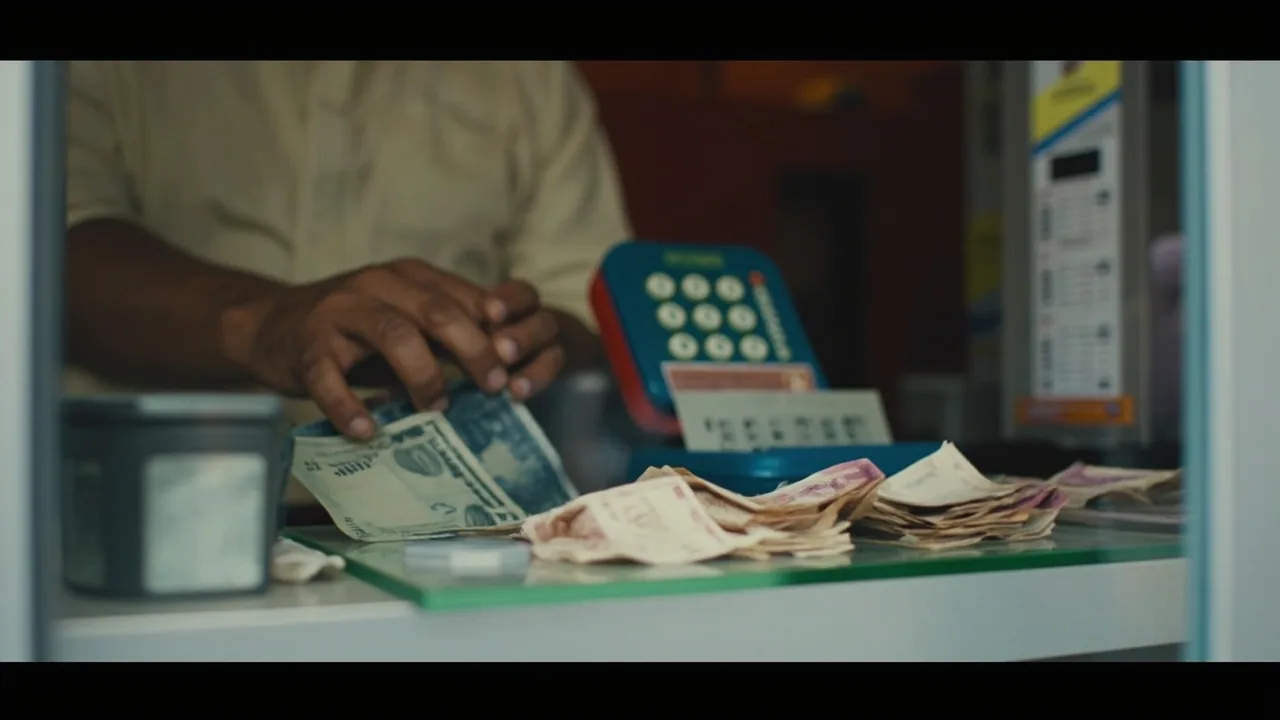
Currency Exchange Tips in Southeast Asia: Best Rates, Safe Spots, and Common Scams
Currency exchange quietly eats 5 to 10% of your budget if you do it wrong. Airport counters in Bangkok, Hanoi, and Phnom Penh quote rates 3 to 7% below interbank. This guide covers currency exchange tips for the region and scams to avoid. For visas, SIMs, and budgeting, see our Southeast Asia backpacking hub.
If you only have two minutes, here is the rule: carry ₹9,640 (~100 USD) bills from India (2006 series or newer, no folds, no marks), change a small amount at the airport to reach your hotel, then change the rest at a city-center “SuperRich” or reputable gold-shop counter in Thailand, a Sacombank branch in Vietnam, or a major-branch ATM in Laos and Cambodia. Skip hotel counters. Skip airport booths past the first 100. Skip anyone who waves a calculator at you on the street.
Subodh’s Pro Tip: The 3% “foreign transaction fee” on Indian forex cards is the silent killer. A card that “feels free” can cost you more than a plain ATM withdrawal. Carry a 50/50 mix: card for big expenses (hostel, tours), cash for everything under ₹2,892 (~30 USD). Bring the rest of this guide into your planning.
Quick Answers
| What | Answer | Price (INR) |
|---|---|---|
| Best single option for currency exchange in Thailand | SuperRich 1965 or Vasu Exchange branches in Bangkok city, NOT the airport | ₹1,000 (~10.37 USD) ≈ 348 THB at current rates (1 THB = ₹2.8691) |
| Best option for currency exchange in Vietnam | Sacombank or Vietcombank city-branch counters over gold-shop street counters | ₹1,000 (~10.37 USD) ≈ 268,000 VND at current rates (1 VND = ₹0.0037) |
| Should I use my Indian forex card to avoid cash? | Only for big expenses. Most cards charge 3% FX markup plus ATM fee (₹500 (~$5.19) per withdrawal on some HDFC/ICICI variants) | ₹500 (~$5.19) per ATM hit on certain Indian cards |
| What is the most common exchange scam targeting Indians? | ”No commission” sign followed by a far worse rate printed only on the receipt; or torn/marked USD bills refused at a 10% “discount” | Loss of ₹574-₹2,297 (~200-800 THB or ~$5.96-$23.83) per ₹9,640 (~100 USD) |
| Where do I get the best deal on currency exchange in Cambodia? | Canadia Bank or ABA Bank counter inside a branch, never hotel or guesthouse desks | ₹1,000 (~10.37 USD) ≈ 42,000 KHR at current rates (1 KHR = ₹0.0238) |
The Three Rules That Beat Every Other Tip
Before we get into per-country specifics, three rules that work everywhere in Southeast Asia. Internalize these and the rest is just geography.
Rule 1: USD cash is king, but only clean USD cash. Carry at least ₹48,202 (~500 USD) in ₹9,640 (~100 USD) and ₹4,820 (~50 USD) bills from an Indian bank forex counter or RBI-authorised dealer. The bills must be post-2006 series, crisp, no folds, no marks, no stamps, no tears. A torn ₹9,640 (~100 USD) bill can be “refused” and you’ll get a 10 to 20% haircut for “condition.” This is the single most expensive mistake Indian travelers make.
Rule 2: Airport rates are 3 to 7% worse than city rates. Always. The airport counter has a captive market and rent to pay. You will get roughly the interbank rate minus 2% in central Bangkok, and minus 5 to 7% at Suvarnabhumi Airport. Change roughly ₹9,640 (~100 USD) at the airport just to get a Grab or taxi to your hostel, then find a real counter.
Rule 3: NEVER use a money changer whose rate is written only as “No commission, best rate.” That phrase means “we make our money on the spread, not the fee.” A good counter writes both the BUY rate and the SELL rate on a board. If the board is missing, if the staff hides it, or if they type numbers into a calculator instead of pointing at a printed rate, walk out.
Best Place to Exchange Currency When Traveling: Country by Country
Thailand (THB)
The gold standard for currency exchange tips in Southeast Asia starts in Bangkok, because Thailand has the most competitive market in the region. The single best option for currency exchange in Thailand is the SuperRich 1965 network, specifically the branches at Siam Square, Silom Road (Soi 6), and Ratchadamri. They display interbank-rate-minus-0.4% on a printed board and do not charge commission. Vasu Exchange and Twelve Victory Exchange run a close second. Avoid SuperRich Thailand (the orange one) at tourist sites like Khao San Road. Their rates are still good, but the Khao San branch is famous for short-changing tourists and slipping in old, marked bills. Travellers report the same story again and again: change at SuperRich 1965 in the BTS/MRT zone, not at the airport or the backpacker strips.
If you’re already in Chiang Mai, look for a reputable money changer near Tha Phae Road or a major bank branch near Warorot Market. Both routinely beat the airport by 1.5 to 2%. Same rule in Phuket: avoid the Patong Beach stalls. A SuperRich 1965 branch in Phuket Town (not Patong) gives the real rate.
For ₹96,404 (~1,000 USD) you can expect to walk away with roughly ₹89,591-₹90,452 (~930-940 USD or ~31,200-31,500 THB) at a SuperRich 1965 branch, versus less at a tourist-strip counter.
Subodh’s Pro Tip: SuperRich 1965 reportedly has a rate-locking feature where you can pre-book a rate in the morning and pick up the cash later in the day. Useful when the baht swings - check with the branch directly to confirm current availability.
Vietnam (VND)
Vietnam runs on cash more than any other country in the region, and the dong has so many zeros that scams are easy. The best place to exchange currency in Vietnam is at a Sacombank or Vietcombank branch counter, not the gold-shop street counter you’ll see in District 1 in Ho Chi Minh City or the Old Quarter in Hanoi. Bank counters show a clear buy/sell board, give you a printed receipt, and the spread is typically 0.8 to 1.5%. Gold-shop counters (the ones with “金银” or “Vàng” signs) are sometimes 0.3% better on rate but are the #1 spot for sleight-of-hand, “commission” appearing after the fact, and short-changing you ₹737 (~200,000 VND or ~$7.64) on a ₹18,415 (~5,000,000 VND or ~$191.02) transaction.
Travellers report a specific pattern in Hanoi’s Old Quarter: a counter will quote you 25,400 VND per USD on the board, you’ll hand over 100 USD, and the receipt will show 24,800 VND per USD. By the time you read the receipt you’ve already handed them ₹93,548 (~25,400,000 VND or ~$970.38) and they’re pointing at the printed number. Always ask to see the calculator with the math written out, not just the receipt. A counter that refuses is not worth your time.
For Cambodian Riel to Vietnamese Dong cross-changes at the border (Moc Bai, Bavet), expect to lose another 1 to 2% on top. Either carry USD cash for the border and change on the Vietnamese side, or use the Sacombank branch in Tay Ninh City, 5 km from the Moc Bai crossing.
Cambodia (USD and KHR)
Cambodia is the weird one: the official currency is Cambodian Riel (KHR), but everyone prices in USD and gives change in riel. A 5 USD meal gets you 4 USD plus roughly 4,000 KHR in change (at the standard ~4,000 KHR per USD change rate vendors use for small denominations). The dual-currency system means most tourists never exchange money. They just use the USD they brought from home.
If you do need riel (for small market purchases, tuk-tuks, and rural areas), the best place to exchange currency in Cambodia is inside a Canadia Bank or ABA Bank branch counter in Phnom Penh or Siem Reap. Avoid guesthouse desks, hotel front desks, and the open-air money changers on Pub Street in Siem Reap, all of which routinely quote 4,000 KHR per USD when the real rate is 4,100 to 4,150.
One local rule: Cambodia’s banks refuse USD bills with any tear, fold, or mark, more aggressively than any other country in the region. Plan to set aside any bill that has visible wear before reaching a bank counter.
Laos (LAK)
Laos is the country where ATM + local bank counter beats every other option because cash is hard to find outside Vientiane and Luang Prabang. Most Indian travelers arrive with a forex card and use BCEL (Banque pour le Commerce Extérieur Lao) ATMs in Vientiane and Luang Prabang. The withdrawal fee is ₹86 (~20,000 LAK or ~0.90 USD) flat (around ₹83) plus whatever your Indian bank charges. Avoid the joint ABC/Money Exchange counters at the airport: they charge ₹259 (~60,000 LAK or ~$2.69) flat “handling fee” on top of a 2.5% worse rate. For a ₹96,404 (~1,000 USD) change, that’s ₹4,338 (~45 USD) in pure waste.
If you’re heading to Vang Vieng or smaller towns, change enough in Vientiane to last. The only “exchange” you’ll find in Vang Vieng is a guesthouse desk with a calculator and no printed rate. Travellers report losing 5 to 8% on those.
Indonesia, Malaysia, Singapore
These three deserve a separate mention because they’re outliers: Indonesia (IDR), Malaysia (MYR), and Singapore (SGD) all have efficient money changer markets. The best place to exchange currency in these three countries is the dedicated money changer chain inside a mall, not a bank:
- Indonesia: A reputable dedicated money changer inside a major mall in Jakarta or Bali, or a money changer cluster in Semarang, consistently beats airport counters by 3%.
- Malaysia: Major licensed money changer chains in Bukit Bintang, KLCC, and Penang’s George Town. The rate is usually within 0.5% of interbank.
- Singapore: The licensed money changer cluster in Chinatown (near Chinatown MRT) is the famous “best rate in Singapore” zone and is competitive even against banks.
Common Scams at the Exchange Booth
These scams target Indian backpackers specifically. I haven’t personally fallen for any of them (because the rule is the same: board, receipt, calculator), but travellers have sent me detailed accounts over the past two years. Here is what to watch for.
The “No Commission” Switch. A sign reads “0% commission, best rate guaranteed.” The board shows a rate of 31.20 THB per USD. You hand over 1,000 USD. The receipt shows 30.60 THB per USD. When you point at the board, the staff says “oh, that was the BUY rate, this is the SELL rate” or “rate just changed.” A genuine counter locks the rate the moment your cash hits the desk. Rule: ask the teller to circle the rate on the receipt with a pen and write the total. If they refuse, cancel the transaction.
The Torn/Marked Bill Discount. You hand over a ₹9,640 (~100 USD) bill with a tiny corner crease. The teller says “sorry, bank won’t accept, give me 5% discount or I can’t change.” If this happens, your bill is still legal tender. Either insist on the full rate or take the bill to a bank branch (yes, even Bangkok Bank at a major branch will accept it). Never accept a 5 to 10% haircut on a ₹9,640 (~100 USD) note you walked across an airport with.
The “Wait, One Moment” Count. Common in Vietnam and Cambodia. The teller counts your stack of ₹9,640 (~100 USD) bills, then calls over a colleague for a “second opinion,” and the count comes back one bill short. You stare at the desk trying to remember if you had 10 or 11. Rule: count the bills yourself before handing them over, in front of the teller. Put them on the counter one at a time. If you handed over ₹964,037 (~10,000 USD), you should be able to count down to the last bill.
The Calculator Trick. Especially in Hanoi’s Old Quarter. The teller types numbers into a phone calculator instead of pointing at a printed rate. You see the math on the calculator and agree. Then the receipt shows a different total. Rule: the only numbers that matter are on the printed receipt and the printed board. Never accept a phone calculator as your reference.
Safety Alert: Scam activity around exchange booths in Bangkok’s Khao San Road, Hanoi’s Old Quarter, and Phnom Penh’s Pub Street has been reported consistently by Indian travelers throughout 2025 and into 2026. For current safety context before your trip, check the MEA travel advisory page at mea.gov.in and the destination country’s own advisory site. The pattern doesn’t change much year to year but the specific streets where it spikes do.
ATM Withdrawals: When They Beat Cash Exchange
For Laos, Cambodia, and Indonesia, ATMs often beat cash exchange if your Indian card has low or no FX markup. Cards like HDFC ForexPlus, ICICI Travel Card, and the new Niyo Global card all offer interbank rates plus a markup on ATM withdrawals; check your card’s current fee schedule, as the spread versus a bad cash counter varies by card and bank. The full picture across Indian banks and ATM networks in Southeast Asia is in our ATM fee comparison for Indian backpackers, but the short version is:
- Withdraw in local currency, never “convert to INR at the ATM” (the dynamic currency conversion trap adds 4 to 6%).
- Always decline the ATM’s offer to “convert to your home currency” if it pops up.
- Withdraw the maximum the ATM allows per transaction because the per-transaction fee is fixed and a bigger withdrawal = lower percentage hit.
The Forex Card vs Cash Question
The single biggest line item Indian travelers get wrong is the forex card. The card “feels free” because there’s no physical transaction visible, but most Indian bank forex cards charge:
- 3% FX markup (HDFC, ICICI, Axis)
- ₹500 (~$5.19) to ₹1,200 (~$12.45) cash advance fee per ATM withdrawal (yes, even at a “no fee” foreign ATM)
- ₹100 (~1.04 USD) to ₹300 (~3.11 USD) cross-currency fee if you load USD but spend in VND or THB
That means a ₹96,404 (~1,000 USD) transaction on a typical Indian forex card costs you roughly ₹99,296 (~1,030 USD). The card looks worse unless you spend big (hostel, tours, internal flights) and avoid small daily expenses. A practical split: forex card for everything over ₹4,820 (~50 USD), cash for everything under.
If you want a SIM to call home while figuring all this out at the airport, see our guide on the best SIM/eSIM options for India-to-Thailand travel and the broader Southeast Asia SIM setup guide. For staying online without a physical SIM, Get Nomad eSIM ships a regional SEA plan that covers Thailand, Vietnam, Cambodia, and Laos on a single QR code.
Quick Checklist Before You Fly
- Get ₹48,202-₹96,404 (~500-1,000 USD) cash from an RBI-authorised dealer (HDFC, ICICI, Thomas Cook, MTM). Specify “post-2006 series, no marks.”
- Load ₹144,606 (~1,500 USD) on a forex card with the lowest markup you can find (check Niyo Global’s current terms - it has offered 0% markup in the past; otherwise HDFC ForexPlus).
- Install Grab (Thailand, Vietnam, Cambodia, Malaysia, Singapore) and Bolt (Vietnam, Cambodia) before you fly. You’ll use them for airport transfers.
- Bookmark SuperRich 1965 (Bangkok), Sacombank (HCMC, Hanoi), and People’s Park Money Changer (Singapore) so you don’t Google “money changer near me” in a panic at 11 PM.
- Set a personal “no exchange above X% spread” rule. I use 1.5%. Anything worse and I go to the next counter.
Common Street Mistakes Indians Make
Mistake 1: Changing all ₹96,404 (~1,000 USD) at the airport. You’ll lose ₹4,820-₹6,748 (~50-70 USD) on the spread. Change ₹9,640 (~100 USD) at the airport, top up at a city counter when you arrive.
Mistake 2: Trusting the guesthouse “we change money, best rate” pitch. Guesthouse counters have rent to cover. They quote you a number, you accept, and you’ve just paid for their week’s electricity.
Mistake 3: Handing over unmarked bills to a money changer, then walking out without counting. In Vietnam especially, count your dong stack to the last ₹184 (~50,000 VND or ~$1.91) note at the counter. The notes have so many zeros that a missing ₹737 (~200,000 VND or ~$7.64) looks identical to a correct count.
Mistake 4: Saying “I have Indian rupees, can you change?” Almost no Southeast Asian money changer accepts INR. The only realistic pair is THB-INR at SuperRich Bangkok (rates are bad, 1.5 to 2% worse than going USD→THB→INR via two changes). Bring USD from home. Don’t try to be clever.
Mistake 5: Using a credit card for everything to “earn points.” Indian Visa/Mastercard credit cards without forex enablement will be declined; the ones with it charge 3.5% markup. The points are not worth it for a backpacker trip. Use the forex card or cash.
Subodh’s Take
The honest truth is that 90% of “currency exchange tips” articles overcomplicate this. Three numbers matter on the day: the printed BUY rate on the board, the printed SELL rate on the receipt, and the difference between them (the spread). A spread under 1.5% is fine. A spread over 2% means you walked into the wrong shop. After that, it’s just geography: SuperRich 1965 in Bangkok, Sacombank in Vietnam, ABA Bank in Cambodia, BCEL ATM in Laos, mall counters in Indonesia and Malaysia. Bring clean USD, refuse unmarked “no commission” pitches, and stop exchanging at airports past the first ₹9,640 (~100 USD). That’s the whole game. For more ways to stretch your budget across the region, see our money-saving tips for Southeast Asia.
FAQ
Should I bring USD or INR for exchange in Southeast Asia? USD. No money changer in Thailand, Vietnam, Cambodia, Laos, Indonesia, or Malaysia routinely accepts INR at a fair rate. Even SuperRich Bangkok will only change THB to INR (for leftover baht on your way home), and the spread is wide. Bring ₹9,640 (~100 USD) bills from an Indian forex dealer.
What’s the safest currency to carry for an Indian backpacker doing Thailand, Vietnam, Laos, Cambodia in one trip? A mix of USD cash (60%) and the local currency of your first country (40%). Change the rest at city centers. Don’t try to pre-load four currencies from India; you waste on every cross-rate. Bring USD and change as you go.
Is it safe to use ATMs in Southeast Asia for Indian debit cards? Yes, at any bank-branch ATM in a glassed-in booth in daytime, in a tourist area, with another person around. Avoid standalone ATMs in dark alleys. The bigger risk is your Indian bank charging 3% FX markup + ₹500 (~$5.19) ATM fee; the safety risk is low. See our full ATM fee guide for Indian bank cards.
Can I use UPI in Southeast Asia? As of mid-2026, UPI works at select merchants in Singapore and Malaysia via partner QR networks. It does not work in Thailand, Vietnam, Cambodia, or Laos yet. Don’t rely on it. Carry cash or forex card.
How much USD cash should I carry for a 30-day Southeast Asia trip? A backpacker spending 40-50 USD/day needs roughly ₹57,842-₹86,763 (~600-900 USD) in cash for small expenses, with the rest on a forex card. Keep your daily cash under ₹14,461 (~150 USD) on you at any time; the rest goes in a hostel locker or a hidden money belt.
Do I need to declare currency at the airport? Under Indian RBI rules, you can carry up to USD 3,000 cash (or equivalent) abroad without a customs form, and up to USD 250,000/year under the Liberalised Remittance Scheme (LRS). Above USD 3,000 in cash you must declare at the airport customs counter on departure. Keep your forex card and bank receipts handy in case they ask.
What’s the best option for currency exchange at Bangkok Suvarnabhumi Airport? Change only a small amount (around ₹9,640 (~$100)/ ~₹9,640 (~100 USD)) at the airport to cover transit to your hotel, then exchange the rest at a SuperRich 1965 city branch or another reputable Bangkok counter for a better rate.
- Subodh
