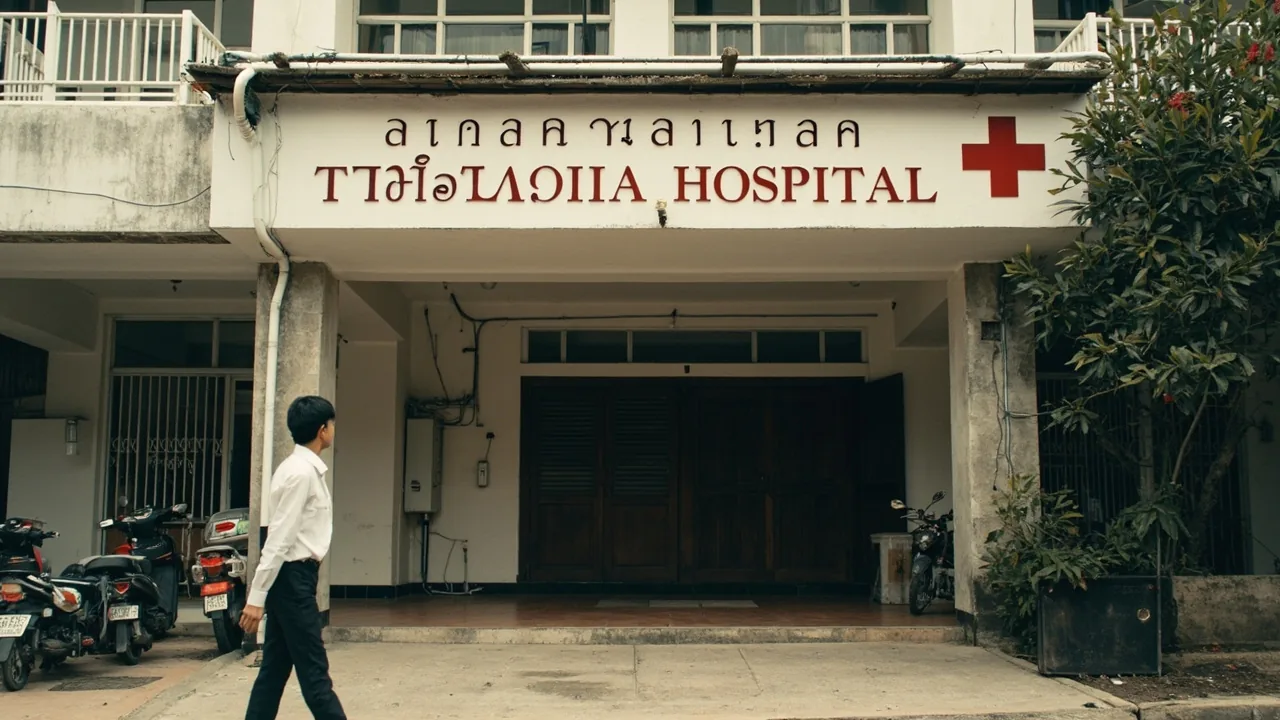
Thailand Emergency Medical Guide for Indians: Hospitals, Snake Bites, Rabies & Evacuation
I cross-checked this guide against the Thai Ministry of Public Health, NHSGO’s Bangkok hospital directory, and traveller reports from the Bangkok and Koh Phangan stretches in July 2026. Thai private hospitals are among the best in Southeast Asia, but the system looks nothing like an Indian one, and the bill at the end looks nothing like an Indian one either. This guide is the playbook I wish someone had handed me on day one.
If something goes wrong in Thailand, three numbers cover almost every situation: 1669 for medical ambulance, 191 for police and general emergencies, and 1155 for the Tourist Police, who speak English and are set up specifically to help foreign visitors. Save all three in your phone before you board the flight, because fumbling for them on a 3G connection with shaking hands is not how you want to spend an emergency. Planning the wider region? Our Southeast Asia backpacking hub covers the full multi-country route.
Quick Answers
| What | Answer | Price (INR) |
|---|---|---|
| Ambulance number in Thailand | 1669 (medical), 191 (general emergency), 1155 (Tourist Police, English) | Free from any Thai SIM |
| Average ER consultation at a private hospital in Bangkok | ₹4,307 (~1,500 THB or ~$44.68) | ₹4,304 (~$44.65) |
| Hospital deposit before admission | ₹86,145-₹229,720 (~30,000-80,000 THB or ~$893.59-$2,382.90) | ₹86,073 (~$892.84) to ₹229,528 (~$2,380.90) |
| Rabies vaccine course (full 4-shot, post-bite) | ₹5,169-₹10,050 (~1,800-3,500 THB or ~$53.62-$104.25) total | ₹5,164 (~$53.57) to ₹10,042 (~$104.17) |
| Medical evacuation (Bangkok to Singapore/India) | ₹2,410,092 (~25,000 USD) to 80,000 | ₹2,408,235 (~$24,980.73) to ₹7,706,352 (~$79,938.34) |
Subodh’s Pro Tip: Take a photo of your passport, visa stamp, and insurance PDF and email them to yourself before you leave the hotel. When you’re in a hospital bed unable to move, you do not want to be arguing about who you are.
The Real Risks (What to Worry About)
In nine trips of talking to Thai doctors, Indian embassy staff, and other backpackers in hospital waiting rooms, the same handful of problems come up over and over. Ranked by frequency, not by what makes the best news headline.
| Risk | Likelihood | Impact | How to Avoid |
|---|---|---|---|
| Scooter / motorbike injuries (cuts, fractures, road rash) | High | Severe | International Driving Permit (IDP) + helmet + never ride after midnight drinking |
| Dengue fever | Moderate | High | DEET 20%+ repellent daily, long sleeves at dusk, no standing water near your room |
| Rabies (dog or monkey bite) | Moderate | High-Fatal if untreated | Stay away from stray dogs and the monkeys at Phra Nang, Khao Sok, and Lopburi |
| Food poisoning (“Bangkok Belly”) | High | Low-Moderate | Eat at busy stalls only, avoid tap water and ice in unknown places, carry ORS |
| Snake or scorpion stings | Low | Moderate-High | Shake out shoes and flip-flops, watch where you put your hands when hiking |
| Heat stroke / dehydration | Moderate | Moderate | Carry 1-2 L of water daily, take afternoon breaks April-June |
| Violent crime against tourists | Low | Variable | Same street awareness you would use in Pune or Bangalore; most incidents are bag-snatching, not worse |
| Jellyfish stings (ocean) | Low | Low-Moderate | Wear a rash guard, look for posted purple flags, vinegar on the wound |
Safety Alert: Rabies is endemic in Thailand and kills roughly one foreigner every few years because they did not get the post-exposure vaccine in time. If a dog, cat, monkey, or bat breaks your skin, even a tiny scratch, wash it for 15 minutes with soap and running water, then go to a clinic the same day. Do not wait.
Prevention and Preparation: What to Do Before You Fly
Most Thai emergencies are preventable with 90 minutes of prep work before you board the plane.
Vaccines to update before departure:
- Routine boosters: DPT, MMR, polio, flu
- Recommended for Thailand: Hepatitis A and B, Typhoid, Japanese Encephalitis (if spending 30+ days in rural areas or near rice fields), Rabies pre-exposure (3 shots, gives you 2 fewer doses if bitten later)
- Yellow fever: Only required if you are transiting through a yellow-fever country before arriving
Insurance, with a non-negotiable checklist:
- Medical coverage of at least ₹9,640,370 (~100,000 USD)
- Motorcycle/scooter coverage explicitly written in, not implied. Most policies exclude scooters unless you have a valid motorcycle license from India AND an IDP AND a helmet on at the time of the accident. Read the fine print.
- Medical evacuation to Singapore or back to India
- 24-hour English-speaking emergency assistance hotline
- Coverage for adventure activities if you plan to do dives at Koh Tao or climbs around Chiang Mai
The non-negotiable documents to carry:
- Passport (6+ months validity, 2 blank pages)
- Printed insurance policy + emergency phone number on a laminated card in your wallet
- Printed copy of your Indian driver’s license and IDP if riding scooters
- Blood type card if you have a rare group
- List of your regular medications with generic names (doctors in Thailand may not recognise Indian brand names)
Get SafetyWing travel insurance, covers Indian travelers from ~$62/month (~₹5,900). Includes COVID, trip interruption, and medical evacuation across Southeast Asia.
City-by-City: Where You Will Most Likely End Up in a Hospital
Bangkok has the best medical care in mainland Southeast Asia. Outside Bangkok, the quality drops fast, especially on the islands and in deep rural provinces.
Bangkok. World-class. Bumrungrad International, Bangkok Hospital, and Samitivej are the three names everyone recommends. Most doctors trained in the US, UK, or Australia. English is universal at the front desk. Expect full JCI accreditation, translators for 30+ languages including Hindi, and cashless billing with most international insurers. An ER consult here costs around ₹4,307 (~1,500 THB or ~$44.68), an MRI around ₹34,458-₹71,788 (~12,000-25,000 THB or ~$357.43-$744.66), and a private room ₹11,486-₹34,458 (~4,000-12,000 THB or ~$119.14-$357.43) per night.
Pattaya, Phuket, Krabi. Bangkok Hospital Pattaya and Bangkok Hospital Phuket are credible for most issues. For serious trauma, they will stabilise you and medevac you to Bangkok or Singapore.
Chiang Mai, Chiang Rai, Pai. Good private hospitals (Chiangmai Ram, Bangkok Hospital Chiang Mai) for routine issues. Limited capability for major trauma and snake antivenom can be hard to source; serious cases go to Bangkok.
Islands (Koh Phangan, Koh Tao, Koh Samui). Only basic clinics with English-speaking staff. Anything beyond a cut or a fever and you are getting a boat or a helicopter to Samui or Surat Thani.
Border towns (Aranyapratho, Mae Sot, Nong Khai). Avoid being treated here for anything serious. Cross the border if you can or call your embassy.
What to Do If It Happens
Step 1: Get to a phone
1669 is the Thai national medical ambulance line. It dispatches EMS vehicles with trained paramedics across all 77 provinces. Free from any Thai SIM. English support is hit-or-miss depending on the province.
191 is the Royal Thai Police general emergency line, used for accidents, fires, crimes, anything where you need cops on scene.
1155 is the Tourist Police hotline. English, Hindi, and other languages staffed. This is your first call for any non-life-threatening issue involving foreigners (theft, fraud, assault) and they will coordinate with 1669 if you need an ambulance too.
If you cannot speak, open Google Maps, type “hospital,” and tap the closest pin. Most Thai private hospitals show up clearly.
Step 2: The First Hospital Steps
At a private Thai hospital (Bangkok Hospital, Bumrungrad, etc.):
- Walk to the ER / Accident & Emergency entrance. There is always a translator on call; ask for Hindi or English.
- Hand over your passport and insurance card. They will photocopy both.
- Sign a financial guarantee form. They will estimate the bill and ask for a deposit. For an emergency admission, expect to pay ₹86,145-₹229,720 (~30,000-80,000 THB or ~$893.59-$2,382.90) upfront by credit card or cash. Hospitals can refuse treatment if you cannot pay, though under Thai law they must stabilise life-threatening emergencies first.
- Keep every receipt. Most insurers reimburse only what you can prove you paid.
At a government hospital: Cheaper (a fraction of the cost), but waits can be 4-8 hours for non-emergencies, English is limited, and you may be asked to buy your own supplies from a pharmacy across the street. Only go here if you are broke and stable.
Step 3: If You Need an Evacuation
Medical evacuation from Thailand typically costs:
- Bangkok to Singapore: ₹2,410,092 (~25,000 USD) to 50,000
- Bangkok to Mumbai or Delhi: ₹4,820,185 (~50,000 USD) to 80,000
- Island to Bangkok (helicopter): ₹771,230 (~8,000 USD) to 15,000 per leg
Insurers will not green-light an evacuation until a Thai doctor certifies it is medically necessary. Call your insurer’s 24/7 line, not the hospital’s billing office, before agreeing to anything.
Step 4: Specific Scenarios
Scooter crash: Do not move if you suspect a spine or head injury. Call 1669, not a Grab. Do not take off your helmet. Photograph the scene, the other vehicle’s plate, and your injuries before you leave the road. Thai police will want a report for any insurance claim; get the report number.
Severe food poisoning: ORS sachets from any 7-Eleven (₹14-₹29 (~5-10 THB or ~$0.15-$0.30) per sachet), Dioralyte-style rehydration, no food for 12 hours, then plain rice. If you have blood in stool, high fever, or cannot keep water down for 6+ hours, go to a hospital. Most clinics will give you IV fluids for ₹4,307-₹8,614 (~1,500-3,000 THB or ~$44.68-$89.36) and send you home the same day.
Snake bite: Stay calm, immobilise the limb at heart level (do not cut, do not suck, do not ice), photograph the snake if you can do so safely, get to the nearest hospital with antivenom. Bangkok Hospital Chiang Mai and Bangkok Hospital Phuket both stock the full range. Time matters: most deaths happen because the patient waited 6+ hours.
Monkey bite (rabies risk): Wash 15 minutes, go to hospital same day, get HRIG (Human Rabies Immunoglobulin) if the bite is deep, and start the 4-shot vaccine course on days 0, 3, 7, and 14. At Bangkok Hospital the full post-exposure course costs around ₹5,169-₹10,050 (~1,800-3,500 THB or ~$53.62-$104.25); at government hospitals it can be free if you have a tourist police incident report.
Jellyfish sting: Pour vinegar on it for 30 seconds (not freshwater, not urine), pluck remaining tentacles with tweezers, hot water soak (40-45°C) for 20 minutes. Purple-flag beaches in Phuket and Krabi post warnings. Severe reactions (trouble breathing, chest pain) get you to a hospital via 1669.
Passport stolen: Call 1155 Tourist Police, file a report (you will need this for the embassy), then visit the Indian Embassy in Bangkok at 46 Soi 23, Sukhumvit, or the Consular counters in Chiang Mai. They issue emergency certificates in 1-3 working days for a fee of around ₹4,307 (~1,500 THB or ~$44.68).
Indian-Specific Considerations
Medicine equivalents you might need:
| Indian brand | Generic | Thai equivalent (over the counter at Boots or Watsons) |
|---|---|---|
| Electral / ORS | ORS | ”ORS” sachets at every 7-Eleven, ₹14-₹29 (~5-10 THB or ~$0.15-$0.30) |
| Crocin / Dolo | Paracetamol 500mg | ”Paracetamol” or “Tylenol,” ₹57-₹115 (~20-40 THB or ~$0.60-$1.19) for 10 |
| Pantocid / Omez | Omeprazole 20mg | ”Losec” or generic Omeprazole, ₹86-₹172 (~30-60 THB or ~$0.89-$1.79) for 14 |
| Metrogyl | Metronidazole 400mg | ”Flagyl,” pharmacy-only with prescription |
| Azithromycin 500mg | Azithromycin | ”Zithromax,” pharmacy-only with prescription |
| Cetirizine | Cetirizine 10mg | ”Zyrtec” or generic, ₹86-₹172 (~30-60 THB or ~$0.89-$1.79) for 10 |
| Avomine | Promethazine (motion sickness) | “Phenergan,” pharmacy-only |
Antibiotics and most Indian-specific meds are pharmacy-only in Thailand. Bring what you need from India.
Indian Embassy contact in Thailand (save these):
- Embassy, Bangkok: 46 Soi 23, Sukhumvit, Bangkok. +66-2-258-0300 to 6. [email protected]
- Consulate, Chiang Mai: 113 Bumrung Buri Road. +66-53-243-066
- 24/7 emergency helpline for Indian nationals: +66-81-845-6224 (use this only for real emergencies; passport loss, arrest, hospital admission)
- Full embassy playbook: Indian Embassy emergency helpline guide
Hospital costs for an Indian visitor (without insurance):
| Service | Cost in THB | Cost in INR |
|---|---|---|
| ER consultation | ₹4,307 (~1,500 THB or ~$44.68) | ₹4,304 (~$44.65) |
| X-ray (single view) | ₹2,297-₹4,307 (~800-1,500 THB or ~$23.83-$44.68) | ₹2,295 (~$23.81) to ₹4,304 (~$44.65) |
| Ultrasound | ₹5,743-₹11,486 (~2,000-4,000 THB or ~$59.57-$119.14) | ₹5,738 (~$59.52) to ₹11,476 (~$119.04) |
| MRI scan | ₹34,458-₹71,788 (~12,000-25,000 THB or ~$357.43-$744.66) | ₹34,429 (~$357.13) to ₹71,728 (~$744.04) |
| Blood test panel (CBC + metabolic) | ₹5,743-₹11,486 (~2,000-4,000 THB or ~$59.57-$119.14) | ₹5,738 (~$59.52) to ₹11,476 (~$119.04) |
| IV fluids + observation (4-6 hours) | ₹8,614-₹17,229 (~3,000-6,000 THB or ~$89.36-$178.72) | ₹8,607 (~$89.28) to ₹17,214 (~$178.56) |
| Single private room per night | ₹11,486-₹34,458 (~4,000-12,000 THB or ~$119.14-$357.43) | ₹11,476 (~$119.04) to ₹34,429 (~$357.13) |
| Hospital admission deposit | ₹86,145-₹229,720 (~30,000-80,000 THB or ~$893.59-$2,382.90) | ₹86,073 (~$892.84) to ₹229,528 (~$2,380.90) |
| Rabies post-exposure vaccine course (full) | ₹5,169-₹10,050 (~1,800-3,500 THB or ~$53.62-$104.25) | ₹5,164 (~$53.57) to ₹10,042 (~$104.17) |
| Snake antivenom (per vial, multiple often needed) | ₹7,179-₹14,358 (~2,500-5,000 THB or ~$74.47-$148.93) | ₹7,173 (~$74.41) to ₹14,346 (~$148.81) |
| Medical evacuation, Bangkok to Singapore | ₹2,297,200-₹4,594,400 (~800,000-1,600,000 THB or ~$23,828.96-$47,657.92) | ₹2,295,280 (~$23,809.04) to ₹4,590,560 (~$47,618.09) |
Subodh’s Pro Tip: Verify the FX rate yourself before assuming the INR figure. At current rates (1 THB = ₹2.87), 1,500 THB = ₹4,305. These are mid-2026 numbers, not 2024’s.
Travel insurance comparison note: Most Indian domestic travel policies do not cover overseas medical evacuation or scooter accidents. International policies that do (SafetyWing, World Nomads, Allianz) start around ₹4,820-₹7,712 (~50-80 USD) per month for a 30-day trip. The cost of one night in a Bangkok private room pays for a month of insurance.
Getting Connected
Working data is the fastest way to call 1669, pull up your insurer’s hotline, or read your passport photo when you are stuck in a hospital. Most Indian travellers buy either a physical SIM at Suvarnabhumi (AIS, dtac, TrueMove) or an eSIM from Nomad that activates the moment you land. For a 14-day trip, an eSIM with 5 GB is enough for maps, Grab, and WhatsApp calls home.
FAQ
Do Indian citizens need any special medical paperwork to enter Thailand? No medical paperwork for entry beyond the standard TDAC digital arrival card at https://tdac.immigration.go.th. If you are carrying prescription medication (insulin, sleeping pills, strong painkillers), carry the prescription and keep meds in original packaging.
Are Thai hospitals safe? Will they speak English? The private hospitals in Bangkok, Phuket, Chiang Mai, and Pattaya are world-class, JCI-accredited, and English is the working language. Government hospitals are cheaper but the wait is longer and English is patchy. For any non-trivial issue, go private.
What if I cannot afford to pay the hospital deposit? Stabilisation is required by Thai law for life-threatening emergencies, regardless of ability to pay. For non-life-threatening care, call your insurer first; they will often arrange a guarantee of payment directly with the hospital. The Indian Embassy’s emergency number (+66-81-845-6224) can also coordinate with the hospital on your behalf.
Is the rabies vaccine available at every Thai clinic? Most private hospitals stock it. Government hospitals may not carry HRIG (the rabies immunoglobulin for severe bites), in which case they will transfer you. The rabies vaccine itself (post-exposure) is widely available and the full 4-shot course costs ₹5,169-₹10,050 (~1,800-3,500 THB or ~$53.62-$104.25) at a private hospital.
How do I call an ambulance if I do not speak Thai? Call 1669. State your location slowly. Most provinces have English-speaking operators, and if not, hand the phone to a Thai passerby or use a translation app. As a backup, call 1155 (Tourist Police, English-speaking) and they will dispatch an ambulance for you.
Can I get my regular medicines in Thailand? Common ones, yes (paracetamol, cetirizine, omeprazole). Stronger stuff (antibiotics, sleeping pills, anxiety meds) is pharmacy-only with a Thai prescription, which most walk-in clinics will write for a small fee. Carry what you need from India.
What is the Indian government’s current travel advisory for Thailand? Check before departure at the Ministry of External Affairs advisory page (mea.gov.in) for any region-specific warnings. Generally Thailand is at “normal precautions” level, but specific border regions or provinces can have periodic advisories.
Subodh’s Take
Thailand’s private hospitals are not the place to be penny-pinching. The cost difference between a good private hospital with English-speaking staff and a Thai government hospital where you wait six hours and someone might or might not speak English is the difference between a one-week problem and a one-month one. Buy proper insurance with explicit scooter coverage, save 1669 / 191 / 1155 in your phone before you leave Suvarnabhumi, and treat any animal bite as a same-day hospital visit. Do those three things and you are statistically going home with nothing worse than a sunburn.
