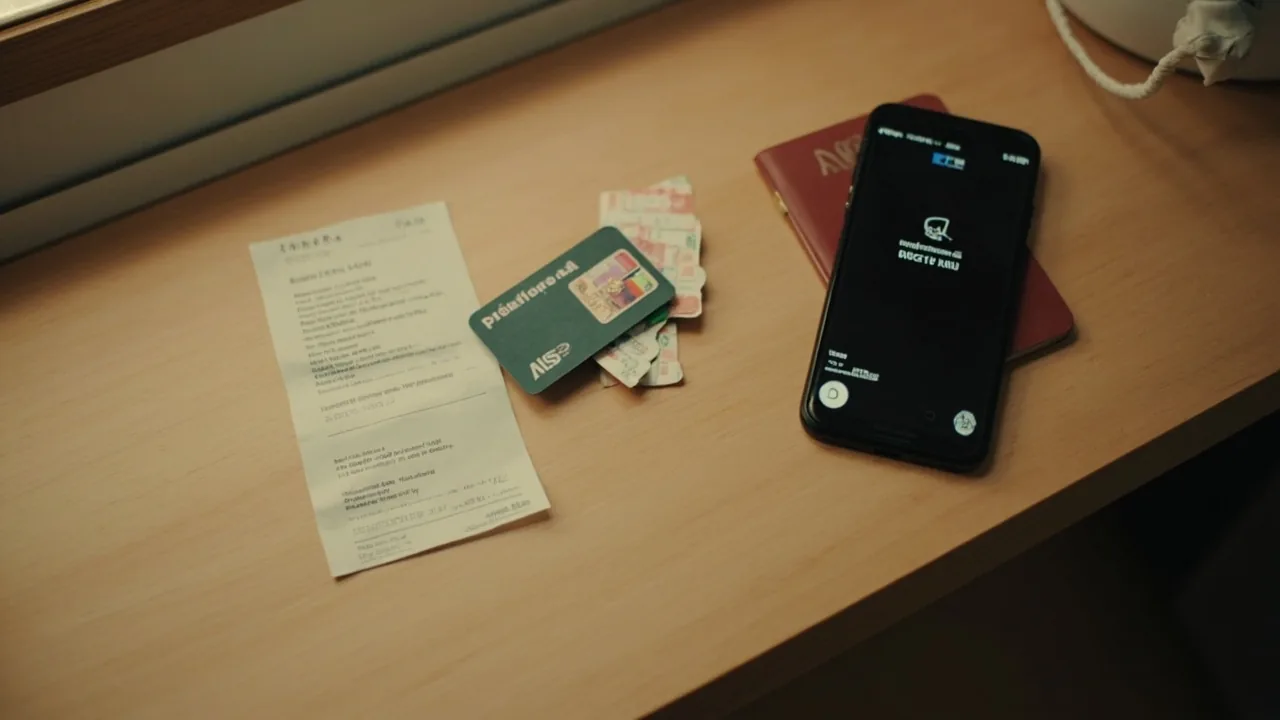
Thailand SIM Card in Koh Samui: Where to Buy, Best Plans & What Works
Koh Samui is one of the easiest islands in Thailand to stay connected on, because all three major operators (AIS, TrueMove, and dtac) run full 4G across the main beach towns and most of the ring road. The catch is the buying step: you can’t just swipe a credit card on a tourist kiosk and walk out with a working SIM like you can in Bangkok. Thailand requires every prepaid tourist SIM to be registered against your passport before the data flows, and if you skip that step you’ll see a working signal but no internet. The whole process from counter to working data takes about 10 minutes once you know what’s coming. For related planning, see our guide on Sea Backpacking Hub.
This guide is the exact buying playbook I walk Indian travelers through before they fly. AIS is the default for most visitors because the island coverage is slightly ahead of the other two around the south coast, but TrueMove wins on price-per-GB and dtac is the strongest pick if you’re planning to ferry over to Koh Phangan or Koh Tao on the same SIM. I’ll cover the airport counter at USM, the 7-Eleven option, the passport-SMS registration step nobody mentions in the glossy blog posts, and the eSIM alternative if you’d rather not swap your Indian number out.
Quick Answers
| What | Answer | Price (INR) |
|---|---|---|
| Best overall SIM for Koh Samui | AIS Tourist SIM (15 days, ~15GB) | ₹1,141 (~399 THB or ~$11.84) |
| Cheapest same-network option | TrueMove tourist SIM at 7-Eleven | ₹855 (~299 THB or ~$8.87) |
| Best for island-hopping to Phangan/Tao | dtac, strongest ferry-route signal | ₹855 (~299 THB or ~$8.87) |
| Where to buy at the airport | AIS/TrueMove/dtac counters right after customs at USM | ₹1,141-₹1,712 (~399-599 THB or ~$11.84-$17.78) |
| Mandatory registration step | SMS your passport number to 4444161 (within ~48 hours) | Free |
| eSIM alternative if you don’t want to swap | Nomad eSIM, data-only, activates on landing | from ₹578 (~6 USD) |
Where to Buy: Airport vs 7-Eleven vs Town Shop
There are three real-world buying channels on Koh Samui, and the price difference between them is small but the experience differs a lot.
Koh Samui Airport (USM). Once you walk out of the small domestic arrival hall, there’s a row of operator kiosks before you hit the taxi stand. AIS, TrueMove, and dtac all run counters here. The advantage is that staff register the SIM for you on the spot, walk you through the registration SMS, and you’re online by the time you reach your hotel. The downside is a markup of roughly ₹143-₹286 (~50-100 THB or ~$1.48-$2.97) over the same SKU at a 7-Eleven, and longer queues if your flight lands alongside another international arrival. If you’ve just stepped off a long-haul from India with a kid in tow and zero patience for paperwork, the airport counter is worth the extra ₹286 (~100 THB or ~$2.97).
7-Eleven and FamilyMart. Every 7-Eleven on the island stocks the same tourist SIM blister packs as Bangkok, usually hung on a rack near the cashier. AIS, TrueMove, and dtac all have their own prepaid tourist SKUs priced ₹855-₹1,141 (~299-399 THB or ~$8.87-$11.84). The clerk activates the SIM in front of you, but the passport-SMS registration is on you. Bring your passport, don’t just hand over your credit card.
Independent phone shops in Chaweng and Lamai. The strip behind Chaweng Beach Road has a few small mobile shops that will sell the same SIMs for the same price, but offer help with registration, APN tweaks, and troubleshooting. Useful if you’ve already bought a SIM that’s misbehaving.
Subodh’s Pro Tip: Buy the SIM at Bangkok Suvarnabhumi or Don Mueang on your way in if you’re transiting through the capital. The airport kiosks there have every plan, the staff are used to handling freshly-landed Indian tourists, and you walk out with a working, registered SIM before your domestic flight. There’s nothing USM has that BKK doesn’t, except a longer queue.
The Three Operators: AIS, TrueMove, dtac on Koh Samui
All three operators are technically nationwide, but the island experience is not identical.
AIS has the most consistent 4G around the ring road, and its 5G has been live in parts of Chaweng and Bophut since 2024. The 15-day tourist SIM is ₹1,141 (~399 THB or ~$11.84) for ~15GB, which is the safest default. AIS counters inside Koh Samui Airport are easy to spot, and the AIS hotline (1175) has English-speaking support if anything goes wrong.
TrueMove is the price-undercut option. Its tourist SIMs are typically ₹855 (~299 THB or ~$8.87) for 8-15 days depending on the SKU, and the data allowance is competitive. Coverage in the south coast and around the more remote beaches is slightly patchier than AIS, but for a Chaweng-Bophut-Lamai trip you’ll never notice. If you’re staying at a hotel cluster, ask which operator the property recommends; many mid-range hotels in Chaweng are tied to TrueMove promotional deals.
dtac is the underdog that quietly wins on the ferry corridor to Koh Phangan and Koh Tao. If your itinerary includes a week of island-hopping, dtac’s signal holds up better than AIS on the boats. If you’re staying put on Samui only, the difference is academic.
Subodh’s Pro Tip: Don’t agonize over this. AIS is the safe pick and ₹1,141 (~399 THB or ~$11.84) is cheap enough that the price gap isn’t worth the time spent comparing. If a friend swears by TrueMove on Samui, believe them, it’ll work fine. The only time to switch is if you’re heading to Koh Tao next, where dtac’s signal is genuinely better.
The Step Most Travelers Miss: Passport Registration by SMS
This is the legal step that catches Indian travelers off guard. Every prepaid Thai SIM sold to a tourist must be registered against the buyer’s passport before the data plan activates. You can buy a SIM, slot it in, and see full signal bars and 4G icons on your phone, but no data will flow until the registration SMS goes through.
Here’s how it works.
When the kiosk staff (7-Eleven clerk) sets up the SIM, they either call a number for you or hand you a slip with the registration instructions. The process is one SMS. From the Thai number, you text your passport number to 4444161. The format is just the passport number, no country code, no spaces. Within a minute you’ll get a confirmation SMS back, and your data starts flowing. If you skip this step, you’ll burn 30 minutes troubleshooting “why isn’t my SIM working” before a Thai friend tells you to do the SMS.
The legal basis for this is Thailand’s SIM registration law, rolled out in phases since 2022 and tightened in 2024-2025. Tourists are required to register within roughly 48 hours of first use. Compliance is enforced at the operator level: AIS and TrueMove throttle unregistered SIMs to almost zero speed after a grace period, which is why your phone shows signal but won’t load a webpage.
The SMS is free. The step takes under a minute. Just do it at the counter.
Current Plans and What They Get You
Prices for the three main tourist SKUs at the time of writing:
- AIS Tourist 15-day at ₹1,141 (~399 THB or ~$11.84). Comes with roughly 15GB of high-speed data, throttled thereafter. Free local calls and a small bundle of free Thai SMS. This is the standard plan and what you’ll find at most airport counters.
- TrueMove Tourist at ₹855 (~299 THB or ~$8.87). 8-15 days depending on the exact SKU, with 10-15GB data. The cheapest option that still has good coverage.
- dtac Tourist at ₹855 (~299 THB or ~$8.87). Similar shape to TrueMove, sometimes with slightly less data but unlimited throttled speed afterward.
All three plans include unlimited domestic calls within Thailand and free incoming calls from any country, which matters more than it sounds when you’re coordinating ferries and hotels. None of them include outgoing international calls or roaming by default; if you need to call an Indian mobile number from your Thai SIM, use WhatsApp on the data plan instead.
Safety Alert: Thailand’s telecom regulator deactivates unregistered SIMs aggressively. If your SIM stops working 24-48 hours after you bought it, you almost skipped the passport SMS. Re-send the SMS to 4444161 and the line comes back within minutes.
eSIM: The Skip-The-Swap Option
If you’d rather not pop out your Indian SIM, the eSIM route is genuinely viable now. A data-only eSIM lets you keep your Airtel or Jio number active on your home SIM for WhatsApp calls to family while the eSIM carries the data. Most modern Indian phones sold since 2022 (iPhone XS and newer, most Samsung Galaxy A and S series from 2022 onward, Pixel 5 and up) support dual SIM with one physical and one eSIM.
Two routes to buy:
-
Get Nomad eSIM before you fly. Data packages for Thailand start around ₹578 (~6 USD) for 5GB over 15 days. Activation is by QR code, and the eSIM connects to AIS or TrueMove’s network under the hood, so coverage is identical to a physical tourist SIM. The catch: a few Indian carriers lock eSIM switching on certain handsets, so test on a friend’s phone first if you can.
-
Buy an AIS/TrueMove eSIM voucher on arrival at Suvarnabhumi or in town at an AIS store. Same plans as the physical SIM (₹1,141 (~399 THB or ~$11.84) for AIS Tourist), but loaded onto an eSIM profile. Useful if your phone takes dual physical SIMs and you’d rather keep both Indian slots free.
ESIMs do not exempt you from the passport registration requirement. The operator still needs to verify your passport, which means you’ll either scan your passport in the eSIM app or visit an AIS counter in person to complete the registration. The QR-code-only flow works, but only if the operator accepts app-based
What About Coverage on the Island?
Koh Samui’s telecom situation is pretty good. The ring road is fully covered by 4G from all three operators, and you’ll get a usable signal from Chaweng through Bophut, Mae Nam, and down to Lamai and the south coast beaches. 5G is live in Chaweng and Bophut on AIS, with TrueMove rolling out through 2026.
The weak spots:
- Remote southwest beaches (around Taling Ngam and the west coast) drop to 3G or edge coverage on all three operators. If you’ve rented a villa on that side of the island, expect flaky WhatsApp calls in the evenings.
- Jungle and national park areas in the interior are dead zones. Download offline maps from Google Maps or Maps.me before you head to any waterfall or viewpoint.
- On the ferries between Samui and Koh Phangan or Koh Tao, expect brief signal loss. AIS holds a signal longest on the routes, dtac is close behind, TrueMove drops out earlier.
How Indian Travelers Should Approach This
A few practical tips specific to flying in from India.
Forex card vs cash for SIM purchase. The airport AIS and TrueMove counters take Visa and Mastercard, but the 7-Eleven clerks mostly want cash. ATM withdrawals at the Bangkok airport or Koh Samui Airport give you Thai baht at the interbank rate, which is better than the airport counter exchange booths. For a ₹1,141 (~399 THB or ~$11.84) SIM, you’re talking about ₹1,144 (~$11.87), and that number lands cleanly on your forex card statement as a foreign-currency transaction.
Don’t skip the registration SMS even if the staff say they did it for you. Counter staff sometimes only activate the line, not register the passport, especially at the airport where they’re rushing through a queue. Send the SMS to 4444161 yourself with your passport number as a sanity check. The free confirmation SMS comes back within a minute and you’ll know it worked.
UPI doesn’t work for SIM purchases. Thai SIM counters and 7-Elevens don’t take UPI. Plan to pay by cash, forex card, or international debit/credit card.
Keep your Indian SIM in a safe place. When you swap to a Thai SIM, your Indian physical SIM goes into your wallet. The slot is small, the SIM is small, and travelers regularly lose theirs in beach bags. Don’t.
If you have an Airtel or Jio international roaming pack active, you can skip the physical SIM entirely. Airtel and Jio’s Thailand roaming packs have gotten cheaper and more generous since 2024, and for short stays they’re competitive with a tourist SIM once you factor in the convenience. Check Airtel’s current Thailand roaming plans before you commit to buying a SIM at the airport.
Common Mistakes Indian Travelers Make on Koh Samui SIMs
-
Skipping the passport SMS registration. The single most common problem. Buy the SIM, slot it in, see signal, can’t load anything. The fix is the SMS to 4444161 with your passport number. Takes 30 seconds.
-
Buying a SIM at the airport without testing the data on the spot. The airport counter staff will register the SIM and confirm it works, but if you walk out without opening Google Maps or sending a WhatsApp message, you might find out at the hotel that the line is dead. Spend 60 seconds verifying before you leave the counter.
-
Paying ₹1,712 (~599 THB or ~$17.78) at the airport when the same SKU is ₹1,141 (~399 THB or ~$11.84) at a 7-Eleven across the street. The markup is real. If you have 20 minutes after landing, walk to the nearest 7-Eleven and save ₹572 (~200 THB or ~$5.94).
-
Buying a TrueMove or AIS SIM and assuming it works on the ferry to Koh Tao. It does, mostly, but signal drops out for 15-30 minutes during the crossing. Download offline maps before boarding.
-
Picking an operator based on Indian friends’ recommendations for Bangkok. Bangkok coverage ≠ island coverage. The 4G/5G maps in central Bangkok don’t predict what you’ll get in Chaweng or Lamai. AIS wins on Samui specifically, and dtac wins on the ferry corridor, regardless of which is “best” in Bangkok.
Safety and Registration Gotchas
One thing worth flagging: Thailand’s telecom regulator has been tightening rules around unregistered SIMs since 2024, and unregistered lines are now throttled to near-zero speed within roughly 48 hours of first use. If your SIM mysteriously dies on day 2 or 3, registration is the first thing to check. Re-send the SMS to 4444161, or visit an AIS/TrueMove/dtac store in town with your passport, and the line will be reactivated on the spot.
Avoid the unofficial “no-passport” SIM vendors that hang around the airport exit. They sell cut-rate SIMs without registration, which work for a day or two and then die. By the time you realize what happened, you’re already at the hotel and out of pocket. Buy only from the official AIS/TrueMove/dtac counters or a 7-Eleven.
Before you fly, check the Indian government’s official travel advisory for Thailand on the MEA portal for any updates to telecom or immigration rules. Also worth a glance at the destination-side Thailand immigration site for the latest entry procedures.
FAQ
Do I need to send a passport SMS to register my Thai SIM? Yes. Every prepaid Thai tourist SIM must be registered against your passport before data works. Send your passport number to 4444161 from the Thai number. Free, takes a minute.
Which operator is best for Koh Samui? AIS is the safest default. It has the most consistent 4G on the island, the clearest 5G rollout in Chaweng and Bophut, and the easiest English-speaking support hotline at 1175. If you’re island-hopping to Koh Tao next, dtac edges ahead.
Can I buy a SIM at Koh Samui Airport or should I get one in Bangkok? Both work. The Koh Samui Airport has AIS, TrueMove, and dtac counters right after customs. Bangkok Suvarnabhumi and Don Mueang have the same operators plus bigger plan selections, and the staff are more practiced with newly-landed tourists. Buy in Bangkok if you’re transiting through BKK anyway; buy at USM if Koh Samui is your first stop.
How much does a Koh Samui SIM card cost? The main tourist plans are ₹855-₹1,141 (~299-399 THB or ~$8.87-$11.84) depending on the operator and SKU. AIS Tourist 15-day is ₹1,141 (~399 THB or ~$11.84), TrueMove and dtac tourist SIMs are typically ₹855 (~299 THB or ~$8.87). Airport counters add roughly ₹143-₹286 (~50-100 THB or ~$1.48-$2.97) over the same SKU at a 7-Eleven.
Should I get an eSIM instead of a physical SIM? If your phone supports dual SIM with one eSIM, yes. Get Nomad eSIM packages for Thailand start around ₹578 (~6 USD) for 5GB. You keep your Indian Airtel or Jio line for calls and WhatsApp, and the eSIM carries the data. You still need to complete the passport registration step.
Does the registration SMS work from any phone? It works from the Thai number itself. Send the SMS from the SIM you just bought, not from your Indian phone. The format is just the passport number, no spaces, no country code, sent to 4444161.
What happens if my Thai SIM stops working after a day or two? Almost the registration SMS was never sent, or was sent with a typo. Re-send your passport number to 4444161 and the line reactivates within a minute. If that doesn’t fix it, walk into any AIS/TrueMove/dtac store with your passport and the SIM.
Should I just use Airtel or Jio international roaming instead? For short stays of under a week, Airtel and Jio’s Thailand roaming packs are now competitive with a tourist SIM, especially if you don’t want to bother with the SMS registration. For stays of 10 days or more, a local Thai SIM is usually cheaper. Check Airtel’s current Thailand plans before deciding.
Subodh’s Take: Buy an AIS Tourist 15-day SIM at the Bangkok airport on your transit in, send the passport SMS to 4444161 the moment you swap the SIM in, and forget about connectivity for the rest of the trip. The ₹1,141 (~399 THB or ~$11.84) plan is cheap enough that agonizing over the operator is wasted energy. If you’re island-hopping to Koh Tao, swap to dtac at the next 7-Eleven. If you’d rather not touch your SIM tray at all, grab a Nomad eSIM before you fly and keep your Airtel/Jio line alive for WhatsApp calls home. Either way, don’t skip the registration step or you’ll spend your first beach morning troubleshooting instead of swimming.
