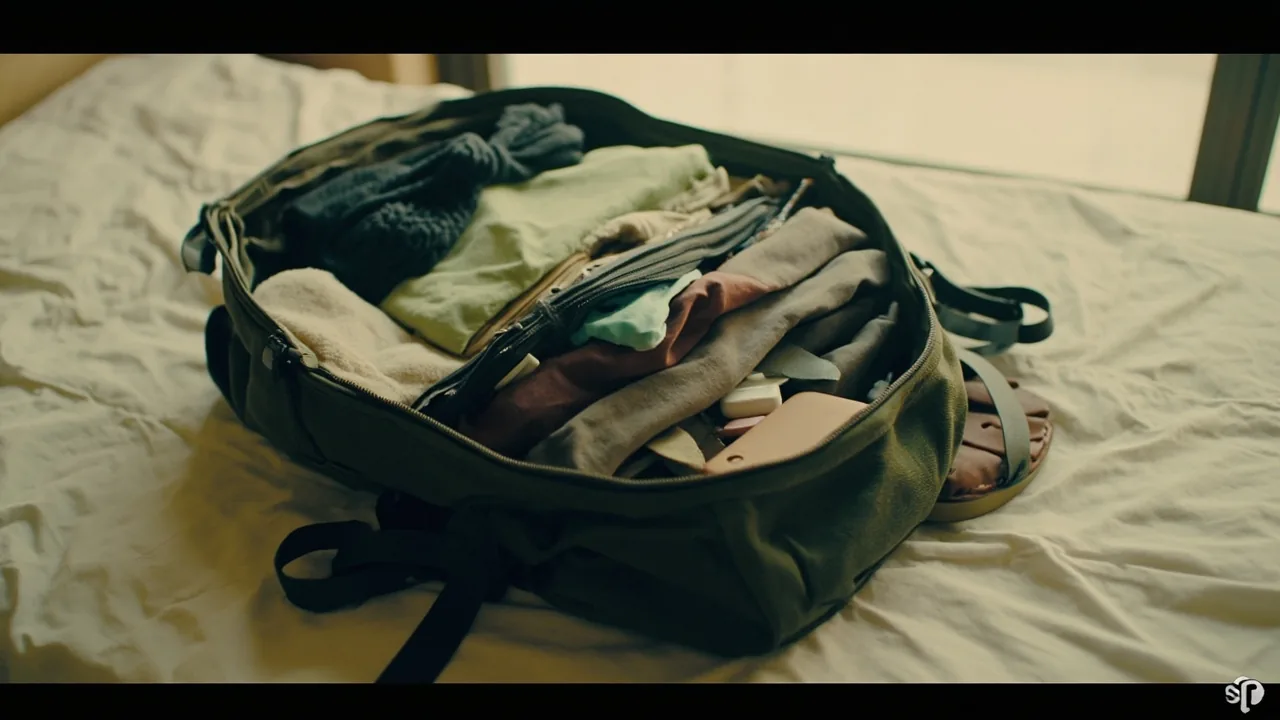
Southeast Asia Packing List for Indians: Complete Guide
Packing light is the single biggest favour you can do yourself before a Southeast Asia trip. A 40-50 litre backpack is enough for three weeks across Thailand, Vietnam, Laos, and Cambodia, because everything you forget is buyable locally for cheap. This complete packing list is built around that reality. Planning the wider region? Our Southeast Asia backpacking hub covers the full multi-country route.
Quick Answers
| What | Answer | Price (INR) |
|---|---|---|
| Ideal backpack size | 40-50 litres, frameless or internal-frame | ₹4,000-₹12,000 (~$41.46-$124.38) |
| Power bank limit (cabin baggage) | Under 100 Wh (roughly 27,000 mAh at 3.7V), airline by airline | Free |
| Sunscreen from India (50ml SPF 50) | Three to four times cheaper than 7-Eleven in Bangkok | ₹250-₹400 (~$2.59-$4.15) |
| Hostel laundry per kg | Drop-off service in every major city, next-day return | ₹172-₹287 (~60-100 THB or ~$1.79-$2.98) |
| Sarong for temple visits | One light cotton sarong covers shoulders and knees anywhere | ₹300-₹500 (~$3.11-$5.18) |
The Ultimate Packing Checklist
This is the master packing list compiled from regional climate data, airline policy as published by DGCA and individual carriers (IndiGo, AirAsia, VietJet, Thai Vietjet), and hostel/transport constraints reported across Thailand, Vietnam, Laos, and Cambodia. The framework fits in a 45L bag if you stick to the clothing counts above and leave the bulky items (laptop, heavy jeans, formal shoes) at home.
Clothing (pack for 7-10 days, wash weekly):
- 4 quick-dry t-shirts (merino or polyester, no cotton)
- 2 light trousers or zip-off pants
- 1 pair of shorts
- 1 light hoodie or fleece (for AC buses and northern Laos nights)
- 7 pairs of underwear, 2 sports bras, 7 pairs of socks
- 1 swimsuit
- 1 light rain jacket or poncho
- 1 cotton sarong or scarf (temples, mosques, hostel cover-up)
Footwear:
- 1 pair broken-in walking shoes or trail runners
- 1 pair Tevas, Chacos, or sturdy flip-flops
- Optional: water shoes for Halong Bay and island stops
Toiletries (travel sizes only):
- Toothbrush, travel toothpaste, floss
- Travel shampoo and body wash bar (lighter than bottles)
- Roll-on deodorant
- Razor and 2 blades
- SPF 50 sunscreen (bring from India, it is 3-4x cheaper)
- Mosquito repellent with DEET 30-40%
- Small towel or microfibre travel towel
- A few packets of ORS and Paracetamol
First Aid:
- Paracetamol, Ibuprofen
- Loperamide (for traveller’s diarrhea, use sparingly)
- Domperidone or Ondansetron (for nausea)
- Cetirizine (allergies, also helps as a mild sleep aid on long buses)
- Broad-spectrum antibiotic like Azithromycin (consult your doctor before flying)
- 4-5 bandages, micropore tape
- Hand sanitiser and 4 wet wipes per day
Documents and money:
- Passport, 2 printed visa copies, 4 passport photos for visa-on-arrival backups
- ₹19,281-₹28,921 (~200-300 USD) in crisp notes (for visas, border crossings, and as an emergency float)
- Forex card loaded in USD, plus ₹20,000-₹30,000 (~$207.29-$310.94) in cash for airport day
- Photocopy of passport and insurance, kept separately from the original
- Travel insurance policy printout
Subodh’s Pro Tip: Photograph your passport, visa, insurance, and vaccine card on your phone and email yourself a copy. If the original gets stolen in a tuk-tuk or guesthouse, you can show the embassy a photo the same hour.
Monsoon vs Dry Season Packing
Southeast Asia has two patterns. Most of Thailand, Vietnam, Cambodia, and southern Laos run May to October wet / November to February dry. Northern Vietnam and northern Laos share the same May to September rainfall peak as the rest of the region, just with cooler temperatures than the south. Hanoi and Sapa are rainiest from May to September.
Monsoon packing (May-October):
- Quick-dry synthetic everything. Cotton stays wet for hours.
- A proper rain poncho with a hood, not a flimsy disposable one. Vietnam rains are sideways.
- A 10-20L dry bag for electronics and documents on scooter days in places like Da Nang, Phuket, and Siem Reap.
- Waterproof sandals like Tevas, not foam flip-flops that slip when wet.
- Anti-chafe cream for thighs (monsoon humidity turns every walk into sandpaper).
- One extra pair of socks per day of monsoon travel.
Dry season packing (November-February):
- Linen and lightweight cotton breathe better than synthetics.
- Sunglasses with UV protection (Bangkok and Hanoi sun is harsh from December-February).
- A wide-brim hat or cap for midday walks.
- Higher-SPF sunscreen because UV index hits 11+ in southern Thailand and southern Vietnam.
- A thin long-sleeve shirt for AC-induced cold in malls and sleeper buses.
Subodh’s Pro Tip: One base layer of merino wool works in both seasons. It dries faster than cotton in the wet, and insulates without bulk when northern Vietnam drops to 10°C in December.
Electronics and Tech Setup
Tech is the heaviest category by weight and the easiest to overpack. Here is what you use.
Must-pack:
- Universal travel adapter. Thailand uses A, B, C, and F sockets. Vietnam uses A, C, and G. Cambodia is A and C. Laos is A, B, and C. One all-in-one adapter saves four different plugs.
- 1 compact 65W GaN charger with 2 USB-C ports and 1 USB-A. Charges laptop, phone, and power bank with one plug.
- 2 USB-C to USB-C cables, 1 USB-C to Lightning (if you carry an iPhone older than 15)
- Power bank under 100 Wh. Indian airlines, VietJet, AirAsia, and Thai Vietjet enforce this strictly. A 20,000 mAh power bank at 3.7V is exactly 74 Wh. A 27,000 mAh at 3.7V is 99.9 Wh, technically just under the 100 Wh cabin limit. Anything at or above 100 Wh is confiscation at security.
- Offline Google Maps download for every country
- Headphones (wired or ANC, your call)
Connectivity: Get Nomad eSIM before you fly. Activate on landing, skip the airport SIM stalls, and stay connected from the moment the wheels touch down. If you would rather weigh a local SIM against pocket Wi-Fi, our Vietnam SIM card vs pocket Wi-Fi comparison walks through the trade-offs.
For physical SIM, dtac and AIS in Thailand, Viettel and Mobifone in Vietnam, and Smart in Cambodia all sell tourist SIMs at 7-Eleven. Our dtac Thailand SIM card guide covers Thai tourist plans in detail. Read electronics-guide-for-southeast-asia-travel-what-to-bring-from-india before deciding.
Skip:
- Laptop unless you work remotely. Most hostels have desktops and coworking is everywhere.
- Kindle is fine, an iPad is too heavy.
- Camera if your phone shoots 4K (every modern phone does).
- Drone. Customs in Vietnam and Cambodia routinely confiscate them at airport entry.
For the full socket breakdown, the southeast asia plug adapter guide is the cleanest reference.
Cultural Dress Codes: Temples vs Beaches
Southeast Asia has hard rules at religious sites. The Grand Palace in Bangkok, Angkor Wat, and most temples in Chiang Mai will physically turn you away if your knees or shoulders are bare. The penalty is real: ticket counters refund nothing.
Temple dress code:
- Shoulders covered. A t-shirt is fine, a tank top is not.
- Knees covered. Shorts above the knee will get you stopped at the gate.
- Shoes off inside every prayer hall.
- No hats inside.
The one-item fix: carry one cotton sarong (₹300-₹500 (~$3.11-$5.18) from Dadar or Colaba market). Wrap it around your waist when shorts show too much knee, drape it over your shoulders when a sleeveless top shows skin, and use it as a beach cover-up on Phuket and Koh Tao. It weighs 150 grams and replaces three separate clothing items.
Mosque dress code (Cambodia, Malaysia, Singapore):
- Women need to cover hair, arms, and ankles. Most mosques lend a robe and scarf at the entrance.
- Men need long trousers and covered shoulders.
Beach and island dress code:
- Anything goes on beaches, but swimwear off the sand is considered rude in Thailand and Cambodia. Bring a sarong or cover-up tee for the walk back to your hostel.
Trail Laundry and Toiletries
Every hostel, guesthouse, and many homestays offer laundry by the kilogram. Drop your bag in the morning, collect it the next afternoon or evening, often folded. Standard rate is ₹172-₹287 (~60-100 THB or ~$1.79-$2.98) per kg in Thailand, ₹110-₹184 (~30,000-50,000 VND or ~$1.15-$1.91) per kg in Vietnam, and ₹35-₹65 (~8,000-15,000 LAK or ~$0.36-$0.67) per kg in Laos.
That is the single biggest reason to pack 7 t-shirts instead of 14. You wash the lot every 5-6 days and never carry more than a kilo of clothes.
Toiletries you forget can be bought at 7-Eleven, Circle K, FamilyMart, VinMart, or Lucky Express. Toothpaste, shampoo, soap, deodorant, sanitary products, even cheap SPF 30 sunscreen are stocked. The exception is high-SPF sunscreen (50+) and good mosquito repellent, both of which are 3-4 times more expensive than India. Bring those two from home.
Common Packing Mistakes Indians Make
Mistake 1: Bringing a hardshell suitcase. Suitcases are death on Southeast Asia’s uneven footpaths, sleeper bus steps, and boat docks. A 45L backpack with a hip belt lets you walk 20 minutes from a bus stop to a hostel without dragging wheels over cobblestones.
Fix: 40-50L internal-frame backpack with a rain cover. Decathlon Forclaz 50L is around ₹4,000 (~$41.46) and survives the trip.
Mistake 2: Packing jeans and heavy cotton hoodies. Jeans take 8 hours to air-dry in monsoon humidity. A wet pair of jeans in a hostel dorm for two days is a smell you cannot remove.
What happens: Travellers wear jeans once on a chilly night in Sapa, wash them, hang them for 36 hours, and pack them still damp. They grow mildew.
Fix: One pair of quick-dry zip-off travel pants. Convert to shorts in hot weather, full trousers at night. Skip jeans entirely.
Mistake 3: Ignoring power bank watt-hour limits. Indian aviation rules (DGCA, aligned with IATA) cap cabin power banks at 100 Wh per battery, with airline approval needed from 100-160 Wh. No battery above 160 Wh is allowed at all.
What happens: A 30,000 mAh power bank at 3.7V is 111 Wh, above the safe cabin limit. Security at Mumbai, Delhi, and Bangkok airports routinely confiscate these. Travellers lose ₹2,000-₹3,500 (~$20.73-$36.28) at the bin.
Fix: 20,000 mAh power bank (74 Wh), under the limit, no questions. Charge nightly. Read the best power banks for Southeast Asia travel 2026 buyer’s guide for tested options.
Mistake 4: Bringing too many shoes. Three pairs is the absolute max: walking shoes, sandals, flip-flops. Anything more is weight you feel at 11 PM climbing into a sleeper bus.
What happens: Travellers bring formal shoes for a “nice dinner.” That dinner never happens, the shoes ride home unused.
Fix: One pair of walking shoes you already wear, one pair of sturdy sandals (Tevas or Chacos) that can handle both water and city walking.
Mistake 5: Forgetting photocopies and scans. Losing your passport in a tuk-tuk or hostel theft is the most common Indian-traveller crisis in Southeast Asia. Without a copy and a scan, getting an emergency passport at the Indian embassy in Bangkok or Hanoi takes 3-5 working days, and travellers without a paper backup or cloud scan have been stranded for a week in the worst cases.
What happens: Travellers who lose passports on boats and buses without any copy or scan can spend several working days at an Indian embassy before being able to fly home.
Fix: One paper photocopy in your bag, one scan emailed to yourself and a family member. Ten minutes before you leave saves a week if it goes wrong.
Safety Alert: For current travel advisories covering Cambodia, Vietnam, Laos, and Thailand, check the Indian Ministry of External Affairs travel advisory page at mea.gov.in before departure. Conditions around border regions and during political events can change without notice, and advisories are updated faster than any blog post can be.
FAQ
Can I bring a suitcase instead of a backpack? You can, but you will regret it by day three. Sleeper bus luggage compartments are tight, tuk-tuk boots are tiny, and most hostels are up at least one flight of stairs with no lift. A backpack wins every time.
Are power banks allowed in cabin baggage? Yes, under 100 Wh (about 27,000 mAh at 3.7V) with no airline approval needed. Between 100-160 Wh needs airline approval. Above 160 Wh is banned. Power banks are not allowed in checked baggage on any airline.
Can I buy sunscreen cheap in Thailand? You can, but SPF 50 from Boots or 7-Eleven costs ₹1,005-₹1,723 (~350-600 THB or ~$10.43-$17.87). The same SPF 50 from Mediker or Lotus Herbals in India costs ₹250-₹400 (~$2.59-$4.15). Bring two tubes from home.
Do I need a raincoat in monsoon? Yes, a proper one with a hood. The cheap ₹200 (~$2.07) disposable ponchos from Bangkok markets tear after one downpour. A Decathlon raincoat at ₹1,500 (~$15.55) lasts the whole trip.
Is it safe to drink tap water in Southeast Asia? No. Stick to bottled water (7-Eleven, Circle K, or local brands), and check the seal is intact before drinking. A reusable bottle with a built-in filter is a good buy.
What weight do airlines allow for check-in baggage? Most SEA-hop flights (AirAsia, VietJet, Thai Vietjet) allow 20 kg checked and 7 kg cabin on international routes from India. Budget carriers are strict, weigh at home. Excess is ₹600-₹900 (~$6.22-$9.33) per kg.
Do I need a sarong for every temple? Yes, one cotton sarong handles 90% of dress codes. Buddhist temples in Thailand, Cambodia, and Laos, and mosques in Malaysia and Singapore. It weighs nothing and saves you at the gate.
Subodh’s Take
The right bag is the trip. A 45L backpack with one week’s clothes, a 20,000 mAh power bank, a universal adapter, two sarongs, and four t-shirts beats a 70L suitcase full of “just in case” every time. You will end up buying a loose tank top in Hoi An for ₹400 (~$4.15) and a pair of board shorts in Koh Tao for ₹600 (~$6.22), and that is the point. Pack the framework, fill the gaps locally, save the kilojoules for the actual trip.
