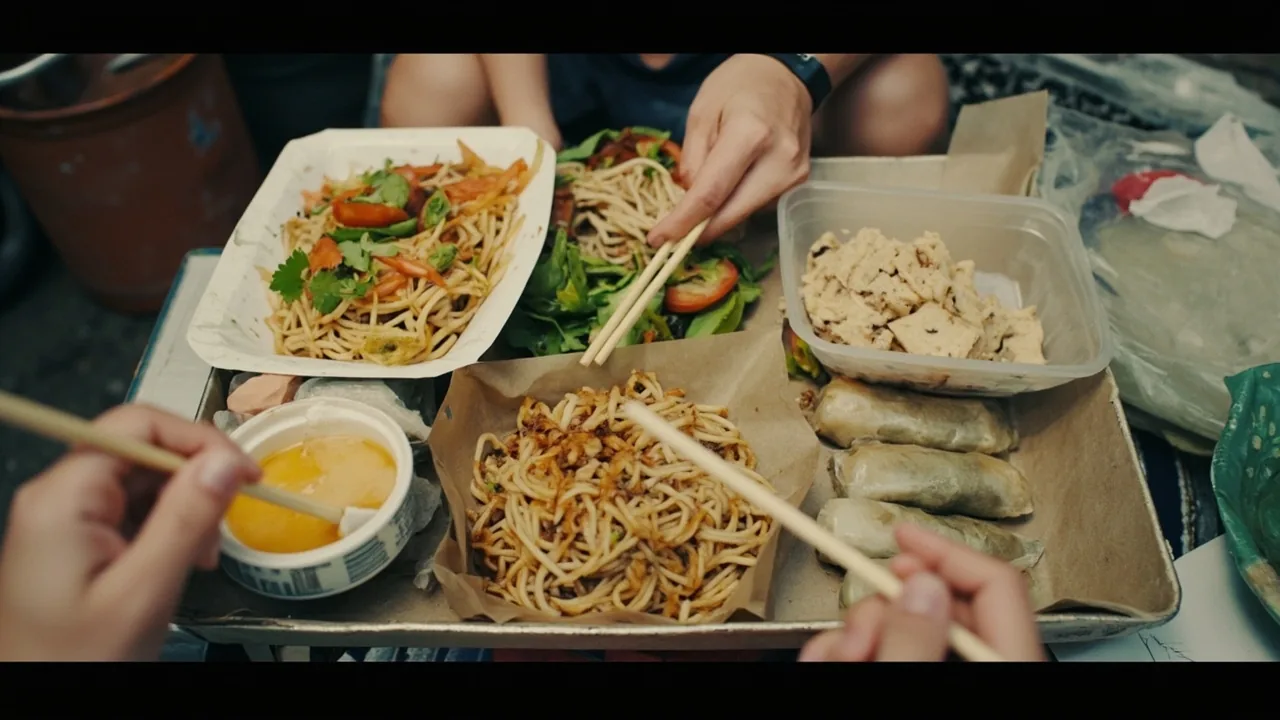
Vegetarian & Indian Food in Thailand: What to Eat, What to Avoid & The Ultimate 7-Eleven Snack List
The single biggest question I get from Indian travellers heading to Thailand is also the most basic: “Will I starve?” It’s a fair fear, because if you just walk into random Thai restaurants in Bangkok or Phuket and start reading menus in Thai script, you can end up with a plate of fish-sauce-soaked noodles when you thought you ordered vegetables. The good news: Thailand is one of the easiest countries in Southeast Asia for vegetarian Indian travellers, and the prices make it almost embarrassing. This guide is verified against traveller reports from June 2026, cross-checked with the official TDAC entry rules, and grounded in what I hear back from backpackers on the Bangkok to Chiang Mai corridor every month.
Quick Answers
| What | Answer | Price (INR) |
|---|---|---|
| Will I starve as a vegetarian in Thailand? | No. Jay restaurants, Indian spots, and 7-Eleven cover you everywhere. | Free worry |
| Average cost of a veg Thai street meal? | Pad Thai, Som Tam, or Khao Man Gai from a street cart | ₹115-₹230 (~40-80 THB or ~$1.19-$2.38) |
| Average cost of a full Indian veg thali? | Dal, sabzi, roti, rice at a sit-down Indian restaurant | ₹430-₹717 (~150-250 THB or ~$4.47-$7.45) |
| AIS/TrueMove tourist SIM (15 days, ~15 GB) | At 7-Eleven or airport, AIS/TrueMove tourist SIM | ₹1,145 (~399 THB or ~$11.88) |
| 7-Eleven veg snack budget per day? | Onigiri, tofu, soya milk, bread, instant noodles (veg) | ₹287-₹430 (~100-150 THB or ~$2.98-$4.47) |
Subodh’s Pro Tip: “Jay” (เจ) is the magic word in Thailand. Any dish marked Jay is Buddhist-vegan by default, no fish sauce, no egg, no dairy. The word comes from the Chinese Mahayana vegetarian tradition, and Thai Buddhists adopted it wholesale. Look for the yellow flag with red Chinese characters outside restaurants. That flag = safe to eat. Planning the wider region? Our Southeast Asia backpacking hub covers the full multi-country route.
Why Thailand Works for Vegetarian Indians
Thailand has three layers of food infrastructure that stack up perfectly for Indian vegetarians. First, there’s a deep local Buddhist-vegetarian tradition (the “Jay” food scene), which means you don’t have to hunt for options, they’re already there. Second, there’s a large, established Indian diaspora running restaurants in every tourist city, with prices half of what you’d pay in the Gulf. Third, the 7-Eleven network is so dense (over 13,000 stores nationwide) that you are never more than a 5-minute walk from a hot meal, and the Japanese-Thai fusion snacks they stock are accidentally vegetarian-friendly. For broader safety and health context before you travel, see our guide on health risks for Indian travellers in Thailand.
For the FX math, the current rate is 1 THB = ₹2.87, so 100 THB = ₹287. Most veg street meals come in at 40-80 THB (₹115 to ₹230), and a proper Indian thali in a sit-down restaurant is ₹430-₹717 (~150-250 THB or ~$4.47-$7.45). At those prices, you can eat three full meals plus snacks for less than ₹1,000 (~$10.36) a day.
Safety Alert: Fish sauce (“nam pla”) and oyster sauce are in almost every Thai stir-fry by default. Pad Thai that looks vegetarian usually isn’t. Oyster sauce is the silent killer because the name sounds plant-based. Always ask, or stick to Jay restaurants and Indian places.
What to Eat: The Local Vegetarian Scene
The local Thai vegetarian food scene is better than most Indians expect, because Thailand has its own plant-based tradition that predates the tourist boom by centuries.
Jay Restaurants (Buddhist Vegan)
Jay food is the easiest, safest bet in any Thai city. The cooking is fully vegan: no meat, no fish sauce, no egg, no dairy, no garlic, no onion in some cases. For strict vegetarians this is a bonus; for Jains, ask about onion/garlic separately because some Jay kitchens do use them.
In Bangkok, Kao Man Kai Jay Vegan Food is a well-rated local option serving the rice-and-chicken analogue that gives the place its name, except made with soy-based mock chicken. In Chiang Mai, Chada Vegetarian Restaurant Chiang Mai covers both Thai and Indian veg dishes. Most Jay restaurants run lunch buffets (sometimes called “Jay buffet”) for ₹230-₹344 (~80-120 THB or ~$2.38-$3.57), which is the cheapest full meal you’ll find in any Thai city.
Dishes That Are Vegetarian (Easy to Make So)
Several Thai classics can be ordered vegetarian if you know what to ask for. The trick is to specify “Jay” (vegan) or “without nam pla” (without fish sauce). Most street vendors understand both phrases.
- Pad Pak Ruam (mixed vegetables stir-fried with garlic and soy): ₹143-₹230 (~50-80 THB or ~$1.49-$2.38). The default veg Thai dish. Comes with broccoli, cabbage, carrot, mushrooms, and morning glory depending on the season.
- Pad Pak Boong Fai Daeng (stir-fried morning glory with garlic and chili): ₹115-₹172 (~40-60 THB or ~$1.19-$1.79). One of the most popular veg dishes in Bangkok. Garlic-heavy, slightly spicy, cheap.
- Pad Thai Jay (vegetarian pad thai, no egg, no fish sauce): ₹143-₹230 (~50-80 THB or ~$1.49-$2.38). A tourist staple that the vendors have figured out, so most know the Jay version by default.
- Khao Man Gai Jay (Hainanese-style “chicken” rice, made with tofu): ₹115-₹172 (~40-60 THB or ~$1.19-$1.79). The Jay version of a Bangkok classic.
- Som Tam Jay (papaya salad, vegan, no fish sauce, no shrimp paste): ₹115-₹172 (~40-60 THB or ~$1.19-$1.79). The standard version uses fish sauce and shrimp paste, so order the Jay version or ask “without nam pla, without kapi.” Specify “mai phet” (not spicy) if you can’t handle the heat.
- Tom Yum Jay (sour soup, vegetarian, no shrimp): ₹230-₹430 (~80-150 THB or ~$2.38-$4.47). The lemongrass-tomato-mushroom version is one of the most underrated veg Thai dishes.
- Mango Sticky Rice (khao niao mamuang): ₹172-₹287 (~60-100 THB or ~$1.79-$2.98). Dessert, vegetarian, available everywhere from street carts to mall food courts.
Other Local Spots Worth Knowing
Outside the Jay network, several non-veg Thai restaurants run explicit vegetarian sections or have staff who understand veg Indian requirements. Food Lab in Bangkok is one such option that handles a mixed menu. For seafood-adjacent places that still serve good veg (when their veg kitchen isn’t crossed with the seafood one), Mama Rocky’s Food and Cocktails and Racha Seafood have been flagged by travellers, but as a strict vegetarian, confirm the veg items are cooked separately. Same caution applies to Som’s Seafood, which is popular with mixed groups.
The Indian Food Backup: When You Need Dal-Chawal
After three or four days of stir-fried greens, the soul craves dal-chawal. This is where Thailand’s Indian restaurant scene earns its keep, and it punches well above its weight for Southeast Asia.
Kanchan Indian Food (Home Made, Pure Veg) in Bangkok is a family-run Punjabi pure-veg spot, the kind of place where the owners are cooking in the back and the menu is exactly the home-style North Indian thalis you’d expect. A full thali with dal, sabzi, roti, rice, and pickle runs ₹430-₹717 (~150-250 THB or ~$4.47-$7.45), and the portions are generous. Chai “N” Thai @ Nimman Indian Restaurant in Chiang Mai’s Nimmanhaemin area covers North Indian, South Indian, vegan, and gluten-free, with strong reviews from the Indian backpacker crowd. Chada Vegetarian Restaurant Chiang Mai is a third option that mixes local and Indian dishes, useful when the group has mixed preferences.
Subodh’s Pro Tip: Indian restaurants in tourist areas (Khao San, Nimman, Patong) are 50 to 100% more expensive than the same food in a local area. If you walk two blocks away from the main strip in any city, prices drop fast. In Chiang Mai, eating on the small lanes just south of Nimmanhaemin Road is a fraction of the cost of eating on the road itself.
A few words of warning about Thai-Indian restaurants: “veg” sometimes means “veg-but-butter-and-cheese,” and “pure veg” can mean “we don’t cook meat, but we use the same cutting board.” If you’re strict (Jain, no onion/garlic, no shared surfaces), the answer is still to find a Jay restaurant, which is fully vegan by religious rule. For everyone else, Indian restaurants in Thailand are reliable.
The 7-Eleven Snack Bible: What Veg Indians Eat
This is the section every Indian backpacker needs. Thailand’s 7-Eleven network is the cheapest, most reliable food source in the country, and the Japanese-Thai fusion means several of the hot-case and onigiri items are accidentally vegetarian. Prices for most snacks are ₹34-₹143 (~12-50 THB or ~$0.36-$1.49), and a full day of 7-Eleven eating comes in under ₹430 (~150 THB or ~$4.47).
Onigiri (Japanese Rice Balls)
The single best 7-Eleven discovery for Indian vegetarians. These are triangular seaweed-wrapped rice balls with a filling, sitting in the rice-and-snack aisle (not the hot case). The fillings to look for:
- Egg onigiri (tamago): not vegetarian, skip.
- Tuna mayo onigiri: not vegetarian, skip.
- Kelp (konbu) onigiri: vegetarian. ₹34-₹52 (~12-18 THB or ~$0.36-$0.54).
- Ume (pickled plum) onigiri: vegetarian. ₹34-₹52 (~12-18 THB or ~$0.36-$0.54).
- Salmon onigiri: not vegetarian, skip.
The egg and tuna ones look identical to the vegetarian ones except for the label, so read carefully.
Soya Milk and Yoghurt Drinks
The chilled drinks case has multiple vegan options. Vita Soy Milk is the most common brand, in original (plain), chocolate, and black sesame. All are vegan and ₹34-₹52 (~12-18 THB or ~$0.36-$0.54). The Meiji strawberry and banana milk is not vegetarian (contains milk), so stick to Vita.
Hot-Case Items
The 7-Eleven hot case is the late-night backpacking food of Thailand, but most items are meat-heavy. The vegetarian-friendly picks:
- Steamed buns with red bean paste (kozi): ₹57-₹86 (~20-30 THB or ~$0.60-$0.89). Sweet, vegan, surprisingly good.
- Steamed buns with custard filling: ₹86-₹115 (~30-40 THB or ~$0.89-$1.19). Not vegan (egg + milk), but vegetarian.
- Tofu puffs in soy sauce (tao hu tod): ready-to-eat, ₹72-₹115 (~25-40 THB or ~$0.74-$1.19).
Avoid: every sausage roll, the chicken buns, the pork buns, the curry buns unless you can read the ingredient list.
Instant Noodles
The entire instant-noodle shelf in 7-Eleven looks vegetarian, but the seasoning sachets often contain dried shrimp. The safe picks:
- MAMA Tom Yum Noodles (cream flavour): ₹37-₹57 (~13-20 THB or ~$0.39-$0.60). Contains milk powder, vegetarian. Skip the tom yum flavour with shrimp.
- MAMA Pad Thai flavour: ₹43-₹57 (~15-20 THB or ~$0.45-$0.60). No shrimp in the standard sachet, but check the back of the pack.
- Vifon or Boo Thai vegetarian phak: more expensive, ₹72-₹115 (~25-40 THB or ~$0.74-$1.19), but explicitly labelled vegetarian.
Safety Alert: Even “vegetable flavour” Thai instant noodles often have anchovy or shrimp powder. The Thai word “nam buai” (น้ำปู) literally means “crab water” and appears in the ingredient list of several non-meat-flavoured noodles. Read the back of the packet. If you can’t read Thai, look for the green “เจ” (Jay) stamp on the front, this is the only reliable sign.
Snacks and Sweets
- Lay’s Stax, Pringles: most flavours in Thailand are vegetarian, but some have chicken or prawn seasoning. Sea salt and original flavours are safe.
- Pocky: all sticks are vegetarian, some are vegan (the strawberry and chocolate ones). ₹57-₹100 (~20-35 THB or ~$0.60-$1.04).
- Bento squid snacks (Thai brand squid-shaped crispy snacks): not vegetarian despite the seafood mascot, contains real squid. Skip.
- Biscuit sticks and wafers (Bourbon, Lotus): mostly vegetarian, check for “may contain milk” if you’re strict vegan.
- Banana or taro chips (real fruit, real veg): vegetarian, ₹57-₹115 (~20-40 THB or ~$0.60-$1.19). The most Thai of 7-Eleven snacks.
Bread, Sandwiches, and Breakfast
The 7-Eleven bakery section has plain croissants, milk bread, and raisin bread, all vegetarian. The sandwiches in the chiller are mostly egg mayo or ham, so skip those unless labelled “Jay” or explicitly veg. For a real breakfast, the cheaper move is two onigiri plus a Vita Soy, around ₹143 (~50 THB or ~$1.49) total.
Subodh’s Pro Tip: Every 7-Eleven has a microwave and a hot water dispenser behind the counter. You can buy any onigiri, any instant noodle, and any cold drink, ask the staff to heat the onigiri for 30 seconds (it transforms the texture) and the noodles for 3 minutes. They do this all day, every day, for free. The same microwave is also how you handle leftover Jay buffet from a restaurant, take it back, microwave at 11 pm.
What to Avoid
Several Thai foods look vegetarian but aren’t, and a few dishes are widely believed to be safe when they contain hidden animal products. The full list of “looks-veg-but-isn’t” Thai foods:
- Pad Thai: made with dried shrimp, fish sauce, and egg by default. Order “Pad Thai Jay” specifically.
- Tom Yum Goong: shrimp-based. Order “Tom Yum Jay” with mushrooms.
- Som Tam: fish sauce and shrimp paste (kapi) are standard. Order “Jay” version or ask without.
- Green curry (gaeng keow wan): Thai basil green curry usually has fish sauce and chicken or beef. Order “Jay” version.
- Massaman curry: same as green curry, almost always contains meat and fish sauce.
- Spring rolls (poh pia tod): some are vegetarian, some contain minced pork. Ask first.
- Mango sticky rice: safe. Listed here because some places add coconut cream made with non-veg stabilizers, but this is rare.
- Khao Soi (northern Thai curry noodles): almost always contains chicken or beef and shrimp paste. Skip unless you find a Jay version.
- Boat noodles: always contains pork and beef. Skip.
- Moo ping (grilled pork skewers): not vegetarian. The smell will tempt you, ignore it.
Budget: How Much Vegetarian Food Costs in Thailand
The math is striking. A typical day of eating as a vegetarian Indian in Thailand breaks down like this (verified 2026-07-17, 1 INR = 0.349 THB, so 100 THB = ₹287):
| Meal | What | Price |
|---|---|---|
| Breakfast | 2 onigiri + 1 Vita Soy from 7-Eleven | ₹143-₹201 (~50-70 THB or ~$1.49-$2.08) |
| Lunch | Jay buffet or Pad Thai Jay from a street cart | ₹230-₹344 (~80-120 THB or ~$2.38-$3.57) |
| Afternoon snack | Mango sticky rice or fresh fruit from a cart | ₹115-₹172 (~40-60 THB or ~$1.19-$1.79) |
| Dinner | Indian thali or full Jay meal at a sit-down place | ₹430-₹717 (~150-250 THB or ~$4.47-$7.45) |
| Late-night | 7-Eleven steamed bun + green tea | ₹115-₹143 (~40-50 THB or ~$1.19-$1.49) |
| Day total | ₹1,033-₹1,578 (~360-550 THB or ~$10.72-$16.38) |
That’s ₹1,033 (~$10.71) to ₹1,578 (~$16.36) per day for a full vegetarian Indian diet with one Indian restaurant meal a day. Cut the Indian meal and you go down to ₹717-₹1,004 (~250-350 THB or ~$7.45-$10.42) per day. Even at the high end, eating vegetarian in Thailand is cheaper than eating vegetarian at home in most Indian cities.
Getting Connected: SIM and Maps
For food specifically, you need mobile data to use Google Maps to find Jay restaurants in any new city. The AIS or TrueMove tourist SIM is the standard pick, ₹1,145 (~399 THB or ~$11.88) for 15 days with about 15 GB of data, available at every 7-Eleven and at Suvarnabhumi / Don Mueang airport kiosks on arrival. If you need help budgeting the rest of your trip after landing, our solo travel guide for first-timers in Bangkok covers the usual first-week costs and SIM options. Just bring your passport, the staff do the activation in five minutes.
If you don’t want to swap your Indian SIM, the Get Nomad eSIM option is cheaper for short trips and activates before you even board the plane. Either way, don’t skip data. It is the single most useful food-finding tool in Thailand.
Common Mistakes Indian Vegetarians Make in Thailand
- Assuming “vegetable” means vegetarian. Thai vegetable dishes are made with fish sauce and oyster sauce by default. Specify “Jay” or “without nam pla.” This is the single most common mistake and the reason vegetarians end up with stomach issues.
- Eating only at Indian restaurants. They’re a backup, not the main plan. The local Jay food scene is the real discovery. Skip Indian food for breakfast and lunch on most days, save it for dinner when the soul needs it.
- Skipping 7-Eleven. Some travellers think 7-Eleven food is “unhealthy” or “not a real meal.” For Indian vegetarians in Thailand, it is a lifeline. Onigiri and tofu puffs are real food, and they’re the cleanest vegetarian options in the country.
- Not learning the word “Jay.” Two letters (เจ) solve 80% of the food-fear problem. The moment you know this word, every menu in Thailand becomes navigable.
- Over-relying on the buffet. The Jay lunch buffet (₹230-₹344 (~80-120 THB or ~$2.38-$3.57)) is a great deal, but many buffets are heavy on fried food and low on actual nutrition. Mix in fresh papaya salad, stir-fried greens, and soup for a balanced day.
Subodh’s Take
Vegetarian Indians overthink Thailand. The country has a 2,000-year-old Buddhist vegetarian tradition, a Thai-Indian restaurant on every tourist block, and a 7-Eleven every 200 metres. Many Indian travellers also book cooking and diving day-trips on the side; a rundown of what’s worth the money is in our guide to solo activities like cooking, diving and elephants in Thailand. You will not starve. You will eat well. You’ll spend less on food in a week than you’d spend in three days in Dubai. Learn the word “Jay,” download Google Maps offline for your route, and trust the system. The only real challenge is the same as any other country: read the menu, ask the question, and don’t assume anything that looks vegetarian is.
FAQ
Will I starve as a vegetarian in Thailand? No. Thailand has a deeper vegetarian infrastructure than most Indian travellers expect. Jay restaurants, Thai-Indian restaurants, and 7-Eleven stock together cover every meal of the day in any city or tourist island.
What does “Jay” mean in Thai food? Jay (เจ) is the Thai word for Buddhist-vegan food. The kitchen uses no meat, no fish sauce, no egg, no dairy, and no onion or garlic in stricter versions. Yellow flags with red Chinese characters outside restaurants mark Jay food. It is the safest, easiest vegetarian option in Thailand.
How much does vegetarian food cost in Thailand per day? For a full day including one Indian restaurant meal, ₹1,033-₹1,578 (~360-550 THB or ~$10.72-$16.38). If you skip the Indian meal and rely on Jay buffets plus 7-Eleven, the day comes in at ₹717-₹1,004 (~250-350 THB or ~$7.45-$10.42). Either way, eating vegetarian in Thailand is cheaper than at home in most Indian cities.
Is Pad Thai vegetarian? Not by default. Standard Pad Thai contains dried shrimp, fish sauce, and egg. You have to order “Pad Thai Jay” specifically. Most tourist-area vendors know the Jay version; many local vendors don’t. Ask first.
Are 7-Eleven snacks safe for vegetarians in Thailand? Most are. The safest picks are onigiri with kelp or plum filling, Vita brand soy milk, MAMA Pad Thai flavour instant noodles, steamed red bean buns, plain bread, and the marked veg Pocky. The biggest risk is the hot-case meat buns and the “vegetable flavour” instant noodles that contain dried shrimp in the seasoning sachet.
Do I need to know Thai to eat vegetarian? No. The word “Jay” (เจ) is the only Thai you need. Show the yellow character on your phone, point to the dish you want, and you’re done. Most Jay restaurant menus also have English or photos. For street stalls without English, pointing at what the next customer ordered usually works.
What if I have dietary restrictions beyond vegetarian (Jain, gluten-free, allergy)? Thailand handles Jain-style food (no onion/garlic) at stricter Jay restaurants, and gluten-free is doable at most places that cook to order. Severe allergies should be written down in Thai on your phone (“I am allergic to peanuts / shellfish / soy”) and shown to the staff. Most Thai cooks will accommodate a clear written request.
