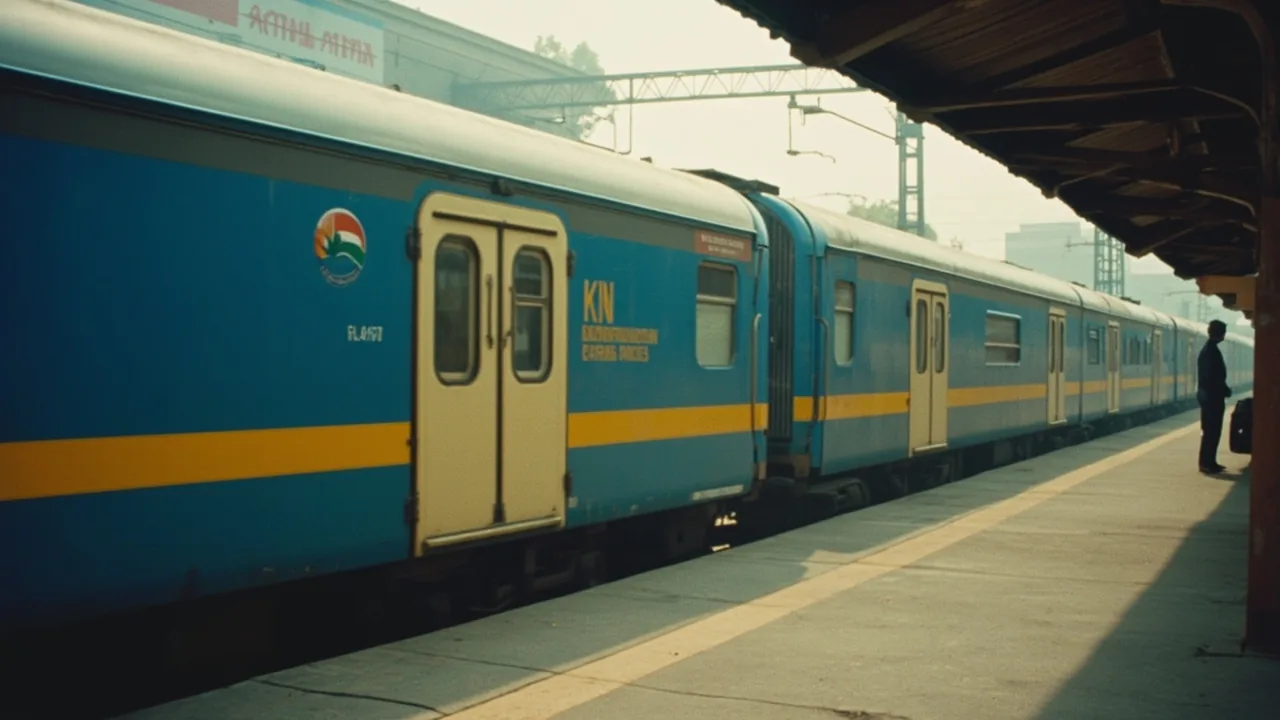
Vietnam Reunification Express: Routes, Timings & Ticket Prices (2026)
✅ Last verified on-the-ground: 17 July 2026
The Reunification Express train is the single rail line that runs the length of Vietnam, from Hanoi in the north to Ho Chi Minh City in the south. Fares for the full Hanoi to Saigon journey start around ₹4,788 (~1,300,000 VND or ~$49.67) in a hard sleeper, and the trip takes 30 to 36 hours depending on which train number you pick. Tickets go on sale 30 to 60 days before departure and the SE1 and SE7 are the two fastest, most-booked services. Planning the wider region? Our Southeast Asia backpacking hub covers the full multi-country route.
What Is the Reunification Express?
The Reunification Express train (Đường sắt Bắc Nam) is Vietnam’s north-south railway, 1,726 km long, operated by Vietnam Railways (Đường sắt Việt Nam). It was rebuilt on the former French colonial line after the war and reopened as a single unified route in 1976, which is how it got its name. Today it runs around 18 numbered trains per day in each direction, stopping at major cities like Ninh Binh, Vinh, Dong Hoi, Hue, Da Nang, Nha Trang, and Dieu Tri.
Quick Answers
| What | Answer | Price (INR) |
|---|---|---|
| Full route length | 1,726 km, Hanoi to Ho Chi Minh City | , |
| Number of trains per day | ~18 each direction, numbered SE1 to SE22 | , |
| Journey time (Hanoi to Saigon) | 30 to 36 hours depending on train | , |
| Cheapest class | Hard seat (ghế cứng) | ₹2,578 (~700,000 VND or ~$26.74) |
| Mid-range class | Soft sleeper, 4-berth (giường nằm mềm) | ₹4,788 (~1,300,000 VND or ~$49.67) |
| Top class | Soft sleeper, VIP 2-berth cabin | ₹8,103 (~2,200,000 VND or ~$84.05) |
| Booking window | 30 to 60 days before departure | , |
| Where to book | dsvn.vn or 12go.asia | , |
| Best trains for time | SE1 (northbound), SE7 (southbound) | , |
| Payment | VND at station, USD/VND card on 12go | , |
FX at the time of writing: 1 INR ≈ 270 VND. Use a forex card with no FX markup to avoid the 3 to 4 percent your bank will charge on the VND sale.
The Full Route, Stop by Stop
The Reunification Express runs the entire length of Vietnam and stops at almost every major city along the way. If you’re planning your broader trip budget across the region, our Vietnam budget trip for couple breakdown is a useful companion read. Here is what the timetable looks like end to end.
| City | Province | Distance from Hanoi (km) | Approx. Fare from Hanoi, soft sleeper (VND) |
|---|---|---|---|
| Hanoi | Ha Noi | 0 | , |
| Ninh Binh | Ninh Binh | 116 | 200,000 |
| Vinh | Nghe An | 319 | 420,000 |
| Dong Hoi | Quang Binh | 522 | 680,000 |
| Hue | Thua Thien Hue | 688 | 900,000 |
| Da Nang | Da Nang | 791 | 1,000,000 |
| Nha Trang | Khanh Hoa | 1,315 | 1,600,000 |
| Dieu Tri (Quy Nhon) | Binh Dinh | 1,065 | 1,350,000 |
| Ho Chi Minh City | Ho Chi Minh | 1,726 | 1,900,000 |
These are off-peak soft-sleeper fares. Da Nang to Hue, the coastal section most travellers ride for the scenery, costs ₹921 (~250,000 VND or ~$9.55) in a hard seat or around ₹1,289 (~350,000 VND or ~$13.37) in a soft sleeper on the SE3 or SE19.
SE1 and SE7: The Two Trains Indian Backpackers Compare
SE1 and SE7 are the two flagship long-distance services, one in each direction, similar in feel to a long-haul Thailand sleeper train but spread over two nights. SE1 runs northbound (Saigon to Hanoi), SE7 runs southbound (Hanoi to Saigon). Both are overnight trains with sleeper cars only, no hard seat, which makes them the cleanest and quickest option if you can book in time.
SE1: Saigon to Hanoi
| Detail | Answer |
|---|---|
| Direction | South to north |
| Departure | Ho Chi Minh City, Saigon Station, around 19:00 to 20:00 |
| Arrival | Hanoi Station, around 05:00 the next morning, depending on day of week |
| Total journey | 30 to 32 hours |
| Stops | 18 to 20, including Nha Trang, Da Nang, Hue, Dong Hoi |
| Best for | Travellers who want to sleep through the journey and arrive in Hanoi at dawn |
SE7: Hanoi to Ho Chi Minh City
| Detail | Answer |
|---|---|
| Direction | North to south |
| Departure | Hanoi Station, around 19:00 to 20:00 |
| Arrival | Saigon Station, around 05:00 the next morning, day three |
| Total journey | 32 to 36 hours |
| Stops | 18 to 20, same corridor in reverse |
| Best for | Travellers heading south after Hanoi, who want one overnight on the train |
Both SE1 and SE7 run as a fixed pairing: SE1 departs Saigon the night before your SE7 arrives in Saigon, so the same physical train set does the round trip. Schedules shift a little each season, so check the day before you travel.
Ticket Classes Explained
Vietnam Railways uses three cabin types on the Reunification Express. Pick by budget, not by comfort expectation, because all of them are functional rather than plush. For a quick sense of how this fits into a multi-country spend, see our Southeast Asia trip cost from India guide.
| Class | Vietnamese name | Layout | Best for |
|---|---|---|---|
| Hard seat | Ghế cứng | Padded seats, no bed | Day trips, short hops, Ninh Binh to Hue |
| Soft sleeper, 4-berth | Giường nằm mềm, 4 berths | 4 bunks per cabin, no door | Most backpackers |
| Soft sleeper, VIP 2-berth | Giường nằm mềm, 2 berths | 2 bunks per cabin, door, lock | Couples, anyone who wants a door |
Hard seat on a full Hanoi to Saigon run is not advised. The trip is too long and the seats do not recline enough. Indian travellers who have done the overnight Indian Railways sleeper will find the Vietnamese soft sleeper narrower but cleaner and quieter.
How to Book Tickets
You have three realistic options to book from India. Pick whichever fits your timeline.
Option 1: Book on 12go.asia (recommended)
This is what most Indian backpackers use. You pay in INR or USD by card, get an e-ticket with a PNR code, and walk to the station 30 minutes before departure. To avoid the bank markup on every transaction, load a forex card built for Indian travellers before you fly.
Steps:
- Go to 12go.asia and search Hanoi to Ho Chi Minh City (or any segment in between).
- Pick SE1 or SE7 if your dates line up. Otherwise pick the next available SE-numbered train.
- Choose your class (soft sleeper 4-berth is the default).
- Pay with a forex card. No Indian bank charges a markup on USD on a Visa/Mastercard forex card like the Niyo Global or Fi-Federal card. See how to carry money from India abroad without getting clipped on FX.
- You get a PDF ticket with a 6-character booking code. Save it on your phone.
- At the station, go to the foreign-bookings counter or the main ticket window, show your passport and booking code, and they hand you the physical ticket.
- Arrive 45 minutes early. The station is chaotic and finding the right platform takes time.
Option 2: Book on the official dsvn.vn site
Vietnam Railways runs its own booking portal at dsvn.vn. It is cheaper than 12go by about 5 to 8 percent, but the interface is in Vietnamese, payment requires a Visa or Mastercard (no UPI), and you sometimes get stuck on the captcha. Use this if you read basic Vietnamese or if a Vietnamese-speaking friend helps you.
Option 3: Buy at the station
You can walk into Hanoi or Saigon station 1 to 3 days before and buy at the counter. This works for off-peak travel. During Tet (late January or early February) and the summer rush (June to August), the SE1 and SE7 sell out 2 to 3 weeks ahead and the counter will turn you away. Travellers report long queues at Saigon station in the morning.
Ticket Prices, by Class
These are current 2026 prices in VND for the full Hanoi to Ho Chi Minh City run on SE1 or SE7. Fares for shorter segments are roughly proportional to distance.
| Class | Price (VND) |
|---|---|
| Hard seat (full run) | 700,000 |
| Soft sleeper, 4-berth | 1,300,000 |
| Soft sleeper, VIP 2-berth | 2,200,000 |
Da Nang to Hue, the most popular short hop:
| Class | Price (VND) |
|---|---|
| Hard seat | 120,000 |
| Soft sleeper, 4-berth | 250,000 |
Hanoi to Ninh Binh (the day-trip favourite):
| Class | Price (VND) |
|---|---|
| Hard seat | 90,000 |
Common Mistakes Indians Make
These are the specific errors that show up in traveller reports and cost real money or real time.
| Mistake | What happens | How to avoid it |
|---|---|---|
| Booking only the day before | SE1 and SE7 sell out 2 to 3 weeks ahead in peak months | Book 30 to 60 days before, especially for Tet, summer, and weekends |
| Assuming UPI works at the station | UPI does not work at any Vietnam Railways counter | Pay online with a forex card or bring VND cash |
| Bringing oversized luggage | Sleeper cabins have no luggage rack, only the overhead shelf | Pack light, one bag under 60 litres fits |
| Booking hard seat for the full run | 30+ hours upright in a padded chair is brutal | Always book a sleeper for the full Hanoi to Saigon run |
| Showing up 10 minutes before departure | The station is large and gates close 5 minutes before | Show up 45 minutes early |
| Trusting the Vietnam Railways website’s English page | It often 404s on the booking step | Use 12go.asia or the Vietnamese-only dsvn.vn |
| Expecting the train to be on time | Trains run 30 to 90 minutes late in monsoon season | Do not book a same-day connection to a flight out of either city |
What Most Guides Don’t Tell You
Three things that don’t make it into the usual blog posts but matter on the ground.
-
The cabin door lock on the VIP 2-berth is flimsy. Travellers report the door rattling open on rough track sections. Bring a small padlock or a carabiner and clip the door to the frame at night.
-
Food sellers walk through the carriages selling noodles, fruit, and coffee. They charge ₹110-₹221 (~30,000-60,000 VND or ~$1.15-$2.29) per item, which is fair, but they only accept cash in VND. There is no card machine on the train.
-
The Reunification Express crosses into a new time zone between Da Nang and Hue. Clocks jump forward by one hour, and the timetable already accounts for it, but if you’re watching the station clock you’ll think the train is an hour late when it isn’t. Don’t time your onward connection by your watch alone.
Subodh’s Pro Tip: Book the bottom bunk, not the top. Bottom bunks cost the same as top bunks but you don’t have to climb up or duck under the ceiling fan on a 14-hour night ride.
Safety Alert: Trains are safe, but petty theft does happen in sleeper cabins during the night. Carry your passport and phone on your body (money belt or neck wallet), not in your daypack on the overhead shelf. Lock the cabin door from inside.
FAQ
How long does the Reunification Express take from Hanoi to Ho Chi Minh City?
Between 30 and 36 hours, depending on which train you take. SE1 and SE7 are the fastest, at around 30 to 32 hours including stops. Slower trains like SE19 or SE21 take up to 36 hours.
What is the difference between SE1 and SE7?
SE1 runs south to north (Saigon to Hanoi), SE7 runs north to south (Hanoi to Saigon). Both leave in the evening and arrive the next morning. They are paired services and use the same carriages on rotation.
How much does a soft sleeper cost on the Reunification Express?
₹4,788 (~1,300,000 VND or ~$49.67) for a 4-berth cabin, ₹8,103 (~2,200,000 VND or ~$84.05) for a VIP 2-berth, for the full Hanoi to Saigon journey as of mid-2026. Shorter segments cost less, in proportion to distance.
Can I book Reunification Express tickets from India?
Yes. The easiest way is 12go.asia, where you pay by forex card and get an e-ticket emailed to you. You can also book on the official dsvn.vn portal if you read Vietnamese, or buy at the station 1 to 3 days before departure.
Is the Reunification Express safe for solo travellers?
Yes. Cabins are shared with other ticketed passengers, stations are staffed, and trains have an attendant who checks tickets and wakes passengers at major stops. The main risk is petty theft from overhead luggage, which you can prevent by keeping valuables on your body.
Do I need to print my ticket or can I show it on my phone?
Show the e-ticket PDF on your phone at the counter and they will hand you the physical boarding ticket. The phone PDF is enough for collection, but you must exchange it for the printed ticket before boarding.
What should I pack for an overnight Reunification Express ride?
A light jacket (AC is cold), a refillable water bottle, earplugs, a small padlock for the cabin door, snacks (the on-board food is limited), toilet paper (the squat toilets run out by morning), and a phone charger. The trains have Western-style toilets as well, usually one per carriage.
Subodh’s Take
The Reunification Express is one of the great slow-travel trips in Southeast Asia. Indian backpackers who have done Indian Railways long-distance sleeper routes will find it familiar but cleaner and slower. The mistake most people make is treating it as a one-shot Hanoi-to-Saigon ride. The better way is to break it into two or three legs (Hanoi to Hue, then Hue to Da Nang, then Da Nang to Nha Trang), stay in each city for two nights, and ride the train by day for the scenery and by night for the sleeper experience. That way you get the journey without losing two full days to it.