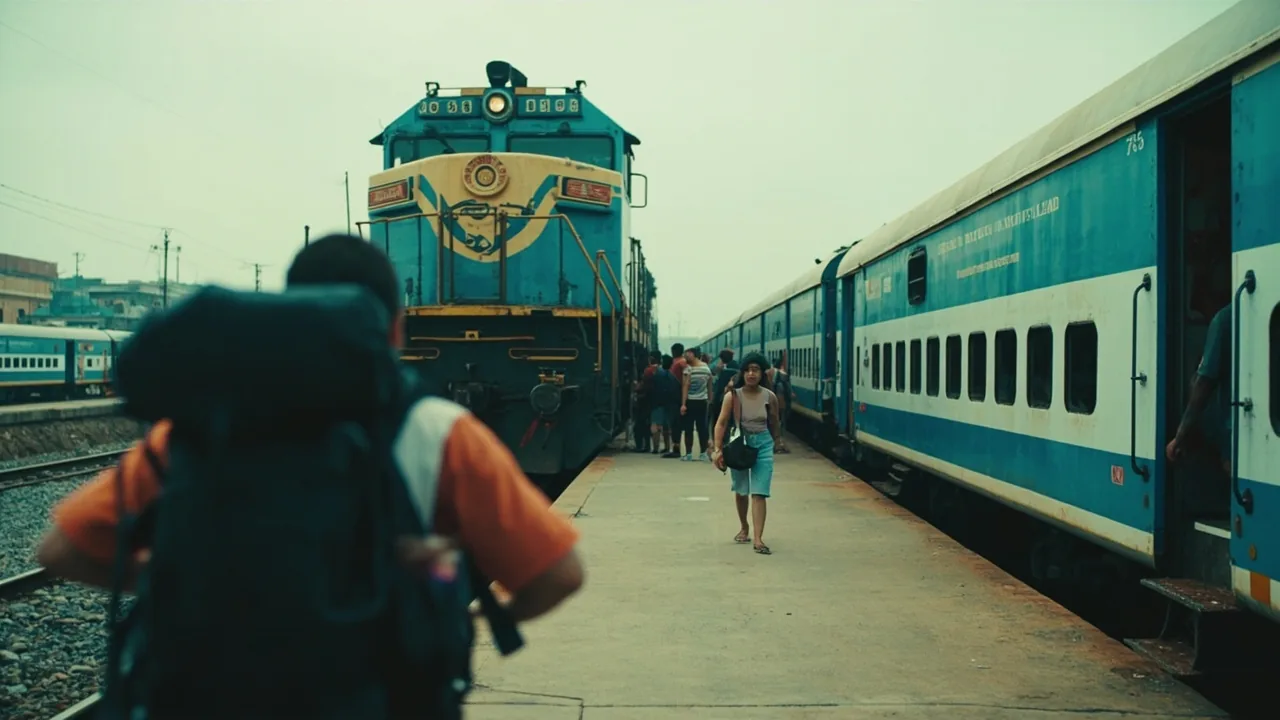
Bangkok to Chiang Mai: Train, Bus, or Flight?
The Bangkok to Chiang Mai route is the single most-travelled corridor in Thailand, and the one where the choice between train, bus, and flight matters. Indian backpackers ask me about this exact decision more than any other leg in the country, so this guide is built around that question: which option is worth your money, which is the genuine “I did this and loved it” experience, and which one to skip unless you genuinely need to be in Chiang Mai by tonight.
I’ve verified all current fares against the State Railway of Thailand (SRT) booking portal and 12go.asia as of July 2026. Train fares and class availability shift with the high season, so re-check closer to your travel date.
Subodh’s Pro Tip: Indian travellers hit with a debit card that keeps getting declined on the SRT foreign-ticket site should book the sleeper train through a registered Thai travel agent or through 12go. You’ll pay a ₹143-₹430 (~50-150 THB or ~$1.49-$4.47) mark-up but it works the first time, every time.
📍 Corridor at a Glance
📍 Distance: 700 km
⏱️ Fastest option: 1h 20m (flight)
💰 Cheapest option: ₹2,295 (\~800 THB or \~$23.83)
✅ Best option: Overnight sleeper train (Special Express, Class 2 A/C berth)
Quick Answers
| What | Answer | Price (INR) |
|---|---|---|
| Cheapest way from Bangkok to Chiang Mai | Government bus from Mo Chit | ₹2,295 (~800 THB or ~$23.83) |
| Best experience | Overnight sleeper train, Class 2 A/C berth | ₹3,139 (~1,094 THB or ~$32.58) |
| Fastest option | AirAsia / Nok Air / Thai Vietjet flight | ₹3,701 (~1,290 THB or ~$38.42) |
| Bangkok to Chiang Mai train time (sleeper) | 12-14 hours overnight | included above |
| Bangkok to Chiang Mai train distance | 751 km on the northern line | included above |
Exchange rate used throughout: 1 THB ≈ ₹2.8691, verified 2026-07-16.
Option 1: Cheapest. Government Bus from Mo Chit
The cheapest door-to-door option is the public bus from Bangkok’s Mo Chit terminal (Northern Bus Terminal, often called “Mo Chit” by travellers) to Chiang Mai’s Arcade Bus Terminal. Tickets run ₹2,295 (~800 THB or ~$23.83) for a standard Class 2 VIP bus, departing roughly every hour between 7 AM and 11 PM. Journey time is 9-11 hours depending on Bangkok traffic out of the city and the number of rest stops.
The buses are 24-seat VIP coaches with reclining seats, air conditioning set to “igloo,” and a small toilet at the back. They do the job. The first hour crawling out of Bangkok traffic is the worst part; once you’re on the open highway it’s smooth. Travellers report that night buses in monsoon season (July-October) can run late by 2-3 hours because of highway flooding around Nakhon Sawan, so if you have a fixed arrival plan, the day departure is safer.
Booking: walk up to the Mo Chit counter the same day, or book ahead through 12go for ₹1,156-₹3,468 (~12-36 USD) depending on operator. Sritawong Tour is a reliable VIP operator at this route with a 4.2 rating on aggregator sites. Book on 12go.
Honest take: if you have ₹1,500 (~$15.57) to save and you don’t mind sitting upright for ten hours with your knees somewhere near your chin, the bus is fine. If you can stretch the budget, the train wins on this route by a long way, and you’ll see why below.
Option 2: Best Experience. The Overnight Sleeper Train
The Bangkok to Chiang Mai sleeper train is the single most-recommended experience on the Banana Pancake Trail, and for good reason. You board at Krung Thep Aphiwat (Bangkok’s central station, the newer name for what most travellers still call Hua Lamphong-adjacent Bang Sue Grand) around 7-8 PM, eat pad thai from the carriage attendant, watch the suburbs slide away, sleep a real sleep in a real berth, and wake up to rice fields and mountains outside Chiang Mai around 6-7 AM. No airports, no queues, no middle-of-the-night taxi haggling on the wrong side of the city.
Class options on the Special Express (train numbers 7, 9, 13):
- First Class A/C sleeper (private 2-berth cabin): ₹4,197 (~1,463 THB or ~$43.57) per lower berth, ₹3,767 (~1,313 THB or ~$39.11) per upper berth. You get a locked door, two wide beds, a small sink, and the whole cabin to yourself or shared with one companion. This is what most Indian couples book, and it’s worth every baht. Limited availability; book 30+ days ahead for the high season (November-February).
- Second Class A/C sleeper (4-berth compartment): ₹3,139 (~1,094 THB or ~$32.58) for a lower berth, ₹2,708 (~944 THB or ~$28.12) for an upper berth. This is the classic backpacker choice. Four berths in a compartment, each with its own reading light, a small shelf, and a curtain. You share with three other travellers, which is half the fun. Lower berths cost more because they’re easier to access; upper berths are cheaper and fine if you can climb.
- Second Class fan (no A/C, 4-berth): ₹2,275 (~793 THB or ~$23.62). Cheaper than the bus, hot as hell, not recommended for Indian travellers who aren’t acclimatised to Thai heat at night.
On-board experience: the carriage attendant walks through selling pad thai, coffee, instant noodles, and bottled water at station prices (₹172 (~60 THB or ~$1.79) for a pad thai box is reasonable). There’s a western-style toilet at the end of each carriage, kept cleaner than you’d expect. Bedding (a thin sheet, a small pillow, a blanket) is provided. Bring a refillable water bottle, earplugs, and a sleep mask. Phone signal drops in patches but works in most populated stretches.
Booking process: the official SRT site at dticket.railway.co.th accepts foreign credit cards but Indian cards frequently get declined because of 3-D Secure Train ticket price summary:
| Class | Lower berth | Upper berth |
|---|---|---|
| First Class A/C (2-berth private) | ₹4,197 (~1,463 THB or ~$43.57) | ₹3,767 (~1,313 THB or ~$39.11) |
| Second Class A/C (4-berth shared) | ₹3,139 (~1,094 THB or ~$32.58) | ₹2,708 (~944 THB or ~$28.12) |
| Second Class fan (4-berth shared) | ₹2,275 (~793 THB or ~$23.62) | ₹2,275 (~793 THB or ~$23.62) |
Subodh’s Pro Tip: book Special Express train number 7 (departure 19:35, arrival Chiang Mai around 06:15) over the slower Express trains. The 1-2 hour time difference is real, and the carriages are noticeably newer.
Safety Alert: lock your cabin door or compartment chain from the inside. Petty theft on overnight Thai trains is rare but not zero, and your phone or wallet on the side shelf is the easiest target. Travellers report occasional incidents in the second-class fan carriages on the cheaper classes.
Option 3: Fastest. Flight
Don Mueang Airport (DMK) to Chiang Mai International (CNX) takes 1 hour 20 minutes in the air, plus 60-90 minutes at each end for check-in, security, baggage claim, and the airport transfer into either city centre. Door-to-door you’re looking at 4-5 hours total, vs 12-14 hours on the train.
Budget carriers on this route: AirAsia, Nok Air, Thai Vietjet. One-way fares start around ₹3,701 (~1,290 THB or ~$38.42) if you book 2-3 weeks ahead in low season, climbing to ₹7,173-₹10,042 (~2,500-3,500 THB or ~$74.46-$104.24) on weekends and in the December-February high season. The flight is uneventful; you board, you sleep or read, you land.
When the flight is worth it: you arrive in Bangkok late on a Friday and need to be in Chiang Mai for a Sunday trek or Monday work thing. You have a heavy bag and don’t want to haul it up train carriage steps. You’re flying with a low-cost fare under ₹4,304 (~1,500 THB or ~$44.68) and the train is sold out.
When the flight is a waste: you’re going in November, December, January, or February when Bangkok traffic is mild but Chiang Mai’s pollution season is bad. The train lets you sleep through the worst of it and you arrive rested. Or you’re going the other way: Chiang Mai to Bangkok, and you want one full Chiang Mai day before leaving, in which case the night bus saves a hotel night and costs roughly half of the flight.
Safety Alert: DMK to Chiang Mai flights are heavily affected by Chiang Mai’s annual burning season (Feb-April). When AQI in Chiang Mai crosses 300, expect 30-60 minute flight delays from holding patterns. Check the Chiang Mai air quality index before booking.
Border Crossing
No international border on this corridor. Both Bangkok and Chiang Mai are in Thailand, and no document checks happen between them. The sleeper train does stop briefly at Ayutthaya, Nakhon Lampang, and Lamphun, but these are technical stops, not immigration checkpoints.
Indian Passport Specifics
Indian passport holders need only their passport for domestic Thai travel, and there are no checkpoints at all on this route. That said, carry your passport on the sleeper train, because SRT staff occasionally ask for the passport number matching the ticket booking. A photocopy works for day travel but not for the sleeper train ticket pickup.
For SIM registration at the destination: your Indian passport is the standard ID document Thai AIS, dtac, and TrueMove shops accept. See the connectivity section below.
If something goes wrong (lost passport, overstay, theft report needed), the Indian Embassy in Bangkok is at 46 Soi 23, Sukhumvit Road, Bangkok. Emergency phone +66 81 845 6224 (verified against mea.gov.in as of July 2026). The Royal Thai Police Tourist Police hotline is 1155, and they speak English.
Subodh’s Pro Tip: take a photo of your passport, visa stamp, and train ticket on your phone before boarding. If you lose the paper ticket on the sleeper, you can still get a re-issue at the next major station with the photo and your passport.
When NOT to Take This Route
Skip the train in Songkran week (mid-April): tickets sell out 60 days ahead and the berths feel like a hostel dorm with everyone soaked from water fights. Fly.
Skip the bus in peak monsoon (September-October): highway 1 between Bangkok and Chiang Mai floods around Nakhon Sawan. Delays of 4-6 hours are common, and some night bus departures get cancelled outright. The train handles monsoon rain better because it doesn’t depend on road conditions.
Skip the flight in burning season unless you have to be there: Chiang Mai’s air quality in March-April regularly crosses AQI 300, and your lungs will not thank you. If you must arrive in March, take the night train and stay indoors the first day.
Skip all of it for the first 48 hours after a Thai public holiday if you’re on a budget. Trains and buses sell out, flight prices double, and sleeper train berths are gone by Tuesday for a Friday departure.
Getting Connected
The Bangkok to Chiang Mai corridor has continuous 4G coverage on all three modes: train, bus, and flight. AIS and dtac are the two networks with the strongest signal along the route. AIS is the safer choice if you’re going off the main highway, including the Chiang Mai foothills and Doi Suthep area.
Physical SIM: buy at Suvarnabhumi Airport (BKK) arrivals AIS counter for ₹858 (~299 THB or ~$8.91). Dtac and TrueMove counters sit next door at similar prices.
ESIM option if you’d rather skip the airport queue: Get Nomad eSIM, which lands on your phone before you board your international flight.
Safety Alert: on the night train, expect two or three 15-20 minute signal dead zones between Nakhon Lampang and Lamphun. Download your offline map of Chiang Mai before boarding, including the area around your hostel, so you can Grab from the station without panic.
FAQ
Q: How much is the Bangkok to Chiang Mai sleeper train?
A: ₹3,139 (~1,094 THB or ~$32.58) for a Second Class A/C lower berth, ₹2,708 (~944 THB or ~$28.12) for the upper. First Class A/C private 2-berth is ₹4,197 (~1,463 THB or ~$43.57) lower / ₹3,767 (~1,313 THB or ~$39.11) upper. Verified against the SRT booking portal, July 2026.
Q: Can I book the Bangkok to Chiang Mai train online from India?
A: Yes through dticket.railway.co.th, but Indian debit cards frequently fail the 3-D Secure step. The reliable path is 12go, where you pay ₹287-₹430 (~100-150 THB or ~$2.98-$4.47) extra and the booking works on the first try.
Q: Is the sleeper train safe for solo female Indian travellers?
A: Travellers report consistently positive experiences on Special Express trains 7, 9, and 13. The Second Class A/C 4-berth compartments are mixed-gender but the carriage attendant and other passengers create a low-risk environment. First Class A/C private cabins are the right call if you want a locked door and full privacy.
Q: What is the Bangkok to Chiang Mai train distance?
A: 751 km on the northern railway line, measured between Krung Thep Aphiwat (Bangkok) and Chiang Mai railway station.
Q: Should I take the train or fly from Bangkok to Chiang Mai?
A: Take the train unless you have a hard time constraint or a flight under ₹4,304 (~1,500 THB or ~$44.68). The sleeper is a traveller experience on its own, costs roughly the same as the cheapest flight on a weekday, and drops you in central Chiang Mai without an airport transfer.
Q: Which station does the sleeper train leave from in Bangkok?
A: Krung Thep Aphiwat Central Station (formerly Bang Sue Grand). It’s connected to MRT Blue Line (Bang Sue station) and is 20 minutes by metro from central Bangkok.
Subodh’s Take
The Bangkok to Chiang Mai sleeper train is one of those rare things that genuinely lives up to the hype. It’s not the cheapest option, it’s not the fastest, but it’s the only one where the journey itself is the point. Most Indian backpackers I’ve walked through this corridor with end up agreeing the same thing: the night train is the better experience than the flight even at double the price, and the Second Class A/C lower berth is the right balance of cost and comfort.
