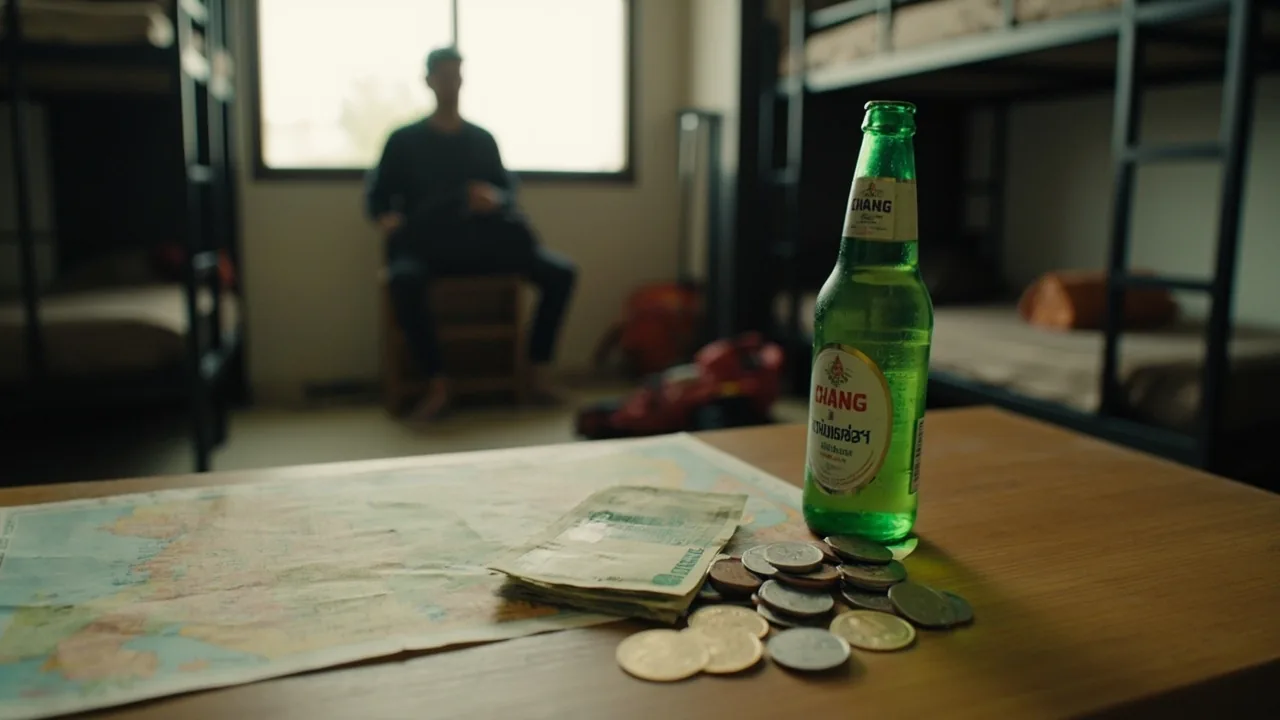
Thailand on a Shoestring: How to Travel Cheap Without Losing Your Mind
The first time you land in Bangkok and see 60-baht pad thai on the street, you’ll feel rich. Then you’ll convert it to rupees and panic at the exchange rate. After a few days, you’ll stop converting everything.
This is a practical playbook on how to travel to Thailand for cheap from India in 2026: the cheapest flights, the dorms that don’t rip you off, the street food stalls where a meal costs less than your morning chai, and the SIM and visa hacks that save real money. For related planning, see our guide on Sea Backpacking Hub and Bangkok to Chiang Mai.
This guide is the playbook I wish I’d had on my first trip: the cheap flights from Indian cities, the dorms and guesthouses that don’t rip you off, the street food stalls where a meal costs less than your morning chai at home, the songthaew and overnight bus hacks, the SIM card move that saves you ₹574 (~200 THB or ~$5.94), the visa rules Indians use (hint: you probably don’t need a visa at all in 2026), and what to skip during monsoon so your trip doesn’t fall apart. You may also find Sihanoukville to Bangkok useful for this trip.
One specific number to anchor expectations: a budget backpacker doing Bangkok, Chiang Mai, and one island can live on around ₹3,443 (~1,200 THB or ~$35.67) per day for beds, food, and local transport. At current rates (1 THB = ₹2.87), that’s roughly ₹3,440 a day, or about ₹1,00,000 for a full month, flights from India included. That’s the real number. Anything in this article that contradicts it is wrong.
📍 Quick Answers
| What | Answer | Price (INR) |
|---|---|---|
| Visa for Indian passport | Visa-free, 60 days | Free |
| Cheapest flight from India (round trip) | Mumbai/Bengaluru → Bangkok via AirAsia/Thai VietJet | ₹18,000-₹26,000 (~$186.47-$269.35) |
| Dorm bed (Bangkok/Chiang Mai) | Khao San area hostels | ₹717-₹1,119 (~250-390 THB or ~$7.43-$11.59) |
| Street food meal | Pad thai/som tam from a stall | ₹115-₹230 (~40-80 THB or ~$1.19-$2.38) |
| Tourist SIM (8 days, 30GB) | AIS traveller pack at 7-Eleven | ₹574 (~199 THB or ~$5.94) |
| Songthaew in Chiang Mai (within city) | Per person | ₹86-₹143 (~30-50 THB or ~$0.89-$1.49) |
| Overnight bus Bangkok → Chiang Mai | V Class VIP bus | ₹2,295-₹3,443 (~800-1,200 THB or ~$23.78-$35.67) |
| Best months to visit on a budget | Late Feb to early May, and late Sept to mid Oct | Dry, shoulder, fewer price spikes |
Subodh’s Pro Tip: Book your return flight from India 6-8 weeks out on a Tuesday or Wednesday afternoon (IST), and you’ll shave ₹3,000-₹6,000 (~$31.08-$62.16) off the round trip. AirAsia and Thai VietJet run flash sales every 2-3 weeks.
Get There Cheap: Flights from India
The cheapest routes in 2026 are Mumbai → Bangkok, Bengaluru → Bangkok, and Delhi → Bangkok on AirAsia, Thai VietJet, or IndiGo’s Bangkok codeshare. Round-trip fares on weekdays in shoulder season sit at ₹18,000-₹24,000 (~$186.47-$248.63) from Mumbai/Bengaluru, ₹22,000-₹28,000 (~$227.91-$290.07) from Delhi, and ₹24,000-₹30,000 (~$248.63-$310.79) from Chennai/Kolkata (with a layover in Kuala Lumpur or Singapore).
Kolkata and Chennai have a trick: fly to Kuala Lumpur on AirAsia first (₹11,000-₹14,000 (~$113.96-$145.03) round trip), then connect to Bangkok or Phuket for another ₹4,000-₹6,000 (~$41.44-$62.16). Total often beats a direct ticket by ₹3,000-₹5,000 (~$31.08-$51.80), and you get a free KL stopover if your ticket is on the same PNR.
Safety Alert: Avoid Bangkok Airways’ “Suvarnabhumi Saver” promo fares. They look cheap but the seat pitch is the worst in Thai domestic travel, and the fuel surcharge is non-refundable even if you cancel. Just pay ₹500 (~$5.18) more on Thai VietJet.
Cheapest Time to Fly from India
The cheapest time to visit Thailand from India is the late-February to early-May shoulder window and the late-September to mid-October window after monsoon breaks. Here’s how to read the Thai calendar for budget purposes:
- Late February to early May (hot season): Temperatures push 38°C in Bangkok, fewer tourists, flights and hostels drop 15-25%. Only pick this if you’re heat-tolerant.
- Late September to mid-October (post-monsoon): Rain tapers, crowds haven’t returned, deals are still soft.
- November to mid-December: Great weather, but prices rise 20% as Europeans fly in for Christmas. Book 6-8 weeks ahead.
- Late December to mid-January (peak): Highest prices of the year. Avoid unless you specifically need the weather.
- June to early September (monsoon): Cheapest of all, but ferry cancellations on the islands are routine. Skip if your itinerary includes Koh Phangan, Koh Tao, or Koh Samui.
The single best 2026 booking window for Indian travellers targeting November travel: book flights in the first week of September. Operators open shoulder-season inventory then, and you’ll see direct fares drop ₹4,000-₹8,000 (~$41.44-$82.88) before they catch back up.
Visa for Indians in 2026
Indians have it good. As of 2026, there’s a bilateral visa-free agreement giving Indian passport holders 60 days on arrival, no fee, no embassy visit. You do, however, need the TDAC (Thailand Digital Arrival Card), a free online form you fill in 72 hours before departure. The official portal is tdac.immigration.go.th. Print the QR or save it on your phone, immigration scans it.
If for some reason you arrive without the TDAC filled, the visa-on-arrival stamp is 15 days at a ₹5,599 (~58 USD) fee. Don’t use this unless you have to. The 60-day visa-free stamp is free and you get four times the stay.
Want to extend? 30-day extension at immigration in Bangkok or Chiang Mai costs ₹5,406 (~56 USD). Pay in cash, bring your passport, a photocopy, a passport photo, and the TM.7 form (available at the counter).
Subodh’s Pro Tip: The visa-free stamp used to be 30 days, but the bilateral agreement in 2024 extended it to 60. Immigration officers occasionally still write “30” by mistake. Check your entry stamp before you leave the booth.
Where to Stay (Hostels, Not Hotels)
Khao San and Silom in Bangkok, the Old City in Chiang Mai, and the south coast of Koh Phangan are where budget travellers cluster. Hostels in these areas have social common rooms, free wifi, and lockers. Dorms with air-con, the only way to sleep in Bangkok, run ₹717-₹1,119 (~250-390 THB or ~$7.43-$11.59) a night in Bangkok and Chiang Mai, ₹488-₹861 (~170-300 THB or ~$5.05-$8.92) in Pai (the best value in Thailand), and ₹1,721-₹2,582 (~600-900 THB or ~$17.83-$26.75) in Koh Phangan outside Full Moon week. Full Moon Party week itself is a different game: dorms spike to ₹4,304-₹6,312 (~1,500-2,200 THB or ~$44.58-$65.39) and book out 3-4 weeks ahead.
If you want a private room with a bathroom and air-con, expect ₹2,008-₹4,017 (~700-1,400 THB or ~$20.81-$41.61) in Bangkok/Chiang Mai, ₹1,434-₹2,582 (~500-900 THB or ~$14.86-$26.75) in Pai, and ₹3,443-₹5,738 (~1,200-2,000 THB or ~$35.67-$59.44) in Phuket. Hotels in tourist zones double that.
Subodh’s Pro Tip: Hostelworld and Booking.com show the same Bangkok dorms at different prices. Always cross-check both, and book direct through the hostel’s website if they have one. Hostelworld charges the hostel 15-20% commission, so direct booking is sometimes 10% cheaper.
What to Eat (and What It Costs)
The cheapest meals in Thailand come from street stalls, not restaurants. A pad thai from a wok in front of you runs ₹115-₹172 (~40-60 THB or ~$1.19-$1.78). Som tam (green papaya salad) is ₹86-₹143 (~30-50 THB or ~$0.89-$1.49). Grilled chicken with sticky rice (khao niao gai yang) is ₹172-₹287 (~60-100 THB or ~$1.78-$2.97). A bowl of boat noodles (kuay teow reua) is ₹86-₹143 (~30-50 THB or ~$0.89-$1.49). Mango sticky rice for dessert is ₹172-₹287 (~60-100 THB or ~$1.78-$2.97).
Khao San Road is famously expensive for street food (₹230-₹430 (~80-150 THB or ~$2.38-$4.46) per dish) because it caters to package tourists. Walk three blocks in any direction from Khao San and the same pad thai drops to ₹115 (~40 THB or ~$1.19). Chinatown (Yaowarat) in Bangkok is the night-food capital: oyster omelets, bird’s nest soup, charcoal moo ping, all ₹143-₹287 (~50-100 THB or ~$1.49-$2.97). Chiang Mai’s Sunday Walking Street has northern Thai specialties at ₹86-₹172 (~30-60 THB or ~$0.89-$1.78) a plate.
For authentic Thai cuisine with a cozier ambiance, ask your hostel staff for the neighbourhood’s go-to spot, since regional plates vary block to block.
Vegetarian and Indian Food
Thailand is not as veg-friendly as Vietnam or Cambodia. Fish sauce and shrimp paste creep into dishes labelled “vegetable.” The reliable veg spots to know:
- Bangkok: Rangsi Restaurant (Rangoon Lane near Khao San, ₹80 (~$0.83)-ish dishes), Saras Indian Food (Sukhumvit Soi 11), and the whole Rambuttra area near the Golden Mount for pure-Jay vegetarian Thai.
- Chiang Mai: Chada Vegetarian Restaurant is a pure-Jay Thai veg spot with local and Indian dishes, both with strong reviews. For north-Indian fixes, Roti Shop near Tha Phae Gate and Shere Punjab on Nimmanhaemin are solid.
- Islands: Koh Phangan has Phat Thai Cafe and Amstardam; Koh Samui has Krishna Cafe near Chaweng.
Subodh’s Pro Tip: “Jay” (เจ) is the Thai word for Buddhist vegetarian and is your safety word at any Thai restaurant. If you say “Jay, krub/ka” and point at the menu, the kitchen will prepare a version without meat, fish sauce, eggs, or dairy. Most street stalls understand it; the upscale restaurants will too.
Getting Around: Cheap Transport
Local transport is the second-biggest expense after accommodation, and the easiest place to overpay.
Within Bangkok
The BTS Skytrain and MRT subway are the only honest way around. Single-trip BTS fares run ₹49-₹178 (~17-62 THB or ~$0.51-$1.84) depending on distance, MRT ₹49-₹129 (~17-45 THB or ~$0.51-$1.34). Buy a Rabbit Card (₹287 (~100 THB or ~$2.97) refundable deposit, top up as needed) and you’ll skip the per-ticket queue. A taxi from Suvarnabhumi to Khao San runs ₹717-₹1,148 (~250-400 THB or ~$7.43-$11.89) on the meter plus ₹143 (~50 THB or ~$1.49) airport surcharge plus tolls (₹215-₹287 (~75-100 THB or ~$2.23-$2.97)). Insist on the meter; “no meter” taxis quote ₹1,721-₹2,295 (~600-800 THB or ~$17.83-$23.78) and it’s a scam.
Bolt and Grab work in Bangkok but the Suvarnabhumi airport taxi mafia has been known to block ride-hailing pickups at arrivals. Walk to Level 4 or the public taxi stand and Grab from there. Don’t try to Grab from arrivals directly.
Songthaews (red trucks) are ₹86-₹143 (~30-50 THB or ~$0.89-$1.49) per person for fixed routes, mostly in the older parts of Bangkok. Motorbike taxis are ₹57-₹172 (~20-60 THB or ~$0.59-$1.78) for short hops.
Bangkok to Chiang Mai
The sleeper train is the best experience. Train #13 (Bangkok → Chiang Mai) departs Hua Lamphong or Krung Thep Aphiwat at 7:35 PM and arrives 10:50 AM. Second-class air-con sleeper runs ₹2,295-₹3,443 (~800-1,200 THB or ~$23.78-$35.67), first-class sleeper is ₹3,730-₹5,738 (~1,300-2,000 THB or ~$38.64-$59.44). The first-class sleeper has two berths per compartment with a door that locks, the second-class has four berths in an open compartment. Both are clean and safe.
The VIP overnight bus is ₹2,295-₹3,443 (~800-1,200 THB or ~$23.78-$35.67) on Sombat Tour or Nakhonchai Air, 9-10 hours, similar comfort, no scenery since it’s dark. Buses from Mo Chit terminal, not the old Khao San one.
Flying Bangkok → Chiang Mai on Thai VietJet or AirAsia is 1 hour 15 minutes and ₹3,443-₹7,173 (~1,200-2,500 THB or ~$35.67-$74.30) one-way. Worth it if you can find a fare under ₹5,164 (~1,800 THB or ~$53.50).
Chiang Mai to Pai
Minivan from Chiang Mai Arcade bus terminal is ₹430-₹574 (~150-200 THB or ~$4.46-$5.94), 3 hours, twisty mountain road. Slower than driving yourself but cheap. Pai itself is walkable, motorbike rental is ₹430-₹717 (~150-250 THB or ~$4.46-$7.43) per day.
Songthaews in Chiang Mai
In-city songthaews are ₹86-₹143 (~30-50 THB or ~$0.89-$1.49) per person within the old city moat area and the Nimman district. Just flag one down, hop in the back, and hand the driver the money when you get off. They run fixed routes but you can ask to be dropped anywhere along the route.
Inter-city Overnight Buses (Chiang Mai → Pai, Bangkok → Koh Tao, etc.)
Most overnight long-distance buses in Thailand use one of three big operators (Sombat Tour, Nakhonchai Air, and GreenBus). Tickets are ₹1,721-₹4,304 (~600-1,500 THB or ~$17.83-$44.58) depending on distance. Book directly at the bus terminal or through the operator’s own website. Bring a sarong or light jacket, AC gets cold.
Safety Alert: Bus and minivan accidents in northern Thailand are a recurring story, particularly on the Chiang Mai → Pai mountain road. Minivans are statistically the riskiest option (overloaded, speeding, inexperienced drivers on the curves). The VIP bus is safer. If you’re on a minivan and the driver is racing, speak up or pull over.
When NOT to Travel (Monsoon and Other Gotchas)
If your Thailand trip is locked in for June, July, or August, here’s the real picture:
- Koh Tao, Koh Phangan, Koh Samui: Ferry cancellations are routine. A 4-hour sea crossing becomes 8-9 hours, or doesn’t run at all. The Samui archipelago had a two-week ferry shutdown in August 2024.
- Andaman side (Krabi, Phuket, Koh Lanta): Less affected by monsoon than the Gulf side, but swells close Maya Bay and the Phi Phi day trips on bad-weather days.
- Northern Thailand (Chiang Mai, Pai): Burn season runs late February to early April, with PM2.5 haze at hazardous levels. Hotels hand out N95 masks. The mountains look beautiful at sunrise; your lungs don’t enjoy it.
- November to mid-December: Wet weather shifts to the south (Phuket, Krabi). Gulf islands are at their best.
If your only available window is monsoon, stick to Bangkok and Chiang Mai. They’re wet but walkable, with indoor backups. Skip the islands or you’ll spend half your trip on stranded ferries.
For more on how monsoon affects specific corridors, see our Thailand 2-week backpacking route guide.
Money: Cash, Cards, and FX
Thai baht is cash-heavy outside Bangkok. Chiang Mai, Pai, and most island towns take cash only at small stalls. Bangkok and chain hotels/restaurants take cards.
Two routes:
- Carry cash USD, exchange at SuperRich or Vasu in Bangkok: SuperRich (Siam Square area, both branches) gives the best rate. Don’t exchange at the airport (worst rate, 5-10% loss).
- Forex card from India (HDFC, ICICI): Withdraw at Bangkok ATMs. Most ATMs charge a ₹631 (~220 THB or ~$6.54) foreign-transaction fee per withdrawal, so withdraw big chunks (₹14,345-₹28,690 (~5,000-10,000 THB or ~$148.61-$297.22) at a time). Notify your bank before flying.
Avoid airport “currency exchange” counters with rates that look 2-3% off the real rate; they’re usually 5-8% off once they pocket the “commission.” Use your forex card or SuperRich instead.
Subodh’s Pro Tip: 7-Eleven ATMs (yes, the convenience stores) and AEON ATMs typically charge lower foreign-card fees than Bangkok Bank or Krungsri. A ₹631 (~220 THB or ~$6.54) fee adds up fast if you’re making four 1,000-THB withdrawals.
Getting Connected: SIM and Data
Three real options:
- AIS traveller SIM at Suvarnabhumi airport: ₹574 (~199 THB or ~$5.94) for 8 days, 30GB data, no registration. Same SKU at 7-Eleven is ₹574 (~199 THB or ~$5.94) minus a ₹57 (~20 THB or ~$0.59) counter markup.
- dtac Happy Tourist SIM: ₹574 (~199 THB or ~$5.94) for 8 days, 30GB data. Good 4G coverage.
- eSIM (Nomad): Buy before flying, scan QR on landing, data works the moment the plane lands. No passport-photo registration, no kiosk, no fumbling in a foreign airport. $Get Nomad eSIM$.
All three carriers (AIS, dtac, TrueMove) have strong 4G coverage in Bangkok, Chiang Mai, Phuket, and Samui. Dead zones exist on the Pai mountain road, ferry rides, and parts of Khao Sok National Park. If you’re hitting those, download offline Google Maps for the region.
Daily Budget Breakdown
| Category | Backpacker (THB) | Backpacker (INR) | Mid-range (THB) | Mid-range (INR) |
|---|---|---|---|---|
| Dorm bed | 250-390 | 720-1,120 | (Private) 700-1,400 | 2,000-4,000 |
| 3 meals from street stalls | 150-250 | 430-720 | 300-600 (mixed restaurants) | 860-1,720 |
| Local transport | 60-150 | 170-430 | 200-500 (taxis/Grab) | 575-1,435 |
| SIM/data | 30 (per day) | 85 | 50 (per day, eSIM topup) | 145 |
| Attractions/entry | 100-300 | 285-860 | 300-700 | 860-2,000 |
| Drink (one beer) | 60-100 | 170-285 | 100-200 (rooftop) | 285-575 |
| Per day total | 650-1,220 | 1,860-3,500 | 1,650-3,400 | 4,730-9,760 |
For a 10-day Thailand trip: budget backpacker ₹25,000-₹35,000 (~$258.99-$362.59), mid-range ₹60,000-₹90,000 (~$621.58-$932.36). Flights from India add ₹18,000-₹28,000 (~$186.47-$290.07) depending on origin city.
If you’re planning a tight-budget month in Thailand, our 30,000 baht Thailand budget guide breaks it down day-by-day.
Subodh’s Take
Thailand on a budget works because the floor is high. Even if you do everything wrong, you still eat well, sleep clean, and move around safely for less than ₹4,000 (~$41.44) a day. The mistake most first-timers make isn’t overspending, it’s over-planning. You don’t need 12 activities booked. You need one good hostel, a songthaew route, and a stomach that can handle street food. The rest figures itself out.
FAQ
Do Indians need a visa for Thailand in 2026?
No, India has a bilateral visa-free agreement giving 60 days on arrival. Just fill the free TDAC online at tdac.immigration.go.th 72 hours before you fly.
What’s the cheapest month to visit Thailand from India?
Late September to mid-October (post-monsoon, low season) is the cheapest month to visit Thailand from India. November-December weather is great but 20% more expensive.
How much cash should I carry per day?
Plan for ₹2,869-₹4,304 (~1,000-1,500 THB or ~$29.72-$44.58) per day for backpacker meals, transport, and small expenses. Larger purchases (tours, hostels, bus tickets) are easier on card.
Is Thailand safe for solo Indian travellers?
Yes, Thailand is one of the safer Southeast Asian countries for solo Indian travellers. Standard precautions: avoid unmarked taxis at airports, watch your drink at Full Moon Party, and don’t ride motorbikes without a licence.
Can I use UPI in Thailand?
Limited. Bangkok has PromptPay at some big malls (Siam Paragon, MBK) and AEON stores, but small stalls, hostels, and islands don’t take UPI. Carry cash or a forex card.
What’s the cheapest way from Bangkok to Chiang Mai?
The overnight sleeper train (Train #13) at ₹2,295-₹3,443 (~800-1,200 THB or ~$23.78-$35.67) is the best combination of price and experience. Minivans are ₹574-₹1,148 (~200-400 THB or ~$5.94-$11.89) cheaper but the road is wobbly and the safety record is poor.
How much should I budget for street food per day?
₹430-₹861 (~150-300 THB or ~$4.46-$8.92) covers three meals a day at street stalls. Less than a single meal at a Bangkok hotel restaurant.
