Does the Mekong Slow Boat Go Through Huay Xai? Route, Substitutes & What Happens
If you’re asking does slow boat mekong go through huay xai, yes: Huay Xai is the official starting point on the Laos side. Boats leave Huay Xai every morning for Luang Prabang, either as a 2-day journey with an overnight stop in Pak Beng, or as a 1-day express. Planning the wider region? Our Southeast Asia backpacking hub covers the full multi-country route.
Learn more about the Thai-side approach in our Chiang Rai to Luang Prabang corridor guide.
If you’re reading this before booking, the practical answer is the same one travellers have used for years: your slow boat begins in Huay Xai, takes 2 days unless you pay for the speed boat upgrade, and stops overnight in Pak Beng because that is the only halfway town with guesthouse rooms.
Let me walk you through exactly how the route works, what the substitutes are, and the specific logistics an Indian traveller needs to know.
📍 Distance: ~410 km along the Mekong from Huay Xai to Luang Prabang ⏱️ Fastest option: Speed boat, 6-7 hours 💰 Cheapest option: 2-day slow boat ✅ Best option: 2-day slow boat with overnight in Pak Beng
Quick Answers
| What | Answer | Price (INR) |
|---|---|---|
| Does the slow boat start in Huay Xai? | Yes, Huay Xai is the official Laos departure point | ₹1,076 (~250,000 LAK or ~$11.18) |
| How long is the 2-day slow boat? | 2 days, with overnight stop in Pak Beng | ₹1,076-₹1,335 (~250,000-310,000 LAK or ~$11.18-$13.86) |
| Can I do it in 1 day? | Yes, speed boat covers Huay Xai to Luang Prabang in 6-7 hours | ₹1,507-₹1,722 (~350,000-400,000 LAK or ~$15.65-$17.88) |
| Where does the boat stop overnight? | Pak Beng, the only town on the Mekong between Huay Xai and Luang Prabang | Guesthouse ₹215-₹431 (~50,000-100,000 LAK or ~$2.24-$4.47) |
| Do I need a Lao visa before arriving? | Yes, visa on arrival is available at Huay Xai for Indian passport holders | ₹2,890 (~30 USD) |
| Is there a direct bus instead? | No direct bus; you must take the river or fly | — |
How the Mekong Slow Boat Route Works
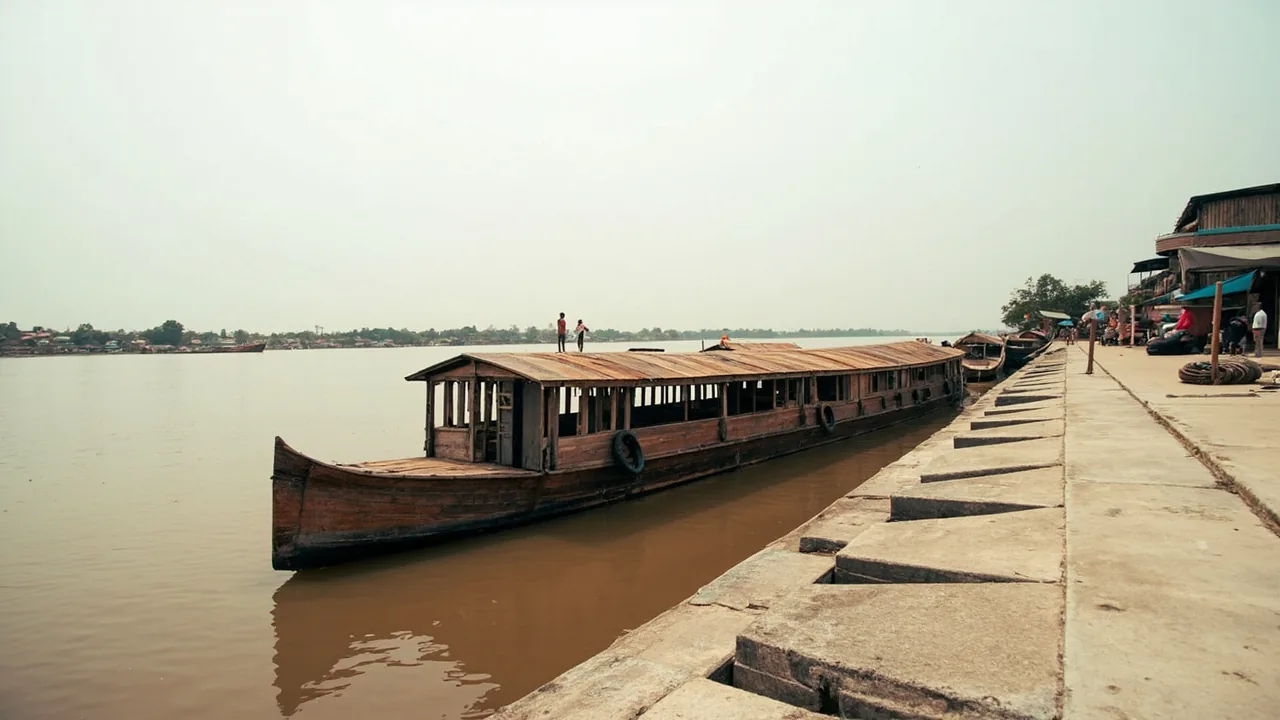
The slow boat is not a single boat. It is a daily scheduled service: long, narrow wooden boats with bench seating and a roof, each carrying around 80-100 passengers plus cargo. They run from Huay Xai downstream on the Mekong, hugging the Laos bank most of the way, and ending at Luang Prabang two days later.
The reason it takes two days is straightforward: Huay Xai to Luang Prabang is roughly 410 river kilometres, and the boats move at a downstream cruising pace that packs the distance into roughly 14+ hours, which is why operators split it at Pak Beng. Pak Beng is the only settlement of any size along this stretch, sitting roughly halfway, and it has guesthouses that exist specifically because the slow boat drops people there.
Here’s how the 2-day trip breaks down:
Day 1: Depart Huay Xai around 9:00-10:00 AM. The boat follows the Mekong past jungle-covered hills and the occasional riverside village. You’ll stop once or twice for fuel, lunch on board (buy food from vendors at the stop), and to drop off cargo. Arrive in Pak Beng around 4:00-5:00 PM. Walk to your guesthouse, eat dinner, sleep.
Day 2: Same boat, same passengers, depart Pak Beng around 8:00-9:00 AM. The scenery on day 2 is often considered the better stretch, with limestone karsts starting to appear as you approach Luang Prabang. Arrive at the Luang Prabang boat pier around 4:00-5:00 PM.
The slow boat is not a luxury cruise. It is bench seating, shared toilets (none), and basic food. What you pay for is the river itself, the pace, and the two days of doing little. Travellers consistently call it one of the more relaxing legs of the Southeast Asia loop.
Option 1. Cheapest: The 2-Day Slow Boat
The 2-day slow boat is the cheapest legitimate way to get from Huay Xai to Luang Prabang by river, and the standard pick for backpackers.
Price: 250,000-310,000 LAK (₹942-1,156 at 1 LAK = ₹0.0043).
What’s included: The boat ticket covers your seat, the two-day journey, and the basic overnight logistics. Your guesthouse in Pak Beng is usually arranged by the boat crew or pre-booked by your agent, costing ₹215-₹431 (~50,000-100,000 LAK or ~$2.24-$4.47) extra. Food is sold on board and in Pak Beng; bring snacks if you’re particular.
Where to book: You can book through any guesthouse in Chiang Khong (on the Thai side) the day before, or walk up to the Huay Xai boat pier in the morning. Pre-booking through your guesthouse is usually ₹43-₹86 (~10,000-20,000 LAK or ~$0.45-$0.89) more expensive but saves the morning scramble. Agents in Huay Xai line the main street near the immigration office.
What it’s like: Wooden benches, padded seat optional (bring a cushion or buy one at the pier for ₹43 (~10,000 LAK or ~$0.45)), a metal roof, and an open view of the Mekong. The boat lurches when it hits wakes from cargo vessels. The bathroom situation is hit or miss; some boats have a basic toilet, most don’t. Bring toilet paper, hand sanitiser, water, sunscreen, a hat, and a book. The boat is slow enough that motion sickness is rarely an issue, but if you’re prone, take a tablet before departure.
Who this is for: Anyone who wants the river experience, isn’t on a tight schedule, and doesn’t want to fork over for the speed boat. The 2-day option is what the Banana Pancake Trail is famous for.
Option 2. Best Experience: The 2-Day Slow Boat (Same One, Different Framing)
The “best experience” is the same slow boat above, because there is no genuinely better alternative on this corridor for travellers who want to be on the river. The 1-day speed boat exists, but it’s a different kind of trip (faster, louder, less scenic, and physically more taxing). The slow boat is what you do here.
What makes the 2-day boat worth the extra day over flying or the speed boat:
- The Mekong itself. The river is wide, brown, and slow. On either bank: jungle, the occasional village, fishermen in longboats, kids waving from shore. There is no road view like this.
- The Pak Beng stop. A surprisingly atmospheric mountain town wrapped in fog most mornings. Guesthouses here are basic but functional, with several options offering balconies overlooking the Mekong.
- The pace. Two days where your only job is to sit and watch the river. For Indian backpackers deep into a multi-country trip, this is often the first time in weeks you’ve slowed down.
Specific tips:
- Sit on the left side (port) leaving Huay Xai. Better views, more shade in the afternoon.
- Buy the cushion at the pier. ₹43 (~10,000 LAK or ~$0.45), saves your back over 8+ hours of wooden bench.
- Don’t book the “VIP” boat unless you specifically want air conditioning. The standard boat is what every traveller takes, and the social atmosphere is half the experience.
- Pack light. Pack your day bag for two days; leave your main backpack at your Huay Xai guesthouse. You’ll thank yourself on day 2.
See our broader how to get to Luang Prabang guide for comparison with flights and overland options.
Option 3. Fastest: Speed Boat (1 Day)
The speed boat is the only way to do the Huay Xai to Luang Prabang river route in a single day. It is also the substitute for when the slow boat is not running (low water in dry season, mechanical issues, or you missed the morning departure).
Price: ₹1,507-₹1,722 (~350,000-400,000 LAK or ~$15.65-$17.88).
Duration: 6-7 hours, depending on water levels and how many stops the captain makes.
How it works: Small, covered longtail-style speed boats, 4-6 passengers per boat. You wear a life jacket and a helmet (the latter because at speed, bugs and debris hitting your face is a real problem). The boat hugs the Laos bank to stay in calmer water and avoid Laos-Thailand border complications (you cannot cross the river into Thai waters).
The honest take: Speed boats get you to Luang Prabang in a day, but the ride is loud, bumpy, and you arrive sunburnt and dehydrated. Travellers who took both consistently say the slow boat was the better experience, and the speed boat was something they did because they were short on time. If you have the two days, take the slow boat.
When to choose the speed boat:
- You arrived in Huay Xai too late to catch the morning slow boat
- You’re on a tight visa or schedule crunch
- The slow boat is cancelled (rare, but happens in extreme low water in April-May)
When NOT to choose it: You have the time, you wanted the river experience, and you don’t enjoy wearing a helmet for 6 hours.
Substitutes When the Slow Boat Isn’t Running
The slow boat runs year-round, but there are edge cases when it’s cancelled or not viable:
1. Speed boat (covered above). The standard substitute. Same route, one day.
2. Minivan + boat combination. Some operators offer a bus from Huay Xai to Pak Beng, then a boat from Pak Beng to Luang Prabang. This is uncommon and usually more expensive than the speed boat. Skip unless you specifically want the Pak Beng overnight without the slow boat ride.
3. Fly to Luang Prabang. Lao Airlines and Lao Skyway operate flights from Huay Xai’s small airport to Luang Prabang. The route exists but flights are infrequent and weather-dependent. If the slow boat is cancelled and you need to be in Luang Prabang urgently, ask at the Huay Xai airport or your guesthouse about same-day availability. Budget around ₹3,445-₹5,167 (~800,000-1,200,000 LAK or ~$35.76-$53.64).
4. Bus via Boten. A long overland option: bus from Huay Xai to Boten (on the Chinese border), then onwards. This is for travellers heading to China or northern Vietnam, not Luang Prabang. If Luang Prabang is your destination, this adds 8+ hours and makes no sense.
The honest answer: In normal conditions (October to early May, water levels adequate), the slow boat runs daily and substitutes aren’t needed. The 1-day speed boat is the only real alternative.
The Huay Xai to Chiang Khong Border Crossing
Most travellers doing the slow boat arrive from Thailand, crossing at the Huay Xai (Laos) / Chiang Khong (Thailand) Friendship Bridge the morning of departure.
Step by step for Indian passport holders:
- Exit Thailand at Chiang Khong. Get a Thai exit stamp. No fee.
- Cross the bridge to Huay Xai. Walk or take the shuttle bus ().
- Visa on arrival at Huay Xai immigration. Indians get a 30-day single-entry visa on arrival. Fee is ₹2,890 (~30 USD). Carry exact USD or THB; cards are not accepted. Passport photos are technically required (2 photos), but most agents can provide a photocopy or a small fee if you don’t have them.
- Get Lao entry stamp. Your visa is issued at the same counter.
- Walk to the boat pier. 5 minutes from immigration.
Total border process time: 30-60 minutes if there’s no queue. During peak season (November-February), allow up to 2 hours.
Money exchange at the border: Both sides have exchange booths. The rate is worse than in town, but it’s enough to get you through the boat ticket and a meal. Bring USD or THB; the Lao kip rate at the Huay Xai border is acceptable.
Scam watch: Some “helpers” at the bridge offer to expedite your visa for a fee. The official process is straightforward and free of charge beyond the ₹2,890 (~30 USD) visa fee. Ignore anyone offering “faster service.”
If you’re starting in Thailand and want a broader route context, the Chiang Rai to Luang Prabang corridor guide covers the full Thai side logistics.
Indian Passport Specifics
Visa on arrival: Available at Huay Xai for Indian passport holders. ₹2,890 (~30 USD), 30 days, single entry. Carry exact USD.
Documents beyond your passport: Two passport photos (a small fee if you don’t have them), proof of onward travel (rarely checked but recommended), and the ₹2,890 (~30 USD) fee in cash.
Currency: Laos uses the Lao kip (LAK). At current rates (1 LAK ≈ ₹0.0043), 250,000 LAK ≈ ₹1,075. The kip comes in large denominations; a ₹431 (~100,000 LAK or ~$4.47) note is roughly ₹430 (~$4.46). Bring small USD bills for the visa.
SIM cards: Unitel and Lao Telecom sell SIMs at the Huay Xai immigration hall. ₹215-₹431 (~50,000-100,000 LAK or ~$2.24-$4.47) for a week of data. Signal is fine in Huay Xai and Luang Prabang but spotty along the Mekong itself, especially on day 2 of the slow boat past Pak Beng.
Sorting an eSIM before you cross means you have data the moment you land in Laos.
When NOT to Take the Slow Boat
Late March to mid-May (peak dry season): Water levels drop, the Mekong gets shallow in stretches, and the slow boat can hit sandbars or get delayed. The speed boat is more reliable in this window. Slow boat cancellations have been reported during the lowest-water stretch of dry season, while the speed boat continued to run without issues.
If you’re on a tight schedule: If you have a flight to catch from Luang Prabang or a visa expiring, the slow boat’s 2-day window and Pak Beng’s flaky wi-fi make it risky. Fly.
If the Pak Beng overnight is a problem for you: Some travellers don’t want to commit to a basic guesthouse night. The speed boat skips it.
Monsoon (June to September): The slow boat still runs, but visibility is lower, the river is rougher, and landslides occasionally delay road transfers in the region. The boat itself is fine; the weather is the variable.
For broader seasonal planning, see the Laos 2-week itinerary for Indian backpackers. First-time visitors can also compare timing in our Laos 1-week itinerary.
Getting Connected
The slow boat route has poor cellular coverage along most of the Mekong stretch. Expect 1-2 hours of signal each day, mostly near Pak Beng and as you approach Luang Prabang. If you need to be reachable, sort connectivity before boarding.
For an Indian traveller, the practical options:
- Unitel or Lao Telecom SIM: Buy at the Huay Xai immigration hall for ₹215-₹431 (~50,000-100,000 LAK or ~$2.24-$4.47). Covers Laos, includes data.
- An eSIM: Activate before crossing the border, and you have data from the moment you land in Laos. This is the simpler option for Indian travellers who don’t want to swap physical SIMs at the border.
FAQ
Can Indian passport holders take the slow boat?
Yes. There is no restriction. Buy your ticket, board at the Huay Xai pier, and present your passport (with valid Lao visa) at any police checkpoints along the river. Travellers report these checks are infrequent and routine.
Is the Pak Beng guesthouse safe?
Yes. Pak Beng exists for the slow boat, so the guesthouses are used to foreigners and basic but functional. Lock your valuables in your bag; bring a padlock for the dorm-style rooms.
How much cash should I bring for the boat and Pak Beng?
Around ₹1,722-₹2,153 (~400,000-500,000 LAK or ~$17.88-$22.35) total (boat ticket, Pak Beng guesthouse, two days of food). Bring this in kip; exchange at the border or in Huay Xai town. Cards are not accepted on the boat or in Pak Beng.
What happens if I miss the morning slow boat departure?
You can either wait for the next day, or book the speed boat for the same day. The speed boat leaves mid-morning from the same pier. Book through your guesthouse or any agent on the main street.
Is there a direct bus from Huay Xai to Luang Prabang?
No. There is no public bus along this route. The river is the only overland option besides flying. Buses from Huay Xai go to Vientiane (south) and Boten (north), not Luang Prabang.
Do I need to book the slow boat in advance?
Not usually. Walk up the morning of, buy a ticket, and board. In peak season (December-January), booking the day before through your guesthouse is safer. The boats are large enough that seat shortages are rare.
What should I pack for the 2-day boat?
Small daypack with: water, snacks, sunscreen, hat, sunglasses, toilet paper, hand sanitiser, a cushion or pillow, a book, a light rain jacket (monsoon months), phone and power bank, passport, and 400,000+ LAK in cash. Leave your main backpack in Huay Xai.
Subodh’s Take
The slow boat is one of those routes where the slow option is the right option. Spend the extra day on the river. The 2-day slow boat is widely considered a highlight of the Southeast Asia river route, and the speed boat is often something travellers regret or skip. The only legitimate reason to take the speed boat is time pressure; everything else is rationalisation.
— Subodh---
