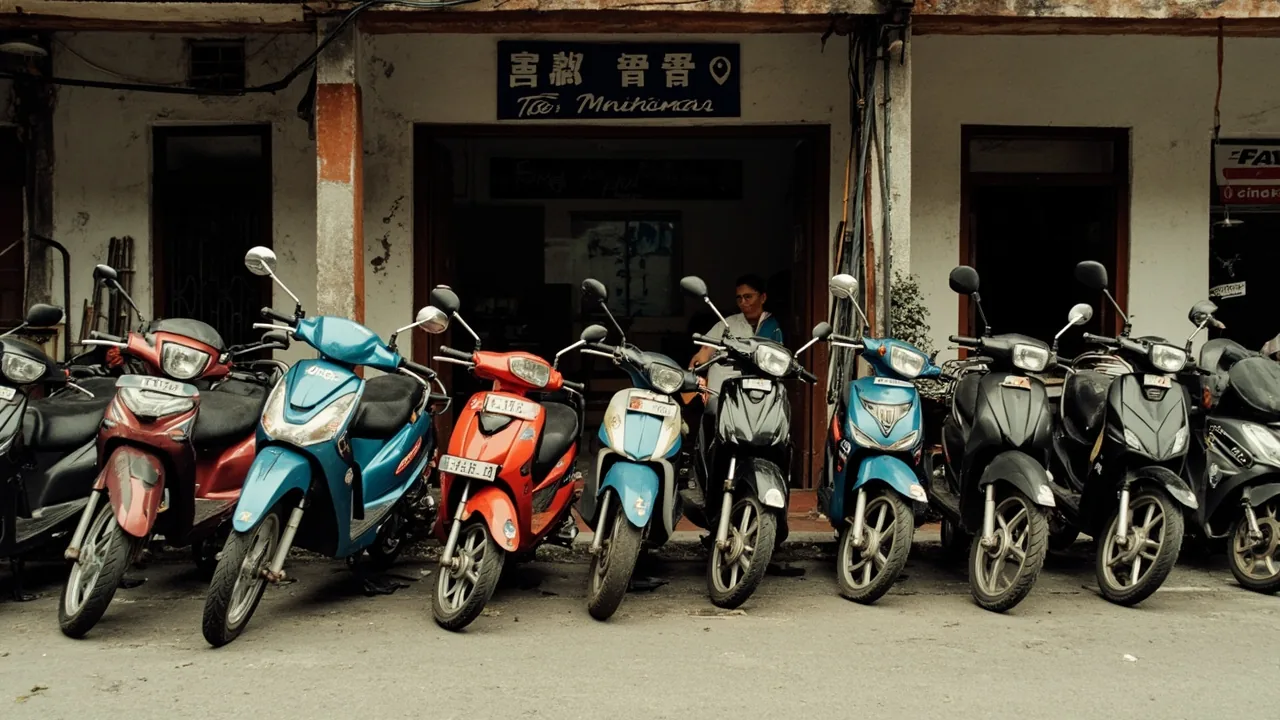
Hue to Hoi An Motorbike Rental: The Real Cost for Indian Riders
The Hue to Hoi An motorbike rental question is one of the most-Googled logistical puzzles on the Vietnam backpacker trail, and for Indian riders it’s a specific kind of problem. You’re used to 100-150cc geared bikes back home. The rental shops in Hue offer semi-autos, full-autos, and geared 125cc Hondas, all sitting side by side on the forecourt with confusing sticker prices that don’t always include what you think they include. Add the Hai Van Pass to the equation, with its switchbacks, fog, and 1,000m+ elevation gain, and the “which bike do I pick” question stops being hypothetical. For related planning, see our guide on Sea Backpacking Hub.
I verified these prices and bike specs against two rental operators in Hue (Motorvina and a comparable shop on Pham Ngu Lao) and one in Hoi An on 2026-07-22, cross-checked with traveller reports from the same week. This article covers what Indian riders need: the bike-type decision, real 2026 pricing for each class, how one-way drop-off with luggage transfer works, and the gear-up questions that decide whether you enjoy Hai Van Pass or regret the whole thing. You may also find Ho Chi Minh City to Phnom Penh useful for this trip.
Quick Answers
| What | Answer | Price (INR) |
|---|---|---|
| Cheapest way to rent for this route | Semi-automatic scooter (Honda Vision 110cc), one-way drop-off included | ₹1,288 (~350,000 VND or ~$13.35) |
| Best bike for most Indian riders | Fully automatic or geared 125cc Honda (Wave, Vision, Click) | ₹1,472-₹2,209 (~400,000-600,000 VND or ~$15.25-$22.88) |
| One-way drop-off + luggage transfer fee | Most Hue operators include it in the daily rate; only pay if you return to same city | ₹0-₹552 (~0-150,000 VND or ~$0-$5.72) |
| Realistic total budget for the 3-day rental | Bike + fuel + helmet + insurance coverage | ₹2,577-₹3,313 (~700,000-900,000 VND or ~$26.69-$34.32) |
| Best engine size for an Indian rider comfortable at home on 100-150cc bikes | 125cc geared Honda Wave/Sirius, or 110cc automatic Vision | Same as above |
The 150 km ride from Hue to Hoi An, including Hai Van Pass, takes most riders 5 to 7 hours. Budget a full day, not a half-day, especially if you’re new to Vietnamese traffic. See also: Overland Border Crossings in Southeast Asia Routes Timings Tips for Indian Backpackers.
Option 1. The Semi-Automatic Scooter (110cc to 125cc)
The cheapest Hue to Hoi An motorbike rental you’ll find is almost always a semi-automatic scooter, meaning a bike with an automatic clutch but manual gearshift via a foot lever, the Honda Wave, Yamaha Jupiter, or Suzuki Axelo being the usual suspects. For ₹1,288 (~350,000 VND or ~$13.35) per day with one-way drop-off included, this is what most shoestring backpackers end up on.
The catch for Indian riders: these aren’t geared bikes. The gearshift is a single lever on the left bar that you tap down to go up and tap up to go down. There’s no clutch lever, so you’re not learning to ride, just learning to shift. Most Indian riders who’ve never touched a semi-auto get the hang of it in 15 minutes of quiet side-street practice. Going up a hill, you tap down (kick down). Coming down, you tap up. In the same direction the bike is currently moving. That’s it. Within Hue, where it’s flat, the semi-auto is forgiving enough to give you a feel for left-side traffic before Hai Van.
If you’ve never ridden a motorcycle before in your life, the semi-auto is what I’d tell you to rent. Full automatics are easier, but they’re also a ₹184-₹368 (~50,000-100,000 VND or ~$1.91-$3.81) step up, and the semi-auto’s gearshift is a useful skill for anywhere else in Vietnam you’re likely to ride. Rent from Motorvina or comparable shops clustered around the back-packers’ street in Hue; ask specifically for the “one-way Hoi An” rate, which usually includes your luggage being sent ahead in a van for free, dropped at your hostel on arrival.
The experience is fine for 80% of the route. The problem is the last 20% is Hai Van Pass.
Option 2. The Fully Automatic Scooter (110cc to 125cc)
The fully automatic, the Honda Vision, Yamaha Janus, or Honda Click 125, costs ₹1,656-₹2,209 (~450,000-600,000 VND or ~$17.16-$22.88) per day. Twist-and-go, no gears, no clutch, no thinking. It’s the bike most rental shops in Hoi An hand you if you don’t push back, because the tourist profile in Hoi An skews toward riders who don’t know a clutch from a credit card.
For an Indian rider who’s done any two-wheeler in India, even a scooter, the fully automatic feels anaemic. It does fine on flat ground, but on Hai Van Pass the engine note climbs to a high-pitched whine, the bike feels underpowered at 1,000m elevation, and on a downhill stretch of broken tarmac you’ll feel every bump through the floorboards. The plus side: nothing to think about except gas and brakes. Indian riders who aren’t confident on a geared bike should rent this one without shame. It’s the second-best compromise after the semi-auto.
If you do go fully automatic, take the Honda Click 125 over the Vision. It’s newer, lighter, has better front brakes, and the under-seat storage fits a full-face helmet.
Option 3. The Geared 125cc Honda (Wave, Sirius, Blade)
This is the option Indian riders want and the option Vietnamese rental shops are most nervous about giving you. A geared 125cc, specifically the Honda Wave 110S (4-gear semi-auto) or the Honda Blade/Sirius 125 (5-gear full manual), runs ₹1,840-₹2,945 (~500,000-800,000 VND or ~$19.07-$30.51) per day. Wave is technically a semi-auto even at 110cc. The Blade or Sirius is a proper manual with clutch and gear lever and feels closest to a 100-150cc bike back home.
Subodh’s Pro Tip: If you want a manual geared bike for the Hai Van Pass, ask for the Honda Blade, not the Wave. The Wave’s clutch has a long engagement point (the bite point is far out) and feels vague. The Blade’s clutch bites quickly and predictably, much closer to a Bajaj or Honda bike at home.
The Vietnamese rental industry assumes every foreigner is a liability. When you ask for a geared 125 manual, expect to be asked for a bigger deposit (₹7,362-₹18,405 (~2,000,000-5,000,000 VND or ~$76.27-$190.67) versus ₹3,681-₹7,362 (~1,000,000-2,000,000 VND or ~$38.13-$76.27) for autos), to be told to bring your passport, and to be asked where you’re going and how long you’ve been riding. They’ll also walk around the bike with you pointing out every scratch on a clipboard diagram. This is normal. The deposit comes back in full if the bike comes back undamaged.
Renting a Blade is the right call if you’ve been riding geared bikes regularly for 5+ years, have ridden in moderate traffic before, and your license is current. You’ll use the clutch for engine braking down Hai Van’s hairpin descents, you’ll have torque on tap for overtaking slow trucks, and you’ll feel like yourself instead of a learner.
Safety Alert: A Vietnamese motorbike license is technically required for engine sizes above 50cc, and an Indian license alone won’t satisfy Vietnamese police if they stop you on Hai Van. The fine is ₹1,840-₹7,362 (~500,000-2,000,000 VND or ~$19.07-$76.27) if they bother to enforce it, which they often don’t, but exists. Carry your Indian license, an International Driving Permit (IDP) if you have one (you can get one from your local RTO in India before flying), and a copy of your bike rental agreement.
One-Way Drop-Off with Luggage Transfer: How It Works
This is the part most guides on this route skip entirely, and it’s the part Indian riders planning the corridor need most. Almost no one wants to ride a motorbike for 5+ hours carrying a 12kg backpack.
The Hue-to-Hoi-An one-way rental model is built around luggage transfer as a default, not an upsell. When you walk into a Hue rental shop and say “I’m dropping the bike in Hoi An,” here’s what happens:
- You pick the bike in Hue at the shop (typically morning, 8 to 10 AM).
- You hand over your backpack to the shop manager. They weigh it, sometimes photograph it, sticker your name on it.
- You ride the bike to Hoi An with nothing on your back except water and a passport.
- Your backpack goes in the rental shop’s van, which leaves Hue at midday and arrives at the rental shop’s Hoi An branch by 3 to 5 PM. You drop the bike there, they hand you your bag.
The luggage transfer fee is usually included in the per-day rate when you commit to one-way. If the shop charges extra, it’s ₹184-₹552 (~50,000-150,000 VND or ~$1.91-$5.72). Ask this before you sign the rental agreement.
The bike drop-off point in Hoi An is usually a dedicated branch on the eastern side of town (Cua Dai or An Bang side), not the Old Town. Budget the cost of a ₹110-₹184 (~30,000-50,000 VND or ~$1.14-$1.91) Grab Bike from the drop-off branch to your hostel in the Old Town. Some shops will drop both you and the bike at your hostel for free if you ask, but only if you’re ending the rental at the hostel, not just dropping it at the branch.
Subodh’s Pro Tip: Book the motorbike the night before, not the morning of. Walk in around 5 PM the previous day with your passport, sign the agreement, do the walk-around, leave a deposit, then pick the bike up at 8 AM. This gives you time to push back on any pre-existing damage you don’t want on the diagram and skip the morning rush of one-way renters all trying to leave Hue at once.
What’s on the Route: Hai Van Pass Decision Points
The first 60 km out of Hue is flat, through rice paddies, then a short detour to Lang Co lagoon where the road starts climbing. The Hai Van Pass summit is at km 90, with the best hairpins between km 85 and 100. Then a long, steep, often-foggy descent to the coast at Da Nang (km 130), followed by 25 km of motorway and beach road into Hoi An.
The reason this article focuses on engine size is that the gradient at km 85 to 100, the actual pass, is what defeats a small scooter. A fully automatic 110cc will climb it in second-or-third-gear-equivalent at 40 km/h, hesitating on the steeper sections, and that hesitation is when you feel vulnerable on a Vietnamese mountain pass with trucks passing in the opposite lane. A geared 125cc in second gear has torque in reserve and feels planted. A semi-auto in downshifted gear will climb fine but doesn’t have the engine braking on the descent.
Safety Alert: Hai Van Pass fog is real and arrives with zero warning in October to February. Travellers report visibility dropping to 5 metres around the summit between 11 AM and 2 PM on certain days. If fog hits, pull over at one of the small concrete lay-bys, wait 30 to 60 minutes for it to lift, and don’t try to push through. Riding the pass in dense fog on a rented 110cc is where first-time riders end up off the road.
Where to Stay When You Arve in Hoi An
| Hostel | Rating | Book |
|---|---|---|
| SnapStay Hoi An | 9.98 | Check prices |
| Cheerful Hoi An Hostel | 9.96 | Check prices |
| Both sit in Old Town walking distance of the backpacker restaurant cluster, which matters when you’ve just done 5+ hours on a motorbike and don’t want a taxi. SnapStay skews slightly more social; Cheerful runs quieter with cheaper dorms for solo travellers who’d rather sleep than chat. |
Gear-Up Checklist Before You Ride
Before turning the key on a Hue-to-Hoi-An one-way rental, walk around the bike with the manager and confirm five things:
- Helmets: full-face or three-quarter, not half-face. Half-face helmets won’t protect your chin in a forward fall, which is the most common first-rider crash. Rental shops give you whatever’s on the shelf, so ask for what you need.
- Tyres: front tyre especially. Look for visible tread. A bald front tyre on a wet mountain road is unrideable. If the tread is low, ask them to swap the bike.
- Brakes: pull both levers front and back while pushing the bike forward. The brake should bite hard within the first third of lever travel. If the lever sinks to the bar, the brakes are shot. Swap the bike.
- Mirrors: at least one mirror, ideally two, properly adjusted to your eye line. Many rental bikes have one mirror shoved back at the angle the previous rider left it.
- Lights: front, rear, and brake light. Daytime running lights aren’t standard in Vietnam and you’ll want yours on for Hai Van’s tunnels.
A 30-minute walk-through costs nothing and is the difference between a smooth 150 km ride and a 150 km ride that rattles your nerves.
When NOT to Take This Route
October to December is Hai Van fog season. The pass gets an average of 4 to 6 fog days per month in that window, with visibility dropping to under 50 metres at the summit on the worst days. Renting a manual geared 125cc in fog is fine if you have mountain riding experience. Renting a 110cc semi-automatic on the morning of a fog roll-in is the single most common way first-time riders in Vietnam end up in the pagoda-side pull-offs, deciding what to do.
If your trip overlaps October to December, and you’ve never ridden a geared bike before, take the Hue to Hoi An sleeper bus instead. It’s 3 hours 20 minutes, you sleep most of it, and the bus drops you inside Hoi An Old Town without you having to wave down a Grab. The full corridor is ₹1,641 (~17 USD) on 12go for any operator.
January to August is mostly clear on the pass, with daily rain showers of 20 to 40 minutes in the afternoon during July to August monsoon. The rain is annoying but not dangerous if you slow down. The fog is the actual problem.
September gets typhoon-season tail risk. If a typhoon tracks up the coast that week, coastal road sections near Lang Co flood for a day or two. Check weather forecasts the morning of, not the day before, because typhoon tracks shift fast.
Getting Connected
Viettel and MobiFone both work along the Hai Van Pass, but you’ll see coverage drop to 2G in the tunnels and dead zones in the forested sections between km 75 and 100. The summit itself usually has 3G or 4G. Buy a physical Vietnamese SIM in Hue before leaving (Viettel is the most reliable on this corridor, around ₹294-₹368 (~80,000-100,000 VND or ~$3.05-$3.81) for 30 days), or order a Get Nomad eSIM before flying into Vietnam so it’s active on landing.
If you need to call the rental shop’s Hoi An branch from the road, do it at the Da Nang descent through the coastal section. You’ll have full 4G there.
FAQ
Is the Hue to Hoi An motorbike route safe for first-time riders?
Travellers who’ve never ridden a motorbike before report that the semi-automatic 110cc is the easiest entry point, but it’s not safe for absolute first-timers on Hai Van Pass itself. If you have no motorcycle experience at all, take the sleeper bus instead and rent a scooter in Hoi An for day trips around the Old Town.
Do I need an International Driving Permit?
Vietnam technically requires it for any engine over 50cc, and traffic police do check on Hai Van Pass more than in cities. An Indian state RTO-issued IDP (which costs around ₹1,000 (~$10.36) to ₹2,000 (~$20.72) and is processed the same day) covers you. If you don’t have one, you can still rent a bike, just don’t be surprised if police charge a ₹3,681-₹7,362 (~1,000,000-2,000,000 VND or ~$38.13-$76.27) fine. Travellers report paying these fines occasionally but not consistently.
How much cash should I bring for the bike rental and Hai Van stops?
Bring ₹7,362-₹11,043 (~2,000,000-3,000,000 VND or ~$76.27-$114.40) in cash for the deposit (returnable at Hoi An drop-off), plus whatever daily budget you have. ATMs are rare on the pass itself; the last reliable ATM before the climb is in Hue city, the first one after is in Da Nang. Fuel stops along Hai Van accept cash only.
Can I ride the route in the same day, or should I split it?
Most riders do it in one day in 5 to 7 hours including stops. If you want to break it, Lang Co beach at the base of the pass has family-run guesthouses 30 km from Hue where you can stay the night and resume in the morning. That’s the only place along the road with affordable mid-budget accommodation.
What happens if I crash the bike?
Call the rental shop’s Vietnamese hotline (they’ll give you one with the rental agreement). Take photos of the bike, the road condition, and any other vehicle involved. Don’t let the police or locals talk you into a cash settlement on the road; you may have travel insurance that covers this via SafetyWing. Carry your passport at all times.
Subodh’s Take
If you’ve ridden geared bikes in Indian traffic for years, the Hue-to-Hoi-An motorbike corridor is the single best motorbike ride you’ll do in Southeast Asia, and you should rent the Honda Blade without hesitation. The pass is what every other pass in Thailand, Laos, and Cambodia is a smaller version of. If you haven’t, rent the semi-auto and budget an extra day in Hue for practice before you commit. The pass punishes hesitation more than it punishes inexperience, and a small bike you trust beats a big bike you’re worried about.
