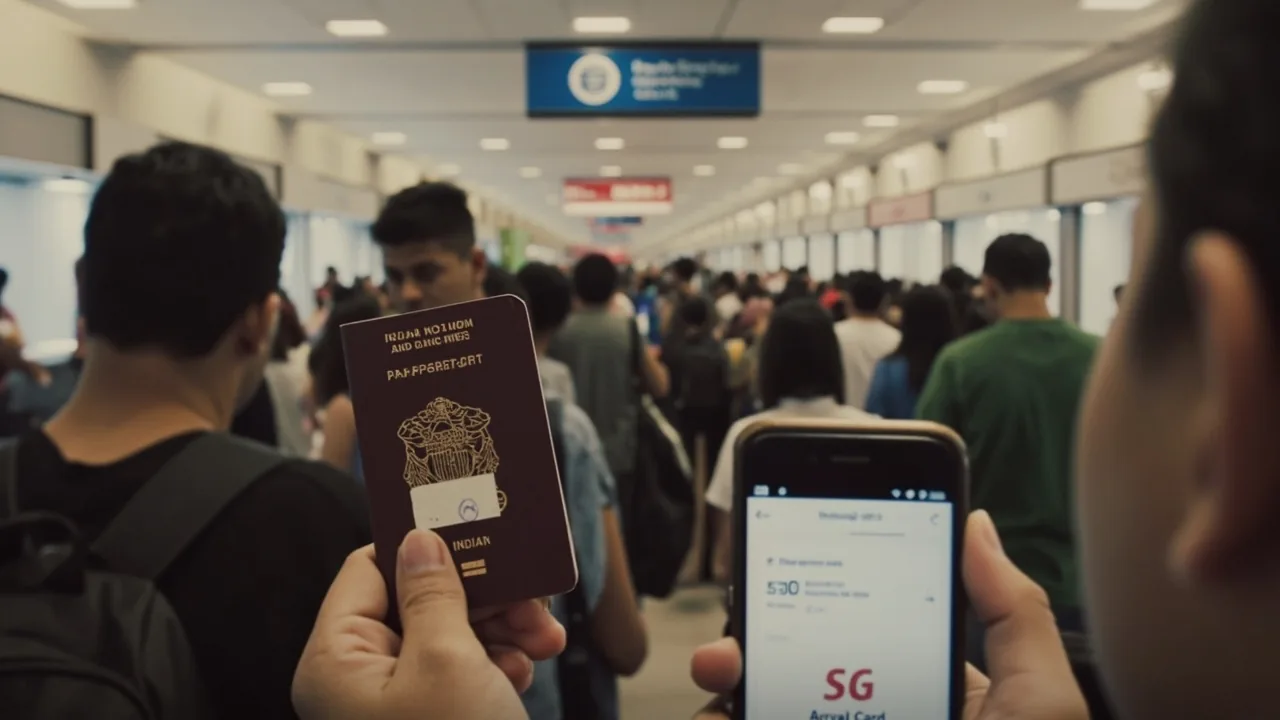
Singapore Entry Rules for Indians: The No-Nonsense 2026 Guide
I cross-checked everything below against the official ICA site on 18 July 2026 and triangulated with traveller reports. If rules changed yesterday, ICA’s site is still source of truth, so bookmark it, the Singapore visa page, and the Indian MEA advisory before you fly. Planning the wider region? Our Southeast Asia backpacking hub covers the full multi-country route.
Quick Answers
| What | Answer | Price (INR) |
|---|---|---|
| Do Indians need a visa for Singapore? | Yes, tourist visa required in advance via ICA or authorised agents | ₹2,120 (~$21.99) |
| How long can Indians stay in Singapore? | Up to 30 days per entry (single entry visa) | , |
| Passport validity required | Minimum 6 months from date of entry | , |
| SG Arrival Card (SGAC) submission | Mandatory within 3 days before arrival, free, online only | , |
| Cash declaration threshold | More than SGD 20,000 (equivalent) must be declared on arrival | , |
The Visa Reality in 2026
There is no visa-on-arrival for Indian passport holders. Singapore runs a tightly controlled pre-approved tourist visa system, and you must hold a valid visa before you board your flight to Changi. The base fee is USD 22 (around ₹2,120 at the current rate of 1 USD = ₹96.3294), but most Indians pay more because they apply through authorised visa agents like VFS Global, Bharat Visa, or a travel agency, who charge their own service fee on top. Total realistic cost through an agent: roughly ₹2,500 (~$25.93) to ₹3,500 (~$36.31).
The visa is single-entry, valid for the dates you specify (typically 30 days from issue), and grants a maximum stay of 30 days in Singapore. It does not let you pop across to Johor Bahru and re-enter on the same visa. You will need a fresh single-entry visa if you exit and want to come back.
Processing takes 3 to 5 working days through ICA directly, sometimes longer if your application triggers additional review. Apply at least two weeks before your flight to be safe.
Common Rejection Reasons
Indian applicants get rejected for three reasons more than anything else:
- Insufficient funds shown. The ICA wants to see a bank statement showing at least ₹74,730 (~1,000 SGD or ~$775.17) to ₹149,459 (~2,000 SGD or ~$1,550.35) per day of stay, or a stable monthly income. If your bank balance looks like ₹8,000 (~$82.98) right before a 10-day Singapore trip, expect a refusal.
- No confirmed hotel booking. You need a hotel reservation covering every night of your stay, with your name on it. Hostel bookings count. Couchsurfing invites do not.
- No onward ticket. You must show a confirmed return flight to India or onward flight to a third country. A printout of a refundable booking works, but you need a PNR.
If your previous visa was refused or you have overstayed in any country, expect extra scrutiny and possibly a longer processing time.
SG Arrival Card (SGAC): The Form You Cannot Skip
The SG Arrival Card is a separate requirement from the visa. Every foreign visitor must submit it within 3 days before arrival in Singapore, and it is mandatory even if you are just transiting through Changi without leaving the airport.
The form is free, takes about 5 minutes, and asks for:
- Personal details (passport number, full name, DOB, nationality)
- Travel details (flight number, arrival date, address in Singapore)
- Health declaration (a short yes/no list)
- Customs declaration (whether you are carrying more than SGD 20,000 in cash, controlled goods, etc.)
Submit it at the official ICA SGAC portal (eservices.ica.gov.sg/sgarrivalcard). You will get a confirmation email. Keep the email on your phone. Immigration officers at Changi do ask for it occasionally, and pulling it up in your inbox is faster than retyping the form at the counter.
If you forget to submit it, you will be sent to a separate queue at the airport to fill it out on a kiosk. That queue is painful. Submit it before you fly.
Passport and Document Checklist
Bring these documents physically (printed) plus a digital backup in your email:
- Passport with at least 6 months validity from your date of entry into Singapore.
- Printed visa approval letter from ICA (the eVisa PDF with the QR code).
- Printed return/onward flight ticket.
- Hotel booking confirmation covering all nights.
- SG Arrival Card confirmation email.
- Travel insurance (not mandatory, but smart, see the footer below).
- Proof of funds: last 3 months bank statements, or an updated passbook photocopy. Carry the original too.
- Credit/debit card with international transactions enabled. Forex cards work but bring at least one Visa/Mastercard as backup.
Subodh’s Pro Tip: Photograph every single document on your phone the day you fly. Passport bio page, visa PDF, hotel confirmation, return ticket, SGAC email. If your phone dies or your bag gets lost, the photo in your email is faster than calling your agent from the immigration hall.
Customs and Banned Items
Singapore is one of the strictest countries in the world at the border. What looks like a small slip-up can mean a fine of thousands of dollars or a criminal charge.
Items You Must Declare
- Cash exceeding SGD 20,000 (equivalent in any currency).
- Goods exceeding the GST relief threshold of ₹37,365 (~500 SGD or ~$387.59) in value for personal items (alcohol, tobacco, gifts).
- More than 0.4 kg of duty-free cigarettes (roughly 200 sticks).
- More than 1 litre of wine, beer, or spirits.
- Controlled pharmaceuticals, prescription drugs above personal-use quantities, or any drug on Singapore’s Misuse of Drugs Act schedules.
Items You Cannot Bring In At All
- Chewable tobacco products including gutka, pan masala, khaini, zarda. Banned outright for personal use.
- E-cigarettes and vapes of any kind. As of 2026, possession, use, and import carry heavy fines and possible jail time.
- Shisha tobacco in any form.
- Fireworks, firearms, ammunition, airsoft guns, realistic toy guns, pepper spray, stun devices.
- Spear guns, crossbows, switchblades, butterfly knives, martial arts weapons.
- Counterfeit goods, pirated media, obscene material.
- Fresh fruits, vegetables, plant material, soil, raw meat, eggs. Singapore enforces this hard.
- All recreational drugs including cannabis, marijuana edibles, CBD products above trace thresholds. The Misuse of Drugs Act carries the death penalty for trafficking.
Safety Alert: Travellers report that the chewing-tobacco ban is enforced even on small amounts intended for personal use. Penalties for chewing-tobacco offences are severe and can include heavy fines. Do not pack it.
What Immigration Officers Check
Changi runs multiple passport control lanes depending on your status:
- Singapore citizens, PRs, long-term pass holders: automated or fast lane.
- Foreign visitors with valid visas (including Indians): regular staffed counters, usually under “Visit Pass” signage.
Indian passport holders will be processed by an ICA officer. The interaction is short but specific. Expect questions like:
- Purpose of visit
- Duration of stay
- Where you are staying
- What you do for work in India
- Whether you are travelling alone
- Return flight date
Answer directly, have your hotel booking and return ticket pulled up on your phone, and do not joke around. Officers have denied entry for evasive answers, so give the requested information cleanly.
Common Reasons Indians Get Turned Away at Changi
- Visa details do not match passport (typo on the application, recent passport renewal with a new number not updated with ICA).
- SG Arrival Card not submitted before arrival.
- Insufficient funds when asked at the counter (the officer can ask you to show your bank balance on your phone or printed statement).
- Suspicious itinerary (short trip with no plausible reason, vague answers to standard questions).
- Overstay history in Singapore or another ASEAN country.
- Banned items found in luggage during secondary screening.
- No confirmed accommodation on arrival.
- Return ticket missing or too far out (officers sometimes push back on return dates more than 30 days out for a 30-day visa).
If you are refused entry, you will be held in a transit area and put on the next available flight back to your point of origin. There is no appeal on the spot. You can write to ICA afterwards to ask for the reason in writing.
Terminal-by-Terminal Tips for Indians Landing at Changi
Changi has four terminals. Most Indian carriers (Air India, IndiGo, Singapore Airlines) land at Terminal 1, 2, or 3. Budget carriers like Scoot and Jetstar mostly use Terminal 1 or 4.
Subodh’s Pro Tip: All four terminals are connected by the free Skytrain and the Changi Airport MRT station on the East-West line. If you have a long layover or want to enter Singapore city during transit, Terminal 2 and 3 have the best MRT access.
- Terminal 1: Most immigration counters, longest queues during peak arrival waves (10pm to 1am from Indian flights). Many SIM card kiosks in the public arrivals hall.
- Terminal 2: Smaller, faster processing. Limited food after immigration, but the public area has a few coffee and snack outlets.
- Terminal 3: Changi’s flagship terminal. Budget more time to walk from gate to immigration (it’s long). Good SIM card options and money exchange on the way out.
- Terminal 4: Budget terminal. Smaller, fewer counters, fewer SIM options. Immigration queues build quickly during Indian-flight arrival banks.
For a deep dive on what to do during a layover, see our Changi Airport layover guide for Indian travellers.
What to Do Once You Land
After immigration, before you leave the airport:
- Get a SIM card or eSIM activated. SIM options include Singtel, StarHub, M1, and tourist SIMs at the arrivals kiosks. For an eSIM you can set up before flying, Get Nomad eSIM works in Singapore from the moment you land.
- Withdraw or exchange some SGD. ATMs at Changi offer good rates. Avoid the “0% commission” money changers in the public hall, they give poor rates compared to the ATMs.
- Tap your contactless card at the MRT gantry or buy a Standard Ticket. MRT single fares run ₹105-₹187 (~1.40-2.50 SGD or ~$1.09-$1.94) (around ₹95 (~$0.99) to ₹170 (~$1.76)). See the full breakdown in our Singapore transport guide for Indian travellers.
- Grab a SIM card if you skipped step 1, prices for tourist SIMs at arrivals are usually ₹747-₹1,495 (~10-20 SGD or ~$7.75-$15.50) depending on data allowance.
Where to Stay on a Singapore Budget
Singapore is the most expensive city in Southeast Asia for backpackers. A dorm bed runs ₹1,868-₹3,736 (~25-50 SGD or ~$19.38-$38.76) per night (around ₹1,870 (~$19.40) to ₹3,740 (~$38.80)) and a basic private room in a hostel runs ₹3,139-₹5,978 (~42-80 SGD or ~$32.56-$62.01) (around ₹3,140 (~$32.57) to ₹5,980 (~$62.03)). For full coverage of where Indians stay on tighter budgets, see our hostels and budget hotels guide.
Two hostels worth booking in advance:
| Hostel | Rating | Book |
|---|---|---|
| Dream Lodge @ Tyrwhitt | 9.2 | Check prices |
| Atelier Hostel | 9.08 | Check prices |
What to Do Once You Are In
You came for a reason. Three attractions that consistently justify the ticket price:
- Book Marina Bay Sands SkyPark Observation Deck Ticket tour for the 360-degree skyline view across Marina Bay, the Central Business District, and on a clear day, Indonesia.
- Book Merlion Park tour for the half-lion, half-fish statue and the photo every Indian traveller wants before heading home.
- Book Singapore Flyer Entry Ticket tour for the world’s largest observation wheel and a smoother, less crowded alternative to Marina Bay Sands.
For the full picture on what is worth paying for, see our Singapore attractions worth-it review.
Where to Eat
Singapore’s hawker centres serve every cuisine, but Indian travellers heading there usually want two things: a reliable veg Indian meal and an interesting local experience.
- Sahebs on Orchard Road (4.7 rating) serves Punjabi and North Indian cuisine and is the safest bet for a dal-chawal fix in central Singapore. Set meals run around ₹1,345-₹2,092 (~18-28 SGD or ~$13.95-$21.70) (around ₹1,345 (~$13.95) to ₹2,090 (~$21.68)). For more options under ₹747 (~10 SGD or ~$7.75), see our cheap vegetarian Indian food guide.
- Joya Onsen Cafe (4.4 rating) is a Japanese-inspired onsen-style cafe. It’s not Indian food, it’s the local experience. Entry with a set meal runs around ₹2,092-₹2,840 (~28-38 SGD or ~$21.70-$29.46) (around ₹2,090 (~$21.68) to ₹2,840 (~$29.46)).
For a deeper dive on Singapore’s hawker and Indian food scene, see our Indian food Singapore guide.
Money and Connectivity
Singapore uses the Singapore Dollar (SGD). Verified 2026-07-18 at 1 SGD = ₹74.6855.
- Forex cards from Indian banks work at ATMs and most shops. Watch the markup.
- UPI is accepted at some larger retailers and hawker stalls under the PayNow UPI integration, but don’t rely on it. Carry a Visa/Mastercard as backup.
- SIM cards at Changi arrivals kiosks: ₹747-₹1,495 (~10-20 SGD or ~$7.75-$15.50) for tourist SIMs with 100 GB+ data.
- eSIM options work from landing. Get Nomad eSIM before you fly.
Full breakdown on cards, cash, and exchange in our Singapore money guide for Indian travellers.
Safety and Indian-Specific Considerations
Singapore is one of the safest cities in the world for Indian travellers. Violent crime is rare, public transport runs all night, and emergency services respond fast. That said, the strict customs and immigration rules mean the biggest risk for an Indian backpacker is not getting mugged, it is getting fined or turned away for a paperwork mistake.
Practical tips from past travellers:
- Do not pack chewing tobacco or vapes. Not even “for a friend.”
- Carry printed copies of every document, not just digital.
- Submit the SG Arrival Card three days before, not the morning of.
- Show your hotel booking and return ticket on your phone at immigration. Pull them up before you reach the counter.
- Stand straight, answer politely, keep your answers short. No jokes.
- If asked for proof of funds, a printed bank statement or passbook photo works.
- For female solo travellers, see our Singapore safety guide for female solo Indian travellers.
Safety Alert: Border and immigration rules can change with little warning. Before you fly, check the official Indian Ministry of External Affairs advisory page (mea.gov.in) and the ICA Singapore site (ica.gov.sg) for any active travel advisories or recent rule changes.
FAQ
Do Indians need a visa for Singapore in 2026?
Yes. There is no visa-on-arrival for Indian passport holders. You must apply for a tourist visa through ICA or an authorised visa agent before flying. Base fee is ₹2,121 (~22 USD), plus agent service charges if you apply through VFS or a travel agency.
How long can Indian citizens stay in Singapore?
Up to 30 days per entry on a single-entry tourist visa. The visa itself is typically valid for 30 days from issue, so apply close to your travel date.
What is the SG Arrival Card and do I need to submit it?
The SGAC is a free online form required from every foreign visitor within 3 days before arrival in Singapore. Submit it at eservices.ica.gov.sg/sgarrivalcard. Even transit passengers need to submit it.
What is the minimum passport validity for Indians entering Singapore?
Six months from the date of entry. Carry a passport with at least two blank pages.
Can I chew paan or carry gutka into Singapore?
No. All chewing tobacco products, gutka, pan masala, khaini, and zarda are banned. Fines start at ₹373,648 (~5,000 SGD or ~$3,875.87).
Can I use my Indian UPI app in Singapore?
Some merchants and hawker stalls accept UPI under the PayNow-UPI integration, but coverage is uneven. Carry a Visa/Mastercard as your primary payment method.
What happens if I am refused entry at Changi?
You will be held in a transit area and put on the next available flight back to your point of origin. There is no on-the-spot appeal. You can write to ICA afterwards to request the reason in writing.
Subodh’s Take
Singapore is the easiest entry in Southeast Asia once your paperwork is right, and the most painful once it’s not. Indians don’t get rejected for the country’s politics or the officer’s mood. They get rejected for missing the SGAC, packing gutka, or showing a bank balance of ₹6,000 (~$62.24) before a 7-day trip. Spend 30 minutes on the visa and the SGAC, double-check your documents, and Changi becomes a 20-minute airport experience instead of a 6-hour ordeal.
