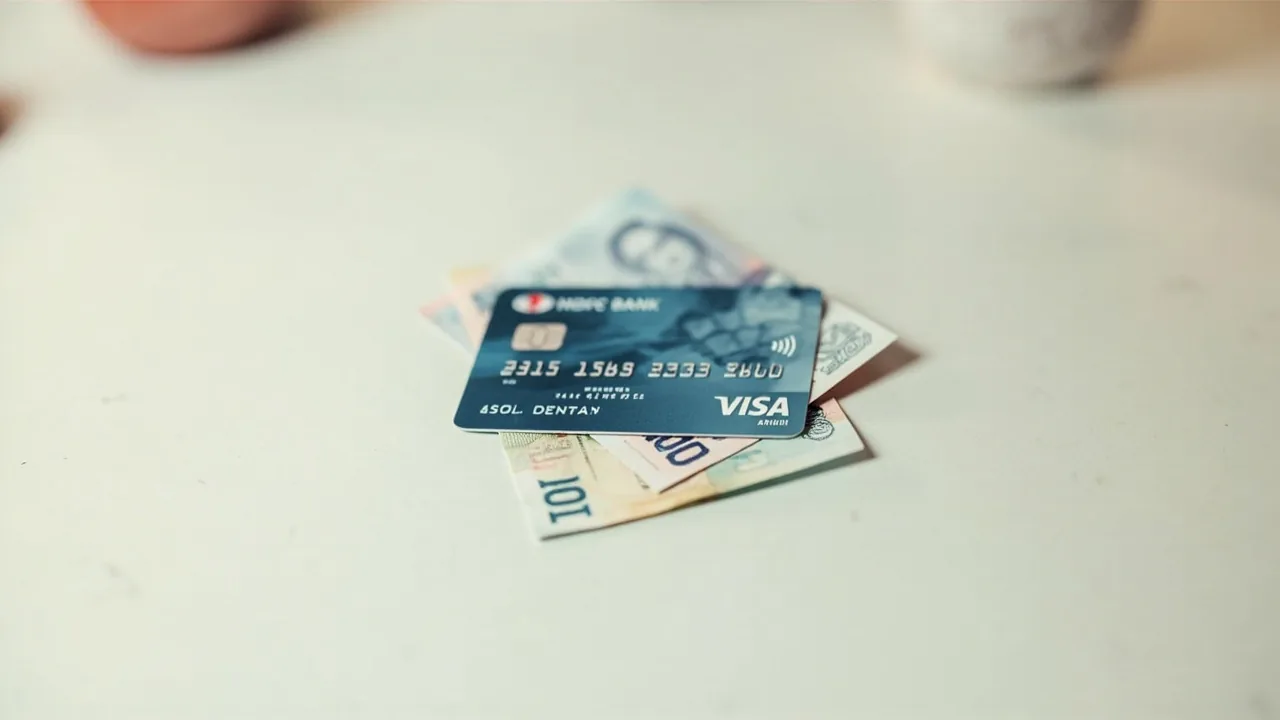
Singapore Money Guide for Indians (2026): Debit Cards, INR to SGD Exchange & Cash Tips
If you’re travelling with an Indian debit card in Singapore forex charges can quietly drain your travel budget. Singapore is the one stop on the Southeast Asia loop where your money habits from Bangkok, Hanoi, or Phnom Penh stop working.
Before you land, make sure you’ve sorted your flight from India and entry requirements.
Quick Answers This guide covers the three high-volume questions Indian travellers Google: should you carry INR cash and convert here, which Indian debit cards work in Singapore without forex markup, and where to get the best INR-to-SGD rate (Little India money changers vs Mustafa Centre vs Changi Airport vs ATMs). Plus the angle most guides miss: how to send money from India to Singapore online if you need a top-up mid-trip, and which platforms charge the least.
Quick Answers
| What | Answer | Price (INR) |
|---|---|---|
| What are Indian debit card in singapore forex charges? | 3.5% per transaction on most cards | The standard cross-currency markup charged by HDFC, ICICI, SBI, and Axis debit cards on every SGD transaction. Reversible only via bank goodwill request; not automatic. |
| Which Indian debit card has zero forex markup in Singapore? | HSBC Premier Debit (requires Premier account) | Most banks treat debit as a forex product by default; 0%-markup credit cards (HDFC Infinia, ICICI Coral, Axis Atlas) are the practical workaround. |
| Where to get the best INR to SGD rate? | Mustafa Centre (Little India) | Within 1-2% of mid-market; Serangoon Road independents close behind. Avoid Changi and hotel desks. |
| Best way to send money from India to Singapore? | Wise (mid-market + 0.41%) | Cheapest above ₹20,000 (~$209.44). Remitly faster for emergencies. |
| MRT single trip | Tap ez-link card | ₹74-₹185 (~1-2.50 SGD or ~$0.77-$1.93) |
| Grab ride (short trip, 3-5 km) | Book via app | ₹591-₹1,108 (~8-15 SGD or ~$6.19-$11.61) |
| Hostel dorm bed | Book online, pay at property | ₹1,847-₹3,694 (~25-50 SGD or ~$19.34-$38.69) |
| What | Answer | Price (INR) |
| --- | --- | --- |
| Best place to convert INR cash to SGD | Mustafa Centre (Little India) or money changers along Serangoon Road | ~₹100 (~1.35 SGD or ~$1.04) per ₹100 (~$1.05) |
| Best forex-free Indian debit card in Singapore | HDFC Bank Infinia or ICICI Bank Coral contactless | 0% forex markup, 0% cross-currency fee |
| Worst place to exchange money | Changi Airport counters | ₹100 (~$1.05) = ₹89 (~1.20 SGD or ~$0.93) |
| Cheapest way to send money from India to Singapore | Wise (formerly TransferWise) | Mid-market rate + 0.41% fee |
| MRT single trip | Tap ez-link card | ₹74-₹185 (~1-2.50 SGD or ~$0.77-$1.93) |
| Grab ride (short trip, 3-5 km) | Book via app | ₹591-₹1,108 (~8-15 SGD or ~$6.19-$11.61) |
| Hostel dorm bed | Book online, pay at property | ₹1,835-₹3,669 (~25-50 SGD or ~$19.38-$38.76) |
Exchange rate anchor: 1 INR = 0.0135 SGD (1 SGD = ₹73.89 or ~$0.97). Use this rate as a mental anchor when comparing offers. If a money changer quotes you ₹100 (~$1.05) = ₹95 (~1.28 SGD or ~$0.99), they’re taking roughly 5% in spread plus commission.
Where to Exchange INR Cash to SGD
If you’re carrying Indian rupees as a backup (which you shouldn’t be doing beyond ₹14,777-₹22,166 (~200-300 SGD or ~$154.75-$232.12) equivalent, see the card section below), here are the four places you’ll encounter, ranked best to worst:
1. Mustafa Centre (Little India). The Singaporean institution every Indian traveller has heard about. Mustafa’s money changer on the ground floor near the Serangoon Road entrance typically offers rates within 1-2% of the mid-market rate for INR. They also quote rates for most major currencies and don’t charge commission on cash exchange above a small minimum. Plan 30-45 minutes for the queue on weekends and expect to walk out with a stack of SGD notes plus the rest of your shopping list (Mustafa is also a mall, an electronics store, and a grocery all in one).
2. Independent money changers along Serangoon Road and Race Course Road. These smaller shops often undercut Mustafa by 0.5-1% because their rent is lower. Look for the ones displaying a live rate board on the street. Many of them are licensed by the Monetary Authority of Singapore (MAS), which is your consumer protection if anything goes wrong. Avoid any shop that won’t display their rate publicly or pushes you inside with promises of a “special rate.”
3. Changi Airport counters (avoid). The rates at Changi are 5-8% worse than Little India. The convenience of exchanging ₹14,777 (~200 SGD or ~$154.75) at the airport costs you roughly ₹739-₹1,108 (~10-15 SGD or ~$7.74-$11.61) extra compared to waiting 45 minutes for a Grab into the city. The only scenario where airport exchange makes sense is arriving after 11 PM when Little India shops are closed (most close by 9-10 PM).
4. Hotel front desks. Rates here are the worst, often 8-12% below mid-market. Don’t do this even in an emergency.
Subodh’s Pro Tip: The ₹100 (~$1.05) = ₹100 (~1.35 SGD or ~$1.04) rate at Mustafa can swing to ₹100 (~$1.05) = ₹103 (~1.40 SGD or ~$1.08) on weekdays when Indian tourists are fewer. If your schedule is flexible, exchange on a Tuesday or Wednesday morning rather than Saturday afternoon.
Which Indian Debit Cards Work in Singapore Without Forex Markup
This is where most Indian travellers lose the most money without realising it. Every time you tap your HDFC, ICICI, SBI, or Axis debit card at a Singapore MRT gantry or a 7-Eleven terminal, your bank charges a “cross-currency markup” on top of the Visa/MasterCard wholesale rate. For most Indian debit cards, this markup is 3.5% per transaction, plus a flat fee in some cases. On a ₹147,771 (~2,000 SGD or ~$1,547.45) trip, that adds up to ₹5,172 (~70 SGD or ~$54.16) of silent charges.
The cards below charge 0% forex markup in Singapore:
| Card | Bank | Forex Markup | Notes |
|---|---|---|---|
| HDFC Bank Infinia Credit Card | HDFC | 0% | Premium card, high annual fee, best overall |
| ICICI Bank Coral Contactless Credit Card | ICICI | 0% on first ₹2 lakh/month | Mid-tier, accessible annual fee |
| Axis Bank Atlas Credit Card | Axis | 0% | Newer card, good for travel |
| HSBC Premier Mastercard Debit | HSBC | 0% for Premier customers | Requires HSBC India Premier account |
| Federal Bank Scapia Credit Card | Federal Bank | 0% | Travel-focused, low fee |
For debit cards specifically (which is what most Indian travellers ask about), the options are thinner. Most Indian banks treat debit cards as a forex-markup product by default. The cleanest exception is HSBC Premier Debit, but you need to hold an HSBC India Premier account (minimum balance ₹10 lakh). For everyone else, the practical move is to use a forex-free credit card above and pay it off from your Indian bank account the same month.
Safety Alert: Avoid using Indian-issued debit cards directly at Singapore ATMs or POS terminals unless you’ve confirmed with your bank that your specific card has zero forex markup. The 3.5% markup on debit cards is automatic and irreversible; the bank will not refund it.
The Card Setup Most Indian Travellers Should Use
The safest card stack for Singapore is:
- Primary payment card: HDFC Infinia / ICICI Coral / Axis Atlas credit card, all 0% forex markup. Use this for MRT top-ups, restaurant bills, Grab rides, shopping.
- Backup cash source: A money changer in Little India, exchanging INR cash to SGD once on arrival for the first 2-3 days of expenses.
- Mid-trip top-up (if needed): Wise or Remitly, sending INR from an Indian bank account to a Singapore bank account or directly to your Wise multi-currency card. See the section below.
- Emergency cash only: ATMs in 7-Elevens or DBS branches, only using a 0%-markup card. Avoid standalone ATMs in tourist areas that add surcharge fees (these are legal in Singapore and the fee is shown on-screen before you commit).
ATMs in Singapore: What to Know
ATMs in Singapore belong to local banks (DBS, OCBC, UOB) or are operator-branded (NETS, Cardplus). Indian Visa/MasterCard debit cards work at all of them. Key facts:
- DBS and OCBC ATMs charge a ₹74-₹222 (~1-3 SGD or ~$0.77-$2.32) fee on top of any foreign-card fee your bank adds. For Indian cards with 3.5% markup, this stacks.
- UOB ATMs are friendlier to foreign cards, sometimes waiving the local fee for Visa and Mastercard.
- The MRT station ATMs (in underground stations) are usually NETS-branded and may have a ₹148 (~2 SGD or ~$1.55) surcharge.
- Avoid the standalone “Travelex” or “MoneyMAX” ATMs in tourist zones; they layer 5-8% in fees and are not worth it.
Subodh’s Pro Tip: Withdraw a lump sum of ₹22,166-₹36,943 (~300-500 SGD or ~$232.12-$386.86) once, in a single ATM hit, rather than small amounts throughout the trip. The flat ATM fee of ₹74-₹222 (~1-3 SGD or ~$0.77-$2.32) hits the same whether you withdraw ₹3,694-₹36,943 (~50-500 SGD or ~$38.69-$386.86), so a larger withdrawal amortises the fee. With a 0%-markup card, this is a clean transaction.
Sending Money from India to Singapore Online
This is the gap most competitor guides don’t cover. If you’re mid-trip and run low on cash, or you need to pay a hostel/landlord in Singapore from your Indian bank account, here are the three platforms Indian travellers use:
1. Wise (formerly TransferWise). Uses the mid-market rate with a transparent 0.41% fee on the INR→SGD corridor. A ₹50,000 (~$523.60) transfer lands as roughly ₹49,503 (~670 SGD or ~$518.40) after fees. The recipient gets it in 1-2 working days into any Singapore bank account (DBS, OCBC, UOB). The cheapest option for amounts above ₹20,000 (~$209.44).
2. Remitly. Slightly higher fee (around 1-1.5% on most corridors) but offers an “Express” delivery option that gets SGD into the recipient’s account in 15-30 minutes via FPX rails. Good for emergencies.
3. BookMyForex. Indian-domiciled platform, useful if you’re sending INR to a Singapore bank account in bulk (rent, business payment). Fee is around 0.5-1% plus a small SWIFT charge.
Critical note on RBI’s LRS (Liberalised Remittance Scheme): All outward remittances from India fall under the USD 250,000/year LRS limit per individual. For a personal trip, you’re nowhere near this ceiling, but the bank will still ask you to declare the purpose (“maintenance of close relative abroad” or “travel abroad” both work).
For amounts under ₹15,000 (~$157.08), the fees on Wise and Remitly can eat 3-4% of the value. For these small amounts, you’re better off using your forex-free credit card directly in Singapore rather than wiring cash.
Where to Stay: Hostels in Singapore
Singapore is the most expensive stop in Southeast Asia for dorm beds. A ₹1,847-₹3,694 (~25-50 SGD or ~$19.34-$38.69) range is typical for a clean, central hostel. For more options, check our full guide to budget hotels and hostels in Singapore. Here are two that consistently rate well with Indian travellers:
| Hostel | Rating | Location | Book |
|---|---|---|---|
| Dream Lodge @ Tyrwhitt | , | Lavender / Jalan Besar (5 min walk to MRT) | Check prices |
| Atelier Hostel | , | Kallang / near Bendemeer MRT | Check prices |
| Both are within ₹739-₹1,108 (~10-15 SGD or ~$7.74-$11.61) of the lower end of the dorm range. Dream Lodge has stronger common-area vibes for solo travellers, while Atelier runs quieter and works well for focused trip segments. |
Dorms in the 25-50 SGD range convert to ₹1,850-3,700 (~$19.34-$38.69), which is 2-3x what you paid in Bangkok or Hanoi.
What to Eat: Indian Food & Hawker Picks
When the dal-chawal craving hits, head straight for Little India or Tekka Centre. For a sit-down meal, Sahebs on Orchard Road serves proper Punjabi and North Indian thalis in the ₹1,847-₹3,325 (~25-45 SGD or ~$19.34-$34.82) range. A full thali with dal, paneer, roti, rice, and a sweet is around ₹2,069 (~28 SGD or ~$21.66), which is 2-3x what you’d pay at a Dhaba in Bangkok but the quality is consistently high.
For cheap local food, the hawker centres (Lau Pa Sat, Maxwell, Chinatown Complex, Tekka Centre) are still the best value. A plate of chicken rice or laksa is ₹296-₹443 (~4-6 SGD or ~$3.09-$4.64). Vegetarian Indian food at hawker centres is also available: the Annalakshmi stall at Little India Arcade serves vegetarian Indian thali on a pay-what-you-want basis, and most Tekka Centre stalls have veg options.
For a casual drink or a western-style bite, Ming’s Cafe & Pub (rating 4.2) in the Boat Quay / Clarke Quay area is a common backpacker spot.
What to Do: Top 3 Attractions
-
Marina Bay Sands SkyPark Observation Deck (rating 4.5) Book Marina Bay Sands SkyPark Observation Deck Ticket. The view from the 57th floor is genuinely worth the ₹1,699-₹2,217 (~23-30 SGD or ~$17.80-$23.21) ticket. Go just before sunset so you get day, golden hour, and the light show in one visit.
-
Gardens by the Bay (rating 4.7) Book Gardens by the Bay tour. The outdoor gardens are free; the Cloud Forest and Flower Dome conservatories are ₹591-₹1,108 (~8-15 SGD or ~$6.19-$11.61) each, or grab a combined ticket for around ₹1,847 (~25 SGD or ~$19.34). The Supertree Grove light show at 7:45 PM and 8:45 PM is free and worth timing your evening around.
-
Merlion Park (rating 4.6) Book Merlion Park tour. Free, walkable, and the photo is mandatory. Best at sunrise when the park is empty and the city behind is still waking up.
Transport in Singapore
- MRT: The metro is the cheapest and fastest way around. Single trip: ₹74-₹185 (~1-2.50 SGD or ~$0.77-$1.93). Buy an ez-link card for ₹369 (~5 SGD or ~$3.87), top it up at any MRT station, and tap your way through. The card is refundable at the end of your trip at any Changi Airport MRT customer service counter.
- Buses: Single trip ₹66-₹185 (~0.90-2.50 SGD or ~$0.70-$1.93), paid via the same ez-link card. Useful for routes the MRT doesn’t cover.
- Grab: Standard short trip (3-5 km): ₹591-₹1,108 (~8-15 SGD or ~$6.19-$11.61). Surge pricing kicks in during peak hours and rain, so plan around it.
- Taxis: Same meter-based pricing as Grab for short trips, but you can hail them on the street. Same comfort, similar price.
Getting Connected
Singapore has one of the best telecom networks in the world. M1, Singtel, and StarHub all sell tourist SIMs at Changi for ₹1,108-₹1,847 (~15-25 SGD or ~$11.61-$19.34) with 100-200 GB of data valid 7-14 days. The physical SIM counter is in the arrivals hall of each terminal, open 24/7.
If you’d rather skip the airport queue and activate before you land, Get Nomad eSIM gives you a Singapore data plan that activates the moment you hit Changi’s network, no physical SIM swap required.
Coverage along the MRT underground is excellent; you’ll have 4G or 5G in every tunnel.
FAQ
Is it better to carry INR cash or use a forex-free card in Singapore?
Carry a small amount of INR (equivalent to 200-300 SGD) as a backup and convert it at Mustafa Centre once you arrive. Your primary spending should be on a 0%-forex-markup Indian credit card. The markup on a standard Indian debit card eats 3.5% of every transaction, which on a ₹147,771 (~2,000 SGD or ~$1,547.45) trip is ₹5,172 (~70 SGD or ~$54.16) lost.
Which Indian debit card has zero forex markup in Singapore?
HSBC Premier Debit Card (requires HSBC India Premier account, minimum balance ₹10 lakh). For most Indian travellers without Premier banking, the practical alternative is a 0%-markup credit card such as HDFC Infinia or ICICI Coral, paid off monthly.
Where is the best INR to SGD exchange rate in Singapore?
Mustafa Centre in Little India, with independent money changers along Serangoon Road a close second. Both are within 1-2% of the mid-market rate. For the latest live rate, check our Singapore Dollar to Indian Rupee converter. Avoid Changi Airport counters, which are 5-8% worse.
Can I use UPI in Singapore?
No. UPI is not accepted in Singapore outside a small pilot with PayNow via certain banks. Indian travellers cannot rely on UPI here. Use a forex-free card or cash.
How much SGD cash should I carry on arrival?
About 200-300 SGD, converted at Mustafa within your first 24 hours. This covers your first 2-3 days of hawker food, MRT top-ups, and Grab rides while you settle in. After that, lean on your forex-free card for everything.
What is the cheapest way to send money from India to Singapore?
Wise, at 0.41% on the mid-market rate for amounts above ₹20,000 (~$209.44). For smaller amounts, the fees eat too much of the value and you’re better off using a forex-free card directly in Singapore.
Are ATMs in Singapore safe to use?
Yes. DBS, OCBC, and UOB ATMs are in every MRT station and most shopping centres. Avoid standalone branded ATMs in tourist zones that add surcharges. Withdraw in lump sums to amortise the per-transaction ATM fee.
Subodh’s Take
Singapore is the one stop on the SEA loop where your money habits from the rest of the trip need a deliberate reset. The dorm beds cost 2-3x more, the hawker food costs 4x more than Penang, and every taxi/MRT tap silently charges 3.5% if you’re on the wrong Indian debit card. Travellers who plan their card stack before the flight (one 0%-markup credit card + a small INR cash backup for Mustafa exchange) save ₹5,000-₹8,000 (~$52.36-$83.78) on a typical 4-5 day Singapore stop. The rest of the loop is cheap enough to absorb mistakes. Singapore is not. Spend an hour on this before you board the plane, and the rest of your stop runs clean.
