Siem Reap to Phnom Penh by Train: What’s Real, What’s Hype & What Works in 2026
📍 Distance: 320 km (overland) ⏱️ Fastest option: 45 minutes (flight) 💰 Cheapest option: ₹1,253 (~13 USD)
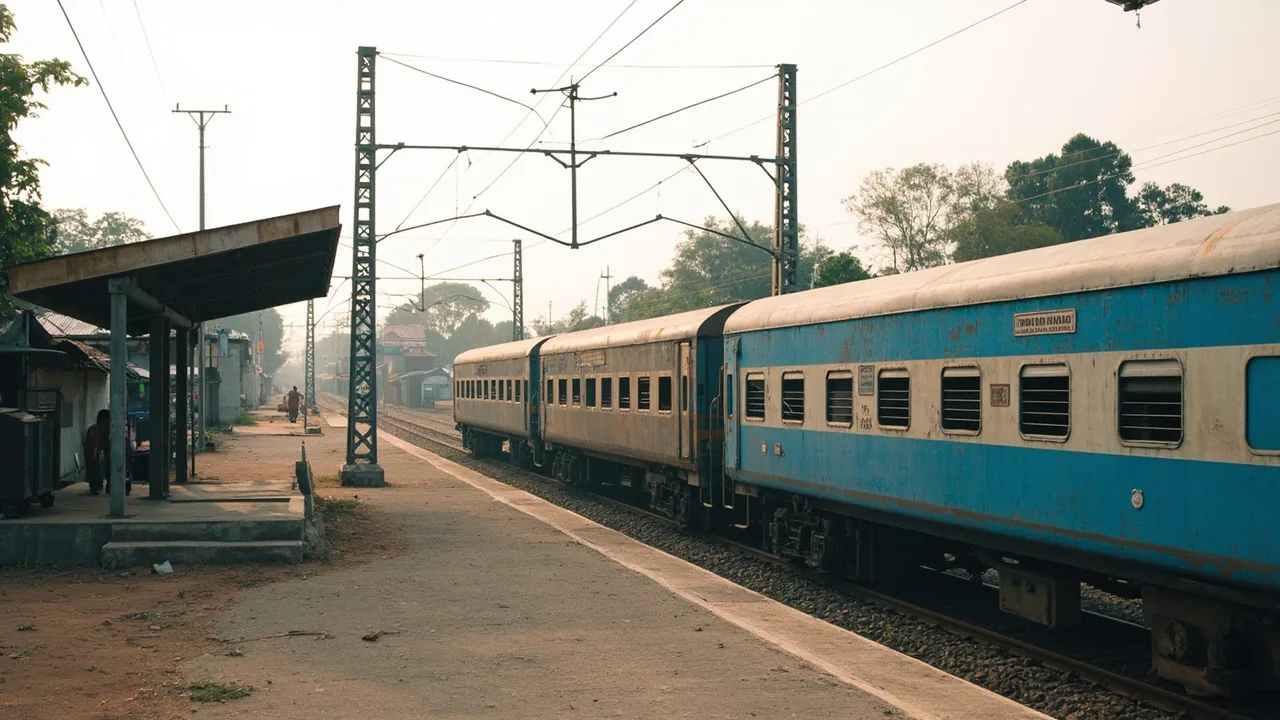
If you’re asking “is there a train from Siem Reap to Phnom Penh” and search it, you’ll find a mess: 2019 blog posts, 2024 Cambodia railway revival headlines, Reddit threads arguing about whether the line reopened. The short answer for 2026: there is no regular passenger train service between the two cities, and there isn’t going to be one in the next few months either. The longer answer involves a bit of railway history, a couple of current scams you should know about, and the realistic options Indian backpackers use to cover this 320 km stretch. I checked the official Royal Railways Cambodia timetable, the Ministry of Public Works and Transport announcements, and traveller reports from June 2026 before writing this.
Quick Answers
| What | Answer | Price (INR) |
|---|---|---|
| Is there a direct train from Siem Reap to Phnom Penh? | No regular passenger service in 2026. The northern line is suspended. | — |
| Is the Cambodia railway “reopened”? | Phnom Penh. Sihanoukville (south) and Phnom Penh. Poipet (north, partial) see occasional freight and limited tourist runs. The Siem Reap branch is dormant. | — |
| Cheapest real option | Shared minivan via 12go or at the bus station. | ₹1,253 (~13 USD) |
| Fastest real option | Cambodia Angkor Air flight (45 min, several daily). | ₹4,338-₹8,194 (~45-85 USD) |
| Best balance of comfort, time, and price | Giant Ibis or Mekong Express tourist bus, 6 hours, AC, WiFi, on-time. | ₹1,832 (~19 USD) |
The Truth About the Train in 2026
Cambodia has a real railway network, the 600-odd km built under French colonial rule, which today is operated as two separate lines by Royal Railways Cambodia (RRC). The southern line, Phnom Penh to Sihanoukville, runs passenger services a few times a week and tourist trains on the Cambodia itinerary circuit. The northern line runs from Phnom Penh to Poipet on the Thai border, passing through Battambang. That northern line technically connects to a branch that used to terminate in Siem Reap, but here’s the catch: the Siem Reap branch has been suspended to regular passenger service for years. There is no scheduled train from Siem Reap to Phnom Penh, and you can’t book one. If a tuk-tuk driver in Siem Reap tells you there’s a “morning train,” he’s either misinformed, testing you, or setting up a scam.
What you will find online: occasional “heritage train” runs, photo shoots, and a few operator packages that use a small stretch of restored track for tourism. These are not transport between cities. They are experiences, expensive, and they don’t take you from Siem Reap to Phnom Penh. There are occasional short heritage-style runs on a section of the old line south of town, but these are not scheduled transport between cities and do not connect onward to Phnom Penh.
The northern line itself, Phnom Penh to Poipet, is in slow revival mode. Royal Railways has run test services and some tourist charters in 2024-2025, and there’s genuine optimism that regular passenger service may resume in late 2026 or 2027. But that’s a Phnom Penh to Battambang or Poipet service, and it still doesn’t solve Siem Reap. Siem Reap is the one major Cambodian city with no working rail link, which is part of why everyone takes the bus, the van, or the plane.
What about a future Siem Reap to Phnom Penh high-speed line? China has funded a feasibility study for a high-speed rail network in Cambodia, and headlines about “Cambodia high-speed rail 2025/2026” have circulated. As of mid-2026, no construction contract has been signed for a Siem Reap line, and ground-breaking is at least 3-5 years out if it happens at all. Don’t plan your trip around a project that’s still on paper. (See the full Phnom Penh to Siem Reap distance breakdown.)
Option 1. Cheapest: Shared Minivan
The cheapest real way to get from Siem Reap to Phnom Penh is a shared minivan, bookable on 12go or at the bus station the morning of departure. ₹1,253 (~13 USD) is the typical fare in 2026, which works out to around ₹1,250 at current rates (1 USD = ₹96.33). You’ll find vans leaving from offices near the Old Market area in Siem Reap and from the main bus stations in Phnom Penh (various operators, the most reliable meeting point is the Central bus station off Russian Boulevard).
The van itself: 12-15 seats, AC, sometimes working, sometimes not, no WiFi. The trip takes 6 hours on a good day, up to 7-8 hours if there’s rain, roadworks, or a stop at a roadside restaurant that takes 30 minutes. Bags go on the roof or in the back, you squeeze in, and you go. The seats recline slightly. You’ll get a small water bottle. Travellers report that the vans are the most common place to pick up a stomach bug on this corridor, mostly because of the food stops, so eat before you board and skip the mystery meat at the rest area.
Vans are fine if you’re on a tight budget and don’t mind a bit of chaos. The downside is they don’t save you time over the bus, they fill up in order of arrival (so show up 30-60 minutes early), and the drop-off in Phnom Penh is rarely where you want to be. Always confirm the drop-off point before you pay, some vans drop at the central station, some at guest houses, some at random intersections.
For booking at the bus station in Siem Reap on the morning of departure, ask your guesthouse which operator they recommend; the Central bus station off Russian Boulevard in Phnom Penh is the most reliable drop-off and pickup point.
Option 2. Best Experience: Tourist Bus (Giant Ibis or Mekong Express)
For most Indian backpackers doing the Siem Reap to Phnom Penh leg, the right answer is a tourist bus. Two operators dominate: Giant Ibis and Mekong Express. Both run modern AC coaches with reclining seats, onboard WiFi (don’t expect much), a working toilet at the back, and a promised departure schedule that they mostly stick to. Fare: ₹1,832 (~19 USD) (about ₹1,830 (~$18.96)). Departure times are early morning (7:00-8:30 AM) and a few operators also run afternoon or evening departures. The trip takes about 6 hours, including one comfort stop.
You book on 12go, through the operator’s own website, or at a guesthouse in Siem Reap. Book 1-2 days ahead in high season (November to February), walk-up works in low season. The bus drops you at a proper terminal in Phnom Penh, from where a tuk-tuk to your hostel is ₹193-₹482 (~2-5 USD).
What makes this the best option for most people: it’s the cheapest option that you can rely on. The vans are cheaper in theory but unpredictable in practice, the flight is faster but costs 3-4x more, and shared taxis are similar in price to the bus but with worse seats and longer actual door-to-door times. The tourist bus is the Indian traveller equivalent of the Volvo AC sleeper, a known quantity that gets you from A to B without drama.
Two practical tips for this corridor: bring a layer, since the AC is aggressive and the bus feels like a refrigerator by hour three. Window-side seats on the left can show longer rural stretches, depending on departure time and sun angle.
You can also book through Giant Ibis or Mekong Express’s own websites, which sometimes run promotions not mirrored on aggregator sites.
Option 3. Fastest: Flight
Cambodia Angkor Air and a few regional carriers fly Siem Reap (SAI) to Phnom Penh (PNH) several times a day, with a flight time of about 45 minutes. Prices in 2026 range from ₹4,338 (~45 USD) for an economy seat booked weeks ahead to ₹8,194 (~85 USD) for last-minute bookings (₹4,330 (~$44.86) to ₹8,190 (~$84.85)). Add 1.5-2 hours of airport time on each end and the total door-to-door saving versus the bus is around 4 hours, sometimes less if the road is good.
The flight is worth it if you’re short on time, the price gap is small, or you’ve already done the bus leg and just want to skip a long day. It’s not worth it for the budget-conscious backpacker doing a multi-week loop: a ₹5,784-₹6,266 (~60-65 USD) saved per person is two nights in a Siem Reap guesthouse or a week’s worth of street food.
There’s also the practical issue that Siem Reap’s new airport (Siem Reap-Angkor International, code SAI) is 50 km east of town, a 45-minute drive that adds cost and time. If you factor in the tuk-tuk to the airport (₹1,446-₹1,928 (~15-20 USD)), the airport time, the flight, and then a tuk-tuk from Phnom Penh airport to your hostel (₹964-₹1,157 (~10-12 USD)), the “fastest” option is genuinely only marginally faster than the bus in the door-to-door calculation, and a lot more expensive.
Border Crossing (If You’re Coming from Thailand)
The Siem Reap to Phnom Penh route is entirely within Cambodia, so there’s no border crossing. But many Indian backpackers arrive in Siem Reap overland from Thailand via the Poipet border crossing, and the train question comes up because there used to be a Thai rail link to Aranyaprathet. If that’s you, get the Poipet border crossing details in our Poipet border crossing visa safety guide for Indian backpackers. The good news: once you’re through Poipet and into Siem Reap, you don’t have to think about borders again on this leg.
If you’re heading onward from Phnom Penh to Vietnam via the Prek Chak crossing (for Ha Tien or back into the Mekong Delta), that’s the next border you’ll see, and it’s covered in our Prek Chak border crossing guide for Koh Kong and Vietnam.
Indian Passport Specifics
Cambodia is one of the friendlier Southeast Asian countries for Indian passport holders. The visa situation in 2026:
- Visa on arrival: ₹2,892 (~30 USD), available at Phnom Penh, Siem Reap, and Sihanoukville airports. 30 days, single entry. Bring a 4x6 cm passport photo, white background.
- e-Visa: ₹3,471 (~36 USD), applied online at the official portal evisa.gov.kh. 30 days, single entry. Slightly more expensive but you skip the queue on arrival. Use the official portal only, not third-party sites charging ₹4,820 (~50 USD)+.
- Extension: Available at the immigration office in Phnom Penh. Extends your stay 30 more days. Confirm the current fee on arrival, as extension fees and procedures change.
No need to carry US dollars in neat ₹9,640 (~100 USD) bills for the visa fee, smaller denominations work, but clean notes (no tears, no marks) work best. The fee is USD only, Cambodian riel accepted at a poor rate if you ask. For full Indian-specific visa details, see our Cambodia visa rejected refund overstay penalty guide.
Carry 2-3 photocopies of your passport, visa, and Indian driver’s license (the international one is helpful in Cambodia even if you don’t rent a scooter). The Indian embassy in Phnom Penh is the only place that can issue emergency travel documents if you lose your passport: 50, Street 214, phone +855 23 218 292. Save the number before you board the bus.
When NOT to Take This Route
Two months in 2026 to be cautious about: August and September. The wet season peaks, and National Route 6 between Siem Reap and Phnom Penh floods in sections. The bus still runs, but what should be 6 hours becomes 8-10, and there have been reports of vans getting stuck overnight. The flight is the reliable backup. From October the roads dry out and the trip is smooth until next June.
Cambodian New Year in mid-April is a separate risk, not because of the road but because buses and vans sell out 3-4 days in advance, and prices for the few remaining seats get jacked up. Book well ahead or shift your travel dates by 2-3 days. Khmer New Year traffic also slows buses significantly, even if seats are available.
If you’re reading this from outside Cambodia: check the MEA India travel advisory page and the official Cambodia government advisories before you depart, since both update on a rolling basis.
Where to Stay on Either End
On the Siem Reap side, the two hostels that consistently rate highest with Indian backpackers and global travellers are both within walking distance of Pub Street and the Old Market:
| Hostel | Rating | Book |
|---|---|---|
| Onederz Siem Reap | 9.76 | Check prices |
| Lub d Siem Reap | 9.76 | Check prices |
| Dorm beds in Siem Reap run ₹482-₹1,157 (~5-12 USD) (₹480-₹1,155 (~$4.97-$11.97)) per night in 2026. Both hostels have pools, both run daily tours to Angkor Wat, and both have Indian-friendly breakfast options nearby. If you’re arriving in Siem Reap after a long overland journey, the pool matters. |
For Indian food cravings once you hit Phnom Penh, Gorkha Palace Phnom Penh Indian and Nepalese Restaurant has been the Indian backpacker go-to for years. The dal-bhat-thali is around ₹578-₹771 (~6-8 USD), and the kitchen knows what vegetarians need. For a real sit-down Cambodian meal, Cuisine Wat Damnak is the standout: contemporary Cambodian tasting menu, around ₹2,410-₹3,374 (~25-35 USD) per person without drinks, worth it for a splurge night. (Read more about Cambodian food costs per day.)
Getting Connected
Cell coverage on the National Route 6 corridor is good, you have signal for about 90% of the trip, with the usual 20-40 minute dead zone around the Kompong Thom stretch where even local SIMs drop to 2G or nothing. Cambodian SIMs (Smart, Cellcard, Metfone) are cheap: ₹193-₹482 (~2-5 USD) for a 7-day tourist SIM with 5-10 GB. Buy at the airport on arrival or at any Smart/Cellcard shop in town. They’ll need your passport, registration is automatic. Top-up via the app once you run out.
If you’d rather skip the airport queue and have data the second you land, Get Nomad eSIM gives you Cambodia coverage that activates before you board the plane.
FAQ
Can I take a train from Siem Reap to Phnom Penh? No. There is no regular passenger train service on this route in 2026. The closest you’ll get is a short heritage-train experience on a section of the old line south of Siem Reap, which doesn’t connect to Phnom Penh. Use the bus, van, or flight.
Is the Cambodia railway reopened? Partially. The Phnom Penh to Sihanoukville southern line runs limited passenger services. The Phnom Penh to Poipet northern line has run test and tourist services but no regular schedule. The Siem Reap branch remains suspended.
How much is a bus from Siem Reap to Phnom Penh? Shared minivans from ₹1,253 (~13 USD), tourist buses (Giant Ibis, Mekong Express) ₹1,832 (~19 USD). Prices are stable across 2026 and not negotiable, since the operators have set online pricing.
Is the night bus safe for Indian travellers? There is no overnight bus on this corridor, the trip is only 6 hours, and the daytime tourist buses are safe and reliable. If you want to travel at night, the only night option is shared taxi or private car, which costs ₹7,712-₹11,568 (~80-120 USD) and isn’t faster than the bus.
Should I fly or take the bus? If you have 6 hours to spare and want to save ₹5,784 (~60 USD) per person, take the bus. If you’re short on time or the flight is under ₹4,820 (~50 USD), fly. The bus is the default choice for most Indian backpackers on a multi-week Cambodia trip.
How much cash should I carry for this trip? You can do the entire Siem Reap to Phnom Penh corridor on card or USD. Bring ₹2,892-₹4,820 (~30-50 USD) in small notes for the visa (if arriving fresh), the bus fare, and the first tuk-tuk. Cambodian riel (KHR) is given as change for USD and the rate is roughly 4,000 KHR = 1 USD (1 KHR = ₹0.024). Mid-range and tourist-area restaurants typically take both, while small guesthouses and street food vendors more often deal in cash USD or KHR.
Subodh’s Take
The “is there a train” question gets asked so often because it would be the right answer for this corridor if Cambodia’s northern line were running. It isn’t, and won’t be in 2026. The real answer for Indian backpackers is boring and reliable: Giant Ibis bus at 7:30 AM, AC on, podcast on, awake in Phnom Penh by 2 PM with ₹1,832 (~19 USD) and 6 hours of your day spent. Save the flight for the trip back when you’re temple-fatigued and just want to skip a long bus day.
