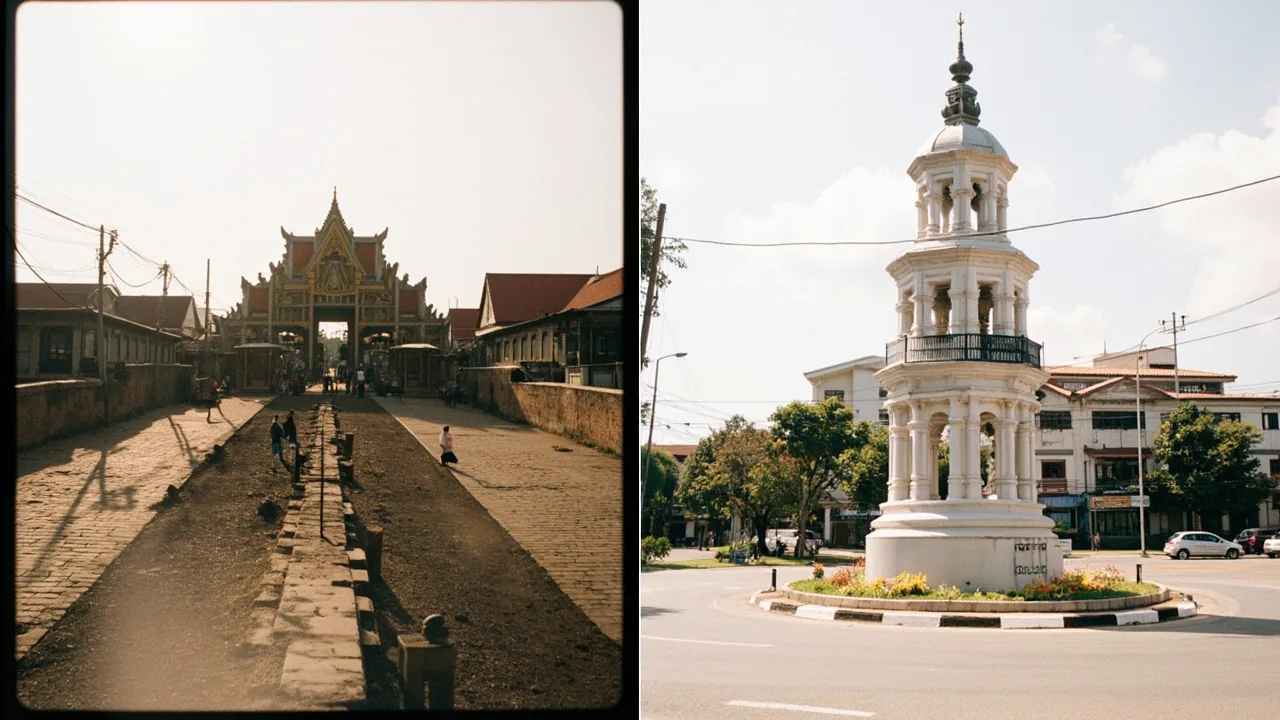
Chiang Mai vs Chiang Rai: Which Northern Thai City Should You Visit?
The honest answer, before you read another paragraph: pick Chiang Mai if you want temples, cafes, a full backpacker circuit, and a base to slow down for a week. Pick Chiang Rai if you want a quieter, smaller, hill-country town with a famous white temple and none of the tourist treadmill. For the broader Bangkok decision before this one, see our Bangkok vs Chiang Mai breakdown. Most Indians do Chiang Mai as a base and day-trip to Chiang Rai. That is the right call for most travellers. This article breaks down when the opposite call is the better one. Planning the wider region? Our Southeast Asia backpacking hub covers the full multi-country route.
Quick Answers
| What | Answer | Price (INR) |
|---|---|---|
| Is Chiang Mai or Chiang Rai better for first-timers? | Chiang Mai | Better infrastructure, more hostels, more veg food |
| Which is cheaper on the ground? | Almost identical | Both run ₹2,325-₹4,360 (~800-1,500 THB or ~$24.56-$46.06)/day |
| Can you do both on one trip? | Yes, easily | 3.5 hours apart by bus |
| Best months for both | November to February | Cool, low humidity, no burning season |
| Worst month to visit | March | Burning season, AQI hits 300+ |
Quick Comparison Table
| Factor | Chiang Mai | Chiang Rai |
|---|---|---|
| Daily budget (THB) | ₹2,297-₹4,307 (~800-1,500 THB or ~$23.83-$44.68) | ₹2,010-₹3,733 (~700-1,300 THB or ~$20.85-$38.72) |
| Visa for Indians | Visa-free 60 days | Same exemption, same 60 days |
| Best months | Nov to Feb | Nov to Feb |
| Veg food availability | Strong (10+ dedicated veg spots) | Limited but workable |
| Safety (solo) | safe | safe |
| English spoken | Widespread | Functional in tourist zones |
| Vibe | Mid-sized cultural capital, big cafe scene, backpacker hub | Small, slow, hill-town feel, fewer tourists |
| Best for | First-timers, slow travellers, digital nomads | Repeat visitors, temple hunters, peace seekers |
The key thing this table hides: Chiang Mai has roughly 10x the hostels, restaurants, and cafes of Chiang Rai. If you want choice and variety, Chiang Mai wins on volume. If you want to feel like you stepped off the tourist conveyor belt, Chiang Rai wins on quiet.
Choose Chiang Mai If…
- You want a city you can spend a full week in without running out of things to do. Chiang Mai has old city temples, Nimmanhaemin cafes, Doi Suthep, Saturday/Sunday walking streets, day trips to Doi Inthanon, plus enough yoga studios and co-working spaces to settle into.
- You eat vegetarian and need reliable Indian or dedicated veg food. Chiang Mai has at least a dozen veg-friendly spots including the well-rated Chada Vegetarian Restaurant in the old city area. For a broader take on Indian veg options across the region, see our vegetarian Indian food in Southeast Asia comparison.
- You want the backpacker social scene. Hostels here run pub crawls, group dinners, and day trips every night. If you are solo and want to meet other travellers, this is the easier city.
- You are flying in from Bangkok and want one base to slow down for 5+ days before continuing north.
Choose Chiang Rai If…
- You have already done Chiang Mai and want somewhere quieter. Chiang Rai has the same hill-country feel but with a fraction of the tourists and a noticeably slower pace.
- The White Temple (Wat Rong Khun) and Blue Temple (Wat Rong Suea Ten) are on your list and you want to see them without the Chiang Mai day-trip crowd. The 3.5-hour bus from Chiang Mai drops you in town by mid-morning.
- You want to base yourself closer to the Golden Triangle, Mae Sai border, and the Laos/Myanmar border crossings for onward travel.
- You are sensitive to crowds and noise. Chiang Rai’s old town near the night bazaar is small, walkable, and noticeably calmer than Chiang Mai’s moat area on a Saturday night.
Chiang Mai. Pros and Cons
Pros:
- Best temple density of any Thai city outside Bangkok, plus Doi Suthep on the hill above town
- Massive cafe and food scene, including strong vegetarian and Indian-friendly options
- 30+ hostels at ₹574-₹1,149 (~200-400 THB or ~$5.96-$11.91) a night, plus mid-range hotels at ₹2,297-₹4,307 (~800-1,500 THB or ~$23.83-$44.68)
- Direct flights from Bangkok (1 hour), Chiang Rai (45 min), and even some India connections via Bangkok
- Backpacker infrastructure that makes solo travel easy
Cons:
- Burning season (late Feb to early April) makes air quality genuinely bad, AQI regularly above 200
- Old city gets crowded at peak season, Saturday/Sunday walking streets can feel like a human traffic jam
- Tourist pricing at the famous spots, especially the night bazaar and Doi Suthep entrance
- Less of the “real Thailand” feel than smaller northern towns, the backpacker bubble is real
Chiang Rai. Pros and Cons
Pros:
- Wat Rong Khun (White Temple) and Wat Rong Suea Ten (Blue Temple) are two of the most photographed temples in Thailand, and they are quiet outside peak weekend hours
- Smaller, slower, hill-town atmosphere without the backpacker conveyor belt
- Closer to the Golden Triangle, Mae Sai border crossing into Myanmar, and the slow-boat route to Laos from Huay Xai
- Slightly cheaper on accommodation outside of festival weekends
Cons:
- Fewer hostel options. You will likely stay in a guesthouse or small hotel rather than a social hostel
- Limited dedicated Indian or vegetarian restaurants. Kunda Vegetarian Vegan Burger Cafe is one of the reliable spots, but the list is short
- The town itself is smaller, you can see the main sights in 2 full days
- Bus connections to Chiang Mai can sell out on weekends, book 12go in advance during high season
Cost Comparison in THB
| Expense | Chiang Mai (THB) | Chiang Rai (THB) |
|---|---|---|
| Dorm bed (avg/night) | 250 to 400 | 200 to 350 |
| Private room (budget) | 500 to 900 | 400 to 800 |
| Street food meal | 40 to 80 | 40 to 70 |
| Restaurant meal | 120 to 250 | 100 to 220 |
| Local transport (per day) | 100 to 200 | 80 to 150 |
| SIM card (tourist, 7 days) | 299 to 499 | 299 to 499 |
| Top activity (Doi Suthep / White Temple) | Free entry, songthaew 100 | 100 entry |
| Beer (local, bar) | 80 to 150 | 70 to 120 |
| 7-day total (budget) | ₹22,972-₹34,458 (~8,000-12,000 THB or ~$238.29-$357.43) | ₹18,665-₹28,715 (~6,500-10,000 THB or ~$193.61-$297.86) |
| 7-day total (comfortable) | ₹43,072-₹63,173 (~15,000-22,000 THB or ~$446.79-$655.30) | ₹34,410-₹51,615 (~12,000-18,000 THB or ~$356.65-$534.97) |
The Bananarchy Take
The clearest way to frame it: Chiang Mai is a city to stay in. Chiang Rai is a city to visit. If you have 5+ days and want to settle into a slower rhythm, Chiang Mai’s old city is the right base. You get temples, cafes, day trips, and a backpacker scene that makes solo travel easy. If you have 2 to 3 days and you have already seen Chiang Mai, Chiang Rai is the better add-on. The White Temple and Blue Temple alone are worth the bus ride, and the town has a quiet hill-country feel you will not find in Chiang Mai. Travellers thinking further out may also want to compare against Chiang Mai vs Luang Prabang for the cultural-capital leg beyond Thailand.
For first-timers to northern Thailand: Chiang Mai, no debate. For repeat visitors who want to feel like they went somewhere: Chiang Rai as a 2-night stop after Chiang Mai is the move. The Bananarchy trip spends 3 nights in Chiang Mai and 1 night in Chiang Rai as a transit stop toward Laos. That ratio works for most travellers.
Getting Connected
Both cities have the same SIM and eSIM options. AIS, dtac, and TrueMove tourist SIMs run ₹859-₹1,433 (~299-499 THB or ~$8.91-$14.86) for 7 days with 15 to 30 GB. Buy at the airport on arrival or any 7-Eleven. Coverage in both cities is solid, Chiang Rai drops to 4G on the edges of town and 3G on the bus between the two cities. For most Indians, an eSIM activated before you fly is the cleaner option: Get Nomad eSIM covers Thailand with 1 to 20 GB plans starting around ₹482 (~5 USD).
Can You Do Both?
Yes, and most travellers should. The bus from Chiang Mai to Chiang Rai takes 3.5 to 4 hours and runs ₹574-₹1,005 (~200-350 THB or ~$5.96-$10.43) on Greenbus, a popular long-distance operator in northern Thailand. Book on 12go to lock in a seat during high season.
The recommended split:
- 5 to 7 nights in Chiang Mai as your base
- 2 to 3 nights in Chiang Rai to see the White Temple, Blue Temple, and Black House
- Bus from Chiang Rai southward toward Lampang, or north toward Huay Xai for the slow boat to Luang Prabang in Laos
Combined 7+3 trip cost in THB:
- 7 nights Chiang Mai (budget): ₹22,972-₹34,458 (~8,000-12,000 THB or ~$238.29-$357.43)
- 3 nights Chiang Rai (budget): ₹7,179-₹11,486 (~2,500-4,000 THB or ~$74.47-$119.14)
- Intercity bus: ₹574-₹1,005 (~200-350 THB or ~$5.96-$10.43) one way
- Activities (temples, day trips): ₹2,297-₹4,307 (~800-1,500 THB or ~$23.83-$44.68)
- Food and local transport: ₹11,486-₹17,229 (~4,000-6,000 THB or ~$119.14-$178.72)
- Total: roughly ₹45,944-₹68,916 (~16,000-24,000 THB or ~$476.58-$714.87) for 10 nights, excluding flights
This compares well with Bangkok vs Chiang Mai, which is the decision before the Chiang Mai vs Chiang Rai question. Once you have picked the north over Bangkok, the Chiang Mai vs Chiang Rai question is the next one. And for travellers continuing onward to Laos, our Chiang Mai vs Luang Prabang comparison covers the next leg.
For broader context on Thailand versus its neighbours, Thailand vs Laos for Indian backpackers is the regional read.
FAQ
Is Chiang Mai worth visiting?
Yes, it is the easiest northern Thailand base for first-time visitors. The infrastructure, hostel scene, and temple density are unmatched in the region.
Is Chiang Rai worth visiting?
Yes, but as a 2 to 3 night stop rather than a primary base. The White Temple alone justifies the bus from Chiang Mai.
Which is cheaper, Chiang Mai or Chiang Rai?
Chiang Rai is slightly cheaper on accommodation, but the difference is small. On a 7-day trip you might save ₹4,307-₹7,179 (~1,500-2,500 THB or ~$44.68-$74.47) by choosing Chiang Rai.
Can you visit Chiang Rai as a day trip from Chiang Mai?
Technically yes, the bus is 3.5 hours each way, but you would spend 7 hours on a bus to see two temples in 4 hours. Stay overnight instead.
What is the best time to visit Chiang Mai and Chiang Rai?
November to February for cool, dry weather. Avoid March, burning season makes the air quality genuinely unhealthy.
Is Chiang Mai safe for solo Indian women?
Yes, it is one of the safer cities in Southeast Asia. Standard precautions apply, but violent crime against tourists is rare. Check the MEA travel advisory at mea.gov.in before departure for the current situation.
How many days do you need in Chiang Mai?
Five full days covers the old city, Doi Suthep, a Doi Inthanon day trip, and the walking streets. Seven days lets you add cooking classes, elephant sanctuaries, and a slower pace.
