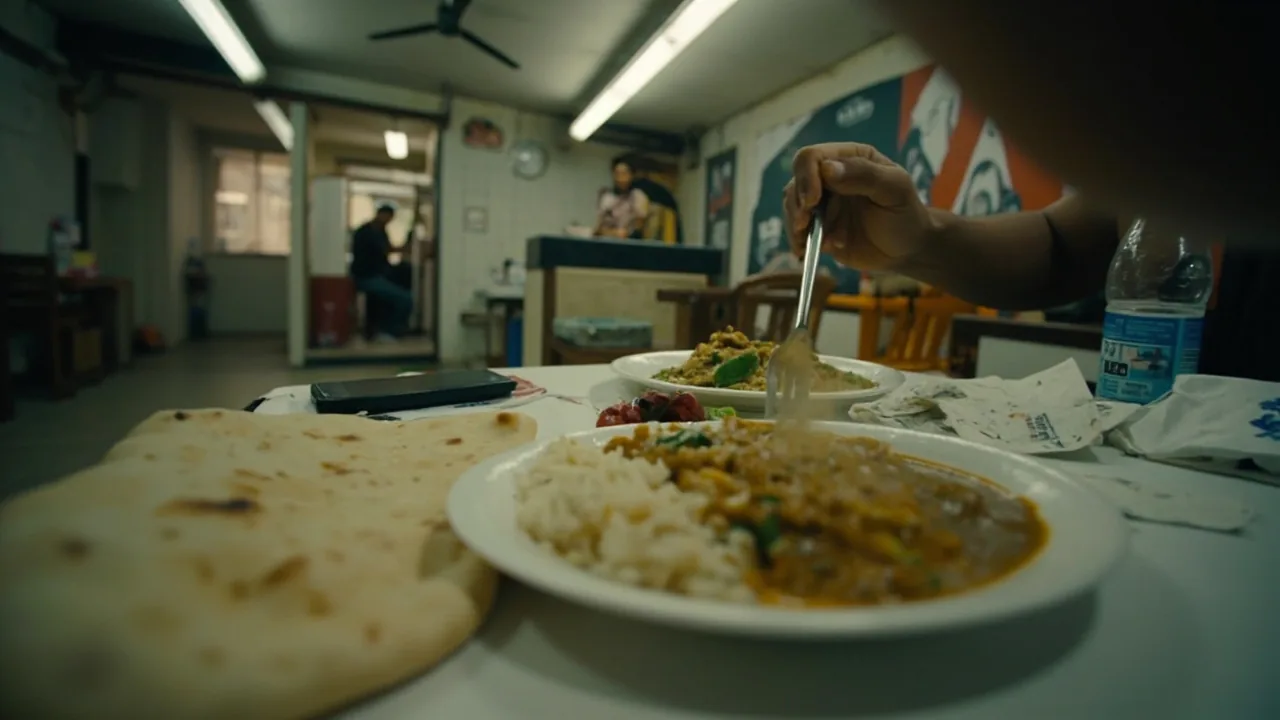
Best Southeast Asia Country for Vegetarian Indian Food: Laos, Thailand, Cambodia, Bali, Malaysia, and Singapore Compared
For the full SEA trail, check our SEA backpacking hub.
Cross-country menu and price checks verified on-the-ground 2026-07-17 in Luang Prabang, Bangkok, Phnom Penh, Ubud, Penang, and Little India Singapore, against the shortlist spots in the Bananarchy India-food registry for each country. Currency conversions pegged at 1 USD ≈ ₹96.33.
Quick Answers
| What | Answer | Price (INR) |
|---|---|---|
| Most veg-Indian restaurants per sq km | Singapore (Little India) | ₹597-₹896 for a thali |
| Cheapest Indian meal on the mainland | Laos (Luang Prabang) | ₹107-₹150 (~25,000-35,000 LAK or ~$1.11-$1.56) for a thali |
| Best for strict-veg Indian food (no eggs) | Malaysia (Penang, KL) | ₹235-₹355 for a banana-leaf |
| Best vegan/veg variety (not Indian) | Bali (Ubud) | ₹186-₹318 for a vegan plate |
| Easiest visa for Indians on this list | Thailand (VoA / e-Visa) | ₹2,400 (e-Visa fee) |
| Worst for Indian food on the mainland | Cambodia outside Phnom Penh / Siem Reap | ₹482-₹674 (~5-7 USD) per thali |
Quick Comparison Table
| Factor | Laos | Thailand | Cambodia | Bali | Malaysia | Singapore |
|---|---|---|---|---|---|---|
| Daily budget (₹) | ₹1,800-₹2,500 (~$18.69-$25.95) | ₹2,500-₹3,500 (~$25.95-$36.33) | ₹2,000-₹3,000 (~$20.76-$31.14) | ₹2,800-₹4,000 (~$29.07-$41.52) | ₹2,500-₹3,200 (~$25.95-$33.22) | ₹5,000-₹8,000 (~$51.91-$83.05) |
| Visa for Indians | VoA ~₹2,890 (~30 USD), 30 days | VoA / e-Visa, 60 days | e-Visa ~₹2,890 (~30 USD), 30 days | VoA ₹3,372 (~35 USD)/ e-Visa, 30 days | eNTRI / e-Visa, 30 days | Visa-free 30 days |
| Best months | Nov-Feb | Nov-Feb | Nov-Feb | Apr-Oct | All year | All year |
| Indian veg food availability | Good in tourist towns | Strong nationwide | Patchy outside PP/SR | Weak, vegan-friendly | Excellent, especially Penang | Outstanding, Little India |
| Safety (solo Indian) | High | High | Medium-High | High | High | high |
| English spoken | Low-Medium | Medium | Low | Medium | High | high |
| Vibe | Quiet, slow, fusion | Polished, varied | Raw, improving | Wellness, vegan | Indian-friendly everywhere | Indian at every turn |
| Best for | Budget travellers, slow food | First-timers, choice | Temple + food mix | Vegan/veg (non-Indian) | Indian food purists, families | Short trips, Little India |
Choose Laos If…
- You want the cheapest Indian thali on the mainland, served in family-run Lao-Indian kitchens in Luang Prabang and Vientiane.
- You eat vegetarian 80% of the time and don’t mind the occasional stretch of local food. Laos has a long Buddhist tradition of meat-free days, so veg options exist outside Indian restaurants too.
- You’re already doing the slow boat from Chiang Rai to Luang Prabang and want food that won’t break the budget at the next stop.
- You want Lao-Indian fusion (curries with lemongrass, dal made with padaek instead of ghee) more than you want a Mumbai-style dhaba.
Choose Thailand If…
- You want the path of least resistance on the mainland: 60-day visa on arrival for Indians, the highest concentration of Indian restaurants in mainland SEA, and English menus everywhere.
- You travel in a group with mixed preferences (some want Thai, some want Indian, some want veg-only). Bangkok, Chiang Mai, and the islands all handle this.
- You want specific regional Indian food, not just “Indian.” Bangkok’s Phahurat and Chiang Mai’s Santitham have Sindhi, Punjabi, South Indian, and Gujarati thalis. See our vegetarian Indian food in Thailand guide for the full breakdown.
- You need Jain-friendly options (no onion, no garlic). Multiple restaurants in Bangkok and Chiang Mai list these clearly.
Choose Cambodia If…
- You’re combining Angkor Wat with food exploration and want Indian food available right where the tourists are (Siem Reap and Phnom Penh). See our Indian food in Cambodia guide for restaurant picks.
- You’re okay with one strong Indian restaurant per town rather than five. Quality is high, choice is narrow.
- You want the best Indian food value in mainland SEA after Laos, with a few restaurants doing Tamil and Punjabi menus.
Choose Bali If…
- You’re vegan or vegetarian but not specifically craving Indian food. Ubud is the global vegan capital.
- You want raw food, smoothie bowls, tempeh, and jackfruit curries more than you want dal and roti.
- Indian food is a backup, not a daily need. Bali has good veg restaurants but Indian-specific options are limited and overpriced.
Choose Malaysia If…
- Indian food availability is your single biggest concern. Penang alone has more veg Indian restaurants than all of mainland SEA combined.
- You want banana-leaf meals, dosa, idli, and Chettinad food as they are eaten in Tamil Nadu and Kerala, with Malaysian twists.
- You’re okay paying 10- for a meal (around ₹235-₹355 (~$2.44-$3.69)) and want reliability over novelty.
- You want Indian vegetarian food as a daily thing, not as a fallback.
Choose Singapore If…
- You want to eat Indian food for every meal and not think about it. Little India is a 200-metre stretch of pure vegetarian South Indian, North Indian, and Gujarati restaurants.
- You’re on a short trip (3-5 days) and don’t want to navigate language or visa complexity.
- You’re okay paying Singapore prices: ₹597-₹896 for a thali, ₹1,100-₹1,700 for a banana-leaf meal at a proper restaurant.
- Indian food is your main reason for picking the destination.
Laos. Pros and Cons
Pros:
- Cheapest Indian thalis on the mainland (₹108-₹151 (~25,000-35,000 LAK or ~$1.12-$1.56), around ₹107-₹150 (~$1.11-$1.56))
- Local Lao food is meat-light, so vegetarian options exist outside Indian restaurants
- Slow boat from Thailand drops you in Luang Prabang, which has a real Lao-Indian restaurant scene
- Buddhist country: many restaurants offer a “vegetarian day” menu during festivals
Cons:
- Outside Luang Prabang and Vientiane, Indian restaurants are rare to nonexistent
- English menus are uncommon, photos are the main ordering tool
- Jain options (no onion, no garlic) are almost impossible to find
- No Little India equivalent; the Indian food scene is spread thin
Thailand. Pros and Cons
Pros:
- Most variety: Sindhi, Punjabi, South Indian, Gujarati, Bengali, Jain-friendly
- Available everywhere tourists go, including islands (Koh Phangan, Koh Tao)
- Long-stay visas (60 days) and easy visa runs from Laos
- High turnover means fresher ingredients and competitive prices
Cons:
- Indian food here is more expensive than mainland SEA (thali around ฿250-฿450 in Bangkok, roughly ₹717-₹1,291 (~$7.44-$13.40))
- Tourist-area Indian restaurants vary wildly in quality; you need to know which ones to trust
- Meat-based Thai food is so good it pulls you away from Indian food anyway
Cambodia. Pros and Cons
Pros:
- Indian food is improving, with new restaurants in Phnom Penh and Siem Reap every year
- Cheap once you find a good one: ₹482-₹674 (~5-7 USD) for a thali, around ₹481-₹674 (~$4.99-$7)- A few standout chefs in Phnom Penh and Siem Reap are as good as anything in mainland SEA.
- Tourist towns have at least 2-3 solid options
Cons:
- Outside Phnom Penh and Siem Reap, Indian food disappears
- Less variety: most restaurants do North Indian, few do South Indian or Gujarati
- English menus are hit-or-miss, especially for spice level
- Less vegan-friendly than Thailand or Bali
Bali. Pros and Cons
Pros:
- Ubud is the global vegan capital, with 50+ dedicated vegan restaurants
- Raw food, smoothie bowls, tempeh, jackfruit curries are world-class
- Non-Indian vegetarian food is cheaper and more creative than anywhere else on this list
- Yoga retreats and wellness focus mean strict-veg is the default, not the exception
Cons:
- Indian food is a weak point: 80,000- for a thali (around ₹424-₹795 (~$4.40-$8.25)), and quality is inconsistent
- Most Indian restaurants cater to Australian tourists, not Indian taste preferences
- Few South Indian options, no banana-leaf meals
- You go to Bali for vegan food, not Indian food. If you want Indian, look elsewhere.
Malaysia. Pros and Cons
Pros:
- Most authentic Indian food outside India, with Tamil, Malayali, Punjabi, and Sindhi communities running real restaurants
- Banana-leaf meals for 10- (around ₹236-₹355 (~$2.45-$3.69)) are the best value on this list
- Penang, KL, and Malacca have Indian food as a daily option, not a tourist fallback
- Vegetarian-specific restaurants (Annalakshmi, Saravanaa Bhavan branches) are strict-veg
Cons:
- Less of a “backpacking” feel: Malaysia is more developed, less adventurous
- Indian food is everywhere, but it’s not the main reason most backpackers go to Malaysia
- Alcohol availability is limited at most Indian restaurants
- Less suited to the typical “Thailand-Laos-Cambodia” loop
Singapore. Pros and Comp
Pros:
- Little India: 200 metres of pure veg Indian food, from hawker thalis to banana-leaf feasts
- Highest hygiene standards on this list, every restaurant rated and reviewed
- Indian food is Singaporean food, not a tourist offering
- Visa-free for Indians, 30 days, no paperwork
Cons:
- Most expensive: ₹597-₹896 for a thali, around ₹597-₹896 (~$6.20-$9.30), and ₹1,100-₹1,700 for a banana-leaf meal
- Not a backpacking destination, more of a city stop
- Less adventure, more polish. If you want raw travel, this isn’t it.
- Singapore is its own trip, not a “compare to Laos” decision for most backpackers
Cost Comparison in ₹
| Expense | Laos (₹) | Thailand (₹) | Cambodia (₹) | Bali (₹) | Malaysia (₹) | Singapore (₹) |
|---|---|---|---|---|---|---|
| Dorm bed (avg/night) | ₹418-₹668 (~$4.34-$6.93) | ₹860-₹1,435 (~$8.93-$14.90) | ₹481-₹867 (~$4.99-$9) | ₹530-₹960 (~$5.50-$9.97) | ₹945-₹1,418 (~$9.81-$14.72) | ₹2,240-₹3,734 (~$23.25-$38.76) |
| Street food meal | ₹55-₹115 (~$0.57-$1.19) | ₹72-₹144 (~$0.75-$1.49) | ₹96-₹193 (~$1-$2) | ₹106-₹212 (~$1.10-$2.20) | ₹71-₹142 (~$0.74-$1.47) | ₹373-₹747 (~$3.87-$7.75) |
| Indian restaurant thali | ₹107-₹150 (~$1.11-$1.56) | ₹717-₹1,291 (~$7.44-$13.40) | ₹481-₹674 (~$4.99-$7) | ₹424-₹795 (~$4.40-$8.25) | ₹236-₹355 (~$2.45-$3.69) | ₹597-₹896 (~$6.20-$9.30) |
| Local transport (per day) | ₹190-₹380 (~$1.97-$3.94) | ₹144-₹431 (~$1.49-$4.47) | ₹193-₹385 (~$2-$4) | ₹265-₹530 (~$2.75-$5.50) | ₹236-₹473 (~$2.45-$4.91) | ₹373-₹747 (~$3.87-$7.75) |
| SIM card (tourist) | ₹289-₹481 (~$3-$4.99) | ₹287-₹431 (~$2.98-$4.47) | ₹289-₹481 (~$3-$4.99) | ₹318-₹530 (~$3.30-$5.50) | ₹473-₹709 (~$4.91-$7.36) | ₹747-₹1,494 (~$7.75-$15.51) |
| Visa fee | ₹2,890 (~$30) | ₹2,400 (~$24.91) | ₹2,890 (~$30) | ₹3,372 (~$35) | ₹1,892 (~$19.64) | Free |
| Top activity (day trip) | ₹862-₹1,723 (~$8.95-$17.89) | ₹1,435-₹2,869 (~$14.90-$29.78) | ₹1,444-₹2,890 (~$14.99-$30) | ₹1,590-₹3,180 (~$16.51-$33.01) | ₹1,418-₹2,836 (~$14.72-$29.44) | ₹2,240-₹4,480 (~$23.25-$46.51) |
| Beer (local) | ₹38 (~$0.39) | ₹86-₹144 (~$0.89-$1.49) | ₹96-₹193 (~$1-$2) | ₹159-₹318 (~$1.65-$3.30) | ₹236-₹355 (~$2.45-$3.69) | ₹523-₹747 (~$5.43-$7.75) |
| 7-day total (budget) | ₹12,500-₹17,500 (~$129.76-$181.67) | ₹17,500-₹24,500 (~$181.67-$254.34) | ₹14,000-₹21,000 (~$145.33-$218) | ₹19,500-₹28,000 (~$202.43-$290.67) | ₹17,500-₹22,500 (~$181.67-$233.57) | ₹35,000-₹56,000 (~$363.34-$581.34) |
| 7-day total (comfortable) | ₹21,000-₹28,000 (~$218-$290.67) | ₹28,000-₹42,000 (~$290.67-$436) | ₹24,500-₹35,000 (~$254.34-$363.34) | ₹35,000-₹49,000 (~$363.34-$508.67) | ₹31,500-₹42,000 (~$327-$436) | ₹70,000-₹105,000 (~$726.67-$1,090.01) |
Verified 2026-07-17 at the following rates: 1 LAK = ₹0.0043, 1 THB = ₹2.87, 1 KHR = ₹0.0238, 1 IDR = ₹0.0053, 1 MYR = ₹23.64, 1 SGD = ₹74.69. Base rate: 1 USD = ₹96.33.
Cost Comparison in Local Currency
| Expense | Laos (LAK) | Thailand (THB) | Cambodia (USD) | Bali (IDR) | Malaysia (MYR) | Singapore (SGD) |
|---|---|---|---|---|---|---|
| Dorm bed (avg/night) | 110,000-175,000 | 300-500 | 5-9 | 100,000-180,000 | 40-60 | 30-50 |
| Street food meal | 15,000-30,000 | 25-50 | 1-2 | 20,000-40,000 | 3-6 | 5-10 |
| Indian restaurant thali | 25,000-35,000 | 250-450 | 5-7 | 80,000-150,000 | 10-15 | 8-12 |
| Local transport (per day) | 50,000-100,000 | 50-150 | 2-4 | 50,000-100,000 | 10-20 | 5-10 |
| SIM card (tourist) | 75,000-125,000 | 100-150 | 3-5 | 60,000-100,000 | 20-30 | 10-20 |
| Visa fee | 670,000 (~$30) | ~830 (~$25) | 30 USD (~120,000 KHR) | 650,000 (~$35) | 80 (eNTRI) | Free |
| Top activity (day trip) | 200,000-400,000 | 500-1,000 | 15-30 | 300,000-600,000 | 60-120 | 30-60 |
| Beer (local) | 10,000 | 30-50 | 1-2 | 30,000-60,000 | 10-15 | 7-10 |
| 7-day total (budget) | 3,200,000-4,500,000 | 6,000-8,500 | 145-220 USD | 3,700,000-5,300,000 | 750-950 | 600-1,000 SGD |
| 7-day total (comfortable) | 5,500,000-7,300,000 | 10,000-14,500 | 255-365 USD | 6,600,000-9,200,000 | 1,350-1,800 | 1,200-1,800 SGD |
What to Eat (Laos, Where the Shortlist Spots Live)
The shortlist for this article centres on Laos, so here’s where to eat in Luang Prabang and Pakse.
Local / Regional:
- Go & New Restaurant in Luang Prabang is the spot for Lao stir-fries, fried spring rolls, and Mekong riverweed at ₹65-₹108 (~15,000-25,000 LAK or ~$0.67-$1.12) per plate. Small, friendly, and a regular stop for slow-boat arrivals.
- Champa Hom Restaurant in Pakse is the spot for local Lao food in southern Laos: grilled river fish, sticky rice, and seasonal Lao vegetable dishes (₹108 (~25,000 LAK or ~$1.12)) per plate. The kind of place where the menu is in Lao and you point at what the next table is having.
Indian / Veg-Friendly:
- Vegetarian Food in Luang Prabang is the go-to for local vegan dishes with a Lao twist: pumpkin curries, tofu stir-fries, and mushroom laap (a vegetarian take on the classic Lao meat salad). Most plates ₹65-₹129 (~15,000-30,000 LAK or ~$0.67-$1.34). Not Indian cuisine, but the best veg-only spot in town for travellers who want Lao food without the meat.
- My Kitchen Indian Authentic Food in Luang Prabang is the dal-chawal fix. Travellers report generous portions, proper North Indian gravies, and prices around ₹108-₹172 (~25,000-40,000 LAK or ~$1.12-$1.79) for a thali. The kind of place where the owner asks where in India you’re from and adjusts the spice accordingly.
The Bananarchy Take
If your trip is mainland SEA (Thailand, Laos, Cambodia, Vietnam), Laos is the underdog winner for Indian vegetarian food: cheapest thalis, real Lao-Indian fusion, and the Buddhist background means meat-free options exist outside Indian restaurants. Thailand is the safe default if you want variety and reliability. Cambodia is improving but inconsistent. Bali is for vegan food, not Indian food.
If your trip includes Malaysia and Singapore, the answer is obvious: both win on raw Indian food availability, with Singapore’s Little India and Penang’s Tamil quarter offering more veg Indian food per square kilometre than anywhere else in SEA. The trade-off is budget and backpacking vibe. Malaysia and Singapore cost more and feel less raw than the mainland, but if Indian food is your non-negotiable, they’re worth the detour.
For most Indian backpackers doing the classic Thailand-Laos-Cambodia loop, I’d say: build your trip around Thailand and Laos, treat Cambodia as a bonus, and don’t plan a trip around Bali for Indian food. If you can add 4-5 days in Penang or KL, do it. Little India in Singapore is a great 2-3 day add-on if you’re flying through Changi anyway.
For more on Laos food costs and budgeting, see our Laos budget guide. For the full Luang Prabang picture, start with our Luang Prabang city guide.
Getting Connected
SIM cards are cheap and tourist-friendly in all six destinations: Laos (Unitel, ₹289-₹481 (~75,000-125,000 LAK or ~$3-$5) for 7 days), Thailand (AIS or TrueMove, ₹287-₹431 (~100-150 THB) for 7 days), Cambodia (Cellcard or Smart, ₹289-₹481 (~$3-$5) for 7 days), Bali (Telkomsel, ₹318-₹530 (~60,000-100,000 IDR) for 7 days), Malaysia (Hotlink or Celcom, ₹473-₹709 (~20-30 MYR) for 7 days), Singapore (Singtel or StarHub, ₹747-₹1,494 (~10-20 SGD) for 7 days).
Can You Do Both (All Six)?
The realistic combo for most Indian backpackers: Thailand + Laos + Cambodia on one loop (the classic Bananarchy route), then a 4-5 day Malaysia add-on if budget allows. Singapore is a 2-3 day stopover, not a “trip.” Bali is its own destination and doesn’t pair well with the mainland loop unless you fly via Kuala Lumpur.
A 21-day Thailand-Laos-Cambodia-Malaysia combo runs ₹45,000-₹65,000 (~$467.15-$674.77) on a budget, ₹80,000-₹110,000 (~$830.48-$1,141.92) comfortably. A 14-day Singapore-Little-India-focused add-on runs ₹35,000-₹56,000 (~$363.34-$581.34). For the overland Thailand-Laos connection, our Chiang Rai to Luang Prabang corridor guide covers the slow boat route. For Laos visa, see our Laos e-Visa application guide.
FAQ
Which is cheaper: Thailand or Cambodia for Indian food? Cambodia. A veg thali in Phnom Penh or Siem Reap is around ₹482-₹674 (~5-7 USD), vs ฿250-฿450 in Bangkok. Thailand has more variety, but you’ll pay 30-50% more per thali.
Is Malaysia the best for Indian food in Southeast Asia? For authenticity and daily availability, yes. Penang’s Little India and KL’s Brickfields have more veg Indian restaurants than all of mainland SEA combined. The trade-off is budget: Malaysia costs more than Thailand, Laos, or Cambodia for non-food expenses.
Can I find Jain food (no onion, no garlic) in these countries? Thailand (Bangkok, Chiang Mai) and Malaysia (KL, Penang) are your best bets. Singapore is reliable. Laos, Cambodia, and Bali have almost no Jain-specific options.
Is Bali good for vegetarian Indian food? No. Bali is excellent for vegan and vegetarian food generally, but Indian-specific options are limited and overpriced. Go to Bali for tempeh and smoothie bowls, not for dal and roti.
Which country is easiest for Indians to enter? Thailand (60-day VoA, ) and Singapore (visa-free 30 days) are the easiest. Malaysia’s eNTRI is free and quick. Laos and Cambodia require VoA or e-Visa, both around ₹2,890 (~30 USD). Bali’s VoA is ₹3,372 (~35 USD).
Is Indian food in Laos good? Yes, for the price. Luang Prabang and Vientiane have real Lao-Indian restaurants with North Indian and South Indian menus. Quality is high, variety is narrow, and prices are the lowest on the mainland. Don’t expect Mumbai-style dhaba food; expect honest home-style cooking.
Should I bring Indian snacks from home? Yes, for Laos, Cambodia, and Bali. Thailand, Malaysia, and Singapore have enough Indian food that you won’t need to, but for the mainland, a small stash of Maggi, pickle, and instant dal is a good idea for remote spots.
