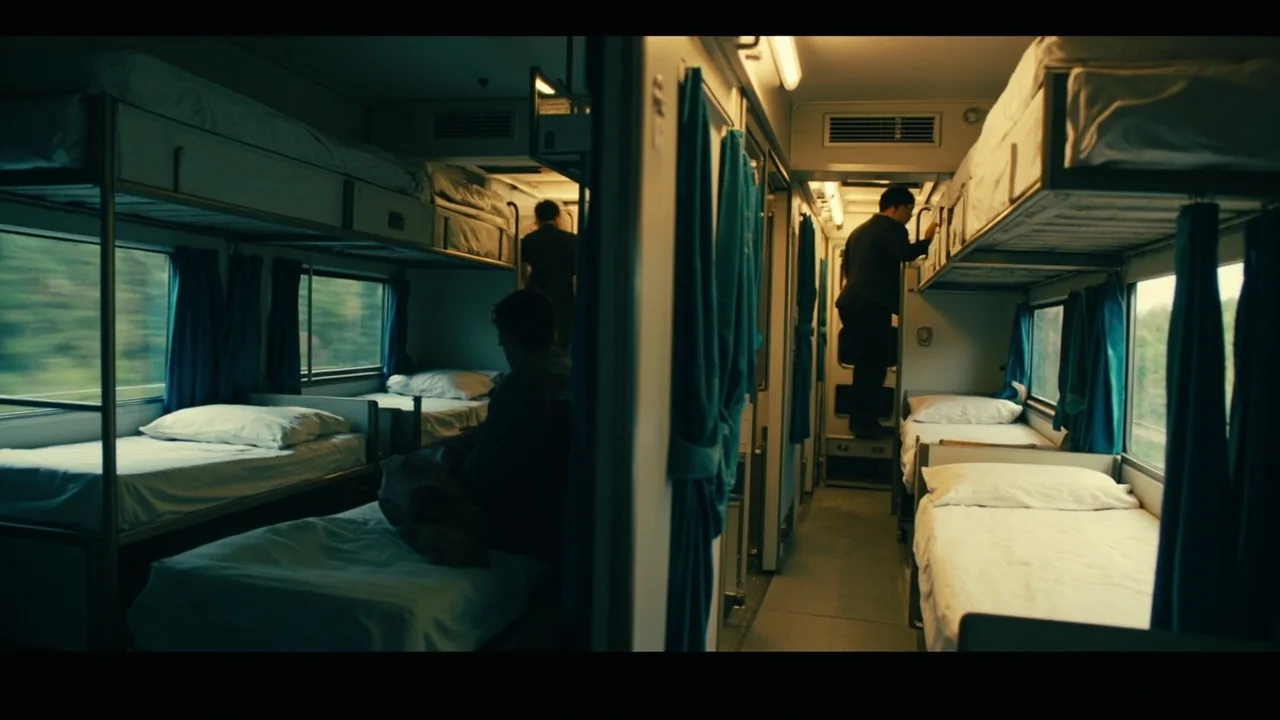
Sleeper Bus vs Train Southeast Asia: The Honest Answer for Indian Backpackers
For sleeper bus vs train southeast asia routes: the sleeper bus wins more often than backpackers think, because the rail network is thin and buses run hourly. Take the sleeper train for the headline journeys (Hanoi to Sapa, Bangkok to Chiang Mai, the Reunification Express); take the sleeper bus for everything else.
Based on research across Thailand, Vietnam, Laos, and Cambodia — comparing timetables, prices, and operator reviews across all four countries — the short version above handles 80% of cases. The rest of this article covers the exceptions: where trains genuinely beat buses on comfort, where buses beat trains on price, and where the only right answer is “fly, don’t do either.” You may also find Backpacking vs Tour useful for this trip.
Quick Answers
| What | Answer | Price (INR) |
|---|---|---|
| Cheapest overnight transport in SE Asia | Sleeper bus, almost always | ₹858 (~300 THB or ~$8.90) to ₹4,288 (~1,500 THB or ~$44.51) depending on country |
| Most comfortable overnight transport | Vietnamese and Thai sleeper trains with proper berths | ₹1,715 (~600 THB or ~$17.81) to ₹5,146 (~1,800 THB or ~$53.42) |
| Best scenic overnight route in the region | Reunification Express, Hanoi to Da Nang (Vietnam) | around ₹2,938 (~800,000 VND or ~$30.49) for a soft sleeper |
| Where sleeper buses win by default | Laos, Cambodia, northern Thailand, almost anywhere off the main line | ₹859 (~200,000 LAK or ~$8.92) to ₹1,718 (~400,000 LAK or ~$17.83) in Laos |
| Where sleeper buses are a bad idea | Long-haul Vietnam routes (10+ hours), Myanmar’s highways, anything ending after midnight in an unfamiliar city | book the train or fly |
Quick Comparison: Sleeper Bus vs Sleeper Train
| Factor | Sleeper Bus | Sleeper Train |
|---|---|---|
| Average cost in Southeast Asia | ₹572-₹2,287 (~200-800 THB or ~$5.94-$23.74) | ₹1,715-₹5,146 (~600-1,800 THB or ~$17.81-$53.42) |
| Average journey duration | 7 to 12 hours for a typical regional hop | 8 to 16 hours for the same hop |
| Seat/berth comfort | Reclined seats on VIP buses, full flat beds only on the rare “limousine” services | True flat beds with sheets, pillow, blanket on Thai and Vietnamese rail |
| Toilet situation | Usually a single onboard toilet that gets grimy by hour 6 | Station toilets only on most routes; Thai rail has toilets at carriage ends |
| Booking lead time | Same day or the day before, walk-up is normal | 1 to 4 weeks ahead on Vietnam’s Reunification Express, especially Sapa and tourist-class Hanoi to Da Nang |
| Safety record | Mixed, generally fine on reputable operators, alarming on unmarked minibuses | Generally good, with two well-known caveats (Bangkok to Chiang Mai derailment history; Thailand’s southern line insurgency corridor) |
| Food | Sometimes included (rice and curry on Thai VIP buses), usually not | Meal vendors walk the aisle on Vietnamese trains; station food at Thai train stations |
| Phone signal / Wi-Fi | Patchy 4G on good routes, dead on mountain stretches | Patchy to decent, depends on the line; Vietnamese trains are improving onboard Wi-Fi |
| Noise | Engine drone, honking, passengers getting on and off at odd stops | Wheel noise, occasional crossing horns; quieter overall once you settle in |
| Best for | Budget travellers, last-minute bookings, routes trains don’t cover | Photographers, slow travellers, anyone prone to bus sickness |
| Worst for | Anyone over 180 cm tall on a standard bus, anyone with a tight connection the next morning | Anyone who didn’t book early and is now on the hard seat |
Choose the Sleeper Bus If…
- You’re booking the night before. Sleeper buses run multiple departures daily on every major corridor. Trains, especially Vietnam’s, sell out 2 to 4 weeks ahead in peak season (October to March).
- The route has no train. Laos has zero domestic sleeper trains. Cambodia’s rail network has limited passenger service, with most routes requiring a bus. Most of northern Thailand outside the Bangkok to Chiang Mai line is bus-only.
- You want to save 30 to 50% on the fare. The Bangkok to Pai sleeper bus runs around ₹1,429-₹1,858 (~500-650 THB or ~$14.84-$19.29); the comparable Chiang Mai to Pai minibus is similar; there’s no train option at all.
- You’re under 175 cm and don’t mind reclined seats. A standard VIP bus gives you about 170 degrees recline with a footrest, fine for someone average height.
- You want to wake up in the destination city, not a station 30 km outside. Trains terminate at major stations; buses often drop you in the centre or near the backpacker area.
Choose the Sleeper Train If…
- You’re doing the Hanoi to Sapa overnight. The train is the only sensible way. The 8-hour bus up the mountain pass is winding, dangerous in rain, and the new highway has cut journey time but not the nausea. Train tickets start around ₹3,672 (~1,000,000 VND or ~$38.12) for a soft sleeper in a 4-berth cabin. Book via 12go or the official site 2 to 3 weeks ahead.
- You want the Reunification Express experience. Hanoi to Da Nang to Hue to Hoi An over 2 to 3 days on the train is one of the great rail journeys in Asia. Hard seats run around ₹1,469 (~400,000 VND or ~$15.25), soft sleepers around ₹2,938-₹4,406 (~800,000-1,200,000 VND or ~$30.49-$45.74).
- You’re Bangkok to Chiang Mai and book early. Thai Railway’s special express runs about ₹1,715-₹4,002 (~600-1,400 THB or ~$17.81-$41.55) depending on class. Sleeper berth in air-conditioned car is the move.
- You’re tall or have back issues. A real flat bed with a proper mattress is worth the price premium if your body protests at reclined seats.
- You want scenery, not just transit. The early morning descent into Da Nang from the Hai Van Pass, the fog over the rice terraces approaching Sapa, the flat Central Plains of Thailand north of Ayutthaya. You can’t photograph those from a bus window the same way.
Sleeper Bus: Pros and Cons
Pros:
- Cheaper on average, sometimes 30 to 50% less than the equivalent train
- Runs on every corridor, not just the rail lines
- Multiple daily departures, walk-up booking is normal
- Drop-off in central areas, not at distant stations
- VIP double-decker buses in Vietnam and Thailand are genuinely comfortable for the price
- No fixed schedule pressure; if you miss one, another leaves in a few hours
Cons:
- Reclined seats, not flat beds, on 90% of services
- Bathroom situation gets rough by hour 6
- Driver behaviour is the main safety variable; reputable operators are fine, unmarked minibuses are a roll of the dice
- Mountain roads in northern Vietnam and northern Laos are not for the bus-sick
- Pickup scams and fake “your hotel is closed” diversions are a real thing at arrival; book a reputable operator and ignore touts at the station
- Wi-Fi and charging points exist on paper, half work in practice
Sleeper Train: Pros and Cons
Pros:
- Real flat beds, sheets, pillow, blanket on Thai and Vietnamese services
- You can walk the carriage, visit the toilet, stretch at stops
- The journey itself becomes the experience on routes like Sapa and the Reunification Express
- Less motion sickness on mountain routes
- Safer driving environment by definition (no driver fatigue, no overtaking)
- Easier to sleep through the night, less honking, smoother ride
Cons:
- Limited network: only Thailand, Vietnam, Malaysia, Singapore, Myanmar have functioning sleeper trains; Laos and Cambodia are bus-only
- Booking lead time is the killer: 2 to 4 weeks for popular Vietnam routes in peak season
- Stations are often 20 to 30 km outside the city centre (Hanoi station to Old Quarter is 30 minutes by Grab; Chiang Mai station is far from the Old City)
- Hard seat class on Vietnam’s trains is genuinely punishing for foreigners
- More expensive than the equivalent bus on most corridors
- Strikes and derailments do happen on Thai rail, though they are rare
Cost Comparison in ₹
For a typical 10 to 12 hour overnight journey across the region, here is what an Indian backpacker pays right now (1 THB ≈ ₹2.87, 1 VND ≈ ₹0.0037, 1 LAK ≈ ₹0.0043):
| Expense | Sleeper Bus | Sleeper Train |
|---|---|---|
| Bangkok to Chiang Mai | ₹1,429-₹2,287 (~500-800 THB or ~$14.84-$23.74) | ₹2,287-₹4,002 (~800-1,400 THB or ~$23.74-$41.55) |
| Bangkok to Pai | ₹1,429-₹1,858 (~500-650 THB or ~$14.84-$19.29) | no train available |
| Hanoi to Sapa (soft sleeper, 4-berth) | ₹1,285-₹1,652 (~350,000-450,000 VND or ~$13.34-$17.15) | ₹3,672-₹5,141 (~1,000,000-1,400,000 VND or ~$38.12-$53.36) |
| Hanoi to Da Nang (Reunification Express) | ₹1,285-₹1,836 (~350,000-500,000 VND or ~$13.34-$19.06) | ₹2,938-₹4,406 (~800,000-1,200,000 VND or ~$30.49-$45.74) |
| Vientiane to Luang Prabang | ₹988-₹1,503 (~230,000-350,000 LAK or ~$10.25-$15.60) | no train available |
| Phnom Penh to Siem Reap | ₹1,927 (~20 USD) | train service suspended for most of the route, bus only |
| Bangkok to Surat Thani (to Koh Samui/Koh Phangan) | ₹1,001-₹1,715 (~350-600 THB or ~$10.39-$17.81) | ₹1,144-₹2,001 (~400-700 THB or ~$11.87-$20.77) |
The sleeper bus is usually cheaper, but the gap narrows on Thai rail where state-subsidised fares keep trains competitive with buses. Vietnam is the outlier where train and bus fares have both risen, but train prices sit at a higher baseline due to the soft-sleeper premium.
The Bananarchy Take
The right framing isn’t “bus or train,” it’s “which journey is the destination, and which is just transit.” Train the scenic ones, bus the rest. Concretely: take the train for Hanoi to Sapa, the Reunification Express from Hanoi to Da Nang, Bangkok to Chiang Mai if you booked a week ahead, and Singapore to Kuala Lumpur. Bus everything else. This applies even to budget-first backpackers, because the time you save by arriving rested on a flat bed beats the ₹1,500 (~$15.57) you saved by taking the bus.
The second thing: don’t trust the cheapest operator on any platform. On 12go, on Baolau, on Bookaway, the bottom-tier listings are often unmarked minibuses with no insurance and a driver on hour 14 of his shift. Sort by reviews, pick the middle price tier, and you’ll be fine.
On the 30-day loop, sleeper trains are used on the two routes generally considered worth the extra cost (the Reunification Express and the Bangkok to Chiang Mai line), and sleeper buses elsewhere.
Specific Routes Worth Comparing
Hanoi to Sapa overnight. Train wins. The mountain road is bad, the night bus drops you at 4:30 AM in Sapa town before anything is open, and the train lets you sleep properly in a 4-berth cabin. Book Hanoi to Lao Cai on 12go at least 2 weeks ahead in October to March. From Lao Cai station, a shared minibus to Sapa town is around ₹184 (~50,000 VND or ~$1.91).
Bangkok to Chiang Mai. Either works. The train is more of an experience, the bus is faster (10 to 11 hours vs 13 to 16 on rail) and cheaper. If you want the experience and have booked ahead, take the Thai Railway special express: Bangkok to Chiang Mai on 12go. If you booked yesterday, take the VIP bus from Mo Chit.
Vientiane to Luang Prabang. Bus only, around 10 to 12 hours. The road is slow but scenic in the dry season. Premium buses (₹859-₹1,503 (~200,000-350,000 LAK or ~$8.92-$15.60)) are noticeably better than the standard ones. The slow boat on the Mekong is the alternative but takes 2 days.
Phnom Penh to Ho Chi Minh City. Bus only, 6 to 7 hours. The border crossing eats 2 hours at the worst moments, 30 minutes at best. Look for well-reviewed operators on 12go or Bookaway.
Bangkok to Pai. Bus only, 8 to 9 hours, the last 4 of which are the famously winding mountain road. Take motion sickness pills 30 minutes before departure, sit in the front row if possible (book early), and accept that you’ll arrive in Pai a bit shaken. Alternatively, sleep one night in Chiang Mai and take the morning minibus.
Getting Connected
You’ll want data on the road, especially if you’re using 12go or Grab to navigate arrival. SIM cards at the airport run ₹855 (~299 THB or ~$8.87) in Thailand (AIS, TrueMove, dtac), ₹734-₹1,102 (~200,000-300,000 VND or ~$7.62-$11.43) in Vietnam (Viettel, Mobifone), and around ₹215 (~50,000 LAK or ~$2.23) in Laos (Unitel). For multi-country trips, an eSIM is often cheaper and skips the airport counter. Get Nomad eSIM covers Thailand, Vietnam, Laos, and Cambodia on one plan with no SIM-swap.
Can You Do Both on One Trip?
Yes, and most multi-country loops do exactly that. A typical 30-day Thailand-Laos-Vietnam-Cambodia loop:
- Bangkok to Chiang Mai: train (overnight, 13 to 16 hours)
- Chiang Mai to Pai: bus (day, the mountain road is bad at night)
- Pai to Chiang Rai to Chiang Khong: minibus and boat (overland border to Laos)
- Huay Xai to Luang Prabang: slow boat (2 days) or bus
- Luang Prabang to Vang Vieng: bus
- Vang Vieng to Vientiane: bus
- Vientiane to Hanoi: fly (or bus if you have 24 hours to waste)
- Hanoi to Sapa: train, train, train
- Hanoi to Da Nang to Hoi An: train or flight
- Hoi An to Hue: bus or train
- Hue to Phnom Penh: fly (the overland via Laos adds 3 days)
- Phnom Penh to Bangkok: bus
That’s 5 trains, 8 buses, 2 flights, 1 boat. Realistic, common, and what most backpackers do on a regional loop. For a deeper breakdown of regional transport trade-offs, see overland vs flying in Southeast Asia and the Vietnam 2 weeks vs 3 weeks guide.
Safety Notes
Long-distance overnight transport in Southeast Asia is generally safe on reputable operators, but the failure mode is concentrated in a few areas: unmarked minibuses, mountain night driving in Laos and northern Vietnam, and Thailand’s southern rail corridor where periodic insurgency has historically affected train schedules. Before departure, check your government’s official travel advisory (MEA for Indians) and the destination country’s own advisory page for current conditions on the specific corridor you’ll travel.
The other recurring issue is arrival scams. Touts at bus stations and train stations offering “your hotel is closed, follow me to a better one” is the classic move. Ignore them, book your first two nights in advance, and have your accommodation address written down in the local language or pinned in Google Maps.
FAQ
Is the overnight bus from Hanoi to Sapa worth it? Only if you’re on a tight budget and can’t find a train ticket. The bus is 7 to 8 hours up a winding mountain pass, with frequent braking. The train is 8 hours of sleep on a flat bed and a transfer in Lao Cai. The train costs about ₹4,406 (~1,200,000 VND or ~$45.74) vs ₹1,469 (~400,000 VND or ~$15.25) for the bus, and most backpackers say the train is worth every rupee.
How do I book the Reunification Express from India? Use 12go or the official Vietnam Railways site (dsvn.vn). Book 2 to 4 weeks ahead in October to March. Soft sleeper in a 4-berth cabin runs around ₹3,672 (~1,000,000 VND or ~$38.12). Carry your passport for ID checks at the station.
Are sleeper buses safe in Laos? Premium operators (VIP bus, air-con, reputable company) are fine. The unmarked minibuses at the station are not. Book through your guesthouse or via 12go and you’ll be on a named operator with insurance. The Vientiane to Luang Prabang route sees occasional reports of motion sickness more than anything else.
Which is cheaper, sleeper bus or train? Bus, almost always. The Bangkok to Chiang Mai bus is ₹1,429-₹2,287 (~500-800 THB or ~$14.84-$23.74) vs the train at ₹2,287-₹4,002 (~800-1,400 THB or ~$23.74-$41.55). The Hanoi to Da Nang bus is ₹1,285-₹1,836 (~350,000-500,000 VND or ~$13.34-$19.06) vs the train at ₹2,938-₹4,406 (~800,000-1,200,000 VND or ~$30.49-$45.74). The exception is the Hanoi to Sapa overnight, where the price gap (1,200,000 vs ₹1,469 (~400,000 VND or ~$15.25)) is large but the comfort gap is larger.
Can I take a sleeper train from Bangkok to Singapore? Not currently as a through service. Direct cross-border sleeper trains between Thailand and Malaysia were suspended and have not been restored, so this route is typically done by flying or with a bus connection. A future resumption of through services cannot be ruled out, but for now almost every backpacker flies.
What’s the best overnight journey for scenery? The Reunification Express from Hanoi to Da Nang, hands down. The descent through the Hai Van Pass at sunrise is one of the great rail moments in Asia. The Bangkok to Chiang Mai train is a close second for Central Plains scenery in the dry season.
Subodh’s Take
On the Hanoi to Sapa corridor, the train is the clear pick for most travellers, even at roughly twice the bus fare. For Bangkok to Chiang Mai, train if booked ahead, bus if not. For everything in Laos and Cambodia, bus, because there’s no other option. For the Reunification Express, take the train, take the slow one, take the overnight, take the morning, take all of them, that line is the reason to do Vietnam. The rule that has never failed me: train the journeys, bus the corridors.
