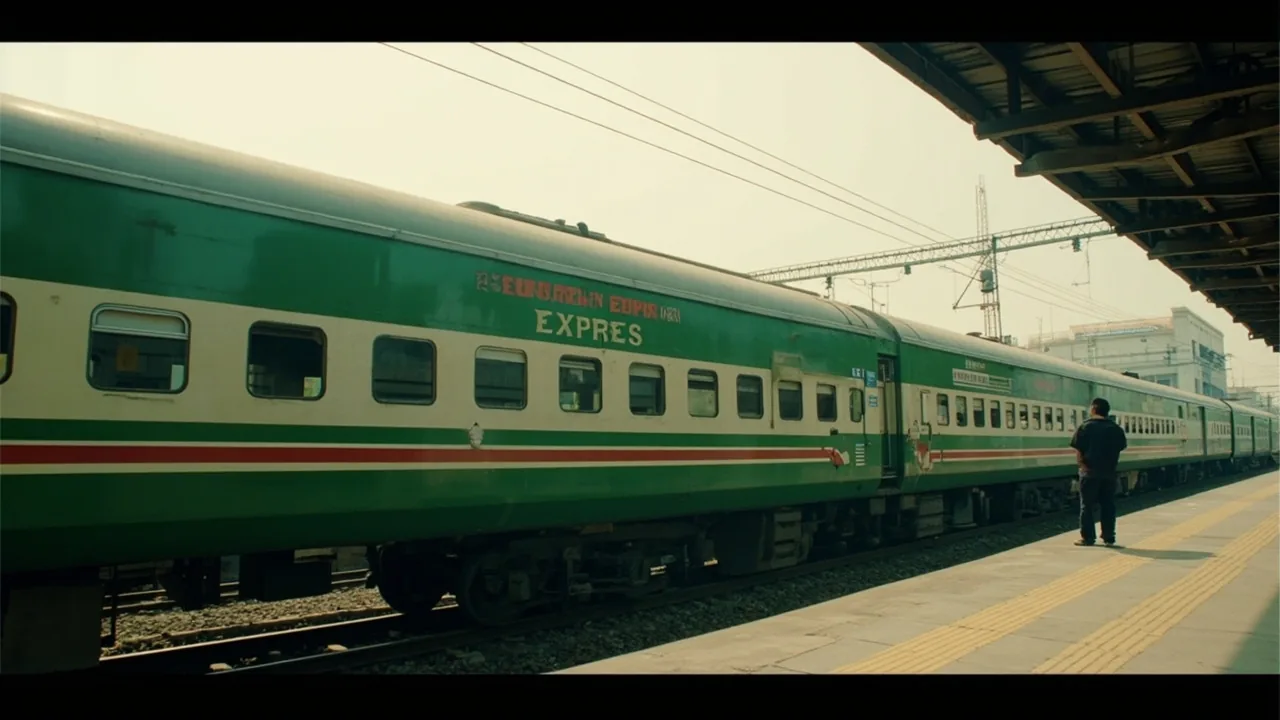
Vietnam’s Reunification Express: Real Cost & Is It Worth It?
If you want the cheapest, fastest way to get from Hanoi to Ho Chi Minh City, fly. If you want the most memorable 1,726 km of your backpacking trip and don’t mind losing a day and a half, take the Reunification Express. Pick the sleeper. Planning the wider region? Our Southeast Asia backpacking hub covers the full multi-country route.
Vietnam’s north-south railway is one of those rare “famous train in Vietnam” experiences that still feels famous the moment you’re on it. The train rattles out of Hanoi through the Red River Delta, climbs past limestone karsts near Ninh Binh, threads the Hai Van Pass between Da Nang and Hue with the coastline glinting a hundred metres below, and rolls flat into the Mekong Delta two days later.
Verified 2026-07-18 at 1 INR = 270.27 VND. Source: Vietnam Railways (DSVN), Baolau, 12go aggregator, DSVN official fare PDF.
Quick answer: Yes. The most famous train in Vietnam is the Reunification Express (Hanoi. Ho Chi Minh City), running 1,726 km in 30–34 hours, with soft sleeper fares of ₹5,524–₹6,629 (~$57.31–$68.77) one-way.
Quick Answers
Need to convert fares back to INR or VND on the fly? See our INR to Vietnam currency exchange primer before you budget the trip.
| What | Answer | Price (INR) |
|---|---|---|
| Hanoi to Ho Chi Minh City total journey time | 30 to 34 hours (SE1, SE3, SE5, SE7) | ₹5,524-₹6,629 (~1,500,000-1,800,000 VND or ~$57.31-$68.77) for SE1/SE3 |
| Cheapest class (hard seat) | Hard seat, 6 per row, upright | ₹2,210 (~600,000 VND or ~$22.92) |
| Best class for backpackers | Soft sleeper, 4-berth cabin | ₹4,420-₹6,629 (~1,200,000-1,800,000 VND or ~$45.84-$68.77) |
| Scenic highlight | Hai Van Pass between Da Nang and Hue | Same ticket, no surcharge |
| Booking website | Official: dsvn.vn | Pay 3.3% card fee or book at the station |
Quick answers verified 2026-07-18 at 1 INR = 270.27 VND. Source: Vietnam Railways (DSVN), Baolau, 12go aggregator.
Quick Comparison: Train vs Flying Hanoi to HCMC
| Factor | Reunification Express | Flight (Vietnam Airlines, VietJet) |
|---|---|---|
| Time door-to-door | 30 to 34 hours plus transfers | 2 to 3 hours total |
| Cost for Indian backpacker | ₹4,420-₹6,629 (~1,200,000-1,800,000 VND or ~$45.84-$68.77) sleeper | ₹5,524-₹12,890 (~1,500,000-3,500,000 VND or ~$57.31-$133.71) one-way |
| What you see | Rice paddies, karsts, coastline, villages | Cloud, then runway |
| Sleep quality (sleeper) | Decent, bumpy, train horn at 4 a.m. | Real bed, flat, silent |
| Social factor | High (cabin mates, food sellers) | Low (middle seat) |
| Scam risk | Medium (overcharging tourists at counter) | Low (online booking) |
| Visa run value | Border-area stopovers possible (Lao Bao, etc.) | Same flight, same airport |
| Best for | Travellers with 10+ days in Vietnam | Travellers short on time |
The flight wins on time and comfort. The train wins on every other axis.
Choose the Reunification Express If…
- You have at least 10 days in Vietnam and can spare 1.5 days of them on rails
- You want the Hai Van Pass between Da Nang and Hue, the most cinematic 12 km of coastline in Southeast Asia
- You like sleeping in transit (soft sleeper = free accommodation + transport combined)
- You want to break the journey in Hoi An, Hue, Nha Trang, or Da Nang without paying for two transport tickets
- You prefer slow travel for the people-watching (cabin mates become friends; the food cart ladies become legends)
Choose a Flight If…
- You have under 10 days and need to maximise city time
- You’re arriving from India with a tight schedule and the Hanoi / HCMC flight is part of a multi-city ticket (Bangkok / KL / Singapore)
- You hate being woken at 4 a.m. By a horn (the trains run on this schedule, every night)
- You have back or joint issues; the bunks are firm and the ride is shaky
- You want a window view of nothing but clouds and arrive rested
Reunification Express: Pros and Cons
Pros:
- Soft sleeper at ₹5,524-₹6,629 (~1,500,000-1,800,000 VND or ~$57.31-$68.77) is cheaper than one night in a Hanoi hostel plus a flight
- The Hai Van Pass segment alone (Da Nang to Hue) is worth the whole trip
- You wake up in the Central Highlands or Mekong Delta, depending on direction
- Cabins are 4-berth, perfect for solo travellers who want company
- The train station in Hanoi is central; HCMC station is 10 minutes from District 1 by Grab
Cons:
- Hard seat class is genuinely punishing, upright for 30+ hours
- Schedule is fixed, late monsoon cancellations do happen (travellers report 2 to 6 hour delays in Oct to Dec)
- Toilets on older SE3 / SE5 carriages are basic, squat-style, gets crowded at stations
- Food on board is overpriced (₹184-₹295 (~50,000-80,000 VND or ~$1.91-$3.06) per tray) and mediocre, bring your own
- The 4 a.m. Horn blast at every station will reset your body clock
Flying Hanoi to HCMC: Pros and Cons
Pros:
- 2 hours flight, door-to-door in half a day
- VietJet flash sales often beat train cost during promotions
- Real bed the same night
- Predictable schedule, weather-permitting
Cons:
- You lose the scenic coast, the karst country, the Mekong approach
- You arrive in HCMC at the airport, which is 8 km from District 1, not central
- Budget airlines charge for everything: bag, seat, water
- No social factor, you don’t meet anyone, no stories
Cost Comparison in INR (VND)
Prices verified 2026-07-18 at 1 INR = 270.27 VND.
| Expense | Train (sleeper) | Flight (budget) |
|---|---|---|
| Hanoi to HCMC ticket | ₹5,524-₹6,629 (~1,500,000-1,800,000 VND or ~$57.31-$68.77) | ₹5,524-₹12,890 (~1,500,000-3,500,000 VND or ~$57.31-$133.71) |
| Seat class upgrade | SE1/SE3 fast train adds ₹737 (~200,000 VND or ~$7.64) | Seat selection ₹552-₹1,473 (~150,000-400,000 VND or ~$5.73-$15.28) |
| On-board food (2 days) | ₹368-₹589 (~100,000-160,000 VND or ~$3.82-$6.11) | N/A |
| Airport transfer | ₹92 (~25,000 VND or ~$0.96) Grab | ₹184 (~50,000 VND or ~$1.91) Grab to District 1 |
| Hotel saved | 1 night Hanoi hostel = ₹921 (~250,000 VND or ~$9.55) | None saved |
| Total | ~₹6,629 (~1,800,000 VND or ~$68.77) | ~₹8,103 (~2,200,000 VND or ~$84.05) |
The sleeper train often comes out cheaper than a budget flight once you count the saved hostel night and the in-transit food that you’d buy anyway.
The Other Scenic Train Routes Worth Knowing
The Reunification Express gets the fame, but the same network branches out to a few smaller, less crowded rides that backpackers underrate. If you have 4 to 5 extra days, layer these onto your Vietnam 7-10 day itinerary.
Hanoi to Lao Cai (overnight to Sapa). The SP1/SP3 night trains run from Hanoi Station to Lao Cai, then a 30-minute shuttle drops you in Sapa town. The morning arrival lets you walk straight into the terraced rice fields before the day-trippers from Hanoi. Book a soft sleeper in a 4-berth cabin; the hard sleeper is sold out by 9 a.m. On Friday for weekend departures. The route crosses into the northern highlands, gets cold in winter, and the final 30 km of descent into Lao Cai is the scenic reward.
Da Nang to Hue (the Hai Van Pass section). This is the segment that makes the Reunification Express famous. If you can’t commit to the full 1,726 km, ride just this. 2 hours 40 minutes, soft seat ₹368-₹552 (~100,000-150,000 VND or ~$3.82-$5.73), the train hugs the coast, tunnels through the mountain, opens up to a drop into Lang Co lagoon. Travellers report pulling out their phone at every curve.
Hanoi to Ninh Binh (day trip option), 2 hours each way, soft seat ₹368-₹479 (~100,000-130,000 VND or ~$3.82-$4.97), the train terminates at Ninh Binh station and you can scooter out to Trang An or Tam Coc the same afternoon. Skip the tourist bus, take the train.
Ho Chi Minh City to Phan Thiet / Mui Ne, 4 to 5 hours, soft seat ₹552-₹737 (~150,000-200,000 VND or ~$5.73-$7.64). A sleeper-bus alternative that some travellers prefer because the train ride has toilets and you can walk around.
Booking, Scams, and Class Differences
Class breakdown on the SE1/SE3 (the two best trains):
- Hard seat (ngồi cứng): 6 seats per row, upright, plastic, no recline. ₹2,210-₹2,946 (~600,000-800,000 VND or ~$22.92-$30.56). Only masochists and locals on short hops.
- Soft seat (ngồi mềm): 4 seats per row, padded, reclines a little. ₹3,315-₹4,420 (~900,000-1,200,000 VND or ~$34.38-$45.84). Fine for the Da Nang to Hue segment, rough for 30+ hours.
- Hard sleeper (nằm cứng): 6 bunks per cabin, no door. ₹3,683-₹4,788 (~1,000,000-1,300,000 VND or ~$38.20-$49.67). Cheaper but cramped.
- Soft sleeper (nằm mềm): 4 bunks per cabin, door, sheet, pillow. ₹5,524-₹6,629 (~1,500,000-1,800,000 VND or ~$57.31-$68.77). The one to book.
Booking tips:
- Official site: dsvn.vn (Vietnam Railways). Foreign credit cards work but the site adds a 3.3% processing fee.
- Aggregator: Baolau.com accepts Indian cards cleanly, charges a small markup, sends the e-ticket by email.
- 12go.asia also sells Reunification Express tickets, useful if you want to bundle with a bus or ferry.
- Book soft sleeper 7 to 14 days ahead for the SE1/SE3 in Oct to March (peak season). Last-minute sales do happen but for hard sleeper only.
- Hanoi Station ticket counter opens 06:00, closes 22:00. Foreigners sometimes get quoted ₹368 (~100,000 VND or ~$3.82) extra by mistake; show the published fare on your phone and it gets corrected.
Scams to avoid:
- Taxi drivers at Hanoi Station quoting ₹1,105 (~300,000 VND or ~$11.46) for a ₹221 (~60,000 VND or ~$2.29) Grab to the Old Quarter. Use Grab or walk 15 minutes.
- Fake “station staff” offering to upgrade your ticket for cash inside the station. No upgrades happen at the platform; if you want a better class, go back to the counter.
- Food sellers overcharging 3x to 5x inside the station. Buy snacks before you board; on-board cart prices are ₹184-₹295 (~50,000-80,000 VND or ~$1.91-$3.06), station prices are ₹110-₹184 (~30,000-50,000 VND or ~$1.15-$1.91), outside-station prices are ₹55-₹92 (~15,000-25,000 VND or ~$0.57-$0.96).
- Unofficial agents around the station charging a ₹737 (~200,000 VND or ~$7.64) “booking fee.” There is no fee at the official counter.
Getting Connected on the Train
The Hanoi to HCMC route has weak but usable 4G coverage for the first 4 hours out of Hanoi, then drops to 2G/3G for most of the central stretch, then recovers around Nha Trang and stays solid to HCMC. SIM options sold in Hanoi for tourists typically run several times the local prepaid rate; check current Viettel tourist pricing at the official Viettel store before buying.
For travellers who want a clean alternative without a SIM swap, the Nomad eSIM Vietnam pack starts at ₹17 (~4,500 VND or ~$0.17) for 1 GB and runs on Viettel towers, same coverage as the physical SIM.
Subodh’s Pro Tip: The 8 to 10 hours from Da Nang to Nha Trang has zero signal in the tunnels through the Hai Van and Phuoc Tuong passes. Download offline maps for Hue and Da Nang before boarding.
Safety on the Train
Vietnam’s railway is one of the safer overnight transport options in the region. Cabins lock from inside. Keep your valuables in the cabin (the under-bunk storage works for backpacks), use a small padlock on your daypack.
For real-time safety updates before you board, check the Indian Ministry of External Affairs travel advisory page at mea.gov.in and Vietnam’s official government portal. Both are updated within 24 hours of any incident.
Safety Alert: Monsoon-season landslides (Sep to Dec) can delay trains by 2 to 6 hours. Travellers report this is more common on the northbound SE2/SE4. Pack an extra meal and a charged power bank.
Can You Do Both (Train + Flight)?
Yes, this is the smartest pattern. Take the train from Hanoi south to Da Nang or Hue, spend 2 to 4 days on the coast, then fly the remaining Da Nang to HCMC leg. Or reverse it. You get the Hai Van Pass scenery, the social sleeper experience, and you skip the flat Mekong stretch (which is the dullest part of the route). Many riders time the Hoi An lantern stops to coincide with the train halt at Hoi An, then resume the next morning.
Suggested split:
- Hanoi to Da Nang by train (SE1 or SE3, 16 to 17 hours overnight, soft sleeper ₹4,420-₹5,524 (~1,200,000-1,500,000 VND or ~$45.84-$57.31))
- 3 days in Hoi An and Da Nang
- Da Nang to HCMC by VietJet (₹5,524-₹8,103 (~1,500,000-2,200,000 VND or ~$57.31-$84.05) one-way)
- Total: ~₹11,049-₹13,627 (~3,000,000-3,700,000 VND or ~$114.61-$141.35) for the trunk route
- Saves you 14 hours versus the full train, costs ₹1,842-₹4,420 (~500,000-1,200,000 VND or ~$19.10-$45.84) more than the full train but ₹5,524 (~1,500,000 VND or ~$57.31) less than full-train-plus-tour-bus for the central detour
The corridor between Da Nang and HCMC has more flight options daily (20+) than the train runs weekly (7), so flexibility is better on the southern half.
FAQ
Is the Reunification Express worth it for backpackers?
Yes, if you have 10+ days. The soft sleeper is the best-value transport-and-accommodation combo in Vietnam. If you have under 10 days, fly.
What is the cheapest class on the Reunification Express?
Hard seat (ngồi cứng) at ₹2,210-₹2,946 (~600,000-800,000 VND or ~$22.92-$30.56) for Hanoi to HCMC. It is genuinely uncomfortable for the full 30+ hour ride; only consider it for short segments like Da Nang to Hue.
How do I book the Reunification Express from India?
Use dsvn.vn (Vietnam Railways official, foreign cards accepted with a 3.3% fee) or Baolau.com (cleaner Indian card processing, small markup). 12go.asia also works.
What are the best scenic train routes in Vietnam besides the Reunification Express?
Hanoi to Lao Cai (Sapa, overnight, 8 hours), Da Nang to Hue (Hai Van Pass, 2h40), Hanoi to Ninh Binh (day trip, 2 hours), HCMC to Mui Ne (4 hours).
Is the train safer than the sleeper bus?
For luggage and personal safety, yes. For speed, no, the sleeper bus Da Nang to HCMC at ₹921-₹1,473 (~250,000-400,000 VND or ~$9.55-$15.28) is half the price of a flight and runs overnight, but travellers report rougher roads and more motion sickness.
Can I get off mid-route and reboard later?
Yes, you can break the ticket at any station, but you pay a 10% rebooking fee per segment. Most travellers just buy two separate tickets: Hanoi to Da Nang, then Da Nang to HCMC.
Do I need to print my ticket or is e-ticket enough?
E-ticket on phone works at the official counter; for foreign passports, carry a printed copy as backup. The gate staff occasionally scan paper only.
