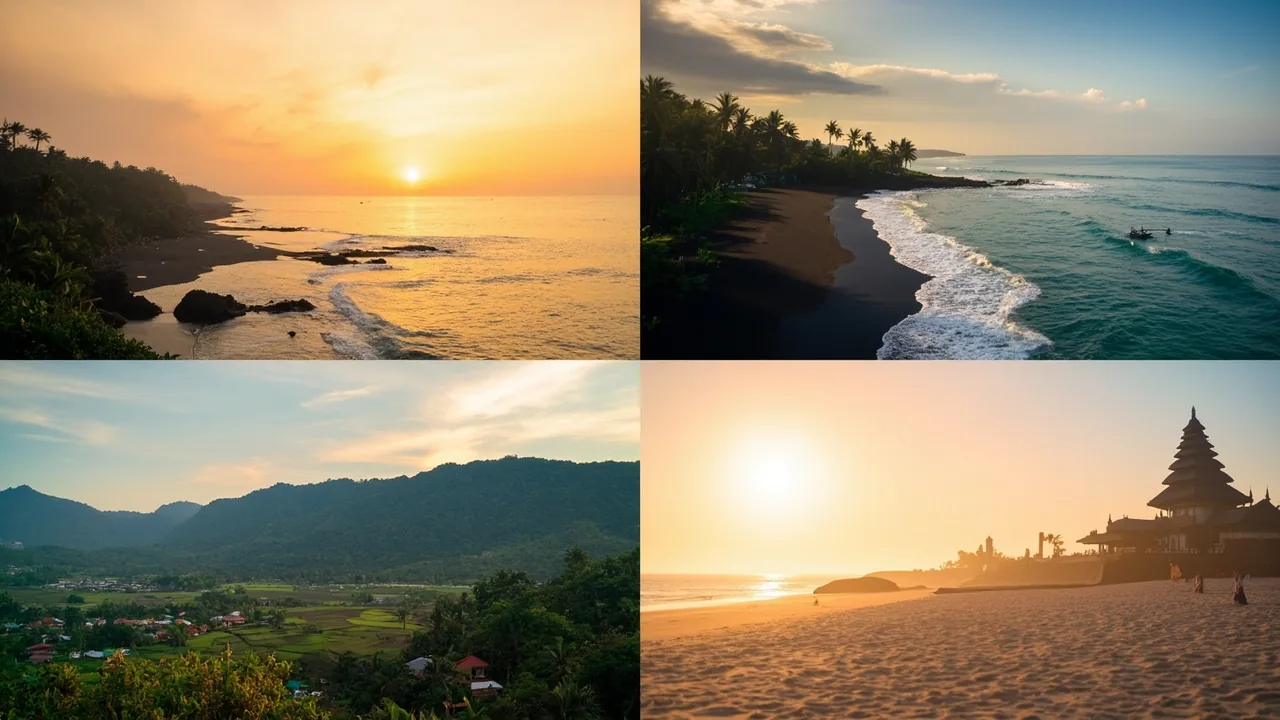
Which Side of Bali is Best? North vs South vs East vs West
If you’re an Indian backpacker flying into Denpasar and have 7 to 14 days, stay in the south (Seminyak, Canggu, Kuta, Sanur or Uluwatu) and add Ubud in the centre as a 2 to 3 day inland detour. If you have 14+ days, a surf-first trip, or you want to escape the crowds entirely, split time between Canggu (south) and either Amed or Canggu’s quieter cousins in the east (Candidasa, Padang Bai) or the Bukit Peninsula (Uluwatu, Bingin). North Bali (Lovina, Munduk) is gorgeous but slow and only worth a dedicated trek if you’re already doing 3 weeks. For related planning, see our guide on Sea Backpacking Hub.
The short version: south Bali has 90% of the infrastructure Indians need (Indian restaurants, UPI-friendly warungs, Gojek drivers who know the route, fast airport access). Everything else is a vibe choice layered on top.
Quick Answers
| What | Answer | Price (INR) |
|---|---|---|
| Best first-time area | South Bali (Seminyak or Canggu) | ₹426-₹1,064 (~80,000-200,000 IDR or ~$4.49-$11.24)/night dorm |
| Cheapest area | Kuta or Sanur (south) | ₹372-₹745 (~70,000-140,000 IDR or ~$3.93-$7.87)/night dorm |
| Best surf | Bukit Peninsula (Uluwatu, Padang Padang) or Canggu | ₹1,862-₹2,660 (~350,000-500,000 IDR or ~$19.66-$28.09)/lesson |
| Best for culture | Ubud (central, not technically a coast) | Free walking temples |
| Best for escaping crowds | Amed or Candidasa (east) | ₹532-₹957 (~100,000-180,000 IDR or ~$5.62-$10.11)/night dorm |
| Where Indians feel most at home | Seminyak, Canggu, Ubud | 8+ Indian restaurants in walking distance |
| Cross-island commute reality | 2-4 hours one-way, traffic dependent | ₹798-₹1,330 (~150,000-250,000 IDR or ~$8.43-$14.05) by Grab/Gojek |
Rates: 1 INR = 185 IDR at the time of writing (1 USD ≈ 17,000 IDR).
Quick Comparison: South vs Central (Ubud) vs East vs West/North
| Factor | South (Seminyak, Canggu, Kuta, Uluwatu) | Central (Ubud) | East (Amed, Candidasa, Padang Bai) | North/West (Lovina, Munduk) |
|---|---|---|---|---|
| Daily budget (IDR) | 400,000-900,000 | 350,000-700,000 | 300,000-600,000 | 300,000-500,000 |
| Visa for Indians | VoA $35 USD (~566,400 IDR) + ₹807 (~150,000 IDR or ~$8.38) levy | Same | Same | Same |
| Best months | May-Sep (dry) | Apr-Oct | Apr-Oct | May-Sep (rain shadow earlier) |
| Veg food availability | High (many Indian spots) | High | Low (1-2 veg warungs) | low |
| Safety (solo) | High | High | High | High |
| English spoken | Universal | Universal | Common | Common |
| Vibe | Beaches, beach clubs, traffic, nightlife | Rice terraces, yoga, art, slower | Diving, fishing villages, black sand | Volcanoes, waterfalls, dolphin tours |
| Best for | First-timers, surfers, party crowd | Yogis, couples, culture seekers | Scuba divers, peace seekers | Hikers, off-grid types |
A note on the table: “Central (Ubud)” isn’t technically a coast, but Bali travellers treat it as a separate base from the southern beaches because the drive is 1.5-2 hours each way depending on traffic, and Ubud has its own food, hostel and coworking scene.
The Real Decision: Pick by Neighbourhood First, Region Second
Here’s the gap most guides miss: Bali’s North/South/East/West breakdown is a starting frame, but the actual decision units are towns within each region. South Bali alone splits into 4 different vibes depending on which stretch of coast you’re on.
- Seminyak (south-west coast): the polished, slightly older crowd. Boutique hotels, beach clubs, sunset cocktails, lots of Indians on honeymoon trips. Quieter than Canggu but pricier.
- Canggu (just north of Seminyak): the current digital-nomad heart. Surfy, hipster, lots of vegans and Australians, the best cafe scene on the island. Traffic is genuinely bad here.
- Kuta (south, near airport): the budget backpacker classic. Cheapest hostels, loudest nightlife, closest to the airport. Most Indians who land on a 5-day trip end up here at least once.
- Sanur (south-east coast): the older, family-friendly beach town. Calm water, beachside promenade, fewer parties. Good if you want a swim-safe beach without the Canggu chaos.
- Uluwatu / Bukit Peninsula (far south): cliff-top surf, temple sunsets, fewer crowds the further you go (Bingin, Padang Padang). Most “I want a quieter Bali” Instagram shots come from here.
- Ubud (centre, inland): the rice-terrace-and-yoga capital. 1.5 hours from the airport, no beach, but the cultural anchor.
- Amed / Candidasa (east coast): the dive-and-fishing-village strip. Black sand beaches, slow pace, almost no nightlife.
- Lovina / Munduk (north): the volcano-and-dolphin area. Cooler, wetter, quiet. Almost no Indians base here.
So when someone asks “which side of Bali is best”, the answer depends a lot on whether they want Canggu’s cafe life, Seminyak’s polish, Uluwatu’s cliffs, or Amed’s silence. The regions in the rest of this article assume you’ve already picked a vibe, or are still deciding.
Choose South Bali If…
- You want to land and have everything within a 15-minute Grab ride: Indian restaurants, money exchange, laundry, beach, SIM card shop, pharmacy.
- You’re a first-timer and don’t want to figure out a new town after a long flight from India. DPS airport is in the south, the hostels are in the south, the warungs are in the south.
- You surf (want to learn) and want consistent waves at multiple price points. Canggu’s beginner beaches are the easiest in Bali.
- You want nightlife or beach clubs. Sundays beach club at Uluwatu, Potato Head in Seminyak, Old Man’s in Canggu.
- You’re on a short trip (5-8 days) and can’t afford to spend 3-4 hours driving each way between bases.
Choose Central (Ubud) If…
- You care more about rice terraces, yoga, art galleries and Hindu temple ceremonies than beach time.
- You’re a vegetarian: Ubud has the highest density of pure-veg cafes in Bali, plus several Indian restaurants. See how Bali compares to Lombok and the Gili Islands if you want a slower alternative.
- You want to do the Mount Batur sunrise trek or the Campuhan ridge walk. Both start from Ubud.
- You’re happy to combine Ubud with 4-5 days in the south for beach + airport convenience. This is the most common Indian backpacker combo on 10-day trips.
Choose East Bali (Amed, Candidasa, Padang Bai) If…
- You’re a certified diver or want to learn. Tulamben (just north of Amed) has the USS Liberty shipwreck, a shore dive from the beach.
- You want the quietest coast with the least infrastructure. No beach clubs, few Indian restaurants, slower Gojek pickup times.
- You’re on a longer trip (14+ days) and want to spend a week reading books in a hammock.
- You don’t mind the 2.5-3 hour drive from the airport on arrival day. Budget for the Bali transport reality before committing.
Choose North/West Bali (Lovina, Munduk) If…
- You specifically want to see dolphins at sunrise (Lovina’s main draw), hike Munduk’s waterfalls, or climb Mount Batur’s quieter cousin Mount Agung from the north.
- You have 3 weeks on Bali and want to “complete” the island. Most 7-14 day trips skip this region entirely, and that’s a reasonable choice.
- You accept that veg food here means Indonesian warungs (which serve plenty of veg dishes) rather than Indian restaurants. There are no Indian restaurants in Lovina or Munduk.
South Bali: Pros and Cons
Pros:
- Best surf variety in one island: beginners in Kuta/Canggu, intermediates at Uluwatu, advanced at Padang Padang.
- 8+ Indian restaurants in Seminyak/Canggu alone. North Indian, South Indian, Gujarati thali, Jain options. You won’t miss home food.
- Gojek and Grab work smoothly. A 5-km bike ride costs ₹43-₹81 (~8,000-15,000 IDR or ~$0.45-$0.84). Airport to Seminyak is ₹807-₹1,076 (~150,000-200,000 IDR or ~$8.38-$11.17) by Grab.
- Best co-working and cafe scene if you need to work remote. Compare tours on GetYourGuide for day trips out of south Bali.
Cons:
- Traffic is the worst in Southeast Asia after Jakarta. A 10-km trip at 5pm can take 45 minutes.
- Kuta and parts of Canggu are loud. If you want quiet, pick Uluwatu or Sanur.
- Prices have caught up with Australia for beach clubs (₹1,614-₹2,690 (~300,000-500,000 IDR or ~$16.75-$27.92) entry with one drink minimum).
- Mass tourism in places like Kuta Beach can feel overwhelming if you came for “tropical paradise.”
Central (Ubud): Pros and Cons
Pros:
- Cooler weather than the coast (highland climate, 20-26°C year-round).
- Highest density of pure-veg and vegan cafes in Bali, plus decent Indian spots. Great for Indian veg travellers.
- Walkable town centre. You don’t need a scooter for most things.
- Surrounded by temples, rice terraces, and the famous Campuhan ridge walk.
Cons:
- 1.5-2 hours to the beach, and Grab drivers cancel on the long uphill return because of poor returns.
- No beach at all. If your trip is beach-first, you’ll be frustrated.
- Yoga and wellness prices have inflated: a single drop-in yoga class is ₹807 (~150,000 IDR or ~$8.38), a wellness retreat is 800,000+ IDR/night.
- Rainy season (Nov-Mar) hits Ubud harder than the south.
East Bali (Amed, Candidasa): Pros and Cons
Pros:
- Cheapest coast in Bali. Dorm beds ₹538-₹968 (~100,000-180,000 IDR or ~$5.58-$10.05), mie goreng ₹108 (~20,000 IDR or ~$1.12), fresh seafood warungs under ₹269 (~50,000 IDR or ~$2.79).
- Best diving and snorkeling shore-access on the island (USS Liberty wreck at Tulamben).
- Almost no Indian tourist density. You’ll likely be the only Indian guest at your homestay.
- Slow, quiet, local. Genuinely “old Bali” if you want that.
Cons:
- few Indian restaurants. Plan your veg food around Indonesian warungs (sayur urab, gado-gado, tempeh).
- Limited public transport. You need a scooter or private driver.
- Internet is patchy in the smaller villages. Not a remote-work base.
- Some areas still have limited water and electricity infrastructure.
North/West Bali: Pros and Cons
Pros:
- Cooler climate and rain-shadow weather. Good escape if south Bali is too hot.
- Dolphin tours at Lovina (₹269-₹538 (~50,000-100,000 IDR or ~$2.79-$5.58) per person), waterfalls at Munduk, Mount Agung climb from the north.
- Almost no tourists in Munduk, even in peak season.
- Some of the cheapest homestays on the island (under 100,000 IDR/night for a private room).
Cons:
- Long drive from the airport: 3-4 hours to Lovina, 3 hours to Munduk.
- Almost zero Indian restaurants or vegetarian-specialised warungs.
- Fewer hostels and a much smaller backpacker scene. You’ll meet fewer travellers.
- Rain is heavier here than anywhere else in Bali; the waterfalls are loudest in wet season for a reason.
Cost Comparison: Bali on a Backpacker Budget
Here’s a 7-day per-person estimate for south Bali (the most common base for first-timers), assuming a dorm + street food + scooter rental split between two travellers.
| Expense | South Bali (per day) | Notes |
|---|---|---|
| Dorm bed | ₹430-₹1,076 (~80,000-200,000 IDR or ~$4.47-$11.17) | Kuta cheapest, Canggu/Seminyak top |
| Street food meal | ₹81-₹161 (~15,000-30,000 IDR or ~$0.84-$1.68) | Nasi/mie goreng, warungs |
| Restaurant meal | ₹323-₹807 (~60,000-150,000 IDR or ~$3.35-$8.38) | Warung to mid-range cafe |
| Scooter rental | ₹377-₹538 (~70,000-100,000 IDR or ~$3.91-$5.58) | Shared with one person = ~₹215 (~40,000 IDR or ~$2.23) |
| Petrol (per day) | ₹108-₹161 (~20,000-30,000 IDR or ~$1.12-$1.68) | ~150 km per full tank |
| SIM card (tourist) | ₹269-₹807 (~50,000-150,000 IDR or ~$2.79-$8.38) | Telkomsel 25 GB, 30 days |
| Top activity (e.g. Surf lesson) | ₹1,883-₹2,690 (~350,000-500,000 IDR or ~$19.55-$27.92) | Group class, 2 hours |
| Beer (local Bintang) | ₹188-₹269 (~35,000-50,000 IDR or ~$1.95-$2.79) | At warung |
| Visa-on-arrival | ₹3,372 (~35 USD) | At DPS airport |
| Bali tourism levy | ₹807 (~150,000 IDR or ~$8.38) | Payable at airport, Feb 2024 onward |
The visa figure converts to about 566,400 IDR at current rates (1 USD ≈ 17,000 IDR, 1 INR ≈ 185 IDR). For a deeper breakdown, see the country-by-country SEA budget guide.
The Bananarchy Take
For 80% of Indian backpackers reading this, the answer is south Bali + a 2-3 day Ubud detour. Anything else is a vibe choice layered on top, not a different trip. The decision tree I’d use with a friend at the airport:
- 5-7 days, first time in Bali, want everything easy: Stay in Seminyak or Canggu. Done.
- 5-7 days, surf-first, want waves not cafes: Stay in Uluwatu (Bukit Peninsula) or Kuta for cheap dorms near surf.
- 10-14 days, mix of culture and beach: 4 days Ubud, 6-8 days split between Canggu and Uluwatu.
- 14+ days, want quiet, can handle slow travel: Add 4-5 days in Amed or Candidasa.
- 3 weeks, want to “complete” the island: Add 2-3 days in Munduk or Lovina.
The honest counter-argument to “stay south” is that Bali’s south is increasingly crowded, expensive for what you get, and traffic-blighted. If you’ve done south Bali before and want to feel like you’re travelling rather than sipping smoothies in a beach club, east coast (Amed) is the underrated play.
Subodh’s Pro Tip: Book your first 3 nights in one place. Don’t try to “see all of Bali” on a 7-day trip. The cost of moving hostels every 2 days (checkout time, Grab to next town, re-settling) eats a full day each move.
Getting Connected
Indonesian tourist SIM cards (Telkomsel, XL, Indosat) are sold at the airport and at every minimarket. Telkomsel’s tourist SIM at the airport counter runs about ₹807 (~150,000 IDR or ~$8.38) for 25-30 GB over 30 days; the same SKU at Indomaret/Alfamart down the road is ₹161-₹269 (~30,000-50,000 IDR or ~$1.68-$2.79) cheaper. Coverage is excellent in south Bali and Ubud, patchy in north/east rural areas. Grab and Gojek work on these SIMs without issue. If you’d rather skip the airport counter, Get Nomad eSIM has Indonesia packages you can activate before you fly.
Can You “Do Both”? Realistic Combos
The easiest combo is south + Ubud, and 90% of Indian backpackers on 10-day Bali trips do exactly this. The harder combo is south + east, because the Amed drive is 2.5-3 hours and best done as a relocation, not a day trip. North Bali almost never combos with anything except Ubud or east; it’s a dedicated trek.
Practical sample itinerary for 14 days:
- Days 1-3: Canggu or Seminyak (south)
- Days 4-6: Ubud (centre)
- Days 7-9: Uluwatu/Bukit Peninsula (far south)
- Days 10-12: Padang Bai or Amed (east)
- Day 13: Back to south for airport
- Day 14: Fly out
For longer Indian-backpacker routes that include Bali plus other Indonesian islands, see the Indonesia 2-week itinerary or the Bali vs Lombok vs Gili comparison. If you’re flying in fresh from Jakarta, the cheapest route from Jakarta to Bali is worth a read.
FAQ
Which side of Bali is best for first-time Indian visitors? South Bali (Seminyak, Canggu, Kuta) for the airport convenience, Indian food access, and surf variety. Add 2-3 days in Ubud for culture.
Which Bali area is cheapest for backpackers? Kuta has the cheapest dorms (70,000-140,000 IDR/night) and street food. Amed and Lovina are cheaper for homestays and private rooms but have less infrastructure.
Where should I stay in Bali for surfing? Beginners: Kuta or Canggu beach breaks. Intermediates: Uluwatu, Padang Padang, Bingin. Advanced: the further down the Bukit Peninsula you go, the heavier the waves.
Is Ubud worth staying in, or just a day trip? Worth staying in. Ubud as a day trip from south Bali costs you 4 hours of driving. 2-3 nights lets you do the Campuhan ridge walk, a sunrise Mount Batur trek, and a couple of rice-terrace walks without rushing.
Where in Bali is safest for solo Indian women travellers? South Bali and Ubud have the strongest tourist infrastructure and English-speaking locals. Use Grab/Gojek at night instead of walking alone, and check your government’s travel advisory before departure (the Indian MEA advisory page is the right reference).
Which side of Bali has the best Indian restaurants? Seminyak and Canggu have 8+ Indian restaurants each, including Gujarati thali places. Ubud has 3-4. Sanur has 2-3. Amed, Candidasa, Lovina and Munduk have none.
Can I cover all 4 regions of Bali in a week? Honestly, no. You’ll spend the whole week in a Grab car. Pick 2 regions for a 7-day trip, 3 for a 10-day trip, all 4 for 14+ days.
Subodh’s Line
Pick south Bali for your first trip. Come back for the east and north on trip two when you know what you’re looking for. Bali rewards a second visit more than a rushed first one.
