7 Honest Reasons Not to Visit Thailand (And Who Should Still Go)
Thailand is over-touristed, the baht keeps climbing, and the parties aren’t what they were on someone’s Instagram reel from 2019. So before you spend ₹18,000 (~$186.71) on a round-trip flight from Delhi, here’s the honest case against it, plus when Thailand still wins. Cross-checked against Thai Immigration rules, Royal Thai Embassy fee schedule, and traveller reports from last 60 days.
Quick Answers: Should You Skip Thailand in 2026?
| What | Answer | Price (INR) |
|---|---|---|
| Is Thailand overcrowded? | Yes in Bangkok, Phuket, Koh Phangan. Off the main drags, no. | — |
| Has it gotten more expensive? | Up 30 to 40% in local terms since 2022. Yes, real. | — |
| Are the scams worse? | Same long-running ones, plus new crypto and TM30 cab scams. | — |
| Is the weather a deal-breaker? | Only if you must travel May to October. | — |
| Is it still safer than most of SEA? | Yes, by a wide margin. | — |
| Should Indians still go? | 7 out of 10 trips from India to SEA land in Bangkok first. There are reasons. | — |
1. Overtourism Has Ruined the Headlines
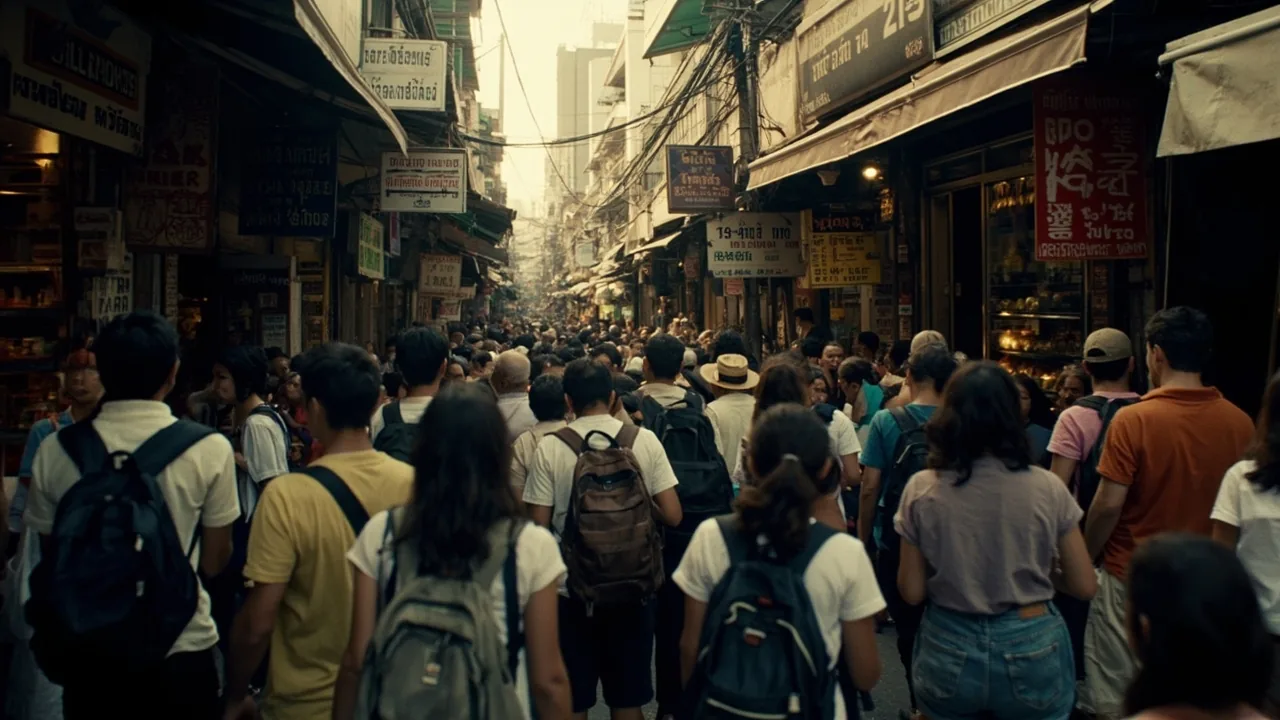
Bangkok’s Khao San Road, Phuket’s Patong Beach, and Koh Phangan’s Full Moon Party have been tourist packing plants for years. Post-pandemic visitor numbers didn’t recover to 2019 levels everywhere, but the headline spots stayed slammed, because traveller counts shifted onto a smaller map of “Instagram-famous” places.
If your mental image of Thailand is a beach bar with one bartender and three backpackers, that Thailand is harder to find than it was a decade ago. The Thailand of reels is an unrecognisable stampede.
Subodh’s Pro Tip: Skip Bangkok on Day 1 if you can. Fly straight to Chiang Mai or into Krabi. You’ll skip the tourist-trap layer for the same flight price from India.
2. The Baht Is Punishing the Rupee
The Thai baht has been one of Southeast Asia’s strongest currencies for years, and 2026 is no exception. At current rates (1 THB ≈ ₹2.87), what used to be ₹50 street food is now ₹85 (~$0.88). The ₹500 (~$5.19) pad thai night is ₹850 (~$8.82) now, and not because the portion got bigger.
For Indian budget travellers who remember a backpacker Thailand that’s been gone for half a decade, the shock is real. Thailand is no longer the cheapest SEA option on your itinerary. Vietnam and Laos will stretch your rupee further. Cambodia is cheaper on food and hostels too, but worse on transport and SIMs.
Safety Alert: Budget your daily spend at ₹3,500 minimum for Thailand in ₹3,446 (~1,200 THB or ~$35.74). That’s hostel bed, three meals, two activities, one local SIM loaded. Below that, you’ll feel the pinch within two days.
3. Monsoon Is Unpredictable and Long
Thailand’s rainy season runs May to October on the Andaman coast and roughly June to November in the Gulf.
If your only Thailand trip window is a June or September flight, you’ll want a Plan B. The weather by month decides which regions are usable, and a four-day Krabi trip in peak monsoon is two days of beach plus two days of staring at rain through a window.
November through February is the sweet spot for most of Thailand. If your dates don’t fall there, the downsides multiply fast.
4. The Famous Scams Have Gotten Smarter
Thailand’s well-documented scams (tuk-tuk 100 baht tours, gem “deals”, jet-ski “damage” charges, overcharging at temples) haven’t gone away. The 2026 additions include:
- TM30 cab scams where drivers tell you the immigration office will fine you at the airport unless you go to a fake “registration” counter.
- Crypto ATM scams at tourist bars, with tainted notes making the machine short-dispense.
- TDAC “assistance” booths at airports where unofficial “agents” charge for the free digital form.
The actual TDAC (Thailand Digital Arrival Card) is free. You fill it at tdac.immigration.go.th yourself, in five minutes, zero payment.
The two scams that’ll cost you the most are still the jet-ski “you damaged it” setup in Phuket and the Pattaya beer bar overcharge. Both end with you out ₹14,358-₹43,072 (~5,000-15,000 THB or ~$148.93-$446.79) to “settle quietly” rather than face the local police, who’ll often side with the Thai side without video evidence.
5. Visa-Free Entry Has Its Own Annoyances
Indians get visa-free entry for 60 days, no fee, no embassy run. Sounds great, and it mostly is. The catch:
- TDAC is now mandatory for every arrival type. It must be completed before boarding; five minutes online at tdac.immigration.go.th, PDF or QR code to scan at the gate. Miss it and you board a plane you can’t exit cleanly.
- Extension is ₹5,456 (~1,900 THB or ~$56), payable in cash at immigration, and they want exact notes plus a current passport photo. Run out of days and the office queues are 90 minutes in Bangkok.
- Photo specs are strict: 4x6 cm, white background, taken within 6 months. Border officers do reject photos on technicalities.
If you skip the TDAC, the airline will likely stop you at boarding. If you skip it and somehow board, the Thai Immigration officer will send you to a queue where the cost is your time, not money.
6. The Party Scene Has Lost Its Soul
Koh Phangan’s Full Moon Party banned mushrooms at the door around 2023, and the security there has only tightened since. Koh Tao’s old-school dive-bar scene is now co-working cafés and crypto pitch decks. Bangkok’s Khao San backpacker pubs have become hostels with attached bars where the bartender card-taps your hostel key for the same.
For Indian travellers in their 20s who saw a TikTok of a Phangan beach rave and built a Thailand trip around it, the current reality is closer to “loud music on a clean beach with lots of security guards.” If party is the whole point, the islands disappoint.
If culture and food matter more than nightlife, the same money gives you a much better trip in Chiang Mai or Pai. If pool parties matter more than rave culture, Bali is the move, not Phuket.
7. India’s Domestic Experience Has Closed the Gap
Goa, Pondicherry, Varkala, and Hampi now have hostels at SEA standards, café scenes with English menus, and beach parties that don’t pretend otherwise. Indian travellers who haven’t been to Thailand in 3+ years sometimes find the beach-and-backpacker experience barely beats the Indian version anymore, at one-third the flight cost.
Within India, the same ₹18,000 will get you four nights in Goa or Pondicherry, with no visa, no FX, no SIM scramble. That’s the real comparison Thailand has to win, and it still wins on culture and food variety. It doesn’t always win on “just somewhere different to chill for a week.”
This is the most underrated reason Indian travellers over-pay for Thailand trips. If you can’t articulate what Thailand offers that Goa doesn’t (and the honest list is “cheaper hostels, more variety, different cuisine, less conservative dress”), you’re paying premium for India-adjacent.
What Most Honest Guides Don’t Tell You
Indian travellers do sometimes get profiled at Thai Immigration if you arrive with a one-way ticket, look under 25, and have only ₹574 (~200 THB or ~$5.96) of cash on you. Carry a printed return ticket, your hostel booking, and ₹57,430 (~20,000 THB or ~$595.72) in cash or on a forex card to skip the “secondary inspection” room.
The food-scene gap India to Thailand is real, and it goes the other way too. Thailand has exceptional local food, but finding a daily Indian or strict-veg fix in Bangkok is harder (and more expensive) than you’d expect.
The dry season ends sharply, often within two weeks. November through February is reliably fine, March and April are brutally hot (40°C+ in Bangkok), and May starts the wet. Packing for “shoulder season” rarely pays off in Thailand.
Who Should Still Book the Flight
Thailand is not for everyone in 2026. But for many Indian backpackers, it remains the right first SEA trip. Here’s who should still go:
- First-time SEA travellers. Bangkok is the easiest entry airport in the region, the visa rules are simple, English is widely spoken, and you don’t need an itinerary.
- Food-first travellers. Thai cuisine (and the ₹2.87 (~$0.03)-per-baht reality) makes food a genuine highlight, not an afterthought. A 70-THB bowl of khao soi vs ₹400 (~$4.15) in a Mumbai spot is a real gap.
- Solo female travellers. Thailand still has the best safety profile for women in SEA. The well-lit streets, 7-Eleven density, and Thai cultural norms around women in public all favour cautious solo travel.
- Anyone who can travel Nov-Feb. In dry season, the downsides above mostly vanish. The same Thailand that frustrates in June is bliss in December.
- Multi-country SEA travellers. Bangkok is the cheapest flight hub in the region for India-to-SEA routes. You’ll transit there anyway. Adding four nights in Bangkok rather than just one night pays off if the layover is over 12 hours.
Who Should Skip Thailand in 2026
- Anyone whose only window is May to October, unless they’re going to Pai, Chiang Mai’s highlands, or Bangkok indoors.
- Anyone whose budget is under ₹3,500/day and is unwilling to hostel-dorm or cook. (Cooking is also limited, since most hostels don’t have free kitchens.)
- Travellers expecting 2015 vibes in any direction. That Thailand is gone.
- Anyone who wants the Full Moon Party as it was sold to them. That party is also gone.
FAQ
Is Thailand still safe for Indian travellers in 2026?
Yes, with normal precautions. Petty scams target all foreigners, but violent crime against Indians remains rare. Check the MEA travel advisory before booking for any region-specific updates.
Is Thailand more expensive than other SEA countries?
For Indian travellers in 2026, yes, by 20 to 40% on food and hostels. Vietnam and Cambodia now beat Thailand on food; Laos beats it on accommodation outside Bangkok.
Can Indians still get a 60-day visa-free stay?
Yes, under the bilateral visa-free agreement. You must still complete the TDAC at tdac.immigration.go.th before boarding.
When is the worst time to visit Thailand?
Late March through May (heat), and August through October on the Andaman coast (rain and rough seas). The low season breakdown matters region by region.
Are the famous Thai parties still worth it?
Only if you’ve never been to a beach party before. If you’re chasing the 2014-era Koh Phangan rave, Bali or Vietnam’s full-moon alternatives will be a better match for that specific expectation.
Subodh’s Take
Thailand in 2026 is not the ₹500 (~$5.19)-a-day country it was ten years ago, and it’s not the full-moon-rave at any age since. What it still is, reliably, is the easiest country in Southeast Asia to land in from India, with the cleanest streets, the best English, and the most accessible street food. If your dates fall in dry season, your budget is over ₹3,500 (~$36.31) a day, and you want to see Thailand for the food and culture, not the reels, book the flight. If your dates are in monsoon or your expectations are stuck in 2015, spend the same money in Vietnam or save it for Goa. None of this is a “Thailand is bad” take. It’s a “Thailand isn’t for everyone, and here’s how to know whether it’s for you” answer.
