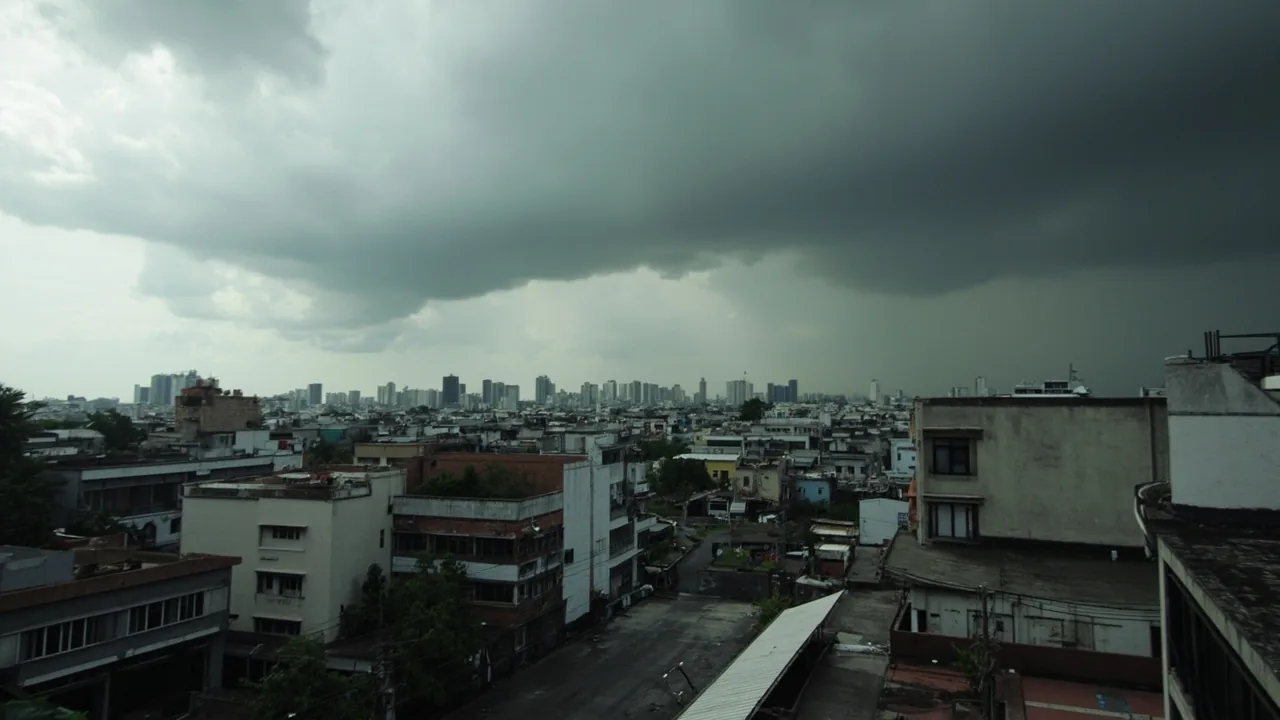
Thailand Rainy Season: When It Hits, Where It Hits, and What to Expect (2026)
What is the rainy season in Thailand? It runs May through October, but two separate monsoons hit the country at different times. This guide breaks down the monthly picture, ferry cancellations, what to pack, and which islands to skip. Planning the wider region? Our Southeast Asia backpacking hub covers the full multi-country route.
What Is the Monsoon, Actually?
Thailand has two monsoon systems. The southwest monsoon blows moist air from the Indian Ocean onto the Andaman coast (west-facing beaches) between roughly May and October, dumping most of its rain there. The northeast monsoon flips the wind direction between November and February, pulling cool, dry air across the country from China, but when it crosses the Gulf of Thailand it picks up moisture and drops it on the Gulf-facing coast (Koh Samui, Koh Phangan, Koh Tao, Hua Hin) from about October to December.
The practical takeaway: if you arrive in June and head straight to Phuket, you’ll be rained out. If you arrive in June and head to Koh Samui, you’ll get sun. Travellers who know this swap are the ones who score cheap flights and empty beaches in the off-season. The whole topic is part of the broader picture in Thailand weather by month, which goes season-by-season for the whole country.
Quick Answers
| What | Answer | Price (INR) |
|---|---|---|
| When is the rainy season in Thailand? | May to October (southwest monsoon on the Andaman coast); October to December (northeast monsoon on the Gulf coast) | — |
| Worst months for rain | August and September on the Andaman side; November on the Gulf side | — |
| Best months to avoid the rain on either coast | Late May (Gulf side warming up) and late October (Andaman side drying out) | — |
| Cheapest months | May, June, September, October | — |
| Do islands close in the rainy season? | Some do; see the island closures section below | — |
| Do ferries get cancelled? | Yes, regularly in the peak monsoon months | — |
| What to pack | Lightweight rain jacket, quick-dry clothing, dry bag, mosquito repellent | — |
| Travel insurance | SafetyWing from ~$62/month | — |
Monthly Breakdown: What Happens
Here’s what each month looks like, verified against Thai Meteorological Department data from May 2026.
May. Southwest monsoon is just starting. Bangkok and the central plains get the first heavy showers, usually 30-60 minute afternoon downpours. The Andaman coast (Phuket, Krabi, Koh Lanta) starts to see rain in the second half of the month. The Gulf coast (Koh Samui, Koh Phangan, Koh Tao) is still mostly sunny and dry. Good month to visit the Gulf side.
June. Southwest monsoon is in full swing. Andaman coast is wet, with frequent all-day rain and choppy seas. Ferry cancellations start. Gulf coast is still mostly sunny, often the best month of the year for Koh Samui. Bangkok stays warm (32-34°C) with afternoon storms.
July. Peak southwest monsoon. Andaman coast sees the most consistent rain. Sea conditions are at their worst for diving and snorkelling. Koh Tao and Koh Phangan are still in their dry window. Northern Thailand (Chiang Mai, Chiang Rai, Pai) gets afternoon rain but the days are clear and the rice paddies are bright green.
August. Same pattern as July, with the Andaman coast at its wettest. Many budget travellers skip the islands entirely and head to Chiang Mai, where the rain is mostly afternoon showers and the city is busy with festivals.
September. Wettest month on the Andaman coast. Some islands operate on a reduced schedule. This is the cheapest month for flights and accommodation. The Gulf coast is still mostly dry, though the wind starts to shift in the last week of the month.
October. Transition month. The southwest monsoon retreats. The Andaman coast starts to dry out from mid-October onward. The northeast monsoon begins, bringing the first heavy rains to the Gulf coast in the second half of October. Travellers report some of the best deals of the year at the start of the month, then increasing rain on the Gulf side by Halloween.
November. Northeast monsoon is established. The Gulf coast (Koh Samui, Koh Phangan, Koh Tao) is at its wettest. The Andaman coast is drying out and most islands reopen for the high season around mid-November. Bangkok is cool (28-30°C) and dry.
December. High season begins on the Andaman coast. Gulf coast is still in the tail end of its monsoon but starts to clear by Christmas. This is the start of the busiest, most expensive months.
The low season guide covers the whole May-October period in more detail if you want a fuller picture of what to expect with crowds, prices, and closures.
Which Islands Close (and Which Stay Open)
Several Thai islands effectively shut down or run on a skeleton schedule during the peak monsoon months. The pattern follows the coast.
Andaman side (May to October, peak closures August-September):
- Maya Bay (Koh Phi Phi Leh), closes for marine restoration, usually August-September.
- Similan Islands, national park closes entirely from mid-May to mid-October. Liveaboard diving season is November to April.
- Surin Islands, same closure as Similan.
- Koh Lanta, stays open but many beach bungalows close. The west-coast beaches are rough.
- Railay Beach (Krabi), accessible year-round by longtail but climbing is dangerous in heavy rain.
Gulf side (October to December, peak closures November):
- Koh Tao, stays open but ferry schedules are reduced and many dive shops close in November. The lull is October to early December.
- Koh Phangan, full-moon parties run all year, but the west coast is hit hardest. Many beach bars close in November.
- Koh Samui, stays open year-round as a commercial island but the worst month is November.
Islands that stay open and busy in the rainy season: Bangkok (it’s a city, not an island), Chiang Mai, Pai, Chiang Rai, Kanchanaburi, and most of the northeast. Inland northern Thailand is genuinely the best rainy-season option because the rain is predictable afternoon showers and the days are clear.
Ferry Cancellations: What Indian Travellers Need to Know
Ferries to the islands get cancelled more often than websites admit. The standard pattern:
- Andaman side (June to September): ferries from Phuket to Koh Phi Phi, Krabi to Koh Lanta, and any liveaboard departures are cancelled or delayed 1-3 days at a time. The official sites still show “operating as normal” up until the morning of departure.
- Gulf side (October to November): ferries from Surat Thani to Koh Samui, Koh Phangan, and Koh Tao see the same pattern.
What experienced travellers do:
- Book accommodation for the first 2 nights on the mainland (Phuket town, Krabi town, Surat Thani, Chumphon) so you’re not stuck sleeping on a ferry terminal floor when a crossing is cancelled.
- Always book ferries through a platform that shows real-time status. Book on 12go consolidates multiple operators and shows live cancellation data. Single-operator sites often pretend everything is running.
- Build a 1-day buffer on either side of any island crossing in monsoon months. Indian travellers who plan a tight 7-day Thailand itinerary often lose a full day to a cancelled ferry.
- Carry a printed booking confirmation in Thai and English. Operators sometimes let you on the next boat if you have a confirmed ticket and the ferry is only delayed, not cancelled.
The cost of a missed ferry: most operators let you rebook for free or for a small fee (₹143-₹574 (~50-200 THB or ~$1.49-$5.96)), but budget airlines like AirAsia and Nok Air charge rebooking fees. Fly into a mainland airport (Phuket, Surat Thani, Nakhon Si Thammarat) and ferry onward, rather than relying on a direct flight to Koh Samui during the monsoon.
What to Pack for the Rainy Season
Pack for rain that lasts 30 minutes to 3 days, not drizzle. Thai rain is heavy, warm, and short (usually), with occasional all-day dumps.
- Lightweight rain jacket or poncho, pack a real one, not a thin emergency poncho that tears after two uses. Decent ones are ₹1,721-₹4,304 (~600-1,500 THB or ~$17.87-$44.68) at Decathlon Bangkok or any mall.
- Quick-dry clothing, cotton stays wet for hours and mildews in hostel rooms. Quick-dry pants and shirts from Decathlon run ₹861-₹2,295 (~300-800 THB or ~$8.94-$23.83) per piece.
- Dry bag, 10-20 litre size for day trips and ferry crossings. ₹574-₹1,435 (~200-500 THB or ~$5.96-$14.89) at any night market.
- Waterproof phone pouch, ₹287-₹574 (~100-200 THB or ~$2.98-$5.96) at 7-Eleven. The Andaman ferries are wet even in dry season.
- Mosquito repellent, dengue is a real risk in the monsoon, especially in Koh Phangan and rural northern Thailand. Bring a DEET-based one from India; Thai brands are weaker.
- Closed-toe sandals or trail runners, flooded streets and slippery rocks make flip-flops dangerous.
- Refillable water bottle, humid air dehydrates you faster than you’d expect, and bottled water adds up.
The full Thailand packing list goes deeper on the women-specific version, but the monsoon essentials above apply to everyone.
Where to Stay in the Rainy Season (Hostels That Stay Open)
Most hostels in tourist areas stay open year-round, but some reduce operations. The reliable year-round options in monsoon-friendly cities:
| Hostel | City | Why it works in monsoon | Book |
|---|---|---|---|
| Lub d Bangkok Silom | Bangkok | Indoor common areas, near BTS | Check prices |
| Stamps Backpackers | Bangkok | Riverside, social, near Khao San | Check prices |
| Hostel by Bed | Chiang Mai | Old city, near night market, covered common area | Check prices |
| Stamps Backpackers Chiang Mai | Chiang Mai | Same brand as Bangkok, near old city | Check prices |
| Bodega Pai | Pai | Indoor bar, good rainy-day social scene | Check prices |
| For Pai specifically, hostels like Bodega have a covered indoor bar and common area that become the social centre during rainy evenings, which is half the reason Pai works as a monsoon destination. |
Rain-Friendly Activities (Yes, You Can Still Have a Good Trip)
The mistake most first-timers make is planning an island-heavy trip and then sitting in a hostel during a 2-day downpour wondering what to do. The rainy season is genuinely good for:
- Northern Thailand cities: Chiang Mai, Chiang Rai, and Pai have a dry morning and rainy afternoon pattern. Hit temples, cafés, and walking streets in the morning, and use the afternoon for museums, cooking classes, or a massage.
- Bangkok malls. Terminal 21, ICONSIAM, Siam Paragon, and MBK are giant indoor complexes that double as air-conditioned refuges. Travellers report spending entire rainy days in them.
- Cooking classes, half-day Thai cooking classes run regardless of weather. Baipai, Blue Elephant, and Pantip are reliable.
- Indoor climbing, committed climbing gyms in Bangkok (Urban Playground, Climb Bangkok) and Chiang Mai (No.1 Chiangmai Climbing, Mountain Project).
- Muay Thai stadiums. Bangkok’s Lumpinee and Rajadamnern run weekly fight cards. Air-conditioned, all evening, weather-proof.
- Cafés and co-working spaces. Chiang Mai’s Nimmanhaemin area has a dense café culture that was designed for exactly this kind of weather.
- Spa and massage. Wat Pho, Let’s Relax, and Asia Herb Association all run rain or shine. A 2-hour Thai massage is ₹1,148-₹2,295 (~400-800 THB or ~$11.91-$23.83).
For the island side, the Andaman coast is fine from late October onward, and a Krabi trip in November with proper rain gear is genuinely good value, half the price of December and almost the same weather.
Getting Connected: SIM and eSIM
SIM cards work in the monsoon. Rain doesn’t affect 4G/5G coverage, and the main tourist SIMs are sold at the airport and 7-Eleven regardless of season.
- Physical SIM (AIS/TrueMove tourist 15-day), ₹1,145 (~399 THB or ~$11.88) at 7-Eleven and Suvarnabhumi Airport. Includes ~15GB data, enough for two weeks of Google Maps, Grab, and video calls home.
- eSIM (Nomad), buy before you fly, activate on landing. Convenient if you’re arriving late and don’t want to queue at the airport kiosk. Get Nomad eSIM covers Thailand and most of Southeast Asia on the same plan.
A common monsoon-related issue: heavy rain and flooding occasionally knock out 4G in rural areas, especially in northern Thailand and on smaller islands. Don’t rely on a mobile hotspot for navigation on remote Bangkok to Chiang Mai bus routes; download offline maps on Google Maps before you leave.
Common Mistakes Indians Make in the Rainy Season
1. Booking only island accommodation and no mainland fallback. A 3-day rain forecast can cancel ferries for 3 days. Travellers who book Phuket, then Koh Lanta, then Koh Phi Phi in a tight chain often end up stuck on a ferry pier. Always book at least one mainland night (Krabi town, Phuket town, Surat Thani, Chumphon) before each island crossing in the monsoon.
2. Assuming “low season” means empty everywhere. Bangkok, Chiang Mai, and the cultural sites are busy year-round. The islands get quieter, but the cities don’t. If you want solitude, the islands in the off-season are the answer, not the cities.
3. Bringing only flip-flops and a thin jacket. Thai rain soaks you to the bone in 5 minutes. Real waterproofs and quick-dry clothes make the difference between enjoying a rainy day and being miserable. The Thailand packing list covers it in more detail.
4. Skipping travel insurance because it’s the off-season. Rainy-season travel has its own risks: ferry capsizes (rare but real), scooter accidents on wet roads, dengue fever, and food poisoning from heat. Insurance costs the same year-round. SafetyWing starts at ~$62/month and covers all of the above.
5. Not checking the TDAC arrival card. Thailand requires a digital arrival card (TDAC) for all entry types since 2025. It’s free, takes 5 minutes, and you fill it out at tdac.immigration.go.th. Most monsoon-season trip-ruiners aren’t ferry cancellations, they’re immigration issues. Indian passport holders get 60 days visa-free.
What Most Guides Don’t Tell You
The “low season pricing” trap. Some islands (Koh Samui, Phuket) have raised their monsoon-season prices over the last few years because they now cater to a year-round European and Russian market. The cheap months are now June and September, not the entire May-October window. Booking a July flight to Phuket expecting half-price rooms is a 2024 idea; in 2026 you’ll find rooms 20-30% off, not 50%.
Northern Thailand’s “secret dry season” runs from November to February. Chiang Mai and Pai have cool, dry weather from November onward and the air quality is good until February. Most Indian travellers go to the islands and miss the best weather in the north entirely. If you want cool weather, cheap hostels, and clear skies for hiking, the north in November is hard to beat.
The Bangkok monsoon is shorter than the islands. Bangkok’s rainy season effectively ends by late September. October and November in Bangkok are usually clear and cool, and most years the floods (when they happen) are in late August. If your main goal is Bangkok, November is a great month to visit.
Rain doesn’t mean non-stop. Even in August, the Andaman coast has 3-5 hours of clear weather most days. Heavy all-day rain happens, but it’s not the norm. Plan around it: morning beach, afternoon café, evening market, repeat.
How to Plan a Rainy-Season Trip That Works
A 7-10 day rainy-season trip should look like this:
- Days 1-3: Bangkok, even in monsoon, Bangkok has 2-3 hours of clear weather most days. Hit the Grand Palace, Wat Pho, Chinatown, and Khao San in the morning, then mall-hop in the afternoon.
- Days 4-6: Chiang Mai, fly or overnight bus. Old city temples in the morning, Nimman cafés in the afternoon, night bazaar or cooking class in the evening. Pack a light jacket for the evening, even in the monsoon.
- Days 7-9: One island, last week of October onward, by late October, the Andaman coast is drying out and the Gulf coast is starting its monsoon, so pick Andaman. Krabi in late October is good value.
- Day 10: Return to Bangkok, fly from Krabi to Bangkok, or take the Bangkok to Phuket bus the other direction.
Budget for this 10-day rainy-season trip: Average daily spend in Thailand is ₹4,304-₹7,173 (~1,500-2,500 THB or ~$44.68-$74.46) per day for backpackers, and 5 days in Thailand costs around ₹21,518-₹35,864 (~7,500-12,500 THB or ~$223.38-$372.30) all-in. A 10-day rainy-season trip at the same pace runs 15,000-25,000 THB total.
Verified 2026-07-17 at 1 INR = 0.3485 THB (1 THB ≈ ₹2.87).
FAQ
Is September the worst month to visit Thailand? September is the wettest month on the Andaman coast (Phuket, Krabi, Koh Lanta), but Koh Samui, Koh Phangan, and Koh Tao are still mostly dry. It’s the worst month for the Andaman and the best month for the Gulf.
Do ferries run in the rainy season? Yes, but with frequent cancellations. The peak cancellation months are August-September (Andaman) and October-November (Gulf). Always have a backup night booked on the mainland.
Is it safe to visit Thailand in the rainy season? Yes. The main risks are ferry accidents, scooter crashes on wet roads, and dengue fever. Travel insurance covers all three. SafetyWing from ~$62/month is the standard for Indian backpackers.
Do I need a visa for Thailand? Indian passport holders get 60 days visa-free. You also need a TDAC arrival card, free at tdac.immigration.go.th, filled out before boarding.
Is Thailand cheap in the rainy season? Flights and accommodation are 20-40% cheaper than high season. The biggest savings are on Phuket and Koh Samui hotels in June and September.
What is the best month to visit Thailand overall? November to February, for cool, dry weather across the country. November is also the start of the diving season in the Andaman. The November Thailand guide covers the timing in detail.
Can I still go island-hopping in the rainy season? Yes, with planning. The pattern is: pick one island, not three, and use a real-time booking platform like 12go. Build a 1-day buffer on either side of any ferry crossing. Most rainy-season horror stories come from travellers who planned a tight 5-island loop and lost 3 days to cancellations.
Subodh’s Take
The rainy season is a good season, not a bad one. You get cheaper flights, smaller crowds, green rice paddies, and a country that feels lived-in instead of paraded. The trick is to stop thinking of Thailand as a beach-and-islands-only destination and accept that northern Thailand, Bangkok, and the cultural sites are the same in May as they are in December. The islands have a wet window and a dry window, and knowing which is which is half the trip. Verified 2026-07-17 against Thai Meteorological Department data and current 12go ferry schedules.
