Malaysia Backpacking Packing List: 50+ Essentials Every Indian Traveler Forgets
Your suitcase is open on the bed, three weeks out from Kuala Lumpur. Malaysia punishes the unprepared traveller in specific ways. This backpacking malaysia packing list what to bring covers every category an Indian backpacker needs. Items are split into three layers: your main backpack, your daypack, and the small toiletry and tech kit pulled out at every hostel check-in.
If you haven’t sorted flights yet, brush up on the Malaysia weather and best-time guide before you pack; March is east coast monsoon, August is relatively dry on both coasts.
Quick Answers
Planning a longer Malaysia trip? Our 5-day Malaysia itinerary guide lays out the route, the islands, and the timing windows that decide what you need to pack.
| What | Answer | Price (INR) |
|---|---|---|
| Backpack size to bring | 50-60L main pack + 15L daypack | ~₹5,000-₹12,000 (~$51.82-$124.38) |
| Rain jacket type | Lightweight, seam-sealed, packable (not “water-resistant”) | ~₹1,500-₹3,500 (~$15.55-$36.28) |
| Power adapter | Type G (British three-pin, like India) | ~₹300-₹600 (~$3.11-$6.22) |
| Mosquito repellent (DEET-based) | 20-30% DEET or 20% Picaridin | ~₹400-₹800 (~$4.15-$8.29) |
| Travel insurance for 2 weeks | SafetyWing | ~₹5,900 (~$61.15) |
Subodh’s Pro Tip: The single most-forgotten item on every Indian Malaysia packing list is a lightweight long-sleeve shirt that covers shoulders AND a scarf/sarong for mosque entry. You’ll get turned away at Masjid Wilayah Persekutuan and Batu Caves if you show up in shorts and a tank top. A ₹300 (~$3.11) cotton scarf from Dadar market solves it.
Where to Stay (First Night Matters More Than You Think)
Your first-night accommodation booking is one of the items immigration can ask to see on arrival. Book something in KL near KL Sentral or Bukit Bintang before you fly; hostels in Chinatown work but the 3 AM check-in queues at some properties have stranded Indian travellers. We break down the best areas by city in our Malaysia hostel and hotel guide.
The Main Backpack: Malaysia-Specific Choices
Most Indian travellers already own a 50-65L backpack from Decathlon or Amazon. That’s fine. The Malaysia-specific considerations are:
Pick a pack with a rain cover built in, or buy one separately. The east coast (Tioman, Perhentian, Kota Bharu) gets monsoon-level rain from November to February. Even on the west coast, Penang and KL see frequent sudden afternoon thunderstorms through much of the year. A “water-resistant” coating is marketing. What works: a pack with an integrated rain cover that pulls out from the bottom compartment, plus a separate dry bag or trash bag liner inside.
Choose a backpack with a hip belt and load-lifter straps. You’re going to be carrying 10-15 kg through Cameron Highlands tea plantations and Bako National Park jungle trails in Sarawak. A top-loader with no frame will destroy your back on day three. If you don’t own one, the Decathlon Forclaz 50L is the standard backpacker pick at ~₹4,500 (~$46.64).
Avoid 4-wheel “backpacker suitcases.” Malaysian hostels (especially dorms in Chinatown KL and Georgetown) have stairs, narrow corridors, and limited floor space. A suitcase becomes a punishment. Travellers report watching wheeled-bag owners struggle up Bukit Bintang hill hostels every weekend.
Clothing: Malaysia Is Not “Pack Like India”
This is where most lists fail. India and Malaysia share a tropical climate, so travellers assume their Indian summer wardrobe will transfer. Two critical differences:
Malaysia is wetter and more humid for longer stretches. Your cotton kurtas and jeans will stay damp for days in places like Kuching, Kota Kinabalu, or even KL during the November monsoon transition. Synthetic moisture-wicking fabrics (polyester blends, merino wool) handle this much better than cotton. Travellers report that cotton t-shirts start to smell within a day in Borneo humidity.
Malaysia has stricter dress codes in religious spaces than most Indian travellers expect. Mosques (Masjid Wilayah Persekutuan, Masjid Jamek, Masjid Kristang in Melaka) require shoulders AND knees covered. Hindu temples like Batu Caves and Thean Hou Temple enforce similar modesty. Thai-style “temple wear” rules apply even at non-Muslim religious sites in Malaysia.
Pack list for clothing:
- 3-4 quick-dry t-shirts (polyester or merino, not cotton)
- 1-2 long-sleeve shirts (one light cotton for mosques, one synthetic for sun)
- 2 pairs quick-dry travel pants (zip-off style preferred)
- 1 pair of lightweight long pants or loose cotton pants for mosques
- 5-7 pairs of moisture-wicking underwear
- 2-3 pairs of synthetic socks (plus 1 pair wool socks for Cameron Highlands nights, which drop to 12-15°C)
- 1 lightweight rain jacket (seam-sealed, not “water-resistant”)
- 1 packable rain poncho for jungle treks in Borneo
- 1 swimsuit (board shorts work for men, modest one-piece for women at conservative beaches)
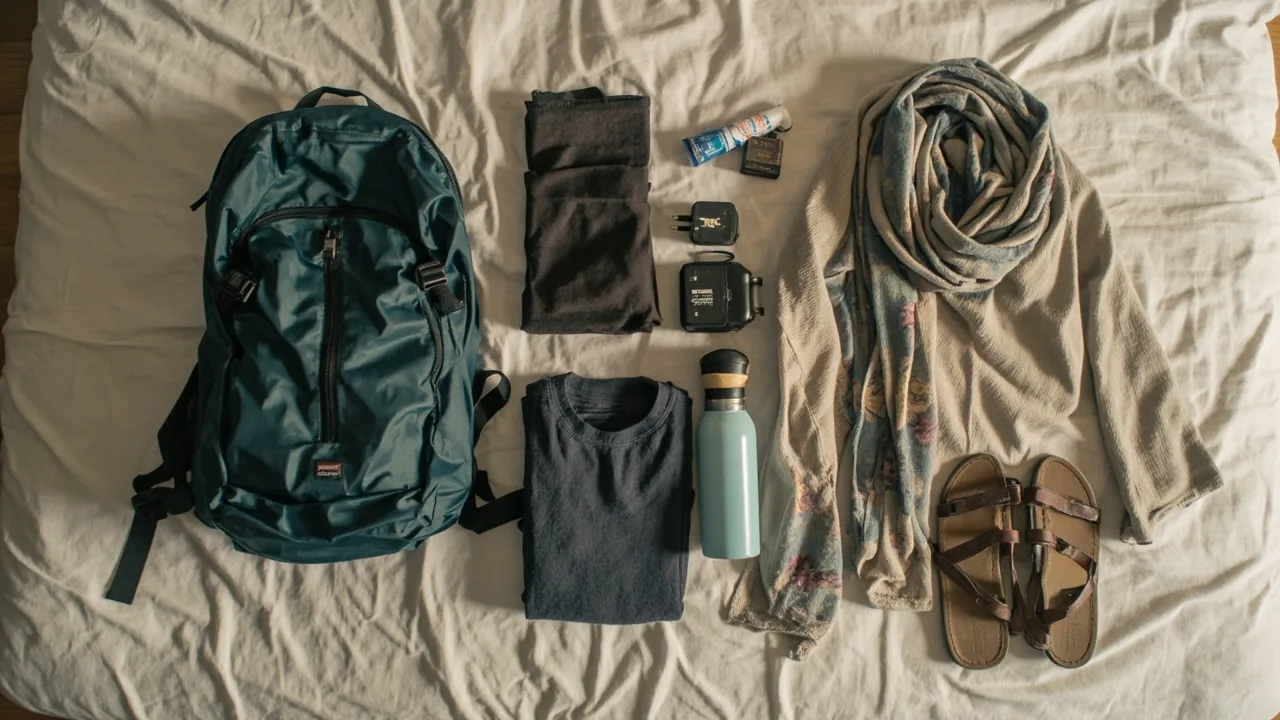
- 1 sarong / cotton scarf (~2 meters, doubles as mosque cover, beach towel, hostel sheet)
- 1 light fleece or hoodie for Cameron Highlands, Genting, and air-conditioned malls (set to 18°C)
- Comfortable walking shoes that can get wet (Merrell, Quechua, Decathlon Forclaz)
- Sandals with back strap (Tevas, Chacos, or the cheap Decathlon Quechua)
- 1 pair of slip-on shoes for hostel showers
Toiletries and Health Kit
The competitive gap this list closes: most packing guides treat toiletries as “bring whatever.” For Malaysia, the medical and health items are non-negotiable. Mosquito-borne dengue is endemic year-round across Malaysia. The CDC and Intrepid’s health advisories both flag Malaysia as a country where prescription medication documentation, travel insurance proof, and dengue prevention items are essential.
Toiletries (travel sizes, all under 100ml for cabin baggage):
- Toothbrush + small toothpaste
- Roll-on deodorant (not aerosol, banned in cabin)
- Solid shampoo bar or small shampoo bottle
- Soap (pack in ziplock to prevent leaks)
- Sunscreen SPF 50+ (reef-safe if you’re hitting Perhentian or Tioman)
- Lip balm with SPF
- Quick-dry travel towel (microfiber)
- Razor + extra blades
- Small pack of laundry detergent sheets for hostel sink-washing
Health kit (the part everyone forgets):
- DEET-based mosquito repellent (20-30% DEET, or 20% Picaridin if you prefer non-DEET). Brands like OFF, Jungle Formula, or the local Malaysian “Mosiguard.” Apply before dusk, reapply every 4-6 hours.
- Mosquito bite relief (hydrocortisone cream, After Bite pen)
- Oral rehydration salts (ORS sachets from any Indian pharmacy, ~₹10 (~$0.10) each). Malaysia’s heat causes dehydration faster than most Indian travellers expect.
- Antimalarials (only if you’re going to Borneo/Sabah deep jungle). Doxycycline is the standard prescription. See a travel doctor at least 2 weeks before departure. West coast cities like KL and Penang do not require antimalarials, but the Health Ministry and CDC still recommend them for inland Sabah and Sarawak.
- Standard OTC meds: paracetamol, loperamide (for traveller’s diarrhea), cetirizine, an antihistamine, ibuprofen, ORS, throat lozenges.
- Band-aids, gauze, medical tape, small scissors (pack scissors in checked bag)
- Prescription medications: carry the original strip AND a copy of the prescription from your Indian doctor. Malaysian customs can ask for proof that your metformin, thyroxine, or anxiety medication is legally yours. Travellers report being detained at KLIA for carrying unlabelled strips.
- Hand sanitizer (60%+ alcohol)
- Wet wipes (individual packs)
- Toilet paper packet (not always stocked at older toilets, especially outside KL)
- Tampons/menstrual products (limited availability in Borneo, common in KL pharmacies)
Safety Alert: Check your government’s official travel advisory before departure. For Indian travellers, the MEA travel advisory page is updated regularly, and Malaysia’s own Immigration Department publishes advisories at imi.gov.my. Generic advisory apps alone won’t cover the regional nuances; border regions of Sabah and Sarawak sometimes carry higher advisory levels than Peninsular Malaysia.
Travel documents and medical proof (mandatory):
- Printed eNTRI or eVISA approval letter (your phone battery can die at immigration)
- Printed return/onward flight ticket
- Printed accommodation booking for first night
- Travel insurance documents with policy number, 24-hour emergency contact, and medical evacuation coverage
- Photocopies of passport, visa, vaccination certificate, and prescription medications (keep one set in luggage, one digital set in cloud storage)
- Vaccination records (yellow fever if coming from a yellow-fever country; COVID-19 vaccination card if you have one)
- 2-4 passport photos (some visa extensions and SIM registrations still ask for them)
Tech and Electronics
Malaysia uses Type G plugs, the same British three-pin as India. If you’re coming from India, your chargers will fit directly. If you have European two-pin chargers, you’ll need an adapter.
Electronics list:
- Phone + charger (Type G works from India)
- Universal adapter (only if you carry Type C European devices)
- Power bank (under 100Wh / 20,000mAh for cabin baggage, larger must go checked)
- Headphones (noise-cancelling if budget allows; hostel dorms are loud)
- E-reader or tablet (long bus rides, jungle treks)
- USB-C and Lightning cables (2 of each)
- Multi-port USB charger (one wall socket, 4 devices)
- Dry bag for electronics during monsoon
- Camera only if you’re serious; phone cameras in 2026 are enough for backpackers
What NOT to bring: laptop unless you work remote. Hostels rarely have secure laptop storage, and you’ll be tempted to leave it in the dorm, which is how laptops get stolen.
Daypack (the 10-15L one)
Your daypack stays with you on buses, in dorms, on day trips. It’s the bag that gets stolen from if anything does. Keep it small, light, and anti-theft if possible.
Daypack contents:
- Passport + printed visa approval (mandatory for police checks in Malaysia)
- Wallet with cash (MYR, not just cards)
- Phone + power bank
- Water bottle (1L minimum, refill at hostel filters)
- Mosquito repellent (always within reach)
- Sunscreen
- Small first-aid kit (band-aids, ORS sachet, paracetamol)
- Rain jacket (always packed, even on clear mornings)
- Sarong (mosque visits, beach, impromptu rain shelter)
- Snacks (Indian travellers miss this; carry biscuits, nuts, energy bars)
Hostel-Friendly Items Most Lists Miss
Two padlocks. Most Malaysian hostels use small combination locks on the lockers (bring a 4-digit one) plus the main dorm door (sometimes keyed). The hostel provides one lock; you need two so your backpack is secured to your bed frame or inside the locker.
Quick-dry towel. Malaysian hostels rarely provide towels, and even when they do, they’re slow to dry. A microfiber towel packs to the size of a fist.
Flip-flops or shower sandals. Hostel bathrooms in older buildings (especially Georgetown heritage shophouses) have questionable drainage.
Earplugs + sleep mask. Geographically, Malaysia’s biggest backpacker hubs are near mosques. The call to prayer at 5:30 AM is part of the experience, and an eye-mask helps if your dorm lights up at midnight from late arrivals.
Small pad of sticky notes + pen. For filling immigration cards on buses (the bus to Singapore, Thailand border runs), hostel registration forms, and SIM card registrations.
West Coast vs East Coast vs Borneo: What Changes
This is where the same packing list fails three different trips.
West Coast (KL, Penang, Melaka, Cameron Highlands, Langkawi):
- Mosques and temples everywhere, modest dress is non-negotiable
- Cameron Highlands drops to 12-15°C at night year-round. Bring one fleece.
- Langkawi is duty-free, no need to pack alcohol
- Rain is mostly afternoon thunderstorms, lightweight rain jacket works
East Coast (Perhentian, Tioman, Redang, Kota Bharu):, for monsoon-window timing across these islands, check the best-time-to-visit Malaysia weather guide before you lock your dates.
- Monsoon season November to February closes most islands. Don’t go then.
- Reef-safe sunscreen recommended at Perhentian marine park
- Sandals + swimsuit as primary footwear
- Stronger mosquito protection, dengue cases higher here than west coast
- Conservative dress in Kota Bharu, Kelantan state enforces stricter Islamic dress code than KL or Penang
- Travellers report that a waterproof dry bag is worth more than a rain jacket here
Borneo (Kuching, Kota Kinabalu, Sandakan, Mulu, Bario):
- Jungle trekking requires proper hiking shoes, not trainers
- Leech socks (you can buy them in Kuching for ~₹355 (~15 MYR or ~$3.68) but supply varies)
- Antimalarials strongly recommended for inland Sabah/Sarawak
- Quick-dry everything, the humidity is worse than Peninsular Malaysia
- Headlamp for Kinabatangan River night walks and Mulu caves
- Insect repellent with higher DEET concentration (30%+)
- Long-sleeve shirts and pants for jungle treks (protection against both sun and mosquitoes)
What You Can Buy Locally (Don’t Pack From India)
Save luggage space by buying these in Malaysia:
SIM card and connectivity: At KLIA or any mall, Hotlink and Celcom tourist SIMs run ₹355 (~15 MYR or ~$3.68) for 7 days with ~5GB data. Your passport is required for registration. If you’d rather land with data already active, Get Nomad eSIM lets you buy a Malaysia data pack before departure.
Toiletries and sunscreen: Watsons and Guardian stores are everywhere in KL and Penang, and prices are competitive with India.
Padlocks and dry bags: Sold at Cameron Highlands souvenir shops and any mall outdoor store.
Sarongs and modest clothing: Can be picked up in Little India KL (Jalan Tun Sambanthan) or Little India Penang (Lebuh Chulia) for ₹237-₹592 (~10-25 MYR or ~$2.46-$6.14).
Mosquito repellent: Local brands work fine and cost less than Indian imports.
Avoid buying in Malaysia: rain jackets (usually low quality, especially in monsoon season) and hiking shoes (limited sizes).
What NOT to Pack (Common Overpacking Mistakes)
- Multiple jeans. One pair, max. They don’t dry in Malaysian humidity.
- Hair dryer / straightener. Hostels rarely provide them; cheap ones available at Watsons.
- Towel that’s not quick-dry. A regular bath towel stays damp and mildews.
- Books. Use Kindle or phone.
- Too many shoes. Two pairs max: walking shoes + sandals.
- T-shirts you’ll feel homesick about. White cotton tees get ruined in Malaysian humidity within 3 washes.
Pre-Departure Checklist (T-7 Days)
- Passport valid 6+ months
- eNTRI or eVISA printed approval (don’t rely on phone at immigration)
- Travel insurance purchased and policy document saved offline
- Prescription medications collected with original packaging and doctor’s letter
- Vaccinations up to date (consult a travel doctor 4-6 weeks before travel for Borneo)
- Flight tickets printed + digital backup
- First-night accommodation booking confirmed
- Bank informed of travel dates (debit/credit card fraud alerts are common)
- Forex card loaded with USD, ready to convert at KLIA
- Indian SIM roaming disabled or international roaming pack activated
- Download offline maps (Maps.me) for areas with poor signal
- Emergency contacts saved offline (Indian embassy in KL: +60-3-2026-7099 (also covers visa extension paperwork; see the Malaysia visa extension rules for Indians before you overstay))
- 2 photocopies of passport and visa, packed separately from original
- Quick-dry towel packed
- Padlocks purchased
- DEET repellent and ORS sachets packed
FAQ
Do I need any specific vaccinations for Malaysia? Routine vaccinations should be up to date (MMR, DTaP, varicella, polio, flu). Hepatitis A and typhoid are recommended by most travel doctors for Southeast Asia generally. Yellow fever vaccination is required only if you’re coming from a country with risk of yellow fever transmission. For deep jungle treks in Borneo, Japanese encephalitis and rabies vaccines are worth discussing with a travel doctor 4-6 weeks before departure.
What’s the dress code at mosques in Malaysia? Shoulders and knees must be covered for both men and women. Women also need to cover their hair. Most major mosques (Masjid Wilayah Persekutuan, Masjid Jamek, Masjid Kristang Melaka) provide free loaner robes, but lines are long during Friday prayers. Carrying your own scarf or sarong saves 20+ minutes of waiting.
Can I bring prescription medication from India? Yes, in original packaging with a copy of your doctor’s prescription. Malaysian customs can detain travellers carrying unlabelled strips, especially psychiatric medication, strong painkillers, or sleeping pills. Limit quantity to your trip duration plus a small buffer.
Is the tap water safe to drink in Malaysia? Generally no, especially outside KL and Penang. Use bottled water (cheap at ₹24-₹47 (~1-2 MYR or ~$0.25-$0.49) for 1.5L), refillable filtered bottles, or hostel-provided filtered dispensers. Ice in restaurants is usually commercially made and safe; street-stall ice cubes can be risky.
What adapter do I need in Malaysia? Type G (British three-pin), same as India. Most Indian phone and laptop chargers will work directly, though some Indian plugs (Type C/D/M) may not seat properly in Type G sockets, check your specific charger before relying on it. If you’re carrying European two-pin devices, bring a Type G adapter.
How much cash should I carry on arrival at KLIA? Carry ₹4,734-₹11,836 (~200-500 MYR or ~$49.11-$122.78) for your first 24 hours (taxi, first meal, SIM card, water). You can exchange at the airport, withdraw from ATM, or use forex card at any Maybank/CIMB ATM in the city. The Indian rupee to Malaysian ringgit exchange rate guide has the current rates.
Do I need travel insurance for Malaysia? Yes. Malaysia has excellent private hospitals but they’re expensive without insurance. SafetyWing covers emergency medical, evacuation, and trip interruption from ~$62/month (~₹5,900) for Indian travellers. Hospital admission without insurance can run ₹50,000 (~$518.23)+ even for a 2-day dengue observation stay.
Subodh’s Take
Most Indian travellers overpack Malaysia by 30%. You’ll see them at KLIA with 25kg checked bags and a week’s worth of toiletries they could’ve bought at Watsons for under ₹2,367 (~100 MYR or ~$24.56). The trick isn’t bringing more, it’s bringing the right specific items: a real rain jacket (not “water-resistant”), DEET repellent in the daypack, a sarong that doubles as mosque cover, beach towel, and hostel sheet, and prescription documentation you don’t have to scramble for at customs.
Skip the universal packing list. Your Indian summer clothes will mostly work. Focus your budget on the four items that matter most for Malaysia: lightweight rain jacket, proper mosquito protection, conservative clothing for religious sites, and a Type G adapter if you’re carrying non-Indian electronics.
