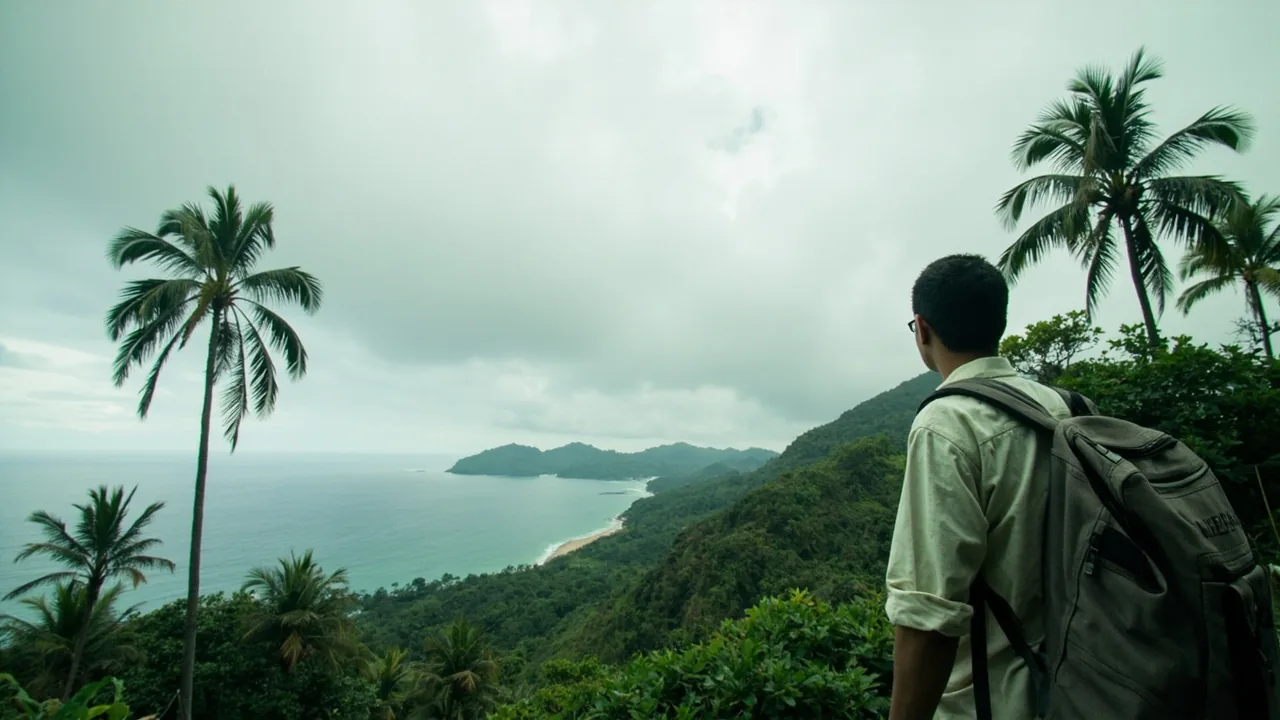
Best Time to Visit Malaysia: Month-by-Month Weather, Monsoon Seasons & Festival Calendar
Malaysia does not have one weather pattern. It has two, running on opposite coasts at opposite times of the year. The mistake first-time travellers make is picking dates that work for Penang and Kuala Lumpur, then flying to the Perhentians or Tioman in the same window and finding the boats cancelled, the dive shops shut, and the islands wrapped in grey for the week. The other classic mistake is booking around Thaipusam or Chinese New Year without realising every hotel on the west coast is triple its normal rate. This guide is built around those two things: the east/west monsoon split, and the festival calendar that drives real prices (not the abstract “shoulder season” advice most blogs repeat).
For currency reference through this article: 1 MYR = ₹23.59 at the time of writing, so 15 MYR for a tourist SIM works out to roughly ₹354 (~$3.67).
Quick Answers
| What | Answer | Price (INR) |
|---|---|---|
| Best months overall (west coast) | December to March | ~₹0 |
| Best months for east coast islands | April to September | ~₹0 |
| Worst monsoon (east coast islands) | November to February | ~₹0 |
| Cheapest flight window from India | March, May, September | ₹18,000 (~$186.84) |
| Most expensive festival window | Chinese New Year (late Jan/Feb) | ~₹0 |
| Tourist SIM (Hotlink 7-day) | Available at KLIA on arrival | ₹353 (~15 MYR or ~$3.67) |
| eVisa fee (eVISA, 30 days) | Apply online before flying | ₹2,119 (~22 USD) |
Subodh’s Pro Tip: Pick your region first, then your dates. Booking east coast dates without checking the monsoon calendar often means paying twice (once in flight change fees, once in lost beach days).
East Coast vs West Coast: The Monsoon Split
Malaysia’s peninsula splits cleanly. On the west, you have Kuala Lumpur, Penang, Langkawi, and the Cameron Highlands. On the east, you have the Perhentian Islands, Redang, Tioman, and the Mersing/Kuantan coastline that ferries to them. These two sides get rain at opposite times of the year.
The southwest monsoon runs roughly late May to September and dumps rain on the west coast. The northeast monsoon runs roughly November to February and shuts down the east coast. There is a small overlap window around March and October when both coasts are workable, but for steady weather you want to be on the side whose monsoon is currently sleeping.
The practical implication: if your itinerary is KL, Penang, maybe Langkawi, almost any month works, though December to February is the driest. If your itinerary includes the Perhentians, Tioman, or Redang, you need to be there between roughly April and September or risk cancelled boats and shut dive shops. Travellers booking a Malaysia-Singapore combo from India should treat Singapore as west-coast equivalent (it sits south of the peninsula but follows a similar dry-window pattern, with February through April the driest).
For more on building a two-country itinerary, see our Malaysia and Singapore backpacking guide.
Month-by-Month Weather Breakdown
January
Wet on the east coast, dry on the west. Langkawi and Penang are at their peak (cool evenings, low humidity, calm seas for the ferry to Koh Lipe if you’re extending into Thailand). Chinese New Year preparation starts mid-month, and accommodation in KL, Penang, and Singapore climbs steadily toward the festival.
February
The worst month on the east coast. Boats to the Perhentians rarely run, Tioman dive shops close, and the rains are persistent. On the west coast it is the dry season’s best month. Chinese New Year itself falls in late January or early February depending on the lunar calendar, so February 2026 in particular has heavy festival demand carry over into the first week.
March
Transitional month. The east coast starts opening up by late March (Perhentian boat services typically resume by the second or third week, weather permitting). The west coast stays dry. This is one of the cheapest windows from India: airlines keep fares low after the CNY bump, and the climate is workable on both coasts.
April
The east coast season fully opens. Perhentians and Tioman come alive, dive shops restart, beach bungalows reopen. The west coast still gets afternoon showers (pre-monsoon humidity), but travel is unaffected. Thaipusam falls on the full moon in the Tamil month of Thai (typically January or February), but check the calendar before booking around Hindu festival dates if you are heading to Batu Caves.
May
Shoulder month. East coast is good, west coast is starting to get wetter. Airfares from India are usually cheaper mid-month. School holidays in Malaysia and Singapore cause a domestic travel bump but don’t affect Indian-origin visitor prices much.
June, July, August
East coast peak season. Perhentians and Tioman are at their busiest (book boats and accommodation a few days ahead). The west coast gets regular rain, mostly in heavy afternoon bursts that don’t ruin plans but do limit beach time. This is the right window if your trip is mostly island-focused.
September
The other shoulder month. East coast is still open but starts tapering late in the month. West coast rain eases. Airfares from India are often at their lowest here, which makes it a strong pick if you’re flexible on which coast to anchor in.
October
Transitional both ways. Short tropical storms can hit either coast, with windows of clear weather between. Not the cleanest time to plan a beach-heavy trip, but workable for KL and Penang city breaks.
November
The east coast monsoon starts. Most islands wind down operations by mid-month. West coast rain begins tapering into its dry season. Airfares from India start inching up toward the December peak.
December
West coast high season begins. Cool weather, low rainfall, Langkawi at its busiest. Singapore is also in its wet phase but the rains are short and predictable, usually late afternoon. Year-end holidays mean flights from India cost more.
Festival Calendar That Drives Real Prices
Three festivals move hotel rates in Malaysia more than any others. If you can avoid them, you’ll save 30 to 60 percent on accommodation in the affected cities.
Chinese New Year (late January or February): 15 days of celebrations. The week before and the week after, hotels in KL, Penang, Johor Bahru, and Singapore are full and priced 2x to 3x. If your dates have flexibility, this is the window to avoid.
Hari Raya Aidilfitri (March 2026): End of Ramadan. KL in particular empties out as Malaysians travel to hometowns, but accommodation in KL itself often rises as domestic tourism peaks. Outside KL, smaller towns see hotel rates climb.
Deepavali (October or November): Mostly affects Indian community areas and Hindu temple towns. Batu Caves gets crowded the week before, but accommodation in mainstream tourist zones is not affected.
Thaipusam (January or February): Batu Caves in Selangor becomes one of the most-visited pilgrimage sites in Southeast Asia, with over a million devotees. Accommodation around Batu Caves and central KL climbs.
For an Indian traveller specifically, Thaipusam and Deepavali are worth aligning with if you want to experience them, while Chinese New Year and Hari Raya are worth avoiding if you want cheaper rooms.
Cheapest Flight Windows from India
Direct flights from Indian metros (Bengaluru, Chennai, Mumbai, Delhi) to Kuala Lumpur typically run between ₹15,000 (~$155.70) and ₹28,000 (~$290.64) round trip on low-cost carriers like AirAsia and IndiGo. The cheapest windows are:
- Mid-March to early April: post-CNY, pre-summer
- May (avoiding the last week): low demand, school holidays haven’t started
- September: shoulder season, low demand
The most expensive windows are the two weeks around Diwali (October/November) and the two weeks around Christmas through Chinese New Year. Tuesday and Wednesday departures are usually cheaper than Friday and Sunday. Book 4 to 8 weeks ahead for the cheapest fares; last-minute AirAsia deals sometimes appear 2 to 3 weeks out but cannot be relied on.
Malaysian Visa for Indians (2026)
Indians need a visa before flying. There is no visa on arrival. Two options:
eNTRI (free, 15 days, single entry): Apply at entri.petra.gov.my at least 48 hours before flying. Free of charge but limited to 15 days, single entry, and specific entry points. Works for most backpackers doing a quick KL + Penang trip.
eVISA (paid, 30 days, single entry): ₹2,119 (~22 USD). Apply at the same portal. Better for trips longer than 15 days or with more than one entry.
Both are processed online, the PDF is emailed, and you print it before flying. Immigration at KLIA scans the printout. For extensions, see our Malaysia visa extension guide.
Connectivity: SIM Card and eSIM on Arrival
The fastest option at KLIA is the Hotlink/Celcom counter in the arrivals hall. The 7-day tourist SIM is ₹353 (~15 MYR or ~$3.67) and includes around 5 GB of data, which is enough for two weeks of Maps, Grab, and WhatsApp if you are not streaming. Both Hotlink and Celcom have airport counters open for most flight arrivals, and the activation takes about ten minutes.
If you want to arrive with data already on, an eSIM from Nomad is the alternative. You buy online before flying, scan a QR code on arrival, and the line activates within minutes, no airport queue, no passport handover.
For a deeper breakdown of physical SIM vs eSIM options and which networks work best in the Cameron Highlands or on Borneo ferries, see our packing list essentials for Malaysia.
Getting from KLIA to Kuala Lumpur
Two airports serve KL: KLIA (main international) and KLIA2 (the AirAsia hub for low-cost carriers). Both are around 50 km south of the city centre.
| Option | Cost | Duration | Best for |
|---|---|---|---|
| KLIA Ekspres train | ₹1,296 (~55 MYR or ~$13.45) | 33 min | Fastest, no traffic |
| Airport taxi (fixed fare) | ₹1,649-₹2,356 (~70-100 MYR or ~$17.12-$24.46) | 45 to 60 min | Late arrivals, groups |
| Grab (ride-hail) | ₹1,414-₹2,120 (~60-90 MYR or ~$14.67-$22.01) | 45 to 75 min | Cheaper than taxi, surge risk at peak hours |
The KLIA Ekspres runs every 20 to 30 minutes from around 5 am to midnight. From KL Sentral station you can connect to LRT, MRT, or monorail lines into the backpacker areas (Chinatown, Bukit Bintang).
Getting Around KL: Transport Basics
KL has proper public transport and Grab works citywide. A single LRT or MRT trip is ₹24-₹118 (~1-5 MYR or ~$0.24-$1.22) depending on distance. A short Grab ride within the city is ₹118-₹353 (~5-15 MYR or ~$1.22-$3.67). For longer routes to Batu Caves or outside the city centre, Grab is the easiest.
A few specifics worth knowing:
- Touch ‘n Go card: A reusable stored-value card works on every LRT, MRT, monorail, and most buses. Buy one at any station, top up at convenience stores, and refund the balance before flying home.
- Grab vs taxi: Airport queues and tourist-heavy areas have fixed-fare taxi counters that sometimes refuse short trips. Grab bypasses this.
- Buses: Cheap and useful for Penang-to-Cameron Highlands or KL-to-Melaka routes. Book on 12go a day ahead.
KL to Penang and the West Coast Route
The classic Malaysia route from India is KL to Penang by bus or train. Both are scenic and cheap.
| Route | Bus (12go) | Train (ETS) | Duration |
|---|---|---|---|
| KL to Penang | ₹825-₹1,296 (~35-55 MYR or ~$8.56-$13.45) | ₹1,414-₹2,592 (~60-110 MYR or ~$14.67-$26.90) | 5 hours |
| KL to Cameron Highlands | ₹589-₹942 (~25-40 MYR or ~$6.11-$9.78) | Not available | 3.5 hours |
| Penang to Langkawi (ferry) | ₹1,649 (~70 MYR or ~$17.12) | Not available | 2.5 to 3 hours |
The ETS train is comfortable and runs frequently. Buses on 12go are fine but slower in traffic.
East Coast Ferries and Boat Seasonality
This is the part most generic Malaysia blogs get wrong. The east coast ferry and boat services are seasonal:
- Perhentian Islands: Ferries from Kuala Besut run roughly March to late October. Out of season, boats stop entirely.
- Tioman: Ferries from Mersing run roughly February to November, with weather-related cancellations possible May to September.
- Redang: Similar to Perhentian, March to October.
If your dates fall outside these windows, do not book non-refundable accommodation, as refunds can be difficult to obtain once boats cancel.
For day-of decisions, ask at your hostel, since staff see which boats are moving. Bring cash for boats, since card terminals often fail on small island operators.
Money: Cash, Forex Cards, and UPI
Malaysia is more cash-heavy than Singapore, less so than Thailand. Cards are widely accepted in malls, chain restaurants, and Grab, but smaller eateries, night markets, and island shops are often cash-only.
UPI: Not yet accepted in Malaysia in 2026. Some merchants in KL have begun piloting it, but don’t rely on it for your main spending.
Forex cards: Work at most ATMs. The two Indian-friendly options are HDFC ForexPlus and ICICI Travel Card. ATM withdrawal fees run ₹100-₹250 (~$1.04-$2.60) per transaction depending on the bank.
Cash: Bring enough MYR for the first two days. Airport counters give poor rates. KL city centre money changers in Bukit Bintang and Chinatown offer rates within 1 percent of the mid-market rate.
For current rate reference, see our INR to MYR conversion guide.
Indian and Vegetarian Food in Malaysia
Malaysia is one of the easier Southeast Asian countries for Indian vegetarian travellers. The Indian diaspora is large, banana leaf restaurants are everywhere on the west coast, and even small towns have at least one South Indian vegetarian spot.
In KL, Brickfields (Little India) is the hub. In Penang, the George Town area around Lebuh Chulia and Lebuh Pasar has multiple South Indian and North Indian restaurants. For a fine-dining option on Orchard Road if you are extending to Singapore, Sahebs is one option cited by travellers for Punjabi and North Indian cuisine.
Strict vegetarians should ask about egg usage in noodles and roti. Most South Indian places have a clear veg-only menu. North Indian places sometimes use ghee that may contain traces of animal fat, so specify “vegetarian only” when ordering.
For more on finding Indian and halal food options, see our Indian vegetarian restaurants in KL and Penang and our halal food guide for Muslim travellers.
Safety Notes for Malaysian Travel
Malaysia is generally safe for Indian travellers. The most common issues are petty (pickpocketing in crowded markets, Grab fare surges at airport, taxi touts at budget hotels).
Two things worth checking before flying:
- The official Indian MEA travel advisory at mea.gov.in for the latest situation.
- Your own government’s standard precautions for the regions you are visiting.
For solo female Indian travellers specifically, see our solo female safety guide for Malaysia.
Packing List Essentials
Bring light cotton, a rain layer (not just an umbrella, the rains come sideways), and modest covering for temple visits (Batu Caves, mosques, Thean Hou Temple). Sandals work for most of the country, but bring one pair of closed shoes if you plan to hike Cameron Highlands or Taman Negara.
For a complete packing checklist, see our Malaysia packing list.
Subodh’s Take
If you only have two weeks and your plan is KL + Penang + maybe Langkawi, almost any month works except the worst of Chinese New Year week. Pick March or September if you want cheaper flights. If the Perhentians or Tioman are non-negotiable, book April to September and accept that west coast weather will be wetter during that window. Travellers who ignore the monsoon split end up with the worst of both coasts and blame Malaysia for being rainy, when they just picked the wrong month for the wrong beach.
FAQ
When is the cheapest time to fly from India to Malaysia? Mid-March, May, and September are the cheapest fare windows. Mid-week departures (Tuesday, Wednesday) are cheaper than weekends. Book 4 to 8 weeks ahead.
Which monsoon affects the east coast of Malaysia? The northeast monsoon, running roughly November to February. East coast islands close during this window.
Can I do Malaysia and Singapore in one trip? Yes, and many Indian travellers do. February to April is the dry window for both. Singapore is around 5 hours by bus from KL, with frequent departures.
Do I need a visa before flying from India? Yes. Indians cannot get a visa on arrival. Apply for eNTRI (free, 15 days) or eVISA (₹2,119 (~22 USD), 30 days) at entri.petra.gov.my before flying.
Is UPI accepted in Malaysia? Not reliably in 2026. Some KL merchants are piloting it, but bring a forex card plus cash.
What is the best month for Penang specifically? December to February. The west coast is at its driest, humidity is lower, and the rains are minimal.
Can I extend my Malaysian visa after arriving? Yes, but only the 30-day eVISA can be extended once for another 30 days at an immigration office. The 15-day eNTRI cannot be extended; overstaying results in a fine and a black mark on future applications. Details in our visa extension guide.
