Bagan Night Market 2026: What to Eat, Buy & Expect After Dark
Subodh’s Pro Tip: Verified against the official Myanmar e-Visa portal (evisa.moip.gov.mm) on 2026-07-18. Myanmar’s safety situation shifts, so cross-check the MEA advisory (mea.gov.in) and your government’s latest travel notice within 7 days of flying. For related planning, see our guide on Sea Backpacking Hub.
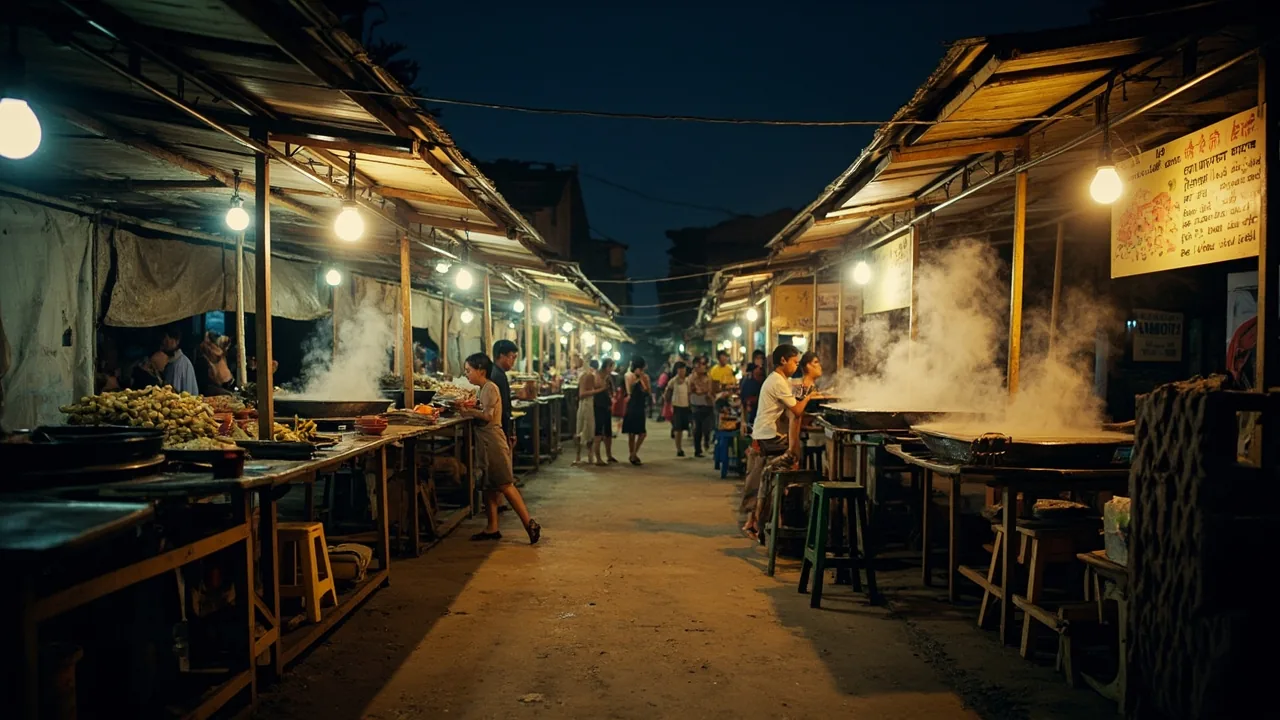
The Bagan night market, locally called Nyaung U night market or ညစျေးတန်း, is not Bangkok’s Chatuchak and it is not Chiang Mai’s Sunday Walking Street. It is a single street in Nyaung U, about 15 minutes by e-bike from Old Bagan, that fills with grills, oil lamps, and souvenir stalls from about 5:30 pm until the last vendor packs up around 10 pm. The vibe is small-town Burmese: kids running between plastic tables, an old couple arguing in Bamar behind a tea-leaf salad stand, monks walking home with orange robes glowing under the bulbs. It is the most local, least Instagrammed evening in the Bagan region, and for an Indian backpacker it is one of the cheapest, easiest nights out anywhere in Myanmar. You may also find Thingyan Water Festival Guide Complete Myanmar New Year Celebration Handbook useful for this trip.
This guide tells you exactly when to show up, what to eat, what to skip, and how to read the market after dark without walking into a bad deal or a worse situation.
Quick Answers
| What | Answer | Price (INR) |
|---|---|---|
| Opening time | Daily ~5:30 pm to 10 pm; food stalls peak 6:30 pm to 8:30 pm | Free entry |
| Best food to try | Mohinga, tea leaf salad, samosa-style snacks, grilled skewers, fresh sugar-cane juice | ₹120 (~$1.24) to ₹400 (~$4.15) |
| Typical meal budget | 2 dishes + a drink per person | ₹250 (~$2.59) to ₹400 (~$4.15) |
| Transport from Old Bagan | E-bike or taxi, 15 min | ₹150 (~$1.55) to ₹300 (~$3.11) |
| Bargaining room | Souvenirs only, never food; 20 to 40 percent off first quote | Free |
The Night Market Scene, Honestly
Bagan is not a party town. There is no Khao San Road, no Pub Street, no full-moon anything. After sunset, the only thing that “happens” in this part of central Myanmar is the night market on the main road in Nyaung U, plus a small cluster of bars and beer stations dotted around the Nyaung U-Old Bagan-New Bagan triangle. Travellers report two distinct evening options: eat and wander the market, then grab a beer somewhere with a view, or skip the market entirely and watch sunset from a pagoda followed by a quiet drink at a hotel.
Across multiple online trip reports, most Indian backpackers find the night market genuinely good, not because the food is claimed to be better than Yangon street food, but because the combination of cheap Burmese food, low-pressure souvenir shopping, and the absence of aggressive touts makes it a relaxing hour or two. The market sits on a single short street, so you can walk the whole thing in 10 minutes and then double back to eat at whatever smelled best.
The bars around Bagan are a different story. Bagan Zay in Nyaung U has a 4.4 rating and pulls a mix of backpackers and locals for rum-based cocktails, HTI is a livelier dance-leaning spot, and Thu Zar night club is the closest thing Bagan has to a proper club if you want a louder night. The Erawati Raft Floating Bar Cafe on the Irrawaddy is named by some travellers as a venue to consider for a sunset drink on a floating platform.
The market itself is not a “see-and-be-seen” place. It is a working Burmese evening market that tourists happen to also shop at. Go with that expectation and you will have a great time. Go expecting Chatuchak, and you will be underwhelmed.
What to Eat (And What Is Worth It)
Food is the reason to come. Burmese street food at the Bagan night market is cheap, fresh, and mostly meat-heavy, so if you are vegetarian, the situation is more limited than in Yangon but workable.
Mohinga is a fish-noodle soup with lemongrass, banana stem, and crispy fritters on top. The stalls with the longest Burmese queues are the right ones; tourists cannot fake their way past locals on this one.
Tea leaf salad (lahpet thoke) is the other essential. Fermented tea leaves tossed with peanuts, sesame, dried shrimp, tomato, garlic, and lime. Travellers who try it for the first time often note the complexity of flavours.
Grilled skewers of pork, chicken, beef, or fish come on bamboo sticks for 500 to 1,500 MMK each. Order a mix and eat them with a cold Myanmar beer.
Samosa-style snacks show up at several stalls, sometimes labelled “Burmese samosa” and sometimes as fried split-pea patties. For Indian travellers these are familiar and satisfying, at low single-digit baht prices.
Shan-style noodle salads, fried rice, and tofu skewers round out the menu. Most stalls display everything in big trays, so point at what you want and they will plate it.
For drinks, fresh sugar-cane juice and local milk tea with condensed milk are common. Myanmar Beer and Mandalay Beer are the two main lagers sold at the market, which is more than local shops but reasonable for the setting.
For sit-down Burmese food in the area outside the market, Top Star Restaurant Bagan and TS Bagan Restaurant are two sit-down spots travellers mention for traditional Burmese plates near the market. Top Star is mentioned by travellers for tea-leaf salad and a pagoda view. Bagan Beach Food Garden does a riverside seafood barbecue if you want something heavier and tourist-friendly.
Vegetarian and Indian-Food Backup
Strict vegetarians and anyone missing dal-chawal are not totally stranded in Bagan. Two spots worth knowing:
- The Moon Vegetarian Restaurant (4.4) is a small local place serving Burmese vegetarian dishes in a clean setting.
- **Khaing Shwe Wha Vegetarian Restaurant is also mentioned by travellers as a plant-based Burmese food option in Nyaung U, and for trek stopovers on the way up, our kalaw inle lake hsipaw trek best season guide helps with the broader Shan State route.
Both are proper sit-down places, not market stalls, and they understand Indian-style vegetarian requests. Neither is fully Indian, so you will not get paneer butter masala, but you will get lentil-based Burmese curries, vegetable fritters, and rice that will satisfy a hungry vegetarian after a day of pagodas.
Do not expect a Jay Fai-style “anything you want” experience. Burmese kitchens often share oil between meat and veg dishes, and Burmese vegetarianism is not always vegan. If you are strict-jain or strict-vegan, say so plainly.
What to Buy (And What Is a Tourist Trap)
The market runs about 80 to 120 stalls, mostly souvenirs aimed at tourists, with a few food and household goods stands tucked in. Here is the honest read.
Worth buying:
- Lacquerware. Black and red lacquer bowls, boxes, and ornaments are common at the market. Quality varies by stall.
- Longyi, the traditional sarong-style wrap. A good cotton longyi is sold by weight of fabric and craftsmanship: cool, durable, and Burmese in a way no fridge magnet is.
- Thanaka wood and paste. Thanaka is the yellow cosmetic paste Burmese people smear on their faces. A small block of the wood is a common souvenir that weighs nothing.
- Lacquered fans, small wooden elephants, and hand-painted betel boxes. These are cheap, light, and packable.
Skip or be careful with:
- “Antique” stones, Buddha heads, and anything claiming age. Myanmar has strict laws on antiquities, and the export of pre-1800 religious items is illegal even if a vendor swears they will ship it. Travellers have lost real money at customs over this.
- Rubies and jade. Myanmar produces world-class stones, but the night market is the worst place to buy them. The fakes outnumber the real stones 100 to 1, and even a real small stone here is over-priced.
- Factory-made sand paintings. The market has rows of identical sunset-over-pagoda canvases. They are pretty, but they are not Bagan.
Bargaining rules: Food, drinks, and any price posted on a board is fixed. Souvenirs are not. Offer 20 to 40 percent below the first quote, smile, walk away if the vendor does not drop, and expect to settle somewhere in the middle. The market is small enough that word travels, so do not haggle aggressively or you will get a hard time the rest of the night. Bargaining should feel friendly, not adversarial.
Transport To and From the Market
The market is in Nyaung U, the modern town that grew up around the bus station and airport. Old Bagan (the archaeological zone with the pagodas) is about 15 minutes north, New Bagan is a planned town about 10 minutes south-east. E-bike is the standard way to get around.
If you are staying in Old Bagan, the most common routes are:
- E-bike rental from your guesthouse.
- Taxi from your hotel. Drivers in Bagan quote fares on a per-ride basis from Old Bagan to the market. Confirm the price before getting in. There is no Grab in Bagan.
- Bicycle. Possible but not recommended after dark, since several stretches of the Old Bagan road have no street lights, and a flat tyre far from your guesthouse would be a serious problem.
The return trip is the part to plan. By 9:30 pm, the e-bike parking area at the market is full, and the ride back to Old Bagan along the main road is unlit in patches. Stick to the main road, ride with another market-goer if you are alone, and avoid cutting through temple grounds at night. Most hotels in Old Bagan are used to guests coming back late and will hold the gate open if you call ahead.
Should You Combine This With a Pagoda Sunset?
Yes, and this is honestly the best way to plan the evening. The classic Bagan day is sunrise at a pagoda, temple-hopping by e-bike until mid-afternoon, a 4 pm sunset from a different pagoda, then a 20-minute ride to the bagan night market for dinner. Travellers consistently say the market at 6:30 pm, after the dust and heat of the day, hits differently. You are tired, slightly sun-drunk, and the food tastes better.
A few notes on the sunset part of this plan: most popular pagodas charge a government archaeological-zone ticket that covers the whole region for several days; verify the current MMK price at your guesthouse or the official Myanmar tourism portal on arrival, as fees are revised periodically. Get to your chosen pagoda by 4:30 pm at the latest in high season. Do not climb pagodas that have “no climb” signs; the local enforcement has been getting stricter, and travellers have occasionally reported being stopped by guards for climbing restricted structures; carry your archaeological-zone ticket and your passport to avoid delays.
Night-Time Safety: What Indian Travellers Should Know
Bagan is a small, sleepy, low-crime place. Thefts are rare and violent crime against tourists is rare. That said, there are a few things to be careful of, and a few things to know about Myanmar more broadly in 2026.
Safety Alert: Myanmar’s overall safety situation in 2026 is variable. Several regions outside the main tourist corridor have seen armed conflict. The Bagan-Nyaung U-Mandalay-Yangon axis is generally considered lower-risk, but the situation changes. Before flying, check the MEA travel advisory (mea.gov.in) and the official Myanmar tourism information. Re-check the day before you fly.
Specific things to watch for at the night market:
- The “closed today” beer scam. A friendly local at a bar tells you the market is closed, the “real” market is somewhere else, or your e-bike has been moved. None of this is true. Stay with the visible market street, and walk your e-bike to where you parked it rather than taking a stranger’s word.
- Currency confusion. Some vendors, especially around tourist-heavy stalls, quote in USD and round aggressively. Have local kyat ready. The official rate and the black-market rate diverge significantly, and you want to be paying in kyat.
- Scooter sobriety. Bagan’s roads are dark, the pavement is patchy, and there are no tuk-tuks. The easy way to get hurt here is to ride your e-bike back to the hotel after four Myanmar Beers. Walk the e-bike, or take a taxi. E-bike accidents are commonly reported as a frequent injury in Bagan.
- Solo women at the market. Bagan’s market is family-friendly and harassment is rare, but the bar scene after 10 pm is a different crowd. If you are a solo female traveller, get a taxi back to your hotel rather than walking or e-biking alone after 11 pm.
Local Rules and Etiquette
Myanmar is a Buddhist-majority country, and Bagan is the most visited Buddhist site in the country. The rules are not complicated, but they are real.
- Shoes and socks off at every pagoda, no exceptions. Carry a small plastic bag for them.
- Shoulders and knees covered at active religious sites. A longyi solves both problems and doubles as a souvenir.
- Do not pose with your back turned to a Buddha statue for photos, and do not climb on Buddha images.
- The first and last days of the Burmese lunar month (Sabbath days) are dry days in some regions. Alcohol can be harder to find on these days, and some restaurants quietly stop serving. Ask your guesthouse about local rules.
- Curfew: there is no nationwide tourist curfew, but some regions have local movement restrictions that have changed. Check with your hotel on the day.
Common Mistakes Indian Travellers Make at the Bagan Night Market
- Showing up late expecting a full market. The food peak is 6:30 to 8:30 pm. Plan the market before your drink, not after.
- Not carrying small kyat notes. The 1,000 MMK note disappears fast. Bring a stack of 1,000s and 5,000s. Vendors will sometimes “not have change” for a 10,000 MMK note on a 2,000 MMK purchase, which is a soft way of charging you more.
- Eating at the first stall you see. The market is short, and the Burmese-local stalls (where you see Burmese families eating) are almost always better and cheaper than the stalls with English menus at the entrance.
- Combining sunset, market, AND a bar crawl. Bagan is small but spread out, and after-dark transport is not Grab. Pick two, do them well, and head back.
- Leaving the e-bike lights off for “atmosphere.” Turn the lights on. Travellers report the Bagan-Old Bagan road at 9 pm is the single most common spot for e-bike injuries involving tourists.
Where to Stay If the Market Is Your Main Night Out
If you are weighing a Yangon stop on the way in or out, our best rooftop bars yangon guide covers where to drink with a city view, and the broader yangon city map myanmar piece helps with orienting yourself in the capital before heading north to Bagan.
If the night market is the centrepiece of your Bagan evening, stay in Nyaung U or New Bagan rather than Old Bagan. Nyaung U is a 5 to 10 minute walk to the market, and New Bagan is a 10 minute e-bike ride. Old Bagan is more atmospheric but you are paying 15 minutes of e-bike every evening.
For dorm beds in the Bagan region, the going rate is roughly ₹500-₹1,200 (~$5.18-$12.44) per night, depending on whether you want a basic fan dorm or an en-suite setup. A few hostels in Nyaung U and New Bagan run sunset tours that end at the market. Ask at reception when you check in.
If you would rather stay in Old Bagan for the views and tolerate the ride, that is also fine. Just plan your evening so you are not riding the e-bike back at 10:30 pm on a dark road with no headlights.
FAQ
Is the Bagan night market safe for solo female travellers? Yes, the market itself is family-friendly and well-lit. After 10 pm, take a taxi back to your hotel rather than walking or e-biking alone. The bar scene after hours is a different crowd.
What time does the Bagan night market open? Stalls start setting up around 5 pm. Most food stalls close by 9 pm, and the market winds down by 10 pm. The market runs every evening, including weekends and public holidays.
Can I pay with USD or by card? No. Cash in Myanmar kyat is required at the night market. Some souvenir stalls may take clean, unmarked USD bills but at a poor rate. Carry small kyat notes and pay in kyat.
Is there vegetarian food at the market? Limited but possible. Look for tea leaf salad (ask for “no shrimp”), Shan tofu, and fried vegetable fritters. For a proper vegetarian sit-down meal, The Moon Vegetarian Restaurant and Khaing Shwe Wha Vegetarian Restaurant in Nyaung U are the two reliable options. For a wider Myanmar read, see our myanmar hidden gems hpa an mrauk u golden rock roundup.
Should I bargain at the Bagan night market? Yes, but only on souvenirs. Food and drink are fixed price. Start at 20 to 40 percent below the first quote, smile, and be ready to walk away. Aggressive bargaining will get you a hard time in a market this small.
Is it worth combining the market with a sunset pagoda? Yes, that is the most efficient evening in Bagan. Sunset at a pagoda by 5:30 pm, market by 6:30 pm, back to the hotel by 9:30 pm. Travellers consistently say this combination works better than either alone.
Do I need a guide for the night market? No. The market is a single short street, easy to navigate, and most stalls are used to tourists. A guide is only useful if you want help with the local food identification, and even then pointing and asking works.
