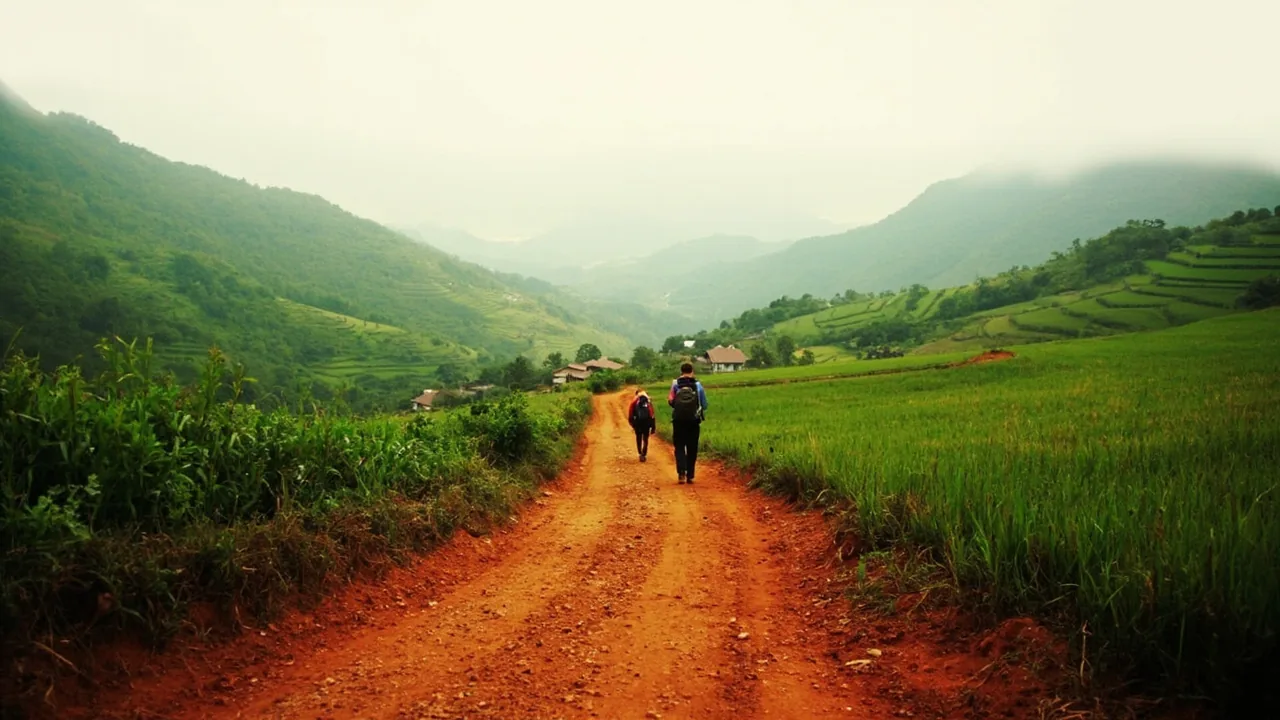
Kalaw to Inle Lake & Hsipaw Trek: Best Season, Routes & Costs (2026 Guide)
The Kalaw-to-Inle and Hsipaw treks are Myanmar’s two classic multi-day hikes, and the right month matters more here than almost anywhere else in Southeast Asia. October through February is the window: cool nights, dry trails, tea-stay homestays running, and the Shan highlands visible instead of buried in fog. Go in June or July and you will spend half your trek ankle-deep in mud with leeches and no view. Here is the real picture, month by month, with what each trek costs an Indian backpacker in 2026. For related planning, see our guides on Sea Backpacking Hub and Monsoon Travel Guide for Indian Backpackers June October Deals Trends Tips.
Quick Answers
| What | Answer | Price (INR) |
|---|---|---|
| Best trekking months | October to February | , |
| Kalaw-Inle trek length | 2-3 days (standard) | , |
| Kalaw-Inle trek cost | 35,000-45,000 MMK | ₹1,200-₹1,500 (~$12.46-$15.57) |
| Hsipaw trek length | 2-3 days | , |
| Hsipaw trek cost | 40,000-55,000 MMK | ₹1,400-₹1,900 (~$14.53-$19.72) |
| Myanmar e-Visa fee | ₹4,817 (~50 USD) | ₹4,826 (~$50.09) |
Month-by-Month Breakdown
| Month | Weather | Crowds | Cost Level | Verdict |
|---|---|---|---|---|
| January | Cool, dry, clear skies | High | Peak (₹₹₹) | Best visibility, busiest trails |
| February | Warm, dry, hazy late | Medium | Peak (₹₹₹) | Still good, dust builds toward month-end |
| March | Hot, dry, pre-monsoon haze | Low | Shoulder (₹₹) | Trails dusty but doable |
| April | hot (35°C+), haze | Low | Shoulder (₹₹) | Hot mid-day, tea-stays fine |
| May | Pre-monsoon rain, humid | Low | Low (₹) | Hit-or-miss, some operators pause |
| June | Heavy rain, leeches | low | Low (₹) | Skip unless you like mud |
| July | Heavy rain, fog, leeches | low | Low (₹) | Skip |
| August | Heavy rain, occasional breaks | Low | Low (₹) | Skip |
| September | Rain easing late month | Low | Shoulder (₹₹) | Risky, late-month windows work |
| October | Cool, dry returning | Medium | Shoulder (₹₹) | Best value month, fresh trails |
| November | Cool, dry, clear | High | Peak (₹₹₹) | Peak season opens |
| December | Cool nights, dry days | High | Peak (₹₹₹) | Coldest month, pack layers |
Subodh’s Pro Tip: October and November are the sweet spot. November brings full peak-season conditions but October has the same weather with 30-40% lower hostel rates around Inle and Kalaw, and the trails feel quieter before the European high season. You may also find Visiting Myanmar in June From India Weather Crowds Prices What to Expect useful for this trip.
Kalaw to Inle Lake Trek: What You Are Walking Into
The classic route starts in the small hill-town of Kalaw (around 1,320 m) and ends at the edge of Inle Lake after 2 or 3 days on foot. Most operators run a 3-day, 2-night version, sometimes compressed to 2 days. Distance is roughly 50-60 km depending on the variant. See also: Visiting Myanmar in July Weather Crowds Prices Travel Tips.
Day one is a descent through pine forest and patchwork farmland, with the trail often narrow and rocky. Day two crosses the Pa-O and Shan village belt, where you stay in a family homestay (tea-stay) on a raised wooden platform. Day three enters the floating-garden zone near Inle, usually finishing at a jetty where a longtail boat meets you for the final leg into Nyaung Shwe or Inle village proper. For related planning, see our guide on Myanmar Visa for Indians Fees Processing Time Guide.
Difficulty: moderate. Anyone who has done a Himachal day-hike can handle it. The challenge is not elevation, it is the trail surface when wet. October-February the path is hard-packed and fast. June-August it turns into clay. The leech situation is real but overstated by travel forums; in dry season you will not see one. In wet season you will.
Safety Alert: Myanmar’s safety situation is highly variable. Before booking any trek, check the Indian MEA travel advisory at mea.gov.in and the Myanmar Ministry of Hotels & Tourism’s current notices. The Shan State areas around Hsipaw have seen periodic localised tensions. Most Indian travellers complete these treks without incident, but the situation can change, and your decision to go should be a current one, not one made from a guidebook.
Hsipaw Trek: What It Adds
Hsipaw is the second major trek, sometimes called the “real” Myanmar trekking route because it goes deeper into Shan State and gets fewer tourists than the Kalaw-Inle circuit. The town of Hsipaw sits on the Dokhtawady River and the treks from here typically run 2-3 days, looping through Palaung, Lisu, and Shan villages before returning to town.
The terrain is more varied than Kalaw-Inle: river valleys, hill-tribe farm terraces, forest sections, and small monasteries. You will see fewer other trekkers, and the homestays feel less rehearsed. Difficulty is similar, moderate, with one or two steeper ridge climbs that beginners find challenging but not dangerous.
Cost is slightly higher than Kalaw-Inle because fewer operators run the routes and group sizes are smaller. A 3-day Hsipaw trek with a licensed guide runs 45,000-55,000 MMK including homestay accommodation and meals. Add transport to and from Hsipaw (overnight bus from Mandalay or Yangon) and your total is closer to 60,000-75,000 MMK all-in.
Permit-wise, neither trek requires a special trekking permit as of mid-2026, but you must carry your passport and your e-Visa printout at all checkpoints. Some Hsipaw-area routes pass near military or ethnic-army controlled zones; your guide will know which loops are currently open. Do not freelance these routes without one.
Kalaw-Inle vs Hsipaw: Which One to Pick
Pick Kalaw-Inle if it is your first multi-day trek in Myanmar, you want the option to finish at Inle Lake and stay on (which most Indian travellers do, given Inle’s food and boat-tour scene), and you like a structured route that almost every operator runs identically.
Pick Hsipaw if you have done Kalaw-Inle already, you want fewer other trekkers, and you are happy ending back where you started instead of chaining it onto a lake stay. Hsipaw also makes sense if you are looping Mandalay-Inle-Hsipaw by bus and want to break the route with two days of walking.
Many travellers do both. They are not interchangeable routes, the landscapes and village cultures differ enough to justify the time. Plan for 5-6 days total if doing both.
Kalaw to Inle Lake & Hsipaw Trek. Pros and Cons
Pros:
- October-February weather is reliably dry and cool, ideal for highland trekking
- Homestays (tea-stays) are simple but warm and authentic, included in trek price
- Trails are well-marked and supported by licensed local guides
- cheaper than equivalent treks in Nepal or Northern India
- Inle Lake finish lets you chain the trek into a full lake stay
Cons:
- June to August is monsoon: trails turn to mud, leeches appear, views vanish into fog
- March and April bring serious haze from regional burning, visibility drops
- Myanmar’s overall safety situation adds planning overhead most other SEA treks do not
- Power cuts and weak mobile data in hill areas, even on the best SIM
- Tea-stays are basic: squat toilets, no hot water, thin mattresses, prepare mentally
What the pros and cons block does not capture is the cost spread. December and January hostel rates around Inle and Kalaw hit the ceiling; you will pay 18,000-22,000 MMK for a basic private room in Nyaung Shwe versus 10,000-12,000 MMK in October. Dorm beds are similarly affected, the canonical dorm rate in Inle is ₹500-₹900 (~$5.19-$9.34) at the Inle end of the spectrum, but peak-season January pulls toward the upper edge of that range. October sits at the lower edge. That alone can be a ₹1,500 (~$15.57) saving per night over a 4-night Inle stay, more than the cost of the trek itself.
What to Pack Specifically for This Time
For October-February highland trekking, pack like you would for a Himachal winter, not a Thai beach trip. Mornings in Kalaw and Hsipaw drop to 8-12°C, evenings are colder. Days on the trail are 18-22°C and dry.
- Light fleece or wool layer for mornings and evenings
- Quick-dry trekking trousers (full-length, not shorts, villages are conservative)
- Two pairs of merino or synthetic socks, plus one thick pair for night
- Trail runners or light hiking shoes with grip; the trail is rocky in places
- Rain shell for shoulder season (October, February) even in mostly dry months
- Small dry bag for phone and documents, dust is real in March-April
- Headlamp, homestays have weak lighting
- 35-45L daypack if doing it porter-supported; your main pack travels by road
- Power bank 10,000 mAh minimum; charging points exist but are shared
- Reusable water bottle with purification tablets or a filter, stream water is common
- Sun hat, the Shan highland sun is sharper than it looks
Indian backpackers used to South Indian hill stations will find the kit overlap almost complete. The one item most Indian trekkers forget is proper socks. The cheap cotton socks you have worn in Hampi are not enough at 1,300 m in January.
Season Costs Comparison
| Item | Peak (Nov-Feb) | Shoulder (Oct, Mar-Apr) | Low (May-Sep) |
|---|---|---|---|
| Flight India-Mandalay (round trip) | ₹25,000 (~$259.50) | ₹18,000 (~$186.84) | ₹13,000 (~$134.94) |
| Dorm bed, Inle area (per night) | ₹900 (~$9.34) | ₹700 (~$7.27) | ₹500 (~$5.19) |
| Private room, Inle area (per night) | ₹1,800 (~$18.68) | ₹1,400 (~$14.53) | ₹1,000 (~$10.38) |
| Kalaw-Inle 3-day trek | 45,000 MMK | 40,000 MMK | 35,000 MMK |
| Hsipaw 3-day trek | 55,000 MMK | 50,000 MMK | Not operating |
| Street meal (Mohinga) | 2,500 MMK | 2,000 MMK | 1,500 MMK |
FX rate right now: 1 MMK = ₹0.034, or about ₹34 per 1,000 MMK.
Subodh’s Pro Tip: Shoulder season in October is the best value play for Indian backpackers. Flights are cheaper (October is between India’s Independence Day rush and Diwali spikes), dorms sit at the lower end of the Inle range, and the weather is already cool and dry. The only catch: some Hsipaw operators do not run every week in October; book the trek at least 10 days ahead.
Getting Connected
Mobile data in Myanmar has improved since the post-2021 telecom reset but is not at Thai levels. Buy a local SIM (MPT, Ooredoo, or ATOM) at Yangon or Mandalay airport on arrival, since activation requires passport registration that small-town agents will not do. Top-up with scratch cards from any tea shop. ESIMs are an option if your phone supports them and you want data the moment you land: Get Nomad eSIM. Coverage in the Kalaw-Inle hills and around Hsipaw is patchy, plan for 2G-3G in villages and no signal on the trail itself. Trekkers report that ATOM had the most consistent data in Shan State during late 2025.
FAQ
Is it safe to trek in Myanmar right now?
For Indian backpackers, the situation is more specific than a yes/no answer. The main tourist treks (Kalaw-Inle, Hsipaw loops) have operated continuously through 2025-2026 with Indian and international trekkers completing them without incident. However, Myanmar’s broader security situation is volatile, and the Indian MEA advisory is updated periodically. Check mea.gov.in and the Myanmar Ministry of Hotels & Tourism site within a week of your flight. Buy travel insurance that explicitly covers Myanmar and includes medical evacuation, this is one trek where the standard Southeast Asia policy is not enough.
Do I need a guide for these treks or can I do them solo?
Solo trekking on these routes is technically possible but inadvisable. Most operators will not let you join a tea-stay chain without a guide, villages along the route expect a guide fee as part of the arrangement, and the security situation makes solo trekking in Shan State a poor idea in 2026. Use a licensed operator. Bookings can be made through guesthouses in Kalaw or Hsipaw directly, no need to pre-book from India.
What is the best Kalaw-Inle route for first-time trekkers?
The standard 3-day, 2-night Kalaw-Inle route most operators run by default is the right choice. It has two moderate days, a tea-stay in a Shan village, and finishes at a canal that connects to Inle Lake. Avoid 1-day compressed versions if you can, the second day is the most scenic part and worth the slower pace.
How difficult are these treks for someone with no trekking experience?
Both treks are moderate, not hard. If you can walk 15 km on hilly ground with a daypack, you can do either trek. The challenge is mental, not physical: squat toilets, basic tea-stays, and 2 days without a proper shower. First-time trekkers consistently report that day 2 was easier than they expected.
When is Hsipaw closed or not operating?
Late May through August most Hsipaw operators pause their scheduled departures, not because of any single event but because trail conditions make the standard routes unpleasant and demand drops. If you must trek in this window, the Kalaw-Inle route has more operators and a higher chance of a confirmed departure, but expect rain and mud.
Can I combine Kalaw-Inle and Hsipaw into one trip?
Yes, and many Indian backpackers do. The typical order is: fly into Mandalay, bus to Kalaw (around 7-8 hours), trek Kalaw-Inle (3 days), boat tour of Inle (1-2 days), bus from Nyaung Shwe to Hsipaw (around 5-6 hours via Taunggyi and back through Mandalay), trek Hsipaw (3 days), bus back to Mandalay and fly out. Total: 10-12 days including travel days. October-November is the right window for this loop.
What should I budget for a 5-day Myanmar trekking trip from India?
At current Myanmar prices, a 5-day Kalaw-Inle trek plus Inle stay costs roughly: trek ₹1,500 (~$15.57), dorm accommodation ₹700 (~$7.27) × 4 nights = ₹2,800 (~$29.06), food ₹500 (~$5.19) × 5 days = ₹2,500 (~$25.95), transport Kalaw-Inle-Nyaung Shwe ₹800 (~$8.30), e-Visa ₹4,826 (~$50.09), plus your flight. Land cost in Myanmar: around ₹12,000-₹15,000 (~$124.56-$155.70) for a tight budget, ₹18,000-₹22,000 (~$186.84-$228.36) with a private room. Total with a return flight from India: ₹28,000-₹50,000 (~$290.64-$519) depending on season.
Subodh’s Take: If Myanmar’s safety situation clears for your travel window, these two treks are the best value multi-day hikes in Southeast Asia, full stop. October is my pick: dry, cool, fewer trekkers, lower hostel rates, and the same views as January. Combine them, do both, give yourself 10 days.
