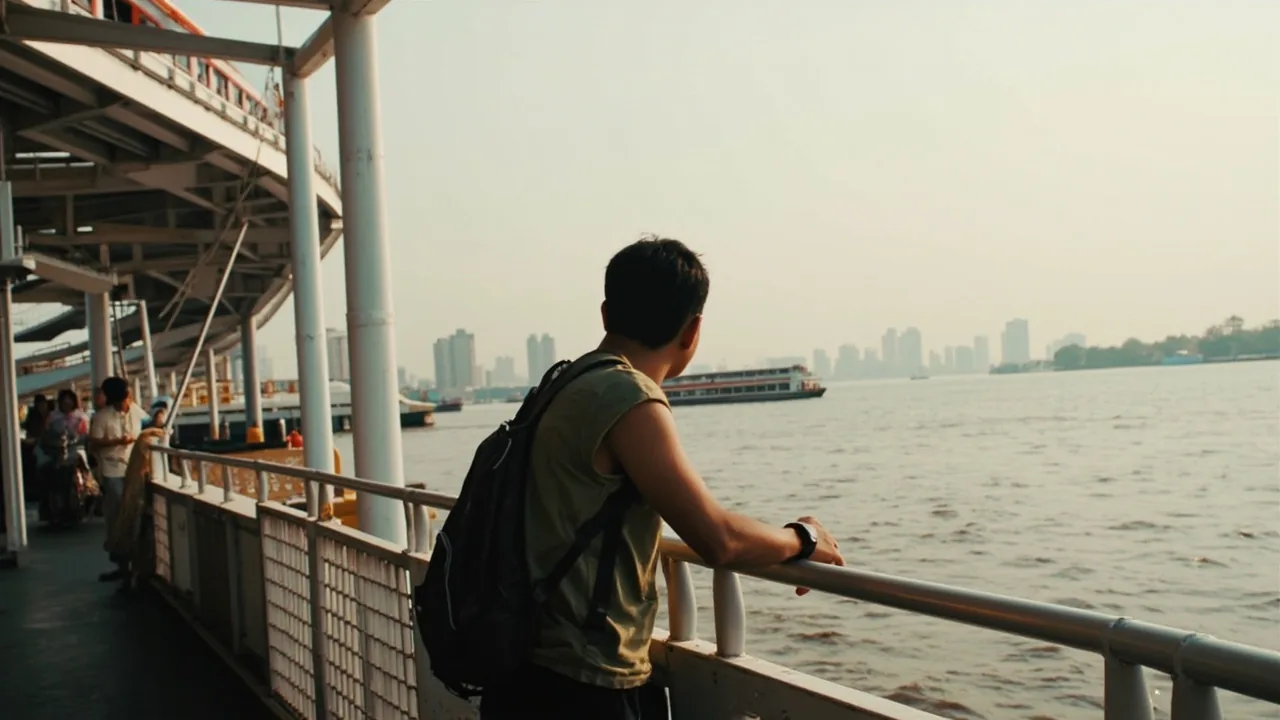
Bangkok Solo Travel 2026: Hostels, BTS/MRT, Scams & Tuk Tuk Truth
Bangkok is the easiest big city in Southeast Asia to land in alone, and this Bangkok solo travel guide covers what to sort in the first 24 hours. The city rewards people who show up with a loose plan and a working data plan.
Quick Answers
| What | Answer | Price (INR) |
|---|---|---|
| Bangkok safe for solo female travellers? | Yes, with standard precautions. Use Grab after dark, dress modestly at temples, ignore touts in tourist zones. | , |
| Cheapest way from Suvarnabhumi to city? | ARL Airport Rail Link to Phaya Thai, then BTS. Cheapest door-to-door option for one person. | ~₹129 (~45 THB or ~$1.34) |
| Tuk tuk vs Grab: which wins? | Grab wins 9 out of 10 times. Cheaper, fixed price, route tracked, no haggling, no “tour stop” detours. | , |
| Best hostel area for solo travellers? | Khao San for social, Silom/Sukhumvit for BTS access and safety late at night. | ~₹718-₹1,120 (~250-390 THB or ~$7.45-$11.62) |
| Bangkok scam that catches most first-timers? | The “temple is closed today, I’ll take you somewhere better” tuk tuk scam near Khao San / Grand Palace. | , |
Why Bangkok Works for Solo Travel
Bangkok is the start of the Banana Pancake Trail, and that has a real upside for solo travellers. The route from Bangkok to Chiang Mai to Pai to the islands is so well-worn that the infrastructure exists to make you social by accident. Hostel lobbies have free tea, shared common areas pull you into conversations, and group day-trips fill up at the front desk.
You will also notice the city has a huge Indian and South Asian population. Bangkok has a long-standing Sikh and Punjabi community, so you are never far from a familiar face, a temple, or a thali. That does not mean Bangkok is India-lite: the language is Thai, the script is unfamiliar, and the BTS/MRT system is the lifeline you need to learn first. But the cultural friction is lower than Hanoi or Phnom Penh.
The honest caveat: Bangkok is enormous, hot, and loud. The first 48 hours can feel overwhelming if you arrive jet-lagged. Build in one slow day to sort your SIM, your BTS card, and your hostel. Do not try to see the Grand Palace, Chinatown, Khao San, and a rooftop bar in one go.
How to Meet Other Backpackers in Bangkok
Solo travel is only lonely if you choose the wrong hostel. Bangkok has hundreds of hostels, and the divide between social and silent is sharper than almost anywhere else in the region.
Pick a social hostel, not a quiet one. Look for ones with a common area, a rooftop bar, or a free nightly dinner. Khao San Road is the most famous social hub, but Silom and Sukhumvit both have hostels with proper common rooms and weekly events. Dorm beds in Bangkok run ₹718-₹1,120 (~250-390 THB or ~$7.45-$11.62) depending on area and season (Khao San is at the higher end during December-February peak). At current rates (1 THB = ₹2.87 $0.03), 300 THB is about ₹860 ($8.93), a tenth of what a basic Indian hotel room would cost in a tourist city.
Do the free walking tour. Most Khao San and Silom hostels run a free morning walk to the Grand Palace, Wat Pho, or Chinatown. The hostels advertise these on lobby boards, but you can also just ask at reception. Show up at 9am, walk for three hours, and you will have a WhatsApp group of 15 people by lunch.
Say yes to the group day-trip. Floating market, Ayutthaya, Maeklong Railway Market: all of these are sold at hostel desks for ₹1,723-₹3,446 (~600-1,200 THB or ~$17.87-$35.74). The price is roughly the same as Grabbing there yourself, but the social upside is huge. You will eat lunch on a slow boat with the same five people you will see again in Pai next week.
Use the apps and groups. Reddit’s r/Bangkok and r/SoloTravel, the Facebook groups “Solo Female Travellers in Thailand” and “Backpackers in Southeast Asia,” and the WhatsApp groups that hostels quietly run are all active. Couchsurfing still works in Bangkok if you are patient.
BTS and MRT: The Only Transport You Need
The BTS Skytrain and MRT subway are the reason Bangkok solo travel is even possible for first-timers. They are clean, English-signed, air-conditioned, and run from about 6am to midnight. The BTS goes above the main Sukhumvit road; the MRT runs underneath. They cross at a few stations: Siam, Asok, Sala Daeng/Mo Chit, and a couple more.
Fares and the Rabbit Card. A single BTS ride runs ₹46-₹169 (~16-59 THB or ~$0.48-$1.76) depending on distance, paid by token or by Rabbit Card. The Rabbit Card is a reloadable stored-value card you buy at any BTS station for ₹287 (~100 THB or ~$2.98) plus your top-up. It saves you ₹14-₹29 (~5-10 THB or ~$0.15-$0.30) per ride and lets you skip the token queue. Get one on day one.
MRT fares run ₹49-₹121 (~17-42 THB or ~$0.51-$1.25). You buy a token or use the MRT Plus card. The two systems do not share a card, sadly.
Practical rules. Our getting-around-Thailand transport guide has the full picture on apps, buses, and trains, but the basics are simple.
- Stand on the left on escalators, walk on the right. Same as India.
- Rush hour is roughly 7-9am and 5-7pm. The trains are packed. If you have luggage, travel outside peak.
- Phaya Thai is the BTS station for the Airport Rail Link. Asok is BTS, Sukhumvit is MRT, the same physical interchange.
- No food or durian on the trains. Thai staff enforce this.
For a typical Sukhumvit-to-Silom day, expect to spend ₹172-₹287 (~60-100 THB or ~$1.79-$2.98) on BTS/MRT. Cheap, predictable, and zero haggling.
Suvarnabhumi to City: The Cheapest Honest Route
Most Indian flights land at Suvarnabhumi (BKK). You have four realistic options to get into town.
| Option | Cost | Time | Honest take |
|---|---|---|---|
| ARL Airport Rail Link to Phaya Thai, then BTS | ₹129 (~45 THB or ~$1.34) + ₹46-₹126 (~16-44 THB or ~$0.48-$1.31) | 45-60 min total | Cheapest door-to-door. Works late, ends around midnight. |
| Public bus 551 / 556 | ₹101-₹144 (~35-50 THB or ~$1.04-$1.49) | 60-90 min | Cheap but slow, bad with luggage, ends early. |
| Metered taxi (from official queue) | ₹718-₹1,149 (~250-400 THB or ~$7.45-$11.91) + ₹215 (~75 THB or ~$2.23) airport surcharge + tolls (₹144-₹287 (~50-100 THB or ~$1.49-$2.98)) | 30-60 min | Honest for late arrivals, family, or huge bags. |
| Grab | ₹1,149-₹2,010 (~400-700 THB or ~$11.91-$20.85) | 30-60 min | App price is the real price, no haggling. |
If you are solo, under-40, and your hostel is near a BTS station, the Airport Rail Link + BTS is the right answer. It is ₹129 (~45 THB or ~$1.34) for the ARL portion (based on the Airport Rail Link fare band published on the official SRT site), and another ₹46-₹126 (~16-44 THB or ~$0.48-$1.31) on BTS. Total fare 60-90 THB, which at current rates (1 THB = ₹2.87) works out to roughly ₹170-260 (~$1.76-$2.70). Door-to-door, in air-conditioning, no scam risk.
If you arrive after midnight, the ARL ends service. Take a metered taxi from the official queue inside the terminal, not the touts in the arrival hall. The ₹215 (~75 THB or ~$2.23) airport surcharge is on the meter, not negotiable, and any driver who claims otherwise is starting a scam.
Subodh’s Pro Tip: Pre-book a Grab from Suvarnabhumi if you land after 11pm. Pickup is on Level 2 (arrivals) at the official ride-hailing zone. Drivers cannot enter the main terminal, which is why you walk to the curb outside. The whole process takes 5 minutes once you have signal.
Tuk Tuk vs Grab: The Honest Truth
This is the question that catches first-timers, so I will be direct.
The honest ranking:
- Grab (Bolt) for almost every ride. Fixed price in the app, route tracked on your phone, no haggling, no detour, no surprise. A Grab from Khao San to Asok is usually ₹230-₹431 (~80-150 THB or ~$2.38-$4.47) depending on traffic. A tuk tuk for the same trip is ₹1,149 (~400 THB or ~$11.91).
- BTS/MRT for any route they cover. Cheaper than both, faster than both in peak traffic, and impossible to scam.
- Metered taxi from a queue (not hailed on the street). When Grab is surging or unavailable, a metered taxi is honest. Insist on the meter. If the driver refuses, take the next one.
- Tuk tuk last, only by choice, only for fun. A tuk tuk is a tourist experience, not transport. The driver will almost always quote 2-3x the real fare, take you past shops where he gets a commission, or invent a “special today” detour.
Why the tuk tuk still matters. Riding one is genuinely part of the Bangkok experience, and the drivers are mostly friendly. Take one once, for the novelty, on a short route you have already done by BTS so you know the real fare. Negotiate the price before you sit down, pay in cash, and refuse any “stop here for ten minutes” suggestion that comes with a price. As a rule of thumb, the real fare for any tuk tuk route is roughly 1.5x the equivalent metered taxi rate. A 5-minute hop that would be ₹230 (~80 THB or ~$2.38) in a meter is about ₹345 (~120 THB or ~$3.57) in a fair tuk tuk fare. Anything 3-4x that is a tourist tax.
Safety Alert: Tuk tuk drivers offering “today only, Grand Palace closed, I take you to a better temple” near Khao San, Wat Pho, or the pier are running a gem-shop commission scam. The Grand Palace is open. The temples are open. Walk away.
Bangkok Scams That Catch Indians
Travellers report these consistently. Knowing them in advance is 90% of the defence. Our Thailand safety and scams guide covers the full country, but these are the Bangkok-specific ones.
1. The “temple is closed” tuk tuk scam. Near the Grand Palace, Wat Pho, and Khao San, a smiling driver in a red, yellow, or green tuk tuk tells you the temple is closed for a Buddhist holiday. He offers a half-day tour of other temples for ₹57-₹287 (~20-100 THB or ~$0.60-$2.98). You end up at a gem shop, a tailor, or a snake farm where the driver collects a commission. The temples are open. Walk to the entrance yourself and check.
2. The “meter is broken” taxi. A driver at a tourist rank claims his meter does not work and quotes a flat fare. Always, always, always insist on the meter. If he refuses, walk five metres to the next taxi. The next one will turn it on.
3. The “no change” trick. A tuk tuk or taxi driver gives you an inflated fare, you hand over a ₹2,872 (~1,000 THB or ~$29.79) note, and he claims he has no change. He hands back less or none. Carry small notes. A ₹287 (~100 THB or ~$2.98) note is your best friend. A ₹2,872 (~1,000 THB or ~$29.79) note is your liability.
4. The jet-ski / jet-ski-damage scam (Pattaya, Phuket, but reported in Bangkok boat tours). You rent a jet ski, the operator claims you damaged it, and demands cash. Photograph the jet ski before you take it. Use only operators with a permanent shop front, not beach hawkers. Same logic applies to motorbike rentals. If you rent a scooter, take a video of every scratch and dent in daylight, and carry your passport photo page on your phone.
5. The “tuk tuk 20 baht all day” scam. It sounds too cheap because it is. You pay, and the driver delivers you to three commission shops in 90 minutes. Sometimes the commission stops are genuinely fine. Often they pressure you to buy. Decline firmly and leave.
Subodh’s Pro Tip: Almost every Bangkok scam is a long con delivered with a smile. The driver’s English will be good, his uniform will look official, and his story will be plausible. The rule is simple: any unsolicited offer that starts with “where are you from?” is selling you something. Smile, say “no thank you,” and walk.
Where to Stay in Bangkok (Solo-Friendly)
Stay near a BTS or MRT station. That single rule eliminates 80% of the transport pain. Below are the solo-friendly Bangkok hostels and the practical trade-offs. Dorm beds in Bangkok run ₹718-₹1,120 (~250-390 THB or ~$7.45-$11.62) in high season, which is the Khao San / Silom range from the canonical price reference. At current rates (1 THB = ₹2.87 $0.03), 300 THB is about ₹860 ($8.93) per night, less than a dorm in Manali or McLeodganj.
Pick a hostel from the operators active in each area (Mad Monkey, Lub d, Bodega, Slumber Party, Mezz Floor and similar chains all run properties in Silom, Khao San, and Sukhumvit) and confirm the exact property, current dorm price, and booking link on the operator’s own site before you book. Stay22 affiliate links for these operators are below for quick price comparison.
The honest split: Khao San is the social peak but it gets loud and tourist-trappy. Silom has better BTS access, calmer streets, and a balance of social and quiet. Sukhumvit is the most convenient for shopping malls, Indian food, and a direct BTS line to most day-trip pickup points.
Indian and Vegetarian Food in Bangkok
Bangkok has one of the strongest Indian food scenes in Southeast Asia. You will not have to survive on pad thai. The shortlist has three reliable spots, each with a clear use case.
- Indique (around 14 USD per person, ~₹1,350 at current rates of 1 USD = ₹96.33) is your butter chicken fine-dining fix in an upscale setting. It sits in the mid-range for Bangkok Indian food and is worth it for a celebration or a family-style meal.
- Shree Gangour Pure Veg Restaurant Bangkok is the strict-veg option. No onion-garlic is sometimes the question, and this is where you go when the answer is “no onion-garlic, no egg, no alcohol on the menu.” Plan for a meal here to run ₹574-₹1,149 (~200-400 THB or ~$5.96-$11.91) per person.
- Amritsr Restaurant Sukhumvit Soi 22 is your North Indian thali and stuffed paratha fix. Budget ₹2,872-₹5,743 (~1,000-2,000 THB or ~$29.79-$59.57) per person including drinks, and expect paneer-heavy North Indian staples that taste close to what you would eat in a Delhi dhaba.
Local Thai food. For non-veg, The Island Bangkok and Aonchorn Thai restaurant (Ratchadamnoen, near Khao San) are well-reviewed local spots with proper Thai dishes, not the touristy fried-everything. G’s is a fusion option with a signature “Volcano Beef” that travellers keep mentioning. Mustache Bangkok is Middle Eastern if you want a break from rice. Medici Playhouse is Italian comfort, useful on day three when you cannot face another bowl of curry.
Subodh’s Pro Tip: Most Bangkok malls have a food court with a ₹172-₹287 (~60-100 THB or ~$1.79-$2.98) vegetarian Thai dish section. Terminal 21 (BTS Asok) and MBK (BTS National Stadium) are the cleanest. Look for the “jay” symbol on Thai Buddhist food stalls, it is the closest local equivalent to pure-veg.
Safety for Solo Female Travellers in Bangkok
Bangkok is one of the safer big cities in Asia for solo female travellers, and the standard precautions apply.
At night: Use Grab, Bolt, or a metered taxi after 9pm. Avoid walking down quiet soi (side streets) alone, even in tourist areas. The main Sukhumvit road and Khao San are well-lit and busy till late.
At temples: Cover shoulders and knees. Carry a scarf or a cheap overshirt in your day bag. The Grand Palace enforces this strictly and rents sarongs at the gate (a ₹574 (~200 THB or ~$5.96) deposit that gets refunded).
On transport: Sit in the BTS/MRT women-and-children car if you want a guaranteed female-only cabin (orange marker on the platform). It is not mandatory, but it is there for a reason, and you will see Thai women using it.
Dress code: Bangkok is liberal. Shorts, tank tops, sundresses are all fine in malls, BTS, Khao San, and Silom. At temples, palaces, and government buildings, cover up. At nightlife zones (Sukhumvit Soi 4, Soi 11, RCA, Khao San), dress up but stay in groups and use Grab back.
Drink spiking: Standard rule. Watch your drink, do not accept open ones, and avoid “free shot” rounds from strangers at clubs. Bangkok clubs are safe overall, but the standard “someone buys you a drink” risk is real.
On the larger question: For honest, experience-grounded advice from female travellers, the Thailand solo female safety article covers the regional picture. For the most up-to-date government advisories, check the Indian MEA travel advisory portal and the Tourism Authority of Thailand’s safety page before you fly.
Budgeting for Solo Travellers in Bangkok
Bangkok solo travel is the cheapest in the region once you factor in safety and infrastructure. At current rates (1 THB = ₹2.87 ~$0.03), here is what a day looks like for a budget-conscious solo backpacker.
| Item | Cost (THB) | Approx INR |
|---|---|---|
| Dorm bed (Khao San / Silom) | 250-390 | ₹720-₹1,120 (~$7.47-$11.62) |
| Three meals (mix of street + restaurant) | 250-450 | ₹720-₹1,290 (~$7.47-$13.38) |
| BTS/MRT (3-4 rides) | 60-120 | ₹170-₹345 (~$1.76-$3.58) |
| One drink at hostel bar | 80-150 | ₹230-₹430 (~$2.39-$4.46) |
| Day-trip pickup (Ayutthaya, market) | 600-1,200 | ₹1,720-₹3,440 (~$17.84-$35.68) |
| Total per day | 1,400-2,300 | ₹4,000-₹6,600 (~$41.49-$68.46) |
The solo-specific traps. Our Thailand solo trip cost breakdown covers the full picture across Bangkok, Chiang Mai, and the islands, but the Bangkok-only traps are:
- Single supplement on tours: most group day-trips are per-person and fair. Walking tours, cooking classes, and pub crawls are priced per head. You are not paying double.
- Tuk tuk overcharging: covered above. Grab fixes it.
- Hotel-style private rooms: a ₹4,307-₹7,179 (~1,500-2,500 THB or ~$44.68-$74.47) private room is worse value than a ₹861 (~300 THB or ~$8.94) dorm when you factor in the social loss. Stay in a dorm for the first 3 nights, then reassess.
Getting Connected: SIM and Data
A working data plan is the single most important thing you sort on day one in Bangkok. Without it, you cannot use Grab, cannot use Google Maps, cannot use the BTS planner, cannot message your hostel. You are stuck holding a paper map and asking directions in a language you do not speak.
Physical SIM. Pick up an AIS or TrueMove tourist SIM at 7-Eleven or the airport. The 15-day tourist pack with around 15GB data is ₹1,146 (~399 THB or ~$11.88), available at every 7-Eleven in the tourist belt. You will need your passport. The staff will set it up in 5 minutes. It is a good fallback.
eSIM option. If you want data the moment the plane lands, an eSIM is faster. Skip the airport SIM queue entirely and have signal before immigration.
Common Solo Mistakes Indians Make in Bangkok
Booking a private hotel in Sukhumvit to “feel safe.” It feels safe for the first night, then isolating for the next six. Hostel common areas are where 80% of solo travellers meet their first Bangkok group. A ₹861 (~300 THB or ~$8.94) dorm in a social hostel beats a ₹5,169 (~1,800 THB or ~$53.62) private room in a quiet guesthouse for a first-time solo.
Only eating at Indian restaurants. Bangkok street food is one of the best in the world. If you can eat non-veg, the seafood at the night markets and the boat noodles are not optional. The local Thai spots in the shortlist (The Island, Aonchorn, G’s) are not tourist traps.
Trying to do Grand Palace, Wat Pho, Wat Arun, Chinatown, Khao San, and a rooftop in one day. You will end up dehydrated, scammed at the palace, and angry at the tuk tuk driver. Split it: morning temple run, evening rooftop. Two days minimum for the main sights.
Skipping travel insurance. Solo travellers do not have a partner to share the ER paperwork. A ₹4,307-₹7,179 (~1,500-2,500 THB or ~$44.68-$74.47) scooter accident, a ₹86,145 (~30,000 THB or ~$893.59) dengue hospital bill, or a missed-flight rebooking all become your problem alone. Get insurance.
Carrying a 25 kg suitcase to a 4th-floor walk-up hostel with no lift. Bangkok old-town hostels are often walk-ups. Pack a 40-litre backpack and a 7-kg cabin bag, not a hard-shell suitcase. Your back will thank you by day three.
Not registering the TDAC arrival card. The TDAC digital arrival card is mandatory before boarding for all Indian arrivals. It is free, takes 3 minutes, and you get a QR code to show at immigration. The visa-free 60-day stay is the right entry type for most Indian tourists, no fee at the border.
FAQ
Is Bangkok safe for solo female travellers? Yes. The standard precautions (Grab at night, cover up at temples, watch your drink) cover almost all real risk. The Thailand solo female safety article goes deeper on the regional picture.
Is Bangkok safe to travel alone in general? Yes, and arguably safer than most Indian metros for first-time foreign travellers. Bangkok’s tourist infrastructure is built for solo Western backpackers, and that infrastructure makes the city friendlier for solo Indian travellers too.
How do I meet other backpackers? Stay in a social hostel, do the free walking tour, say yes to the group day-trip at the hostel desk, and use the WhatsApp groups that hostels run. The solo travel Thailand article has more on this.
Should I take a tuk tuk or use Grab? Grab 9 times out of 10. Take a tuk tuk once for the novelty, on a route you have already done by BTS, and negotiate the fare before you sit down.
What is the cheapest way from Suvarnabhumi to my hostel? Airport Rail Link to Phaya Thai, then BTS. Total ₹172-₹258 (~60-90 THB or ~$1.79-$2.68), 45-60 minutes. Use Grab if you arrive after midnight or have heavy luggage.
Do I need a visa? Indians get 60 days visa-free. Just complete the TDAC arrival card before you board. No fee, no embassy visit.
What is the best Indian food in Bangkok? Indique for fine dining, Amritsr Sukhumvit for thali and parathas, Shree Gangour for strict veg. The full Indian food Thailand guide has the regional picture.
Subodh’s Take
Bangkok solo travel is one of those things that looks intimidating on paper and feels obvious in practice. The first 24 hours are the hardest, the BTS card, the SIM, the hostel check-in, the first Grab ride. Once those click, you stop being a solo traveller and start being part of a moving hostel community that flows north through Thailand into Chiang Mai (our Bangkok-to-Chiang Mai night bus review covers the route), into Pai, and around the Mekong. The city rewards people who land with a small backpack and a workable plan. Show up, learn the BTS, ignore the tuk tuk touts, and Bangkok will look after you.
