Bangkok to Hua Hin: Cheapest, Fastest, and Most Comfortable Ways Compared
If you’re an Indian backpacker wondering how to get to Hua Hin from Bangkok, take the train from Krung Thep Aphiwat station. It’s cheap, scenic, and drops you in Hua Hin town centre. This guide ranks every option for time, comfort, and cost.
The real question isn’t “which is best” but “which fits your airport, your time window, and your baggage situation.” A family with two suitcases arriving at Suvarnabhumi at 11 PM has a different answer than a solo backpacker landing at Don Mueang at 6 AM. Let’s sort it.
Quick Answers
| What | Answer | Price (INR) |
|---|---|---|
| Cheapest option | Train from Krung Thep Aphiwat (3rd class) | ₹431 (~150 THB or ~$4.47) |
| Fastest option | Minivan from Suvarnabhumi Airport (door-to-door) | ₹804 (~280 THB or ~$8.34) |
| How long from Bangkok to Hua Hin by train | 3.5 to 4.5 hours | included |
| Best for families with luggage | Private taxi from BKK airport | ₹7,179 (~2,500 THB or ~$74.47) |
| Is flying possible? | No commercial flights, Hua Hin has no scheduled service for this route | not applicable |
Price-checked against SRT’s published 2026 schedule and 12go.asia’s current bookings on 2026-07-18. The minivan fare spikes to ₹919 (~320 THB or ~$9.53) during weekends and Thai holidays.
The Five Real Options, Ranked
1. Train (Best Overall: Cheap + Scenic)
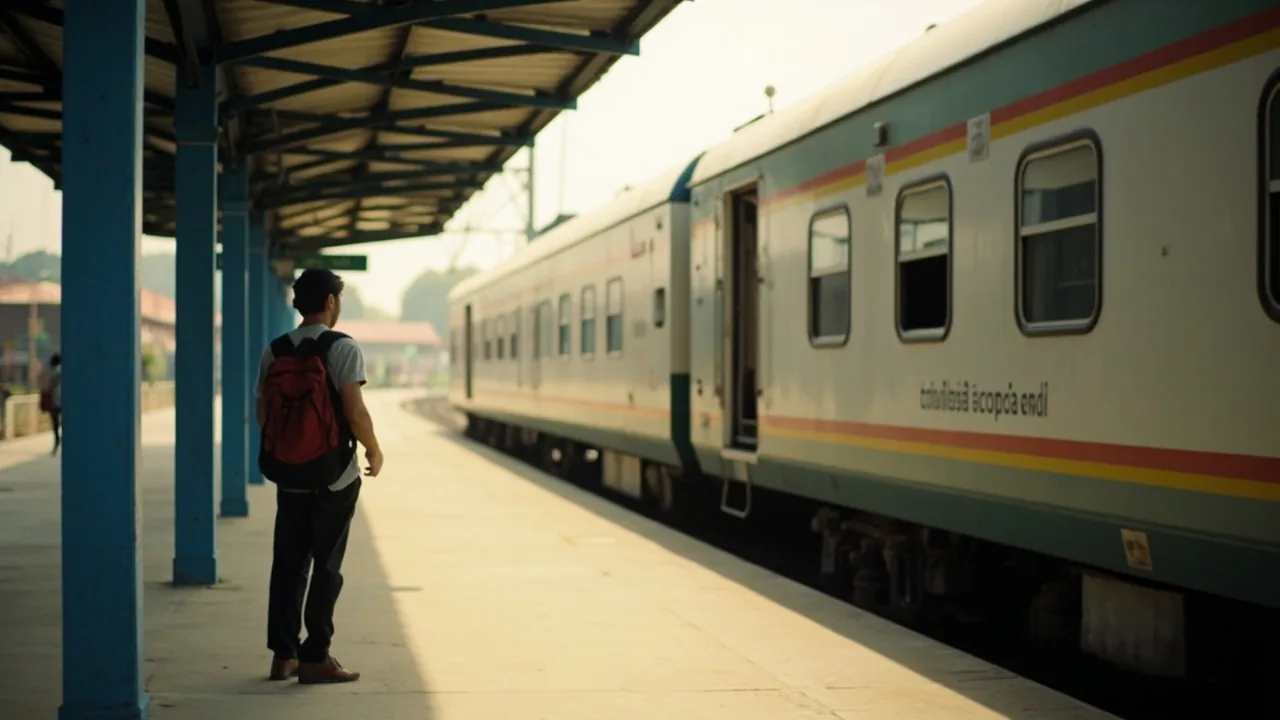
The Hua Hin train runs from Krung Thep Aphiwat (Bang Sue Grand), the newer main hub for southern line trains. Most Hua Hin specials originate here. Easier airport connection via MRT Blue Line to Bang Sue. The old Hua Lamphong terminal has been phased out for long-distance routes, and it no longer serves Hua Hin trains.
Fares: ₹431 (~150 THB or ~$4.47) for 3rd-class fan seat, around ₹718 (~250 THB or ~$7.45) for 2nd-class air-conditioned, ₹1,436-₹2,297 (~500-800 THB or ~$14.89-$23.83) for 1st-class.
Time: 3 hours 30 minutes on the express, 4 hours 30 minutes on slower locals.
How to book: Tickets at the station counter same day, or via 12go. The 3rd-class seats frequently sell out on weekends, so buy a day ahead during high season (November to February).
Why I recommend it: Travellers consistently rate this as the most relaxing way to reach Hua Hin. The line runs through paddy fields, salt flats, and a stretch that hugs the coast near Pranburi. You’re not stuck in Bangkok traffic, you meet Thai families doing the same weekend trip, and the ₹431 (~150 THB or ~$4.47) fare is the same as a 30-minute Grab.
2. Minivan from Suvarnabhumi (Fastest, Door-to-Door)
Roong Reuang Coach and Bell Travel run minivans from a counter on the 1st floor (public area) of Suvarnabhumi. You buy your ticket at the desk, walk out to a parking bay, and you’re in Hua Hin in about 3 hours.
Fare: ₹804 (~280 THB or ~$8.34) per person, ₹919 (~320 THB or ~$9.53) on weekends.
Baggage allowance: One standard backpack or small suitcase. Anything bigger than 20kg needs negotiation with the driver.
The catch: They leave when full. During low season you’ll wait 30 minutes. During Songkran in April or long weekends, vans leave every 20 minutes. The departure window is roughly 6 AM to 7 PM.
Best for: Solo travellers and couples with light bags arriving at BKK. Not great for anyone with a check-in-sized suitcase, because storage under the seats is tight.
3. VIP Bus from Southern Terminal (Bangkok’s Sai Tai Mai)
The government’s Transport Co. Ltd runs VIP 24-seat buses from the Southern Bus Terminal (Sai Tai Mai) to Hua Hin. These are the most comfortable public option, with reclining seats and air conditioning that works.
Fare: ₹689 (~240 THB or ~$7.15) for VIP, ₹574 (~200 THB or ~$5.96) for standard.
Time: 4 hours including one short rest stop at Cha-Am.
Departures: Every hour or so, 6 AM to 8 PM.
The catch: Sai Tai Mai is on the wrong side of Bangkok from both airports. From Suvarnabhumi, it takes 60 to 90 minutes by taxi just to reach the bus terminal. From Khao San, it’s also 60 minutes. The bus itself is comfortable, but the total door-to-door time eats the savings.
Best for: Travellers already based in the Silom or Khao San area who don’t want the train.
4. Private Taxi (Best for Families or Heavy Bags)
A private car from Suvarnabhumi to Hua Hin runs ₹6,892-₹8,040 (~2,400-2,800 THB or ~$71.49-$83.40) depending on the operator and surge. From central Bangkok (Sukhumvit, Silom, Khao San) it’s ₹6,317-₹7,179 (~2,200-2,500 THB or ~$65.53-$74.47).
Time: 2.5 to 3 hours, faster than minivan if traffic is light.
Best for: Families of 3 to 4 people, anyone with a large suitcase, or travellers arriving at 11 PM when no minivan is running.
How to book:
- Bolt or Grab from the airport: metered, around ₹5,743 (~2,000 THB or ~$59.57) but surge can push it to ₹8,040 (~2,800 THB or ~$83.40)
- Pre-booked through your hotel: ₹7,179 (~2,500 THB or ~$74.47) fixed
- 12go has a private transfer option that locks the price in advance
5. Self-Drive (Skip It)
The drive itself is easy, motorway all the way, about 2 hours 30 minutes. But you’re a foreign driver in Thailand, parking in Hua Hin is awkward, and rental insurance doesn’t cover you the way it should. Skip this unless you’re a confident, experienced Southeast Asia driver.
Cost Comparison Table
Prices current as of 2026-07-18, verified against 12go, SRT, and traveller reports. At current rates (1 THB ≈ ₹2.87), 100 THB ≈ ₹287.
| Option | Price (THB) | Time | Best For |
|---|---|---|---|
| Train 3rd class | 150 | 3.5 to 4.5 hr | Budget travellers, scenery lovers |
| Train 2nd class | 250 | 3.5 hr | Comfort on a budget |
| Minivan from BKK | 280 | 3 hr | Solo, light bags, fast |
| Bus VIP | 240 | 4 hr | Central Bangkok-based travellers |
| Private taxi | 2,500 | 2.5 to 3 hr | Families, heavy luggage |
Subodh’s Pro Tip: If you’re arriving at Don Mueang (DMK), the math shifts. There’s no direct minivan from DMK to Hua Hin, and the train connection from DMK means a 30-minute taxi to Krung Thep Aphiwat first. From DMK, a private taxi for ₹7,179 (~2,500 THB or ~$74.47) is the cleanest option. From BKK or central Bangkok, train wins.
Which Bangkok Station, Which Airport?
The shortest explanation:
- Arriving at Suvarnabhumi (BKK): Minivan from the airport. Period. It’s 3 hours door-to-door, no transfers. Our Bangkok airport arrival guide covers what to do when you land.
- Arriving at Don Mueang (DMK): Private taxi. The airport is in the north, Hua Hin is in the south, the train stations are in between. Don’t add a third transfer.
- Already in Bangkok (Khao San, Sukhumvit, Silom): Train from Krung Thep Aphiwat via MRT, or VIP bus from Sai Tai Mai.
If you’re staying in Bangkok first, get to Krung Thep Aphiwat via the MRT Blue Line to Bang Sue station. It’s 30 minutes from Sukhumvit, the trains are clean, and you avoid Bangkok traffic entirely. Our first 24 hours in Bangkok guide covers the full arrival protocol from the airport.
Indian-Specific Tips
Visa and TDAC: Thai visa-free for Indian passport holders gives 60 days, confirmed against the Thai Immigration Bureau’s portal on 2026-06-27. You still need the TDAC digital arrival card before boarding, even for the train crossing. Apply at the official portal: https://tdac.immigration.go.th.
SIM Card: The ₹1,146 (~399 THB or ~$11.88) AIS/TrueMove 15-day tourist SIM with 15GB is sold at Suvarnabhumi’s arrival hall. If you’ve already arrived in Bangkok, the same SIM is at any 7-Eleven. Bring your passport, registration takes 10 minutes. For an eSIM alternative you can install before flying, Get Nomad eSIM and activate on landing.
Cash vs Card: Hua Hin is more card-friendly than Pai or Koh Phangan, but the train station ticket counter and the minivan counter take cash only. Withdraw from an ATM at Hua Lamphong before you board, or change a small amount at the Krung Thep Aphiwat exchange kiosk. For tax refund info on your purchases, see our Thailand VAT refund guide.
Vegetarian Food on the Train: The food trolley on the 3rd-class Hua Hin train only carries meat and seafood snacks. For a real meal, buy something at the platform at Hua Lamphong before boarding, or eat at the Hua Hin station cafeteria when you arrive (the one across the road from the platform, not the inside one, serves basic veg fried rice at ₹144 (~50 THB or ~$1.49) a plate). Travellers report the Indian restaurant options inside Hua Hin town are good but thin, plan one or two meals ahead by checking what’s around your hostel.
Language on the Train: Announcements are in Thai only. Use the 12go app or Google Translate to screenshot your destination station name (“หัวหิน” for Hua Hin). The conductor will check your ticket and wave you off at the right stop. Don’t sleep through it, the station is small and the train doesn’t dwell long.
Safety Notes
Trains and minivans in Thailand have been involved in occasional accidents over the years, mainly speeding-related crashes. Stick to daytime departures, and if you’re taking a VIP bus or minivan between 10 PM and 5 AM, ask the operator about their overnight driving policy. The trains have the strongest safety record.
For current advisories before you travel, check the Indian Ministry of External Affairs travel page at mea.gov.in and the Thai government’s official tourism safety portal. The broader regional risks, including periodic border tensions in southern Thailand (far from Hua Hin), are noted there.
Booking Strategy
Book direct when you can:
- Train: at the station counter, same day, no advance booking needed
- Minivan: at the airport counter on arrival
- VIP bus: at Sai Tai Mai ticket hall
Book in advance when it matters:
- Long weekends (Songkran in April, King’s Birthday in late July, New Year)
- 1st-class train seats if you want a guaranteed window
- Private taxi if you have a specific flight arrival time
Use 12go for comparison: 12go.asia lists multiple transport options in one search, with current prices and customer reviews. It’s a useful single place to compare options and lock a fare for private transfers.
FAQ
Is it cheaper to fly to Hua Hin than train? Hua Hin Airport (HHQ) has no scheduled commercial service from Bangkok. The only way to fly is a private charter, which costs ₹71,788 (~25,000 THB or ~$744.66) or more. Train at ₹431 (~150 THB or ~$4.47) is unbeatable on price.
How long from Bangkok to Hua Hin by train exactly? The express is 3 hours 30 minutes. The slower local trains with more stops run 4 hours 30 minutes. Both leave from Krung Thep Aphiwat.
Can I buy the train ticket online? SRT’s own website lets you book 1st and 2nd-class tickets up to 90 days out. 12go sells the same tickets with a small service fee. 3rd-class is walk-up only. For the reverse journey, see our Hua Hin to Bangkok train guide with the return timetable.
What’s the last minivan from BKK to Hua Hin? Roong Reuang’s last departure is around 7 PM. After that, your only options are a pre-booked private taxi or an overnight bus from Sai Tai Mai, which arrives 4 AM.
Do Indian citizens need any document for the BKK to Hua Hin train? For domestic travel in Thailand, you only need your passport as ID. For the journey across Thailand’s visa-free entry (which you already completed at the airport), keep your passport with you. Some SRT ticket counters ask for ID at peak times.
Is Hua Hin worth a stop? For Indian travellers who want Thai beaches without the Phuket price tag, Hua Hin is the cleanest entry point. Travellers report it works well for a 2 to 4-night stop, longer if you’re a slow traveller.
Can I use the same train ticket to return to Bangkok? Buy a separate ticket for the return, either at Hua Hin station or via 12go. The return trains run more frequently because they originate in Hua Hin.
Subodh’s Take: Take the train. The Hua Hin line is one of the few Thai rail journeys that still feels local, with food sellers jumping on at small stations, families bringing tiffin carriers, and the landscape shifting from Bangkok suburbs to salt flats to palm groves. If you’re carrying a suitcase and an elderly parent, splurge for the 2nd-class air-con at ₹718 (~250 THB or ~$7.45); the 3rd-class fan option at ₹431 (~150 THB or ~$4.47) is rough on hot days but unbeatable value. Skip flying, it’s a non-route for this corridor.
For more routes and transport guides across Southeast Asia, browse our SEA Backpacking Hub.
