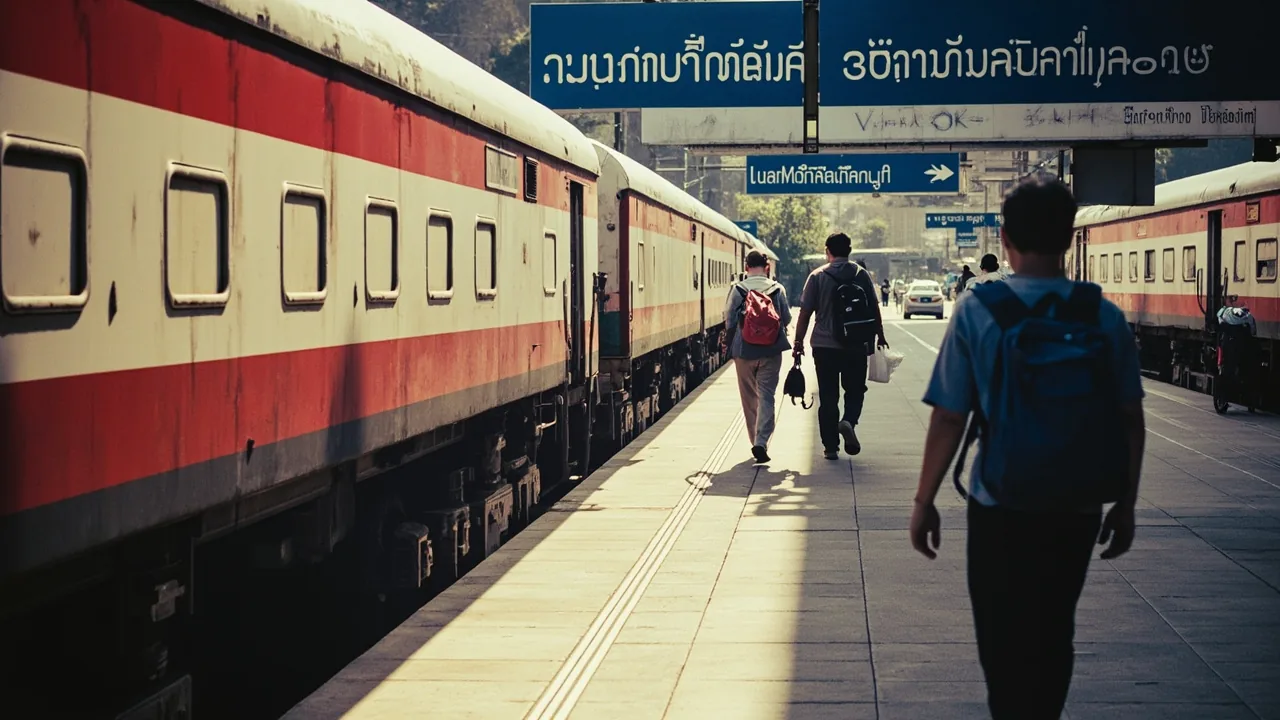
Hua Hin to Bangkok by Train: Timetable, Ticket Prices, and How to Book Online from India
The State Railway of Thailand (SRT) runs roughly a dozen departures a day on the Hua Hin to Bangkok train schedule from Hua Hin Railway Station. This guide covers the timetable, every fare class, and what to do when Songkran weekend seats vanish, based on SRT’s published June 2026 timetable cross-checked against D-Ticket seat availability on the Indian travellers skip the usual visa paperwork for this route: the Thailand visa-free entry allows 60 days, with a TDAC arrival card still mandatory. The train crosses no border, so a passport with 6 months validity is the only document you need at the platform. If you are connecting onwards, the Bangkok to Hua Hin corridor runs the same physical trains in reverse, so the departure times from Hua Hin listed below can be read in reverse for Bangkok-to-Hua Hin planning; always confirm your specific train number’s Bangkok-side departure on the official SRT timetable before booking. You may also find Krabi to Koh Lanta useful for this trip.
Quick Answers
| What | Answer | Price (INR) |
|---|---|---|
| Cheapest fare (3rd class fan) | Hua Hin to Bangkok (terminus varies by train) | ₹429 (~150 THB or ~$4.45) |
| Best value day fare (2nd class AC seat) | Hua Hin to Bangkok (terminus varies by train) | ₹1,144 (~400 THB or ~$11.87) |
| 1st class sleeper AC berth, overnight option | Hua Hin to Bangkok | ₹3,431 (~1,200 THB or ~$35.61) |
| Trip duration | Fastest day train | ~3 hours 20 minutes |
Subodh’s Pro Tip: Hua Hin station has no escalator and the platform gap is real. Travel light on this leg, the night sleeper berths are tighter than they look in photos.
Hua Hin to Bangkok Train Timetable (2026)
SRT runs two distinct service families on the Hua Hin to Bangkok corridor: daytime locals and a small set of overnight long-distance trains that stop at Hua Hin around 21:00-23:00 on their way up from Surat Thani, Nakhon Si Thammarat, or the Malaysian border. The overnight services are the only way to access first-class sleeper AC on this route, and they’re competitive enough to vanish a week out on Songkran weekend and long Thai holidays.
The daytime schedule below is approximate and based on SRT’s published June 2026 timetable. Times vary by 5-15 minutes depending on which direction the train is running, and SRT does publish ad-hoc timetable shifts around national holidays.
| Train number | Hua Hin departure | Bangkok arrival | Service type | Distance covered |
|---|---|---|---|---|
| Special Express 43 | 01:01 | ~06:00 | Overnight sleeper, 1st class AC + 2nd class AC | Hua Lamphong |
| Special Express 37 | 01:32 | ~06:30 | Overnight sleeper, 1st class AC + 2nd class AC | Hua Lamphong |
| Rapid 171 | 02:07 | ~06:35 | Overnight, 2nd class fan + sleeper (mixed) | Hua Lamphong |
| Rapid 169 | 03:27 | ~08:05 | Overnight, 2nd class sleeper fan | Hua Lamphong |
| Ordinary 251 | 06:05 | ~11:30 | Day local, 3rd class fan only | Hua Lamphong |
| Ordinary 253 | 09:48 | ~14:50 | Day local, 3rd class fan only | Hua Lamphong |
| Ordinary 255 | 14:41 | ~20:20 | Day local, 3rd class fan only | Hua Lamphong |
| Special Express 41 (day) | 15:46 | ~19:50 | Day, 2nd class AC seat + 1st class AC seat | Hua Lamphong |
| Ordinary 257 | 17:07 | ~22:30 | Day local, 3rd class fan only | Hua Lamphong |
| Ordinary 259 | 19:38 | ~00:50 | Evening local, 3rd class fan only | Hua Lamphong |
Trains on this Hua Hin to Bangkok train schedule terminate either at Krung Thep Aphiwat (Bang Sue Grand) or at Hua Lamphong, depending on the service; not every service shown above calls at both, so confirm the listed terminus against your booking confirmation before boarding.
Subodh’s Pro Tip: The platform indicator at Hua Hin station is not always updated in English. Ask any SRT guard in the orange vest which platform your train number is on, then walk rather than try to read the sign.
Fare Classes Explained: Fan vs Air-Con vs Sleeper
SRT uses four fare classes on the Hua Hin to Bangkok corridor. The classes differ in seating, comfort, and price, but not all trains carry all classes.
Third-class fan (₹429 (~150 THB or ~$4.45)): Wooden or vinyl bench seats, open windows, standing-room common. Available only on Ordinary trains 251, 253, 255, 257, and 259. Local Thais and migrant workers use this class heavily, and the windows are the only air-conditioning. Good for budget travellers who don’t mind arriving stiff.
Second-class fan (₹686 (~240 THB or ~$7.12)): Cushioned bench seats in long rows, fans overhead, no air-conditioning. Mostly found on Rapid trains as a backup to the AC option. Still hot in April, but quieter than third-class.
Second-class AC seat (~400 THB): Reserved air-con seats, the most practical class for day travel on this route. Available on Special Express trains 39 and 41. Cars are numbered on the platform, and a small bottle of water is usually included.
Second-class AC sleeper (~700 THB): Berths in a 6-berth or 4-berth cabin with air-conditioning. Available on the overnight Special Express trains (43 and 37). Bedding is provided.
First-class AC sleeper (~1,200 THB): Private 2-berth cabins on the overnight trains, the only first-class option on this corridor. Cabin includes a fold-down table, reading light, and lockable door. Bedding and a small towel are provided. Berths are in demand for the Hua Hin to Bangkok overnight, so book at least a week ahead during Songkran.
Day vs Night Trains
Day trains run about every 90 minutes from 06:00 until early evening, and they are the right choice if you want the countryside view or have a Bangkok hotel booking locked in. Night trains run overnight and let you save on a Bangkok hotel night, but you arrive in Bangkok in the early morning rather than mid-afternoon. The first-class sleeper cabin on overnight Special Express 37 or 43 is the option most travellers ask about specifically, since it is the only private berth on this route.
If you are landing at Suvarnabhumi (BKK) the next morning, the airport is connected to Hua Lamphong via the Airport Rail Link (City Line), so an overnight sleeper arrival at 06:00 lines up with a 07:00 connection straight to the airport terminal.
How to Book from India
Three booking paths work for Indian travellers, each with a different trade-off.
Option 1: D-Ticket (SRT’s official app). D-Ticket is the State Railway of Thailand’s own booking app, available on iOS and Android. You register with a Thai or international phone number, but payment works with Visa and Mastercard credit cards issued in India. The app shows the full Hua Hin to Bangkok timetable, seat maps, and lets you reserve 1st class sleeper berths that are invisible on the secondary platforms. Fares match the station counter exactly, no markup.
Option 2: 12Go. 12Go consolidates SRT inventory alongside buses and minivans, which is useful if you want to compare train vs van times side by side. The platform adds a small booking fee on top of the SRT fare, which varies by corridor but usually runs ₹143-₹429 (~50-150 THB or ~$1.48-$4.45) per ticket. Indian credit cards work, and UPI is supported on the rupee version of 12Go. For the Hua Hin to Bangkok route specifically:
Option 3: Walk-up at Hua Hin station. Buy at the ticket counter 20-30 minutes before departure for any class that is not sold out. Third-class fan tickets go on sale 60 minutes before, second-class on the day of travel, first-class sleeper berths go on sale 90 days ahead. Bring cash in Thai baht; the counter does not accept Indian debit cards or forex cards.
Subodh’s Pro Tip: For Songkran (mid-April) and the King’s Birthday long weekend, first-class sleeper berths vanish 2-3 weeks ahead. If your travel dates fall over a Thai public holiday, book on D-Ticket the moment you have a confirmed itinerary.
Hua Hin Station: What to Know Before Boarding
Hua Hin Railway Station is a small wooden structure dating back to the 1920s, sitting about 1 km from the town centre on Phetkasem Road. The station has no escalator, no lifts, and the platform-to-train gap is the kind of step your backpack should not wobble over.
Getting there from the beach. Songthaews from Hua Hin beachfront (along Naresdamri Road) charge ₹286 (~100 THB or ~$2.97) per person to the station, or ₹572 (~200 THB or ~$5.94) if you negotiate a private ride. A Grab from the night market area runs ₹372-₹457 (~130-160 THB or ~$3.86-$4.75).
At the station. Ticket counters are in the main hall to your right as you enter. There’s a small waiting room with hard plastic chairs and a 7-Eleven outside the front gate that sells water and pad thai if your train is delayed. The platform is a single level, so any luggage works.
Toilets. Available inside but famously basic. Bring tissue and hand sanitiser.
Boarding. Trains stop at Hua Hin for 5-10 minutes. The conductor will shout “Hua Hin, Hua Hin” before the train pulls in. Third-class passengers board on the side opposite the platform overhang, since they tend to crowd the platform waiting area.
At Hua Lamphong: Exiting Toward Bangkok
Hua Lamphong is the older of Bangkok’s two main train stations, sitting on the MRT Blue Line at Hua Lamphong Station (Exit 1 to the train station building). From here, your onward options are:
MRT to Sukhumvit or Silom. The Blue Line exits at MRT Hua Lamphong Station, literally underneath the train station building. A single trip costs ₹49-₹120 (~17-42 THB or ~$0.50-$1.25) depending on distance. Khao San Road requires a change at Bang Lam Phu via songthaew or a short Grab.
Airport Rail Link to Suvarnabhumi. From Hua Lamphong, take the MRT Blue Line directly toward Bang Sue, then transfer to the Airport Rail Link (ARL) at Bang Sue Grand for the airport. Total journey runs 90-120 minutes and costs about ₹214 (~75 THB or ~$2.23) combined.
Krung Thep Aphiwat (Bang Sue Grand) is the newer central station that has largely replaced Hua Lamphong for long-distance SRT services on this Hua Hin to Bangkok train schedule, including many Hua Hin services. If your train pulls in here, you are at the BTS Bang Sue Grand Station and can transfer to the MRT Blue Line directly. Verify which station your specific train number terminates at before boarding.
Safety Alert: Hua Lamphong’s taxi queue outside the main exit sometimes has touts quoting fixed fares to Khao San Road at ₹1,144-₹1,715 (~400-600 THB or ~$11.87-$17.81). Ignore them and use the public taxi counter inside the hall, which meters the fare. A metered taxi to Khao San should run ₹229-₹343 (~80-120 THB or ~$2.37-$3.56) including the ₹100 (~35 THB or ~$1.04) flagfall and tolls.
Bangkok Food Near Hua Lamphong (For the Day You Arrive)
Most travellers coming off the Hua Hin to Bangkok daytime train arrive hungry around lunch or dinner. Hua Lamphong’s exit turns right onto Rama IV Road, which has a clutch of eating options within walking distance.
If you want an Indian meal near the station, Shree Gangour Pure Veg Restaurant is well-rated and serves the kind of thali that resets your palate after Thai food for several days running. For something more upscale, Amritsr Restaurant on Sukhumvit Soi 22 is reachable via MRT and stays open until late. Amritsr’s signature stuffed parathas run about ₹2,859-₹5,718 (~1,000-2,000 THB or ~$29.68-$59.35) per person.
For a Thai meal near the station, Aonchorn Thai restaurant on Ratchadamnoen and Jim Thompson both serve classic central-Thai dishes. Both are 10-15 minutes by Grab from Hua Lamphong. If you are in a hurry, Indique is the closest sit-down Indian option within a short walk of the station, and several Thai street-food vendors set up around the station entrance from late afternoon onwards.
When Trains Are Sold Out
Three situations kill Hua Hin to Bangkok sleeper berth availability: Songkran (mid-April), the King’s Birthday long weekend in late July or the King’s Coronation Day long weekend in late October or early November, and the Christmas-New Year fortnight. If D-Ticket shows everything sold out:
Walk up anyway. SRT releases a small pool of unreserved 2nd-class seats to walk-up passengers on the day of travel. They go fast, so arrive an hour early.
Switch to a minivan. 12Go consolidates minivans from Hua Hin to Bangkok on the same route, running ₹715-₹1,144 (~250-400 THB or ~$7.42-$11.87) per person. Minivans leave from the main highway rather than the train station, so plan transport from your Hua Hin hotel to the pickup point.
The overnight Bangkok-to-surat-thani sleeper as backup. SRT sleeper cars running south often have empty northbound berths at Hua Hin when southbound demand is low. Train 43 (Bangkok-Surat Thani) is the most commonly available.
If you’re building a full Bangkok itinerary for the days after this train, the Thailand VAT refund at airport guide explains how to claim 7% back on shopping, and the tax-free tourist FAQ outlines what’s covered.
Travel Insurance and Final Costs
Total cost for one Indian traveller on the Hua Hin to Bangkok train, economy class, day fare:
| Item | Amount |
|---|---|
| Train ticket (2nd class AC seat) | ₹1,144 (~400 THB or ~$11.87) |
| Songthaew to Hua Hin station | ₹286 (~100 THB or ~$2.97) |
| Metred taxi from Hua Lamphong to hotel | ₹286 (~100 THB or ~$2.97) |
| Lunch at Hua Lamphong market | ₹343 (~120 THB or ~$3.56) |
| Bottled water and snacks | ₹143 (~50 THB or ~$1.48) |
| Total | 770 THB |
At current rates (1 INR ≈ 0.35 THB, so 1 THB ≈ ₹2.87), 770 THB ≈ ₹2,210 per person for the full door-to-door leg.
FAQ
Q: Can I take the overnight sleeper from Hua Hin to Bangkok as a foreigner without a visa? Yes, the Thailand visa-free entry covers Indian passport holders for 60 days, and the overnight train is internal travel, no border crossing. Carry your passport, your TDAC arrival card QR code (PDF printout), and your booking confirmation.
Q: What is the baggage allowance on SRT trains? SRT enforces a soft 30 kg limit on sleeper berths and 20 kg on seated classes. Larger luggage travels in the luggage car at the front of the train. There is no checked-baggage fee on domestic Thai trains.
Q: Is there food on the train? On Special Express 37, 39, 41, and 43 (where these services carry a buffet or vendor car), a small trolley or vendor passes through offering instant noodles, water, rice boxes, and pad thai in a foam container; Ordinary services stop long enough at major stations for platform vendors to board. On Ordinary services, vendors board at every major station. Prices are ₹114-₹229 (~40-80 THB or ~$1.19-$2.37) per item.
Q: How early should I arrive at Hua Hin station? 10 minutes for an Ordinary train is fine, 20-30 minutes for a Special Express sleeper if you want to find your berth without rushing. The station has nowhere to sit comfortably, so don’t arrive 90 minutes early.
Q: What happens if I miss my overnight sleeper? SRT will refund unused sleeper berths at the ticket counter, less a small admin fee. You can then buy a third-class fan ticket on the next Ordinary train, or a 12Go minivan if the delay is significant.
Q: Can I use Indian UPI to book a ticket on D-Ticket? No, D-Ticket accepts Thai debit and credit cards plus Visa/Mastercard issued internationally. UPI does not work on D-Ticket. 12Go’s rupee checkout does accept UPI for Indian cardholders, but the ticket itself is issued in Thai baht.
Q: Is the first-class sleeper berth worth it for a 3-4 hour journey? For a daytime Hua Hin to Bangkok trip, no, the second-class AC seat is sufficient. For the overnight trains where you sleep, yes, the private 2-berth cabin lets you arrive rested, and it is about ₹1,144-₹1,429 (~400-500 THB or ~$11.87-$14.84) more than a shared second-class sleeper. The cost difference is about ₹1,500 (~$15.57) for the privilege of a door.
Subodh’s Take
Three to four hours on a Thai train from Hua Hin to Bangkok costs less than a Bangkok taxi from the airport to the city centre, and you wake up to a view of salt fields and coconut palms rather than a bus terminal. The fan classes are honest budget travel, but the AC sleeper is the right call if you can spare the baht. Book D-Ticket a week ahead, show up 20 minutes before departure, and you’ll skip the touts at the Hua Lamphong exit.
