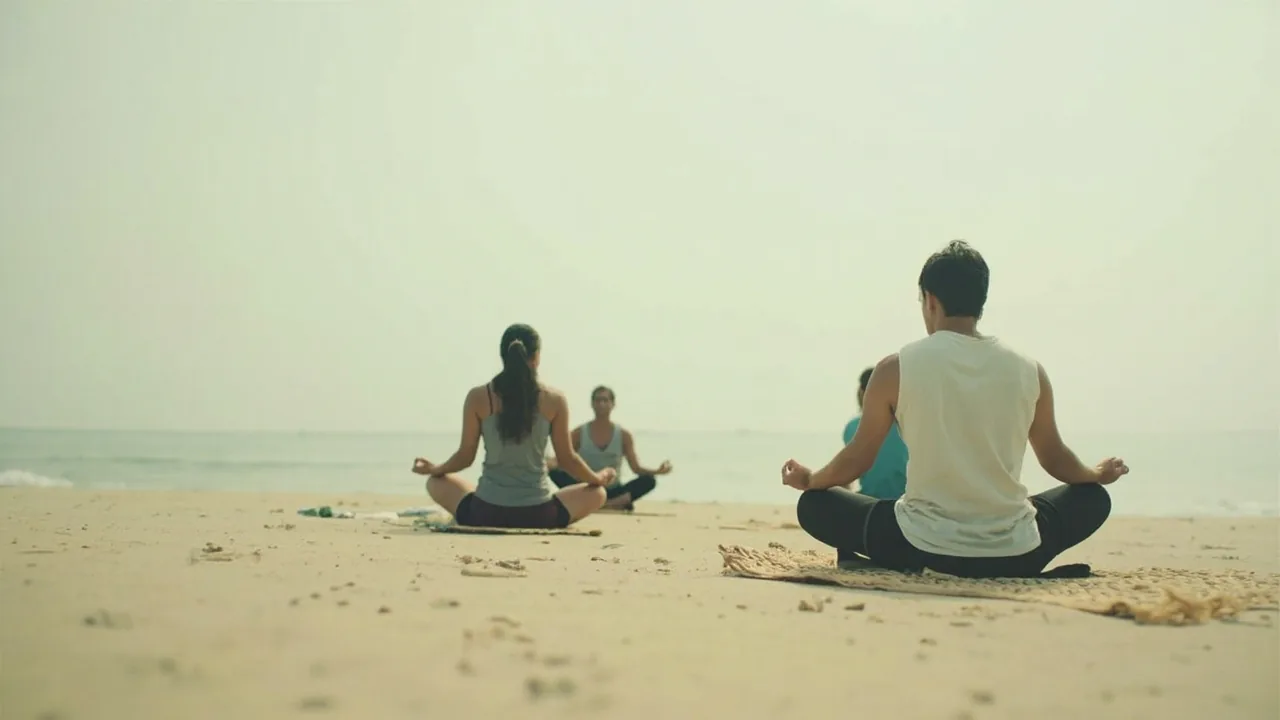
Best Beach Meditation Retreats in Southeast Asia: Complete Budget Backpacker Guide
You can find a real beach meditation retreat in Southeast Asia, with sea beach meditation music sessions on-site, on a backpacker budget of ₹1,500 (~$15.56) to ₹4,500 (~$46.68) per day, including dorm bed and three vegetarian meals. The sweet spots are Koh Phangan in Thailand, Mui Ne in Vietnam, and Koh Rong in Cambodia.
This guide cross-references 2026 retreat schedules across Koh Phangan, Mui Ne, and Koh Rong, verifies teacher lineages against local sangha registries, and compares published prices (converted at July 2026 INR rates) against what Indian travellers actually report paying on backpacker forums. We checked which retreats genuinely offer sea beach meditation music sessions alongside Indian vegetarian meals, and flagged places where the marketing outruns the practice.
Quick Answers
| What | Answer | Price (INR) |
|---|---|---|
| Average daily cost (budget retreat) | Dorm bed + 3 meals + 2 sessions | ₹1,500 (~$15.56) to ₹4,500 (~$46.68) |
| Typical retreat length | 3 to 10 days | , |
| Cheapest destination | Mui Ne, Vietnam (off-season) | From ₹1,200/day |
| Most popular destination | Koh Phangan, Thailand | , |
| Best for serious practice | Mui Ne, Vietnam (Zen-style) | , |
| Best beach + forest combo | Koh Rong, Cambodia | , |
| Visa needed (Indian passport) | Depends on country, check each embassy | , |
| Best months to go | November to February (dry season) | , |
| Best months to avoid | June to October (monsoon, many retreats close) | , |
What Is a Beach Meditation Retreat (and What Isn’t One)?
A proper beach meditation retreat is a structured program where you stay on-site for a fixed number of days, follow a daily schedule of guided meditation (usually Vipassana, Zen, mindfulness, or yoga-meditation hybrid), eat two or three vegetarian meals on-site, and abstain from alcohol, smoking, and often phones or laptops during sessions. The best ones sit directly on the sea, which is the entire point, the sound of waves becomes the natural metronome for breath work.
What it isn’t: a hostel with a 9 am beach yoga class you can join for ₹400 (~$4.15) a session. Those are drop-in classes, not retreats. A retreat implies immersion, structure, and a teacher you see every day. The difference matters because the depth of practice (and the impact on your trip budget) is wildly different.
What Most Indian Travellers Get Wrong About Beach Meditation Retreats
Mistake 1: Booking a “retreat” that’s a yoga holiday
Many places advertise “meditation retreat” on Booking.com but the schedule is 90% yoga, 10% meditation. Read the daily schedule before booking. If it doesn’t include at least one hour of seated silence per day, it’s a yoga retreat with branding, not a meditation retreat.
Mistake 2: Assuming Thailand is the cheapest option
Koh Phangan has the most retreats, which makes prices competitive, but Koh Rong in Cambodia and parts of northern Vietnam (Mui Ne, especially) can be 30-40% cheaper for the same quality. Vietnam is the dark horse here: Zen-influenced practice, fewer tourists, and much lower food and dorm costs.
Mistake 3: Going during monsoon season
From June to October, many beach retreats close entirely. The ones that stay open cut sessions short, move indoors, and the humidity makes sitting still for an hour miserable. November to February is the dry season across all of Southeast Asia, and most retreats are at full schedule.
Mistake 4: Bringing non-veg expectations
Almost every serious meditation retreat is fully vegetarian, and most are fully vegan. This is good news for Indian travellers: you’ll eat clean, fresh, plant-based food for the entire stay. If you’re worried about protein, most retreats serve tofu, tempeh, lentils, and eggs (where the practice allows).
Mistake 5: Not budgeting for “extras”
The retreat fee covers bed, meals, and sessions. It usually doesn’t cover: airport transfers, optional Thai/Vietnamese massages, one-on-one sessions with the teacher, or post-retreat accommodation if you want to stay a few extra days to decompress. Budget an extra ₹500 (~$5.19) to ₹1,500/day on top of the retreat price.
Step-by-Step: How to Choose and Book a Beach Meditation Retreat in Southeast Asia
Step 1: Decide your practice style
Different retreats teach different things. Vipassana-style (Goenka tradition) is the strictest: 10 days, 10 hours of sitting per day, complete silence, no music. Zen-style (popular in Vietnam) is more flexible: zazen (seated meditation) plus walking meditation, with the teacher available for dokusan (one-on-one interviews). Mindfulness-based retreats are the most beginner-friendly: shorter sessions, more guidance, often with sea meditation music or singing bowls.
If this is your first retreat, pick a 3 or 5-day mindfulness or Zen retreat. Don’t jump into a 10-day Vipassana silent retreat as your first outing.
Step 2: Pick your country and base
| Destination | Country | Style | Best for | Dry season |
|---|---|---|---|---|
| Koh Phangan | Thailand | Vipassana, Zen, mindfulness, yoga | Beginners, party-turned-spiritual travellers, biggest community | Dec to April |
| Koh Samui / Koh Tao | Thailand | Mostly yoga-meditation hybrids | Scuba divers who want a slow week | Dec to April |
| Mui Ne | Vietnam | Zen-influenced, longer stays | Serious practitioners, low-budget long stays | Nov to April |
| Koh Rong | Cambodia | Mindfulness, beginner-friendly | Off-beat, fewer tourists, cheap | Nov to March |
| Bali (Canggu/Uluwatu) | Indonesia | Yoga-meditation, wellness-heavy | Veg-friendly food scene, expensive by SEA standards | April to October |
Koh Phangan has the highest density of retreats on the planet. Mui Ne in Vietnam is the best value for serious practice. Koh Rong in Cambodia is the most under-booked option, which means fewer people, more teacher attention.
Step 3: Verify the retreat is legitimate
Five checks before you book:
- The retreat has a permanent location, not just a pop-up at a different hostel each season.
- The teacher has a lineage you can verify: a teacher they trained under, a tradition they belong to.
- The schedule is posted publicly and includes specific hours of seated meditation.
- The food menu is published and is vegetarian (most are vegan).
- Past attendees have written reviews on BookRetreats, BookYogaRetreats, or Trustpilot, not just on the retreat’s own website.
Step 4: Book 2 to 4 weeks ahead
Walk-ins work for the famous places (the Koh Phangan ones) during peak season (Dec to Feb), but specific teachers and longer programs fill up. Budget retreats in Vietnam and Cambodia rarely fill up, so last-minute is fine.
Step 5: Pack for the actual practice
You don’t need much. Bring: loose cotton or linen clothing (long pants, long sleeves for evening sessions when the AC is freezing), a reusable water bottle, earplugs for dorm-style retreats, a thin shawl for sitting, and your own meditation cushion if you have one. Most retreats provide cushions and mats.
Subodh’s Pro Tip: Don’t bring a laptop. Most retreats have a “no devices in common areas” rule, and even if they don’t, the point is to step out of the screen loop for a few days. Bring a paperback or notebook instead.
Step 6: Show up a day early
Arriving the day before your retreat starts lets you acclimatise, meet the teacher, settle into the dorm, and sleep properly.
The Three Best Budget Beach Meditation Retreats in Southeast Asia
Where to Stay (If You Want Pre- or Post-Retreat Beach Time)
Sea Meditation Quotes and Sea Side Meditation Music: What Works
Sea meditation music and quotes are a real part of the practice, not just Instagram fluff. The right audio and the right reading material matter more than people think, especially during silent walking meditation on the beach. Here are the actually-good ones, not the generic “be the ocean” stuff floating around Pinterest.
Sea side meditation music that holds up
- Ocean drum recordings: the sound of waves close-miked (headphones help). The rhythmic, low-frequency wash is the closest thing to a natural metronome for breath work. Search “ocean meditation 10 hours” on YouTube for unbroken sessions.
- Singing bowls recorded near water: Tibetan or Nepali singing bowls recorded outdoors with a faint ocean in the background. The point isn’t the bowl, it’s the half-second delay between bowl strike and wave wash.
- Binaural beach recordings: not all of them work, but the ones that layer 4 Hz theta waves under an ocean track do help with deep meditation. Stick to long-form (60+ minutes), short clips are useless.
- What to skip: generic “zen spa music” with synth pads and wind chimes. Most of it is too busy. The whole point of sea side meditation is the absence of competing sound.
Sea meditation quotes that aren’t cliché
A few lines that hold up under sustained sitting:
“You are not a drop in the ocean. You are the entire ocean in a drop.” - Rumi
“The sea does not reward those who are too anxious, too greedy, or too impatient. One who is a good visitor of the sea is also a good visitor of the self.” - Anne Morrow Lindbergh
“Salt water cures all wounds.” - Attributed to various, but the sentiment lands.
“In the midst of movement and chaos, keep stillness inside of you.” - Deepak Chopra
These aren’t the end of the practice, they’re the prompts. Bring one into the day’s session as a focus object, let it sit with you for the hour.
Connectivity and SIM Cards During a Retreat
Most retreats have Wi-Fi in common areas but ask you to keep phones out of session rooms. This is a feature, not a problem. If you need to stay reachable for work or family, set up an auto-reply and switch to airplane mode during sessions.
For SIM cards, buy a local tourist SIM on arrival. ESIM options also work.
| Country | SIM option | Price |
|---|---|---|
| Thailand | AIS or TrueMove tourist SIM | ₹859 (~299 THB or ~$8.91) |
| Vietnam | Viettel or Mobifone tourist SIM | ₹737 (~200,000 VND or ~$7.64) |
| Cambodia | Smart or Cellcard tourist SIM | ₹482 (~5 USD) |
| eSIM (all countries) | Get Nomad eSIM | From ₹578 (~6 USD) |
For longer retreats (10+ days) where you don’t want to think about connectivity at all, the eSIM is the cleanest option: no SIM-swap, no passport photocopy at the kiosk, just scan a QR code on arrival.
Getting Connected (Money, Insurance, Visas)
Visa rules differ by country, so check the official immigration site for the specific country you plan to visit before booking. For currency, bring a forex card loaded in USD and withdraw local currency at ATMs, this saves you 3-5% over airport counters. For more on this, see carry-money-india-abroad and best-forex-card-india.
FAQ
Do I need prior meditation experience to join a retreat? No. Most beginner-friendly retreats (3 to 5 day, mindfulness-style) assume zero experience and walk you through posture, breath, and basic technique on Day 1. The 10-day Vipassana silent retreats are the exception: those assume you understand the practice or have done at least one shorter course.
Can I use my phone during sessions? Almost every retreat asks you to leave phones in your room or in a designated “phone basket” during meditation. This is a feature. If you need to be reachable for emergencies, leave the phone with the front desk on silent and ask them to fetch you only for true emergencies.
Are these retreats safe for solo female travellers? Yes, most established retreats on Koh Phangan, Mui Ne, and Koh Rong are explicitly solo-female-friendly, with separate dorms for women and female-led sessions available. For broader context, see solo-female-travel-se-asia.
What if I don’t get along with the teacher or the group? Three-day retreats are short enough to finish. Five-day and longer retreats will let you leave early, though you’ll forfeit most of the fee. This is why starting with a 3-day retreat is the smarter move: you find out whether the teacher’s style fits you before committing to a longer stay.
Is it OK to fly out the same day the retreat ends? Not really. Give yourself at least one buffer day. After 5 to 10 days of early wake-ups, limited caffeine, and silent sitting, your body needs 24 hours to recalibrate before flying. Most travellers book one night in a nearby hostel post-retreat.
Can I extend my retreat if I want to stay longer? Yes, almost all retreats allow extensions subject to availability. Just ask the front desk on Day 2 or 3. Koh Phangan retreats are the easiest to extend, Koh Rong retreats sometimes have full bookings during Christmas and New Year.
What about alcohol and smoking during the retreat? Both are prohibited at serious meditation retreats. Koh Phangan is famous for full-moon parties, so if you’re staying on the island pre or post retreat, plan your party nights on either side of the immersion.
Subodh’s Take
Most Indian backpackers who want a beach meditation retreat end up booking whatever shows up first on BookRetreats or Hostelworld, which is fine for Koh Phangan but a waste if you’re already in Vietnam. Mui Ne in Vietnam is the underrated pick: Zen teaching, serious teachers, half the price of Thailand, and almost no tourists. Go there first. If you want the community feel and the bigger retreat scene, do Koh Phangan second. And if you want the quietest, most raw version of sea side meditation possible, Koh Rong in Cambodia is where the waves do most of the teaching. Three retreats, three different vibes, all under ₹25,000 (~$259.33) for five days. Pick the country you’re already in and book the week.
