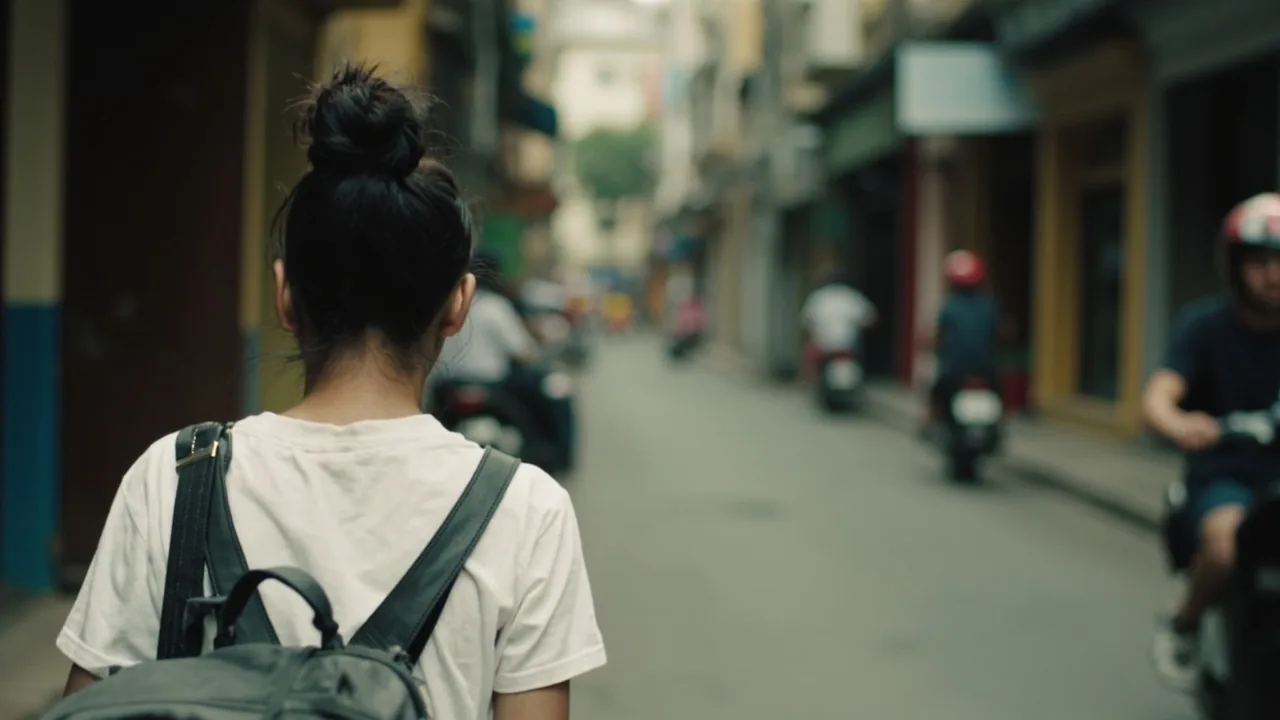
Solo Female Travel in SE Asia: A 2026 Safety Guide for Indian Women
Solo female travel southeast asia safe? Yes, Vietnam, Singapore, and Thailand rank safest for Indian women. Bali is safe but scooter-heavy; Cambodia and Laos work in tourist zones. Below: the country-by-country breakdown, the apps you need, the scams that target women specifically, and what most guides leave out.
This guide was cross-checked against official tourism advisories for Thailand (tourismthailand.org), Vietnam (vietnam.travel), and Indonesia (indonesia.travel), and against recent traveller reports on r/solotravel and India travel Facebook groups.
Quick Answers
| What | Answer | Price (INR) |
|---|---|---|
| Safest SE Asia country for solo Indian women | Singapore, followed by Vietnam and Thailand | — |
| Safest Thai cities | Chiang Mai, Bangkok (tourist zones), Koh Samui | — |
| Safest Vietnamese cities | Hanoi, Da Nang, Hoi An | — |
| Bali safety verdict | Safe for solo women, but watch scooters and drink-spiking in Canggu | — |
| Country to avoid as a first solo trip | Cambodia (Phnom Penh after dark), Myanmar (current travel advisory) | — |
| Best app for safe transport | Grab (covers Thailand, Vietnam, Malaysia, Singapore, Cambodia, Indonesia) | Free |
| Best stay type | Female-only dorm (try Hostelworld filters) | ₹400–₹1,200/night |
| Common scam against women | ”Tuk-tuk is closed” redirection, bar-fly drinks, jet-ski damage claims | — |
| Solo female travel in India vs SE Asia | Tier-1 Indian cities feel as safe as Hanoi or Chiang Mai; smaller towns are riskier than SE Asia equivalents | — |
What “Safe” Means Here
“Safe” for Indian women abroad splits into three buckets, and most articles mush them together. (1) Street harassment and groping: rare and socially punished in Vietnam and Singapore, common but not hostile in Thailand and Bali, acute on certain Thai islands during full-moon weeks. (2) Scams targeting solo women specifically: tuk-tuk lies, jet-ski damage claims, drink spiking in Khao San / Canggu / Phnom Penh bars. (3) Getting stranded: lost passport, missed border run, late-night taxi refusal. The first two are manageable with apps; the third is where actual risk lives for Indian women, more than violent crime ever is.
Country-by-Country Breakdown
Vietnam: The Default First Choice
Vietnam is the safest large SE Asia country for Indian women travelling solo in 2026. Is Vietnam safe for Indian travellers? Hanoi, Da Nang, and Hoi An all rank at the top of solo-female safety lists globally, and the reasons are structural: low violent crime against tourists, family-oriented culture that treats female visitors with curiosity rather than hostility, and good tourist infrastructure. Travellers report harassment is rarer here than in Bangkok.
Stays: female-only dorms exist in every major city. Book on Hostelworld with the “female-only dorm” filter. In Hanoi, the Old Quarter has the densest cluster.
Transport: Grab works in Hanoi, HCMC, and Da Nang. For sleeper buses and trains, book via 12go.asia or at local bus stations. Avoid xe-om (motorbike taxis) flagged down on the street at night.
What to watch: petty theft on overnight buses. Keep your day-pack as a pillow, not on the overhead rack.
Thailand: Safe but Context-Dependent
Thailand is statistically safe for solo women, with Bangkok, Chiang Mai, Koh Samui, and Krabi all rated low-risk. But the safety is uneven: it tracks your neighbourhood, your hour, and your alcohol intake more than your destination. Khao San Road after midnight is a different country from Chiang Mai’s Nimmanhaemin at 11 pm.
The two real risks for solo Indian women in Thailand are (a) drink spiking in tourist-bar zones, which travellers report in Bangkok, Patong, and parts of Koh Phangan, and (b) the “Tuk-tuk is closed today” redirection scam that funnels you into gem shops and tailoring stores. Both are avoidable with two habits: watch your drink, and ignore any tuk-tuk driver who tells you a famous site is closed. Read more in our scams to avoid in SE Asia guide.
Stays: Chiang Mai has the best female dorm scene. Bangkok’s Khao San area is convenient but loud and male-heavy; consider staying in Silom or Sukhumvit instead, then taking the river ferry to Khao San for a day visit.
Transport: Grab covers Bangkok, Chiang Mai, Phuket, Pattaya. For Bangkok, the BTS Skytrain and MRT are safer and cheaper than any road option after 9 pm.
What to watch: dress at temples (covered shoulders and knees, easy to forget when it’s 35°C). The Thai royal family is genuinely revered, and stepping on a baht coin (which has the king’s image) is a real offence.
Bali (Indonesia): The Tricky One
Bali is the destination most Indian women book first and regret most on the safety axis. It’s not violent, but it has a specific risk profile: scooter accidents (the single biggest injury cause for solo women in Bali, not crime), Canggu drink-spiking reports, and the “your jet-ski is damaged” scam at Kuta and Nusa Dua beaches. Ubud and Sidemen are safer than Canggu and Kuta. Sanur is the safest of the beach towns for solo women. See our is Bali good for solo travel guide for more.
If Bali is your first solo trip, stay in Ubud or Sanur for the first week, day-trip to Canggu, and skip the scooter entirely. The scooter accident rate among foreign tourists in Bali is high enough that several embassies, including the Australian one, have issued specific warnings.
Stays: female-only dorms exist in Ubud and Canggu. Canggu has a stronger solo-women hostel scene; Ubud has the quieter, more reflective vibe.
Transport: Gojek and Grab both work in Bali. The airport taxi cartel is notorious; pre-book a Grab or use the official airport taxi counter, never the touts inside the terminal.
What to watch: rabies. Bali has had a persistent dog rabies problem since 2008. Any dog bite, even from a pet, needs post-exposure prophylaxis within 24 hours.
Cambodia and Laos: Off the Main Tourist Track, Quieter
Cambodia and Laos are safe in tourist zones during the day. After dark, the calculus shifts: Phnom Penh and Vientiane have fewer Grab-style enforcement systems, late transport is harder, and female solo travellers report more catcalling and follow-home incidents than in Hanoi or Bangkok. The scam catalogue is also longer here, particularly in Cambodia (the milk-tea tuk-tuk scam, the “closed Angkor Wat today” lie, and bag-snatching from passing scooters).
That said, both are workable for confident solo women. Siem Reap, Luang Prabang, and Vang Vieng have hostel scenes with other solo women.
What to watch: Phnom Penh after 9 pm, period. Don’t walk alone in the riverside district after dark. Tuk-tuks only, never motorbike taxis flagged down on the street.
Singapore and Malaysia: The Easy Defaults
Singapore is the safest large city in SE Asia for solo Indian women, period. English is universal, Grab works flawlessly, the MRT runs until midnight, and violent crime against tourists is vanishingly rare. The downside is cost: dorm beds start at ₹2,614 (~35 SGD or ~$27.14) and a hawker meal runs ₹448-₹896 (~6-12 SGD or ~$4.65-$9.30), more expensive than anywhere else in the region by 2-3x.
Malaysia sits between Singapore and Thailand in safety perception. Kuala Lumpur, Penang, and Melaka all have good hostel scenes and low harassment risk. The Grab app works in KL.
The Apps You Need
The biggest practical safety upgrade for solo female travellers in SE Asia isn’t a self-defence class, it’s the right four apps on your phone before you board the plane.
- Grab: ride-hailing across Thailand, Vietnam, Malaysia, Singapore, Cambodia, Indonesia, and the Philippines. Use this instead of any tuk-tuk or unmarked taxi. Drivers are tracked, fares are fixed, and you can share your trip in real-time with someone at home. Download Grab.
- Google Maps with offline maps downloaded for every country you visit. Cell signal dies at borders; offline maps don’t.
- WhatsApp: the de facto communication app across SE Asia. Save your hostel, your embassy, and one trusted local contact before you arrive.
- Smart Traveller / SafetyWing app: track your trip and trigger emergency assistance. Insurance alone is useless if you can’t find the embassy number at 2 am.
For connectivity, get a local SIM at the airport on arrival (AIS in Thailand, Viettel in Vietnam, Telkomsel in Bali, all around ₹574-₹861 (~200-300 THB or ~$5.96-$8.94) / ₹736 (~200,000 VND or ~$7.64) / ₹800 (~150,000 IDR or ~$8.30) for a 30-day tourist pack with data). Compare options in our SIM card SE Asia guide. If you’d rather not queue at the airport desk, Get Nomad eSIM ships a working data eSIM before you fly, activates on landing, and avoids the SIM-swap scam at Bangkok airport kiosks.
Scams That Specifically Target Solo Women
These are the five I’ve seen reported most often by Indian women travelling solo, in rough order of frequency.
- The “famous temple is closed today” tuk-tuk lie (Bangkok, Siem Reap, Phnom Penh): a driver tells you the Grand Palace / Angkor Wat / Royal Palace is closed for a Buddhist holiday, and offers to take you to “another beautiful temple” (his cousin’s gem shop). It’s not closed. Ignore and walk to the official entrance yourself.
- Drink spiking (Khao San Road, Canggu, full-moon parties, Phnom Penh’s Pub Street): the only reliable defence is to watch your drink being poured, never accept open drinks from strangers, and avoid buckets in Thailand. If you feel unusually drunk after one drink, tell a bartender or hostel staff immediately.
- The “your jet-ski is damaged” scam (Kuta Beach, Nusa Dua, Pattaya): you return the rental to find pre-existing damage, and the operator demands ₹48,165-₹192,659 (~500-2,000 USD) to fix it. Photograph the jet-ski from every angle before you start, with the timestamp visible. Better: don’t rent jet-skis.
- Overcharging by motorbike taxi at night (Ho Chi Minh City, Hanoi, Phnom Penh): xe-om drivers quote 10x the day rate once they see a solo woman at 11 pm. Use Grab Bike or refuse and walk to a main road.
- The “free” photo with a performer / monk / snake (Bangkok, Chiang Mai, Siem Reap): they’ll drape a snake or pose with you and demand ₹287-₹1,435 (~100-500 THB or ~$2.98-$14.89) afterwards. Say no before the photo.
Accommodation: How to Vet a Hostel as a Solo Woman
The three checks that matter, in order:
- Female-only dorm available: filter on Hostelworld. A hostel that doesn’t offer one is usually a sign the operator doesn’t think about solo women guests.
- 24-hour reception with secure luggage storage: you will arrive at 6 am from an overnight bus and need a place to leave your pack until check-in.
- Lockers that fit a full backpack, not just a laptop. Bring your own padlock; hostel locks are usually missing or broken.
Beyond that: read the most recent 20 reviews on Hostelworld filtering for “solo female” or “felt safe.” Reviews from the last 3 months matter more than the hostel rating number, which is sticky and outdated.
If a hostel feels wrong on arrival, leave. No booking is worth the bad gut feeling. Hostelworld and Booking.com both allow same-day cancellation if you haven’t checked in.
Solo Female Travel in India vs Southeast Asia
This is the comparison the search intent wants and most guides skip. Tier-1 Indian cities (Mumbai, Bangalore, Delhi’s Hauz Khas area, Pune’s Koregaon Park, Pondicherry’s White Town, Goa) feel as safe as Hanoi, Chiang Mai, or Singapore’s Bugis for solo women. The infrastructure is there: UPI, Ola, Zomato, English-language signage.
Where SE Asia pulls ahead: (1) the hostel culture is genuinely solo-women-friendly, with female-only dorms as the default in most hostels, whereas Indian hostels are still emerging; (2) walking alone at 11 pm in central Hanoi or Bangkok is unremarkable, whereas the same in most Indian cities is not; (3) the cultural distance is short enough that you don’t have to relearn social norms from scratch.
Where India pulls ahead: (1) you speak the language; (2) zero visa cost or paperwork; (3) family is a flight or train ride away; (4) UPI means you can travel with almost no cash.
Honest verdict: for a first solo trip, Indian women who are nervous about the leap should start with Goa, Pondicherry, or a Zostel in Jaipur. For the second solo trip, SE Asia (specifically Vietnam or Thailand) is the natural next step. The skill set transfers.
What Most Guides Don’t Tell You
- The single biggest safety upgrade is sharing your live location with one person back home. Not the embassy, not a tour company, your mother or your best friend. IPhone’s “Find My” or WhatsApp live location, once a day, takes 5 seconds and is the actual reason most solo-women emergencies end well.
- You don’t need self-defence classes. You need situational awareness and the ability to walk away from a bad situation. The ₹19,266 (~200 USD) you were going to spend on a krav maga weekend in Mumbai buys you two weeks of hostel stays in Hanoi.
- Solo female travel is statistically safer than driving to the airport. SE Asia’s violent crime rate against foreign tourists is among the lowest in the world. The actual risks are scams, scooter accidents, and drink spiking, all of which are managed with apps, helmets, and not accepting open drinks.
- “Safe countries for solo female travellers” rankings move every year. The current 2026 consensus: Singapore, Japan, Vietnam, Thailand, Indonesia (Bali only, with scooter caution), Malaysia, Taiwan. India sits outside the top 20 in most rankings, but Indian women know that ranking reflects rural-urban averaging, not their actual daily experience in tier-1 cities.
- Travelling with a tour group isn’t safer, just more expensive. A Bananarchy-style fixed-route group solves the loneliness problem and the route-planning problem without solving any actual safety problem, because the same scams target solo and group travellers alike.
Before You Fly: The 10-Minute Solo-Women Checklist
- Grab installed, payment method added
- Offline Google Maps downloaded for every country
- Embassy phone number saved in WhatsApp (Indian missions in Bangkok: +66-2-670-2400, Hanoi: +84-24-3845-3732, Bali: +62-361-241-118)
- Live location sharing turned on with one person back home
- Travel insurance live before you board (SafetyWing covers solo women, no extra rider needed)
- Two passport photos in your day-pack, separate from your passport
- Photocopy of passport in your email inbox
- First three nights of accommodation pre-booked and confirmed
- Female-only dorm filter applied on every booking
- One trusted local contact per country (your hostel manager, a Couchsurfing host, a tour guide)
Subodh’s Pro Tip: The one habit that separates women who love solo travel from women who have one bad trip and quit: they treat bad situations as data, not destiny. A creepy tuk-tuk driver in Bangkok is a bad tuk-tuk driver in Bangkok, not a sign that SE Asia is unsafe. Reframe fast, move on.
Safety Alert: Always check your government’s official travel advisory before booking. Indian travellers: mea.gov.in for country-specific advisories. The US State Department and UK FCDO maintain detailed country-by-country pages that update within hours of any incident. Don’t rely on a blog post, including this one.
FAQ
Q: Is Vietnam safe for solo female Indian travellers? Yes, it’s the safest large SE Asia country. Hanoi, Da Nang, and Hoi An all rank at the top of global solo-female safety lists. Use Grab, stay in female-only dorms, and you will be fine.
Q: Which is safer for solo women, Thailand or Vietnam? Vietnam, by a small margin. Thailand is statistically safe but has more tourist-bar risks (drink spiking, jet-ski scams) than Vietnam. For a first solo trip, Vietnam’s Hoi An and Da Nang are easier than Bangkok.
Q: Is Bali safe for solo female travellers? Yes for Ubud and Sanur. Canggu and Kuta have more drink-spiking reports. The bigger Bali risk for solo women is scooter accidents, not crime. If you don’t ride a scooter in India, don’t start in Bali.
Q: Is solo female travel in India safer than in SE Asia? Tier-1 Indian cities (Mumbai, Bangalore, Goa, Pondicherry, parts of Delhi) are as safe as Hanoi or Chiang Mai. Smaller Indian towns are riskier than equivalent SE Asia towns. The cultural distance is shorter at home, which is its own safety.
Q: What is the safest country in Asia for a solo female traveller? Singapore, by most independent safety indices including the Global Peace Index. After that, Japan and South Korea, then Vietnam, Thailand, Malaysia, and Taiwan.
Q: Do I need different travel insurance as a solo female traveller? No. Standard policies like SafetyWing cover solo women identically. What matters is the medical evacuation and trip-interruption clauses, which are standard inclusions, not gendered.
Q: Should I book a tour or go fully solo? For your first solo trip, a fixed-route small group (like Bananarchy) solves the route-planning, accommodation, and visa logistics, so you can focus on the actual experience. By the second trip, you’ll likely want to go fully solo.
Subodh’s Take
Indian women hesitate to travel solo abroad for the same reason Indian men don’t: family pressure, the “log kya kahenge” loop, and the belief that solo female travel abroad is somehow more dangerous than solo female travel in India, which millions do every year. SE Asia is the right region to break that ceiling: short flights, English widely spoken, vegetarian food available, and a hostel culture designed for solo women. Start with Vietnam, graduate to Thailand, save Bali for when you have 10 days and a scooter licence. Browse our SE Asia backpacking hub for country-specific budget guides, and check the packing list for SE Asia before you go.
— Subodh
