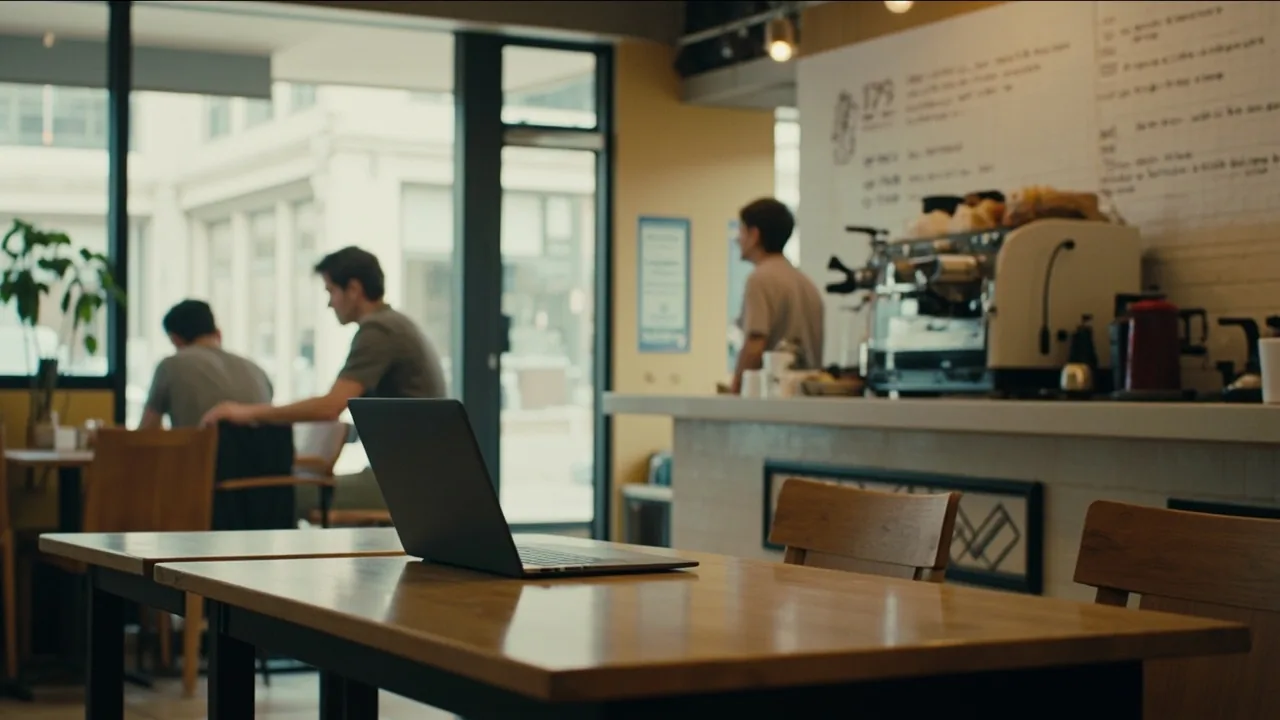
Best Cafes for Specialty Coffee & Coworking in Southeast Asia’s Top Cities
Southeast Asia is the sweet spot for coffee-loving laptop travellers, and the cafes in city centres from Bangkok to Hanoi prove it. A flat white in a converted shophouse costs less than a Starbucks in Delhi. This guide covers each city with districts, filter-coffee prices, and wifi reality. For a regional overview, see our SEA backpacking hub.
The coffee scene here did not exist in its current form ten years ago. Vietnam always had its cà phê sữa đá culture. Thailand and Indonesia had kopi. But the third-wave roasting, the pour-over bars, and the laptop-friendly policies are a 2020s phenomenon, and the cities that embraced it fastest (Chiang Mai, Hanoi, Bali, Singapore) are now the ones where you can work from a cafe all day without anyone giving you the side-eye.
Subodh’s Pro Tip: Filter coffee is the move in SEA, not espresso. The beans are roasted light for filter methods and the milk drinks are usually a 50/50 split. If a cafe offers a V60 or a Kalita, order that. If they only do espresso, ask for a piccolo or a cortado, the milk drinks here tend to be small (4-6 oz) and the locals consider a 12 oz latte an “American size.”
Quick Answers
| What | Answer | Price (INR) |
|---|---|---|
| Cheapest specialty filter coffee | Hanoi, Vietnam (small Vietnamese-run cafes) | ₹92 (~25,000 VND or ~$0.95) |
| Best city for laptop-cafe density | Chiang Mai, Thailand (Nimmanhaemin) | ₹258 (~90 THB or ~$2.67) |
| Best wifi in a cafe | Singapore (most cafes test 100+ Mbps) | ₹598 (~8 SGD or ~$6.20) |
| Best city for vegan milk options | Bali, Indonesia (Canggu) | ₹242 (~45,000 IDR or ~$2.50) |
| Most expensive city for cafe work | Singapore (espresso + pastry) | ₹897 (~12 SGD or ~$9.29) |
The SEA Coffee Map at a Glance
Thailand: Bangkok and Chiang Mai. Bangkok’s scene is newer and more spread across Sukhumvit (Ari, Phrom Phong, Thonglor). Chiang Mai’s Nimmanhaemin Road is the single densest laptop-cafe street in the region.
Vietnam: Hanoi and Ho Chi Minh City. Hanoi’s cafe density is wild, you cannot walk five minutes in the Old Quarter without passing three. The Vietnamese tradition means strong robusta-and-arabic blends, and the third-wave spots add pour-overs and oat milk. Ho Chi Minh (District 1 and District 2/Thao Dien) is more expat-priced.
Indonesia: Bali (Canggu and Ubud). Canggu is the surf-and-laptop crowd. Ubud is the yoga-and-laptop crowd. The beans are excellent, the wifi is decent, and you can spend the entire day on one drink with no fuss.
Malaysia: Kuala Lumpur and Penang. KL has a serious specialty scene concentrated in Bangsar, TTDI, and Damansara. Penang (George Town) is cheaper and slower-paced.
Singapore: Tiong Bahru, Joo Chiat, Tanjong Pagar, Bugis. Small cups, fast wifi, brutalist interiors. Not cheap, but the most reliable.
Cambodia: Phnom Penh. A small but serious scene around BKK1 and the riverside. Cheap.
Laos: Vientiane. Tiny scene, mostly along Setthathirath Road.
Subodh’s Pro Tip: The “cafe near Hitech City” search returns Hyderabad, not SEA. But if you are coming from Hyderabad’s Gachibowli belt, the SEA cafe scene will feel familiar, just swap Chaai for an iced Vietnamese coffee and you’ll be fine.
Bangkok: Specialty Coffee Across the BTS
Bangkok’s coffee map runs along the BTS Sukhumvit Line. The old cafe district was Ari (around Sukhumvit Soi 7), but the action has moved east to Phrom Phong, Thonglor, and Ekkamai over the last three years. The Bangkok side is what most travellers call “Bangkok cafes in city centre,” though the centre is Sukhumvit.
Where to work: A laptop-friendly cafe on Sukhumvit Soi 11 or Soi 55 (Thonglor). The standard day-rate is one filter coffee (₹258-₹344 (~90-120 THB or ~$2.67-$3.57)) plus a pastry or snack. Most cafes have power outlets along the wall and quiet zones on the second floor.
Beans and roasters: Bangkok roasts seriously. You will find single-origin Ethiopians, Kenyans, and Panamas at every third-wave spot. If you want to taste the local roasting, find a cafe that uses a Thai roaster on their bar.
Wifi: 30 to 60 Mbps typical, depending on how busy the cafe is.
Safety Alert: Bangkok BTS-area cafes are safe. Pickpocketing is rare inside cafes; the bigger risk is leaving your laptop on a chair when you go to the bathroom, even for 60 seconds. Travellers report occasional grab-and-runs.
Chiang Mai: The Laptop Capital of SEA
Chiang Mai’s Nimmanhaemin Road (often just “Nimman”) is the single densest cafe street in Southeast Asia. There are roughly 200 cafes within a 1.5 km stretch, and most are explicitly laptop-friendly. The city has been the de facto digital-nomad capital since 2017 and the infrastructure has caught up.
Where to work: Nimmanhaemin Road has several multi-level malls and complexes with clusters of cafes sharing the same wifi, and the surrounding streets have many more independent laptop-friendly cafes.
Beans and roasters: Northern Thai arabica grown by hill-tribe cooperatives. You can taste the difference: lighter, more floral, slightly fruity compared to standard Thai supermarket coffee.
Wifi: 50 Mbps is the baseline at any “laptop cafe,” and dedicated coworking spaces around the city test 200+ Mbps if you need a Zoom-stable connection.
Subodh’s Pro Tip: Nimman cafes do not enforce a “one drink, all day” policy like Bali does. You can sit on one filter coffee for five hours, and staff will refill your water without charging. This is the single biggest reason Chiang Mai remains the laptop capital.
Indian food nearby: Nimman has multiple Indian restaurants within a 10-minute walk. The best for veg is on the east end of the street. For a more detailed local map of Indian restaurants in the area, see Indian food in Chiang Dao for the regional context, and for broader Thai food safety tips check our Thailand street food safety guide (yes, the vegetarian strategies transfer).
Hanoi: Where Coffee is a Daily Habit, Not a Treat
Hanoi’s cafe density is the highest in the region. Vietnamese people drink coffee all day, so the cafes are not designed for laptops in the way Chiang Mai’s are, but a clear subset of newer spots have set up laptop zones and reliable wifi. The best laptop-cafes in Hanoi are concentrated in the Tay Ho (West Lake) area and along the streets just west of the Old Quarter.
Where to work: Tay Ho (the expat district around West Lake). A standard Hanoian cafe here serves a coconut coffee (₹92-₹129 (~25,000-35,000 VND or ~$0.95-$1.33)) and lets you work all afternoon. The Old Quarter has more atmospheric cafes but tighter seating and more noise.
Beans and roasters: Vietnamese robusta-and-arabica blends. The robusta gives Vietnamese coffee its chocolatey, heavy body. Third-wave spots in Hanoi now offer single-origin arabicas for pour-over, but the local way is still cà phê sữa đá (iced coffee with condensed milk) or cà phê trứng (egg coffee, an Hanoi specialty).
Wifi: Variable. Tay Ho cafes typically run 40 Mbps. Old Quarter cafes drop to 10-20 Mbps in the afternoon when every tourist has a phone on the network.
For a deep-dive on egg coffee specifically, see our Hanoi egg coffee guide.
Ho Chi Minh City: Expat-Priced and Polished
HCMC’s specialty scene is younger than Hanoi’s but more polished. District 1 (around Dong Khoi and the backpacker area) has rooftop cafes with city views. District 2 (Thao Dien) is where the expat families live, and the cafes there have high chairs for kids and reliable wifi for parents. District 7 (Phu My Hung) is newer and quieter.
Where to work: District 2 (Thao Dien). A standard filter coffee here runs ₹184-₹258 (~50,000-70,000 VND or ~$1.91-$2.67). The cafes are spacious, have many power outlets, and explicitly welcome laptops.
Beans and roasters: HCMC roasters lean toward Brazilian and Colombian blends, but single-origins from Ethiopia and Kenya are common. The milk drinks are better here than in Hanoi because the baristas have more training.
Wifi: 50 to 100 Mbps at the Thao Dien cafes.
Bali: Canggu and Ubud
Bali’s cafe scene is two cities: Canggu (beach, surf, expats) and Ubud (yoga, rice terraces, slower pace). Both have good wifi and laptop-friendly hours, though most places enforce some kind of laptop-window or order policy.
Canggu: The beach-and-laptop crowd. Cafes cluster along Batu Bolong and Echo Beach. A coconut or a single-origin espresso runs ₹242 (~45,000 IDR or ~$2.50). The wifi at the cafe-bars is decent (40 Mbps), but you cannot Zoom without buying a “work pass” or upgrading your order, and most places close by 6 PM.
Ubud: The yoga-and-laptop crowd. Cafes cluster along Jalan Hanoman and Jalan Bisma. A standard iced latte or a turmeric latte runs ₹188-₹295 (~35,000-55,000 IDR or ~$1.95-$3.06). Ubud cafes are quieter and stay open later, some until 10 PM.
Beans and roasters: Indonesian arabica is excellent. Sumatra Mandheling, Java, Bali Kintamani. Most cafes roast in-house or source from local roasters.
Subodh’s Pro Tip: Bali cafes are aggressive about “laptop hours.” Most have a 9-to-4 or 10-to-5 window where laptops are welcome, and after that they become dinner-only. Check before you settle in, or be prepared to relocate for dinner.
For broader Bali food context beyond coffee, our Southeast Asia bar and food guide covers the non-cafe food and nightlife scene.
Kuala Lumpur and Penang
Malaysia’s coffee scene divides along a serious-versus-casual line. KL is serious. Penang is casual but rising.
KL: Bangsar, TTDI, and Damansara Heights are the cafe districts. A third-wave cafe here serves single-origin filter coffee (₹425-₹590 (~18-25 MYR or ~$4.40-$6.11)) and has proper wifi and power outlets. The cafe interiors are gorgeous, Malaysian design magazines regularly feature them.
Penang (George Town): Cheaper, slower, more local. A standard kopi (traditional Malaysian coffee) runs ₹71-₹142 (~3-6 MYR or ~$0.73-$1.47), but specialty cafes charge ₹330-₹472 (~14-20 MYR or ~$3.42-$4.89) for filter coffee. The cafe scene is concentrated around Lorong Stewart and Beach Street.
Beans and roasters: Malaysian roasters pull from Indonesia, Ethiopia, and Brazil. Single-origin Ethiopians are the most common.
Wifi: KL cafes 60 Mbps, Penang cafes 30 to 50 Mbps.
Singapore
Singapore is the most expensive cafe-work city in Southeast Asia, but also the most reliable. A standard espresso (₹598 (~8 SGD or ~$6.20)) is double what you pay in KL or Bangkok, but the wifi is faster, the seats are more comfortable, and you will not get rained on.
Where to work: Tiong Bahru (heritage neighbourhood, multiple cafes), Joo Chiat (Peranakan area, newer cafes), Tanjong Pagar (CBD, business-friendly cafes), and Bugis (mixed, student-friendly).
Beans and roasters: Singapore imports everything. You can find Panamanian Gesha, Kenyan AA, Yemeni natural, and Indonesian Mandheling at the top cafes.
Wifi: 100+ Mbps typical. The MRT stations have free wifi as a backup.
Safety Alert: Singapore cafe theft is rare. The bigger concern is the price: an espresso (₹598 (~8 SGD or ~$6.20)) and a pastry (8 SGD) is 16 SGD before tax and service, which converts to over ₹1,200 for a single sitting. Budget accordingly.
For broader food costs across Thailand beyond cafe coffee, check our Thailand food cost per day breakdown for the full daily spend picture.
Phnom Penh
Cambodia’s specialty coffee scene is small but serious. The cafes cluster around BKK1 (the expat district) and along the riverside. A standard flat white runs ₹290-₹483 (~3-5 USD), which is roughly half of Singapore.
Beans and roasters: Mostly imported (Ethiopian, Colombian). The local roaster scene is small but growing.
Wifi: 20 to 40 Mbps typical. Power cuts are more common than in the other SEA cities, so check before you settle in for a Zoom call.
Vientiane
Laos’s coffee scene is tiny. The cafes are concentrated along Setthathirath Road. A standard Lao coffee (often served strong and sweet, similar to Vietnamese style) runs ₹108-₹173 (~25,000-40,000 LAK or ~$1.12-$1.79).
Beans and roasters: Lao arabica from the Bolaven Plateau is excellent. Most cafes use local beans.
Wifi: Variable, 10 to 30 Mbps.
Connectivity and SIM Cards
You will need data to look up cafes, translate menus, and run Google Maps. Every SEA country has a tourist SIM at the airport (AIS in Thailand, Viettel in Vietnam, Smart in Cambodia, Star Telekom in Laos, etc.) for around ₹858 (~299 THB or ~$8.89) for 7-15 days of data.
For shorter trips or backup connectivity, an eSIM is the move. Get Nomad eSIM gives you data across multiple SEA countries on a single install, useful if you are doing Bangkok-Hanoi-Bali in two weeks.
Daily Cafe Budget (SEA, July 2026)
Prices below are converted at mid-2026 rates and rounded for readability.
| City | Filter Coffee | Espresso | Latte | Pastry |
|---|---|---|---|---|
| Bangkok | ₹258-₹344 (~90-120 THB or ~$2.67-$3.57) | ₹230-₹287 (~80-100 THB or ~$2.38-$2.97) | ₹316-₹402 (~110-140 THB or ~$3.27-$4.16) | ₹230-₹430 (~80-150 THB or ~$2.38-$4.46) |
| Chiang Mai | ₹201-₹287 (~70-100 THB or ~$2.08-$2.97) | ₹172-₹258 (~60-90 THB or ~$1.78-$2.67) | ₹258-₹344 (~90-120 THB or ~$2.67-$3.57) | ₹172-₹344 (~60-120 THB or ~$1.78-$3.57) |
| Hanoi | ₹92-₹166 (~25,000-45,000 VND or ~$0.95-$1.72) | ₹110-₹184 (~30,000-50,000 VND or ~$1.14-$1.91) | ₹147-₹221 (~40,000-60,000 VND or ~$1.53-$2.29) | ₹129-₹221 (~35,000-60,000 VND or ~$1.33-$2.29) |
| HCMC | ₹184-₹294 (~50,000-80,000 VND or ~$1.91-$3.05) | ₹166-₹239 (~45,000-65,000 VND or ~$1.72-$2.48) | ₹221-₹313 (~60,000-85,000 VND or ~$2.29-$3.24) | ₹184-₹331 (~50,000-90,000 VND or ~$1.91-$3.43) |
| Bali (Canggu) | ₹215-₹322 (~40,000-60,000 IDR or ~$2.23-$3.34) | ₹188-₹269 (~35,000-50,000 IDR or ~$1.95-$2.78) | ₹269-₹403 (~50,000-75,000 IDR or ~$2.78-$4.17) | ₹215-₹430 (~40,000-80,000 IDR or ~$2.23-$4.45) |
| Bali (Ubud) | ₹188-₹295 (~35,000-55,000 IDR or ~$1.95-$3.06) | ₹161-₹242 (~30,000-45,000 IDR or ~$1.67-$2.50) | ₹242-₹376 (~45,000-70,000 IDR or ~$2.50-$3.90) | ₹188-₹376 (~35,000-70,000 IDR or ~$1.95-$3.90) |
| Kuala Lumpur | ₹425-₹590 (~18-25 MYR or ~$4.40-$6.11) | ₹283-₹425 (~12-18 MYR or ~$2.93-$4.40) | ₹377-₹519 (~16-22 MYR or ~$3.91-$5.38) | ₹236-₹425 (~10-18 MYR or ~$2.44-$4.40) |
| Singapore | ₹598-₹897 (~8-12 SGD or ~$6.20-$9.29) | ₹449-₹748 (~6-10 SGD or ~$4.65-$7.75) | ₹598-₹897 (~8-12 SGD or ~$6.20-$9.29) | ₹449-₹897 (~6-12 SGD or ~$4.65-$9.29) |
| Phnom Penh | ₹290-₹483 (~3-5 USD) | ₹290-₹386 (~3-4 USD) | ₹386-₹579 (~4-6 USD) | ₹290-₹483 (~3-5 USD) |
| Vientiane | ₹108-₹173 (~25,000-40,000 LAK or ~$1.12-$1.79) | ₹130-₹194 (~30,000-45,000 LAK or ~$1.34-$2.01) | ₹151-₹238 (~35,000-55,000 LAK or ~$1.57-$2.46) | ₹108-₹194 (~25,000-45,000 LAK or ~$1.12-$2.01) |
City With the Most Cafes (Per Capita and Per Square Km)
Per capita (cafe-to-resident ratio): Hanoi wins. You cannot walk five minutes in the Old Quarter without passing three cafes.
Per square kilometre (density of laptop-friendly cafes): Chiang Mai’s Nimmanhaemin wins. About 200 cafes in 1.5 km.
Per tourist (cafe-to-visitor ratio): Ubud. Tourists outnumber residents, so every cafe is packed.
For traveller base-camps, Chiang Mai remains the winner, but if you want a serious cafe work trip with more variety, Hanoi and Bali are also strong.
Vegan and Plant-Based Milk in SEA Cafes
Vegan milk (oat, almond, soy) is now standard at every third-wave cafe in the region. Some local notes:
Thailand: Soy milk is traditional in Thai coffee, and most cafes have it. Oat milk is available at every third-wave spot but costs ₹57-₹86 (~20-30 THB or ~$0.59-$0.89) extra.
Vietnam: Coconut milk is the local plant milk. Coconut coffee is a Hanoi specialty. Oat milk is harder to find in traditional cafes but standard in third-wave spots.
Indonesia: Coconut milk is everywhere. Bali cafes lead on plant-milk options.
Malaysia: Soy and oat milk both standard.
Singapore: Every plant milk you can imagine, including pistachio and hazelnut.
Cambodia and Laos: Oat milk is rare outside the expat-area cafes in Phnom Penh and Vientiane. Coconut milk is the default.
Wifi Speed Rankings (2026)
| City | Typical Cafe Wifi | Best Cafe Wifi |
|---|---|---|
| Singapore | 100 Mbps | 300+ Mbps |
| Kuala Lumpur | 60 Mbps | 150 Mbps |
| Chiang Mai | 50 Mbps | 200 Mbps (coworking spaces) |
| Bangkok | 40 Mbps | 100 Mbps |
| HCMC (Thao Dien) | 50 Mbps | 100 Mbps |
| Hanoi (Tay Ho) | 40 Mbps | 80 Mbps |
| Bali (Canggu) | 40 Mbps | 80 Mbps |
| Bali (Ubud) | 30 Mbps | 60 Mbps |
| Penang | 30 Mbps | 70 Mbps |
| Phnom Penh | 25 Mbps | 50 Mbps |
| Vientiane | 15 Mbps | 30 Mbps |
For most laptop work (Slack, email, browser-based apps), 25 Mbps is enough. For Zoom calls and screen sharing, you want 50 Mbps minimum. For video editing or large file uploads, find a coworking space, not a cafe.
Common Mistakes Indian Travellers Make
Mistake 1: Assuming “no sugar” means “with milk.” In SEA cafes, “no sugar” means no sugar, the milk is still there. Specify “no sugar, no milk” if you want black coffee.
Mistake 2: Confusing “local coffee” with “specialty coffee.” Traditional Vietnamese cà phê sữa đá and Thai kopi are not specialty, they are strong, sweet, condensed-milk drinks. If you want a third-wave experience, specifically ask for “filter coffee” or “pour-over.”
Mistake 3: Sitting at a cafe for 6 hours on one espresso in Singapore. A few Singapore cafes enforce a “laptop hours” policy or expect you to reorder every 2 hours. In Bali, you can do it, in Singapore, you cannot.
Mistake 4: Going to Starbucks. The third-wave cafes have better beans, better milk, and cheaper prices. Starbucks in SEA is for tourists who do not know better.
Mistake 5: Skipping the Vietnamese cà phê sữa đá entirely. It is not specialty, but it is one of the best coffee experiences in the world, and it costs about ₹92 (~25,000 VND or ~$0.95). Drink it at least once.
Food Tours Worth the Money
If you want a guided tour through the cafe scene, food tours are a strong option. They handle the logistics and you eat what locals eat. A standard food tour in Bangkok, Hanoi, or Singapore runs ₹2,869-₹4,304 (~1,000-1,500 THB or ~$29.72-$44.58), which is fair for 4 hours of food and a guide.
Browse food tour options in advance, especially in Singapore where last-minute availability is limited.
For broader food-tour context across the region, see our food tour guide for backpackers.
Safety Notes for Cafe Workers
Bag safety: Use a locker if available. Most coworking spaces have them. Cafes rarely do. Travellers report occasional grab-and-runs in tourist-area cafes.
Power outlet safety: Bring a universal adapter. SEA uses a mix of Type A (US), Type B (US), Type C (EU), and Type G (UK). A universal adapter solves all of them.
Pickpocketing: Low risk inside cafes. Higher risk on the streets and in night markets.
Weather: Monsoon season (June-October in most of SEA) brings afternoon thunderstorms. Pick a cafe with indoor seating, not a street-side bench.
Cultural: Remove shoes if the cafe has a low-table seating area. In Thailand and Vietnam, this is expected.
For broader safety context across the region, street food safety in Southeast Asia a budget backpackers guide to what to eat and what to avoid covers food-specific concerns.
For up-to-date government advisories on any country in this list, check the Indian Ministry of External Affairs travel advisory page (mea.gov.in) before departure.
FAQ
Is wifi reliable enough for full-time remote work in Chiang Mai?
Yes. Nimmanhaemin cafes run 50 Mbps typical, and coworking spaces around the city run 200+ Mbps. Most remote workers in Chiang Mai use a coworking space as a backup for Zoom calls and meetings.
Which city is the cheapest for cafe work?
Vientiane, then Phnom Penh, then Hanoi. A full day of cafe work in Vientiane (coffee plus snacks) runs about ₹259 (~60,000 LAK or ~$2.69).
Which city has the best specialty coffee beans?
Subjective, but Bangkok, Singapore, and KL have the deepest single-origin selection. Bali’s local beans (Kintamani) are underrated and worth trying if you are on the island.
Are SEA cafes laptop-friendly?
Most third-wave cafes in Bangkok, Chiang Mai, Hanoi, Bali, KL, and Singapore are laptop-friendly. A few Singapore and Bali cafes enforce laptop hours. Phnom Penh and Vientiane cafes are laptop-friendly but with weaker wifi.
Can I get oat milk in Hanoi?
Yes, at every third-wave cafe in Tay Ho and the Old Quarter. It is not yet at the traditional cà phê sữa đá stalls. Coconut milk is the local plant-milk alternative.
Is it safe to leave my laptop at a cafe in SEA?
Inside the cafe: yes, for short breaks (5-10 minutes). Outside the cafe: no. Travellers report grab-and-runs in tourist-area cafes. Use a laptop lock if you have one.
Which city is best for a first-time SEA cafe-work trip?
Chiang Mai. The cafe density, the laptop-friendly culture, the cost, and the Indian food scene make it the easiest entry point.
Subodh’s Take
If you are an Indian remote worker who wants to escape Mumbai rent, Chiang Mai is still the move. The Nimman cafe density is unmatched, the cost is low, and the wifi is reliable. If you want a more urban or beach experience, Bangkok or Bali (Canggu) are the next best options. Singapore is for when you need reliability over cost. Hanoi is for the caffeine enthusiast who wants a daily coffee habit. Pick one base, plan 30 days, and you will have enough data to decide if you want to stay longer. The Southeast Asian cafe scene is the single best thing about the region for laptop workers in 2026, and the prices still beat anything in Goa or Bangalore.
