Best Markets in Southeast Asia: A Complete Backpacker’s Guide (2026)
Southeast Asia has the best markets of any region on earth for budget travellers. This guide covers the twelve I’d build a trip around, country by country, with what each one is known for, when it runs, and how to navigate it. For related planning, see our guide on Sea Backpacking Hub.
Subodh’s Pro Tip: Most SEA markets sell the same six things (printed tees, elephant pants, bootleg bags, fake Ray-Bans, hemp bracelets, woven scarves). The trick is to know what each market is genuinely good at, then ignore the rest. Bangkok Chatuchak is for vintage tees and home goods, Chiang Mai Sunday Walking Street is for hill-tribe crafts, and Bali Sukawati is for the same wood carvings you’ll see marked up 3x in Ubud.
What Counts as a “Market” Here, Anyway?
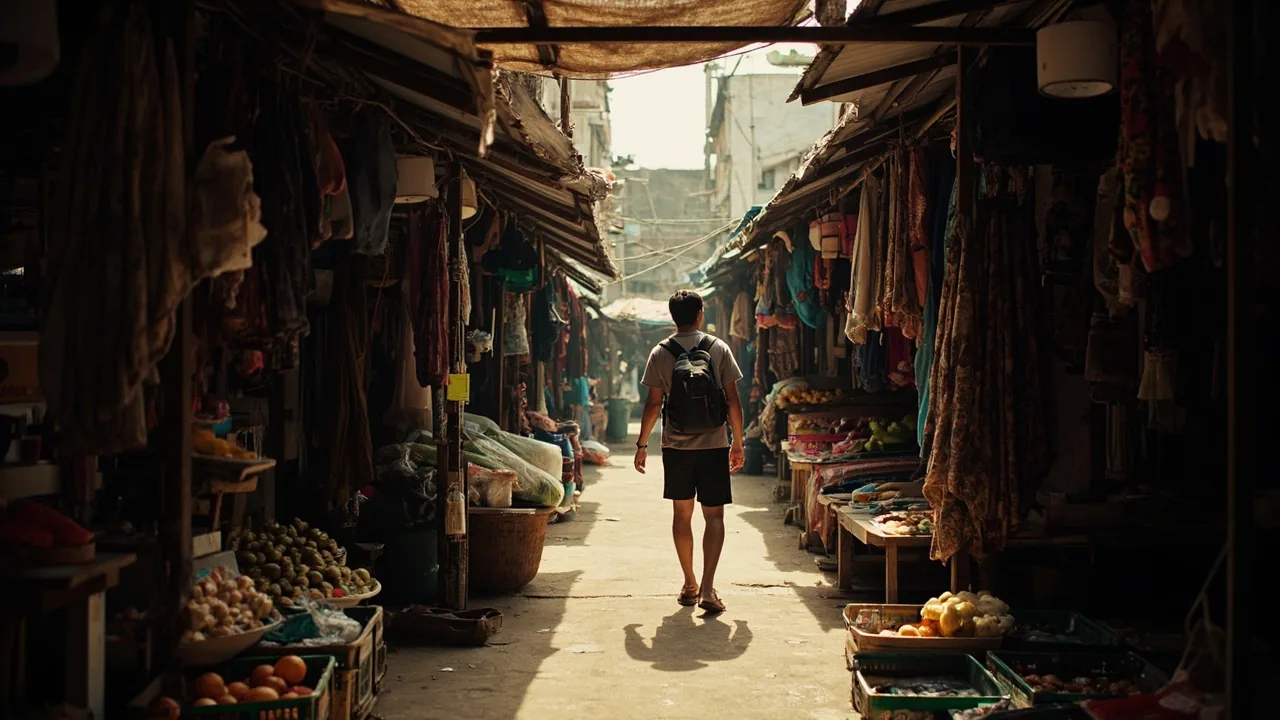
In Southeast Asia, the word “market” covers a wider range than what Indians usually picture. A “market” can be: a permanent covered bazaar (Bangkok’s Chatuchak, Bangkok’s Pratunam, Jakarta’s Tanah Abang), a once-a-week night walking street that closes a road to traffic (Chiang Mai Sunday, Luang Prabang Night Market, Hanoi Old Quarter weekend streets), a floating market on a canal (Damnoen Saduak, Cai Rang, Amphawa), or a wet market that turns into a street-food court at dusk (Chiang Mai’s Warorot, Hanoi’s Dong Xuan, Phnom Penh’s Central). Each type has its own rhythm: night walking streets peak at 8-10 PM, floating markets need you there by 6 AM, flea circuits close by 6 PM, and weekend walking streets shut shop by 11 PM.
For an Indian backpacker, the practical difference is: night walking streets = food + souvenirs in one go, floating markets = photo op + boat ride + breakfast, flea markets = bulk shopping, wet markets = lunch.
Quick Answers: Best Markets in Southeast Asia at a Glance
| What | Answer | Price (INR) | What it’s known for | Entry |
|---|---|---|---|---|
| Chatuchak Weekend Market | Thailand (Bangkok) | Sat-Sun, 9 AM-6 PM | Vintage tees, home goods, plants, pets | Free |
| Pratunam / Platinum Fashion Mall | Thailand (Bangkok) | Daily | Wholesale fashion | Free |
| Chiang Mai Sunday Walking Street | Thailand | Sun, ~4 PM-10:30 PM | Hill-tribe crafts, lanterns, silver | Free |
| Chiang Mai Saturday Walking Street (Wualai) | Thailand | Sat, ~4 PM-10:30 PM | Silver, woodwork, smaller crowd | Free |
| Warorot Market | Thailand (Chiang Mai) | Daily, day + evening food court | Northern Thai food, dried chili, souvenirs | Free |
| Damnoen Saduak Floating Market | Thailand (Ratchaburi) | Daily, 7 AM-noon | Boat noodles, palm sugar, photo op | ₹572 (~200 THB or ~$5.94) boat ride |
| Amphawa Floating Market | Thailand (Samut Songkhram) | Fri-Sun, afternoons | Seafood, firefly boat rides at night | Free entry |
| Pak Khlong Talat (Flower Market) | Thailand (Bangkok) | 24 hours, peak 2 AM-5 AM | Wholesale flowers, late-night food | Free |
| Hoi An Night Market | Vietnam | Daily, ~5 PM-11 PM | Lanterns, tailor clothes, white rose dumplings | Free |
| Cai Rang Floating Market | Vietnam (Can Tho) | Daily, ~5 AM-9 AM | Wholesale fruit, boat noodles | ₹367-₹551 (~100,000-150,000 VND or ~$3.81-$5.72) boat |
| Ben Thanh Market | Vietnam (HCMC) | Daily, day + night food court | Souvenirs, dried fruit, fixed prices | Free |
| Dong Xuan Market | Vietnam (Hanoi) | Daily | Cheap clothes, electronics, indoor food court | Free |
| Luang Prabang Night Market | Laos | Daily Oct-Jun, ~5 PM-9:30 PM | Textiles, lanterns, hill-tribe weavings | Free |
| Phnom Penh Central Market (Phsar Thmei) | Cambodia | Daily | Jewellery, shoes, dried goods | Free |
| Phnom Penh Night Market | Cambodia | Daily, dusk-11 PM | Riverside crafts, souvenirs | Free |
| Ubud Traditional Art Market | Indonesia (Bali) | Daily | Wood carvings, batik, sarongs | Free |
| Sukawati Art Market | Indonesia (Bali) | Daily | Wholesale art, lower prices than Ubud | Free |
Subodh’s Pro Tip: Most “daily” markets in this list mean daily except a public holiday. Check the specific date before you go; missing Chatuchak because you assumed it was Sunday when your flight lands on Saturday is a classic backpacker mistake.
Thailand: The Night Market Capital
Thailand has more famous markets per square kilometre than anywhere else in the region. The Bangkok-Chiang Mai-Isan corridor alone could fill this whole article.
1. Chatuchak Weekend Market, Bangkok
The largest market in Southeast Asia, with over 8,000 stalls spread across 35 acres. It’s only open Saturday and Sunday, 9 AM to 6 PM, and you need a full day (or two half-days) to see even half of it. Sections are numbered and signposted: Section 1 is plants and books, Sections 2-6 are home goods and antiques, Sections 7-13 are clothing, Sections 22-29 are food and pets. The vintage tees in Section 7 are genuinely good (₹858-₹1,429 (~300-500 THB or ~$8.90-$14.84) for a faded band shirt), the home decor in Sections 24-26 is the best in Thailand, and the plant section at the back is bigger than most nurseries. What Chatuchak is not good for: electronics (go to Pantip Plaza instead) and bulk fashion (go to Platinum Fashion Mall). Heat is brutal from 11 AM to 3 PM, get there at opening or after 4 PM.
Safety Alert: Chatuchak’s pet section has a controversial reputation. Travellers report seeing animals kept in poor conditions. Skip it if you’re sensitive to this, and don’t buy from it.
See Chatuchak Weekend Market tours on GetYourGuide
2. Chiang Mai Sunday Walking Street (Ratchadamnoen Road)
This is the one Chiang Mai market everyone tells you to go to, and it earns the hype. The old city’s main road closes to traffic every Sunday around 4 PM, and roughly 2 km of road fills with vendors selling exactly the kind of thing you came to Chiang Mai for: hill-tribe textiles (especially Hmong embroidery, ₹572-₹2,287 (~200-800 THB or ~$5.94-$23.74)), hand-painted umbrellas (Bo Sang village, ₹429-₹858 (~150-300 THB or ~$4.45-$8.90)), soap carvings, silver jewellery, wooden kitchenware, and good street food. The food court at the eastern end near Tha Phae Gate has the best pad see ew on the route. Peak hours are 7-9 PM; come at 4 PM if you want to browse without being shoulder-to-shoulder. Closes by 10:30 PM.
The Saturday version on Wualai Road is smaller, less crowded, and tilts more toward silver and woodwork. If you’ve got a choice, Sunday is the better bet for first-timers; Saturday is better if you’ve already done Sunday and want a calmer browse.
3. Warorot Market (Kad Luang), Chiang Mai
A permanent covered market a few hundred metres from the Night Bazaar, mostly skipped by tourists. The ground floor is a Northern Thai food court that’s a better lunch stop than any restaurant in the old city: khao soi (₹114-₹172 (~40-60 THB or ~$1.19-$1.78)), sai ua (Chiang Mai sausage, ₹57 (~20 THB or ~$0.59) a stick), and nam prik num. The upper floors have dried chili, mango, and tamarind at prices locals pay. Worth a stop on any Chiang Mai morning.
4. Damnoen Saduak Floating Market, Ratchaburi
The floating market you’ve seen in every Thailand tourism photo: women in conical hats paddling wooden boats piled with fruit and vegetables. It’s 80 km southwest of Bangkok, day-trippable but tight on time, and 90% of the visitors are now tour groups from Bangkok. Vendors do paddle past selling boat noodles and coconut ice cream, but most of the action has moved off the water onto the canal-side walkways. Worth it if you’ve never seen one before; skip it if you’ve done Cai Rang (Vietnam) or Amphawa (Thailand, smaller and better). A long-tail boat ride costs ₹572-₹1,429 (~200-500 THB or ~$5.94-$14.84) per person for 30-40 minutes; negotiate before boarding. You can pair this with a Maeklong Railway Market half-day if you book a combined tour.
5. Pak Khlong Talat (Flower Market), Bangkok
Bangkok’s 24-hour flower market, busiest between 2 AM and 5 AM when wholesale deliveries happen. You can show up at any hour and find orchids, marigolds, jasmine garlands, and rose petals being sorted into temple offerings. The upper level has a small wet market with late-night food stalls, including some of the city’s best boat noodles. Best visited after a night out in Chinatown, which is a five-minute walk away. No entry fee, no need for a guide.
Vietnam: Walking Streets, Floating Markets, and Tailor Heaven
Vietnamese markets skew toward “walking street” models (a road closes to traffic, vendors set up, the road reopens) and floating markets, both of which are best experienced on specific nights or early mornings.
6. Hoi An Night Market
Hoi An’s old town becomes a pedestrian zone every evening from roughly 5 PM to 11 PM, and along the riverside near the Japanese Bridge, a string of stalls sells lanterns (₹114-₹429 (~40-150 THB or ~$1.19-$4.45) equivalent, ₹73-₹294 (~20,000-80,000 VND or ~$0.76-$3.05)), tailored clothes, leather bags, and the city’s signature white rose dumplings. The food court just east of the bridge is the cheapest dinner in town: cao lau (₹147 (~40,000 VND or ~$1.52)), banh mi (₹55-₹92 (~15,000-25,000 VND or ~$0.57-$0.95)), and a beer for ₹37-₹55 (~10,000-15,000 VND or ~$0.38-$0.57).
Subodh’s Pro Tip: Hoi An has over 400 tailors. If you’re getting custom clothes made, get measured on day one, do a first fitting on day two, and pick up the final product on day three. Most tailors ask for full payment upfront; pay 50% on order and 50% on pickup instead.
7. Cai Rang Floating Market, Can Tho
The Mekong Delta’s largest floating market, wholesale fruit and vegetables sold boat-to-boat from 5 AM to 9 AM. Get there by 6 AM to see the action before it winds down; hired boats from Can Tho pier cost ₹367-₹551 (~100,000-150,000 VND or ~$3.81-$5.72) per person for a 90-minute cruise. You’ll see pineapples, watermelons, dragon fruit, and pomelo being loaded between boats; breakfast on the boat is usually included. Pair this with a Phong Dien floating market (smaller, more local) if you’ve got two mornings in Can Tho.
8. Ben Thanh Market, Ho Chi Minh City
The classic HCMC market: a covered bazaar in District 1, open daily, with a night food court that sets up outside after dark. The day side sells souvenirs, dried fruit (mango, dragon fruit, jackfruit), and the same bootleg bags you’ll see elsewhere, all at fixed prices. The night food court is the better half: go for bun thit nuong, banh xeo, and fresh sugarcane juice. Closes around midnight.
Common Mistakes Indians Make at Vietnamese Markets: Don’t bargain before checking the price tag at Ben Thanh (it’s fixed). Don’t accept the first “fixed price” at Dong Xuan without asking the vendor twice. And don’t carry your passport to a night market; a photocopy of the front page is enough.
Cambodia, Laos, and Indonesia: The Smaller But Worth-It Ones
9. Luang Prabang Night Market, Laos
Runs every evening from October through June, 5 PM to around 9:30 PM, along Sisavangvong Road in the old town. The northern end is hill-tribe textiles and woven scarves (often better and cheaper than the Thai equivalents), the middle is paper lanterns and woodwork, and the south end is a food court with laap, mok pa (river fish in banana leaf), and fresh fruit shakes. Luang Prabang is one of the few places in SEA where you can find genuinely high-quality handmade textiles at a market; what you buy here you’ll see marked up 3x in Chiang Mai.
See Luang Prabang Night Market tours on GetYourGuide
10. Phnom Penh Central Market (Phsar Thmei) and Night Market
Central Market is the Art Deco building near Phsar Thmei intersection, four wings around a central dome, open daily: jewellery and watches (Cambodia is a hub for gem cutting, mostly small stones), shoes, leather goods, dried fish, and fabrics. The night market (Psar Chas, “Old Market”) is a separate riverside spot near the Royal Palace, busy from dusk to about 11 PM, with souvenirs, food stalls, and a craft beer section. Skip the gem vendors at Central Market unless you know what you’re buying; what looks like jade or sapphire is usually dyed quartz.
11. Ubud Traditional Art Market, Bali
The market adjacent to Ubud Palace, open daily. The first impression is overwhelming: wood carvings, batik sarongs, silver jewellery, paintings, woven baskets, and stone statues. The prices are higher than Sukawati (about 3 km east, same goods, lower prices), so do Ubud first to know what you want, then go to Sukawati to buy. Bargaining is expected; first offer is usually 3x the seller’s real price.
12. Sukawati Art Market, Bali
The wholesale version of Ubud. Smaller, less photogenic, no Instagram crowds, and prices 30-50% lower for the same batik and carvings. Get a Grab or scooter from Ubud; the market is also where many of Ubud’s shops source their stock. Best for: bulk sarongs (₹215-₹430 (~40,000-80,000 IDR or ~$2.23-$4.47) each, minimum three for a discount), batik shirts, and small wood carvings.
How to Use This Guide (Step-by-Step)
A “market tour” in Southeast Asia needs more planning than people think. Here’s the sequence that works:
Step 1: Anchor each market to a night you’re already in that city. Don’t make a separate market trip; just plug one into a night you’re already walking around. Most night markets are within 2 km of the main tourist area, and the entry is free.
Step 2: Decide what you’re there to buy before you arrive. Once you’re inside a market with 1,000 stalls, you buy impulsively. Set a rule in advance: “I’m here for souvenirs under ₹572 (~200 THB or ~$5.94) each” or “I’m here for fabric only.” It saves you ₹5,718 (~2,000 THB or ~$59.35) every time.
Step 3: Eat before you buy. Markets are food courts first and shopping second in SEA. Eat first (₹172-₹429 (~60-150 THB or ~$1.78-$4.45)), then shop with a full stomach and a clearer head. Hot food at markets is almost always safer than the restaurant version, because turnover is high and the food is cooked in front of you.
Step 4: Bring cash in small bills. Most vendors don’t take cards. Withdraw from an ATM (use a forex card to avoid the per-transaction fee and the exchange-rate markup, see the forex card guide for which ones Indian travellers use) and break big notes at a 7-Eleven or a local vendor. For broader trip budgeting, see the Southeast Asia trip cost guide.
Step 5: Bargain once, walk away if no deal. Counter with 50% of the asking price, expect to settle around 60-70%, and walk away if the vendor doesn’t budge. They’ll often chase you down with a “last price.” If they don’t, the price was probably already fair.
When to Visit SEA Markets: Timing and Season
Southeast Asia markets run year-round but the experience varies sharply by season. The cool dry season (November to February) is when you’ll get the most comfortable walking-around weather, especially in northern Thailand, Laos, and Vietnam. The hot dry season (March to May) is when night markets peak because it’s too hot during the day; the air-conditioned Platinum Fashion Mall in Bangkok becomes more attractive than Chatuchak. The wet season (June to October) has fewer tourists, lower prices, and markets stay open, but rain can interrupt outdoor walking streets. Check the Vietnam peak season guide or Thailand low season guide if you’re flexible on dates.
Festival periods bring extra markets that don’t run the rest of the year: Loi Krathong in Thailand (November, floating lanterns on every river), Tet in Vietnam (late January / early February, markets shut for 3 days but reopen with red decorations), and Songkran in Thailand (April 13-15, many markets temporarily relocated).
Getting Connected at Markets
Markets themselves don’t matter for connectivity, but you’ll be using Google Maps, Grab, and a translation app while you navigate them. Most SEA countries sell tourist SIMs at the airport for ₹855 (~299 THB or ~$8.87), and 7-Eleven sells the same SKU cheaper. If you’re hopping countries and don’t want to swap SIMs at every border, an eSIM covers the whole region on one purchase.
Get Nomad eSIM, one purchase covers Thailand, Vietnam, Cambodia, Laos, and Indonesia, no physical swap, data-only plans starting from ₹482 (~5 USD) for 7 days.
What to Buy (and What Not to Buy) at Each Market
| Market | Buy this | Skip this |
|---|---|---|
| Chatuchak | Vintage tees, home decor, plants | Electronics, fake luxury |
| Chiang Mai Sunday Walking | Hill-tribe textiles, umbrellas, lanterns | Bootleg tees |
| Hoi An | Tailored clothes, lanterns, white rose dumplings | ”Antique” wood furniture |
| Cai Rang | Fruit, breakfast on the boat | Handicrafts (not the point) |
| Ben Thanh | Dried fruit, fixed-price souvenirs | ”Jade” jewellery |
| Luang Prabang | Textiles, paper lanterns | Anything labelled “antique” |
| Ubud / Sukawati | Batik, sarongs, wood carvings | Gemstones |
| Phnom Penh Central | Small gems, leather, dried fish | Large gems, gold |
A general rule across the region: if a market is famous for something specific (hill-tribe crafts in Chiang Mai, textiles in Luang Prabang, fruit on the Mekong), that’s what it’s good at. Vendors at those markets selling bootleg luxury or generic souvenirs are just using foot traffic; their prices are higher than the same goods in Bangkok or HCMC.
Common Mistakes Indians Make at SEA Markets
Mistake 1: Carrying the passport instead of a photocopy. Most SEA markets are crowded, and Indian passports are a target for snatch theft in Bangkok, HCMC, and Phnom Penh in particular. Bring a colour photocopy of the photo page, leave the passport in your hostel locker.
Mistake 2: Exchanging money at the airport to “have cash for markets.” Airport counters in Bangkok and HCMC give rates 4-7% worse than a forex card or an ATM in town. Carry ₹5,000 (~$51.90) worth of local currency on landing, get the rest from an ATM with your forex card once you’ve settled in.
Mistake 3: Buying “antiques” in Hoi An, Luang Prabang, or Chiang Mai. “Antique” wood carvings in these markets are almost always newly carved and chemically aged. If you want genuine antiques, you need a licensed dealer (most countries require export permits for anything over 100 years old anyway).
Mistake 4: Forgetting that markets in Vietnam are fixed-price and markets in Thailand/Laos are not. At Ben Thanh and Dong Xuan, the price on the tag is the price. Bargaining and you’ll get stared at. At Chatuchak and Chiang Mai Sunday, bargaining is mandatory and the first price is always inflated. Different rules, same region.
Mistake 5: Buying heavy souvenirs you have to carry for three more countries. A wooden Buddha from Chiang Mai is a great gift for your parents. It’s also 4 kg of dead weight on the bus to Pai, the train to Bangkok, and the flight home. Buy at the last market before you fly out, not the first one you visit.
What Most Guides Don’t Tell You
1. Most markets have a “second wave” around 9-10 PM. Vendors don’t want to pack stock home, so the last hour of night markets often has 30-50% discounts if you ask. Don’t expect it at floating markets or wet markets, but walking streets and flea markets will bargain harder in the last hour.
2. Some markets have “tourist rows” and “local rows” with the same goods at half the price. At Chatuchak, the official vendor stalls are organized in numbered sections, but there’s an unofficial second market just outside the perimeter gates with the same tees and bags at lower prices. At Chiang Mai Sunday Walking Street, the main road is the tourist row but the side streets off it have the same hill-tribe goods cheaper. Walk ten metres off the main drag before you commit.
3. Markets are where you find the cheapest local transport and SIMs. Tourist SIMs at airports are overpriced; 7-Eleven inside Chatuchak has the same SKU for 20-30% less. Tuk-tuks at night markets will quote you 3x the going rate, but motorbike taxis (the ones in orange or green vests) hanging around the entrance charge the same local rate as anywhere else. Ask a local vendor which colour vest is the official metered option.
4. The “free entry” claim at Damnoen Saduak hides the ₹572 (~200 THB or ~$5.94) pier fee and the ₹858 (~300 THB or ~$8.90) boat ride. You’re going to spend ₹1,429 (~500 THB or ~$14.84) minimum per person at the most popular floating market, on top of whatever food you buy. Budget accordingly.
FAQ
Which is the single best market in Southeast Asia? For sheer variety, Chatuchak in Bangkok. For atmosphere and craft quality, Chiang Mai Sunday Walking Street. For a “must do once in your life” experience, Cai Rang Floating Market at sunrise in Can Tho. There’s no single best; they do different things.
Are SEA markets safe for Indian travellers? Generally yes. Common-sense rules: don’t flash your phone or passport, watch your bag in the densest crowds, and avoid the pet and gem sections at Chatuchak and Phnom Penh Central. For country-specific safety notes (some border regions can see periodic tension, some airports have had reports of taxi cartels blocking ride-hailing pickups), check the Indian MEA travel advisory at mea.gov.in before you fly.
Can I use UPI at SEA markets? Only at major malls in Singapore and Malaysia. At traditional markets across Thailand, Vietnam, Cambodia, Laos, and Indonesia, you’re paying cash. Carry small bills.
How much cash should I budget per market visit? For a night market dinner + a few souvenirs: ₹858-₹1,429 (~300-500 THB or ~$8.90-$14.84) in Thailand, ₹367-₹734 (~100,000-200,000 VND or ~$3.81-$7.62) in Vietnam, ₹269-₹430 (~50,000-80,000 IDR or ~$2.79-$4.47) in Indonesia. For a full Chatuchak half-day with two meals and clothes: ₹4,288-₹7,147 (~1,500-2,500 THB or ~$44.51-$74.19). Floating markets in Vietnam run cheaper because boats are group-shared.
Are markets open during Muslim holidays in Indonesia and Malaysia? Bali (Hindu) markets run on Balinese holidays, not Islamic ones. Markets in Java and Sumatra slow down during Ramadan and may close entirely on Eid. Plan around it.
What’s the difference between a “night market” and a “walking street”? Same thing, different country. Thailand calls them “walking streets” when they close a road, “night markets” when they’re permanent. Vietnam calls both “walking streets.” Cambodia and Laos mostly use “night market.” Indonesia uses “pasar malam” (night market) and “pasar seni” (art market).
Subodh’s Take
Most backpackers treat markets as a thing to “fit in” between monuments. They should be the other way around. Markets are where you meet the country: the food, the textiles, the bargaining rhythm, the time of day people go shopping. A week in Chiang Mai with three night markets beats a week of temples and waterfalls. If you only do one right, do Chatuchak (Bangkok) on a Saturday morning, stay till 1 PM, eat the coconut ice cream, and then go back to your hostel with a tote bag full of things you’ll still be using five years later.
Exchange rates used in this article (time of writing, July 2026): 1 THB ≈ ₹2.87, 1 VND ≈ ₹0.0037, 1 IDR ≈ ₹0.0054, 1 LAK ≈ ₹0.0043, 1 KHR ≈ ₹0.0239, 1 USD = ₹96.53.
