Boun Ok Phansa 2026: Dates, Meaning & How Indians Can Celebrate in Laos
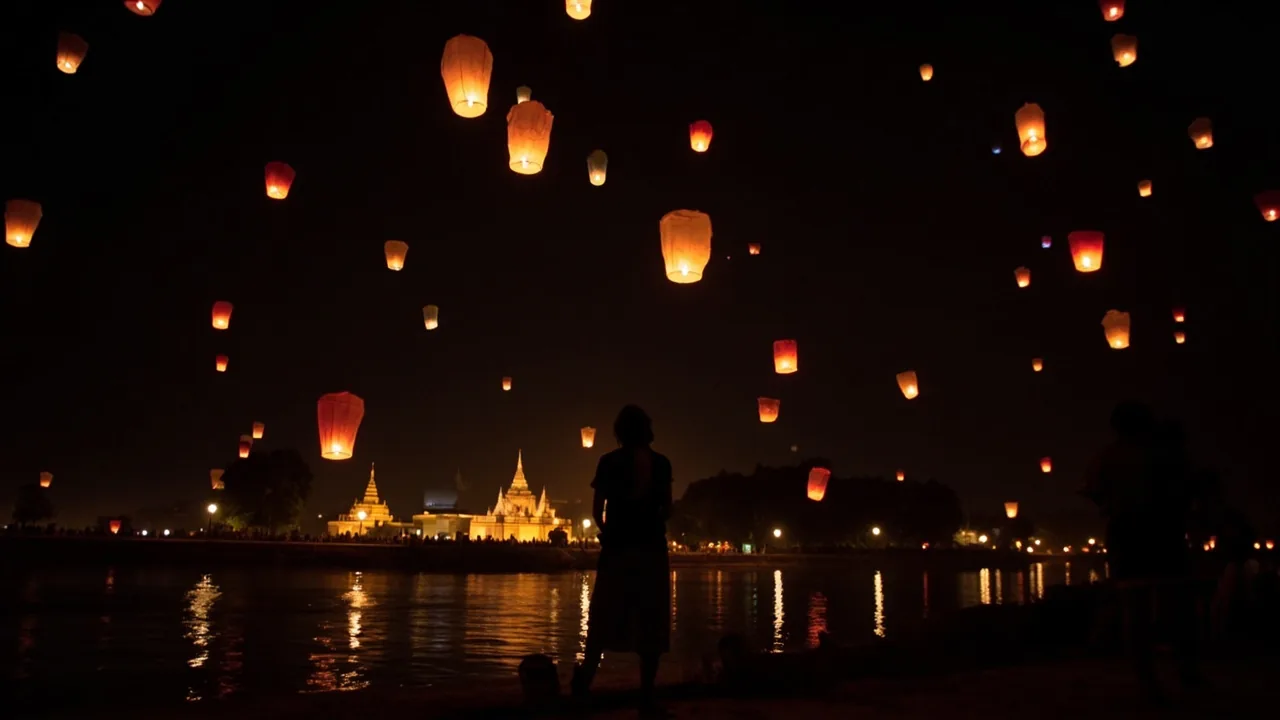
If your Laos trip lines up with autumn, you’re walking into Boun Ok Phansa, the country’s most photogenic celebration. It marks the end of Buddhist Lent, a three-month rainy-season retreat when monks stay in their temples. On the full moon, monks receive fresh saffron robes. That night, rivers fill with longtail boats and temples hold processions.
For Indian backpackers, this is one of the few Buddhist festivals that runs over multiple days in multiple Lao cities, so you can plan your route around it instead of rearranging a whole itinerary. If you’re threading Laos into a wider trip, our SEA backpacking hub covers border crossings, visa options, and route planning across all nine countries.
Quick Answers
| What | Answer | Price (INR) |
|---|---|---|
| When is Boun Ok Phansa 2026? | Full moon on 5 October 2026 (with festivities 3-7 October) | Free to watch |
| What does it celebrate? | The end of Buddhist Lent (Vassa) | ₹ |
| Where are the biggest celebrations? | Luang Prabang, Vientiane, Vang Vieng, Pakse | Free to watch |
| Main events to attend | Boat races, Tak Bat at dawn, Loy Krathung-style lantern launches, temple processions | Free |
| Visa for Indians | 30-day visa on arrival (around ₹2,892 (~30 USD)) | ~₹2,890 (~$29.98) |
Prices above are local-only. The Boun Ok Phansa street ceremonies and temple processions themselves cost nothing, but tuk-tuk rides, food at the festival, and entry into some temple grounds can run ₹216-₹432 (~50,000-100,000 LAK or ~$2.24-$4.48) per go.
Quick Background: What Boun Ok Phansa Means
Buddhist Lent, or Vassa, begins on the full moon of the eighth lunar month (usually July) and ends on the full moon of the eleventh lunar month. During those three months, monks stay in their wats (temples), meditating and avoiding long journeys. Laypeople traditionally avoid drinking alcohol, getting married, or hosting loud parties, which is partly why Laos feels unusually quiet from July through September if you’ve been there before.
When the full moon of the eleventh month arrives, that’s Boun Ok Phansa (sometimes written Boun Awk Phansa or just “Ok Phansa”). The word literally means “the end of the rains.” Customs differ between Laos and Thailand. Thai celebrations revolve around Loy Krathung, lantern-floating on rivers, mostly under one big night. Lao celebrations are louder and longer, stretching across multiple days, with boat racing as the headline event.
Three things make it visually unmistakable:
- The robe-giving ceremony at dawn: Monks form a long line and receive fresh saffron robes donated by the community. This happens at the major temples, including Wat Xieng Thong in Luang Prabang and That Luang in Vientiane.
- Illuminated processions: At night, candles, incense, and small floating vessels are paraded around the temple grounds, sometimes with hundreds of monks carrying them.
- Boat races (Suwanna Heua): Long, narrow racing boats with crews of up to 40 paddlers go at full speed down the Mekong or Nam Ngum rivers. The biggest race is in Vientiane on the Mekong, but Pakse, Savannakhet, and Luang Prabang run their own.
Subodh’s Tip: If you’ve only got one or two days free, do NOT try to be in two cities at once. Pick one. The transport costs and the bus time eat more of your festival than the festival itself does.
When Are the 2026 Dates?
According to the Lao Buddhist calendar, the full moon of the eleventh lunar month in 2026 falls on 5 October. Traveller reports from 2024 and 2025 confirm that the surrounding 3-5 days are when the public events happen, with the heaviest crowds and processions on the day itself.
So:
- 3-4 October 2026: Smaller temple ceremonies, decorations going up, boats arriving at launch points.
- 5 October 2026: Main day, full-moon robe-giving at dawn, boat races mid-morning to afternoon, illuminated procession at night.
- 6-7 October 2026: Secondary processions in some provinces, cleanup, and family gatherings.
For reference, the 2024 celebration fell on 17 September, both on the western calendar’s full moon of the eleventh lunar month. Use the lunar pattern rather than fixed Gregorian dates if you’re planning far ahead.
Where to Celebrate Boun Ok Phansa in Laos
Luang Prabang
This is the easiest place to be. Most backpackers doing the slow boat route land here anyway, and the town is built for the festival. The main robe-giving ceremony happens at Wat Xieng Thong at sunrise, and the illuminated procession at night winds from Wat Mai through the peninsula. Boat races run on the Mekong between Luang Prabang and the north bank.
For the boat race, get to the riverbank by 8 AM. The races are loud, fast, and crowded, with Lao commentary in real time over loudspeakers. If you can’t get there early, any riverside café with a view will let you sit and watch for the price of a drink.
Subodh’s Pro Tip: Get to the temple grounds by 5:30 AM for the robe-giving. The ceremony starts with a traditional Lao procession at dawn, and most tourists wait until 7 AM, by which time the front rows are full of Lao families who’ve been there since 4 AM.
Vientiane
The capital hosts the most photogenic boat race, held on the Mekong stretching from the Thai-Lao Bridge area to the riverside parks. The crowds are bigger, the boat crews are more competitive, and you have to plan around Thai and Lao tourists who cross the Friendship Bridge for the day. That Luang, the gold stupa that appears on every Lao banknote, lights up at night for the procession.
Vientiane is also your best bet for an Indian food fix during the festival, since the city has the largest Indian community in Laos.
Vang Vieng
Vang Vieng’s festival is smaller and friendlier, more traveller-friendly. The Nam Ngum river hosts a quiet boat race, and the night procession happens at the town wat, which is a short walk from every hostel in the area. If you want to combine the festival with karst-limestone views and cave-tubing, this is the move. Many backpackers do Vang Vieng on their way between Vientiane and Luang Prabang.
For Vang Vieng-specific logistics, our full Vang Vieng guide covers hostels, transport from the capital, and where to grab dinner after the procession.
Pakse and Southern Laos
If you’re heading down south, Pakse hosts one of the wildest boat races in the country, on the Se Don River just before it joins the Mekong. The party spills onto the streets, with multiple stages of live music and food stalls running late into the night. The 4,000 Islands area (Si Phan Don) is quieter, mostly family processions at the local temple, but the vibe is genuinely Lao. For a sit-down meal in Pakse, ITALAO Restaurant Pakse is the local pick (Italian-Lao menu, the only shortlist option south of Luang Prabang).
For southern logistics, the 4000 Islands guide covers transport from Pakse and where to stay.
How a Backpacker Day at Boun Ok Phansa Looks
Here’s the rhythm most travellers settle into after a day or two:
4:30 AM: Wake up. Get dressed modestly (long sleeves, long pants, shoulders covered), grab your camera, walk to the nearest temple.
5:00-6:30 AM: The robe-giving ceremony. Locals carry woven baskets of saffron robes, flowers, and small offerings, and queue to present them to the monks. This is also the morning of the tak bat (alms-giving), so the air-route from every major street is full of monks in single file.
7:00-8:30 AM: Breakfast. Lao coffee, khao jee (Lao baguette with egg), or a hotel/hostel breakfast. Back to the riverside for the boat race.
9:00 AM-12:00 PM: Boat race. Loud, fast, fun. The crews are mostly young men from competing villages. Betting exists, but it’s informal and you should NOT show up expecting a Vegas-style bookie scene.
12:00-3:00 PM: Rest. This is also a good time to swim in the Mekong or the river/lagoon near your hostel, and to take advantage of any quieter temple grounds.
4:00-6:00 PM: Smaller processions. Locals light candles at home shrines, and you’ll see groups of kids carrying small flower arrangements to temples.
7:00-11:00 PM: The illuminated procession. Locals carry candles, incense, and small decorated vessels around the temple grounds three times. This is the best night for photography.
11 PM-12 AM: Late-night street food. Satay, khao niaw (sticky rice), grilled Mekong fish, Beerlao. Vendors stay open late to catch the post-procession crowd.
Safety Alert: After dark, stay on well-lit main streets. Drunk Lao tourists on motorbikes get a lot more aggressive during festival nights, and the riverside walkways can be slippery from spilled drinks.
Getting Connected
Buy a Lao SIM at the airport (Unitel or Lao Telecom both work) for ₹216-₹432 (~50,000-100,000 LAK or ~$2.24-$4.48), or skip the queue and Get Nomad eSIM, the eSIM option that loads in 10 minutes and avoids the airport counter. You’ll want data for Grab (works in Vientiane and Luang Prabang), Google Maps for the temple processions, and translation apps for the boat race commentary.
Where to Eat Around the Festival
Akhin Restaurant and Bounthavy are the local workhorses for traditional Lao food during Boun Ok Phansa, both serving the kind of laap, tam mak hung, and sticky rice that runs cheaper than the festival street stalls. Akhin has the slightly better ratings in traveller reviews. Ping moo is your spot if you want pork-heavy local dishes.
When the festival food stalls get too heavy (and they will after three days of grilled fish), Namlin Restaurant and Vegetarian Food offer the Indian/Asian mix your stomach craves. My Kitchen Indian Authentic Food is the right move if you want a full thali and need a break from festival street food.
For food prices: laap is ₹108-₹173 (~25,000-40,000 LAK or ~$1.12-$1.79), grilled fish ₹129-₹259 (~30,000-60,000 LAK or ~$1.34-$2.69), Beerlao draft ₹65-₹108 (~15,000-25,000 LAK or ~$0.67-$1.12), sticky rice basket ₹22-₹43 (~5,000-10,000 LAK or ~$0.22-$0.45). Indian thalis at the vegetarian spots run ₹216-₹345 (~50,000-80,000 LAK or ~$2.24-$3.58).
Where to Stay During Boun Ok Phansa
Book 2-3 weeks ahead, especially in Luang Prabang and Pakse. October is shoulder season but the festival brings domestic tourists in numbers the country doesn’t see the rest of autumn. Dorms fill up, and private rooms near the river get 30-50% markup.
| Hostel | Cost (INR) | Vibe | Verdict |
|---|---|---|---|
| Luang Prabang dorm options | 418-668 | Riverside, social | Book early |
| Vang Vieng dorms | 350-600 | Backpacker party + chill | Best for solo |
| Vientiane budget stays | 500-800 | Quieter, mid-range | Best for overnight |
| Pakse (4,000 Islands gateway) dorms | 418-668 | Riverside, basic | Book ahead for boat race |
| Slow boat connection (Pak Beng) dorms | 350-500 | Rustic, mandatory | Booked with slow boat ticket |
Vientiane has more hotel-style rooms and fewer classic backpacker dorms, so it’s the priciest of the four if you want a hostel bed. Luang Prabang and Pakse fill up fastest, so reserve in advance.
How to Get Around During the Festival
Walking is fine inside Luang Prabang and Vientiane’s old town. For longer distances, tuk-tuks run ₹216-₹432 (~50,000-100,000 LAK or ~$2.24-$4.48) depending on distance, and you MUST agree on the price before getting in. Songthaews (shared trucks) are cheaper at around ₹86-₹129 (~20,000-30,000 LAK or ~$0.90-$1.34) per person but only run set routes.
For moving between festival cities, book on 12go. The slow boat from Huay Xai to Luang Prabang runs through the festival week, but schedules tighten around the full-moon date. Check the slow-boat route guide for current departure times. Buses Vientiane-Vang Vieng are ₹432-₹647 (~100,000-150,000 LAK or ~$4.48-$6.71) and take 4 hours through karst scenery. Our full Laos transport guide breaks down every option with 2026 prices.
If you’re combining the festival with cross-border travel, our corridor guide from Thailand covers Vientiane-Vang Vieng-Pakse patterns.
Do’s and Don’ts at the Temple
Do:
- Dress modestly. Shoulders and knees covered, especially at dawn ceremonies and after 6 PM processions. Most guesthouses will lend you a shawl if you forget.
- Take photos of the monk processions only from behind the rope barriers, never in the middle of the procession.
- Take off shoes and hats before entering the temple ordination hall (sim).
- Stand or kneel when monks are speaking or chanting. Sitting is fine, but not with legs stretched out toward the Buddha image.
- Make a small offering if you take part in any ritual. Candles, incense, or flowers, your choice.
Don’t:
- Touch monks, especially female monks (yes, Lao Buddhism has female monks, called mae chi).
- Take flash photos during chanting, this is banned at major temples and signs are everywhere.
- Walk between monks and the Buddha image if there’s a ceremony in progress.
- Bring alcohol into temple grounds. Beerlao is fine at street stalls outside.
- Run or play loud music near the temples during processions. Drone-flying is technically illegal and you WILL get a quiet tap on the shoulder from temple staff.
Local Rules and Etiquette
Alcohol during Vassa: Outside of the festival week, alcohol is restricted in many temples and the tak bat alms-giving morning has a soft ban. During Boun Ok Phansa itself, alcohol flows freely and vendors set up around the temples.
Curfew/closing times: Most wats close to non-Buddhists by 8 PM the night before the main festival day, and the illuminated procession grounds close at midnight. Some minor temples stay open later, but the major ones (Wat Xieng Thong, That Luang) lock gates around 11 PM.
Dress code enforcement: At That Luang in Vientiane, guards check that women are wearing long skirts or pants and have shoulders covered.
Photography rules: Drone use is officially restricted, and a permit is required. Tripods at professional festivals need a media pass from the Lao Ministry of Information, but casual photos are fine.
Common Mistakes Indians Make at Boun Ok Phansa
- Showing up at 8 AM for the dawn ceremony: By then the front row is gone. Be there by 5:30 AM at the latest.
- Treating boat-race betting like a Vegas casino: There’s informal betting, but local crews handle it themselves. Stick to spectating and you’ll avoid awkward moments.
- Wearing shorts or sleeveless tops into temples: Yes, this includes the evening procession, where the enforcement is lightest but the cultural disrespect is highest. Modest clothing keeps things polite.
- Booking one night and assuming you can find a bed on the day: October festival dates fill Luang Prabang and Pakse two weeks out. Same for Laos accommodation generally, our luang-prabang-guide has the booking details.
- Trying to hit Vientiane and Luang Prabang on the same day: It’s a 9-11 hour bus ride or a 40-minute flight. Pick one city as your anchor.
FAQ
Is Boun Ok Phansa safe for solo female travellers?
Yes. The festival is family-friendly, with monks, families, and elderly locals forming the bulk of the crowd. Night processions are well-lit and well-attended. Be cautious on motorbike-heavy nights, when the standard solo female safety tips apply.
Do I need a visa for Laos if I’m visiting for the festival?
Indian passport holders get a 30-day visa on arrival for around ₹2,892 (~30 USD). Check the Laos visa process for Indians for current fees and which borders do it. Same rules as any other time of year.
Can I fly drones over the boat race?
Technically you need a media permit from the Lao Ministry of Information, and enforcement is tighter during the festival. Skip it. Your phone camera is plenty.
What should I wear to the dawn robe-giving?
Long sleeves, long pants, closed shoes. Lao locals dress in their finest traditional clothes (a sinh skirt or a long-sleeved blouse), so bring at least one modest outfit if you want to blend in.
Are there vegetarian options during the festival?
Yes. Vegetarian Food and Namlin Restaurant both serve Indian and Asian veg options year-round. Lao street food is mostly meat-heavy, but the Indian spots in Luang Prabang and Vientiane are open through the festival.
Is the boat race worth going to even if I’m not into sports?
Yes. It’s a community event more than a sports event. The noise, the painted boats, and the crowd energy are unlike anything else in Laos. If you want to make a full day of it, walk the riverside in the morning and grab street food for lunch.
Can I take part in the lantern procession, or should I just watch?
You can join. Locals welcome respectful visitors carrying candles and small offerings. Just match the pace, don’t push to the front, and follow whatever the temple staff signal.
Subodh’s Take
If you’re in Laos in October, do NOT skip Boun Ok Phansa for a Thailand side trip. The festival is the one time of year when the whole country turns out, and you get a clearer window into Lao Buddhism than any temple visit gives you. Pick one city, anchor there, and let the festival come to you. Skip the rushed multi-city plan, dress modestly, and bring an empty memory card. You’ll leave with full ones.
