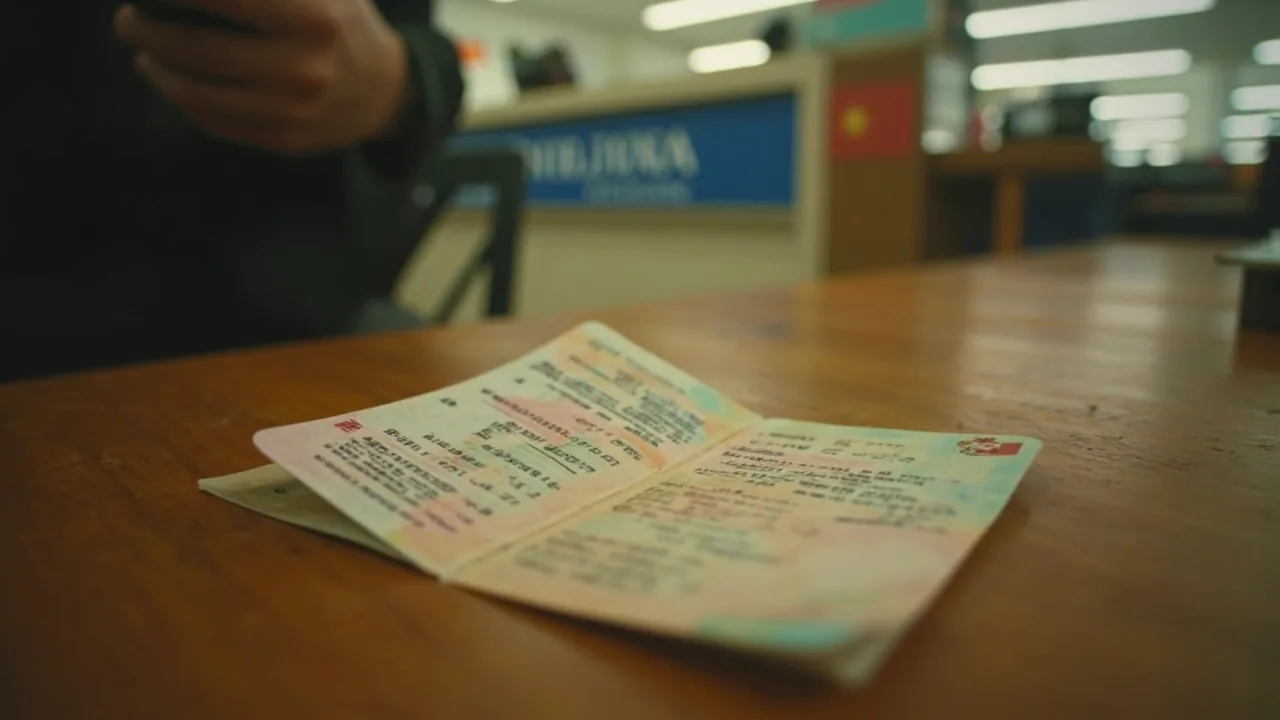
Can Indians Travel to Vietnam Right Now? 2026 Entry Rules, e-Visa & Flight Guide
Yes, Indians can travel to Vietnam from India now in 2026. You need a Vietnam e-Visa costing ₹2,410 (~25 USD), taking 3 business days to process. Direct flights operate from Delhi, Mumbai, Bengaluru, Hyderabad, Kolkata, and Chennai to Hanoi and Ho Chi Minh City. Planning the wider region? Our Southeast Asia backpacking hub covers the full multi-country route.
This guide is verified against traveller reports from June 2026 and cross-checked with the official Vietnam Immigration portal and current Vietnamese consulate advisories. Every rupee figure below uses the rate on the day this was written: 1 USD = ₹96.3294.
What Is the Vietnam e-Visa?
The Vietnam e-Visa is a pre-approved electronic visa issued by the Vietnam Immigration Department. Indian travellers apply online at the official portal, upload a photo and passport scan, pay the fee by card, and receive a printable PDF visa by email. On arrival, you show the printout at the immigration counter, get the visa stamped, and walk out.
It replaced the old visa-on-arrival letter system for Indian passports in 2023. You can no longer get a visa on landing at Hanoi, Ho Chi Minh City, Da Nang, or any other airport. The e-Visa is the only entry route for Indians flying in. For a full breakdown of why this changed, see the Vietnam visa rules for Indian passport holders explainer.
Quick Answers
| What | Answer | Price (INR) |
|---|---|---|
| Entry allowed for Indians? | Yes, with e-Visa | , |
| Visa type | e-Visa, multiple entry | , |
| Cost | ₹2,410 (~25 USD) | |
| Processing time | 3 business days | , |
| Apply at | Official portal | , |
| Validity | 90 days from issue | , |
| Photo requirement | 4x6 cm, white background, taken within 6 months | , |
| Passport validity needed | At least 6 months beyond entry date | , |
| Direct flights from India | Yes, from 6 cities | ₹18,000 (~$186.71) round trip |
| Local SIM on arrival | Viettel or Mobifone tourist SIM, 14 days | ₹469 (~130,000 VND or ~$4.96) |
Step-by-Step: How to Get Your Vietnam e-Visa
Step 1: Check Your Passport Eligibility
Before you apply, confirm three things:
- Your passport has at least 6 months of validity left from your entry date into Vietnam. Six, not three. Officers at Hanoi and Ho Chi Minh City immigration have been refusing Indian passports with exactly 3 months left, even though the official portal says 3 months is enough.
- Your passport has at least 2 blank pages for the visa stamp.
- You have a digital passport scan (colour, full page) and a recent 4x6 cm photo with a white background, taken within the last 6 months.
Step 2: Apply on the Official Portal Only
Go to https://evisa.xuatnhapcanh.gov.vn. This is the only legitimate Vietnamese government site for e-Visas. Do not use any .com or .org site, even if it shows up first on Google.
Many visa “agency” sites copy the official form, add a ₹2,000 (~$20.75) to ₹5,000 (~$51.87) service fee, and send your details through anyway. Skip them. The official portal accepts Indian debit cards (Visa, Mastercard, RuPay via Visa/Mastercard rails) and processes the application itself.
Step 3: Fill in the Form
The form asks for:
- Personal details: full name, date of birth, nationality, passport number
- Travel details: intended entry date, port of arrival (Hanoi, Ho Chi Minh City, Da Nang, etc.), accommodation address in Vietnam
- A 4x6 cm photo upload (white background, no glasses, no smile)
- A passport bio-page scan (PDF or JPG, colour, full page visible)
Double-check the spelling of your name and passport number. A typo means your visa gets rejected and you reapply and pay again.
Step 4: Pay the Fee
The fee is fixed at $25 USD. At the current rate of 1 USD = ₹96.3294, that is ₹2,408. Payment is by international debit or credit card. Indian forex cards (HDFK, ICICI, Niyo Global) all work. Do not pay in rupees; the portal charges in USD and your bank will convert at the standard cross-border rate.
Step 5: Wait 3 Business Days
The official processing time is 3 business days, but most applications clear in under 24 hours according to reports from Indian travellers in June 2026. Weekends and Vietnamese public holidays do not count as business days, so apply mid-week to avoid a delay.
You will receive an email with a PDF attachment. Print it in colour, A4 size, and keep two printouts, one for immigration on arrival and one spare.
Step 6: Fly and Present at Immigration
On arrival in Vietnam, go to the foreign passport / e-Visa counter (sometimes labelled “Visa on Arrival / e-Visa”). Hand over:
- Your printed e-Visa PDF
- Your passport
- Your return ticket or onward ticket (print this too; they sometimes ask)
Officers stamp your passport and you are in. The whole queue takes 10 to 20 minutes outside peak hours.
Step 7: Get Connected on Arrival
Before you leave the airport, buy a SIM or activate your eSIM. A Viettel or Mobifone tourist SIM costs ₹479 (~130,000 VND or ~$4.97) for 14 days and includes about 6GB of data. Buy it at the Viettel/Mobifone counter in the arrivals hall; they will set it up for you. If you prefer to land with data already working, Get Nomad eSIM before you fly. Hotel Wi-Fi in Vietnam is patchy, especially in places like Ha Long Bay cruises and sleeper buses, and Grab and Google Maps both need mobile data.
Common Mistakes Indians Make
Mistake 1: Typing the URL Wrong
The official URL is https://evisa.xuatnhapcanh.gov.vn. Common typos Indians make: evisa.vietnamimmigration.com (fake), vietnam-visa.com (fake), evisavietnam.in (fake). If the site asks for a “service fee” on top of the government fee, it is not the official government portal.
Mistake 2: Uploading the Wrong Photo
The official requirement is 4x6 cm with a white background. Indians uploading a 2x2 inch Indian passport photo get rejected. The 4x6 requirement is non-negotiable. Crop a 4x6 cm headshot against a plain white wall, JPEG under 2MB, and you are fine.
Mistake 3: Not Printing the e-Visa
You get a PDF by email. Print it. Immigration officers in Hanoi and Ho Chi Minh City do not always have reliable scanners, and they will not look at your phone. Travellers without a printout have been sent to the back of the queue or, in rare cases, refused entry. Carry two printouts.
Mistake 4: Applying on the Wrong Date
If you enter March 5 and leave March 25, apply with entry date 2026-03-05. Your visa is valid from that date for 90 days. Applying weeks in advance does nothing, the 90-day clock starts when you enter.
Mistake 5: Exchanging All Cash at Delhi Airport
The Indian rupee to Vietnamese dong rate at Delhi airport forex counters is poor. Use your forex card or withdraw VND on arrival from a Hanoi or Ho Chi Minh City ATM. Most ATMs accept Indian Visa and Mastercard debit cards and charge about ₹184 (~50,000 VND or ~$1.91) per withdrawal (this is the local bank fee, not your Indian bank’s). The INR to Vietnam currency exchange guide explains the cheapest ways to get dong in 2026.
What Most Guides Don’t Tell You
The e-Visa Portal Goes Down on Tuesday Nights IST
Travellers report the Vietnam e-Visa portal goes into maintenance from around 11 PM to 4 AM IST most Tuesdays. If you apply during that window, your submission gets stuck and the timer resets. Apply during Indian business hours to avoid losing a day.
You Must Declare Your Exact Port of Arrival
The e-Visa form asks you to list one port of entry. If you apply for Hanoi Noi Bai but your flight lands at Ho Chi Minh City Tan Son Nhat, you will be turned away at the gate in HCMC. This is the single most common mistake Indian travellers make when they book connecting flights through different cities. If your itinerary might shift, apply for the port that matches the first flight, not the most popular one.
90 Days Is the Stay Limit, Not the Visa Validity
Vietnam’s e-Visa lets you enter Vietnam any time within 90 days of issue, but each stay is capped at 90 days. Most Indians get a single entry on a tourist visa and stay 2 to 4 weeks, well within the limit. But if you plan to stay 3 months plus on a workation, note that the visa is single-issue (multiple entry for re-entries from neighbouring countries).
Currency Rule for Customs
If you carry more than ₹482,018 (~5,000 USD) equivalent in cash (including dong), you must declare it at Vietnam customs. Nobody Indian does this. But officers occasionally ask, especially if you arrive on a flight from a high-spend city. Travellers report a soft spot at the gold counter in Tan Son Nhat: if you have more than $5,000 in jewellery, declare it. For broader spending planning, see how much spending money for Vietnam.
Direct Flights From India to Vietnam in 2026
You have non-stop options from six Indian cities as of July 2026.
| From | To | Airline | Frequency | Price Range (round trip) |
|---|---|---|---|---|
| Delhi (DEL) | Hanoi (HAN) | VietJet, Vietnam Airlines | Daily | ₹18,000 (~$186.71) to ₹32,000 (~$331.94) |
| Delhi (DEL) | Ho Chi Minh City (SGN) | VietJet, Vietnam Airlines | Daily | ₹20,000 (~$207.46) to ₹35,000 (~$363.06) |
| Mumbai (BOM) | Ho Chi Minh City (SGN) | VietJet, Vietnam Airlines | Daily | ₹19,000 (~$197.09) to ₹34,000 (~$352.68) |
| Bengaluru (BLR) | Ho Chi Minh City (SGN) | VietJet | 4x/week | ₹17,000 (~$176.34) to ₹30,000 (~$311.19) |
| Hyderabad (HYD) | Hanoi (HAN) | VietJet | 3x/week | ₹21,000 (~$217.83) to ₹33,000 (~$342.31) |
| Kolkata (CCU) | Hanoi (HAN) | IndiGo (codeshare) | 3x/week | ₹19,000 (~$197.09) to ₹28,000 (~$290.45) |
| Chennai (MAA) | Ho Chi Minh City (SGN) | VietJet | 4x/week | ₹20,000 (~$207.46) to ₹32,000 (~$331.94) |
Prices are for round-trip economy tickets booked 2 to 4 weeks ahead. Mumbai-Delhi-HCMC is the cheapest route most months. If you do not see a direct flight from your city, the cheapest one-stop is usually through Bangkok or Kuala Lumpur. For a step-by-step on cross-border travel once you are in Vietnam, how to get from Sapa to Ha Long Bay covers the kind of onward routes you will be booking next.
FAQ
Do I Need a Return Ticket to Enter Vietnam?
Officially, yes. Immigration officers sometimes ask for proof of onward travel. A printed return flight booking or PDF of your next bus ticket to Cambodia or Laos usually suffices. If you have an open-ended itinerary, book a cheap refundable ticket out before you fly and cancel after you land.
Can I Get a Vietnam Visa on Arrival As an Indian?
No. Visa-on-arrival for Indian passport holders was discontinued in 2023. The e-Visa is the only way in for tourists. Travel agencies still advertise “visa on arrival” for Indians, but they mean the e-Visa with an extra fee. Skip them, apply at the official portal yourself.
How Long Is the Vietnam e-Visa Valid For?
90 days from the date of issue. You can enter Vietnam any time within that 90-day window. Once inside, you can stay up to 90 days per visit (multiple entry for land crossings from Cambodia or Laos is allowed). The math works out to: apply just before you fly, not months earlier.
What If My e-Visa Application Gets Rejected?
Rejections are rare. The most common reason is a typo in the passport number or a photo that does not meet spec. You will get a refund of the ₹2,410 (~25 USD) minus a small processing fee, and you can reapply with corrected details. Allow 5 to 7 days total for a rejection and resubmission. Do not book flights until the visa is approved.
Can I Extend My Vietnam Visa From Inside the Country?
Yes, you can extend a tourist e-Visa once for an additional 30 or 90 days at the Vietnam Immigration Office in Hanoi or HCMC. The extension fee is around ₹4,820 (~50 USD) to ₹9,640 (~100 USD) depending on length and nationality. Most Indian backpackers do not bother, they cross into Cambodia, Laos, or Thailand and re-enter fresh.
Is Vietnam Safe for Indian Tourists in 2026?
Yes. Vietnam is one of the safer countries in Southeast Asia for Indian travellers. The standard precautions apply: watch for pickpockets in Hanoi Old Quarter and District 1 in HCMC, ignore every “you dropped something” scam, use Grab (the local Uber) instead of unmarked taxis, and never hand your passport to anyone not in uniform. For a full rundown on what Indian tourists tend to miss, the 12 things Indian tourists should avoid in Vietnam guide goes deeper.
Subodh’s Take
Vietnam is one of the easiest visas in Southeast Asia to get right now, but only if you apply on the correct official portal and use the exact photo specs. The biggest trap for Indians is typing the URL wrong and ending up on a fake agency site that charges 5x the real fee. Apply yourself at evisa.xuatnhapcanh.gov.vn, print the PDF twice, and the rest of the trip is smooth sailing.