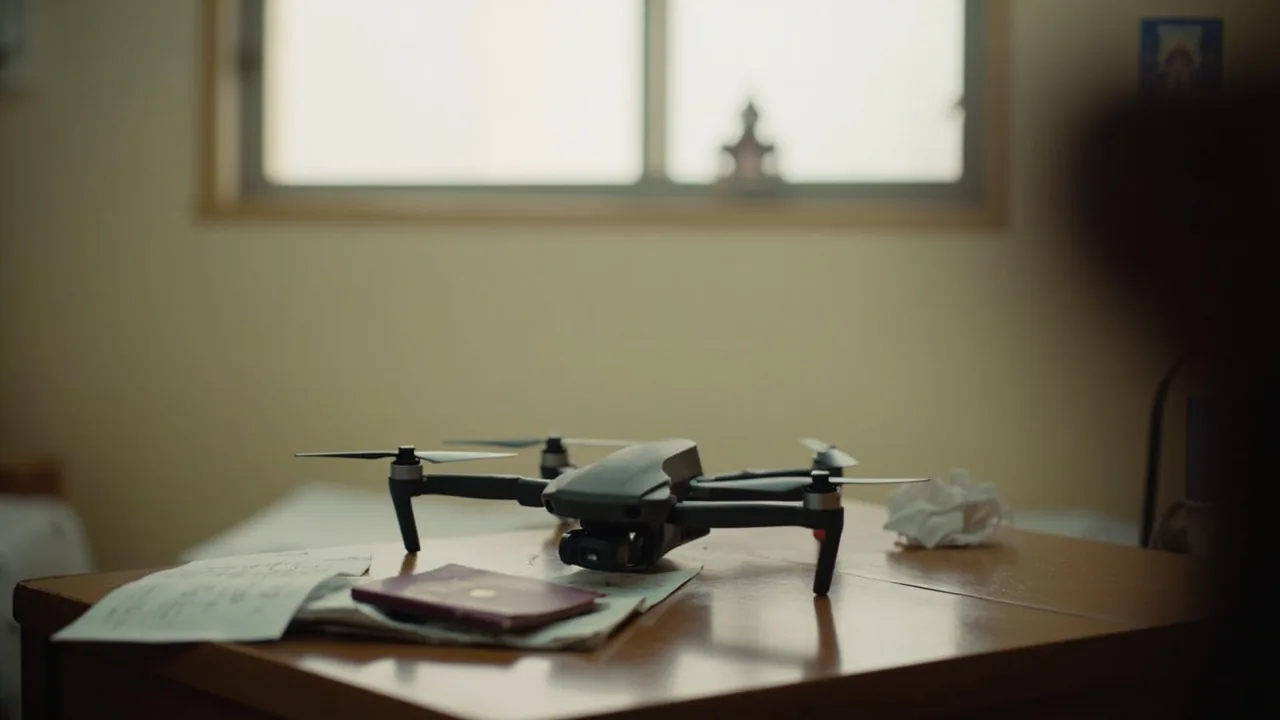
Can You Fly a Drone at Angkor Wat? Cambodia Drone Import Rules for Tourists
Drone rules Cambodia are strict for tourists, and here’s exactly what to expect before you pack. For related planning, see our guide on Sea Backpacking Hub.
Short answer: No, you cannot fly a drone over Angkor Wat or anywhere inside the Angkor Archaeological Park boundary. The park is a permanent no-fly zone, and it is enforced. Beyond Angkor, the broader rule is that you need a permit from Cambodia’s aviation authority, plus customs clearance for the device itself, before you can legally fly anywhere in the country. Skipping either step risks confiscation, a fine, or both.
This guide covers both pieces. First, the import and customs process for bringing a drone into Cambodia as a tourist. Second, the airspace rules around Siem Reap and the rest of the country. There is a lot of confusing old forum advice floating around; the rules have tightened since 2024 and the current process is what you need to follow.
Subodh’s Pro Tip: If your drone is the reason you are flying to Cambodia (you are a content creator, vlogger, or working on a paid project), plan for a 4 to 6 week permit lead time before departure. Tourist “I just want aerial shots of Angkor” trips are not realistic under current rules.
Quick Answers on Drone Rules Cambodia Tourists Ask
| What | Answer | Price (INR) |
|---|---|---|
| Can you fly a drone at Angkor Wat? | No. Permanent no-fly zone over the entire Angkor Archaeological Park. Violations are enforced. | $0 (not allowed at any cost) |
| Do you need a permit to fly a drone elsewhere in Cambodia? | Yes. Permit required from the State Secretariat of Civil Aviation (SSCA) for any flight. | $50 to $200 USD permit fee |
| Do you need to declare a drone at customs on arrival? | Yes. Personal drones must be declared and temporarily imported through customs. | Customs duties may apply |
| Can tourists bring a drone into Cambodia at all? | Yes, with a Temporary Admission Carnet or proper customs declaration. | Varies by value |
| Maximum drone weight allowed without special authorisation? | Drones under 25 kg fall under standard rules; anything above requires separate heavy UAS permits. | Permit required |
Why Cambodia’s Drone Rules Are Strict
A few things converge to make Cambodia one of the more restricted drone destinations in Southeast Asia. First, the Angkor Archaeological Park sits directly adjacent to Siem Reap International Airport’s airspace, and the temples themselves are a UNESCO World Heritage Site with strict preservation rules. Allowing low-altitude drone traffic around stone structures from the 12th century is, from the authorities’ perspective, a risk they have decided not to take.
Second, the broader Cambodian airspace has tightened since the early 2020s. Tourism drone footage used to be tolerated with a polite nod. As of 2024 onwards, the State Secretariat of Civil Aviation (SSCA) has been issuing formal permits, and travellers flying without one have been stopped at airport checkpoints and fined. Smaller drones are not exempt from these requirements.
Third, customs treats drones as dutiable electronics. They are not on a “personal effects exemption” list the way a phone or laptop is. You have to declare the device on arrival, either paying duty on it or completing a Temporary Admission Carnet (a customs document that lets you bring goods in duty-free as long as you take them out when you leave).
The net effect: flying a drone in Cambodia is not impossible, but it is paperwork-heavy, slow, and the most famous filming location in the country is permanently off-limits.
The Angkor No-Fly Zone Explained
The Angkor Archaeological Park covers roughly 400 square kilometres around Siem Reap. The no-fly zone matches the park boundary plus a buffer. In practice this means:
- No flights over any temple complex: Angkor Wat, Bayon, Ta Prohm, Banteay Srei, Phnom Kulen, and every smaller ruin in the park.
- No flights over Siem Reap town: The town sits inside the broader controlled airspace around the airport.
- No flights from hotel rooftops or temple viewpoints
- No “quick sunrise shot”: The single most common request travellers have, and the answer is still no.
The enforcement is real. The Angkor Enterprise handles temple entry, and security staff at the park gates have been instructed to ask visitors about drones at the entry checkpoint. Any drone carried visibly into the park may be held at the gate until you leave.
If you want aerial-style shots of Angkor, your only legal options are:
- Pre-existing licensed footage: A handful of production companies hold valid permits for commercial shoots. Rates start around ₹144,606 (~1,500 USD) per day and require a 30+ day advance application. Out of reach for most backpackers.
- Ground-based photography: The classic sunrise shot from the reflection pond. Yes, it is over-photographed. No, it is not illegal.
- Drone-free vlogging: Cambodia produces strong content from temple interiors, street scenes, and food. The country’s drone ban does not have to end a content career.
Safety Alert: Do not bring a drone into the park even if you intend not to fly it. Leave it at your hotel safe.
Cambodia Drone Import Rules for Tourists
This is the part most travellers skip and then get caught on. Even if you have no intention of flying at Angkor, you still need to clear the drone through customs on arrival.
Step 1: Declare on Arrival
When you land at Phnom Penh, Siem Reap, or Sihanoukville International Airport, fill out the customs declaration form accurately. The line asking for “goods to declare” includes electronics above a certain value (typically ₹48,202 (~500 USD) for personal effects, but drones are often flagged regardless). Mark the drone. Hiding it is the worst option; if discovered, it gets seized and you may face a fine.
Step 2: Temporary Admission Carnet
The cleanest path is a Temporary Admission Carnet (sometimes called a “ATA Carnet for personal goods”). This is an international customs document that lets you bring equipment into a country duty-free, on the condition you export it within the validity window (usually 6 to 12 months).
In Cambodia, the carnet is processed by the General Department of Customs and Excise at the airport on arrival. You will need:
- The drone, in original packaging or carry case, ready to show
- Purchase receipt or invoice showing the value
- Your passport and visa
- The carnet form itself, obtained before departure (in India, these are issued by FICCI, or by the Federation of Indian Export Organisations, FIEO)
- A return flight ticket showing you will take the drone out
Processing typically takes 30 to 90 minutes at the airport customs desk.
Step 3: Pay Duty (If You Skip the Carnet)
If you do not want to deal with the carnet, you can pay import duty on the drone at customs. Duties in Cambodia on consumer electronics run roughly 15% to 35% of declared value plus VAT. For a $1,200 USD drone, this lands in the ₹19,281 (~200 USD) to ₹48,202 (~500 USD) range. Not worth it for a one-week trip.
Step 4: Get the SSCA Flight Permit
Even after customs is cleared, you cannot legally fly the drone in Cambodian airspace without a permit from the State Secretariat of Civil Aviation. This is a separate process from customs. For advice on protecting gear in Cambodia’s humidity and handling the paperwork safely, see our electronics safety guide.
For recreational/tourist flights:
- Application submitted to SSCA via email or in person at their Phnom Penh office
- Required documents: passport copy, visa copy, drone specifications (weight, model, serial number), intended flight locations, dates, and altitudes
- Lead time: 4 to 6 weeks is the realistic range for non-commercial permits
- Fee: ranges from ₹4,820 (~50 USD) for short recreational flights to ₹19,281 (~200 USD) for multi-location shoots
For commercial shoots (paid content, client work, film production):
- Additional documentation: proof of insurance (typically $1M+ liability), production company registration, location permits from each site
- Higher fee structure, often ₹48,202 (~500 USD) and up
- Lead time: 6 to 12 weeks
The permit specifies where, when, and how high you can fly. Flying outside these parameters is treated as a violation.
Where You Can (Technically) Fly in Cambodia
Assuming you have both customs clearance and an SSCA permit, drone flights are still restricted in many areas:
- Never: Around airports (5 km buffer), military zones, government buildings, royal palaces, and all UNESCO sites including Angkor
- Permit required: Anywhere in urban Phnom Penh, Siem Reap town, or Sihanoukville
- More feasible with permit: Rural areas of Mondulkiri, Ratanakiri, Kampot countryside, and remote parts of the Cardamom Mountains
- Open: There is no real “open” airspace for tourist flights; even rural areas require the SSCA permit
Travellers with permits commonly use rural Cambodia for nature and landscape footage. The permits tend to come through more easily when the flight zone is far from sensitive infrastructure.
Drone Models Indian Travellers Typically Bring
| Drone | Weight | Camera | Notes |
|---|---|---|---|
| DJI Mini 4 Pro | Under 249 g | 4K/60fps | Often allowed in carry-on without airline issues |
| DJI Air 3 | 720 g | 4K/100fps | Heavier, easier for customs to flag |
| DJI Mavic 3 Pro | 958 g | 5.1K/50fps, Hasselblad | High value, triggers full customs review |
| Autel Evo Lite+ | 820 g | 6K/30fps | Less common but works the same way at customs |
| DJI Avata 2 (FPV) | 377 g | 4K/60fps | FPV drones attract extra scrutiny at customs |
For Indian travellers flying with these, the Mini 4 Pro is the least paperwork-heavy option at Indian airport security (still under the 250 g threshold that India’s DGCA treats as “nano”). See our best travel gear for Cambodia backpackers for more on what to pack. At the Cambodia end, the weight does not change the rules; you still need the carnet and SSCA permit, but smaller drones get fewer questions on arrival.
Penalties for Flying Without a Permit
Cambodia’s drone enforcement has real teeth:
- Confiscation of equipment: The drone and any footage on the SD card may be held for an extended period.
- Fines: ₹48,202 (~500 USD) to ₹192,807 (~2,000 USD) depending on the severity and whether restricted airspace was violated
- Detention: Repeat or egregious violations (flying over military sites, royal palaces) have resulted in short-term detention followed by deportation
- Visa cancellation: An SSCA violation can be flagged to immigration, resulting in visa revocation and being placed on the next flight out
The fines hit especially hard because they are in USD. At current rates (1 USD = ₹96.33), a $1,000 USD fine lands at ₹96,330, which dwarfs the value of most consumer drones.
What Travellers Should Do
If you are a tourist planning a Cambodia trip:
- Leave the drone at home unless you have a specific paid shoot or content project that justifies the paperwork
- If you must bring one, get the Temporary Admission Carnet from FICCI before flying out of India
- Apply for the SSCA permit 6 weeks in advance of any planned flight dates
- Carry proof of insurance (any standard drone liability policy) in case the permit review asks for it
- Do not fly at Angkor, full stop
- Do not fly from hotel rooftops in Siem Reap or Phnom Penh, even with a permit, unless the permit explicitly covers that location
If you are a content creator or vlogger who cannot fly in Cambodia, the country’s footage still works well from ground level. The temples are visually rich, the street scenes in Phnom Penh are cinematic, and the food scenes carry their own appeal without an aerial angle.
Realistic Alternatives for Aerial-Style Content
Travellers who came to Cambodia specifically for aerial footage and hit the rules have a few options:
- Licensed drone operators in country: A handful of Siem Reap and Phnom Penh-based operators hold SSCA permits and can be hired for paid shoots. Day rates start at ₹38,561 (~400 USD). Their footage can sometimes be licensed for personal projects.
- Helicopter tours: Siem Reap offers helicopter flights over Angkor starting at ₹11,568 (~120 USD) for 20 minutes. Same aerial perspective, fully legal.
- Hot air balloon: Available at certain times of year near Siem Reap, gives a wide-angle view without the regulatory headache.
- Stock footage: Licensing existing Angkor aerials from places like Shutterstock or Pond5 starts at ₹4,820 (~50 USD) per clip and is much cheaper than a permit application.
For backpackers on a budget, this is the practical answer: skip the drone, bring a good phone or compact camera, and shoot from the ground. Cambodia is one of the most photogenic countries in Southeast Asia without needing altitude.
Quick Checklist Before You Fly
- Confirmed whether drone is for personal recreation or commercial shoot (different permits)
- Temporary Admission Carnet obtained from FICCI before leaving India
- SSCA flight permit applied for at least 6 weeks before departure
- Drone packed in carry-on, with purchase receipt accessible
- Flight zones reviewed and confirmed not restricted
- Insurance documentation ready
- Backup plan for Angkor footage (ground-based or licensed operator)
Subodh’s Take
Here is the honest version: Cambodia is not a drone-friendly country, and Angkor is the worst place to test that boundary. Travellers who packed a drone for the trip and never opened it reported the smoothest experience. Travellers who flew without permits lost days to airport back-and-forth and got SD cards held. The paperwork is real, the lead times are real, and the most famous filming location in the country is permanently off-limits. If your content career depends on Cambodian aerial footage, plan it as a paid production with a local operator and budget for it. If you are a backpacker who wants a few nice shots for Instagram, leave the drone in your bag and use your phone. Cambodia is genuinely beautiful from the ground.
FAQ
Can you fly a drone at Angkor Wat as a tourist? No. The Angkor Archaeological Park is a permanent no-fly zone, and security at the park gates actively checks visitors for drones. Even carrying a drone visibly into the park can result in it being held at the gate.
Do I need a permit to fly a drone anywhere in Cambodia? Yes. The State Secretariat of Civil Aviation (SSCA) requires a permit for any drone flight in Cambodian airspace, regardless of location. Recreational permits typically cost ₹4,820 (~50 USD) to ₹19,281 (~200 USD) and require 4 to 6 weeks of advance processing.
Will customs in Cambodia let me bring a drone without declaring it? You can bring one in, but it must be declared. The cleanest method is a Temporary Admission Carnet obtained before departure from India. Skipping declaration risks confiscation and fines.
What happens if I fly a drone in Cambodia without a permit? Typical consequences are drone confiscation, fines of ₹48,202 (~500 USD) to ₹192,807 (~2,000 USD), and in serious cases (restricted airspace, royal or military zones) detention and visa cancellation.
Are small drones under 250 g exempt from the rules? No. Cambodia’s rules do not have a weight exemption similar to India’s nano category. Any drone, regardless of weight, requires customs declaration and an SSCA flight permit.
Can I fly over Phnom Penh or Siem Reap city? Not without an SSCA permit specifically covering urban airspace, and these permits are harder to obtain. Most recreational permits are limited to rural zones.
How long does the SSCA permit take? For recreational flights, allow 4 to 6 weeks from application to approval. For commercial shoots, 6 to 12 weeks. Lead times have lengthened since 2024.
