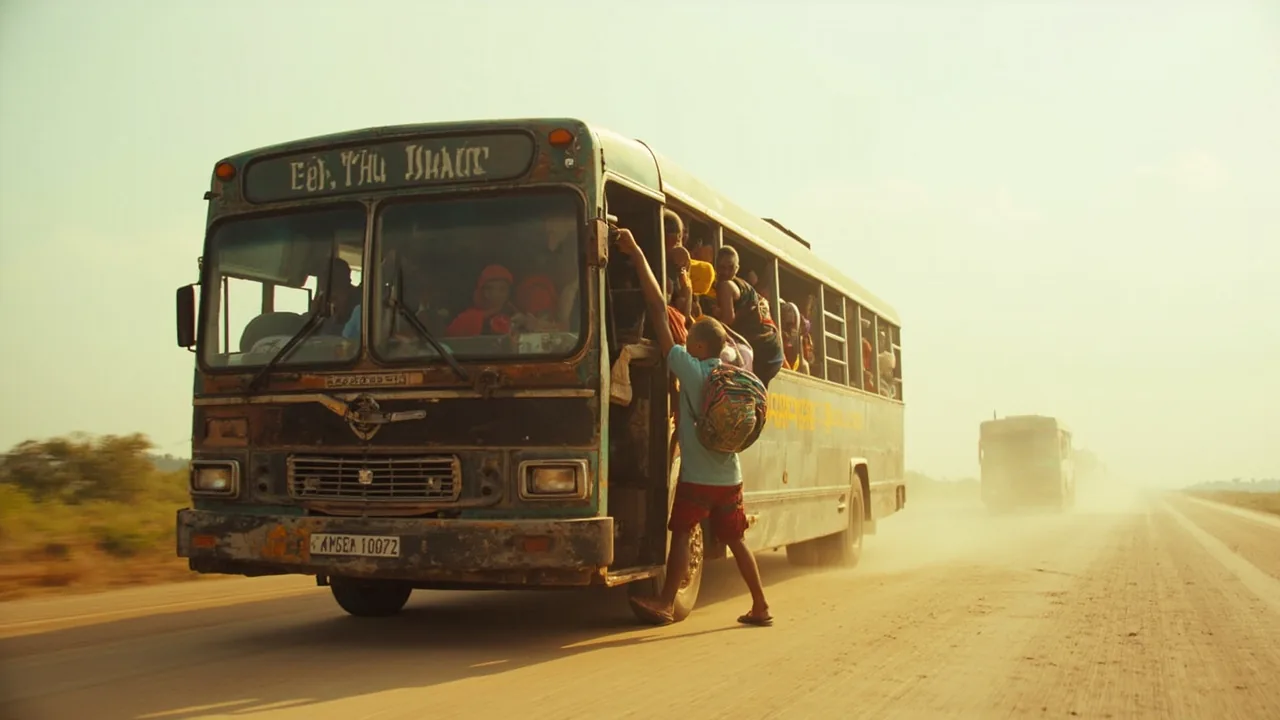
Cheapest Way to Travel Cambodia: Buses, Boats & Local Transport on a Backpacker Budget
Cambodia is the cheapest country in Southeast Asia to travel through on land, full stop. Buses between major cities run ₹771-₹1,446 (~8-15 USD), tuk-tuks cost less than a plate of noodles in Bangkok, and a dorm bed in Phnom Penh or Siem Reap comes in at ₹482-₹964 (~5-10 USD). For Indian backpackers paying in INR, the math gets even friendlier because the Cambodian riel (KHR) is pinned to the US dollar at roughly 4000 KHR = 1 USD, and at current rates (1 USD = ₹96.33, or 1 KHR = ₹0.0238), a 10 USD dorm is ₹963 and a 12 USD bus ticket is ₹1,156 (~$11.99). This guide breaks down exactly how to keep transport costs at the floor without ending up on a broken minibus at 3 AM. Planning the wider region? Our Southeast Asia backpacking hub covers the full multi-country route.
Quick Answers
| What | Answer | Price (INR) |
|---|---|---|
| Cheapest bus Phnom Penh to Siem Reap | Giant Ibis or Mekong Express, 6 to 7 hours | ₹670 (~$6.95) to ₹1,250 (~8-15 USD) |
| Cheapest way Bangkok to Siem Reap overland | Bus via Poipet border, 11 to 13 hours | ₹1,450 (~$15.04) to ₹2,400 (~15-25 USD) |
| Cheapest way Ho Chi Minh City to Phnom Penh | Mekong Express bus via Bavet, 6 to 7 hours | ₹1,250 (~$12.97) to ₹2,000 (~13-21 USD) |
| Cheapest in-city transport | Walking + bicycle rental (~1.5-2.5 USD/day) | ₹145 (~$1.50) to ₹240 (~1.5-2.5 USD) |
| Cheapest SIM (7 days, 10 GB) | Cellcard or Smart tourist SIM at airport | ₹250 (~3 USD) |
All prices verified against the official Giant Ibis, Mekong Express, and Bookaway booking portals in July 2026.
How to Get to Cambodia from the Rest of the Trail
From Bangkok (Thailand to Siem Reap overland)
The Bangkok to Siem Reap overland route is the most-used corridor on the Banana Pancake Trail. You have two real options: a direct tourist bus, or the local bus plus border shuffle that costs half as much.
The direct tourist bus (Giant Ibis or Nattakan) leaves Bangkok’s Khao San / Mo Chit area around 7 to 8 AM, hits the Poipet border around noon (Cambodian visa on arrival happens here, see Visa / Entry Notes), and arrives in Siem Reap by late afternoon. It’s painless. Tickets run 900 to (₹2,582 (~$26.78) to ₹3,730 (~$38.69)) booked through Bookaway or 12go, with 12go’s Bangkok to Siem Reap route currently the cleanest aggregator: Book Bangkok to Siem Reap on 12go.
The cheaper version: take a local 2nd-class bus from Bangkok’s Mo Chit 2 terminal to Aranyaprathet (Thai border town) for (₹660 (~$6.85)), walk across the border to Poipet, then grab a shared taxi or local bus the last 150 km to Siem Reap for ₹964-₹1,446 (~10-15 USD). Total: about plus ₹964 (~10 USD), roughly half the direct bus. The trade-off is three vehicle changes, longer total time, and the Poipet taxi mafia trying to overcharge you the moment you cross. First-timers should pay the extra for the direct bus. The local bus shuffle is for people who’ve done the corridor before.
From Ho Chi Minh City (Vietnam to Phnom Penh overland)
The HCMC to Phnom Penh route is one of the smoothest land borders in the region. Mekong Express and Giant Ibis both run direct buses from District 1 in Ho Chi Minh City, departing morning and afternoon, crossing at Moc Bai / Bavet, and arriving in Phnom Penh 6 to 7 hours later. Tickets run ₹1,253-₹2,024 (~13-21 USD). Book Ho Chi Minh City to Phnom Penh on 12go.
If you’re on a tight budget and don’t mind a slow morning, take a local bus from HCMC’s Mien Tay bus station to Moc Bai for around ₹675 (~7 USD), walk across, then catch a Cambodian shared taxi from Bavet to Phnom Penh for another ₹675 (~7 USD). Total ₹1,350 (~14 USD), saving maybe ₹50-₹100 (~$0.52-$1.04) over the direct tourist bus. Honestly not worth the hassle unless you’re counting coins.
From Phnom Penh to Siem Reap (the main Cambodian corridor)
This is the route everyone does. Five to seven buses a day, all on the same highway, all roughly the same time. Giant Ibis and Mekong Express are the two operators worth booking. Both run VIP buses with AC, a water bottle, and a guaranteed seat for ₹868-₹1,446 (~9-15 USD). Book Phnom Penh to Siem Reap on 12go.
The “cheap” option is the local minibus from Phnom Penh’s Borei Sar Taung station, ₹675-₹771 (~7-8 USD), no seat assignment, sometimes a van from 1996 with broken AC. It works, it’s fine, but for an extra ₹100-₹200 (~$1.04-$2.07) you get a 2018 Hyundai and a USB port. The choice is yours.
Subodh’s Pro Tip: Book direct buses through Bookaway or 12go instead of walking up to the bus station in Phnom Penh. Online prices are usually ₹96-₹193 (~1-2 USD) cheaper, you get a confirmed seat, and pickup is included at your hostel.
How to Get Around Cambodia Once You’re There
Long-distance buses: the full breakdown
For the major corridors (Phnom Penh to Siem Reap, Phnom Penh to Sihanoukville, Phnom Penh to Kampot, Siem Reap to Bangkok, HCMC to Phnom Penh), the same four operators show up: Giant Ibis, Mekong Express, Capitol Vans, and Virak Buntham. Quality rankings in 2026:
- Giant Ibis, the gold standard, English-speaking staff, USB ports, free water, free pickup. ₹96-₹289 (~1-3 USD) more than competitors on every route, worth it.
- Mekong Express, nearly as good, slightly cheaper, runs the HCMC and Bangkok corridors.
- Virak Buntham, cheap, decent, runs night buses. Use them for sleeper routes, avoid for daytime.
- Capitol Vans, minivans for 4 to 8 passengers. Fast on paper, often cramped in reality.
Typical prices for the major corridors in 2026:
| Route | Operator | Price | Duration |
|---|---|---|---|
| Phnom Penh to Siem Reap | Giant Ibis | ₹868-₹1,157 (~9-12 USD) | 6.5 hours |
| Phnom Penh to Sihanoukville | Giant Ibis | ₹964-₹1,253 (~10-13 USD) | 4.5 hours |
| Phnom Penh to Kampot | Mekong Express | ₹771-₹964 (~8-10 USD) | 3 hours |
| Siem Reap to Bangkok | Giant Ibis / Nattakan | ₹1,446-₹2,410 (~15-25 USD) | 11-13 hours |
| Siem Reap to Ho Chi Minh City | Mekong Express | ₹1,735-₹2,121 (~18-22 USD) | 10-12 hours |
| Phnom Penh to Ho Chi Minh City | Mekong Express | ₹1,253-₹2,024 (~13-21 USD) | 6-7 hours |
Safety Alert: Most intercity bus tickets sold on Khao San Road or by hostel “tour desks” in Bangkok and Phnom Penh come with a 5 to 15 percent commission. Book through 12go or Bookaway instead, same operator, same seat, lower price.
Boats: when water beats road
There are only two boat routes in Cambodia that matter for backpackers:
Phnom Penh to Siem Reap via Tonle Sap: Speeding boats do this run in 5 to 6 hours, slow boats in 10 to 14 hours. The slow boat (₹3,374-₹4,338 (~35-45 USD), ₹3,371-₹4,335 (~$34.97-$44.97)) is a backpacker rite of passage, floating downriver through stilted villages, river dolphins occasionally, beer on board. The speedboat (₹3,374-₹4,338 (~35-45 USD), 5 hours) is loud, bumpy, and has had safety incidents. Skip the speedboat. Book the slow boat through 12go’s Phnom Penh to Siem Reap route and pick the “boat” option. Worth the money in the dry season, less reliable June to October when water levels are low.
Sihanoukville to Koh Rong / Koh Rong Samloem: The cheapest way to the islands is the public ferry from Sihanoukville’s Serendipity Beach pier, ₹675-₹964 (~7-10 USD), 45 minutes to an hour. Speedboats run ₹1,446-₹2,410 (~15-25 USD) but aren’t worth the markup unless you’re in a group. Check our Koh Rong guide for the full island breakdown.
Tuk-tuks and remorques: short-distance transport
For anything inside a city or to/from the airport, tuk-tuks (Phnom Penh, Siem Reap) and remorques / moto-dops (motorbike trailers, Sihanoukville, Kampot) are the answer.
Within-town tuk-tuk prices in 2026:
| Ride | Price (local) | Price (INR) |
|---|---|---|
| Short hop (within city center) | ₹193 (~2 USD) | ₹193 (~$2) |
| Across town (e.g. Riverside to BKK1) | ₹289-₹482 (~3-5 USD) | ₹289-₹482 (~$3-$5) |
| Phnom Penh airport to city center | ₹482-₹771 (~5-8 USD) | ₹482-₹770 (~$5-$7.99) |
| Siem Reap airport to city | ₹482-₹675 (~5-7 USD) | ₹482-₹674 (~$5-$6.99) |
| Full-day Angkor tuk-tuk (Siem Reap) | ₹1,446-₹2,410 (~15-25 USD) | ₹1,445-₹2,408 (~$14.99-$24.98) |
Always agree the price before getting in. Tuk-tuks in Phnom Penh and Siem Reap rarely run meters, and the standard “I’ll take you for 5” line usually opens at double what locals pay. Aim for ₹193 (~2 USD) inside town, ₹289-₹482 (~3-5 USD) across town, and book airport rides through your hostel in advance (they lock the rate and send a driver who knows where you’re going).
Subodh’s Pro Tip: Grab (the ride-hailing app) is in Phnom Penh and Siem Reap as of 2026 and gives upfront fixed prices, which kills the “but for you, special price” haggling routine. Use it for late-night rides when tuk-tuks try to charge tourist rates.
Bicycles and motorbikes: the cheapest option in town
This is where Cambodia quietly beats Thailand and Vietnam for budget transport. Bicycle rentals in Phnom Penh and Siem Reap run ₹145-₹241 (~1.50-2.50 USD) per day (₹145-₹240 (~$1.50-$2.49)), and Siem Reap is genuinely flat enough to cycle everywhere. Phnom Penh has some traffic chaos but is doable. Sihanoukville and Kampot are even better cycling territory. Most hostels include a bicycle for free if you stay 3+ nights, ask at check-in.
For longer distances, motorbike rental runs ₹482-₹771 (~5-8 USD) per day (₹482-₹770 (~$5-$7.99)). The standard Honda Click / Wave is everywhere, fuel is 1 USD per litre, and Cambodian traffic is calm enough that even beginners manage. You will need a motorbike license technically, but in practice police rarely check tourists in Siem Reap or Kampot. Phnom Penh police do, occasionally.
Where to Stay
This is a regional guide rather than a single-city guide, but the pattern holds across Cambodia. Dorm beds in Phnom Penh run ₹482-₹964 (~5-10 USD), Siem Reap ₹482-₹1,157 (~5-12 USD), Sihanoukville ₹578-₹1,060 (~6-11 USD). Private rooms start around ₹1,157-₹1,735 (~12-18 USD) for budget double rooms with fan, ₹1,928-₹3,374 (~20-35 USD) for AC plus en-suite. Cambodia has fewer ultra-cheap ₹289 (~3 USD) dorms than Vietnam or Laos now, but the quality at the ₹578-₹868 (~6-9 USD) level is solid, clean sheets, working wifi, lockers, often a small pool.
For our full Siem Reap hostel picks, see the Siem Reap city guide. For Phnom Penh, see Phnom Penh on a backpacker budget. Booking through Hostelworld or Booking.com gets you free cancellation, which matters in monsoon season when buses get cancelled.
What to Eat
Cambodian food is the underrated cousin of Thai and Vietnamese cooking, less spicy, more coconut, less fish sauce, lots of fresh herbs. The vegetarian situation is workable but not abundant.
Local dishes worth trying:
- Fish Amok, steamed coconut curry with river fish, banana leaf, the national dish. Smokin’ Pot Authentic Cambodian Restaurant and Cooking School in Siem Reap does the definitive version, around ₹386 (~4 USD). Order without fish and they make a tofu version that’s just as good.
- Num Pang. Cambodian baguette sandwich, leftover from the French colonial era. Pâté, pickled carrot, cucumber, cilantro. Street stalls everywhere for ₹145 (~1.50 USD). Cambodia Kitchen in Phnom Penh does a higher-end take.
- Lok Lak, stir-fried beef in Kampot pepper sauce over rice. Cambodia Kitchen and HoubHoub Cambodian Restaurant (BKK1, Phnom Penh) both serve solid versions, around ₹289-₹482 (~3-5 USD).
- Kuy Teav, the morning noodle soup, pork or beef broth, rice noodles, scallions, garlic. ₹145-₹241 (~1.50-2.50 USD) at any street stall with the steam coming out at 6 AM.
- Bay Sap, palm fruit dessert, sweet, sticky, perfect after a hot day. 0.50-1 USD at markets.
Indian food and strict-veg options:
For when you need a proper dal-chawal fix, Cambodia has a handful of reliable Indian restaurants:
- Indian Restaurant (Phnom Penh), the basic option, decent dal, average roti, around ₹289-₹482 (~3-5 USD) per plate.
- Galaxy Indian Restaurant (Poipet), the best Indian food on the Thai-Cambodia border crossing. Useful if you’re stuck in Poipet waiting for a connection.
- Saffron Indian Restaurant (Poipet), the other Poipet option, slightly more upscale, full menu including paneer and biryani.
Siem Reap has more Indian restaurants per capita than anywhere else in Cambodia, mostly catering to the Israeli tourist crowd. Pub Street area has at least 5 options. Most charge ₹386-₹675 (~4-7 USD) for a thali. Phnom Penh’s BKK1 neighborhood has a small cluster too.
Subodh’s Pro Tip: Many Cambodian “vegetable” dishes use fish sauce as the base. If you’re strict-veg, say “no fish sauce, no oyster sauce” in Khmer (“sot trei ot”) and double-check at street stalls. Indian restaurants in Siem Reap and Poipet are the safest bet for pure veg.
What to Do
Since this is a regional transport guide rather than a single-city guide, the activities below are the ones that shape transport decisions.
1. Angkor Wat (Siem Reap). The 37 USD one-day pass (₹3,564) gets you into the main temple complex. The 62 USD three-day pass (₹5,972 (~$61.95)) is the sweet spot for most backpackers, spread over any 10 days within a 30-day window. The ₹6,941 (~72 USD) week-long pass is for temple obsessives. Factor in a tuk-tuk for the day (₹1,446-₹2,410 (~15-25 USD), ₹1,445-₹2,408 (~$14.99-$24.98)) on top of the ticket price.
2. Phnom Penh city exploration. Walking is fine for the Riverside, BKK1, and the Royal Palace area. Tuk-tuks for the Killing Fields and Tuol Sleng museum (₹482-₹771 (~5-8 USD) each way, ₹482-₹770 (~$5-$7.99)). Full breakdown in our cheap things to do in Phnom Penh guide.
3. Koh Rong island trip, ₹675 (~7 USD) ferry from Sihanoukville, hostels from ₹578 (~6 USD). The boat ticket is the transport AND the activity. See Koh Rong.
4. Phare, the Cambodian Circus (Siem Reap), ₹1,735-₹3,663 (~18-38 USD) for the show ticket (₹1,734-₹3,660 (~$17.99-$37.97)), 1.5 hours of acrobatics, live music, and Cambodian stories told without words. The dinner-and-show combo is the best value. Profits go to a local youth arts school. Book through Book Phare Cambodian Circus tickets.
5. Kampot and Kep day trip from Phnom Penh. Mekong Express bus to Kampot 3 hours, ₹771-₹964 (~8-10 USD). Rent a bicycle in Kampot for ₹193 (~2 USD), ride to Kep for crab market, ride back. Full day for under ₹1,446 (~15 USD) total transport.
Getting Connected
Cambodia’s two main operators are Cellcard and Smart. Both sell 7-day tourist SIMs at the airport for ₹289 (~3 USD) with about 10 GB of data. The airport kiosks are slightly overpriced versus downtown shops (where the same SIM drops to ₹193-₹241 (~2-2.50 USD)), but the convenience is real after a long flight.
If you’re already in Bangkok or Ho Chi Minh City and want data the moment you land in Cambodia, an eSIM is the cleanest option. Get Nomad eSIM, regional SEA packages start at ₹482 (~5 USD) for 5 GB over 7 days, activate on landing, no airport queue.
WiFi at Cambodian hostels and cafés is usually strong, Siem Reap is better than Phnom Penh for working remotely, Sihanoukville is unreliable.
Daily Budget Breakdown
A typical backpacker day in Cambodia in 2026:
| Category | Budget/day (local) | Budget/day (INR) |
|---|---|---|
| Dorm bed | ₹482-₹964 (~5-10 USD) | ₹482-₹963 (~$5-$9.99) |
| Food (3 meals, mostly street) | ₹482-₹868 (~5-9 USD) | ₹482-₹867 (~$5-$8.99) |
| Local transport (tuk-tuk / bicycle) | ₹193-₹482 (~2-5 USD) | ₹193-₹482 (~$2-$5) |
| Activities (avg over trip) | ₹482-₹964 (~5-10 USD) | ₹482-₹963 (~$5-$9.99) |
| Misc (water, beer, snacks) | ₹193-₹386 (~2-4 USD) | ₹193-₹385 (~$2-$3.99) |
| Total | ₹1,832-₹3,663 (~19-38 USD) | ₹1,830-3,660 |
Verified 2026-07-17 at 1 USD = ₹96.33.
Add a long-distance bus every 2 to 4 days (averaged out: 4-6 USD/day) and your true all-in daily cost lands at ₹2,410-₹4,338 (~25-45 USD). That’s roughly 30 to 50 percent cheaper than the equivalent daily budget in Thailand or Vietnam for the same trip pattern.
Visa / Entry Notes
Indian passport holders get a visa on arrival at Phnom Penh, Siem Reap, and Sihanoukville airports, plus all major land borders (Poipet from Thailand, Bavet from Vietnam). The visa on arrival is ₹2,892 (~30 USD), the e-Visa is ₹3,471 (~36 USD) if you apply in advance at the official portal. The e-Visa is worth the ₹578 (~6 USD) extra because the Poipet land border is chaotic and the e-Visa line moves faster. Both are single-entry, both give 30 days, both are extendable once for ₹4,338 (~45 USD) at the immigration office in Phnom Penh.
You’ll need:
- A passport valid 6 months past entry date
- One 4x6 cm white-background photo (some borders will let you skip if you pay a ₹96-₹193 (~1-2 USD) “no photo” fee, but bring one)
- ₹2,892 (~30 USD) cash (₹3,471 (~36 USD) for the e-Visa), clean bills, no tears, no marks. The border officials do reject damaged notes.
- Apply online at the official portal: https://www.evisa.gov.kh
For the full process including the Thai and Vietnamese border crossings, see our Cambodia border crossings guide.
Common Mistakes
1. Overpaying for tuk-tuks by skipping Grab. The single most expensive mistake in Cambodia is letting tuk-tuk drivers name the price. A ride from Pub Street to the Angkor ticket checkpoint in Siem Reap is ₹289 (~3 USD) by Grab, ₹482-₹675 (~5-7 USD) if you flag one down. Over a week, that’s an extra ₹2,892 (~30 USD) you didn’t need to spend.
2. Taking the Poipet taxi mafia “shared” taxi. When you cross into Cambodia at Poipet, every tout will offer a “shared taxi” to Siem Reap for ₹1,446-₹1,928 (~15-20 USD) per person. These are often unmarked cars, sometimes 6 people in a sedan, and they’ll hold you at the border restaurant until the car fills. Book Giant Ibis pickup in advance through 12go for a fixed ₹1,446 (~15 USD), guaranteed seat, real bus.
3. Skipping e-Visa because the VoA is “cheaper.” The ₹578 (~6 USD) savings on the visa on arrival sounds tempting, but the Poipet land border without an e-Visa can mean a 1 to 3 hour queue with no AC, plus the no-photo fee (₹96-₹193 (~1-2 USD)), plus the “processing” fee (₹193-₹289 (~2-3 USD)) that shows up unannounced. The e-Visa line is 15 minutes, the totals are predictable. The ₹578 (~6 USD) is paying for your time and your blood pressure.
FAQ
Is Cambodia cheaper than Thailand for Indian travelers?
Yes, by 30 to 50 percent on most line items. A dorm in Phnom Penh runs ₹482-₹964 (~5-10 USD) vs. ₹771-₹1,446 (~8-15 USD) in Bangkok or Chiang Mai. A long-distance bus in Cambodia is ₹771-₹1,446 (~8-15 USD) vs. ₹1,446-₹2,410 (~15-25 USD) for the equivalent Thai route. Street food is similar at ₹145-₹289 (~1.50-3 USD) per meal in both countries, but the surrounding costs (temples, tuk-tuks, accommodation) all sit 30 to 40 percent lower in Cambodia. In INR terms, you’re looking at daily costs of ₹1,830-₹3,660 (~$18.98-$37.97) in Cambodia vs. ₹3,000-₹5,500 (~$31.12-$57.05) in Thailand for the same trip pattern.
Can I get around Cambodia with just buses and tuk-tuks, no motorbike?
Yes, 100 percent. Cambodia has reliable bus coverage between Phnom Penh, Siem Reap, Sihanoukville, Kampot, and Battambang, plus all major border crossings. Tuk-tuks handle every in-city and short-distance need. A motorbike is a nice-to-have, not a must-have, especially in Siem Reap and Phnom Penh where traffic is heavier.
How do I book buses online in Cambodia?
Three reliable platforms: 12go, Bookaway, and Baolau. 12go has the cleanest interface and the largest route selection, especially for cross-border bookings. Bookaway is similar and sometimes slightly cheaper. Baolau is the local-favorite, particularly for Vietnamese routes. For tickets at the bus station in Phnom Penh, you can also walk up and pay cash at Giant Ibis’s office near Psar Thmei.
Is it safe for Indian travelers?
Generally yes. Cambodia is one of the safer countries in Southeast Asia for tourists. The main risks are petty (bag-snatching from passing motorbikes in Phnom Penh, tuk-tuk overcharging, occasional drink-spiking in tourist bars) rather than violent. Solo Indian women travelers report feeling comfortable in Siem Reap and Phnom Penh. As always, check the current Indian government travel advisory on mea.gov.in before departure, since conditions can change between posts. Get a proper travel insurance plan regardless: Get SafetyWing travel insurance covers Indian travelers from ~$62/month (~₹5,900). Includes COVID, trip interruption, and medical evacuation across Southeast Asia.
What about Cambodia in monsoon season, do buses still run?
June through October, yes, with caveats. Long-distance buses run year-round but get delayed by flooding in low-lying areas, especially the Phnom Penh to Siem Reap corridor during heavy August-September rains. Boats to Koh Rong are unreliable from June to August. Ferries cancel on short notice when the wind picks up. Build an extra day of buffer into your schedule during monsoon, and don’t book the cheapest possible onward bus on the same day as your arrival flight. For month-by-month weather and crowd breakdowns, see best time to visit Cambodia from India.
Do Cambodian buses have AC and toilets?
Most VIP buses (Giant Ibis, Mekong Express) have AC, free water, sometimes a working USB port. Toilets are rare on Cambodian buses, plan for a 10 to 15 minute stop every 3 to 4 hours at roadside restaurants. The stop restaurants overcharge for food and souvenirs, so bring your own snacks and water.
Should I pay in USD or Cambodian riel?
Both are accepted everywhere, but USD is the default for bigger purchases (hotels, tours, visa fees) and riel is the default for small change (under 1 USD). ATMs dispense USD in Phnom Penh and Siem Reap, riel elsewhere. Carry small USD bills (1s, 5s, 10s) for tuk-tuks and street food. For everything else, see our Cambodia travel essentials guide.
Subodh’s Take
Cambodia is where your Southeast Asia trip starts to feel affordable again after Thailand and Vietnam. The buses are cheaper, the dorms are cheaper, the food is cheaper, and the corridors are short enough that you’re not burning days on transit. The trade-off is fewer tourists and less infrastructure, but for Indian backpackers doing the trail, that’s usually a plus. Book your major buses online, rent a bicycle in Siem Reap, take the slow boat once, and you’ll land at the bottom of your budget instead of the middle.
