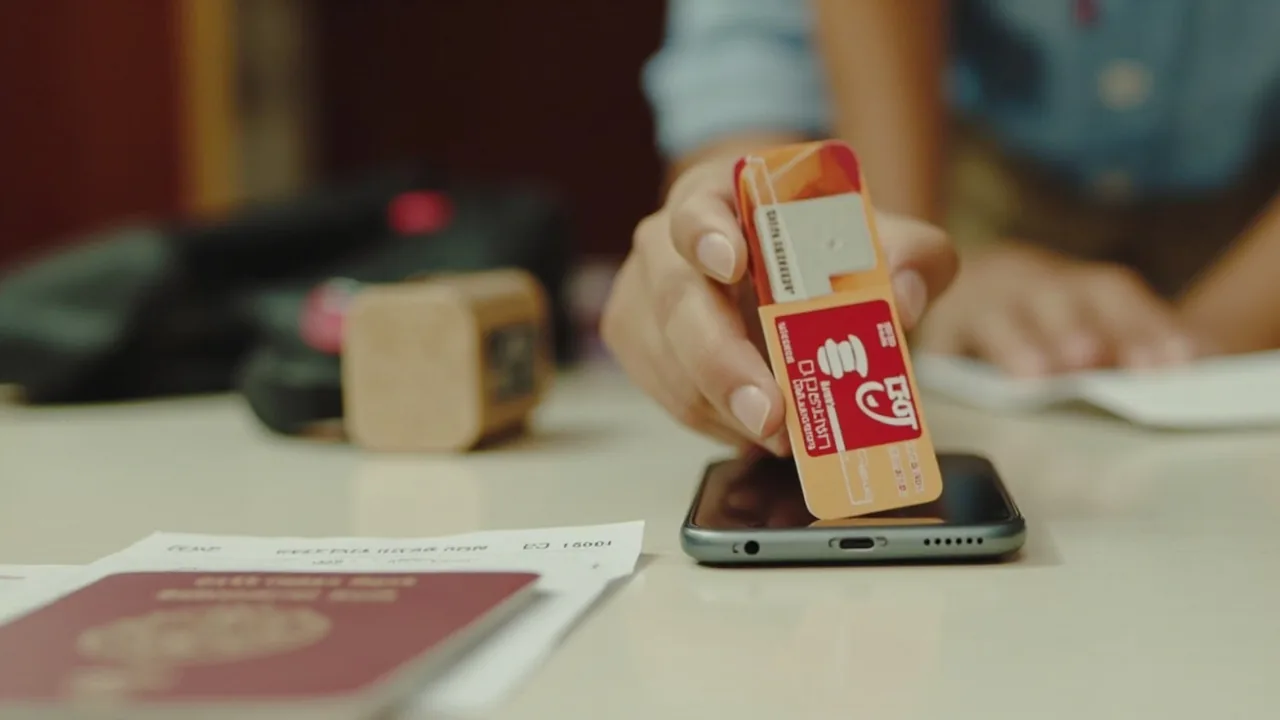
Cambodia Travel Essentials for Indian Tourists: SIM Cards, Vaccinations & Is It Safe for Solo Female Travelers?
Cambodia is the country that quietly punches above its weight on the Banana Pancake Trail. This guide puts the gotchas in one place. SIM cards, vaccinations, the visa, and the safety stuff specific to women. See also our Sea Backpacking Hub and Siem Reap guides.
I’ll walk you through what Indian travellers need before the flight: the documents, the SIM card that works on your Jio or Airtel-locked phone, the jabs worth paying for at a travel clinic, the safety stuff that’s specific to women, and the insurance line you should have in place before you board. You may also find Phnom Penh useful for this trip.
Quick Answers
| What | Answer | Price (INR) |
|---|---|---|
| Visa on arrival for Indians? | Yes, ₹2,896 (~30 USD) at airport ₹3,475 (~36 USD) e-Visa online | ₹2,896 (~$30) |
| Best SIM for Indian phones? | Smart or Cellcard tourist SIM, 7 days, ~10GB | 250 |
| Vaccinations recommended? | Hep A, Hep B, Typhoid, Tetanus; Rabies if rural | ₹3,500-₹7,000 (~$36.26-$72.52) at travel clinic |
| Is it safe for solo Indian women? | Mostly yes, with normal precautions; avoid late-night pub street excess | — |
| Travel insurance cost? | SafetyWing, ~$62/month for Indian passport holders | ~₹5,900/month |
Subodh’s Pro Tip: Sort the e-Visa before you fly. The $6 extra buys you a fast queue at Phnom Penh or Siem Reap airport and saves 30 to 45 minutes standing in line with tired backpackers who forgot to print their photo. See also: Kampot.
What Documents Do You Need to Travel to Cambodia from India?
Passport, photo, money, and either a printout or an online confirmation. Here’s the full list: For related planning, see our guide on Top Cities to Visit in Cambodia.
Passport: Six months validity beyond your entry date. Two blank pages minimum. Indian passport holders get visa-on-arrival at Phnom Penh (PNH) and Siem Reap (REP) airports.
Photo: One 4x6 cm photo on white background. Bring two, in case the first gets smudged or stamped-on. Cambodia is strict on the size, more so than most Southeast Asian countries.
Visa: ₹2,896 (~30 USD) cash for visa-on-arrival at the airport counter. ₹3,475 (~36 USD) for the e-Visa (apply at least 3 business days before your flight). Both give 30 days, single entry. Extension costs ₹4,344 (~45 USD) if you want another 30 days, applied for at the immigration office in Phnom Penh.
Subodh’s Pro Tip: Carry the ₹2,896 (~30 USD) fee in clean, unmarked USD notes. Torn or pre-2006 bills get rejected at the VoA counter, and there’s no ATM inside the visa queue. The airport ATMs outside baggage claim charge a ₹483 (~5 USD) fee, so carry extra cash.
Proof of onward travel: Immigration sometimes asks for a bus ticket to Thailand or a flight out. Print it. They’ll rarely hold you up if you can’t produce one, but having it skips the 10-minute interrogation.
Vaccination card: Yellow fever certificate if you’re coming from a country with risk of transmission (not India, but if you’re transiting via Africa or South America, you’ll need it). For hep A, typhoid, and the rest, carry the WHO yellow card if your travel clinic gave you one, it speeds up the conversation at land borders.
Travel insurance: Not a visa requirement, but the smart move. Get SafetyWing travel insurance covers Indian travellers from ~$62/month (~₹5,900). Includes COVID, trip interruption, and medical evacuation across Southeast Asia. Cambodia’s private hospitals (especially in Phnom Penh) are decent but expensive for foreigners, so this matters more here than in Thailand.
Getting Connected: SIM Cards and eSIMs
Cellcard and Smart are the two networks that matter. Smart has wider 4G coverage outside the cities. Cellcard works better in central Phnom Penh and Siem Reap town. Both run tourist SIMs that work in Indian-locked phones without issue.
Airport SIM: Smart and Cellcard counters are inside the terminal after customs, before the exit doors. The 7-day tourist SIM with around 10GB of data costs around ₹250 (~$2.59). They will register your passport and activate on the spot, takes five minutes. The airport price is the same as downtown, so convenience is the only reason to buy there.
Downtown SIM: Phnom Penh and Siem Reap both have Cellcard and Smart shops within walking distance of the main backpacker areas. Same SKU, same price, less queue. If you’re arriving overland from Thailand at Poipet, the Cellcard shop across from the casino zone sells the same SIM.
eSIM option: If you’d rather skip the SIM-counter queue and keep your Indian number active on your physical SIM, Get Nomad eSIM. Nomad’s Cambodia packages start around ₹483 (~5 USD) for 5GB over 7 days, activate by QR code the moment you land. Works on any recent Indian-purchased iPhone or flagship Android.
WiFi: Hostel WiFi in both Phnom Penh and Siem Reap is good enough for WhatsApp and Maps. Cafes like Brown Coffee and Amazon Cafe have reliable WiFi. You don’t need a SIM for the basics, but Grab and PassApp (the local ride-hailing apps) won’t work without mobile data.
Vaccinations: What Indian Travellers Need
I’m not going to scare you into ten jabs. Indian travellers from metros with up-to-date routine immunisations need four core vaccines for Cambodia, plus rabies if you’re going off the main trail.
Hepatitis A: Strongly recommended. Cambodia’s water and street food standards don’t always match what you’re used to. Two-shot series, the second dose 6 to 12 months after the first. Get the first shot at least two weeks before flying.
Hepatitis B: Recommended for most Indian adults who haven’t already had the three-dose series. Get it at the same travel clinic visit as Hep A.
Typhoid: Recommended. The injectable version gives two years of protection. Cambodia’s street food is mostly safe, but typhoid is the one infection that catches Indian travellers specifically because we eat more aggressively than Western backpackers.
Tetanus: Make sure your booster is current. Motorbike scrapes are the main risk.
Rabies: Worth it if you’re going to Mondulkiri, Kratie, or any rural area with dogs. Siem Reap and Phnom Penh are lower priority. Two shots pre-exposure, then boosters after any bite.
Japanese encephalitis: Only if you’re doing extended rural travel (more than a month, sleeping in open-air villages). Skip for a standard two-week Cambodia trip.
Malaria: Phnom Penh, Siem Reap, and Angkor are not malaria zones. Angkor Wat is prophylaxis-free. If you go to Mondulkiri, Ratanakiri, or remote Koh Kong, talk to your travel clinic about doxycycline.
Total cost at a travel clinic in Delhi, Mumbai, or Bangalore: ₹3,500 (~$36.26) to ₹7,000 (~$72.52) for the four core vaccines, depending on whether your Hep B series is already done. Apollo Clinics, Manipal, and the travel-medicine departments at major hospital chains all offer this. Book the appointment two weeks before flying.
Safety Alert: If you get bitten by a dog or monkey anywhere in Cambodia, wash the wound with soap for 15 minutes and seek post-exposure prophylaxis within 24 hours. Rabies immunoglobulin is available at Pasteur Institute in Phnom Penh. This is not a “wait and see” situation.
Is Cambodia Safe for Solo Female Travellers?
Honest answer: mostly yes, with the same common sense you’d use anywhere in Southeast Asia. The specific risks for Indian women are different from what generic “is Cambodia safe” articles cover.
Phnom Penh: Generally safe during the day. Walking around BKK1, the riverside, the Royal Palace area, and the Russian Market is fine. After dark, stick to BKK1 and the riverside strip, avoid walking alone down side streets off Street 136 and the back alleys near Central Market. Tuk-tuk drivers occasionally catcall, but it’s verbal, not physical. Grab and PassApp rides give you a tracked trip and a plate number, use them after dark.
Siem Reap: Safer than Phnom Penh, full stop. Pub Street is the backpacker strip and it’s busy enough that solo women feel comfortable there in the early evening. After midnight, the drunk-Aussie-Brit crowd gets handsy and the vibe shifts. If you’re not into that scene, head back to the hostel by 11pm and you’ve avoided most of the risk.
Beaches: Sihanoukville has been overdeveloped by Chinese investment and is the most “sketchy” of the major stops. Koh Rong and Koh Rong Samloem are safer, with a small backpacker scene. Travel in groups on night boats.
Common scams: The “temple is closed today” tuk-tuk scam (driver tries to take you to a different shop), the milk-tea overpricing in tourist zones, and the occasional bag-grab from passing motorbikes in Phnom Penh. Walk on the inside of the pavement, away from the road, and keep your phone zipped.
Dress code: Cambodia is conservative compared to Thailand. Cover shoulders and knees at the Royal Palace and at any wat (temple). On the beach and at the hostel, anything goes. In Phnom Penh’s night markets and local restaurants, modest dress earns you more respect.
For a deeper pre-departure safety briefing, check the Indian Ministry of External Affairs Cambodia travel advisory before you fly, and cross-check with the destination country’s own government advisory page. These two sources are updated more often than any blog.
Subodh’s Pro Tip: Pre-departure safety is also where travel insurance earns its keep. Solo women travellers face one specific risk that insurance covers well: emergency medical evacuation if you’re in a rural area with a snake bite, a bad fall, or anything requiring Bangkok-level hospital care. Get SafetyWing travel insurance covers Indian travellers from ~$62/month (~₹5,900). Includes COVID, trip interruption, and medical evacuation across Southeast Asia.
Common Mistakes Indian Travellers Make in Cambodia
1. Buying a SIM at the airport from a non-official reseller: The SIM kiosks near baggage claim are usually fine, but the unofficial guys shouting “SIM card, SIM card” outside the terminal are selling tourist-scammed packages at 3x the price. Walk to the official Cellcard or Smart counter inside.
2. Skipping travel insurance because “it’s just Cambodia”: One motorbike accident in Siem Penh at 40km/h without a helmet can mean a ₹289,587 (~3,000 USD) hospital bill and a ₹965,289 (~10,000 USD) medevac to Bangkok. Insurance is $62/month. The math is obvious.
3. Assuming everyone at Pub Street is your friend: Siem Reap’s Pub Street has a few bars where “friendly locals” buy solo women drinks that contain something stronger than gin. Watch your drink, don’t accept opened bottles, and stay with hostel groups after midnight.
4. Exchanging money at hotel counters: Phnom Penh and Siem Reap have proper money changers along Street 51 (Phnom Penh) and Pub Street (Siem Reap) that give close-to-spot rates. Hotel counters give 5-10% worse rates.
5. Driving a motorbike without a Cambodian licence: Cambodian police set up checkpoints specifically around Angkor and Sihanoukville. The “fine” is negotiable from ₹1,931 (~20 USD) up, and it eats a day of your trip. Don’t ride without a valid international permit.
Daily Budget Breakdown
What a solo Indian backpacker spends per day in Cambodia, averaged across Phnom Penh and Siem Reap:
| Category | Budget/day |
|---|---|
| Dorm bed | 400-1,000 |
| Food (3 meals) | 250-500 |
| Local transport (tuk-tuk/PassApp) | 170-420 |
| Activities | 1,250-2,100 |
| Misc / drinks | 250-500 |
| Total | ~2,300-4,500/day |
Cambodia’s two-currency system (USD and Cambodian riel, KHR) means most tourist prices are quoted in USD, with small change in riel.
The food range is realistic: street food runs ₹97-₹290 (~1-3 USD) per meal, a sit-down dinner with a beer is ₹483-₹772 (~5-8 USD). Activities are dominated by Angkor, which alone costs ₹3,572 (~37 USD) for a one-day pass, ₹5,985 (~62 USD) for three days ₹6,950 (~72 USD) for seven days. If Angkor is on your list, the seven-day pass is the best value.
What to Eat (Especially if You’re Vegetarian)
Cambodia is more vegetarian-friendly than Thailand’s street food, but less than India. Fish sauce is in almost everything, so strict vegetarians need to flag this in English (“no fish sauce, no oyster sauce, no shrimp paste”) or just default to the Indian restaurants listed below.
Num pang (₹145 (~1.50 USD)): Cambodian sandwich, baguette stuffed with pickled carrot, daikon, cucumber, and your choice of meat or egg. The closest thing to Vietnamese banh mi but with more pickled veg. Easy to ask for “no meat, extra veg.”
Fish amok (₹386 (~4 USD)): The national dish. Coconut-fish curry steamed in banana leaf. Skip if you’re vegetarian, but if you eat fish, this is the must-try.
Bay saprov (₹145-₹241 (~1.50-2.50 USD)): Stir-fried morning glory with garlic. The default veg side at every Cambodian restaurant. Ask for it without the fish-sauce base if you want it fully veg.
Red curry with vegetables (₹290-₹386 (~3-4 USD)): Less spicy than Thai red curry, slightly sweet, served with rice. Most Cambodian restaurants will do this veg-friendly.
Where to eat it:
- Smokin’ Pot Authentic Cambodian Restaurant and Cooking School: The cooking class is the best part. Half-day, around ₹2,413 (~25 USD), you cook four dishes and eat them. Worth it for the cultural context more than the meal.
- Cambodia kitchen: Rustic, local, the kind of place Cambodians eat. Order the fish amok and the lok lak (beef in Kampot pepper sauce).
- HoubHoub Cambodian Restaurant (BKK1): Lively atmosphere, slightly more upscale, good for a Phnom Penh dinner with friends.
- Phare, The Cambodian Circus: Not food, but worth mentioning here because it’s part of the Siem Reap evening scene. Acrobats, music, and storytelling by Cambodian youth performers. Book tickets through the venue directly.
When you need Indian food:
- Indian Restaurant (Phnom Penh): Basic, reliable, close to BKK1. The dal tadka and chapati hit different after a week of rice and noodles.
- Galaxy Indian Restaurant (Poipet): If you’re crossing the Thailand border, this is the first proper Indian meal you’ll find. Paneer, dal, biryani, the whole menu.
- Saffron Indian Restaurant (Poipet): A step up from Galaxy, slightly more expensive, same border-town convenience.
Travel Insurance for Cambodia
Get SafetyWing travel insurance, covers Indian travelers from ~$62/month (~₹5,900). Includes COVID, trip interruption, and medical evacuation across Southeast Asia.
FAQ
Do Indian passport holders need a visa for Cambodia? Yes, but it’s cheap and easy. ₹2,896 (~30 USD) for visa-on-arrival at the airport ₹3,475 (~36 USD) for the e-Visa online at evisa.gov.kh. Both give 30 days, single entry.
Is Cambodia safe for solo Indian women? Generally yes. Stick to BKK1 and the riverside in Phnom Penh, avoid Pub Street after midnight in Siem Reap, use Grab or PassApp after dark. The standard Southeast Asia rules apply, no country-specific red flags that don’t apply to male travellers.
What vaccinations do I need for Cambodia from India? Hep A, Hep B, Typhoid, and a current Tetanus booster. Add Rabies if you’re going rural. Japanese encephalitis only for extended rural travel. Get the jabs at a travel clinic two weeks before flying.
Which SIM card works in Cambodia for Indian phones? Cellcard or Smart. Both sell tourist SIMs at the airport for ~₹250 (~$2.59) with 10GB over 7 days. Indian-locked phones from Jio, Airtel, or Vi work fine.
Can I use Indian rupees in Cambodia? No. Cambodia uses USD and Cambodian riel (KHR). Bring clean, unmarked USD notes in $20s and $50s. Exchange at proper money changers, not hotel counters.
How much does travel insurance cost for Cambodia from India? SafetyWing is ~$62/month (~₹5,900). Covers medical evacuation, COVID, and trip interruption. Get it before you fly, not after.
What is the cheapest way to get from Bangkok to Cambodia? Bus from Bangkok to Poipet border, then a shared taxi or tuk-tuk from Poipet to Siem Reap. Total cost: ₹1,448-₹2,413 (~15-25 USD). Total time: 8-10 hours. Book through your hostel in Bangkok.
Are there any Cambodia travel restrictions for Indian citizens right now? No active restrictions. Indian passport holders get visa-on-arrival as standard. Check the MEA travel advisory page before flying, but the route is currently open and routine.