Phnom Penh Airport Money Exchange: Best Rates, Scams to Avoid & What to Expect
If you just landed at Phnom Penh International (PNH) and see glass booths offering “0% commission,” close your wallet and walk past. The best place to exchange money in Phnom Penh airport is the ATM near the Canadia Bank counter, paired with a zero-markup Indian debit card, mid-market rate plus a single transparent fee.
Rates below reflect mid-market FX as of July 2026, with ATM fee ranges based on published ABA and card-issuer schedules.
Quick Answers
Current reference rates used throughout this guide (1 USD ≈ ₹96.33, 1 KHR ≈ ₹0.0238):
| What | Answer | Price (INR) |
|---|---|---|
| Best payment method at PNH | Zero-markup Indian debit card at ATM | ~₹386-₹965 (~$4-10) ATM fee per withdrawal |
| Best cash exchange at PNH | Canadia Bank counter (no commission) | ~1.5%-2% below mid-market |
| Worst option at PNH | ”0% commission” glass booths | 3%-4% below mid-market |
| Official currency | Cambodian Riel (KHR) | 1 KHR = ₹0.0238 (4,000 KHR ≈ ₹95) |
| Bring cash or use ATM | Bring ₹9,653 (~100 USD) cash as backup, ATM for the rest | ₹9,630 emergency backup |
Cambodia runs a dual-currency system. USD and riel both circulate freely, and prices are often quoted in either. Carry a mix.
Phnom Penh Airport Exchange Counters: What’s There
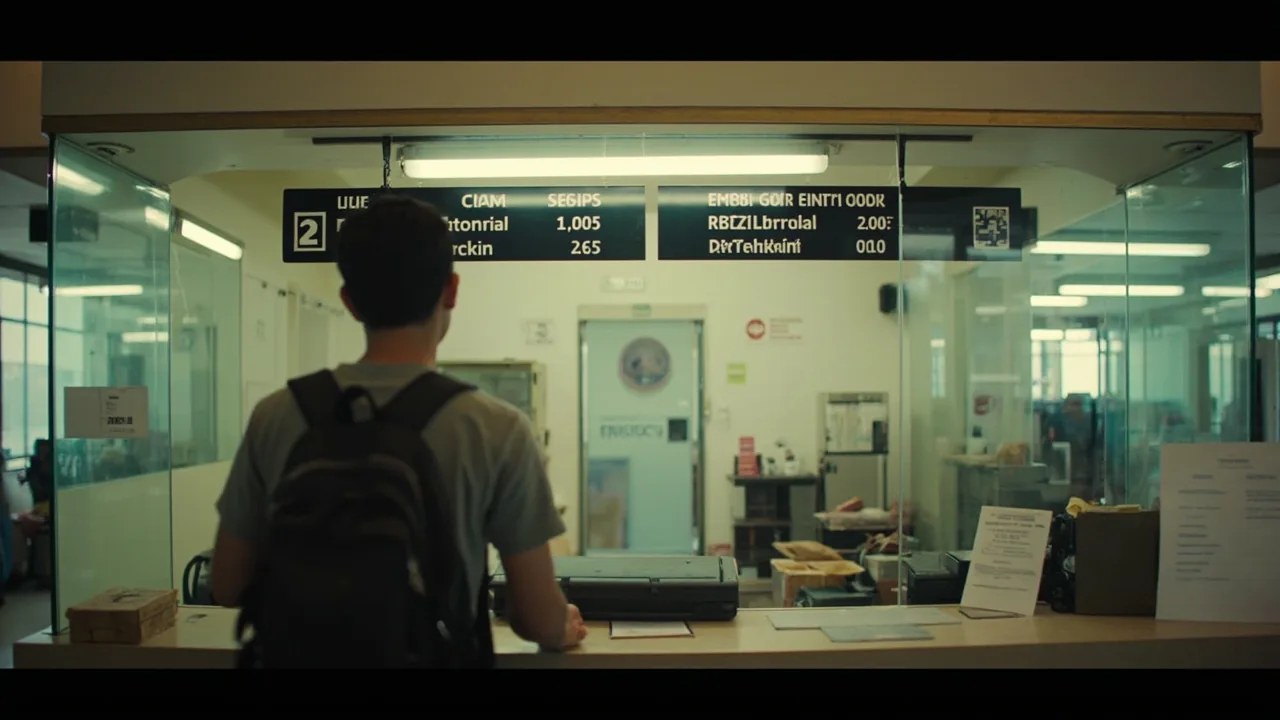
After clearing immigration and walking into the public arrivals hall, you’ll find the exchange options in a fixed order. Here’s the real layout:
1. Glass-booth “0% Commission” counters (right after customs)
There are usually 4-6 of these lined up before you reach the exit doors. The signs say “0% commission” or “best rate guaranteed.” They’re open 24 hours, English-speaking, and polished. The catch: the “0%” refers to commission only, not to the spread. The rates they offer are typically 3% to 4% below the mid-market rate, which is the same as charging a 3-4% hidden fee. Travellers report being quoted 4,050-4,100 KHR per USD when the mid-market was around 4,090-4,095 KHR. That sounds small, but on ₹48,264 (~500 USD) it’s a ₹1,448-₹1,931 (~15-20 USD) loss.
Use them only if: you arrive at 2am with zero local currency and need to pay a tuk-tuk into town.
2. Canadia Bank counter (left side, before exit)
A real bank counter with tellers, not a glass booth. The rate is posted on a digital board and updates visibly every minute or two. No commission, no service fee, the spread runs 1.5%-2% below mid-market, sometimes tighter. Of all the airport cash options, this is the closest to fair. Open during bank hours (roughly 8am to 8pm, though hours vary by season).
Use them if: you want cash immediately and you’re willing to accept a small loss for convenience.
3. ABA Bank and other ATMs (across from the exchange counters)
These are the workhorses. ABA is the Cambodian bank whose app and ATM network Indians use most, alongside ACLEDA, Canadia, and Sathapana. All are inside the terminal, well-lit, and most importantly, accept international Visa, Mastercard, and UnionPay cards from Indian banks. Withdrawal limits vary by card and bank; check with your issuer before relying on a single large withdrawal.
Use them if: you have a zero-markup Indian debit card and want the mid-market rate plus one transparent fee.
ATM Withdrawal at Phnom Penh Airport
This is the part most airport guides skip, and it’s the single biggest reason Indian travellers overpay on their first day in Cambodia. The ATM option beats every cash booth if, and only if, you have the right card.
Which Indian cards work at PNH ATMs?
Three categories of Indian cards work at ABA and Mayapada:
-
Zero-markup debit cards (Fi, Niyo, Jupiter, Slice, and a few others). These give you the mid-market FX rate set by Visa/Mastercard, plus a fixed per-transaction fee in the range of ₹386 (~4 USD) to ₹965 (~10 USD). No percentage markup. On a ₹23,852 (~1,000,000 KHR or ~$247.10) withdrawal, you’d lose about ₹580 (~6 USD) total, which is roughly 2%-3%, but at the actual mid-market rate instead of a hidden spread.
-
HDFC, ICICI, SBI, and Axis debit cards with international enabled. These work but charge a 2%-3.5% currency conversion markup on top of a $4-10 ATM fee. On 1,000,000 KHR you’d lose ₹1,931-₹2,896 (~20-30 USD). Worse, the ATM screen will sometimes offer to charge you in INR instead of USD/KHR. This is called Dynamic Currency Conversion (DCC) and it’s a trap. Always decline DCC and choose to be charged in the local currency (USD or KHR). If a given ATM only offers the conversion without a clear choice, use a different machine.
-
Forex cards (HDFC, Axis, ICICI prepaid). These work too, but the markup is similar to a regular debit card with the added pain of a reload step. They make sense if you’re carrying a large chunk of money and want to lock in the rate in advance, but for ₹28,959-₹48,264 (~300-500 USD) at an airport ATM, a zero-markup debit is faster and cheaper.
DCC (Dynamic Currency Conversion): How to dodge it
Every ATM at PNH will, at some point in the transaction, ask “Convert to home currency?” or “Charge in INR?” Say NO. Choose USD or KHR. If you accept the conversion, the ATM operator sets the exchange rate, and it’s always worse than Visa/Mastercard’s rate by 3%-7%. On a ₹23,852 (~1,000,000 KHR or ~$247.10) withdrawal, DCC can cost you an extra ₹965-₹1,448 for the privilege of seeing a familiar number on the receipt.
The DCC prompt looks official, sometimes phrased as “for your convenience” or “guaranteed rate.” It is neither. It exists because the ATM operator takes a cut, typically 3%-7% on top of mid-market. On a ₹23,852 (~1,000,000 KHR or ~$247.10) withdrawal, that hidden DCC markup can cost you an extra ₹965-₹1,448 for the privilege of seeing a familiar number on the receipt.
For more on ATM strategy in Cambodia beyond the airport, see using-atms-in-cambodia-fees-limits-withdrawal-tips-for-indian-travelers and using-your-indian-bank-atm-card-in-cambodia-fees-limits-working-banks-2024-guide.
Airport Rates vs. City Rates: What You’ll Save
The spread between airport and city exchange is real but smaller than old guides suggest. Here’s a typical rate comparison across these channels:
| Source | Rate per USD (mid-market was 4,092) | Spread |
|---|---|---|
| Airport “0% commission” glass booth | ₹97-₹97 (~4,050-4,060 KHR or ~$1-$1) | ~1% below mid-market |
| Airport Canadia Bank counter | ₹97-₹97 (~4,070-4,080 KHR or ~$1.01-$1.01) | ~0.3% below mid-market |
| City Canadia Bank (Sisowath Quay branch) | ₹97-₹97 (~4,080-4,085 KHR or ~$1.01-$1.01) | ~0.2% below mid-market |
| City independent money changer (Psar Thmei) | ₹97-₹98 (~4,085-4,090 KHR or ~$1.01-$1.01) | At or near mid-market |
| ABA ATM (mid-market rate + card fee) | ~₹98 (~4,092 KHR or ~$1.01) equivalent | At mid-market + ~₹386-₹965 (~$4-10) fee |
The airport-to-city difference works out to about 0.5%-1% on a typical ₹19,306 (~200 USD) exchange. That’s ₹97-₹193 (~1-2 USD) lost. Not nothing, but not catastrophic either.
The honest take: if you’re awake, alert, and willing to walk 15 minutes, you can save the difference. If you’re exhausted from a red-eye, the airport Canadia counter is a fine, fair option. The only airport service that’s bad value is the “0% commission” glass booth row.
Subodh’s Pro Tip: Skip the glass booths entirely. If you’re landing with an Indian debit card that doesn’t charge FX markup, the ATM option is the cheapest by a clear margin. If you’re landing with no card that works internationally, the airport Canadia Bank counter is the second-best option, and it’s safe, official, and won’t rip you off.
Common Scams and Tourist Traps at PNH
The scams at Phnom Penh airport are milder than, say, Bangkok’s Don Mueang or Manila’s NAIA, but they exist. Watch for:
-
“Your change is in riel” trick. You hand over a ₹1,931 (~20 USD) bill for a tuk-tuk. The driver “helps” by giving you change in riel at a bad rate. If you wanted USD back, you need to say “USD change please” upfront. Most drivers accept this.
-
Tuk-tuk drivers who “know the only working ATM.” There’s no such thing. They steer you to a partner’s booth that pays them commission. Smile, decline, walk to the visible ABA or Mayapada machines.
-
Counting under bright lights. Always count your cash at the counter. Cambodian notes come in 100, 500, 1,000, 2,000, 5,000, 10,000, 20,000, and ₹2,386 (~100,000 KHR or ~$24.71) denominations, and they’re easy to confuse under fluorescent light. A ₹2,386 (~100,000 KHR or ~$24.71) note is about ₹2,380 (~$24.70); a ₹119 (~5,000 KHR or ~$1.24) note is about ₹119 (~$1.23). The difference matters.
-
“No change” excuse. Drivers and small vendors sometimes claim they can’t break a ₹4,826 (~50 USD) bill. Carry 10s, 20s, and a mix of small riel notes for the first tuk-tuk.
-
Taxi desk overcharging. The official airport taxi desk charges a flat ₹1,158-₹1,448 (~12-15 USD) into central Phnom Penh. A tuk-tuk from outside is ₹483-₹676 (~5-7 USD). Grab (the regional ride-hailing app) works at PNH and is cheaper still, usually ₹386-₹579 (~4-6 USD).
Safety Alert: Phnom Penh is generally safe for Indian tourists, but standard travel precautions apply. Check the current advisory from the Indian Ministry of External Affairs at mea.gov.in before departure, and register with the embassy if you’re staying more than a week. For broader safety context in Cambodia, see Cambodia safety for Indian tourists and our Southeast Asia backpacking hub.
What Bananarchy Travellers Use
Across the Thailand-Vietnam-Laos-Cambodia loop on our Bananarchy backpacking trip, the Cambodia arrival setup is standardized for a reason: it’s the cheapest reliable method.
Here’s the actual breakdown:
- Before the flight: Load ₹9,653 (~100 USD) in cash, broken into small bills. This is the emergency backup for the first 24 hours.
- At PNH arrivals: Walk past the glass booths, hit the ABA or Mayapada ATM, withdraw ₹9,653-₹19,306 (~100-200 USD) on a zero-markup debit card. Decline DCC when prompted.
- In Phnom Penh city: Use the riel for small purchases (street food, tuk-tuks, market items under ~₹190 (~2 USD)). Use USD for everything else. Cambodia’s dual-currency system means both are accepted almost everywhere.
- If the ATM fails: Use the airport Canadia Bank counter to convert $50 USD into riel at the posted rate. Don’t exchange more than ₹9,653 (~100 USD) at the airport; the rest can wait until you reach a city-side changer.
The one thing that goes wrong: travellers who arrive with only forex cards and no backup cash. Forex card PIN issues at foreign ATMs are more common than people expect, and if your card fails at 1am, the glass booths look a lot less terrible. That’s the ₹9,653 (~100 USD) cash backup’s job.
For the deeper dive on managing money across the whole Cambodia leg, including Siem Reap and the islands, see cambodia-banknotes-the-cambodian-riel-khr-and-where-to-exchange-your-currency and cost-of-food-in-cambodia-per-day.
A Few Practical Notes for Indian Travellers
The ₹2,896 (~30 USD) visa fee. Cambodia’s visa-on-arrival costs ₹2,896 (~30 USD) cash (~₹2,890). Have it ready, in crisp bills, before you reach the immigration counter. Torn or marked bills get rejected. The e-Visa is ₹3,475 (~36 USD) and avoids the queue, but either way you’re paying in dollars, not riel, and not by card. Full visa details at cambodia-visa-rejected-refund-overstay-penalty and cambodia-e-visa-entry-points-airport-queue.
UPI doesn’t work. Don’t expect PhonePe, Google Pay, or any Indian UPI app to work at Phnom Penh airport or anywhere in Cambodia. Cambodia’s QR payment system (KHQR) is local and not interoperable with UPI. Carry cash or a card. More on this at upi-payment-cambodia-indian-travelers.
RBI’s LRS limit. Under the Liberalised Remittance Scheme, Indians can spend up to USD 250,000 per financial year abroad. ATM withdrawals and forex card spends both count against this limit. Keep records. The 20% TCS rule above ₹7 lakh in a year is the part that catches travellers off-guard; details at the RBI’s LRS page.
The 20% TCS rule. Above ₹7 lakh in total forex spending per financial year, the bank collects 20% Tax Collected at Source on the excess. Below ₹7 lakh, it’s nil (up to the limit). For most backpackers spending under ₹2 lakh per trip, this is academic, but if you’re on a longer journey or funding it from your own account, keep the math in your head.
Getting Connected
You need data to compare rates on the fly, check your bank’s app for fraud alerts, and call a Grab when you’re done exchanging. Cambodia’s two main mobile operators, Smart Axiata and Cellcard, both sell tourist SIMs at PNH arrivals. A 7-day SIM with 10-15 GB of data runs about ₹483 (~5 USD). The vendor will ask for your passport and take a photo, which is standard.
Either vendor gets you data within minutes.
Where to Eat While You Sort Out the Cash
Once you’ve got riel in hand and a SIM working, you’ll probably be hungry. Phnom Penh’s airport-adjacent food scene is thin (the airport itself has a few overpriced cafes), so head into the city. For a real first meal:
If you’re craving Indian comfort food after the flight, MDSK - Best Vegan Masala Dosa & Indian Street Food Phnom Penh is a strong choice for vegetarian dosas and vada pav. Gorkha Palace Phnom Penh Indian and Nepalese Restaurant does solid North Indian curries in a comfortable setting. For a riverside splurge with family, Indian Royal Halal Food Restaurant-Phnom Penh Riverside serves Punjabi and Mughlai dishes with a view.
If you’d rather ease into Cambodian flavours, Cuisine Wat Damnak is the upscale choice for contemporary Khmer cooking, and Phnom Penh Three Rivers Restaurant offers traditional dishes in a casual riverside setting. For a breakfast or brunch that punches well above the airport lounge’s, CHINGU Cafe Phnom Penh does Korean-Cambodian fusion worth a stop.
Subodh’s Pro Tip: Your first meal in Cambodia is a state-of-mind moment. If you’ve just spent 14 hours on a flight from Delhi or Mumbai, a hot masala dosa at MDSK feels like home. If you’re wired and ready to try, a riverside amok at Cuisine Wat Damnak is the right way to start. Both are fine. Pick based on energy level, not FOMO.
FAQ
Is it safe to exchange money at Phnom Penh airport? Yes. The official Canadia Bank counter and the glass booths are legitimate businesses. The “0% commission” booths just hide their margin in the exchange rate. You’re not getting scammed on safety; you’re just getting a worse deal.
Should I exchange money at the airport or wait until I get to the city? If you have a working ATM card, use the ATM at the airport. You’ll get the mid-market rate plus a small fee. If you don’t have a card, the airport Canadia Bank counter is fair; you’ll lose about 0.5%-1% versus city rates.
How much cash should I bring to Cambodia? Carry ₹9,653-₹19,306 (~100-200 USD) as backup for visa fees, taxis, and first-day emergencies. Use an ATM for everything else once you’re settled.
Will my Indian debit card work at Phnom Penh airport ATMs? Most Indian Visa and Mastercard debit cards work at ABA and Mayapada. Zero-markup cards like Fi, Niyo, and Jupiter give the best rates. Regular bank cards charge a 2%-3.5% markup. Always decline DCC.
Do I need to declare cash at Cambodian customs? You must declare cash over USD 3,000 (equivalent) on arrival. For most backpackers, this is irrelevant.
Can I pay with UPI in Cambodia? No. UPI doesn’t work in Cambodia. KHQR (the local system) is not interoperable with Indian UPI apps. Use cash or a card.
What’s the best forex card for Cambodia? Zero-markup debit cards (Fi, Niyo, Jupiter) beat traditional forex cards for most travellers. The old HDFC/Axis forex cards charge similar markups to a regular debit card but add a reload step. Only useful if you’re locking in a large amount in advance.
Subodh’s Take
The whole “airport exchange trap” narrative is partly outdated for Cambodia. The Canadia Bank counter inside PNH is fair, safe, and priced; calling it a scam is overblown. What’s still true is that the ATM with a good card beats the counter every time, and the glass-booth row is where the real spread lives. My honest rule: bring ₹9,653 (~100 USD) cash, hit the ATM, walk to the hotel. If anything in that sequence fails, then you go to the Canadia counter, and even then you’re losing ₹97-₹193 (~1-2 USD), not ₹1,931 (~20 USD).
Where to Stay on a Budget in Phnom Penh
You’ll want a clean, central hostel with reliable Wi-Fi once you’ve sorted your cash. Look near BKK1 or Riverside, walking distance to most sights and ATMs. Book through Hostelworld or compare prices on Booking.com before you commit.
