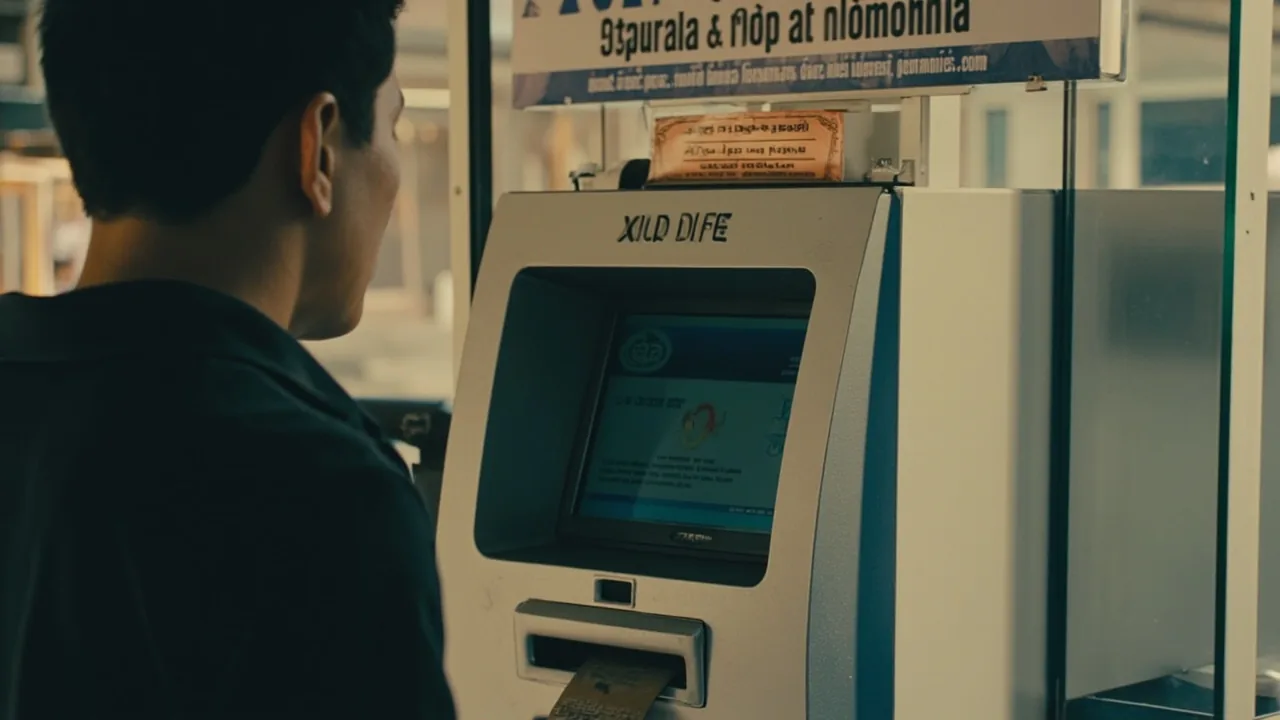
ATMs in Cambodia for Indians: Fees, Limits & Safety (2026)
Cross-checked against ABA Bank and Canadia Bank public fee schedules, the National Bank of Cambodia’s ATM locator, and traveller reports from June 2026. For related planning, see our guide on Sea Backpacking Hub.
Here’s the bottom line for any Indian landing in Phnom Penh or Siem Reap: bring a zero-markup forex debit card (Niyo or Fi), withdraw in USD from an ATM inside a bank branch or an airport arrivals hall, and decline every “convert to INR” prompt the machine offers. ABA, Canadia, and Acleda are the three networks you’ll use 90% of the time, and they all charge the same ₹95 (~4,000 KHR or ~$0.99) fee per transaction on top of whatever your Indian bank charges. The biggest landmines aren’t the fees. They’re the dynamic currency conversion scam, isolated ATMs in border towns, and skimmers on unlocked machines in tourist-heavy areas. We’ll cover all three. You may also find Currency Exchange Cambodia Phnom Penh Airport useful for this trip.
Quick Answers
| What | Answer | Price (INR) |
|---|---|---|
| Best payment method | Zero-markup forex debit card (Niyo/Fi) | ₹100-₹300 (~$1.04-$3.11) ATM fee (~$1.20-$3.60) |
| Standard Cambodian ATM fee | ABA, Canadia, Acleda all charge | ₹95 (~4,000 KHR or ~$0.99) per withdrawal |
| Typical withdrawal limit | ₹19,306-₹48,264 (~200-500 USD) per transaction | Varies by Indian bank |
| Worst option | DCC (paying in INR at the ATM) | 5%-8% worse than mid-market |
| Safest ATM spot | Inside a bank branch or airport | Avoid isolated street ATMs at night |
| UPI works? | No | Use cards or USD cash |
How it Works
Cambodia runs on two currencies side by side: the Cambodian riel (KHR) and the US dollar. The dollar is so dominant for tourist transactions that most ATMs dispense USD bills, not riel. You’ll see riel notes for change under $1 (for example, a $0.75 bill paid with a $1 note comes back as 1,000 KHR in change). The exchange rate is roughly 4,000-4,100 KHR per 1 USD, and at current rates that’s about ₹24 per 1,000 KHR. See also: Cambodia Banknotes the Cambodian Riel Khr and Where to Exchange Your Currency.
When you walk up to an ATM in Cambodia, four things happen in sequence:
- Your Indian bank’s network (Visa, Mastercard, or RuPay) routes the transaction.
- The Cambodian ATM operator (ABA, Canadia, Acleda, or a smaller bank) tacks on its own fee. This is the ₹95 (~4,000 KHR or ~$0.99) you’ll see on screen.
- The ATM asks if you want to be charged in KHR or in your home currency (INR). This is the dynamic currency conversion prompt, and the answer is always “no, charge me in the local currency” (which here means USD, since the machine dispenses dollars).
- Your Indian bank charges its own cross-border markup, which is where the 1%-3.5% difference between a Niyo/Fi card and a regular HDFC/SBI debit card lives. For related planning, see our guide on Cost of Food in Cambodia Per Day.
DCC is the single most expensive mistake travellers make. The ATM’s exchange rate is set by the ATM operator’s payment processor, not by the mid-market rate your bank uses. On a ₹19,306 (~200 USD) withdrawal, DCC can cost you an extra ₹800-₹1,500 (~$8.29-$15.54) over what your home bank would have charged. Always decline it. If the machine forces the conversion and won’t let you skip it, walk away and find another machine.
For a deeper breakdown of the markup difference between card types, see our Indian bank ATM card in Cambodia guide.
Comparison of Popular Options
Here’s how the main options stack up for Indian travellers withdrawing cash in Cambodia. All figures assume a ₹28,959 (~300 USD) withdrawal.
| Method | ATM Fee | Markup | Total Cost (INR) | Verdict |
|---|---|---|---|---|
| Niyo Global Debit Card | ₹97 (~1 USD) | 0% | ~₹96 (~$0.99)+ 0% | Best option for most travellers |
| Fi Federal Debit Card | ₹97 (~1 USD) | 0% | ~₹96 (~$0.99)+ 0% | Tied with Niyo; some users report better app |
| HDFC ForexPlus Card | ₹97 (~1 USD) | 2%-3.5% | ~₹96 (~$0.99)+ ~₹700-₹1,000 (~$7.25-$10.36) | Acceptable backup, not first choice |
| SBI Global Card | ₹97 (~1 USD) | 2.5%-3.5% | ~₹96 (~$0.99)+ ~₹800-₹1,100 (~$8.29-$11.40) | Works, but markup adds up on bigger trips |
| Standard HDFC/SBI Debit | ₹97 (~1 USD) | 3%-4% + ₹483 (~5 USD) txn fee | ~₹96 (~$0.99)+ ~₹1,000-₹1,300 (~$10.36-$13.47) | Expensive; only for emergencies |
| Cash exchanged in India | N/A | 5%-8% spread | Worst of all options | Avoid unless you need ₹4,826-₹9,653 (~50-100 USD) on arrival |
| DCC at the ATM | Hidden in rate | 5%-8% markup on the FX | ₹1,200-₹2,000 (~$12.43-$20.72)+ on ₹28,959 (~300 USD) | Never accept this |
The ₹95 (~4,000 KHR or ~$0.99) ATM fee is fixed by the Cambodian bank, not your Indian bank. Your card choice only affects the markup layer. Niyo and Fi are both zero-markup on the currency conversion side, which is why they come out ahead on any withdrawal over ₹9,653 (~100 USD).
For a country-by-country cost comparison of these cards across Southeast Asia, see our monthly cost breakdown for backpacking Southeast Asia.
India-Specific Gotchas (RBI & TCS)
Two RBI rules bite Indian travellers on every overseas trip: TCS (Tax Collected at Source) and the LRS (Liberalised Remittance Scheme) limit.
TCS on forex cards and overseas card spends is 20% above the ₹7 lakh threshold per financial year. Below ₹7 lakh spent abroad on a forex card, there is zero TCS. Above it, 20% of the amount over ₹7 lakh gets collected and is refundable when you file your ITR. This is the most misunderstood part: the money is recoverable, not a tax, but it sits locked until you file. Plan your card spends so you don’t blow past ₹7 lakh in one trip unless you want the cash flow hit.
LRS limit is USD 250,000 per financial year, far above what any backpacker needs. The relevant threshold is the ₹7 lakh forex card spend ceiling. If you’re loading multiple cards, the total across all of them counts toward ₹7 lakh.
PAN card is required for any forex card load above USD 250 or any outward remittance, and for the ITR refund of the TCS amount. Carry a digital copy.
Cash declaration at the Indian airport on exit is required if you’re carrying more than ₹289,587 (~3,000 USD) in cash (equivalent) out of India. Most backpackers carry well under this, but if you’re funding the whole trip in USD bills, note the form is at the customs counter before security.
Subodh’s Pro Tip: Load your Niyo or Fi card in tranches of ₹2-3 lakh across multiple trips rather than loading ₹7 lakh in one shot. You’ll never cross the TCS threshold on a single trip, and you avoid the ITR refund wait entirely.
ATM Safety: Skimmers, Isolated Machines, and What to Watch For
This is the part no competitor covers properly, and it matters: Cambodia has a real skimming problem at standalone ATMs in tourist areas, and reports of card cloner fraud surface in traveller forums every few months. The good news is the risk is concentrated in specific situations, and you can avoid almost all of it with a few habits.
Skimmers are physical devices attached to the card slot or the keypad. They read your card’s magnetic stripe when you insert it. Chip cards (which all Indian Visa and Mastercard debit cards have been since 2019) are far harder to clone than stripe cards, but the embedded keypad overlays can still capture your PIN. The Cambodian banks listed above have not been the source of widespread skimming reports, but the same can’t be said for every ATM in tourist-heavy areas like Pub Street in Siem Reap, the riverside in Phnom Penh, or border towns like Poipet.
Where to withdraw safely:
- Inside a bank branch during business hours. ABA, Canadia, and Acleda branches have a guard at the door and the ATM is visible to staff. This is the lowest-risk option.
- In the airport arrivals hall. Phnom Penh International and Siem Reap International both have bank-affiliated ATMs just past customs. Higher per-transaction fee (usually ₹483 (~5 USD) instead of ₹97 (~1 USD)), but the lowest skimming risk and open 24 hours.
- Inside a major hotel lobby. Five-star and chain hotels have ATMs inside the building, often ABA or Canadia branded.
- At a mall ATM during open hours. Aeon Mall, Exchange Square, and the larger markets have visible, frequently-serviced machines.
Where to avoid:
- Freestanding street ATMs in dark or isolated spots, especially in border towns.
- ATMs with a “card inserted” warning or any message in Khmer you don’t recognize. These are sometimes legitimate, but a machine showing odd behaviour is a reason to cancel and walk away.
- “Unofficial” money changer booths that have an ATM inside. These exist and are not affiliated with any real bank.
Three habits that prevent most ATM fraud:
- Cover the keypad with your other hand when entering your PIN. This defeats shoulder-surfing and most keypad-overlay skimmers.
- Use chip + PIN, never magstripe. Your Indian card will default to chip. If the machine asks you to swipe, cancel the transaction and find another ATM.
- Set a low daily limit on your Indian bank app before you leave. If your card gets cloned, a ₹30,000 (~$310.79) daily cap means a fraudster can drain ₹30,000 (~$310.79), not ₹300,000 (~$3,107.88). Niyo and Fi both let you freeze and unfreeze the card from the app, which is a strong secondary defence.
Subodh’s Pro Tip: Set up SMS and app transaction alerts on every card before you fly. ABA’s ATM will send you an SMS receipt with the exact amount, which makes it easy to cross-check against what your bank shows.
For a broader read on safety for Indian tourists in Cambodia beyond ATMs, see our Cambodia safety for Indian tourists guide.
What Bananarchy Travellers Use
Most travellers in our group carry ₹20,000-₹30,000 (~$207.19-$310.79) in USD cash for the first two days (enough for the visa on arrival, a taxi into town, and the first night’s hostel), then switch entirely to a Niyo or Fi card for the rest of the trip. ABA ATMs are the most common pick because the network is everywhere and the app (ABA Mobile) shows your balance and transaction history in English.
The pattern that breaks people’s budgets is relying on one method. Card gets blocked, the only ATM nearby is down, the bank branch is closed, and suddenly you’re at a guesthouse that only takes USD cash and the money changer is closed. The fix is boring: carry two cards from different networks (one Visa, one Mastercard, or one RuPay and one Visa), keep ₹4,826-₹9,653 (~50-100 USD) in your wallet as a backup, and know the location of at least two ATMs near your hostel before you need them.
One thing people consistently get wrong: they assume Siem Reap and Phnom Penh are the same. Siem Reap has fewer ATMs per capita, especially outside Pub Street and the Old Market area. If you’re staying near the temples or in a quieter neighbourhood, plan to withdraw in town before heading back. Islands like Koh Rong have almost no ATMs; bring enough cash from the mainland.
For a deeper look at how this fits into a Cambodia-specific budget, our Cambodia trip cost from India breakdown lays out realistic day-to-day spending.
Getting Connected
You need data on your phone the moment you land, not just for maps and Grab but because checking your bank’s transaction alert and the ABA app’s balance is how you catch a skimmer or a wrong conversion in real time. A physical SIM is the cheapest option; an eSIM works fine if you don’t want to swap cards. Most travellers go with Cellcard or Smart for 5-7 GB of data, which costs around ₹386-₹579 (~4-6 USD) for a week. For an eSIM alternative, Get Nomad eSIM delivers a Cambodia data plan you can activate before takeoff.
Subodh’s Take
I’ve been watching the same conversation play out in Cambodia for years, and the punchline never changes: the people who lose money on ATMs in Cambodia aren’t losing it to fees. They’re losing it to DCC, to a skimmer on a random street machine in Pub Street, or to a card their bank blocked because of “suspicious activity” three countries in. A zero-markup debit card from a bank that’s been told you’re travelling, a backup card from a different network, and the discipline to only use bank-branch ATMs solves 95% of the problem. The other 5% is bad luck, and you can’t plan that away.
FAQ
Do Indian Visa and Mastercard debit cards work at Cambodian ATMs? Yes. ABA, Canadia, and Acleda all accept both networks. RuPay acceptance is limited; don’t rely on it.
What is the maximum I can withdraw per transaction? ABA’s default is ₹48,264 (~500 USD) per transaction, ₹193,058 (~2,000 USD) per day. Your Indian bank may set a lower cap; check the app before you leave. Canadia allows ₹96,529 (~1,000 USD) per transaction.
Can I withdraw in Cambodian riel instead of USD? Some ABA machines offer KHR. The math works out the same either way, but USD is simpler because you can spend the bills directly. Use KHR only for small change under ₹97 (~1 USD).
Will my Indian bank charge me a foreign transaction fee on top of the ATM fee? Standard HDFC, SBI, ICICI debit cards charge 3%-4% markup plus a flat ₹483 (~5 USD)-transaction fee on some networks. Niyo and Fi are zero-markup and no flat fee, which is why they’re the first choice.
What should I do if the ATM eats my card? Call the bank hotline on the back of the card immediately, then visit the branch with your passport during business hours. ABA’s customer service line works in English. Don’t leave the ATM without noting the transaction reference on screen.
Is it safe to withdraw at night? Inside a 24-hour airport ATM or a hotel lobby: yes. A freestanding street ATM in a poorly lit area: no. Cambodia’s cities are generally safe at night, but card skimmers prefer the cover of darkness and a target who’s in a hurry.
What if every ATM I try is down or empty? This happens more often than it should, especially on weekends and holidays. Your fallback is a licensed money changer (look for the “Money Changer” sign with a government-issued licence number on the wall). The rate is 1%-2% worse than your card, but it’s reliable.
