UPI in Cambodia: Can You Use Google Pay & PhonePe? (2026 Truth)
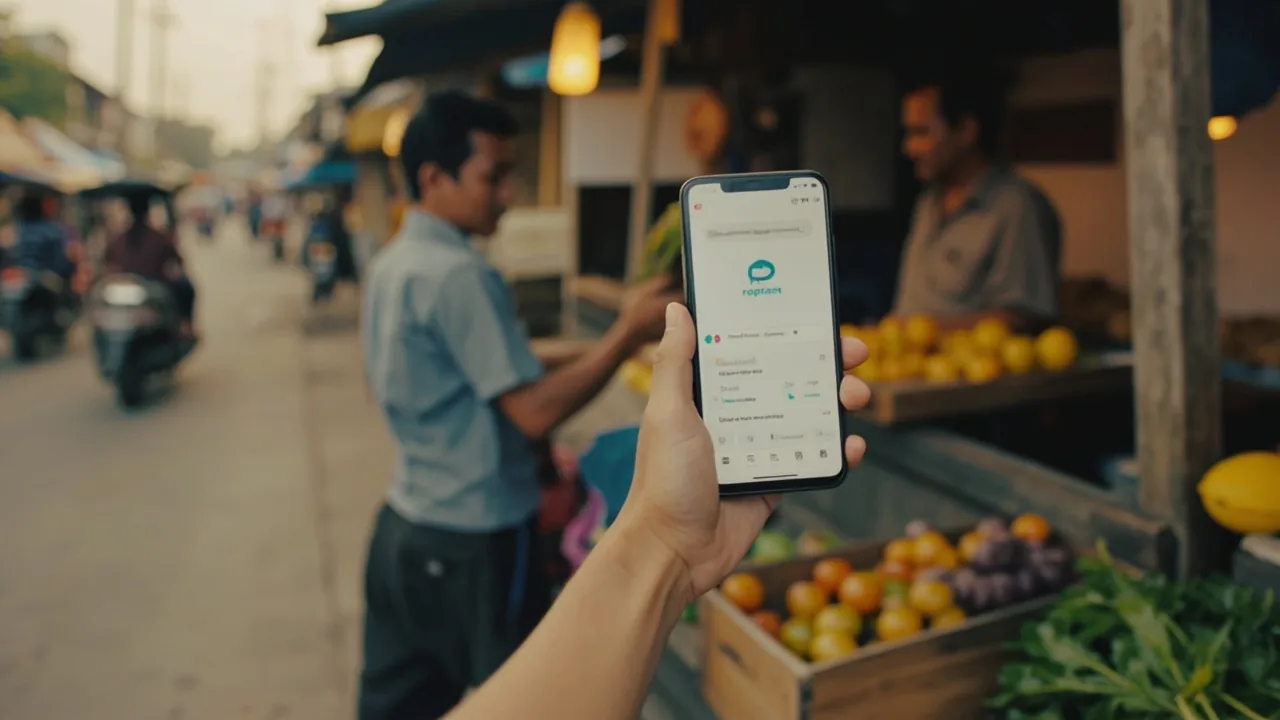
Short answer: No. Is UPI accepted in Cambodia? No, it is not. Neither Google Pay nor PhonePe will scan a QR code at a tuk-tuk, restaurant, or market stall. Verified against NPCI’s international partner list and current traveller reports on 21 July 2026. For related planning, see our guide on Sea Backpacking Hub.
If you land in Phnom Penh expecting to tap your phone at a noodle stall, you will be standing there confused. Cambodia runs on its own payment rails (ABA, Wing, KHQR) and on USD cash. Indian travellers need a different setup. This article covers what works: the cash vs ATM vs forex card mix, how ABA Pay and Wing work even without a Cambodian bank account, and the exact fees you will pay in 2026. You may also find Currency Exchange Cambodia Phnom Penh Airport useful for this trip.
Subodh’s Pro Tip: Don’t bring ₹15,000 (~$155.39) in Indian rupees to “exchange later.” Cambodia does not officially accept or exchange INR. Bring USD notes from India (clean, post-2013 series) and convert at a Cambodian money changer, not at the airport.
Quick Answers
| What | Answer | Price (INR) |
|---|---|---|
| Does UPI work in Cambodia? | No. Zero merchant acceptance. | ₹0 (cannot be used) |
| Does Google Pay work? | No. No international QR support in Cambodia. | ₹0 (cannot be used) |
| Does PhonePe work? | No. Same UPI rail, same dead end. | ₹0 (cannot be used) |
| Best payment method | USD cash + zero-markup debit card ATM withdrawals | ₹0 markup, ~₹100-₹300 (~$1.04-$3.11) ATM fee per withdrawal |
| Backup method | Traditional forex card | 2%-3.5% markup on every spend |
| Worst option | Exchanging INR in Cambodia or paying in INR via DCC | 5%-12% worse than mid-market |
| Cambodian local e-wallets | ABA Pay (main one), Wing, KHQR (the shared QR standard) | Free to install, free to top up from cash |
| ATM withdrawal fee | ~₹483 (~5 USD) per transaction on most bank ATMs | ~₹482 (~$4.99) per withdrawal |
| USD to KHR street rate | ~4,100 KHR per 1 USD | 1 USD ≈ ₹96.33 |
How Payment Works in Cambodia
Cambodia has a genuinely weird payment stack compared to Thailand or Vietnam. Two things to understand before you land:
1. USD is a parallel official currency. Cambodia runs on both Cambodian Riel (KHR) and US Dollars side by side. Most prices for tourists are quoted in USD. Small change (under 1 USD) gets given to you in KHR. Both currencies work for any transaction, anywhere, at the same exchange rate.
2. There is no consumer UPI, no Google Pay, no PhonePe, no Paytm. Cambodian retail is split into three lanes:
- Cash (USD or KHR), still the default in markets, tuk-tuks, roadside eateries, and small guesthouses. Roughly 70% of tourist transactions.
- Cards (Visa, Mastercard, JCB), accepted at mid-range and high-end restaurants, hotels, supermarkets, and chain cafes like Brown Coffee or Amazon Cafe.
- Local e-wallets + KHQR, the QR standard that replaced Cambodia’s fragmented wallet scene in 2024. ABA Pay, Wing, and a dozen smaller apps all generate and accept KHQR codes. Foreigners can install these apps but cannot fully KYC without a Cambodian phone number plus passport The single most common error Indian travellers make: assuming the “QR code on the table” works like it does at a stall in Goa. It does not. Scanning a KHQR code with Google Pay or PhonePe returns an error. No fallback, no foreign-card option through that QR.
What works at a KHQR merchant if you’re a foreigner
You have three options:
- Pay cash (USD or KHR), universal.
- Hand the merchant your Visa/Mastercard physical card, they type the amount into their ABA POS machine. Works at most established restaurants and shops, but not at tuk-tuks or wet markets.
- Ask a Khmer friend or your guesthouse to KHQR you and pay them back in cash, common workaround, no fee.
For more on the underlying card-vs-cash mechanics, see using your Indian bank ATM card in Cambodia.
How UPI, Google Pay, and PhonePe Fail in Cambodia
UPI is a closed-loop Indian rail. Every transaction needs three things Cambodia does not have:
- A participating Cambodian bank on the UPI/NPCI network. No Cambodian bank has signed up. Verified against the official NPCI international partner list on 2026-07-21.
- A merchant acquiring arrangement with NPCI’s international arm. Zero Cambodian acquirers.
- A QR standard that UPI apps can read. KHQR is owned by the National Bank of Cambodia and is not compatible with UPI QR codes.
The same applies to Google Pay and PhonePe. Both rely on UPI for Indian QR payments. Google Pay’s overseas “tap to pay” only works in regions where Google has a direct deal with local networks (US, parts of Europe, Singapore, Australia). PhonePe has no international presence at all.
Bottom line: If a payment method requires UPI, NPCI, or an Indian banking partner, it will not work in Cambodia in 2026.
Safety Alert: If any travel forum or YouTube video claims “UPI works at certain Phnom Penh restaurants” in 2026, the information is outdated or fabricated. Always check the official app store description for KHQR compatibility, not traveller anecdotes from before the KHQR rollout.
What Indian Travellers Should Use Instead
This is the realistic payment stack for a 7-14 day Cambodia trip in 2026, ranked by how much you should lean on each one.
1. USD cash (primary)
Carry ₹38,612-₹57,917 (~400-600 USD) in clean, untorn $20s, $10s, and $5s from India. Pre-2013 series notes get rejected at most Cambodian money changers and even by some shops. Exchange at any “Money Changer” in Phnom Penh or Siem Reap city centre. Rates are tight: roughly 4,100 KHR per 1 USD, which matches mid-market. Avoid airport exchange counters (rates 3-5% worse).
Use USD cash for tuk-tuks, roadside food, markets, rural guesthouses, Angkor Wat tickets (USD only), and tips. For day-to-day food prices, see cost of food in Cambodia per day.
2. Zero-markup debit card at ATMs (secondary)
Best setup: a Niyo Global, Fi, or Jupiter debit card. These charge zero forex markup on the currency conversion, only the local ATM operator’s flat fee (₹290-₹483 (~3-5 USD) per withdrawal). Withdraw USD directly from ATMs in Phnom Penh (Canadia Bank, ABA, ANZ Royal), Siem Reap, and Sihanoukville.
ATM math: withdrawing ₹19,306 incurs a ₹483 (~5 USD) fee = 2.5% effective cost. Cheaper than a 3.5% forex card markup on a small purchase.
Always decline DCC (Dynamic Currency Conversion). When the ATM asks “Convert to INR?” choose No. Always. Paying in KHR or USD at the ATM gets you the bank’s interbank rate + USD 5 fee. Paying “in INR” gets you the ATM’s proprietary rate + USD 5 fee + a 3-5% spread. Full ATM strategy here: using ATMs in Cambodia.
3. Traditional forex card (backup)
HDFC ForexPlus, Axis Multi-Currency, ICICI Travel Card. Markup in 2026 is 2-3.5% above mid-market. Fine as a backup for hotels and bigger purchases, wasteful for daily street food. One perk: locked-in rates if you load when USD is cheap.
4. Visa/Mastercard physical card (mid-range use)
Indian Visa/Mastercard credit and debit cards work at any ABA or Sathapana POS machine. Always choose to pay in USD (KHR), never in INR. Same DCC trap as ATMs.
5. ABA Pay / Wing / KHQR (situational)
You can install ABA Pay or Wing without a Cambodian bank account, but full functionality (sending money to other users, KYC features) needs a Cambodian SIM and a passport scan at a branch. For a 7-day trip, the friction is not worth it. The exception: if you’re staying in Cambodia longer, have a Cambodian guesthouse help you KYC at an ABA branch in Phnom Penh. KYC takes 15 minutes, no minimum balance required.
6. NEVER exchange INR to anything in Cambodia
Indian Rupees have zero official exchange path in Cambodia. Anyone offering to “convert your INR” at the border or at a guesthouse is running a scam or a black-market trade at 10-15% worse than mid-market. Bring USD or use your card.
Comparison of Payment Methods for Indian Travellers in Cambodia (2026)
| Method | Markup / Fee | Acceptance | Best For | Verdict |
|---|---|---|---|---|
| USD cash | 0% (mid-market at city changers) | 95% of tourist spots | Tuk-tuks, markets, street food | Primary. Carry ₹38,612-₹57,917 (~400-600 USD). |
| Zero-markup debit (Fi, Niyo, Jupiter) at ATM | 0% markup + ₹290-₹483 (~3-5 USD) ATM fee | All ATMs in cities | Reloading cash mid-trip | Best card choice. Lowest total cost. |
| Traditional forex card | 2%-3.5% markup | All card merchants | Hotels, big purchases | Acceptable backup. Wasteful for daily spend. |
| Visa/Mastercard credit (Indian bank) | 0%-3.5% forex + GST on forex | All POS terminals | Mid-range restaurants, malls | Useful if you have a no-forex-fee card. |
| UPI / Google Pay / PhonePe | N/A | 0% | Nothing | Does not work. Skip. |
| ABA Pay / KHQR | 0% | Widespread, but needs Cambodian SIM/KYC | Long-stay travellers | Overkill for a 7-day trip. |
| INR cash exchanged informally | 10%-15% loss | Border scams only | Nothing | Avoid. Bring USD. |
| DCC (paying in INR abroad) | 3%-5% spread | Forced on you if you accept | Nothing | Always decline. |
India-Specific Gotchas (RBI, TCS, and Cash Rules)
This is where most Indian travellers get financially surprised. Three things to know before you leave:
1. The 20% TCS rule (still applies in 2026). When you load a forex card or remit money abroad under the Liberalised Remittance Scheme (LRS), the bank collects 20% Tax Collected at Source on amounts above the ₹7 Lakh per financial-year threshold. The 20% is refundable when you file your ITR, but you are out of pocket until then.
The ₹7 Lakh cap covers all foreign-exchange spends combined: forex card, international debit/credit card spends, overseas wire transfers, even some UPI international spends if they were ever to work. Track all of it on one PAN.
2. The ₹7 Lakh exemption is real. If your total annual foreign travel spend is under ₹7 Lakh (most backpackers), no TCS applies. You still need to declare the LRS purpose (code L09 for “travel for private visit”) on the Form A2 your bank files. Carry the PAN card used for the card as ID proof at the bank branch if asked.
3. Cash out of India is capped at USD 3,000 (equivalent). Anything above USD 3,000 in cash declaration requires customs filing at the airport. Travellers commonly carry ₹144,793-₹241,322 (~1,500-2,500 USD) in notes plus cards, well under the cap.
4. PAN is mandatory for any forex card issue, any international debit/credit card use above a small threshold, and any wire transfer. No PAN = no forex card.
5. GST on forex markup: foreign currency spends on Indian credit cards attract 18% IGST on the forex markup portion. Debit cards usually skip this. Yet another reason debit cards (Fi, Niyo, Jupiter) beat credit cards for daily spend abroad.
For the broader India-to-Cambodia budget picture, see Cambodia trip cost from India and the monthly cost breakdown for backpacking Southeast Asia.
What Bananarchy Travellers Use
The setup that consistently works:
- Land with ₹48,264 (~500 USD) in cash. Mixed $20s, $10s, $5s. Clean, post-2013 series. This covers the first 3-4 days: airport taxi, guesthouse, food, Angkor ticket.
- Zero-markup debit card as the ATM backup. Niyo Global or Fi. Withdraw ₹19,306-₹28,959 (~200-300 USD) at a time from a Canadia or ABA ATM when cash runs low. Decline DCC every time.
- No forex card. The 3.5% markup is not worth it for our route and pace.
- One Visa/Mastercard credit card (HDFC Infinia or similar with zero forex markup) for hotel bookings and the occasional mid-range restaurant. Carried in the hotel safe, not the day bag.
- No UPI/Google Pay/PhonePe apps relied on at all. They are not installed for Cambodia use. UPI apps fail silently on KHQR, with no fallback for foreign cards. Travellers who relied on UPI ended up switching to cash within the first day.
The failure modes we see most often:
- Travellers arrive with only INR cash, no USD. They get fleeced at Phnom Penh airport (rates 5-8% worse than city) or at a border money changer.
- Travellers accept DCC at an ATM. They lose 3-5% on top of the ₹483 (~5 USD) ATM fee and don’t realise until they check their statement.
- Travellers trust “UPI works here” advice from a 2023 blog post. They walk around with no cash backup.
If your Cambodia trip is part of a longer SE Asia loop, the USD cash + zero-markup debit combo carries through Vietnam, Laos, and Thailand without changes. One setup, four countries. That is the actual efficiency gain.
Getting Connected
Working data matters for three reasons: checking your bank’s transaction alerts, comparing the rates your ATM gave you against mid-market, and contacting a guesthouse when tuk-tuk negotiations fall apart.
Cambodian physical SIMs from Cellcard, Smart, or Metfone are cheap. A 30-day, 10 GB tourist SIM runs around ₹483-₹676 (~5-7 USD). Bring your passport to any airport counter or Cellcard/Smart shop in town. Top-ups are ₹97-₹193 (~1-2 USD).
For travellers who do not want to swap physical SIMs at every border, Get Nomad eSIM works in Cambodia and across the rest of SE Asia on a regional plan. Install before you fly, activate on landing.
Subodh’s Take
UPI is a domestic Indian rail. Treating it as a global payment method is a category error that costs Indian travellers real money on every trip. Cambodia in 2026 is a USD-cash country with a USD-ATM card layer and a local QR layer that foreigners rarely bother with. If you accept that fact before you fly, you’ll spend zero time hunting for QR codes that don’t work, and more time eating ₹289-₹482 (~3-5 USD) fish amok at Smokin’ Pot Authentic Cambodian Restaurant or whatever Khmer joint the guesthouse owner points you to.
FAQ
1. Does UPI work in Cambodia? No. Zero merchant support. NPCI has no Cambodian bank partner as of 2026-07-21. Verified against the official NPCI international partner list.
2. Can I use Google Pay or PhonePe in Cambodia? No. Both rely on UPI for QR payments and have no direct Cambodian acquiring deals. Google Pay’s overseas tap-to-pay covers the US, parts of Europe, Singapore, and Australia, not Cambodia.
3. What is KHQR and can I pay it with an Indian app? KHQR is Cambodia’s national QR standard launched by the National Bank of Cambodia. It is accepted everywhere from 7-Eleven to tuk-tuks, but only Cambodian wallet apps (ABA Pay, Wing) can generate a payment to it. No Indian app currently supports KHQR.
4. Should I carry USD or KHR? USD. Both are legal tender, but USD is quoted at every tourist price. KHR comes back to you as change for anything under USD 1. Spend the KHR before you fly; it is not convertible outside Cambodia.
5. Can I use my Indian debit card at Cambodian ATMs? Yes. Visa and Mastercard debit cards from Indian banks (HDFC, SBI, ICICI, Axis, and fintechs like Fi/Niyo/Jupiter) work at Canadia Bank, ABA, ANZ Royal, and Sathapana ATMs. Decline DCC every time. Expect ₹290-₹483 (~3-5 USD) ATM fee per withdrawal on top of any markup your bank charges.
6. How much USD cash should I carry for a 7-day Cambodia trip? ₹38,612-₹57,917 (~400-600 USD) covers most backpacker budgets (hostels, street food, tuk-tuks, one Angkor pass). Withdraw more from ATMs using a zero-markup debit card if you overspend.
7. Is exchanging Indian Rupees legal in Cambodia? There is no official INR exchange channel in Cambodia. Any informal INR-to-USD or INR-to-KHR trade at borders or guesthouses is a private grey-market deal at 10-15% worse than mid-market. Bring USD instead.
