Diwali in Southeast Asia: Where Indians Celebrate (2026)
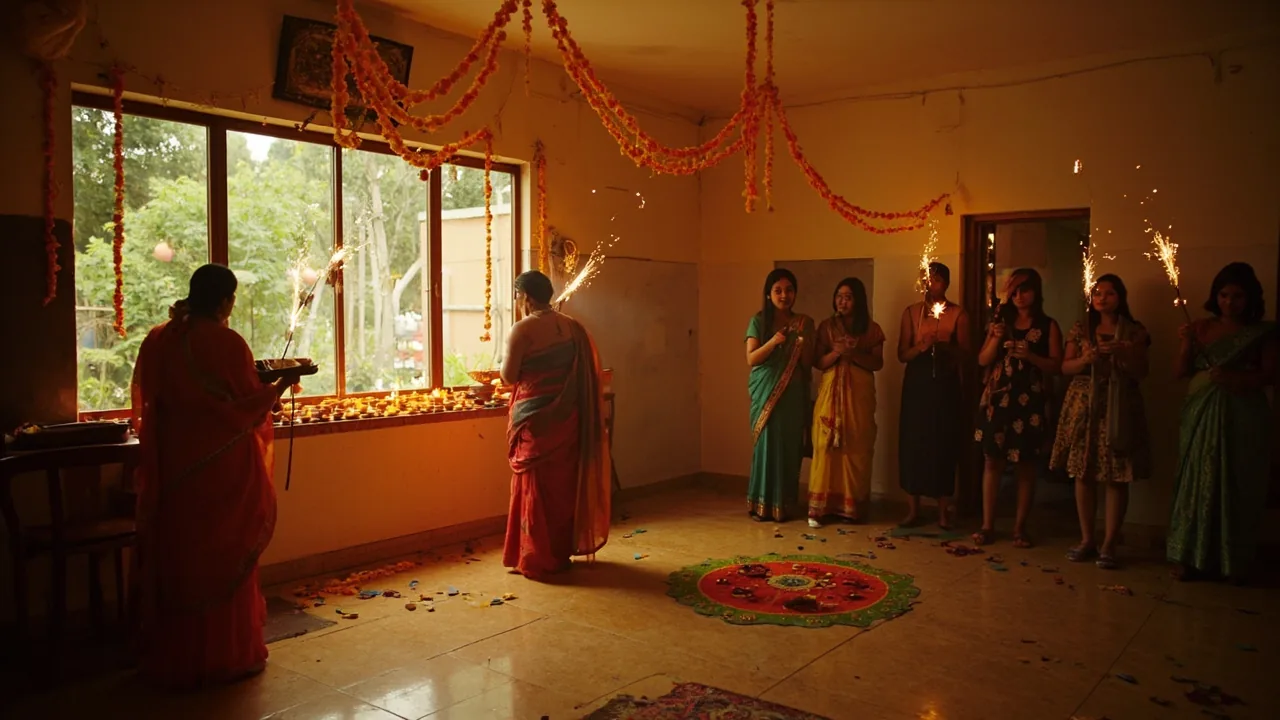
Diwali 2026 falls on Sunday, 8 November (Drik Panchang dates verified 2026-07-20). Southeast Asia has no public holiday for it. Bangkok has moved into its cool dry season by early November. Real picture: Diwali here is a diaspora event, not a public festival. Bangkok, Singapore, Kuala Lumpur, Penang, and parts of Jakarta host community-led celebrations. Thailand, Vietnam, Laos, and Cambodia have no Diwali tradition at all, and many Indian travellers there spend the holiday in a hostel common room missing home. That honest framing matters more than any “festive celebrations” travel-fluff pitch. Planning the wider region? Our Southeast Asia backpacking hub covers the full multi-country route.
Quick Answers
| What | Answer | Price (INR) |
|---|---|---|
| When is Diwali 2026? | Sunday, 8 November 2026 (Drik Panchang, verified 2026-07-20) | Free |
| Which SE Asian country has the biggest Diwali celebration? | Malaysia (Penang + KL), public holiday | Free to attend |
| Does Thailand celebrate Diwali? | Community-led only, no public holiday | Free to attend |
| Best city for Indian food + Diwali vibes? | Singapore (Little India) or KL (Brickfields) | Meals ₹597-₹1,120 (~8-15 SGD or ~$6.19-$11.61) |
| Should I travel INTO SE Asia for Diwali? | Only if you’re already going; don’t fly just for it | Flights ₹18,000-₹35,000 (~$186.56-$362.76) round trip |
Month-by-Month Breakdown
Diwali sits squarely in early November, which across Southeast Asia lands at the tail end of the wet season in equatorial Malaysia, Singapore, and Indonesia, while Thailand, Vietnam, Laos, and Cambodia are entering their cool dry season. Weather matters: monsoon rain can wash out open-air Diwali events, while dry-season cities are at their best.
| City/Region | Early Nov Weather | Diwali Setup | Crowd Level | Verdict |
|---|---|---|---|---|
| Bangkok, Thailand | 28-32°C, light rain possible | Community events in Phaya Thai / Silom | Low (Indians), high (general tourist traffic) | Decent, weather reliable |
| Kuala Lumpur, Malaysia | 26-30°C, heavy rain possible | Public holiday, Deepavali events citywide | Moderate | Strong option, official recognition |
| Penang, Malaysia | 27-30°C, monsoon rain | Public holiday, George Town lights up | High (local + Singapore tourists) | Best festival vibe in region |
| Singapore | 26-30°C, monsoon rain | Little India street closure, big bazaars | high (Indian population ~9%) | Most “at-home” feel outside India |
| Jakarta, Indonesia | 27-32°C, wet | Small community events | Low | Skip unless you live there |
| Phnom Penh, Cambodia | 27-31°C, dry season starts | No local events; Indian embassy reception sometimes | low | Only for diplomats/expats |
| Hanoi / HCMC, Vietnam | 22-28°C, dry season starts | Small Indian community events | low | Only for residents |
| Vientiane, Laos | 22-28°C, dry season starts | Indian community gathering (small) | low | Only for residents |
Subodh’s Pro Tip: Diwali in SE Asia is not a destination festival. If you want lights, sweets, and crowds of Indians in the street, Singapore’s Little India and Penang’s George Town are the only two places that genuinely deliver. Everywhere else, you’re finding a small temple gathering rather than a citywide event.
Diwali Abroad: Where to Go for Real Festivities
Singapore: Little India (Most “At-Home” Feel Outside India)
Singapore has roughly 650,000 Indians (~9% of the population), with Little India (Serangoon Road, race-course area) running one of the biggest Diwali street events outside India. The annual Deepavali Light-Up along Serangoon Road and Race Course Road sees the street closed to traffic, lit with thousands of diyas and kolam patterns, and lined with bazaar stalls selling Indian sweets, festive wear, and decorations. This timing lines up with the Singapore monsoon period, so plan indoor backups.
Schools and many employers mark Deepavali as a day off, though Singapore gazettes Deepavali but it is not a universal paid public holiday for every workplace, so the cultural infrastructure is what you feel: Several major Hindu temples in Little India run Diwali processions, and the area’s shopping centres and arcades stock festive merchandise and limited-time menus during Deepavali week. Vegetarian Indian food is easy to find across Little India, with several decades-old pure-veg restaurants serving festival menus during Deepavali week.
Singapore is also the easiest destination for Indians: no visa required for Indian passport holders for short stays (verify on ICA’s official site before booking).
Malaysia: Penang and Kuala Lumpur (Only Country with Diwali as Public Holiday)
Malaysia is the only country in Southeast Asia where Deepavali is a federal public holiday, observed on the same day as India’s Diwali. This single fact changes the entire experience: schools close, government offices shut, and the festival is genuinely felt across the country.
Kuala Lumpur (Brickfields, also called “Little India KL”) is the mainland hub. The street gets elaborate light displays, the temple zone around Sri Kandaswamy Temple runs through the night, and major malls (Pavilion KL, Suria KLCC) put up public decorations. Vegetarians do well: Brickfields and surrounding KL neighbourhoods have a strong pure-veg Indian food scene, and several restaurants put up Deepavali-special menus during the public-holiday week. Many Malaysian Indian restaurants also follow the country’s Deepavali timing in December.
Penang (George Town) is where most regional Indians who’d normally go to Malaysia for Diwali end up. George Town’s older Indian community (Tamil and Malayalee, three generations deep) treats Deepavali with a different flavour than KL: smaller crowds, older uncles in white veshti walking to temple, less tourist gloss. The Little India enclave around Lebuh Queen and Lebuh Chulia lights up with bazaars and market activity during the public-holiday week. Vegetarians find George Town’s Lebuh Chulia and Lebuh Penang lined with pure-veg Indian restaurants running Deepavali specials; expect queues on the public-holiday day itself, and keep an eye on Penang’s September monsoon patterns that often extend into early November.
Indian passport holders get visa-free entry to Malaysia for 30 days (verify on the official immigration portal before travel).
Thailand: Bangkok (Community, Not Countrywide)
Bangkok has roughly 150,000-200,000 Indians and a significant Punjabi-Sikh community (Phaya Thai, Ratchathewi areas), plus growing Tamil and Gujarati populations. Diwali here is not a public holiday and there’s no government festival. What exists is community-led.
Phaya Thai has a Sikh gurdwara that runs an evening langar and kirtan on Diwali night, open to all regardless of background. Bangkok’s oldest Hindu temple in the Silom area holds a smaller Diwali celebration with abhishekam and aarti, often drawing Thai-Indians and curious Bangkokians. Vegetarian food is accessible around Phaya Thai and Sukhumvit: pure-veg Gujarati thalis, ISKCON-run unlimited veg buffets, and North Indian spots near the Sikh and Hindu temples serve as natural gathering points on Diwali night. Travellers arriving this time of year should also factor in Thailand’s November weather window.
Two specific things to know:
- Firecracker rules: Thailand has stricter firecracker import rules than you’d expect. Travellers report that small packs can be confiscated at Bangkok’s Suvarnabhumi security; the safer call is to attend a local temple’s aarti and skip fireworks entirely.
- No “Diwali tours” exist: Bangkok doesn’t have a Diwali-themed tour product, so don’t book one through platforms expecting a structured experience.
Vietnam, Laos, Cambodia: Skip the Trip
Vietnam, Laos, and Cambodia have no Diwali tradition and tiny Indian populations (mostly embassy staff, garment-trade merchants, and a small Tamil diaspora around Battambang/Pursat in Cambodia from the 19th century). You will not find public Diwali events in Hanoi, Ho Chi Minh City, Vientiane, or Phnom Penh outside of private embassy receptions and temple visits at the handful of Hindu shrines that exist (Phnom Penh’s ISKCON-affiliated Hindu temple holds a community Diwali evening that is the most reliable public gathering for Indians in the city).
Indian travellers doing the backpacking loop through these three countries around Diwali week will spend the day in a hostel. The workarounds that work:
- Reach out to the Indian embassy in the capital before Diwali week to ask about community gatherings; private embassy receptions and small ISKCON-affiliated temple events are the most reliable way to mark the day in these three countries.
- Video-call family during peak puja time.
- Skip the trip entirely and fly home if your budget allows.
Indonesia: Jakarta (Skip Unless You Live There)
Indonesia has a small Indian community (~50,000 concentrated in Medan, North Sumatra, with smaller Jakarta groups), tied historically to Tamil migration centuries ago. Jakarta’s main Diwali gathering is at a historic Hindu temple in the old town (Kota Tua area), a small but genuine community event with no bazaar or public lights. Medan (North Sumatra) has a denser Indian community and a more substantial Diwali presence: Medan’s main Hindu temple runs a multi-day festival that draws Indian-Indonesians from across Sumatra.
Don’t fly to Indonesia specifically for Diwali. It’s a diaspora event, not a tourism draw.
Diwali Abroad: Pros and Cons
Pros:
- Singapore and Malaysia give you a real festival experience within a 4-hour flight of India
- Air fares in early November are mid-range (off-peak for most destinations except Malaysia)
- The cool dry season in Thailand, Vietnam, Laos, and Cambodia makes November a top travel window
- Malaysian and Singapore food scenes are the best in SE Asia for vegetarians during Diwali week
Cons:
- Thailand, Vietnam, Laos, and Cambodia don’t recognize Diwali at all. Festivities in those four countries are community-only, small, often unmarked.
- Flights from India to Malaysia and Singapore spike 15-25% in Diwali week compared to mid-October
- Monsoon tail-end rain in Singapore, KL, and Penang has washed out outdoor Diwali events in past years. Pack a foldable umbrella.
- Hostel common-room loneliness on Diwali night is real for solo travellers in non-festive cities (HCMC, Phnom Penh, Vientiane)
- Bring your own mithai (sweets) from home if specific regional varieties matter. Sweet-shop options in SE Asia lean generic
Safety Alert: Always check your government’s official travel advisory before flying out for Diwali abroad. The Indian Ministry of External Affairs maintains country-specific advisories at mea.gov.in, and destination governments (Singapore ICA, Malaysian Immigration) publish their own updates. Festive periods sometimes see minor scam spikes (fake temple donation asks, unauthorized “Diwali tours” in Bangkok); pay attention at the temple itself, not to third-party operators outside.
What to Pack Specifically for Diwali Abroad
Diwali abroad in Southeast Asia in early November means warm, humid air, possible rain, and temple-floor sitting. The packing list is mostly the same as any November SE Asia trip, with a few Diwali-specific items:
- One set of festive wear that you’d wear to a family puja at home. Singapore’s Deepavali bazaars and Penang’s night market both have street-style deals, but the fit won’t match home tailoring.
- Small boxes of home-region mithai (2-3 boxes) for hosts at any community event you attend. Regional variants (Bengali sandesh, Maharashtrian karanji, Gujarati fafda) are harder to find in SE Asia and instant conversation openers with diaspora families.
- A foldable umbrella for Singapore/Malaysia monsoon-tail rain.
- Earplugs: Singapore’s Little India Diwali celebrations include firecrackers at temple events, and firecrackers are legal under controlled settings in Malaysia but not Thailand.
- Modest temple-wear: covered shoulders and knees for Hindu temples (Sri Maha Mariamman Bangkok, Sri Kandaswamy KL, Sri Veeramakaliamman Singapore). Many temples lend sarongs at the door.
Diwali Abroad: Cost Comparison (Peak Diwali Week vs Shoulder)
Peak Diwali week (5-12 Nov 2026) flights from India to Malaysia and Singapore spike because both countries have Indian diaspora travel. Flights to Thailand, Vietnam, Laos, and Cambodia stay at shoulder rates since local demand is unaffected.
| Item | Diwali Week (5-12 Nov) | Shoulder (Oct or Dec) | Off-Peak (Jul-Sep) |
|---|---|---|---|
| Flight India → Singapore (round trip) | ₹28,000-₹38,000 (~$290.21-$393.86) | ₹22,000-₹32,000 (~$228.02-$331.67) | ₹18,000-₹26,000 (~$186.56-$269.48) |
| Flight India → KL (round trip) | ₹26,000-₹36,000 (~$269.48-$373.13) | ₹20,000-₹30,000 (~$207.29-$310.94) | ₹15,000-₹24,000 (~$155.47-$248.75) |
| Flight India → Bangkok (round trip) | ₹18,000-₹28,000 (~$186.56-$290.21) | ₹15,000-₹25,000 (~$155.47-$259.12) | ₹10,000-₹18,000 (~$103.65-$186.56) |
| Dorm bed, Singapore (Little India) | ₹2,240-₹3,734 (~30-50 SGD or ~$23.22-$38.70) | ₹1,867-₹2,987 (~25-40 SGD or ~$19.35-$30.96) | ₹1,643-₹2,614 (~22-35 SGD or ~$17.03-$27.09) |
| Dorm bed, KL (Brickfields) | ₹943-₹1,649 (~40-70 MYR or ~$9.77-$17.10) | ₹707-₹1,296 (~30-55 MYR or ~$7.33-$13.43) | ₹589-₹1,060 (~25-45 MYR or ~$6.11-$10.99) |
| Dorm bed, Bangkok (Phaya Thai) | 350-650 THB | 300-550 THB | 250-450 THB |
Exchange rates used: 1 INR ≈ 0.0134 SGD, 1 INR ≈ 0.0423 MYR, 1 INR ≈ 0.3485 THB.
Getting Connected
ESIM and local SIM both work fine across the region. For checking temple event cancellations (monsoon rain causes last-minute drops in Singapore/Malaysia) and for sharing Diwali reels, having data from the flight onward matters. Get Nomad eSIM at nomadesim.com for a 5-10 GB plan covering Thailand, Singapore, Malaysia, and Indonesia. Physical SIM alternatives: TrueMove (Thailand, ₹857 (~299 THB or ~$8.89) tourist SIM), Singtel (Singapore, ₹747 (~10 SGD or ~$7.74) prepaid), Hotlink (Malaysia, ₹707 (~30 MYR or ~$7.33)).
FAQ
Which country celebrates Diwali as a public holiday in Southeast Asia?
Only Malaysia, where it’s called Deepavali and observed as a federal public holiday on the same date as India’s Diwali (8 November 2026). Singapore gazettes Deepavali, but it is not a universal paid public holiday in the way Malaysia’s federal holiday is. Every other SE Asian country treats it as a regular working day.
Is Diwali in Thailand a real festival?
No, it’s community-led and not a public holiday. Bangkok has the Guru Singh Sabha Sikh temple and Sri Maha Mariamman Hindu temple that hold evening events, but Bangkok as a city does not run a Diwali festival. Travellers report that the best way to find the gathering is to message the temple directly a week ahead.
Where do Indians celebrate Diwali abroad with the most “at-home” feel?
Singapore’s Little India (Serangoon Road) is widely considered the most festival-dense Diwali experience outside India, with a multi-week street light-up, bazaars, and temple processions. Penang (George Town) and Kuala Lumpur (Brickfields) both run significant Deepavali celebrations. Jakarta, Bangkok, Hanoi, HCMC, Phnom Penh, and Vientiane have small community-only events.
Should I travel abroad for Diwali or stay in India?
Stay in India if your goal is family, puja, sweets, and tradition. Travel abroad only if you’re a student or working professional abroad and want to plug into a diaspora community. Don’t fly from India to SE Asia “for Diwali”: the festival there is community-sized, not destination-sized, and your trip will feel anticlimactic compared to even a modest Diwali at home. Timing-wise, this falls in the shoulder-season sweet spot for most of the region.
Can I bring fireworks from India to Singapore or Thailand?
Singapore has strict controls on personal-use fireworks; travellers report that even small packs lead to confiscation at airport security, and Singapore has the strictest fireworks laws in the region. Thailand bans firecracker possession outright. Malaysia allows small patakhe under controlled religious-event rules. The practical advice: skip fireworks, attend a community aarti or temple event instead.
What is the best Indian food city in SE Asia during Diwali week?
Singapore has the densest pure-veg Indian restaurant scene in the region, with several long-running Little India restaurants putting up limited-time Diwali menus, but KL and Penang are close behind. Avoid relying on a single city: book table in advance at the most popular spots during the festival week.
