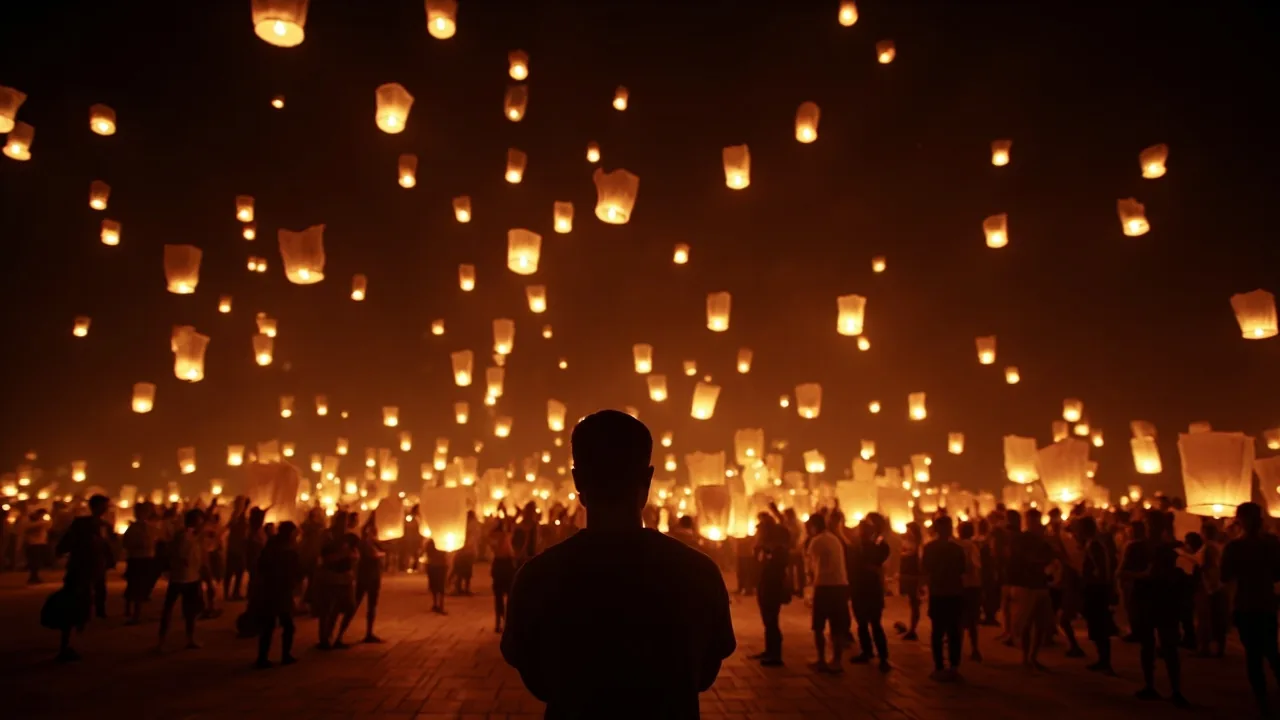
Yi Peng Lantern Festival Chiang Mai: 2026 Dates, Tickets, and Honest Take
The Yi Peng lantern festival in Chiang Mai runs 24-26 November 2026, with the main mass-release on the night of 25 November. Book tickets by mid-October, expect flights from India to roughly double compared to October prices, and read the environmental note below before you commit: the lantern-release tradition has a real cost beyond the ticket price. For related planning, see our guide on Sea Backpacking Hub.
Quick Answers
| What | Answer | Price (INR) |
|---|---|---|
| Yi Peng 2026 dates | 24-26 November 2026 (main mass-release 25 Nov) | Free to view from public spaces; ticketed ceremonies from ₹10,006 (~3,500 THB or ~$103.86) |
| Yi Peng 2027 dates (projected) | 23-25 November 2027 (Thai lunar calendar, provisional) | Same tier as 2026 |
| Official ticketed ceremony | Mae Jo University mass-release on 25 Nov | ₹10,006-₹18,583 (~3,500-6,500 THB or ~$103.86-$192.89) depending on zone |
| Where to stay | Old City hostels book out by mid-September | ₹2,287-₹7,147 (~800-2,500 THB or ~$23.74-$74.19) per night in peak week |
| Environmental concern | Sky lanterns are single-use, often not biodegradable, and pose fire/wildlife risks | Free to skip; free alternatives exist |
Subodh’s Pro Tip: The Mae Jo ceremony tickets sell out 6-8 weeks ahead every year. If you want the official mass-release experience, book the moment tickets drop, usually the first week of October. If you miss out, the free lanterns from the Tha Phae Walking Street area on 25 November still put you in the middle of it.
What Yi Peng Is
Yi Peng is a Lanna (Northern Thai) festival tied to the end of Buddhist Lent, when temples release floating lanterns (khom loi) into the sky as a gesture of letting go of misfortune. It coincides with Loy Krathong, the national water-lantern festival held on the full moon of the 12th Thai month.
In Chiang Mai specifically, two things happen in the same week:
- Loy Krathong: People float small decorated baskets (krathong) on rivers and ponds, mainly on the night of the full moon (25 November 2026).
- Yi Peng: Sky lanterns rise into the night, with the largest coordinated release at the Mae Jo University ceremony on the same night.
The festival dates shift slightly each year because they follow the Thai lunar calendar, but they always fall in November. For 2026, the main mass-release night is Tuesday, 25 November.
Yi Peng 2026, 2027, and 2025 Dates at a Glance
- Yi Peng 2025: 5-7 November 2025 (mass-release 6 Nov, already past)
- Yi Peng 2026: 24-26 November 2026 (mass-release 25 Nov)
- Yi Peng 2027 (projected): 23-25 November 2027 (mass-release 24 Nov, pending official confirmation)
The exact day shifts because Yi Peng falls on the full moon of the 12th Thai lunar month. The Chiang Mai provincial government usually confirms dates in August of the festival year. Treat the 2027 row above as provisional until the official announcement.
The Ticketed Ceremonies: Where to Spend and What You Get
Three main ticketed options, in order of price and crowd size:
1. Mae Jo University Mass-Release (the official one)
The biggest official ceremony, organised by the Chiang Mai provincial government and Buddhist monks. Up to 10,000 participants release lanterns simultaneously. Tickets go on sale in October through authorised agents.
- Price: ₹10,006 (~3,500 THB or ~$103.86) standard zone, ₹18,583 (~6,500 THB or ~$192.89) VIP zone
- What’s included: Entry to the venue, one paper lantern per person, sometimes a vegetarian meal
- Where: Mae Jo University, about 20 km north of the Old City, shuttle buses from the city included with most tickets
- Sell-by date: Mid-October in recent years; 2025 tickets sold out within 10 days
VIP zones get you a closer release spot and a sit-down meal. Standard zones involve a lot of standing and walking but the actual lantern-release moment is the same.
2. Private Temple Ceremonies
Smaller Buddhist temples in and around Chiang Mai hold private Yi Peng ceremonies with prayers, chanting, and lantern releases. Travellers report price points of ₹4,288-₹10,006 (~1,500-3,500 THB or ~$44.51-$103.86) depending on the temple and whether dinner is included.
Ask at your hostel or check the Chiang Mai events calendar in October for the list of registered ceremonies.
3. The Free Public Experience
You do not need a ticket to enjoy Yi Peng. The Tha Phae Walking Street area, the Ping River, and most public spaces along the moat host Loy Krathong activities where you can:
- Buy a small khom loi (sky lantern) from street vendors for ₹286-₹858 (~100-300 THB or ~$2.97-$8.90) and release it from anywhere outside the old city moat (the moat area is now restricted due to fire risk)
- Float a krathong on the river for ₹143-₹429 (~50-150 THB or ~$1.48-$4.45)
- Watch thousands of lanterns rise from temples and street corners for free
The free experience is more chaotic and crowded, but it is genuinely the version most locals participate in. The ticketed ceremonies are a tourist product built around a local tradition.
The Environmental and Ethical Angle
This is the part most Chiang Mai marketing glosses over. Sky lanterns are beautiful; they are also a real environmental problem.
- Fire hazard: Chiang Mai banned lantern releases inside the Old City moat in 2018 after a series of fires damaged heritage buildings. The ban has been unevenly enforced, but the fire risk during the dry season (November is the start of burning season) is real.
- Wildlife and livestock: Lanterns that don’t fully combust land in fields, forests, and rivers. Cows in northern Thailand have reportedly swallowed lantern debris and needed treatment. River lanterns (krathong) made from plastic foam or non-biodegradable materials end up downstream.
- Air quality and waste: Mass releases dump thousands of paper-and-wire frames into the air within an hour. Most don’t burn fully.
- Animal welfare concerns: Some released lanterns carry the ashes of deceased pets or livestock; a few animal-rights groups have raised concerns about how this is handled at specific ceremonies.
What you can do:
- Skip the personal sky lantern entirely. Watch from the riverbanks.
- Choose krathong made from banana leaf or bread (which fish can eat) rather than foam or plastic.
- If you do release a lantern, do it away from the moat, trees, and dry fields. Banned-zone enforcement is real; the Chiang Mai municipality has fined people.
- Pick the official Mae Jo ceremony over scattered street releases; the clean-up is coordinated, and the venue is a controlled open field, not a forest.
Subodh’s Pro Tip: If the environmental concerns bother you, there is a real alternative: Yi Peng in the sky is one thing, but Loy Krathong on the Ping River, especially the floating of bread or banana-leaf krathong that fish eat, has all of the visual poetry with a fraction of the waste. Pick that, and skip the khom loi altogether.
Month-by-Month Breakdown for Planning Around the Festival
| Month | Weather | Crowds | Cost Level | Verdict |
|---|---|---|---|---|
| August 2026 | Wet, humid | Low | Budget (₹) | Book tickets when they drop |
| September 2026 | Wet, easing | Low | Budget (₹) | Hostels still bookable, lock yours in |
| October 2026 | Dry, cooling | Medium | Shoulder | Last call for tickets and hostels |
| November 2026 (Yi Peng week) | Cool, dry, haze possible | high | Peak | Festival itself, expect 2-3x normal rates |
| December 2026 | Cool, dry | Medium | Shoulder | Cheaper than festival week, still good weather |
| January-March 2027 | Hot, dry (burning season peaks) | Medium | Shoulder | Different season, see Chiang Mai burning season guide |
Yi Peng. Pros and Cons
Pros:
- Chiang Mai’s old moat and temples look genuinely stunning under lantern light, which is the whole point.
- Cool November weather (highs around 30°C, lows around 18°C) makes walking the night markets pleasant.
- The festival falls in Thailand’s shoulder season elsewhere, so Bangkok and the islands are cheaper than December-January peak.
- Direct flights from India to Chiang Mai (via Bangkok or direct from Delhi on some carriers) make a 4-5 day festival trip feasible.
Cons:
- Hostels in the Old City triple in price during festival week. A ₹1,429 (~500 THB or ~$14.84) dorm becomes ₹4,288-₹7,147 (~1,500-2,500 THB or ~$44.51-$74.19).
- Flights from Delhi, Mumbai, and Bangalore spike. October prices for late November can run ₹25,000-₹35,000 (~$259.50-$363.30) round trip, vs ₹12,000-₹18,000 (~$124.56-$186.84) for early November.
- The mass-release at Mae Jo is crowded; VIP tickets are the only way to avoid jostling.
- Burning season starts in November. PM2.5 in Chiang Mai hits unhealthy levels on bad days. Pack a mask; check Chiang Mai burning season guide for the latest.
- Rain in the run-up (early November) can ground lanterns early in some years.
What to Pack Specifically for Yi Peng Week
- A light jacket or hoodie for the late-night release; Chiang Mai temperatures drop to 17-19°C between midnight and 3 AM in late November.
- A reusable water bottle; ceremony venues often have refills, and the plastic waste at these events is enormous.
- An N95 or KF94 mask, because burning season haze often overlaps the festival.
- Closed-toe shoes with grip; temple courtyards get slippery from candle wax.
- Cash in small notes (₹286-₹1,429 (~100-500 THB or ~$2.97-$14.84)) for street lanterns, krathong, and food.
- A portable battery pack for your phone; you’ll be filming.
Season Costs Comparison (Yi Peng Week vs Adjacent Weeks)
| Item | Yi Peng Week (24-30 Nov) | Shoulder (Early Nov or Dec) | Low Season (Aug-Oct) |
|---|---|---|---|
| Flight from Delhi round trip | ₹28,000-₹35,000 (~$290.64-$363.30) | ₹18,000-₹22,000 (~$186.84-$228.36) | ₹12,000-₹16,000 (~$124.56-$166.08) |
| Dorm bed per night (Old City) | ₹4,288-₹7,147 (~1,500-2,500 THB or ~$44.51-$74.19) | ₹1,429-₹2,287 (~500-800 THB or ~$14.84-$23.74) | ₹1,001-₹1,429 (~350-500 THB or ~$10.39-$14.84) |
| Private room per night | ₹10,006-₹17,153 (~3,500-6,000 THB or ~$103.86-$178.05) | ₹3,431-₹5,718 (~1,200-2,000 THB or ~$35.61-$59.35) | ₹2,287-₹3,431 (~800-1,200 THB or ~$23.74-$35.61) |
| Mae Jo ticket | ₹10,006-₹18,583 (~3,500-6,500 THB or ~$103.86-$192.89) | n/a | n/a |
| Street food meal | ₹229-₹429 (~80-150 THB or ~$2.37-$4.45) | ₹172-₹286 (~60-100 THB or ~$1.78-$2.97) | ₹143-₹229 (~50-80 THB or ~$1.48-$2.37) |
If your dates are flexible, go the week before Yi Peng (mid-November) or the week after (early December). The cool weather, the temple decorations, and many Loy Krathong activities are still running, and the prices are 40-60% lower.
Where to Eat During Festival Week
The Old City night markets and the Tha Phae Walking Street ramp up food stalls for Yi Peng week. Most spots run late (until midnight or later during the festival). Two local spots worth knowing:
- Chiang Mai (the restaurant, not the city) in the Old City specialises in Northern Thai dishes, with a khao soi that travellers consistently rate well; a bowl runs ₹229-₹343 (~80-120 THB or ~$2.37-$3.56).
- Riverfront Restaurant Chiang Mai along the Ping River gives you the Loy Krathong river view with standard Thai fare, mains ₹343-₹715 (~120-250 THB or ~$3.56-$7.42).
For Northern Thai food beyond the khao soi standard, Mr. KAI Restaurant in the Nimman area is a known pick with a modern khao soi and coconut-based curries. A full meal with a drink runs ₹715-₹1,287 (~250-450 THB or ~$7.42-$13.35).
When you need a dal-chawal reset:
- Chada Vegetarian Restaurant Chiang Mai in the Old City is the long-running veg/Indian pick, with both local and Indian dishes; a thali is around ₹429-₹629 (~150-220 THB or ~$4.45-$6.53).
- Little Indian Kitchen at the Night Bazaar is the family-run, halal, South Indian and vegan-friendly option; dosas and thalis in the ₹343-₹572 (~120-200 THB or ~$3.56-$5.94) range.
- Coconuts N Cocktails Indian Restaurant at the Night Bazaar is the North Indian and tropical-cocktail pick, more of a sit-down vibe, mains around ₹572-₹1,001 (~200-350 THB or ~$5.94-$10.39).
Where to Stay
Hostels and budget hotels inside the Old City moat are the practical pick for Yi Peng week; walking to the Tha Phae gate, the Night Bazaar, and the moat lantern views is the whole game, and a tuk-tuk back from Mae Jo after midnight costs ₹858-₹1,429 (~300-500 THB or ~$8.90-$14.84), so staying central saves real money.
For hostel-level budget accommodation in the Old City during festival week, expect ₹4,288-₹7,147 (~1,500-2,500 THB or ~$44.51-$74.19) for a dorm bed (peak rates). Book by mid-September to get anything under ₹5,718 (~2,000 THB or ~$59.35). HostelWorld and Booking.com listings in this range go fast.
For a broader sense of Chiang Mai hostels across the rest of the year, the dorm bed usually sits around ₹1,001-₹1,429 (~350-500 THB or ~$10.39-$14.84) in low season and ₹1,429-₹2,287 (~500-800 THB or ~$14.84-$23.74) in shoulder months. Festival week is the only time you pay ₹7,147 (~2,500 THB or ~$74.19)+ for the same bed.
If hostels are fully booked, look at Nimman (a 10-minute scooter ride from the Old City), where guesthouses and small hotels often have rooms when the Old City is sold out. A basic private room in Nimman during festival week runs ₹7,147-₹12,865 (~2,500-4,500 THB or ~$74.19-$133.54).
How to Get to Chiang Mai from India
Most Indian travellers fly into Bangkok and connect. Direct options:
- Delhi-Bangkok: 4-5 hours, then Bangkok-Chiang Mai (1 hour 15 min). Round trip Delhi-Chiang Mai via Bangkok usually runs ₹25,000-₹40,000 (~$259.50-$415.20) during festival week, ₹18,000-₹25,000 (~$186.84-$259.50) shoulder.
- Mumbai-Bangkok: 4-5 hours, then connect. Similar pricing.
- Direct Delhi-Chiang Mai: A few carriers run seasonal direct flights in winter; round trip can hit ₹35,000-₹50,000 (~$363.30-$519) during Yi Peng week, so most people connect through Bangkok.
Within Thailand:
- Bangkok-Chiang Mai flight: ~1 hour 15 min, ₹4,288-₹10,006 (~1,500-3,500 THB or ~$44.51-$103.86) one way.
- Bangkok-Chiang Mai overnight train: 13-15 hours, sleeper berths ₹2,287-₹5,146 (~800-1,800 THB or ~$23.74-$53.42). Worth it if you have time; tickets go on sale 90 days ahead.
- Chiang Mai to Pai, Chiang Rai, or Sukhothai: Book on 12go for minivans and buses; 4-5 hour rides, ₹572-₹1,144 (~200-400 THB or ~$5.94-$11.87).
Getting Connected
For checking real-time haze and weather alerts during festival week, a working SIM or eSIM is essential. Get Nomad eSIM as a backup if you do not want to queue at the Chiang Mai airport counter.
FAQ
Is Yi Peng 2026 the same as Loy Krathong? They overlap on the same full-moon night (25 November 2026), but they are different traditions. Loy Krathong is nationwide, focused on floating krathong on water. Yi Peng is Northern Thai, focused on sky lanterns. Chiang Mai runs both at full scale.
Do I need a ticket for Yi Peng? No. The free public experience around Tha Phae and the river is genuinely the local version. Tickets are for the organised Mae Jo mass-release ceremony; if that is what you came for, book in October.
Is it safe to release sky lanterns in Chiang Mai now? Releasing lanterns is banned inside the Old City moat and on temple grounds. Outside those zones, enforcement is patchy but fines are real. The fire risk during the November dry-season start is the bigger concern.
What is the environmental impact? Sky lanterns are mostly paper and wire, with a small wax or paraffin fuel cell. The ones that don’t fully combust land in fields, rivers, and forests. The Mae Jo ceremony collects debris from its site after the event, but uncontrolled street releases do not. Krathong made from bread or banana leaf is the lower-waste option.
Is November the right month overall for Chiang Mai? November is the start of cool season and the best weather month, but also the start of agricultural burning, so PM2.5 spikes are a real concern by late November and into the burning season months. If you have asthma or respiratory issues, consider December visits before the haze peaks, or aim for late October when the festival buildup happens but PM2.5 is lower.
Should I book the official ceremony or skip it? If you have the budget and want the photo of a thousand lanterns rising at once, the Mae Jo ceremony delivers. If you care about the environmental angle more than the photo, stay in the city, float a banana-leaf krathong on the river, and skip the lantern release. Both are legitimate versions of the festival.
Subodh’s Take
Yi Peng is one of the few festivals that delivers on the visual promise of the photos. The moat, the temples, the lanterns, the cool November air, it is genuinely special. But the trip is materially more expensive than a normal Chiang Mai week, and the environmental cost of sky lanterns is real and rarely discussed. My honest take: go during festival week if you can, stay in the Old City, attend Loy Krathong on the river with a banana-leaf krathong, and skip the personal sky lantern. The free version of the festival is more Chiang Mai than the ticketed one anyway.
